Key takeaways
- All four platforms track brand mentions in AI search engines, but their depth and usefulness vary significantly once you get past the dashboard.
- Promptwatch is the only one of the four with built-in content generation, AI crawler logs, and traffic attribution -- it closes the loop from "we're invisible" to "here's what to publish."
- Nightwatch is a solid rank tracker that has added AI monitoring, but it's still primarily a traditional SEO tool with AI features bolted on.
- Gauge and Searchable both occupy a similar niche: cleaner UIs, simpler setups, and lighter feature sets that suit smaller teams or those just starting to track AI visibility.
- If you're a growing marketing team that wants to act on AI visibility data -- not just look at it -- the feature gap between Promptwatch and the other three is meaningful.
The AI search visibility market has exploded. Two years ago, most marketing teams weren't thinking about whether ChatGPT mentioned their brand. Now it's a standing agenda item in quarterly reviews. And with that urgency has come a flood of tools, all claiming to solve the problem.
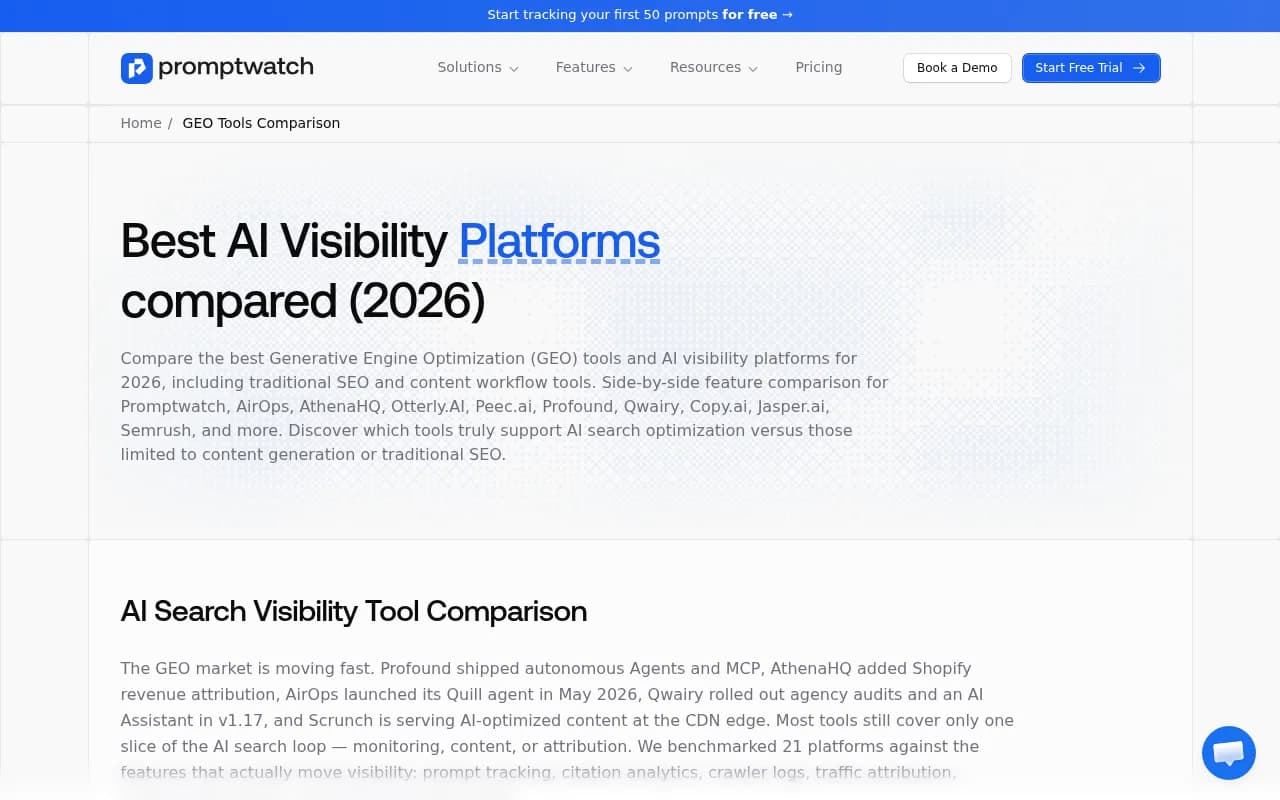
Four platforms keep coming up in conversations with mid-market marketing teams: Searchable, Promptwatch, Nightwatch, and Gauge. They're all priced for teams that aren't enterprise-budget, they all track AI mentions, and they're all trying to answer the same question: "Is our brand showing up when AI answers questions in our category?"
But they answer that question very differently. Here's what you actually need to know.
What these four tools are actually trying to do
Before getting into the comparison, it's worth being honest about what "AI visibility platform" means in 2026. The category covers everything from simple brand mention trackers to full optimization platforms that generate content, log AI crawler activity, and attribute revenue to specific pages.
The four tools here sit in the middle of that spectrum -- or at least, they're marketed that way. In practice, they land in quite different places.

Feature comparison
| Feature | Searchable | Promptwatch | Nightwatch | Gauge |
|---|---|---|---|---|
| AI brand mention tracking | Yes | Yes | Yes | Yes |
| AI models covered | 5+ | 10+ | 4-5 | 5+ |
| Traditional rank tracking | No | No | Yes | No |
| Content gap analysis | Basic | Advanced | No | No |
| AI content generation | Yes | Yes (Content Agents) | No | No |
| AI crawler logs | No | Yes | No | No |
| Traffic attribution | No | Yes | Limited | No |
| Reddit/YouTube insights | No | Yes | No | No |
| ChatGPT Shopping tracking | No | Yes | No | No |
| Competitor heatmaps | Basic | Yes | No | Basic |
| Prompt volume/difficulty | No | Yes | No | No |
| Multi-language/region | Limited | Yes | Yes | Limited |
| Page-level citation tracking | No | Yes | No | No |
| Looker Studio / API | No | Yes | Limited | No |
| Free trial | Yes | Yes | Yes | Yes |
| Starting price (approx.) | ~$99/mo | $99/mo | $39/mo | ~$49/mo |
A few things jump out immediately. Nightwatch is the cheapest entry point, but it's also the most different from the others -- it's a rank tracker that added AI monitoring, not an AI visibility platform that also does SEO. Gauge is the simplest. Searchable sits between Gauge and Promptwatch in terms of depth. And Promptwatch has a noticeably longer feature list, particularly around the things that come after you've identified a visibility gap.
Nightwatch: rank tracking with an AI layer
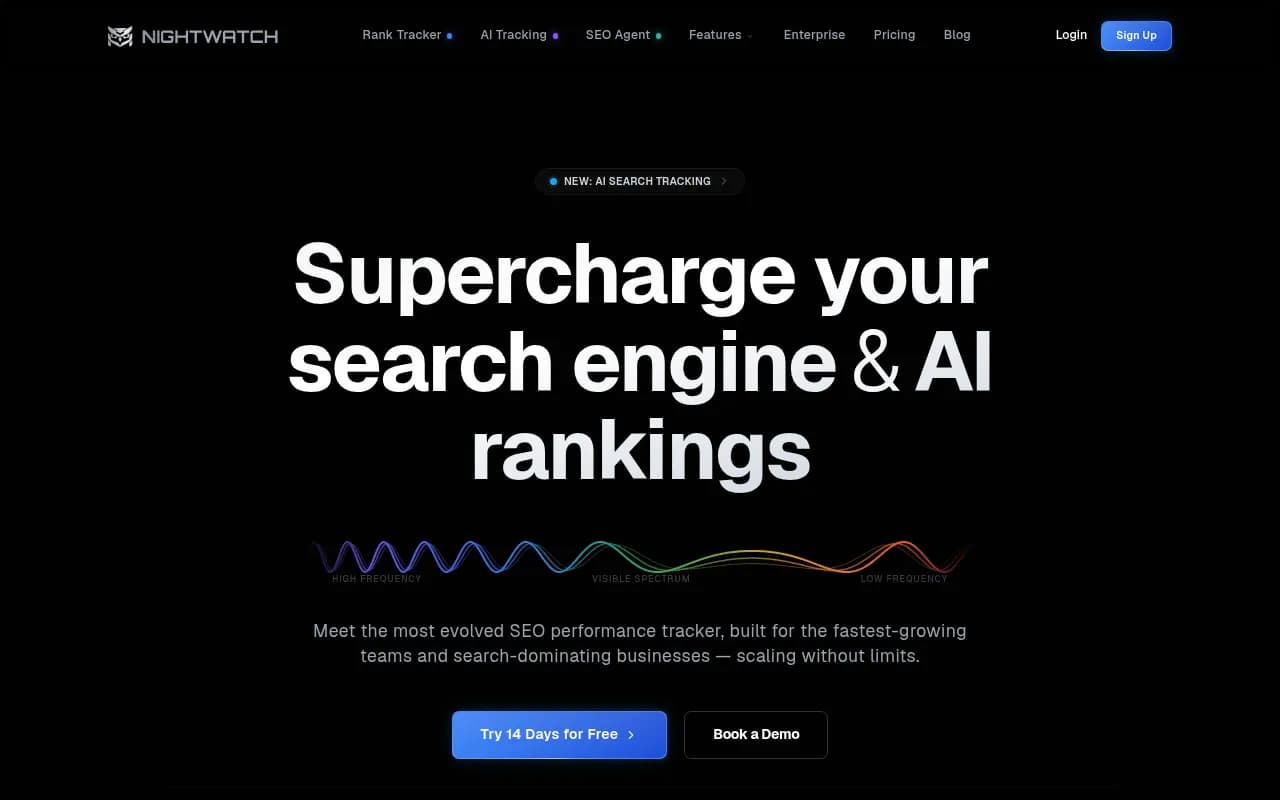
Nightwatch has been around since before the AI search era, and that history shows. Its core product is traditional rank tracking -- Google, Bing, local search -- and it does that well. The AI monitoring features feel like a genuine addition rather than a pivot, which is both a compliment and a limitation.
For teams that still care deeply about Google rankings and want to add some AI visibility tracking without switching tools, Nightwatch makes sense. The price is right, the interface is clean, and the rank tracking data is reliable.
Where it falls short for teams that are serious about AI search: there's no content gap analysis, no way to understand why you're not being cited, and no path from "we're invisible in Perplexity" to "here's what to do about it." It tracks the problem but doesn't help you fix it. If your team is already using a dedicated SEO platform and just wants a lightweight AI monitoring layer, Nightwatch could work. But if AI visibility is becoming a primary concern, you'll outgrow it quickly.
Gauge: clean, simple, and deliberately narrow
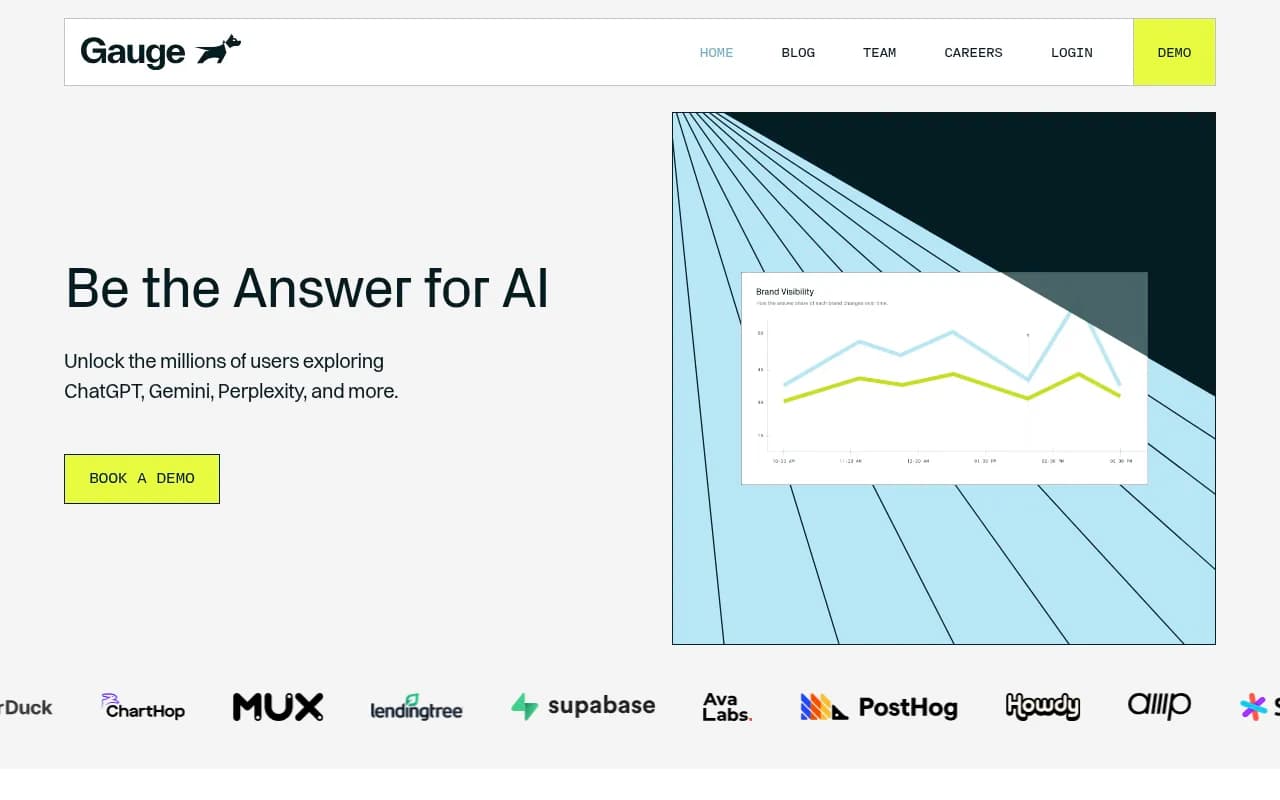
Gauge is the most stripped-down of the four. The pitch is essentially: tell us your brand and your competitors, we'll show you who's winning in AI search. The UI is genuinely nice, setup takes minutes, and the data is easy to read.
That simplicity is the product. Gauge isn't trying to be a full GEO platform. It's trying to be the thing you open when your CMO asks "are we showing up in ChatGPT?" and you need a clean answer in 30 seconds.
The limitation is obvious: once you have the answer, Gauge doesn't tell you what to do next. There's no content generation, no crawler logs, no prompt-level analysis. For a solo marketer or a small team doing an initial audit, that's fine. For a team that's past the "do we have a problem?" stage and into "how do we fix it?", Gauge is too thin.
Searchable: monitoring plus content, but with gaps
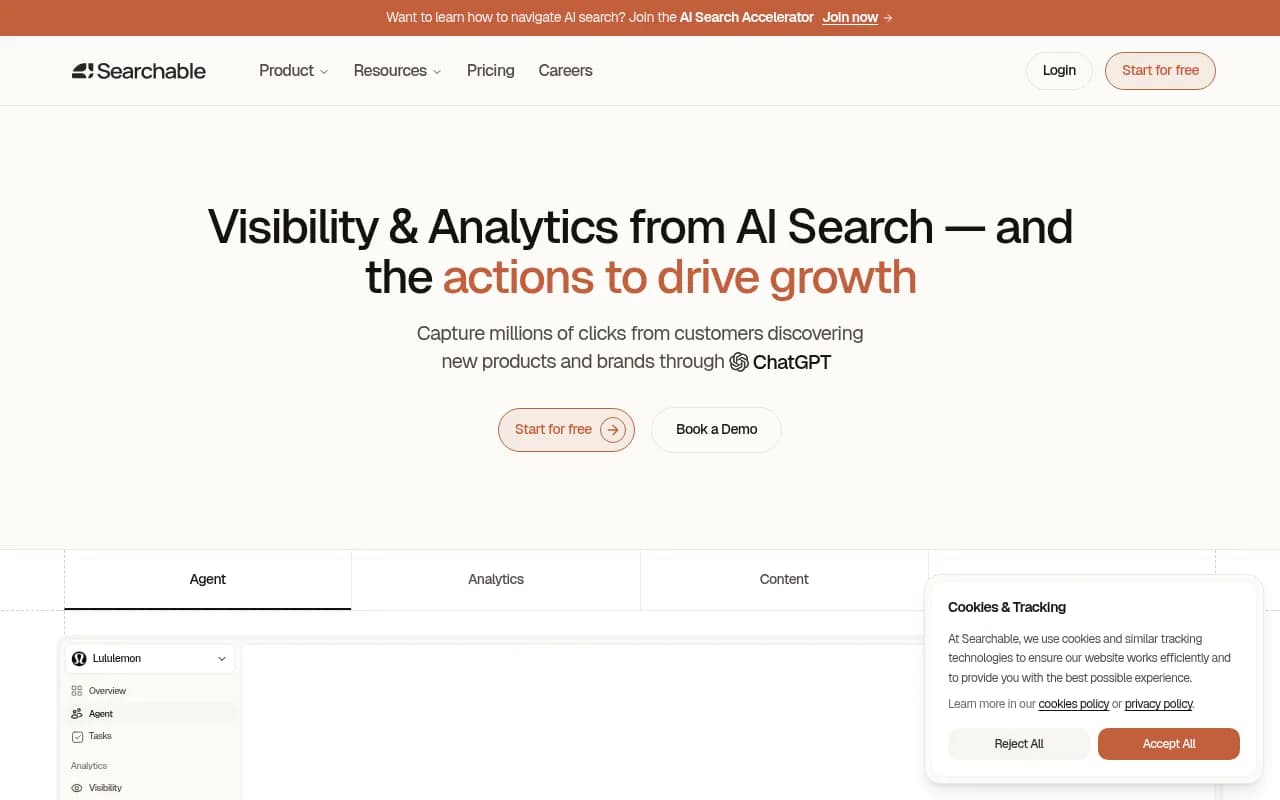
Searchable positions itself as more than a tracker. It has content generation built in, which puts it in a different category from Gauge and Nightwatch. The idea is that you can spot a visibility gap and then create content to address it, all within the same platform.
In practice, the content tools are functional but not particularly sophisticated. The gap analysis is basic compared to what Promptwatch does -- it shows you where you're missing, but the prompt data behind it is thinner. There's no crawler log data, so you can't see whether AI engines are actually visiting your pages. And the attribution story is weak: you can see visibility scores go up, but connecting that to actual traffic or revenue requires manual work.
Searchable is a reasonable choice for a team that wants a single tool for both monitoring and content creation and doesn't need deep analytics. It's a step up from Gauge, but it doesn't quite close the loop that a growing marketing team needs.
Promptwatch: the full optimization loop
Promptwatch is the most ambitious of the four, and the most different from the others in terms of what it's actually trying to do.
The core difference is that Promptwatch isn't built around the monitoring dashboard. It's built around what happens after you see the data. The Answer Gap Analysis shows you exactly which prompts your competitors are visible for and you're not -- specific questions, specific topics, specific angles. The Content Agents then generate articles, listicles, and briefs designed to fill those gaps, grounded in real prompt data and citation analysis. And the tracker shows you when those pages get crawled, when they start getting cited, and what traffic they drive.
That loop -- find the gap, create the content, track the result -- is what separates it from the other three. Nightwatch, Gauge, and Searchable all stop at step one (or one and a half). Promptwatch is designed to run the whole cycle.
A few specific capabilities worth mentioning:
The AI crawler logs are genuinely useful and rare. You can see when ChatGPT's crawler or Perplexity's agent visits your site, which pages they read, and whether they encounter errors. Most teams have no idea this data exists, let alone how to use it. Promptwatch surfaces it in a way that's actionable.
The prompt intelligence layer -- volume estimates, difficulty scores, query fan-outs -- lets you prioritize. Not every gap is worth filling. Some prompts have almost no volume. Some are dominated by sources you can't compete with. Promptwatch helps you find the winnable ones.
Reddit and YouTube tracking is a feature that sounds niche until you realize how much AI models draw on those sources. If a Reddit thread is driving Perplexity's recommendations in your category, you want to know about it.
The pricing starts at $99/month (Essential: 1 site, 50 prompts, 5 articles), which is competitive with Searchable and more expensive than Gauge or Nightwatch's entry tiers. The Professional plan at $249/month adds crawler logs, more prompts, and more content generation capacity -- that's where the platform really opens up for a growing team.
Who should use which tool
The honest answer depends less on budget and more on where your team is in the AI visibility journey.
If you're just starting out and need a quick read on whether you have a problem: Gauge is fine. It's cheap, fast to set up, and gives you a clear answer. Don't overthink it at this stage.
If you're primarily an SEO team that wants to add AI monitoring without changing your stack: Nightwatch makes sense, especially if you're already using it for rank tracking. Just know you'll need something else when you want to act on the AI data.
If you want monitoring plus basic content tools in one place and don't need deep analytics: Searchable is a reasonable middle ground. It's not the most powerful option, but it covers both sides of the problem at a mid-market price.
If AI visibility is a serious priority and you want to actually improve your position, not just track it: Promptwatch is the right choice. The feature gap is real, and the action loop it supports -- gap analysis, content generation, crawler logs, attribution -- is what a marketing team needs to move the needle rather than just report on it.
A note on what "mid-market" actually means here
All four tools are marketed at teams that aren't Fortune 500 enterprises. But "mid-market" covers a lot of ground. A 5-person startup and a 50-person marketing department at a $50M company have very different needs.
For the smaller end of that range, Gauge or Nightwatch are probably enough to start. For teams with dedicated content operations, a real SEO function, and leadership that's asking for AI visibility ROI, the monitoring-only tools will feel limiting within a few months.
The question to ask yourself isn't "which tool tracks AI mentions?" -- they all do that. It's "what do we do after we see the data?" If you don't have a clear answer, you probably need a platform that helps you figure that out.
The broader competitive context
These four tools don't exist in isolation. The AI visibility market in 2026 includes platforms like Profound and AthenaHQ at the enterprise end, and simpler trackers like Otterly.AI and Peec.ai at the entry level. Searchable, Gauge, Nightwatch, and Promptwatch are all trying to serve the space in between.
What's notable about this comparison is that three of the four tools (Gauge, Nightwatch, Searchable) are primarily monitoring tools with varying degrees of content features. Promptwatch is the outlier -- it's built around optimization, not just observation. That's a meaningful distinction as the market matures and teams move from "we should track this" to "we need to improve this."
For teams evaluating other options in this space, it's also worth looking at:
Otterly.AI



These sit at different price and feature points and might fit specific use cases better depending on your team's size and priorities.
Bottom line
If you're a growing marketing team taking AI visibility seriously in 2026, the tool you pick should match where you want to be in six months, not where you are today. Monitoring dashboards are easy to outgrow. A platform that helps you act on the data is harder to find.
Nightwatch and Gauge are good starting points. Searchable adds content tools but doesn't go far enough on analytics. Promptwatch is the only one of the four that's genuinely built to improve your AI visibility rather than just report on it -- and for teams that are past the awareness stage, that's the difference that matters.