Key takeaways
- Semrush is a mature, all-in-one SEO platform that added AI visibility features in 2025-2026; it makes sense if your team is already standardized on Semrush and needs traditional SEO alongside basic AI monitoring.
- Searchable is a dedicated AI search visibility platform with built-in content generation, designed specifically for teams that want to appear in ChatGPT, Perplexity, and Google AI Overviews.
- Neither tool is the clear winner for every team — the right choice depends on whether AI visibility is your primary problem or one of many SEO problems you're solving.
- If AI search visibility is your core priority, purpose-built platforms like Promptwatch go further than both, combining tracking, content gap analysis, and AI content generation in one workflow.
- The biggest mistake teams make in 2026 is treating AI visibility as a monitoring problem when it's actually a content problem.
The question sounds simple: Searchable or Semrush? But it's actually asking something deeper — are you trying to maintain your existing SEO program while adding some AI coverage, or are you starting fresh with AI search as the primary objective?
These two tools come from completely different directions. Semrush has been the dominant SEO platform for over a decade and bolted on AI visibility features as the market shifted. Searchable was built specifically for the AI search era, with content generation baked into the core product. That origin story matters more than any feature comparison, because it shapes what each tool is actually good at.
Let's break it down honestly.
What Semrush actually is in 2026
Semrush is an all-in-one digital marketing platform. Keyword research, backlink analysis, technical site auditing, competitor intelligence, rank tracking, content optimization — it does all of it, and it does most of it well. For teams running traditional SEO programs, it's hard to argue against.
The AI visibility piece came later. Semrush One (the rebranded enterprise tier) includes an AI Visibility Toolkit that covers:
- An AI Visibility Score measuring your presence across AI answers
- Brand Performance tracking (share of voice, sentiment, how different LLMs perceive your brand)
- Prompt Research and Prompt Tracking, which treats prompts like keywords
- Third-party brand mention tracking (turning AI citations into PR targets)
- An AI-focused Site Audit that checks whether your site is "AI-ready"
This is genuinely useful. The prompt tracking feature in particular is a smart addition — it gives SEO teams a familiar mental model (keywords → prompts) to start thinking about AI search. And the brand sentiment breakdown by LLM is something most standalone AI visibility tools don't offer.
But there are real limitations. Semrush uses fixed prompt sets rather than dynamically surfacing the prompts your actual customers are typing into ChatGPT. There's no AI traffic attribution connecting AI citations to actual website visits or revenue. The AI crawler logs that show you how GPTBot and ClaudeBot are actually crawling your site? Not there. Reddit and YouTube tracking, which are increasingly important because AI models cite those sources heavily? Also absent.
One Reddit thread from mid-2026 captures the frustration well: teams using Semrush for AI visibility find the data directionally useful but struggle to act on it. The platform tells you your AI Visibility Score went up or down, but it doesn't tell you which specific content gaps caused the change or what to write to fix it.
That's the core tension with Semrush's AI features: they're monitoring features grafted onto an SEO platform, not an optimization workflow built around AI search from scratch.
What Searchable actually is in 2026
Searchable positions itself as an AI Search Visibility Platform with built-in content generation. The pitch is that it doesn't just show you where you're invisible in AI answers — it helps you create content to fix it.
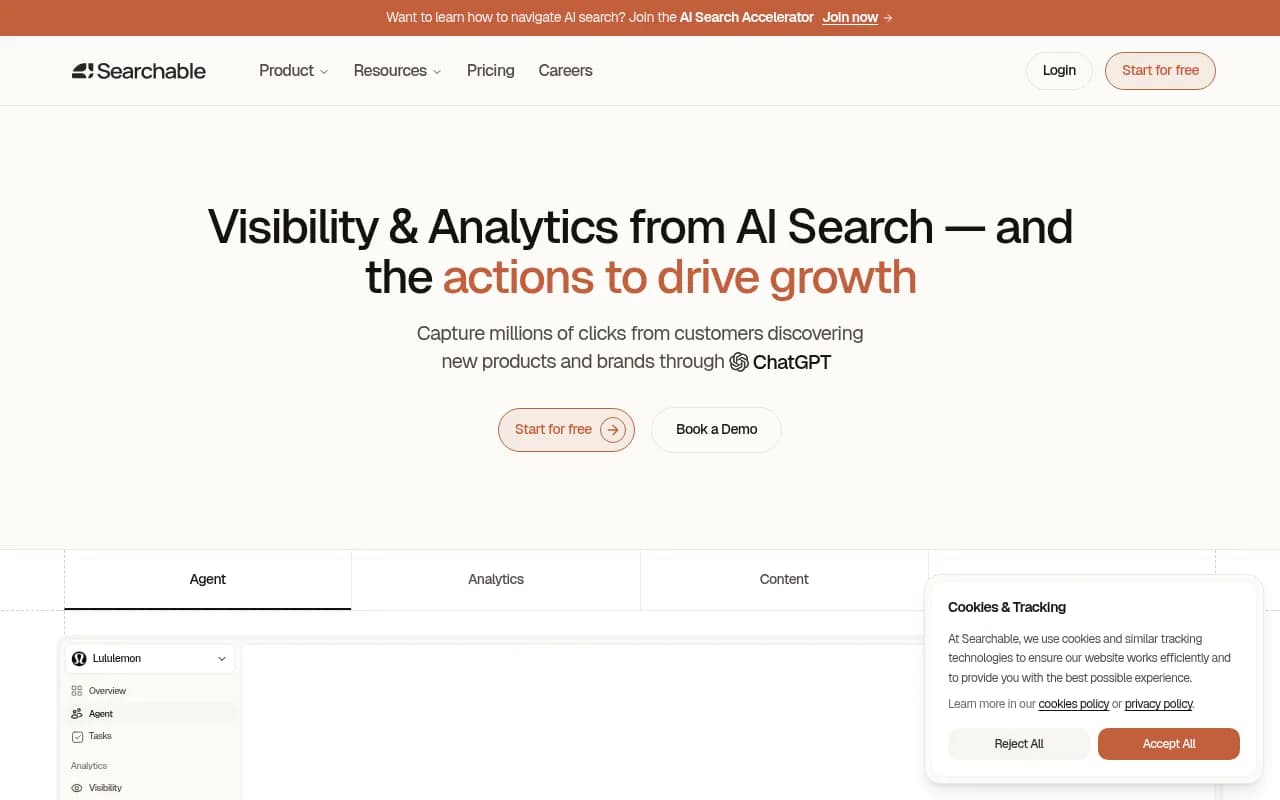
That's the right instinct. The teams winning in AI search in 2026 aren't the ones with the best dashboards; they're the ones publishing content that AI models actually want to cite. Searchable's content generation features are designed to close that loop.
Where Searchable sits in the market is as a dedicated, purpose-built AI visibility tool. It's not trying to replace your rank tracker or your backlink analysis tool. It's focused on the specific problem of AI search presence — tracking it, understanding it, and improving it through content.
The honest limitation is that Searchable is a newer, smaller platform. Its data coverage, model breadth, and feature depth are still maturing compared to the more established players. Teams that need deep traditional SEO capabilities alongside AI visibility will find themselves running Searchable alongside another tool, which adds cost and workflow complexity.
Head-to-head comparison
| Feature | Semrush | Searchable |
|---|---|---|
| Traditional SEO (keywords, backlinks, audits) | Comprehensive | Not included |
| AI visibility tracking | Yes (AI Toolkit) | Yes (core focus) |
| Models covered | Multiple LLMs | Multiple LLMs |
| Prompt research | Fixed prompt sets | AI search-focused |
| Content generation for AI | Limited | Built-in |
| AI crawler logs | No | Limited |
| Reddit/YouTube tracking | No | No |
| AI traffic attribution | No | Limited |
| Pricing entry point | ~$140/mo (Pro) | Varies |
| Best for | Teams already on Semrush | AI-first content teams |
The real question: what problem are you solving?
Here's where most comparisons go wrong. They treat this as a feature race when it's actually a workflow question.
If your team runs a full SEO program and AI visibility is one new thing you need to add, Semrush is probably the path of least resistance. You're already in the platform. The AI Visibility Toolkit gives you enough signal to know whether you're showing up in AI answers and roughly how you compare to competitors. You don't have to learn a new tool or justify a new budget line.
If AI search visibility is your primary objective — you're a brand that's noticed traffic from ChatGPT and Perplexity, or you're an agency building a GEO practice — Searchable's focused approach makes more sense. You get a tool designed around the specific workflow of finding AI visibility gaps and publishing content to close them.
But there's a third scenario worth naming: teams that have outgrown both options.
When neither is enough
Both Semrush and Searchable have meaningful gaps for teams that are serious about AI search optimization. Semrush's AI features are monitoring-first with limited action capability. Searchable is purpose-built but still maturing.
The teams getting the most traction in AI search in 2026 are using platforms that close the full loop: find the gaps, create the content, track the results, and connect it all to revenue.
Promptwatch is worth looking at here. It's built specifically around that action loop — Answer Gap Analysis shows exactly which prompts competitors are visible for but you're not, Content Agents generate articles and briefs grounded in real prompt data, and page-level tracking shows which pages are being cited by which models and how often. The AI Crawler Logs feature (showing how GPTBot, ClaudeBot, and Perplexity's crawler actually interact with your site) is something neither Semrush nor Searchable offers at the same depth.

It also covers things like Reddit and YouTube tracking (because AI models cite those sources constantly), ChatGPT Shopping tracking, and multi-language/multi-region monitoring. For teams where AI visibility is a strategic priority rather than a checkbox, the difference between a monitoring tool and an optimization platform is significant.
Other tools worth knowing about
If you're evaluating this space, a few other platforms are worth a look depending on your situation.
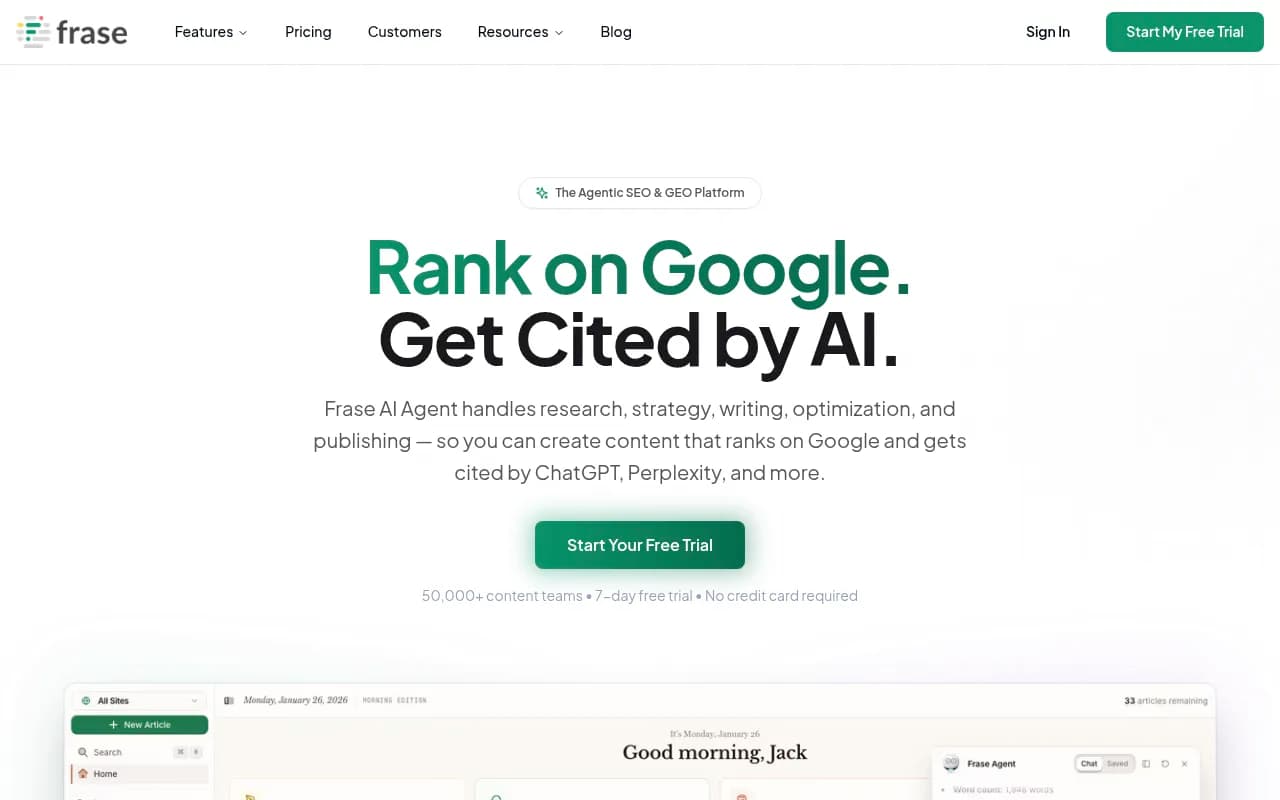
For teams that want AI visibility tracking alongside content optimization in a single workflow, Frase pairs daily AI-engine tracking with research and writing tools:
For enterprise-grade AI visibility tracking with deep reporting, Profound is one of the strongest dedicated monitors:
Profound

For teams that want AI visibility tracking without the full platform overhead, Peec AI and Otterly.AI offer lighter-weight monitoring:

Otterly.AI

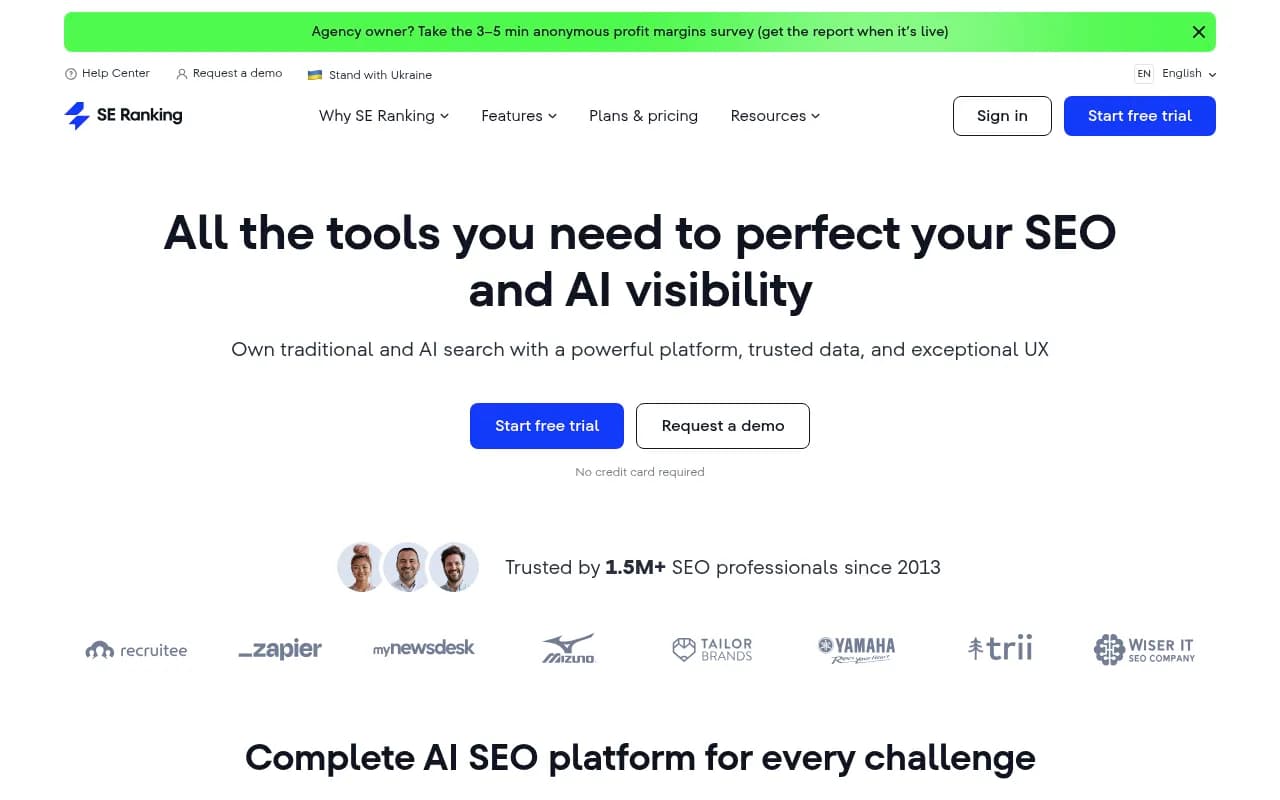
For traditional SEO teams that want to add AI visibility without switching platforms, SE Ranking has added solid AI tracking features at a competitive price point:
Pricing reality check
Semrush Pro starts around $140/month and doesn't include the full AI Visibility Toolkit — that's part of Semrush One, which is priced higher and aimed at larger teams. If you're already paying for Semrush at a tier that includes AI features, the incremental cost is zero. If you'd be upgrading specifically for AI visibility, the math gets harder to justify.
Searchable's pricing is positioned as a dedicated AI visibility tool, so you're paying for that focus. The question is whether you need everything else Semrush offers or whether you'd rather have a tool that does one thing well.
Promptwatch's pricing runs from $99/month (Essential: 1 site, 50 prompts, 5 articles) to $579/month (Business: 5 sites, 350 prompts, 30 articles), with agency and enterprise tiers available. The free trial makes it easy to test before committing.
Which one should you actually pick?
Here's the honest answer:
Pick Semrush if you're already using it for traditional SEO and you want to add AI visibility monitoring without changing your toolset. The AI Toolkit gives you enough signal to stay informed, even if it won't help you systematically close visibility gaps.
Pick Searchable if AI search visibility is your primary focus and you want a purpose-built tool with content generation built in, and you're comfortable running it alongside a separate traditional SEO tool.
Look at Promptwatch if you want to treat AI visibility as an optimization program rather than a monitoring exercise — tracking prompts, generating content to close gaps, monitoring AI crawlers, and connecting visibility to revenue in one platform.
The teams that are winning in AI search right now aren't the ones with the best dashboards. They're the ones that found the gaps, published the content, and watched their citation counts climb. Whatever tool you pick, make sure it helps you do that — not just measure it.