Key takeaways
- LLMs don't rank pages the way Google does -- they synthesize answers from sources they find credible, which means a small brand with a few authoritative, well-structured pages can beat a large brand with hundreds of thin ones
- Entity recognition is the foundation: if AI models don't know who you are, they won't cite you, regardless of how much content you publish
- Answer clusters (tightly focused content that directly addresses specific questions) outperform broad, generic blog posts in AI citation rates
- Third-party mentions -- press releases, industry roundups, Reddit threads, review sites -- carry disproportionate weight with LLMs
- Tracking which prompts you're missing is the fastest way to find your next content opportunity
There's a myth circulating in marketing circles right now: that AI search visibility is a numbers game. Publish more, cover more topics, build a bigger content moat. The brands with the most content win.
It's wrong. And small brands are proving it every day.
I've watched companies with 15 blog posts get cited by ChatGPT more consistently than competitors with 500. The reason isn't luck. It's that they understood something early: LLMs don't reward volume. They reward clarity, authority, and answerability.
This guide is about how to build that -- even if you're starting with almost nothing.
Why thin content libraries aren't the disadvantage you think they are
When Google was the only game in town, content volume mattered. More pages meant more chances to rank. The logic was simple: cast a wider net, catch more traffic.
LLMs work differently. When someone asks ChatGPT "what's the best project management tool for remote design teams," the model isn't scanning an index of pages. It's synthesizing an answer from patterns in its training data, combined with real-time retrieval (in models like Perplexity and ChatGPT Search) from sources it deems credible.
What makes a source credible to an LLM? A few things:
- The source directly answers the question being asked
- The source is cited or referenced by other trusted sources
- The brand or entity is consistently described the same way across multiple places on the web
- The content is structured in a way that's easy to extract and quote
A small brand with five perfectly crafted, highly specific pages can tick all four boxes. A large brand with 400 vague, keyword-stuffed articles often ticks none.
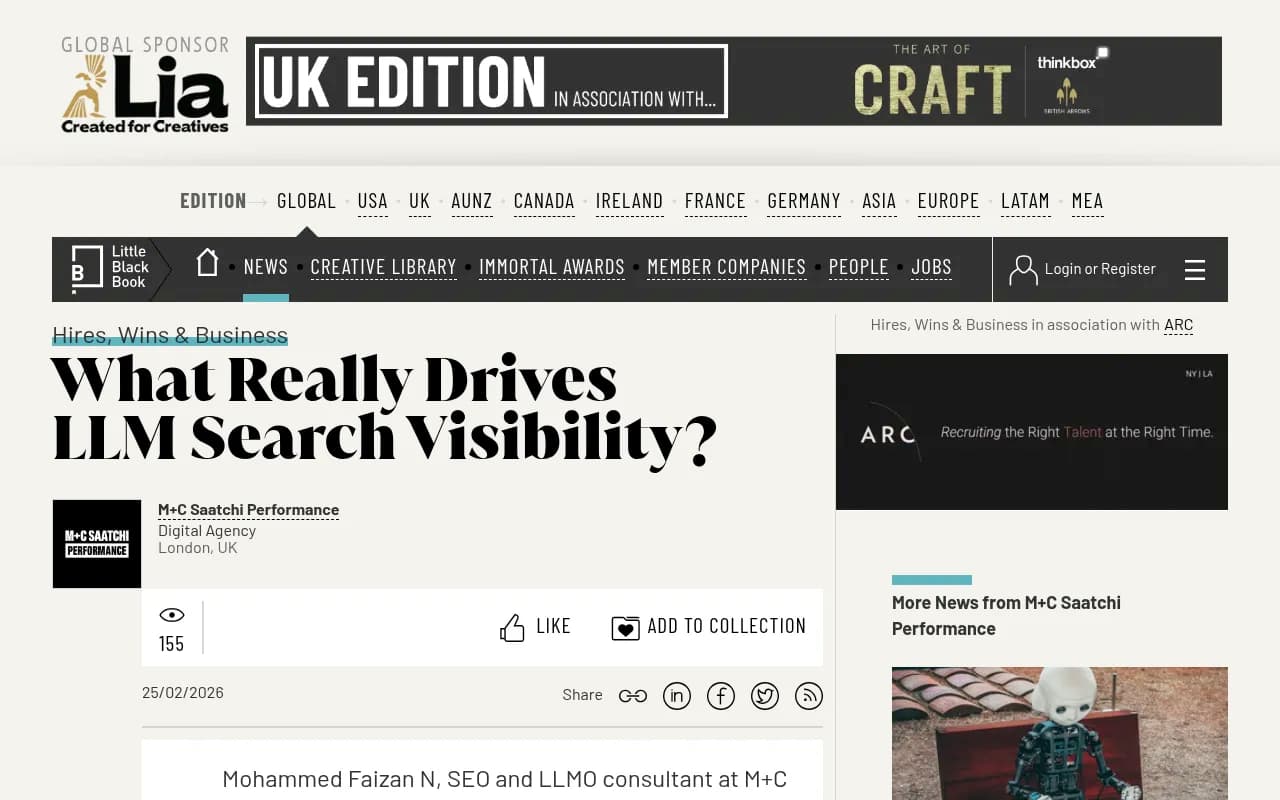
Mohammed Faizan N, an SEO and LLMO consultant at M+C Saatchi Performance, put it well: the game changed while most brands were staring at the old scoreboard. Rankings and organic traffic metrics don't tell you whether AI models know you exist.
Step 1: Get your entity right before you write a single word
If you take nothing else from this guide, take this: entity clarity is the prerequisite for everything else.
An "entity" in this context is how AI models understand who your brand is. Not your homepage copy. Not your tagline. The consistent, cross-referenced description of your brand that appears across your website, your LinkedIn, your press mentions, your product listings, your partner pages, and third-party directories.
LLMs build a mental model of your brand by aggregating signals from dozens of sources. If those sources are inconsistent -- your website says you're "an AI-powered analytics platform," your LinkedIn says "data intelligence for growth teams," and a review site says "business intelligence software" -- the model gets confused. Confused models don't cite.
What to fix first
Pick one clear, specific description of what your brand does and who it's for. Something like: "Acme helps B2B SaaS companies reduce churn by identifying at-risk accounts before they cancel."
Then make sure that description (or a close variant) appears:
- In your website's meta description and About page
- In your LinkedIn company description
- In your Crunchbase or similar directory profiles
- In any press releases or media mentions you control
- In your Google Business Profile if applicable
This isn't glamorous work. But it's the foundation. Without it, even great content won't get you cited reliably.
Step 2: Build answer clusters, not content calendars
Most small brands approach content the same way: pick topics, write articles, publish on a schedule. The result is a scattered library where no single area has enough depth to signal real expertise.
AI models respond to something different: answer clusters. A cluster is a tight group of content that collectively answers every meaningful question about a specific topic from a specific angle.
Here's a simple example. Say you sell accounting software for freelancers. Instead of writing one article called "accounting tips for freelancers," you'd build a cluster:
- "How do freelancers track invoices and expenses in the same tool?"
- "What's the difference between cash-basis and accrual accounting for a solo consultant?"
- "When does a freelancer actually need accounting software vs. a spreadsheet?"
- "How do freelancers handle quarterly estimated taxes?"
Each piece answers one specific question completely. Together, they signal to LLMs that your site is the authoritative source on freelancer accounting. When someone asks ChatGPT about freelancer finances, your content becomes the obvious thing to cite.
The key insight: you don't need to cover everything. You need to cover one thing better than anyone else.
How many pieces do you actually need?
Honestly, fewer than you think. A cluster of 6-10 tightly focused pieces on a single topic can outperform a sprawling library of 100 loosely related articles. The goal is depth in a defined area, not breadth across many areas.
Start with the topic where you have the most genuine expertise and the clearest competitive differentiation. That's where LLMs are most likely to find your content credible and citable.
Step 3: Find the specific prompts you're missing
Here's where small brands often get stuck. They know they should create content, but they don't know which questions to answer. So they guess, or they copy what competitors are writing, or they use keyword tools designed for Google search.
None of those approaches work well for LLM visibility.
What you actually need is to know which prompts -- the specific questions people are asking AI models -- your competitors are appearing in but you're not. That gap is your roadmap.
Promptwatch has a feature called Answer Gap Analysis that does exactly this: it shows you the prompts where your competitors get cited and you don't, so you can see precisely what content your site is missing. Rather than guessing what to write, you're working from real data about what AI models are already being asked.

This matters more for small brands than large ones, because you can't afford to waste effort on content that won't move the needle. Every piece you create needs to target a real, winnable gap.
Step 4: Make your content structurally citable
There's a difference between content that's good to read and content that's easy for an LLM to cite. The latter requires some specific structural choices.
Use direct, declarative answers
LLMs pull quotes and summaries. If your content buries the answer in the fifth paragraph after three paragraphs of context-setting, the model might not extract it correctly. Lead with the answer. Then explain.
Bad: "When it comes to the complex question of how freelancers should handle taxes, there are many factors to consider, including..."
Better: "Freelancers in the US should pay estimated taxes quarterly -- in April, June, September, and January. Here's how to calculate what you owe."
Use specific, verifiable claims
LLMs are trained to prefer content that makes specific, checkable claims over vague generalities. "Most freelancers underestimate their tax bill" is weak. "A 2024 survey by QuickBooks found that 67% of self-employed workers were surprised by their tax bill" is citable.
If you don't have access to external data, use your own. Internal data, customer case studies, and first-party research are all credible sources that LLMs can cite.
Use clear headings that match the questions people ask
If someone asks ChatGPT "how do freelancers handle quarterly taxes," and your page has a heading that says exactly "How freelancers handle quarterly estimated taxes," the model has a much easier time matching your content to the query.
This sounds obvious but most content teams don't do it systematically. Go through your existing pages and rewrite headings to match the natural language questions your audience actually asks.
Step 5: Build secondary sources -- this is where small brands have a real edge
Here's something counterintuitive: LLMs often trust what other people say about you more than what you say about yourself.
A LinkedIn post from a founder in your industry mentioning your product. A Reddit thread where someone recommends your tool. A press release picked up by a trade publication. A review on G2 or Capterra. These third-party signals are disproportionately influential in how LLMs form opinions about brands.
According to analysis shared on LinkedIn by Joe Andrews, 95% of sources for mid-funnel searches in LLM responses come from third-party sources, not brand-owned content. Your homepage is almost irrelevant. What matters is the ecosystem of mentions around you.
For small brands, this is actually good news. You don't need a massive content operation. You need a handful of genuine third-party mentions in the right places.
Where to focus your off-site efforts
- Industry newsletters and roundups that get cited by AI models (look at what sources appear when you ask ChatGPT questions in your category)
- Reddit communities where your target audience asks questions -- a genuine, helpful answer that mentions your product can be cited for years
- Press releases distributed through wire services, which Notified has noted are "uniquely trusted by AI" compared to standard blog posts
- Review platforms like G2, Capterra, and Trustpilot, where AI models frequently pull product descriptions and user feedback
- Podcast appearances and interview transcripts, which are increasingly indexed and cited
The goal isn't to spam these channels. One genuinely useful Reddit comment in the right subreddit can drive more AI citations than ten blog posts.
Step 6: Track what's actually working
This is where most small brands fall down. They create content, publish it, and then... nothing. No systematic way to know whether AI models are actually citing them, which prompts they're appearing in, or whether their visibility is improving.
Without tracking, you're flying blind. You might be winning and not know it. Or losing ground to a competitor and not notice until it shows up in your revenue numbers.
A few tools worth knowing about for this:
Promptwatch tracks your brand visibility across 10 AI models including ChatGPT, Perplexity, Claude, Gemini, and Google AI Overviews. The page-level tracking shows exactly which of your pages are being cited, how often, and by which models -- so you can see whether your new content is actually working.
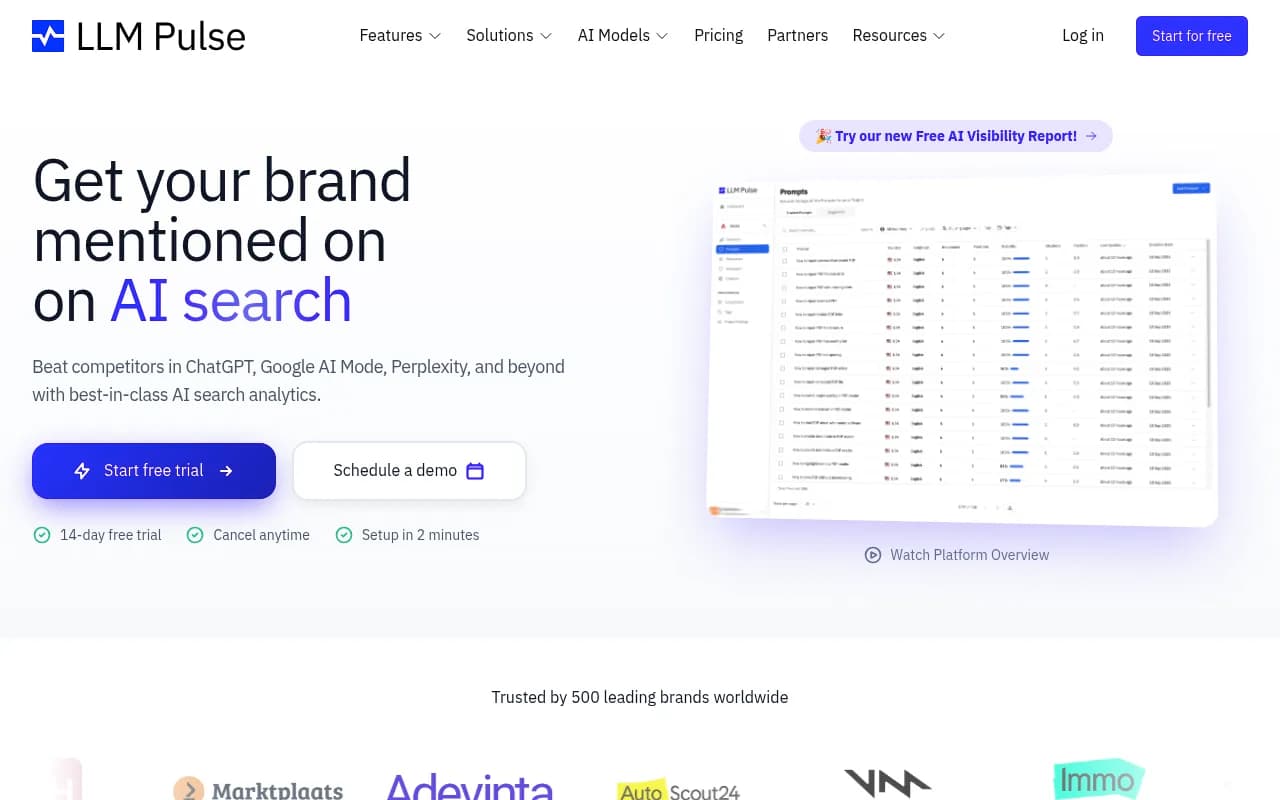
For lighter-weight monitoring, tools like LLM Pulse and Peec AI offer basic citation tracking:

What you're looking for in your tracking:
- Which prompts is your brand appearing in? Are they the right ones?
- Which pages are being cited most often? What do they have in common?
- Where are competitors appearing that you're not? (This feeds back into your content gap analysis)
- Is your visibility improving over time as you publish new content?
The last point matters more than people realize. AI visibility doesn't move instantly. A new piece of content might take weeks to start appearing in citations. Tracking gives you the patience to stay the course -- and the data to know when something isn't working.
A realistic playbook for a brand starting from near zero
Let's make this concrete. If you're a small brand with almost no content library, here's a practical sequence:
-
Nail your entity description. One clear, consistent description across all your profiles. Do this before anything else.
-
Pick one topic cluster. Choose the area where you have the most genuine expertise and the clearest differentiation. Not your whole product -- one specific problem you solve better than anyone.
-
Write 6-8 focused pieces. Each one answers a specific question completely. Lead with the answer. Use specific claims. Structure headings to match natural language queries.
-
Build 3-5 third-party mentions. A press release. Two or three Reddit answers. A guest post in a relevant newsletter. These don't need to be elaborate -- they need to be genuine and specific.
-
Start tracking. Set up monitoring so you can see when your content starts getting cited and which prompts you're winning.
-
Find your next gap. Once your first cluster is working, use gap analysis to find the next set of prompts you're missing. Repeat.
This is a 3-6 month process, not a 3-week sprint. But the compounding effect is real. Each piece of content you add to a well-established cluster makes the whole cluster more citable.
Tools that help small brands punch above their weight
A few tools worth having in your stack if you're running lean:
For tracking AI visibility and finding content gaps:
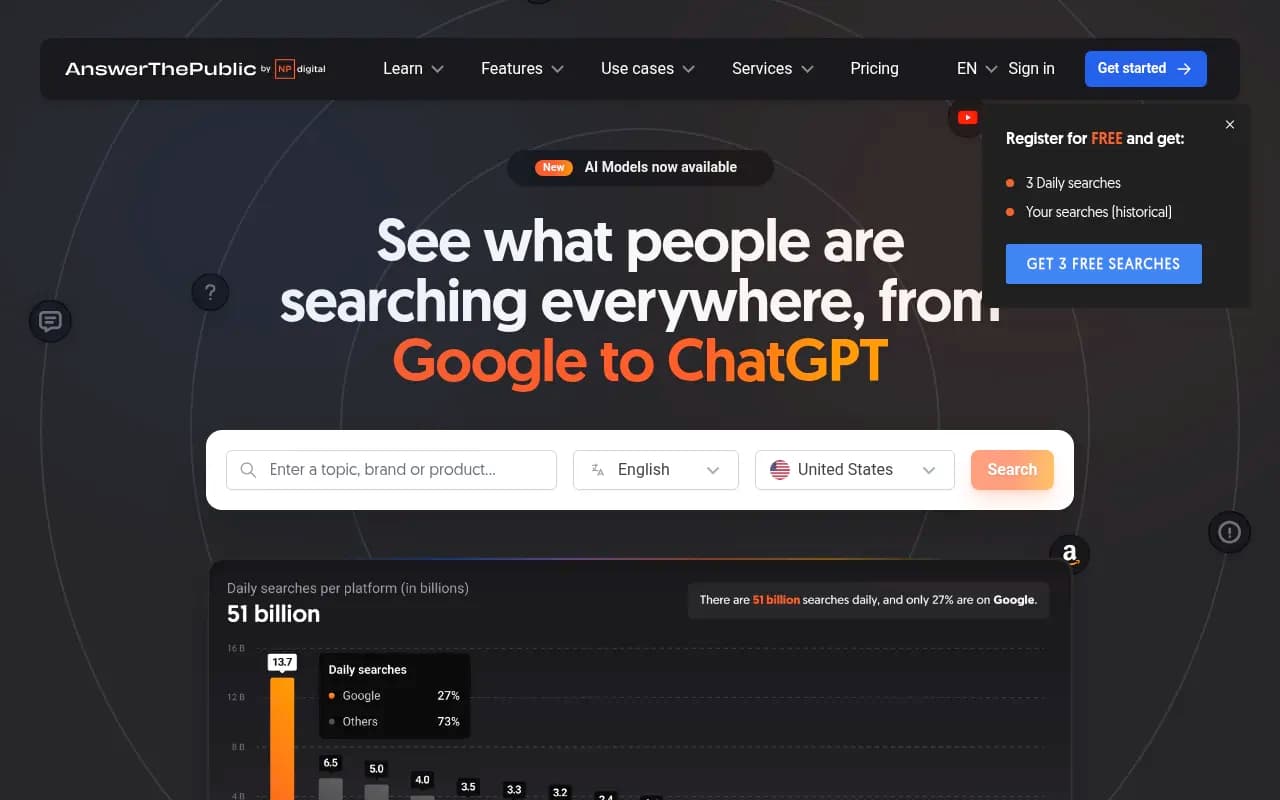
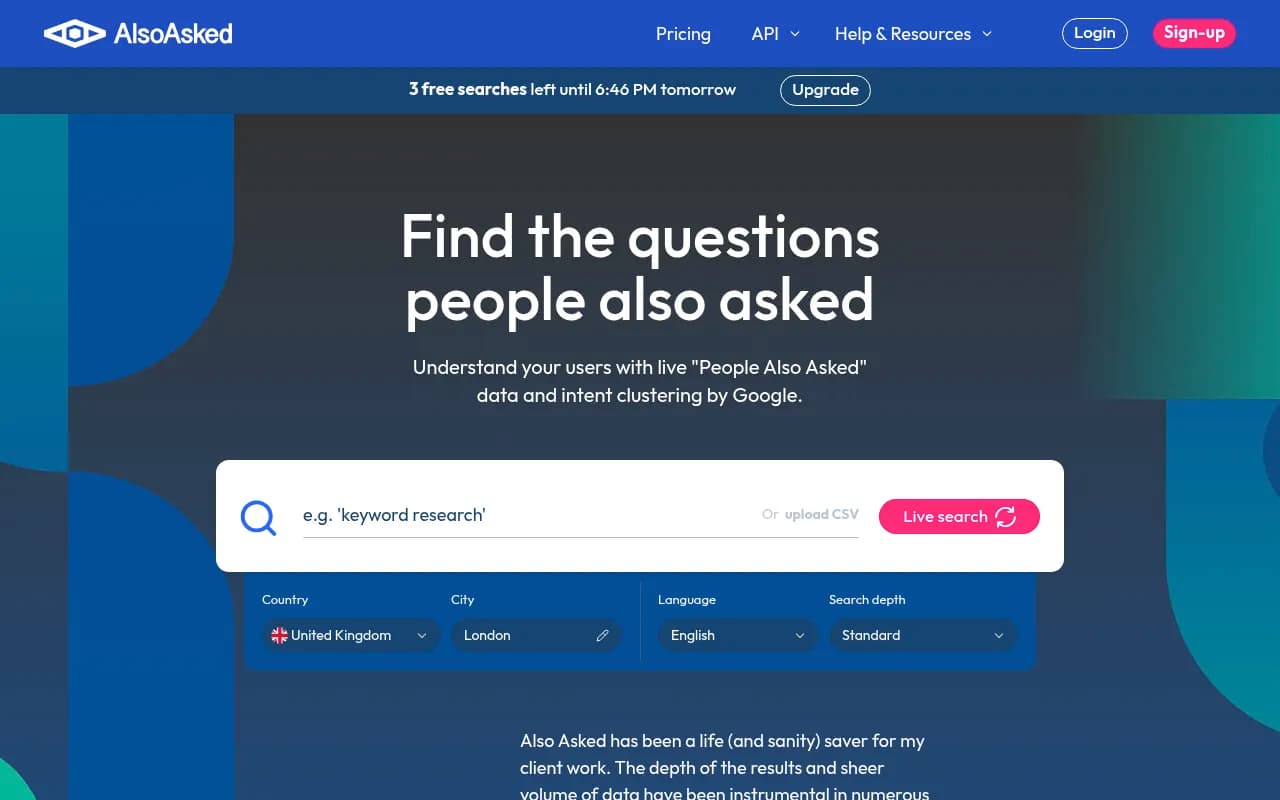
For understanding what questions your audience is actually asking:
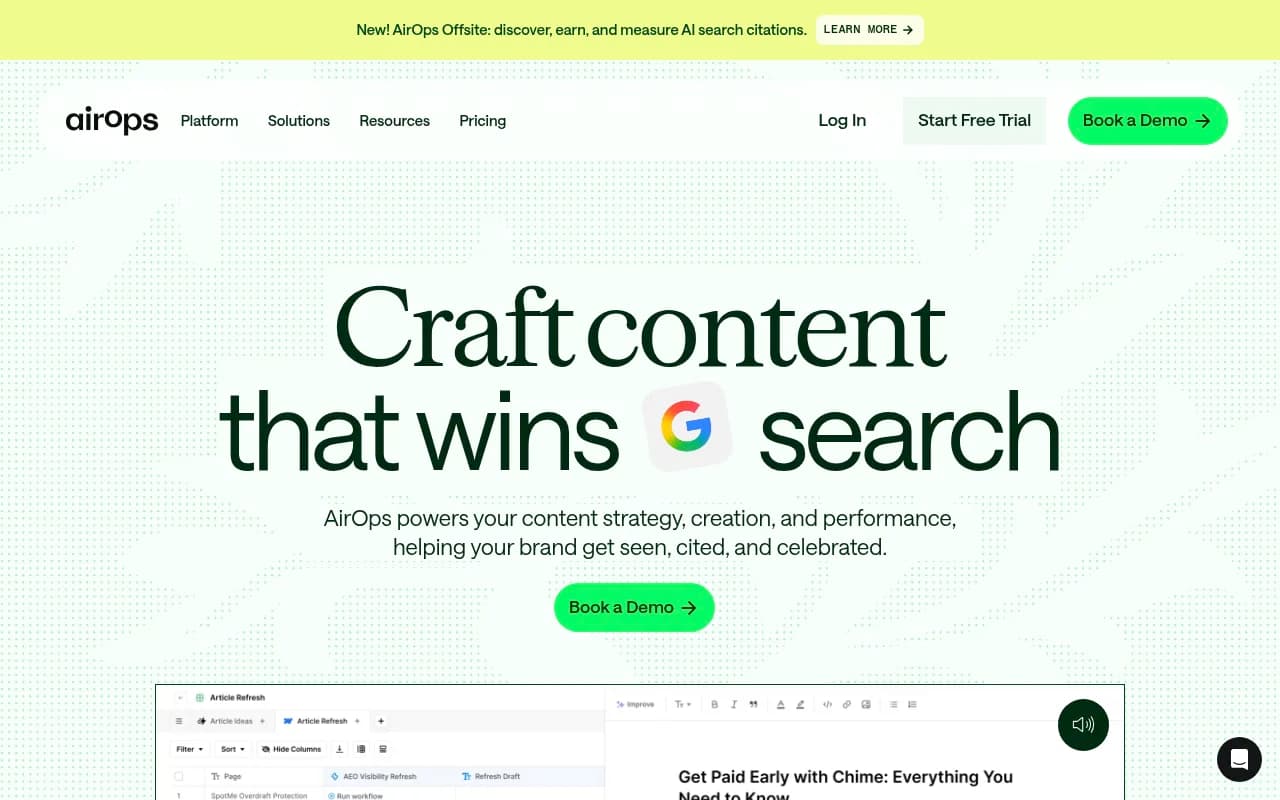
For creating content that's structured for AI citation:
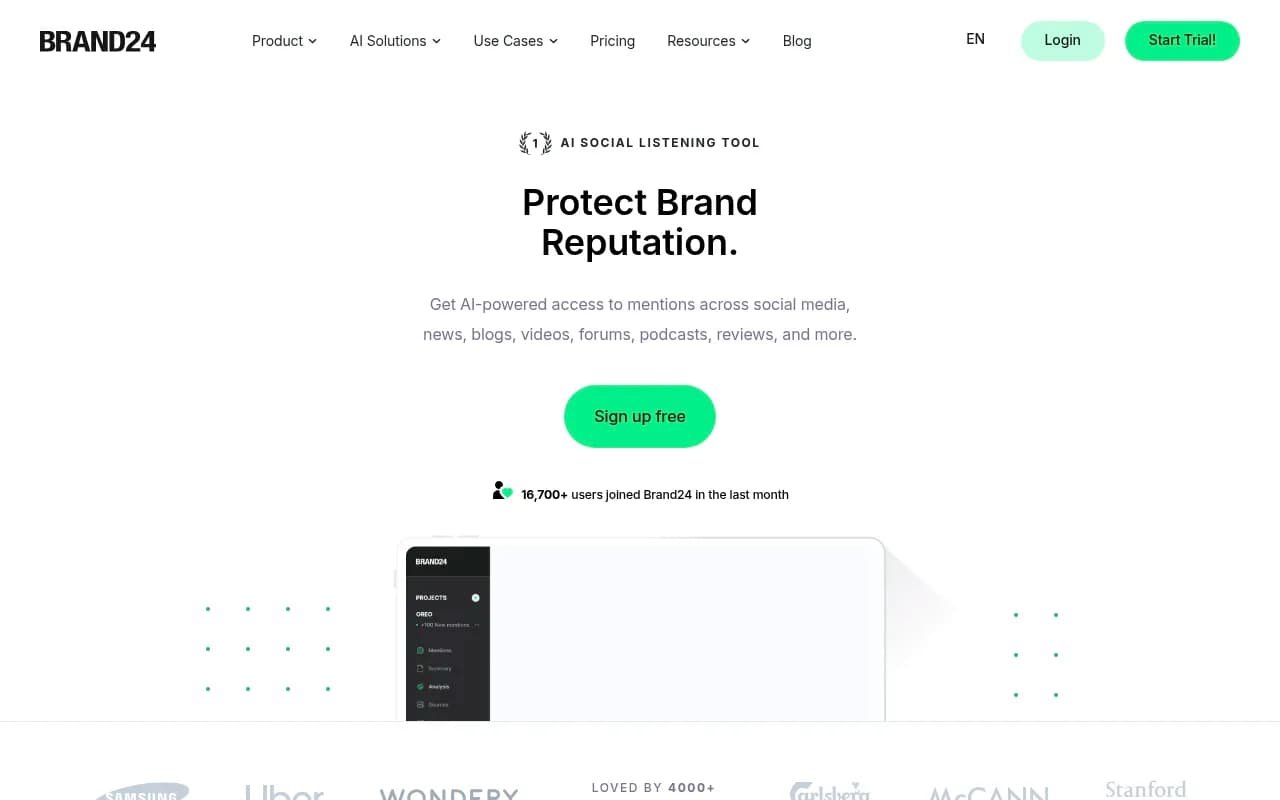
For monitoring brand mentions across the web (feeds your third-party signal strategy):
Comparing approaches: volume vs. precision
| Approach | Content volume needed | Time to first citation | Sustainability | Best for |
|---|---|---|---|---|
| Broad content calendar | High (50+ pieces) | 3-6 months | Hard to maintain | Large teams with dedicated writers |
| Answer cluster strategy | Low (6-10 pieces per cluster) | 4-8 weeks | Very sustainable | Small teams, focused niches |
| Third-party signal building | Minimal owned content | 2-4 weeks | Requires ongoing effort | Brands with strong networks |
| Combined (clusters + third-party) | Low-medium | 3-6 weeks | Best long-term | Most small brands |
The combined approach -- tight answer clusters plus deliberate third-party signal building -- is what I'd recommend for most small brands. It's the most efficient path from zero to consistent AI citations.
The honest reality check
None of this is magic. A small brand with a thin content library can absolutely win in AI search -- but it requires being more strategic, not less. You can't afford to publish content that doesn't serve a specific purpose. Every piece needs to answer a real question, be structured for citability, and fit into a coherent cluster.
The good news is that this kind of focused, intentional content is also better for human readers. It's more useful, more specific, and more trustworthy than the generic SEO content that most brands have been producing for years.
AI search is, in some ways, a correction. It rewards brands that actually know what they're talking about and can explain it clearly. For small brands with real expertise, that's an opportunity, not a threat.
The brands winning in LLM search right now aren't the ones with the biggest content libraries. They're the ones who understood the new rules first.