Key takeaways
- ChatGPT cites content through two layers: a training layer (slow, months-long cycles) and a live web-search layer (fast, days to weeks via Bing). Most brands should focus on the live layer.
- Answer-first content, original research, and FAQ/schema-marked pages consistently get cited faster than generic blog posts.
- Bing indexation is the single biggest technical bottleneck -- if Bing hasn't crawled your page, ChatGPT's web-search mode can't cite it.
- Third-party mentions (Reddit, review sites, industry publications) often get cited before your own domain does.
- Tracking citation velocity -- not just rankings -- is the only way to know if your content is actually working.
How ChatGPT actually "indexes" content
Before talking about speed, it's worth being precise about what "indexing" means for ChatGPT, because it's different from Google.
ChatGPT pulls from two distinct sources:
Training data: The base model was trained on a large corpus of web content up to a certain cutoff. Getting into this layer is essentially impossible to engineer on a short timeline -- it happens over months or years as OpenAI retrains models.
Live web search (ChatGPT Search): When a user asks a question that benefits from current information, ChatGPT retrieves live results -- primarily through Bing -- and synthesizes an answer from a small set of trusted pages. This is the layer you can actually influence, and it's where citation speed becomes a real, measurable thing.
For most brands in 2026, the live web-search layer is where the game is played. ChatGPT now has around 900 million weekly active users (OpenAI, February 2026), and a significant portion of those queries trigger live retrieval. That's the pipeline you want your content in.
The speed question, then, is really: how fast does content move from "published" to "Bing-indexed" to "cited by ChatGPT in a live answer"?
The Bing bottleneck
Here's something a lot of SEOs miss: ChatGPT's live search layer runs through Bing, not Google. Your Google Search Console data tells you almost nothing about your ChatGPT citation potential.
If your pages aren't indexed in Bing, or if your robots.txt blocks GPTBot or OAI-SearchBot, you're invisible to ChatGPT's live retrieval -- regardless of your Google rankings.
Bing's crawl frequency is generally slower than Google's for lower-authority sites, which means new content on a fresh domain might sit uncrawled for weeks. High-authority sites with strong Bing signals get recrawled within days.
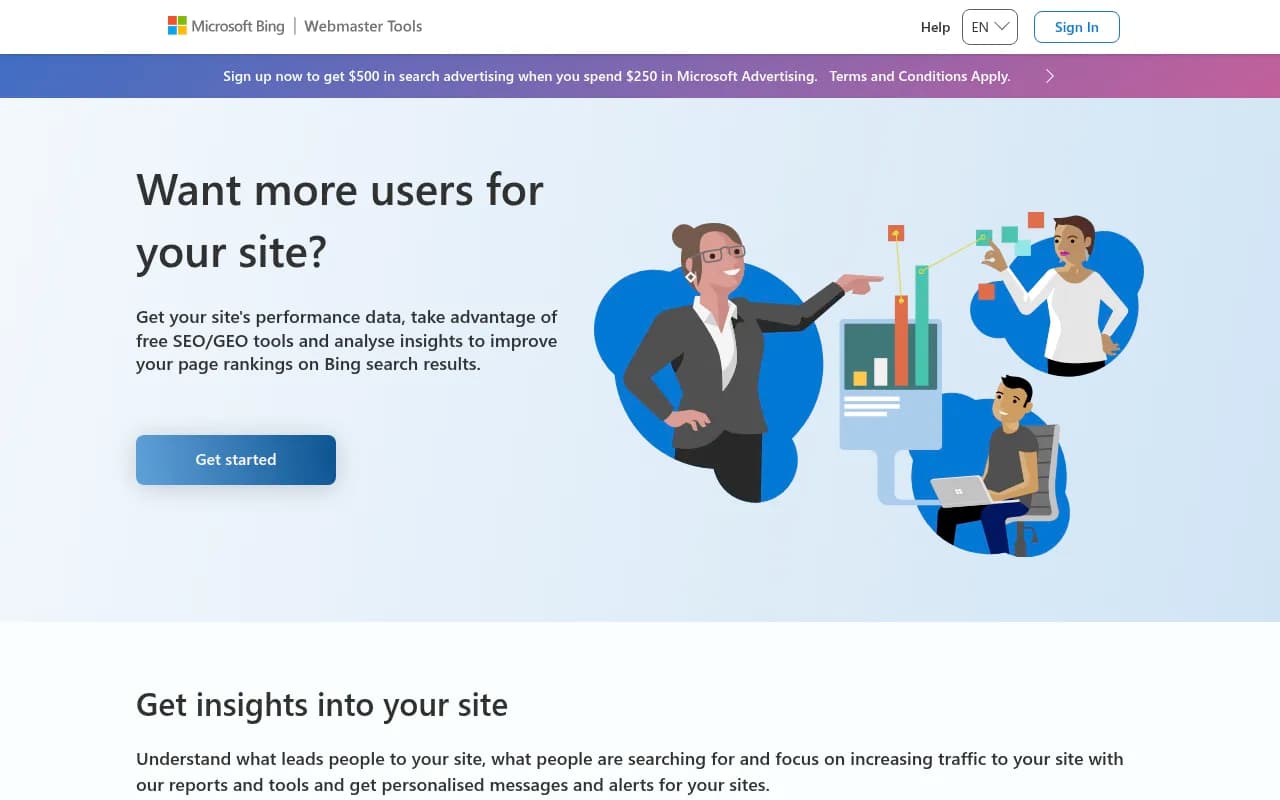
The practical fix: submit pages directly to Bing Webmaster Tools after publishing. It's the fastest way to get new content into Bing's index and, by extension, into ChatGPT's citation pool.
Content types ranked by citation speed
This is where it gets interesting. Not all content formats move through the pipeline at the same rate. Based on citation data and patterns observed across GEO practitioners in 2026, here's a rough ranking from fastest to slowest:
1. FAQ pages and schema-marked Q&A content
FAQ pages with proper FAQPage schema markup are consistently among the fastest-cited content types. The reason is structural: ChatGPT's retrieval system is essentially looking for content that directly answers a question. FAQ pages are pre-formatted to match that pattern.
When you add FAQPage schema, you're giving the model a machine-readable signal that says "this page contains discrete question-answer pairs." That makes it trivially easy to extract and quote.
Citation timeline: days to 2 weeks after Bing indexation, for pages on established domains.
2. Original research and data-backed content
Pages containing original statistics, survey results, or proprietary data get cited disproportionately fast. ChatGPT tends to pull specific numbers when constructing answers -- "X% of companies do Y" -- and if your page is the source of that number, you get the citation.
One data point worth knowing: sites with over 32,000 referring domains are roughly 3.5x more likely to be cited by ChatGPT than lower-authority counterparts, according to SE Ranking's analysis. Authority accelerates citation speed, but original data can punch above your domain's weight class because the model needs a source for the specific claim.
Citation timeline: 1-3 weeks for well-distributed research pieces. Faster if the data gets picked up by third-party sites that link back.
3. Answer-first articles (direct answer in the first paragraph)
The structure of your content matters more than most people expect. Articles that lead with a direct, quotable answer -- rather than burying the conclusion after three paragraphs of context -- get cited faster and more often.
This is sometimes called "answer-first" or "inverted pyramid" writing. The model lifts self-contained sentences. If your answer requires reading five paragraphs to assemble, it won't get cited as cleanly as a page where the answer is in the first two sentences.
Citation timeline: comparable to FAQ pages, assuming Bing indexation is fast. The format advantage is most visible on competitive queries where multiple pages are competing for the citation slot.
4. Comparison and "best of" listicles
"Best [X] tools for [Y]" and "[Tool A] vs [Tool B]" pages get heavy citation traffic in ChatGPT because users ask comparison questions constantly. These pages also tend to attract backlinks naturally, which accelerates both Bing indexation and authority signals.
The catch: this format is saturated. Citation speed is fast, but citation probability is lower because dozens of similar pages exist. The ones that win are usually on high-authority domains or contain genuinely differentiated information (real pricing, hands-on testing notes, recent updates).
Citation timeline: 1-4 weeks for established sites. Longer for new domains competing against entrenched listicles.
5. Standard long-form blog posts
A well-written, comprehensive blog post on an established domain will eventually get cited. But "eventually" is doing a lot of work there. Without the structural advantages of FAQ schema, answer-first formatting, or original data, long-form posts compete on authority and topical relevance alone.
Citation timeline: 2-8 weeks, sometimes longer. Heavily dependent on domain authority and Bing crawl frequency.
6. Product pages and commercial content
Pure product pages -- pricing, features, buy-now CTAs -- get cited less often than informational content. ChatGPT's answers skew toward information synthesis, not purchase facilitation, so commercial pages are at a structural disadvantage.
The exception is ChatGPT's shopping features, where product pages can appear in shopping recommendations. That's a different pipeline with different rules.
Citation timeline: slow and inconsistent for standard informational queries. More predictable for shopping-intent queries if product schema is implemented correctly.
The comparison table
| Content type | Typical citation speed | Key accelerators | Main bottleneck |
|---|---|---|---|
| FAQ + schema markup | Days to 2 weeks | FAQPage schema, direct answers | Bing indexation |
| Original research / data | 1-3 weeks | Third-party pickup, unique stats | Distribution reach |
| Answer-first articles | Days to 2 weeks | Inverted pyramid structure | Domain authority |
| Comparison / listicles | 1-4 weeks | Backlink velocity, authority | Saturation |
| Standard long-form posts | 2-8 weeks | Topical depth, internal links | Crawl frequency |
| Product / commercial pages | Slow, inconsistent | Product schema, reviews | Format mismatch |
What actually moves the needle on citation speed
Bing indexation (non-negotiable)
Submit every new page to Bing Webmaster Tools on publish day. Check that GPTBot and OAI-SearchBot aren't blocked in your robots.txt. These are table-stakes steps that a surprising number of sites skip.
Third-party mentions
This is the counterintuitive one: most pages ChatGPT cites aren't the brand's own domain. Being referenced consistently across other trusted sites -- industry publications, review platforms, Reddit threads, YouTube videos -- is often a faster path to citation than publishing another blog post.
If a Reddit thread discussing your product gets cited, that's visibility. If a comparison article on a high-authority site mentions your tool, that's visibility. Building off-domain presence is not optional.
Schema markup beyond FAQPage
HowTo, Article, Product, and BreadcrumbList schema all help models parse your content structure. HowTo schema is particularly effective for process-oriented content because it breaks instructions into discrete, quotable steps.
Content freshness
ChatGPT's live retrieval layer favors recent content for time-sensitive queries. Updating existing pages with a current date and fresh data can re-trigger crawls and improve citation probability faster than publishing new content from scratch.
Entity consistency
Your brand name, product names, and key claims should appear consistently across your own site and third-party mentions. Inconsistent naming (e.g., "PromptWatch" vs "Prompt Watch" vs "promptwatch.com") creates entity confusion that can reduce citation frequency.
The offsite citation problem most brands ignore
Here's something the pure "optimize your own site" playbook misses: a significant portion of ChatGPT citations come from pages you don't own or control.
Reddit discussions, YouTube videos, Trustpilot reviews, G2 profiles, industry comparison sites -- these are all fair game for ChatGPT's retrieval. If your brand is being discussed positively in these places, you're getting citation credit even when your own domain isn't directly cited.
This means your "citation speed" strategy has two tracks:
Track 1 (onsite): Publish answer-first, schema-marked content on your own domain. Optimize for Bing indexation. Keep content fresh.
Track 2 (offsite): Build presence on the platforms ChatGPT trusts. Encourage reviews. Participate in relevant Reddit communities. Get mentioned in comparison articles. Publish on platforms like LinkedIn or industry newsletters that carry their own authority.
Track 2 often produces faster citation results than Track 1, especially for newer domains that haven't built Bing authority yet.
How to track citation velocity (not just rankings)
Traditional rank tracking tells you where you appear in Google's blue links. That's largely irrelevant for ChatGPT citation analysis. What you actually need to measure:
- Which of your pages are being cited, and by which AI models
- How often your brand appears in AI-generated answers for target prompts
- How long it takes from publish date to first citation (citation velocity)
- Which third-party pages mentioning your brand are getting cited
- When AI crawlers (GPTBot, ClaudeBot, PerplexityBot) visit your pages
Most traditional SEO tools don't track any of this. Promptwatch is built specifically for this problem -- it tracks AI crawler activity in real time, shows page-level citation data across 10 AI models, and connects the timeline from publish to crawl to citation. That's the feedback loop you need to actually improve citation speed rather than guessing.

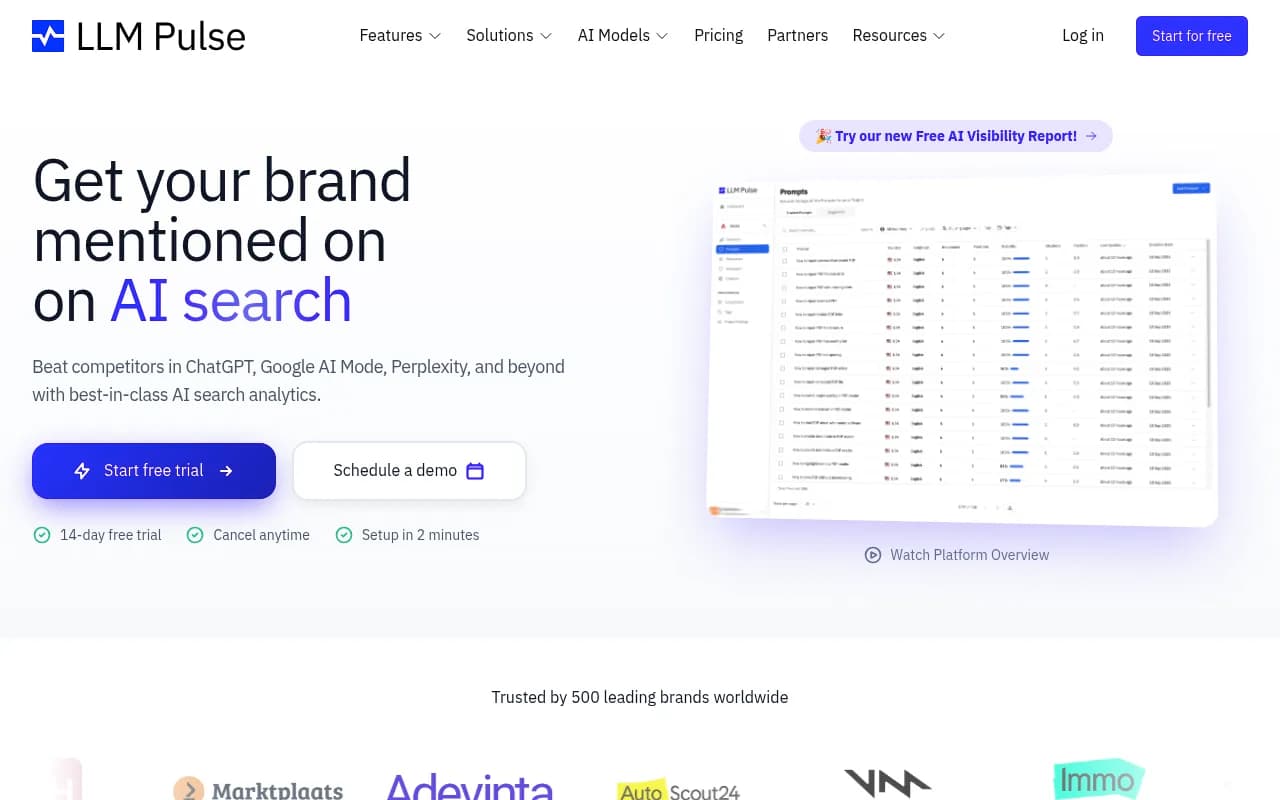
For teams that want to track citation frequency at a basic level, tools like Rankshift and LLM Pulse offer monitoring across ChatGPT and Perplexity.

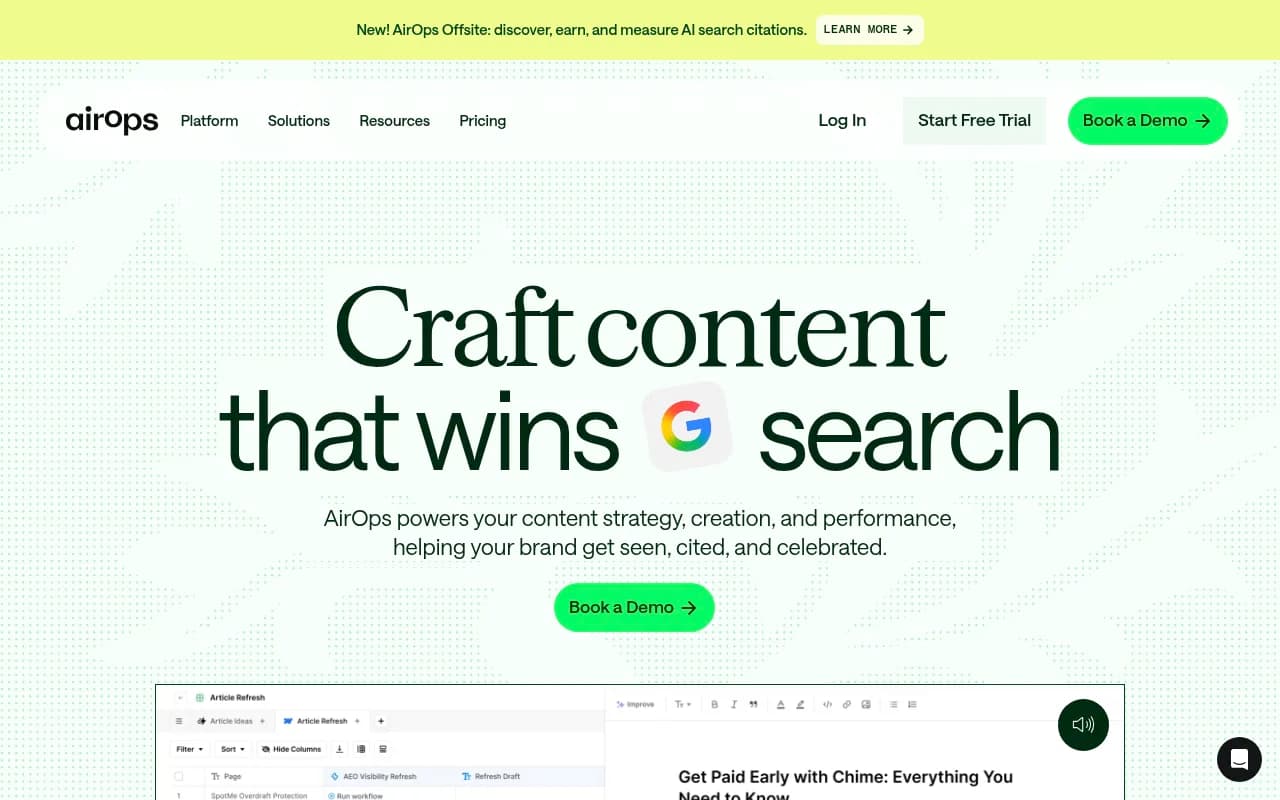
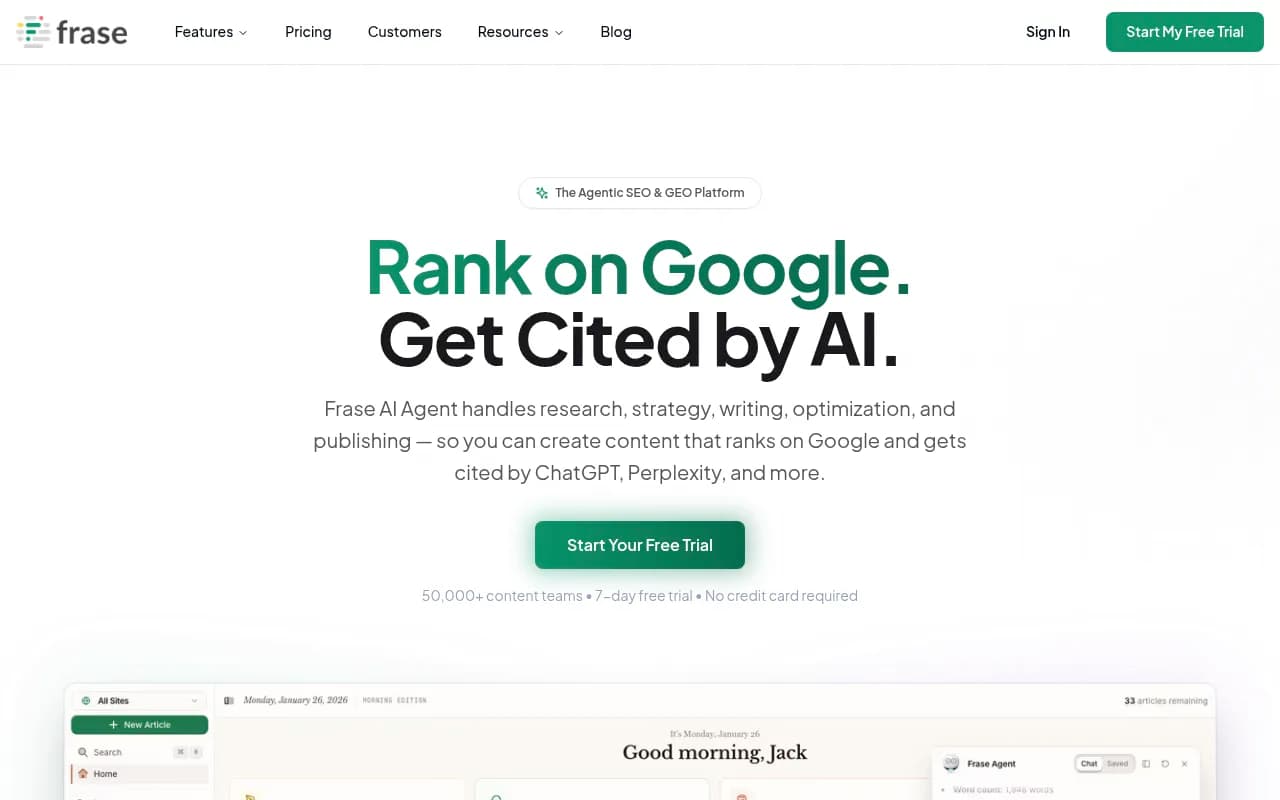
For content creation that's structured to get cited, AirOps and Frase help generate answer-first content grounded in real query data.
A practical workflow for faster citations
Here's a repeatable process that combines the fastest-moving content types with the right distribution:
Step 1: Identify high-value prompts Find the specific questions your target audience is asking ChatGPT. These aren't always the same as your Google keyword targets. Tools that track prompt volumes and query fan-outs help here.
Step 2: Check competitor citations Before writing, see which pages are already getting cited for your target prompts. You're not trying to copy them -- you're trying to understand what format and depth is winning.
Step 3: Write answer-first Lead with the direct answer. Put the most citable sentence in the first paragraph. Add FAQ schema for question-based content. Add HowTo schema for process content.
Step 4: Submit to Bing immediately Don't wait for organic crawl. Submit the URL to Bing Webmaster Tools on publish day.
Step 5: Distribute for third-party pickup Share the content in relevant communities. Reach out to sites that cover the topic. The goal is to get the page mentioned on other trusted domains within the first two weeks.
Step 6: Update existing content If you have older pages on the same topic, update them with fresh data and a current date. This is often faster than waiting for a new page to build authority.
Step 7: Track and iterate Monitor which pages get cited, how quickly, and by which models. Use that data to refine your content format and distribution approach.
The content types that are overrated for citation speed
A few formats get a lot of attention in SEO circles but consistently underperform for ChatGPT citation speed:
Thought leadership opinion pieces: ChatGPT prefers factual, quotable content over opinion. A well-argued essay on industry trends is less likely to get cited than a page with specific statistics.
Heavily visual content: Infographics, image-heavy pages, and video-first content don't translate well to text-based AI retrieval. The underlying text still matters, but if your page is mostly images, there's less for the model to extract.
Gated content: If your best research is behind a form, ChatGPT can't access it. Ungating key findings -- even a summary page -- is worth considering.
Keyword-stuffed thin content: This one should be obvious, but it's still common. Pages that repeat a keyword 40 times without actually answering the question get filtered out quickly. ChatGPT's retrieval is better at detecting low-quality content than Google's traditional ranking algorithm.
The bottom line
Citation speed in ChatGPT is not random. It follows patterns: answer-first structure, FAQ schema, original data, Bing indexation, and third-party distribution all accelerate the timeline from "published" to "cited."
The brands that are winning in AI search right now aren't necessarily publishing more content -- they're publishing smarter content, getting it into Bing faster, and building the offsite presence that AI models trust. That combination, tracked with the right tools, is what turns content investment into measurable AI visibility.
The feedback loop matters as much as the content itself. Without tracking citation velocity, you're flying blind -- publishing into a void and hoping something sticks. With the right monitoring in place, you can see exactly what's working, which formats are getting picked up fastest, and where the gaps are.