Key takeaways
- AirOps is a no-code AI workflow platform built for content teams that need to scale production — not a general GTM or sales tool
- Pricing starts at $200/month (Solo) and jumps to $2,000/month (Pro) for multi-engine AI search visibility, which is steep for most teams
- G2 reviewers rate it 4.6/5, but 54+ of 118 reviews flag a steep learning curve and 21+ cite pricing as too high for the ROI
- The platform takes roughly 1 month to implement and 8 months to see ROI, according to G2 averages
- Several alternatives cover similar ground at lower price points, or go further on AI visibility tracking and content optimization
AirOps has been making noise in the content and SEO space for a couple of years now. It has real customers — Webflow, Ramp, Carta, Chime, Klaviyo — and a 4.6/5 rating on G2. That's not nothing.
But "well-reviewed" and "right for your team" are different questions. After digging through 118+ G2 reviews, Reddit discussions, and practitioner analyses, a more complicated picture emerges. AirOps is genuinely good at what it does. The problem is that what it does is narrower than the marketing suggests, and the pricing structure can catch teams off guard.
This review covers everything: what AirOps actually is, how it works, what it costs (including the parts that aren't obvious), where it breaks down, and which alternatives are worth considering in 2026.
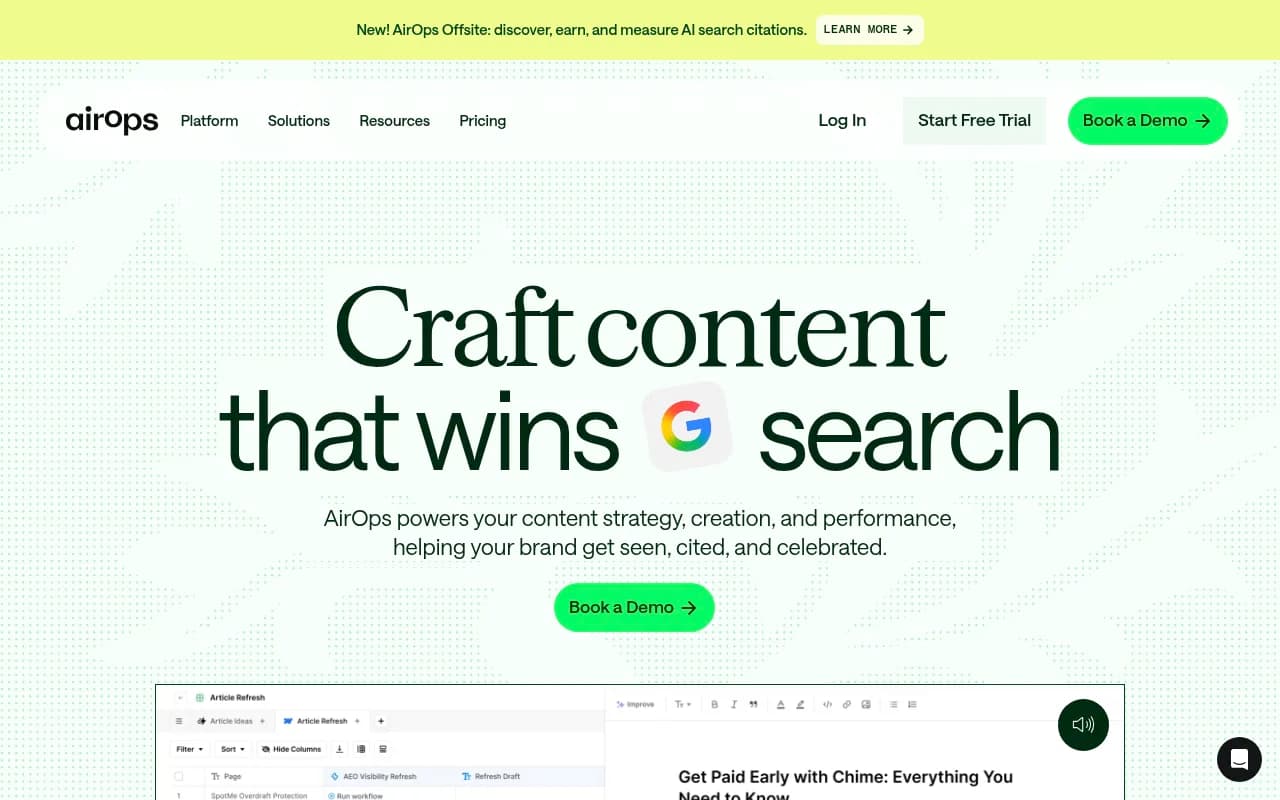
What AirOps actually is
AirOps describes itself as a content engineering platform. More specifically, it's a no-code workflow builder that lets content and SEO teams create automated, multi-step AI pipelines for content production, optimization, and publishing.
Think of it less like a writing assistant and more like a content assembly line. You design the steps — pull data from this source, run it through this AI model, apply these brand guidelines, push the output to this CMS — and AirOps executes them at scale.
The platform has four core components:
- Workflow Builder: A drag-and-drop interface for building multi-step AI pipelines. You can chain together data sources, AI models, and publishing destinations.
- Grids: A spreadsheet-style interface where you can run AI operations across rows of data — useful for bulk content production, URL-level audits, or large-scale content refreshes.
- Brand Kits: Store your tone guidelines, writing samples, and formatting rules so every output stays on-brand. The Solo plan limits you to one brand kit.
- Pages: A publishing layer that connects to WordPress and Webflow for direct CMS output.
More recently, AirOps added an AI search visibility component — an Answer Engine Optimization (AEO) diagnostic tool that shows where your brand appears in AI-generated answers. This is where the pricing gets complicated, which we'll get to.
Who it's actually built for
The honest answer: AirOps is for content and SEO teams that already have a working strategy and need to execute faster.
If your bottleneck is production speed — you have a proven content playbook, established editorial workflows, and a team that thinks in systems — AirOps can meaningfully accelerate output. Agencies managing multiple client SEO campaigns, SEO managers handling large content refresh backlogs, and content teams scaling without adding headcount are the clearest fits.
Who should look elsewhere: teams without a clear content strategy, early-stage companies still figuring out what to publish, GTM or sales teams looking for lead enrichment or outbound tools, and anyone who needs a simple writing assistant rather than a workflow platform.
AirOps will help you produce content faster. It won't tell you what to produce or whether your strategy is sound. And it definitely won't help you prospect, enrich leads, or sync with your CRM — at least not without significant custom work.
AirOps pricing in 2026: what you'll actually pay
This is where a lot of reviews gloss over the details. Here's the full picture:
| Plan | Price | Prompts/tasks | AI search engines | Team seats |
|---|---|---|---|---|
| Solo | $200/month | 20,000 tasks | ChatGPT only | 1 |
| Pro | $2,000/month | 75,000 tasks | Multi-engine | Unlimited |
| Enterprise | Custom | Custom | Full | Custom |
The jump from Solo to Pro is significant. At $200/month, you get AI search visibility tracking — but only for ChatGPT. If you want to track how your brand appears in Perplexity, Google AI Overviews, Claude, Gemini, or other AI engines, you're looking at $2,000/month.
For most content teams, that's the real pricing decision. Single-engine monitoring at $200/month is limiting in a world where buyers are using multiple AI tools. Multi-engine monitoring at $2,000/month is a serious budget commitment that requires clear ROI justification.
There are also operational costs that don't show up in the plan price. The credit/task system means scaling usage can push you toward overages. The platform takes roughly a month to implement properly (per G2 averages), which means staff time before you see any output. And G2 data puts average time-to-ROI at 8 months — which is honest, but worth factoring into your business case.

What AirOps does well
Let's be fair. The platform has genuine strengths that explain its G2 rating.
The workflow builder is genuinely flexible. Once you've climbed the learning curve, you can build sophisticated content pipelines that would otherwise require a developer or a stack of duct-taped integrations. Teams that have invested in setup report meaningful time savings on content refresh cycles and large-scale production runs.
Grids are particularly useful for SEO teams dealing with large URL inventories. Running AI-assisted audits across hundreds of pages, identifying content gaps, or generating briefs at scale — these are real use cases where AirOps earns its keep.
The brand kit system is solid. Maintaining consistent voice across AI-generated content is a genuine problem, and AirOps handles it better than most writing tools.
The AEO diagnostic features — showing where your brand appears in AI answers — are genuinely useful for teams trying to understand their AI search visibility. The limitation is that meaningful multi-engine tracking requires the Pro plan.
Where AirOps falls short
The G2 review data is worth taking seriously here. Out of 118 reviews, 54+ flag learning difficulties and 21+ cite pricing as too steep for the ROI. These aren't just negative reviews — many 4-star and 5-star reviewers raise the same issues.
The learning curve is real
AirOps is not a tool you install and start using. It's a platform you configure. Building effective workflows requires understanding content strategy, SERP analysis, and how to structure AI prompts for consistent output. Non-technical users often struggle. The drag-and-drop interface looks approachable, but the underlying logic requires real investment to get right.
Performance issues at scale
Grids slow down noticeably on datasets over 100 rows. For teams running large-scale content operations, this is a practical limitation that can disrupt workflows.
CMS integration is limited
Direct publishing works for WordPress and Webflow. Shopify isn't supported. Custom CMS setups require workarounds. For e-commerce teams or companies with non-standard tech stacks, this is a real gap.
It's not a GTM platform
AirOps has no lead enrichment, no buying intent signals, no outbound sequence builder, and no native CRM sync below the Pro tier. If you're in sales, RevOps, or running a full GTM motion, you'll need separate tools for those functions.
The AI visibility gap
The AEO features are useful, but they're monitoring-focused. AirOps shows you where you appear in AI answers — but the content generation and optimization workflow isn't as tightly integrated with the visibility data as you might expect. Teams that want to close the loop between "where am I invisible" and "what content do I publish to fix that" may find the workflow requires more manual work than anticipated.
Better alternatives in 2026
Depending on what you actually need, several tools cover similar ground with different tradeoffs.
For AI search visibility and content optimization
If your primary goal is understanding and improving how you appear in AI search engines — and you want a platform that goes beyond monitoring to actually help you fix it — Promptwatch is worth a close look. It tracks visibility across 10 AI models (ChatGPT, Perplexity, Claude, Gemini, Google AI Overviews, Grok, DeepSeek, and more), identifies content gaps where competitors are visible but you're not, and has a built-in AI writing agent that generates content grounded in real citation data. The pricing starts at $99/month for a single site, which is meaningfully more accessible than AirOps' Pro tier.

For content workflow automation
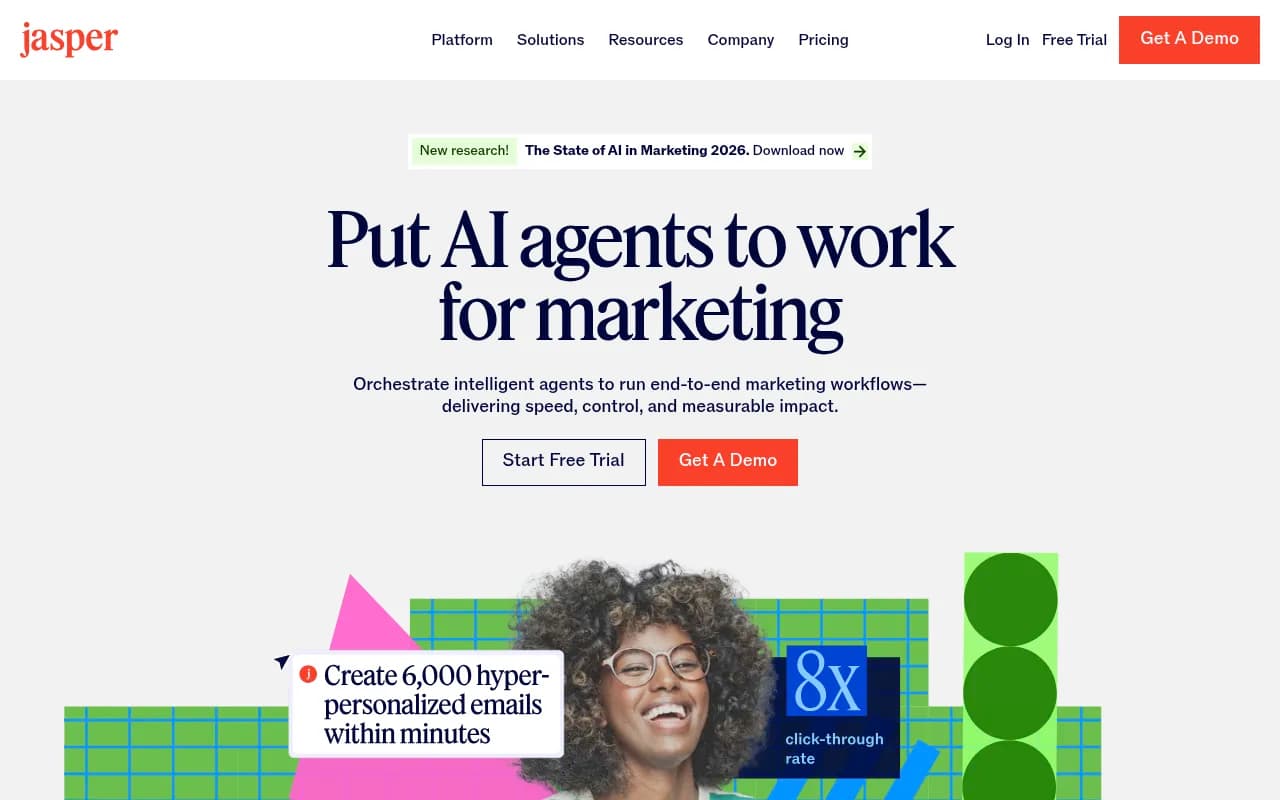
Jasper covers a lot of the same content production ground as AirOps with a gentler learning curve and stronger brand voice controls. It's more of a writing tool than a workflow platform, but for teams that don't need the full pipeline complexity, that's often a feature rather than a limitation.
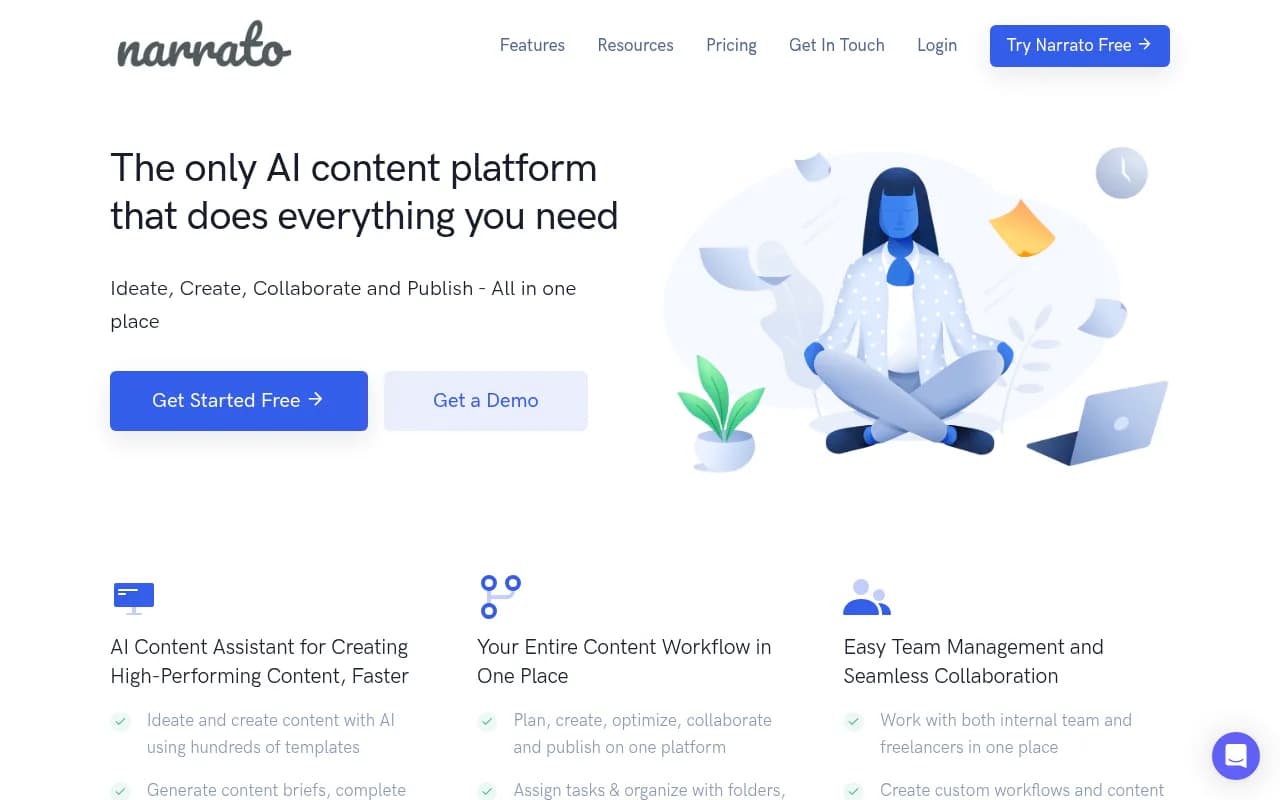
Narrato AI is another solid option for content workflow and creation, particularly for teams that want project management built into the same platform.
For SEO content optimization
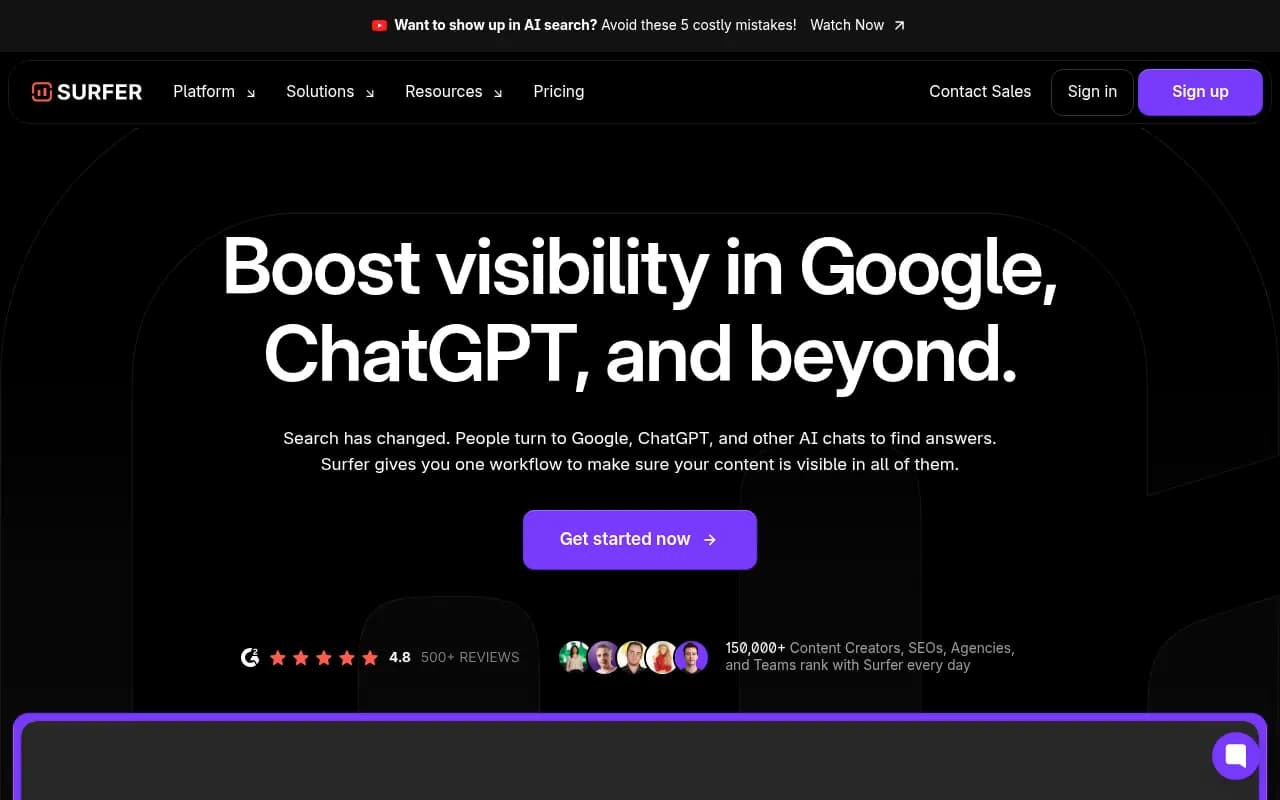
Surfer SEO and Clearscope both handle content optimization well at lower price points. Neither does the full workflow automation that AirOps offers, but if your bottleneck is content quality rather than production speed, they're more focused tools.

For AI visibility tracking specifically
Several platforms focus specifically on tracking brand visibility in AI search engines. Profound is strong at the enterprise end. Otterly.AI covers the basics at a lower price point. AthenaHQ is monitoring-focused with good data.
Profound

Otterly.AI


Feature comparison: AirOps vs alternatives
| Feature | AirOps Solo ($200/mo) | AirOps Pro ($2,000/mo) | Promptwatch Pro ($249/mo) | Surfer SEO | Jasper |
|---|---|---|---|---|---|
| AI workflow builder | Yes | Yes | No | No | Limited |
| Multi-engine AI visibility | No (ChatGPT only) | Yes | Yes (10 engines) | No | No |
| Content gap analysis | Limited | Yes | Yes | No | No |
| AI content generation | Yes | Yes | Yes | Partial | Yes |
| CMS publishing | WordPress, Webflow | WordPress, Webflow | No | No | No |
| Brand kit / voice | 1 kit | Multiple | Yes | No | Yes |
| Crawler / indexing logs | No | No | Yes | No | No |
| Reddit/YouTube insights | No | No | Yes | No | No |
| Starting price | $200/mo | $2,000/mo | $99/mo | $89/mo | $49/mo |
The honest verdict
AirOps is a well-built platform for a specific use case: content teams with established workflows, technical maturity, and budget to match. If that describes your team, the investment can pay off — but plan for a month of setup and eight months before you see clear ROI.
The pricing structure is the biggest friction point. $200/month for single-engine AI visibility monitoring is limiting. $2,000/month for multi-engine monitoring is a significant commitment that requires a clear business case. For teams whose primary need is understanding and improving AI search visibility, there are more accessible options that don't require that kind of budget.
The platform's content workflow strengths are real. The learning curve is also real. And for GTM or sales teams who wandered in looking for a broader automation platform, AirOps will disappoint — it's a content tool, not a revenue operations tool.
If you're evaluating AirOps, the right question isn't "is it good?" (it is, within its scope) but "is this the right scope for what we need?" For pure content production at scale, it's worth a trial. For AI search visibility with a tighter budget, look at what else is on the market before committing to the Pro tier.