Key takeaways
- Google AI Overviews now appear 58% more often in search results, but strong organic rankings no longer guarantee a citation -- the selection criteria are fundamentally different.
- When Google switched to Gemini 3 as the default AI Overviews model in January 2026, 42% of previously cited domains were replaced almost overnight, showing how volatile this channel is.
- The brands getting cited most aren't necessarily the biggest -- they're the ones whose content directly answers the specific questions AI models are trying to resolve.
- Visibility gaps are measurable and fixable: tools like Promptwatch can show you exactly which prompts competitors are appearing for that you're not.
- The fix isn't more content -- it's the right content, structured the right way, targeting the right prompts.
The visibility gap is real, and it's growing
Here's a scenario that's playing out across industries right now. Two competing brands, similar domain authority, similar content volume. One gets cited in Google AI Overviews dozens of times a day. The other barely appears at all.
The difference isn't budget. It's not even content quality in the traditional sense. It's something more specific -- and once you understand it, it becomes fixable.
Google AI Overviews have been expanding fast. According to Search Engine Journal data cited by Rock Salt Marketing, their presence in search results has surged 58% over the past year. That's not a gradual drift -- that's a channel that's becoming central to how people get answers online.
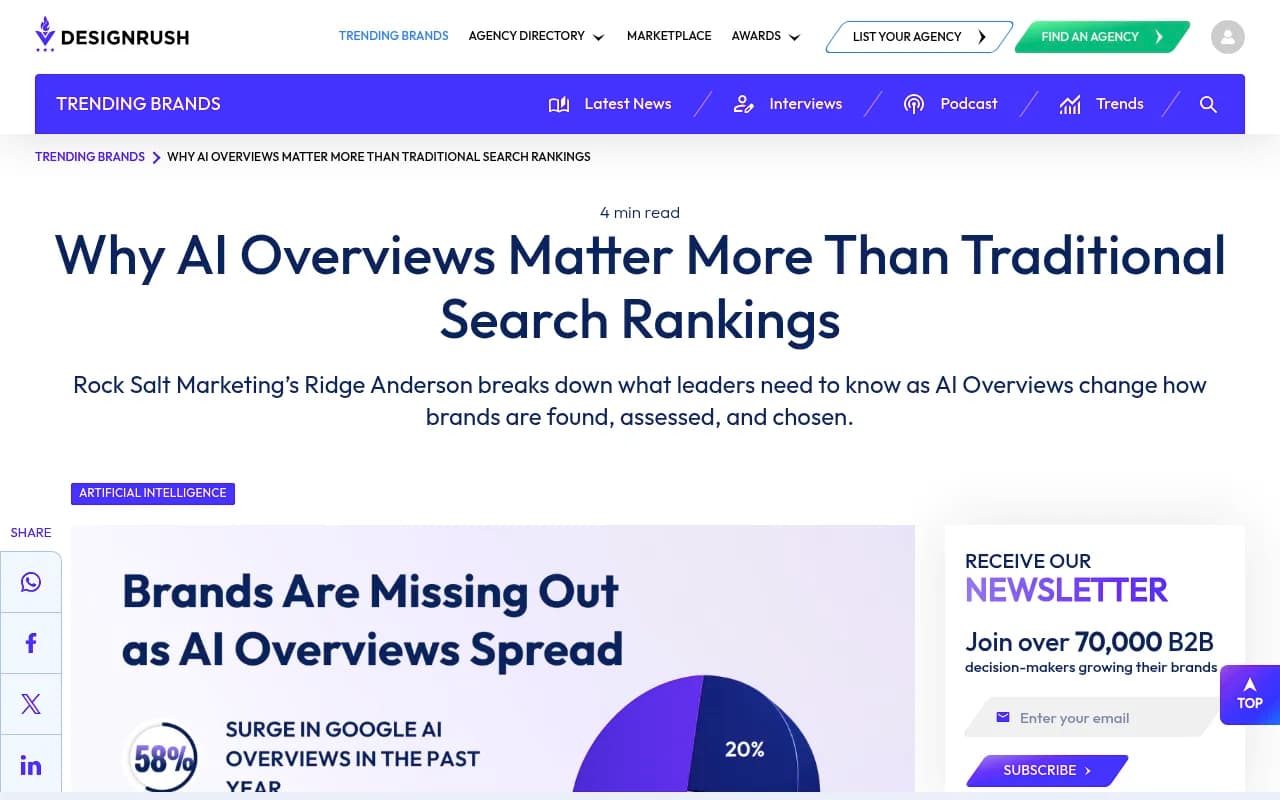
What makes this particularly disorienting for marketers is that the old rules don't apply. A page ranking #1 organically has no guaranteed path into an AI Overview. The model picks its own sources based on its own criteria. And those criteria are not the same as Google's traditional ranking signals.
What changed when Gemini 3 took over
The clearest evidence of how different AI Overviews behave from traditional search came in late January 2026, when Google switched to Gemini 3 as the default model powering AI Overviews.
SE Ranking's research team tracked what happened. The result: 42% of domains that had previously been cited in AI Overviews were replaced. Nearly half the citation pool changed in one model update.
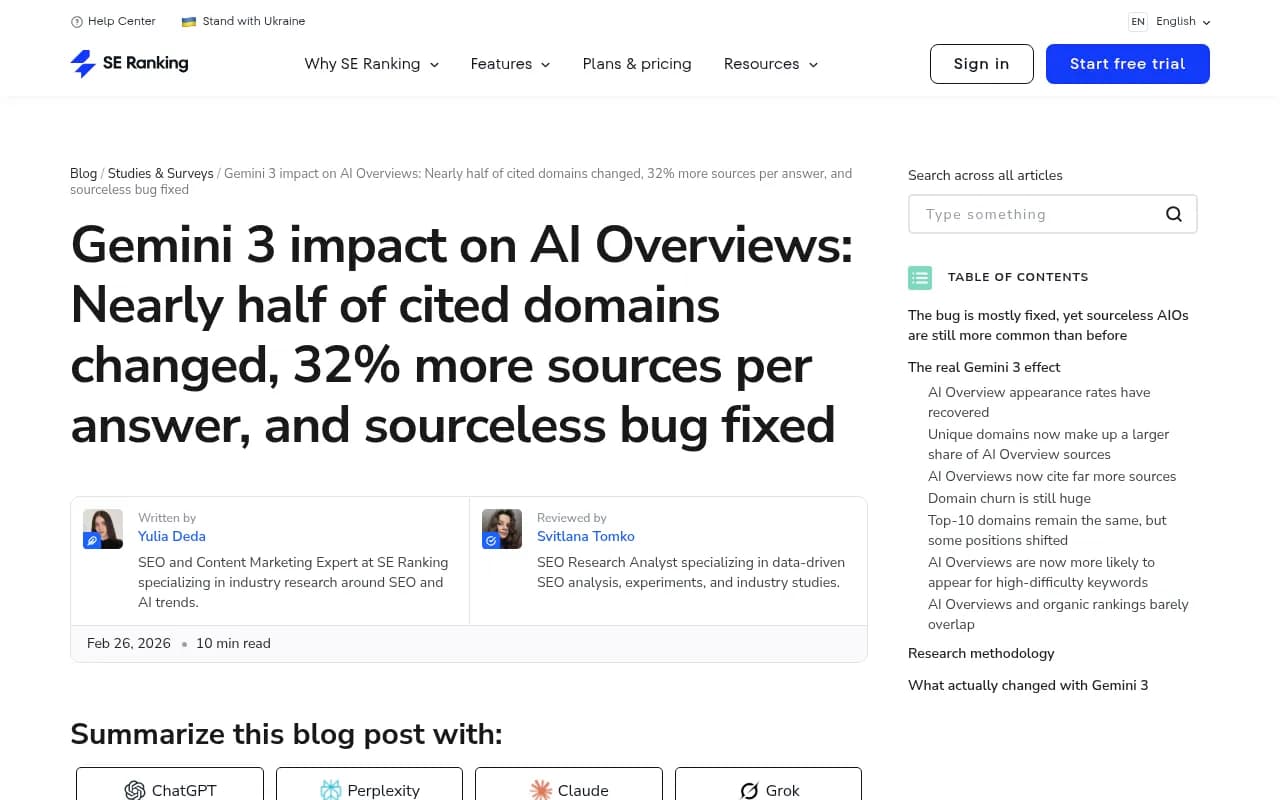
There was also a temporary bug where AI Overviews stopped showing sources entirely -- which made it briefly impossible to tell what Gemini 3 was actually doing vs. what was just broken. Once the bug was fixed in early February, the picture became clearer: Gemini 3 also started pulling from 32% more sources per answer on average.
What this tells you: the brands that were "winning" AI Overview visibility in December 2025 had to re-earn it in February 2026. And they'll probably have to re-earn it again at the next model update. This is not a set-it-and-forget-it channel.
Why traditional SEO signals don't explain the gap
If you've been assuming that your AI Overview visibility roughly tracks your organic search rankings, this is the section to pay attention to.
AI models like Gemini don't rank pages by backlink count or keyword density. They're trying to answer a question. So they look for content that:
- Directly addresses the specific question being asked
- Provides a clear, quotable answer (not buried in paragraphs of preamble)
- Comes from a source the model has learned to associate with reliable information on that topic
- Is structured in a way that makes it easy to extract and summarize
A page with 200 backlinks and a #2 organic ranking can lose to a page with 20 backlinks if the latter actually answers the question better. This is uncomfortable for teams that have spent years optimizing for traditional signals.
It also means the visibility gap between brands isn't random. It's a content gap. The brands getting cited 10x more have content that maps to the specific prompts people are typing into Google. The brands getting ignored don't -- or their content exists but isn't structured in a way that AI models can easily use.
The anatomy of a citation-worthy page
So what does a page that gets cited in AI Overviews actually look like? A few patterns show up consistently:
Direct question-answer structure. Pages that open with a clear, concise answer to the implied question -- before expanding into detail -- get cited more often. AI models want to extract a usable snippet. Give them one.
Topical specificity over breadth. A page that comprehensively covers one narrow question tends to outperform a page that broadly covers a topic area. "What is the average cost of X in 2026" beats a 5,000-word guide that mentions cost somewhere in section four.
Entity clarity. The model needs to understand what your page is about. Clear use of named entities (your brand, your product category, the specific topic) helps the model categorize and retrieve your content appropriately.
Freshness signals. AI models are sensitive to recency, especially for topics where things change. A page last updated in 2023 is at a disadvantage against a page updated in Q1 2026, even if the older page has more backlinks.
Structured data and schema. FAQ schema, HowTo schema, and other structured markup make it easier for AI crawlers to understand and extract your content. This isn't a guarantee of citation, but it removes friction.
The prompt gap: what your competitors know that you don't
Here's the core of the visibility gap problem. Your competitors aren't just ranking for different keywords -- they're appearing in responses to specific prompts that your content doesn't address at all.
Think about how people actually use Google AI Overviews. They're not typing "best CRM software." They're typing "what CRM is best for a 10-person sales team that uses Slack" or "how does HubSpot compare to Salesforce for B2B SaaS companies under 50 employees." These are specific, conversational prompts. And the brands that appear in those responses have content that speaks to those exact questions.
The gap isn't just about content quality -- it's about coverage. If your competitor has a page that directly addresses "how to migrate from [your category] to [their product]" and you don't have an equivalent, they'll appear in that response and you won't. Full stop.
This is why prompt-level analysis matters so much in 2026. You need to know which prompts are driving AI Overview citations in your category, which ones your competitors are appearing for, and which ones you're missing entirely. That's the answer gap -- and it's where the 10x visibility difference actually lives.
Promptwatch is built specifically for this kind of analysis. Its Answer Gap Analysis shows you the exact prompts where competitors are visible but you aren't, so you can see the specific content your site is missing rather than guessing.

How the citation gap compounds over time
One thing that makes this problem worse: AI visibility tends to compound. A brand that gets cited frequently builds a stronger association in the model's training data and retrieval patterns. The more often you're cited, the more likely you are to be cited again.
The reverse is also true. A brand that's consistently absent from AI responses starts to look -- from the model's perspective -- like it's not a relevant source for that topic. This isn't a formal penalty, but the practical effect is similar.
This is why brands that ignore AI Overview visibility now are likely to find it harder to break in later. The gap between the brands being cited and the ones being ignored is widening, not narrowing.
Tools for measuring and closing the gap
You can't fix what you can't measure. Here's a practical toolkit for understanding and improving your Google AI Overview visibility:
Tracking your current visibility
Before you can close the gap, you need to know how big it is. That means running your target prompts through Google and recording when you appear vs. when competitors appear.
SE Ranking has done some of the most detailed public research on AI Overviews behavior (their Gemini 3 analysis is worth reading in full). Their platform also includes AI Overview tracking features.
Semrush has added AI Overview tracking to its platform, though it uses fixed prompt sets rather than custom prompts -- useful for benchmarking but less flexible for deep gap analysis.
Otterly.AI

Otterly.AI tracks brand mentions across AI Overviews and other AI search engines. It's a solid monitoring tool, though like most trackers it shows you the data without helping you act on it.
Finding the content gaps
This is where most tools stop short. Knowing you're not being cited is the easy part. Knowing exactly what content to create to fix it is harder.
Promptwatch's Answer Gap Analysis goes further than monitoring -- it shows you the specific prompts where competitors are visible and you're not, then its built-in AI writing agent can generate content engineered to fill those gaps. The content it produces is grounded in citation data from 880M+ analyzed citations, not generic SEO templates.
Ahrefs has added Brand Radar features for AI search tracking, though its prompt sets are fixed and it lacks AI traffic attribution -- useful as a supplementary data source.
Creating content that gets cited
Once you know the gaps, you need to fill them with content that AI models will actually want to cite.
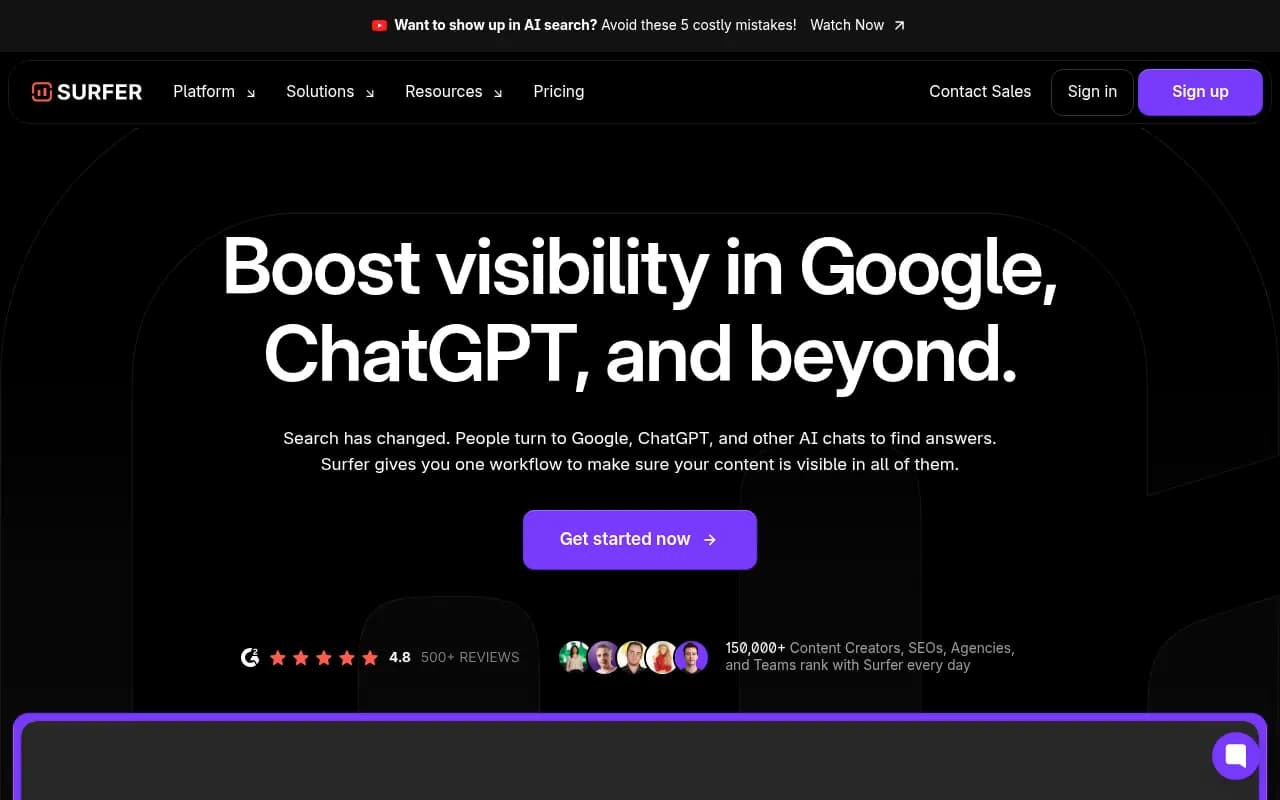
Surfer SEO helps optimize content structure and topical coverage, which matters for AI citation as much as traditional ranking.
MarketMuse's content intelligence platform is good for identifying topical gaps and building content that covers a subject comprehensively -- both signals that AI models respond to.
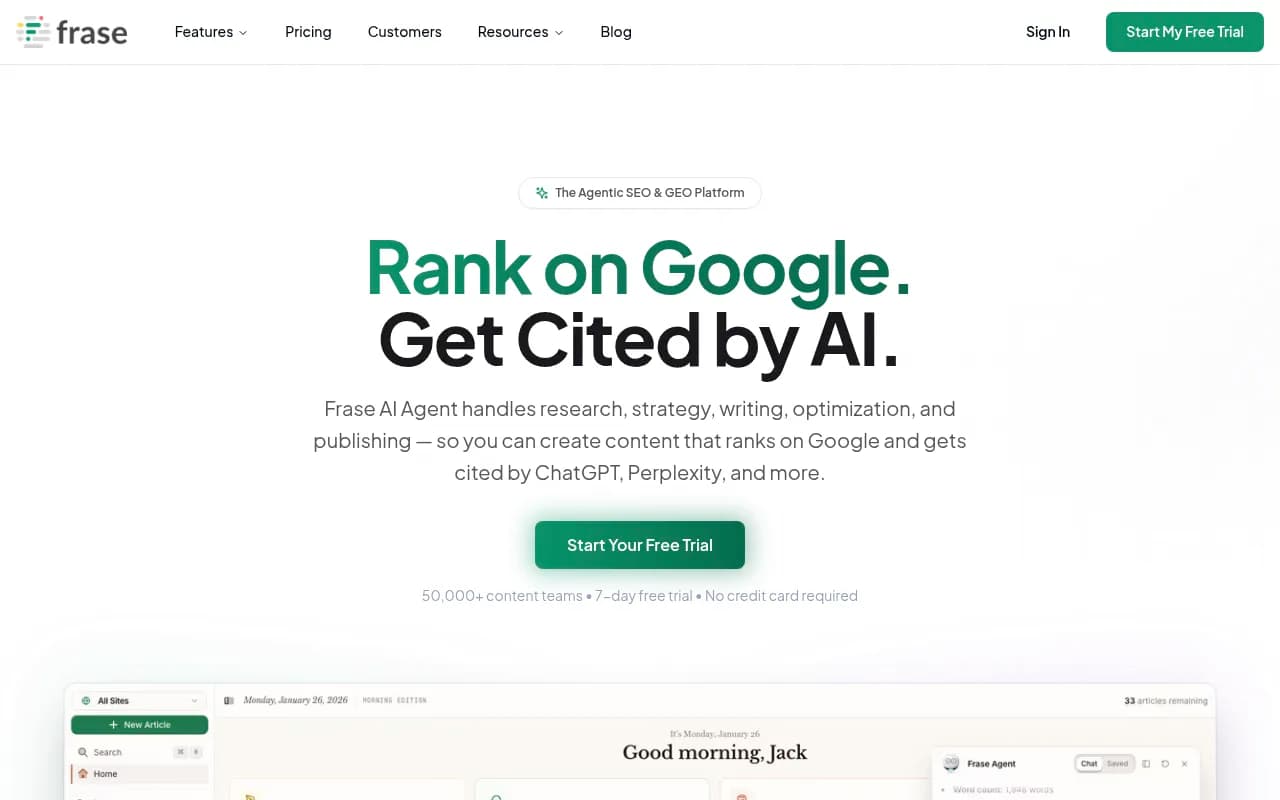
Frase is useful for building content briefs around specific questions, which maps well to how AI Overviews select sources.
A comparison of approaches to AI Overview visibility
| Approach | What it tells you | What it doesn't tell you | Best for |
|---|---|---|---|
| Manual prompt testing | Exactly what AI says for specific queries | Scale -- you can only test so many prompts | Quick spot-checks |
| Monitoring-only tools (Otterly, Peec.ai) | Whether you're being cited | Why you're not, or what to do about it | Baseline tracking |
| Traditional SEO platforms (Semrush, Ahrefs) | Organic rankings + some AI tracking | Deep prompt analysis, content gap specifics | Teams already using these tools |
| Dedicated GEO platforms (Promptwatch) | Citation gaps, competitor visibility, prompt volumes | N/A -- most comprehensive option | Teams serious about AI visibility |
| Manual content audits | What content you have | What prompts it maps to | Content strategy planning |
What to actually do this quarter
If you're looking at your AI Overview visibility and wondering where to start, here's a practical sequence:
Step 1: Map the prompts that matter in your category. Don't start with your brand name. Start with the questions your customers are actually asking when they're in buying mode. "Best [category] for [use case]", "how to choose [product type]", "[your category] vs [alternative]" -- these are the prompts that drive decisions.
Step 2: Run those prompts and record who gets cited. Do this manually at first. You'll quickly see patterns: certain competitors appearing consistently, certain content types getting cited, certain question formats that seem to trigger AI Overviews more reliably.
Step 3: Audit your existing content against those prompts. For each prompt where you're not appearing, ask: do we have a page that directly answers this? If yes, is the answer clearly stated near the top? If no, that's your content gap list.
Step 4: Prioritize by prompt volume and competitive difficulty. Not all gaps are equal. Focus first on high-volume prompts where competitors are appearing but the competition isn't overwhelming. These are the fastest wins.
Step 5: Create content specifically for the gap. Not repurposed blog posts. Not expanded category pages. Specific pages that directly answer specific prompts, structured to be easily cited. Short, clear answers first -- then supporting detail.
Step 6: Track and iterate. AI Overview visibility can change with model updates (as the Gemini 3 transition showed). Build a monitoring habit so you know when your visibility changes and why.
The bigger picture
The 10x visibility gap between brands in AI Overviews isn't a mystery. It's a content coverage problem combined with a structural problem. The brands winning have more content that directly maps to the prompts people are using, and that content is structured in a way that makes it easy for AI models to extract and cite.
The good news: this is fixable. Unlike some SEO advantages (domain authority, link profiles) that take years to build, content gaps can be closed in weeks if you know exactly what to create. The key is knowing which prompts to target -- and that requires better data than most brands currently have.
The Gemini 3 transition was a reminder that this channel will keep evolving. Brands that build systematic processes for tracking, analyzing, and responding to AI Overview visibility changes will maintain their advantage through future model updates. Brands that treat it as a one-time optimization will keep getting surprised.