Key takeaways
- ChatGPT doesn't "rank" brands the way Google does — it assembles answers from sources it can verify. If your brand is hard to verify, it gets skipped.
- The core problem is a lack of entity clarity and third-party corroboration, not content volume.
- Fixing AI visibility requires a specific sequence: audit what AI says about you, build entity signals, create third-party proof, restructure your content, track AI crawler behavior, and measure results.
- Most monitoring tools only show you the problem. The fix requires actually creating content that closes the gaps.
- ChatGPT has an estimated 800M–1B weekly active users in 2026. This is not a future problem.
Someone on your buying team just opened ChatGPT and typed: "What's the best platform for [your exact category]?"
ChatGPT answered. Confidently. With a short list of recommendations.
Your brand wasn't on it.
This is happening to thousands of companies right now, and most of them have no idea. They're still optimizing title tags and building backlinks while a growing share of their potential customers are getting vendor recommendations directly from an AI that has never heard of them.
The uncomfortable part isn't that AI search exists. It's that the AI isn't wrong, exactly. It's just working with incomplete information — and your competitor gave it better information.
Here's what's actually going on, and what you can do about it.
Why ChatGPT recommends your competitor (the real reason)
The instinct most marketers have is: "We need more content." That's not quite right.
ChatGPT isn't doing SEO-style ranking. It's doing something closer to trust assembly. When someone asks it to recommend a vendor, it pulls from sources it can parse, cross-reference, and confidently summarize. It needs to be able to verify that a brand exists, does what it claims, and is recognized by others.
Your competitor keeps showing up because they're easier to verify — not necessarily because they're better.
A few things drive this:
Entity clarity. Does every mention of your brand across the web use the same name, the same category description, the same positioning? If your website calls you a "B2B SaaS platform," your LinkedIn says "enterprise software," and a press release calls you a "workflow automation tool," AI models struggle to build a coherent picture of what you actually are.
Third-party corroboration. ChatGPT draws heavily from Reddit discussions, news coverage, comparison articles, and community mentions. If the only place your brand appears is your own website, the AI has nothing to triangulate. Your competitor probably has Reddit threads where users compare them to alternatives, a few "best of" listicles, and some forum mentions. That's what gets them cited.
Machine-readable content. Pages that AI can extract cleanly — clear headings, FAQ sections, tables, plain-language claims — get weighted more heavily in practice. A beautifully designed JavaScript-heavy homepage that loads in 3 seconds is nearly invisible to AI crawlers.
Recency. AI models, especially those with web access like Perplexity and ChatGPT's browsing mode, weight fresh signals. A competitor who published a comparison article last month has an edge over your evergreen content from 2022.
As one analysis from ReddiReach put it: "ChatGPT isn't 'choosing' your competitor. It's failing to verify you."
The 6-step fix
Step 1: Run an honest audit of your current AI visibility
Before you fix anything, you need to know what AI models actually say about you right now.
Open ChatGPT, Perplexity, and Google AI Overviews. Ask the prompts your buyers would realistically use: "What's the best [your category] for [your use case]?" "Who are the top [your category] vendors?" "Compare [your brand] vs [competitor]."
Write down what you find. Are you mentioned at all? When you are mentioned, is the description accurate? Are there factual errors? Which competitors keep appearing?
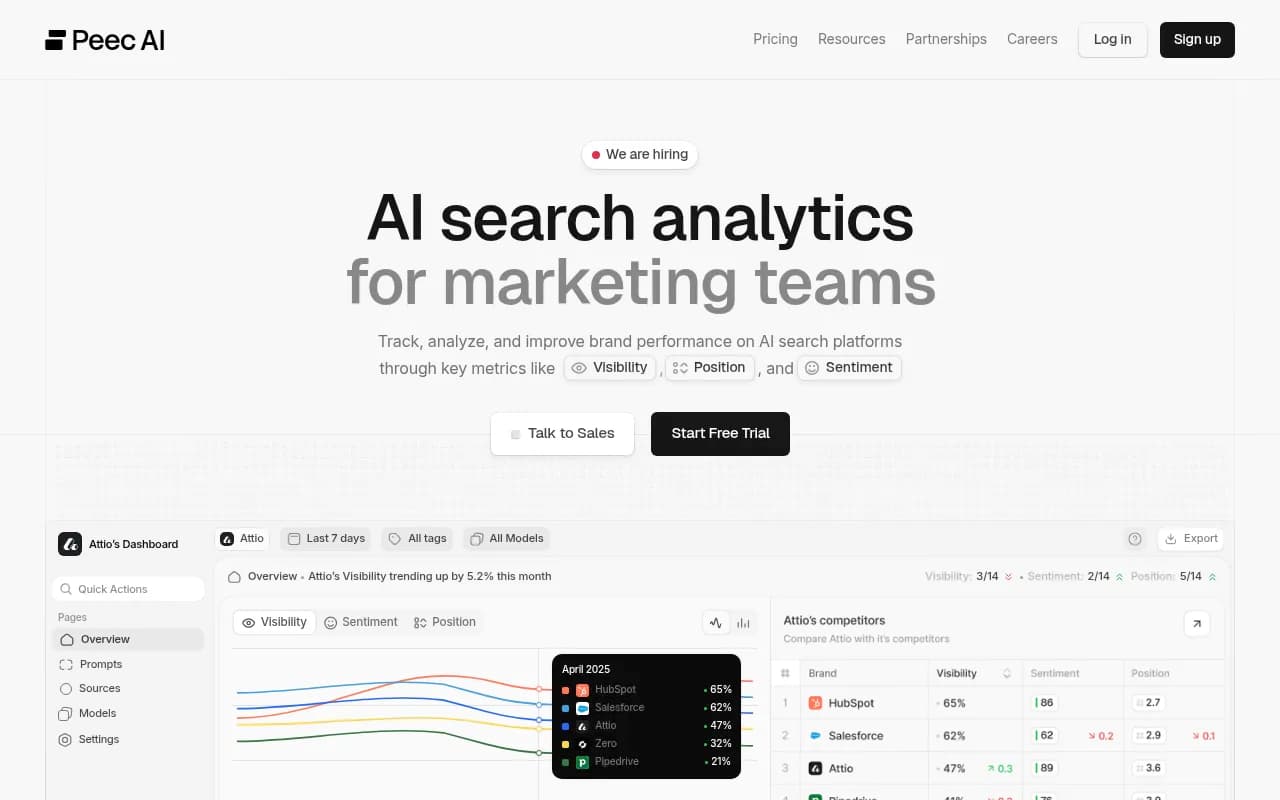
This manual check gives you a baseline, but it's slow and doesn't scale. For ongoing tracking across multiple AI engines and dozens of prompts, tools like Promptwatch track exactly which prompts you appear in, which competitors are beating you, and what the AI says when your name comes up.

Other tools worth knowing for basic monitoring:
Otterly.AI


The audit answers the most important question: where specifically are you invisible?
Step 2: Fix your entity signals
This is the unglamorous work that most brands skip, and it's probably the highest-leverage thing you can do.
AI models build a mental model of your brand from structured and semi-structured data across the web. If that data is inconsistent, incomplete, or contradictory, you get deprioritized.
Practically, this means:
- Pick one canonical name for your brand and use it everywhere. If you go by an acronym sometimes and a full name other times, standardize.
- Write a single clear category sentence ("X is a [category] that helps [audience] do [outcome]") and use it consistently across your website, LinkedIn, Crunchbase, G2, Capterra, and any other profile.
- Make sure your Wikipedia page exists if you're large enough to warrant one. If not, ensure your Wikidata entry is accurate.
- Claim and complete your Google Business Profile, even if you're B2B.
- Add structured data markup (schema.org Organization schema at minimum) to your homepage.
The goal is to make it trivially easy for an AI model to understand: this brand exists, this is what it does, this is who it serves.
Step 3: Build third-party proof where AI models actually look
Your website is not enough. AI models need to see your brand mentioned and discussed outside your own domain.
The channels that matter most:
Reddit. ChatGPT draws heavily from Reddit. If there are no Reddit threads mentioning your brand in relevant subreddits, you're essentially invisible to one of ChatGPT's most trusted sources. The fix isn't to spam Reddit — it's to participate genuinely in communities where your buyers hang out. Answer questions. Mention your tool when it's relevant and you're transparent about your affiliation. Encourage customers to share their experiences.
Comparison and "best of" listicles. When someone searches "best [category] tools," the articles that rank on Google tend to also get cited by AI. Getting listed on G2, Capterra, and Product Hunt helps. Getting mentioned in independent comparison articles helps more. Reach out to writers and publications that cover your space.
Press and news mentions. Even a single mention in a relevant trade publication gives AI models a credible third-party signal. This doesn't require a PR firm — a well-timed data study, a contrarian opinion piece, or a guest post on an industry blog can do it.
YouTube. Perplexity and some ChatGPT responses cite YouTube content. If there are no videos reviewing or discussing your product, that's a gap.
The question to ask for each channel: "If someone were trying to verify that my brand is real and credible, would they find anything here?"
Step 4: Restructure your content for AI extraction
Most websites are built for human readers, which is fine. But AI models parse content differently. They look for clear, extractable answers to specific questions.
A few structural changes that make a real difference:
Add FAQ sections to key pages. Literally write out the questions your buyers ask and answer them in plain language. "What does [your product] do?" "Who is [your product] for?" "How does [your product] compare to [competitor]?" These get pulled directly into AI responses.
Use clear heading hierarchies. H1, H2, H3 in a logical structure. AI models use headings to understand what a page is about and to extract relevant sections.
Write explicit comparison content. "How [your brand] compares to [competitor]" pages are among the most cited content types in AI responses. If you don't write this content, your competitor will — and their version will be the one AI cites.
State your claims plainly. "We integrate with Salesforce, HubSpot, and Slack" is more extractable than "We connect with your existing tech stack." Specific, concrete, verifiable claims get cited. Vague marketing language gets ignored.
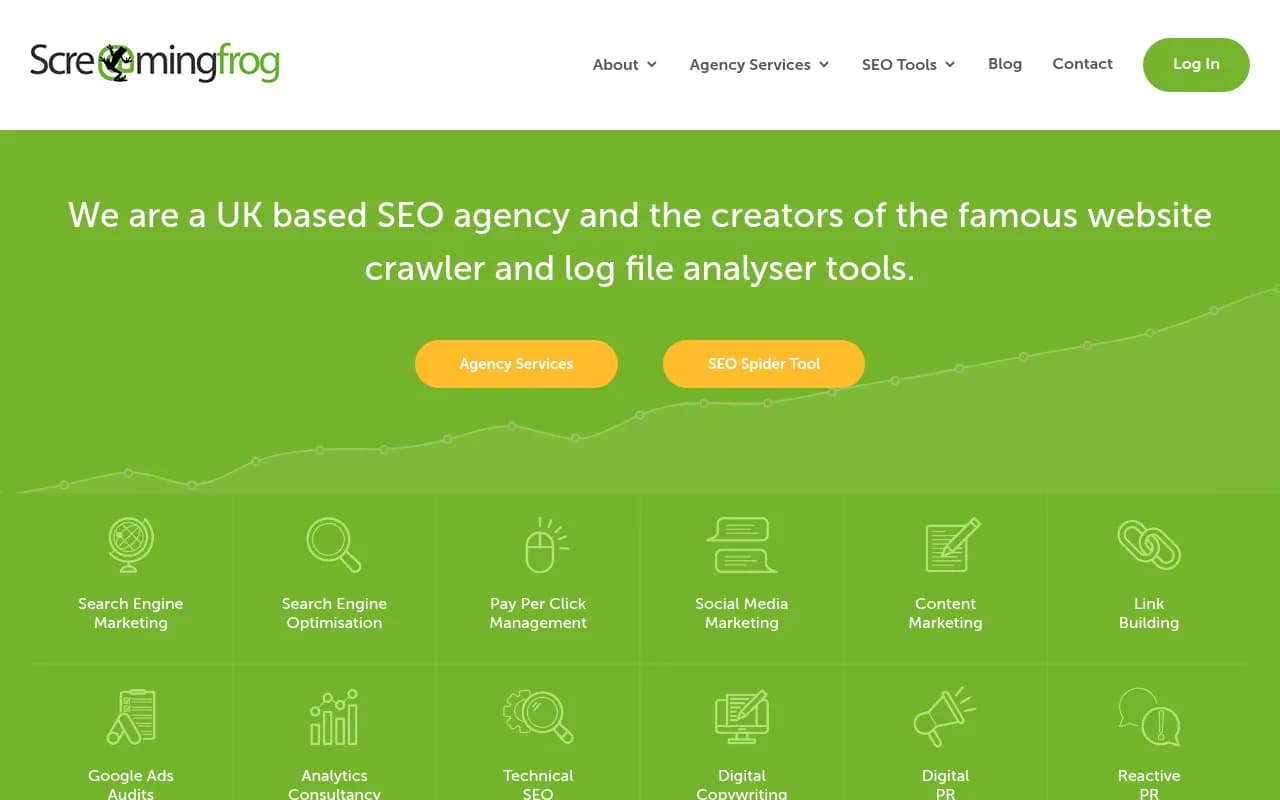
Fix technical crawlability. If your site relies heavily on JavaScript rendering, AI crawlers may not see your content at all. Check your robots.txt to make sure you're not accidentally blocking AI crawlers (GPTBot, ClaudeBot, PerplexityBot). Tools like Screaming Frog can surface crawlability issues quickly.
Step 5: Create content that closes specific gaps
Once you know which prompts your competitors are winning and you're not, you can create content specifically designed to close those gaps.
This is different from general content marketing. You're not writing for traffic. You're writing to answer the specific questions AI models are already synthesizing answers to — and currently pulling from your competitor's content instead of yours.
For example: if a competitor keeps getting cited when someone asks "best [category] for enterprise teams," and you serve enterprise teams, you need content that explicitly and credibly answers that question. Not a blog post that vaguely mentions enterprise. A page that directly addresses enterprise use cases, with specific features, customer examples, and clear positioning.
The content types that tend to perform best in AI citations:
- Direct comparison pages ("X vs Y")
- Use-case specific landing pages ("X for [specific industry/role]")
- FAQ and "how it works" pages
- Original research and data studies
- Customer case studies with specific, quotable outcomes
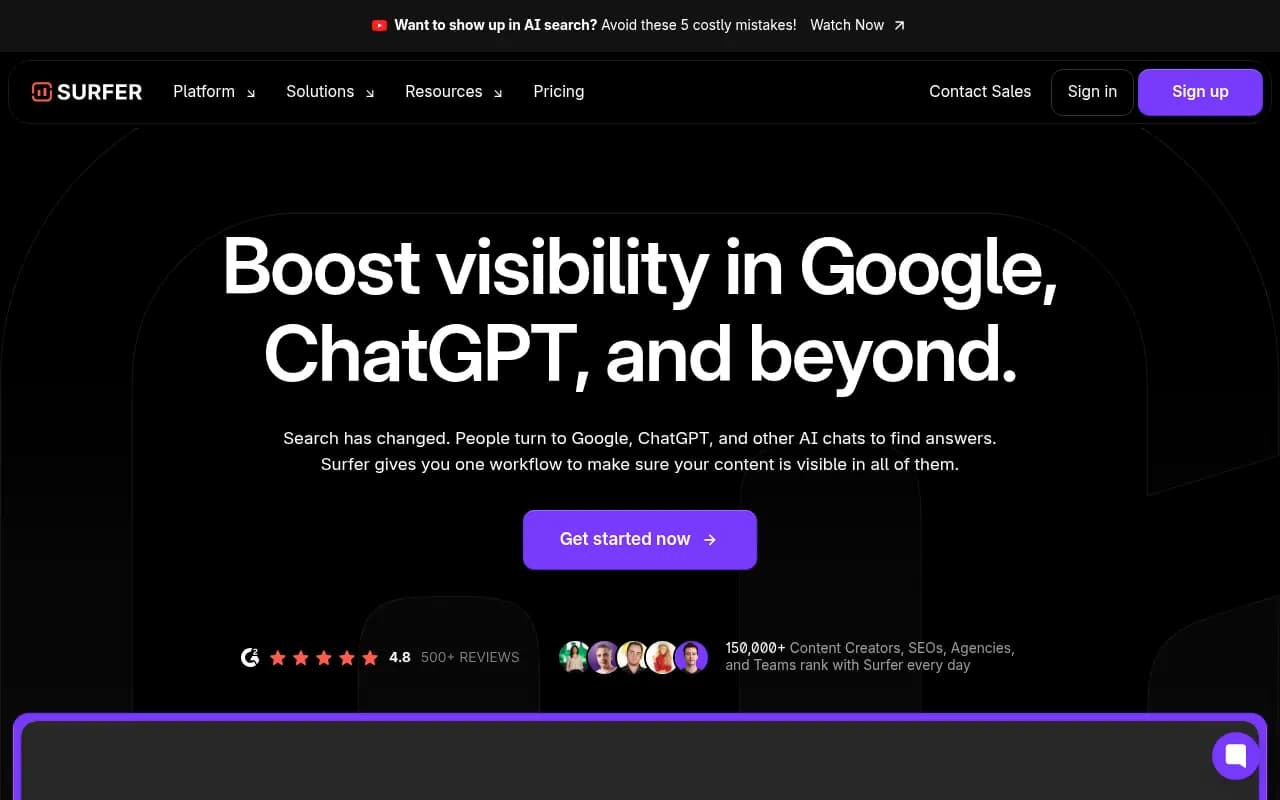
Platforms like Surfer SEO can help you optimize content structure for both traditional and AI search.
For content briefs grounded in actual prompt data and competitor citation analysis, Promptwatch's Content Agents generate articles specifically engineered to close AI visibility gaps — not generic SEO filler.
Step 6: Track AI crawler behavior and measure what's working
This is where most brands fall short. They make changes and have no idea whether those changes are working.
AI visibility is measurable, but you need the right instrumentation.
At minimum, track:
- Which prompts you appear in (and which you don't)
- Which AI models cite you (ChatGPT vs Perplexity vs Google AI Overviews may give very different results)
- Which specific pages on your site are being cited
- When AI crawlers visit your site and which pages they read
That last point is underappreciated. GPTBot, ClaudeBot, and PerplexityBot all crawl the web. Knowing which pages they're reading — and which they're skipping — tells you a lot about what's working. If a crawler visits your comparison page but you're still not getting cited, the content probably needs work. If a crawler never visits a page, it may have a technical issue.
Promptwatch's crawler log analysis shows exactly which AI agents are hitting your site, which pages they read, and the timeline from crawl to citation. Most monitoring-only tools don't have this.
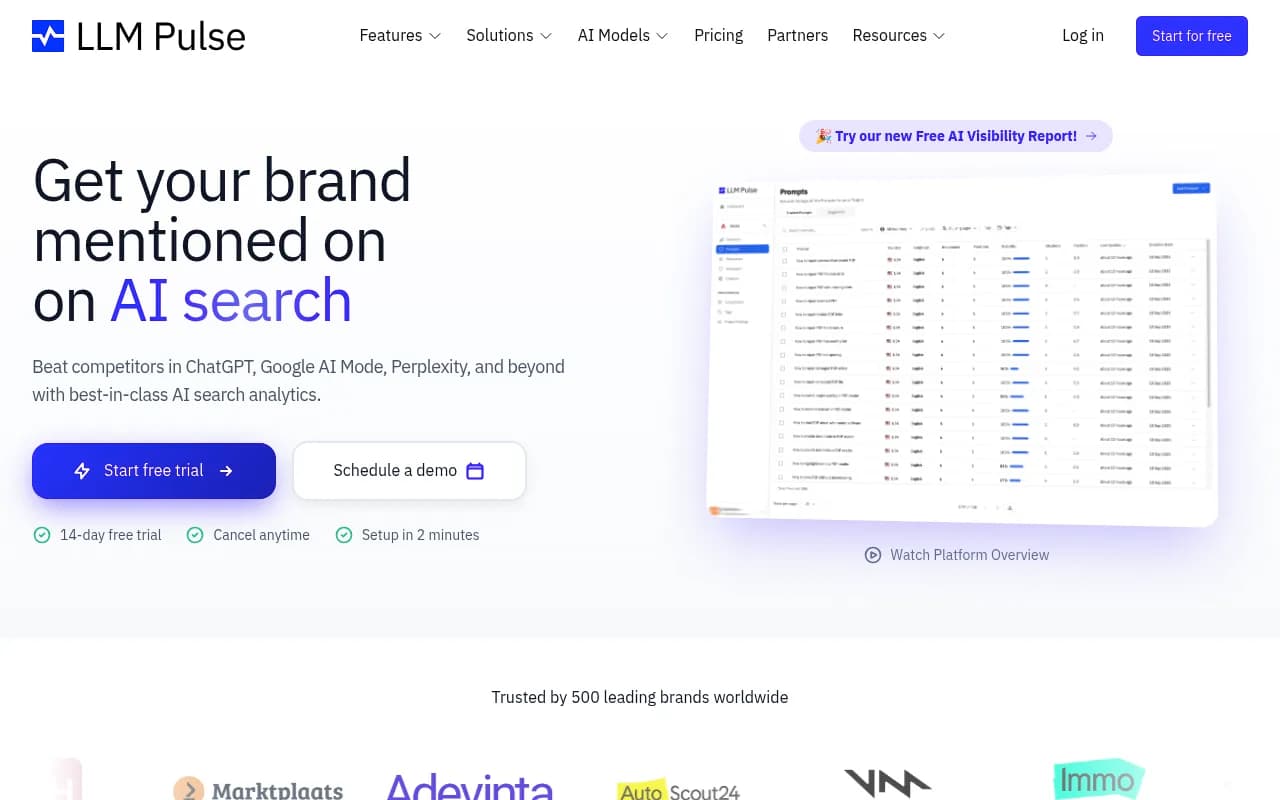
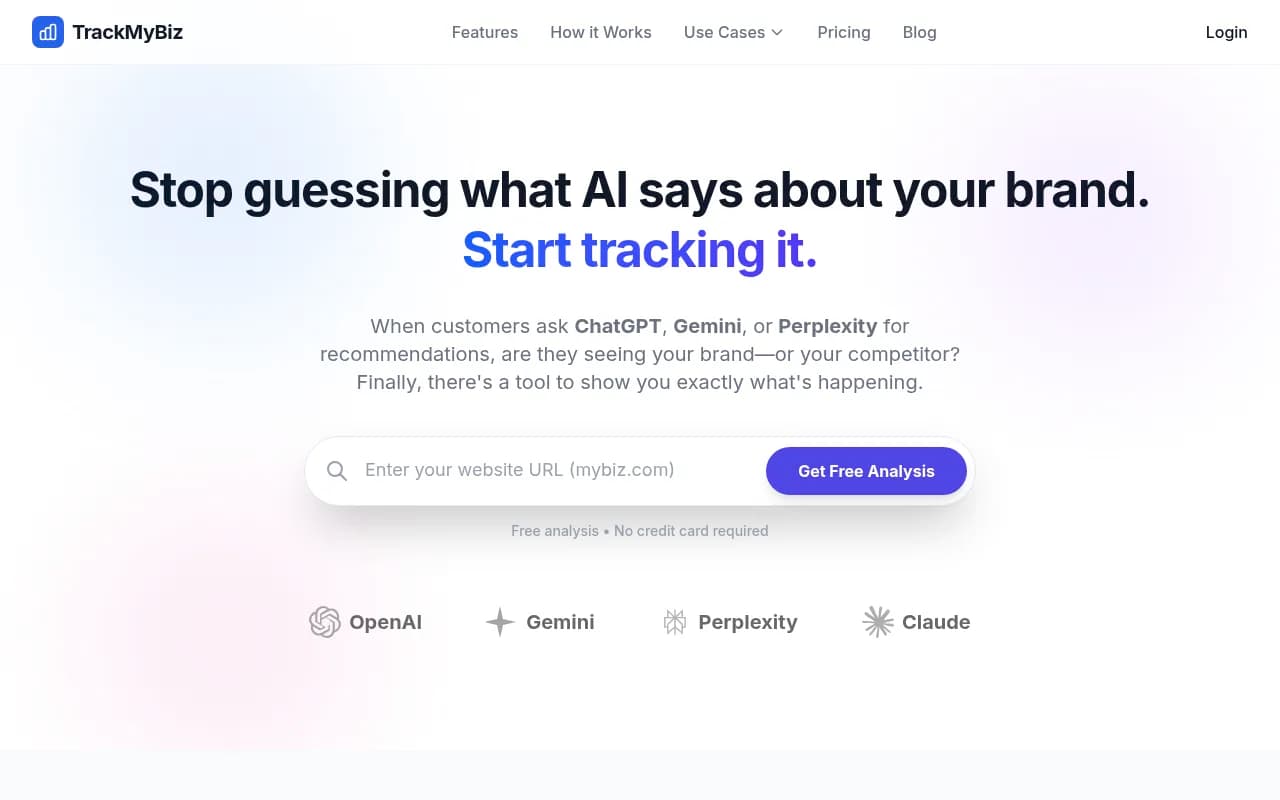
For teams that want a broader view of AI visibility without the full platform commitment, tools like LLM Pulse and TrackMyBusiness offer lighter-weight tracking.
How the tools compare
Here's a quick look at how the main AI visibility tools stack up for this specific problem:
| Tool | Monitors AI visibility | Content gap analysis | Content generation | Crawler logs | Pricing starts |
|---|---|---|---|---|---|
| Promptwatch | Yes (10 models) | Yes | Yes | Yes | $99/mo |
| Otterly.AI | Yes | No | No | No | ~$49/mo |
| Peec AI | Yes | No | No | No | ~$49/mo |
| Rankshift | Yes | No | No | No | ~$29/mo |
| Profound | Yes | Limited | No | No | $500+/mo |
| Surfer SEO | Traditional + AI | Yes | Yes | No | $89/mo |
The pattern is clear: most tools stop at monitoring. They show you that you're invisible but don't help you fix it. If you're serious about improving your AI visibility rather than just watching it, the tool needs to support the full loop: find gaps, create content, track results.
A note on timeline
Don't expect overnight results. When you publish new content, AI models need to crawl it, index it, and then start incorporating it into responses. The timeline from publish to citation typically runs 2–8 weeks depending on the model and how frequently it updates.
That's actually useful information: if you publish a comparison page and see GPTBot crawl it within a week but still no citations after 6 weeks, the content probably needs to be stronger. If you see citations start appearing within 3 weeks, you've found a format that works.
The brands winning in AI search right now aren't doing anything exotic. They have clear entity signals, genuine third-party mentions, well-structured content that answers specific questions, and they're tracking what's working. That's it.
The brands losing are the ones who assumed AI search would sort itself out, or that their existing SEO would carry over automatically.
It doesn't. But the fix is more straightforward than most people think.