Key takeaways
- Surfer SEO is the closest like-for-like alternative: SEO-grounded content optimization with its own AI writing layer, and it now tracks AI search visibility too. Better for teams that want deep SERP analysis baked into the writing workflow.
- Frase is the best pick if you want research-first content creation at a lower price point ($39/mo vs. ContentShake's $45+/mo standalone).
- Jasper AI is the enterprise play -- brand governance, 100+ agents, and full campaign pipelines. Overkill for solo creators, but powerful for large marketing teams.
- Clearscope is the gold standard for content grading and editor experience, but it's expensive ($189/mo+) and doesn't generate content itself.
- NeuronWriter is the budget-friendly option for semantic SEO optimization, starting at $19/mo annually.
- Promptwatch is the right choice if your goal is specifically to rank in AI search engines (ChatGPT, Perplexity, Claude) rather than just Google -- it tracks AI visibility, finds content gaps, and generates content engineered to get cited by LLMs.
ContentShake AI sits inside the Semrush ecosystem, which is both its biggest strength and its most common reason people look elsewhere. If you're already paying for Semrush, the Content Toolkit makes sense. But if you're not, the pricing gets awkward fast -- the standalone $45/mo Pro plan gives you unlimited AI generation but none of Semrush's underlying keyword data, which is kind of the whole point. And if you want that data, you're looking at $165+/mo minimum.
Beyond pricing, some users find ContentShake's output too templated. It's good at producing SEO-structured articles quickly, but it doesn't give you the granular optimization feedback that tools like Surfer or Clearscope do. Others outgrow it when they need more than blog posts -- campaign copy, brand voice consistency, or AI search visibility tracking.
Here are the best alternatives worth considering in 2026.
Surfer SEO
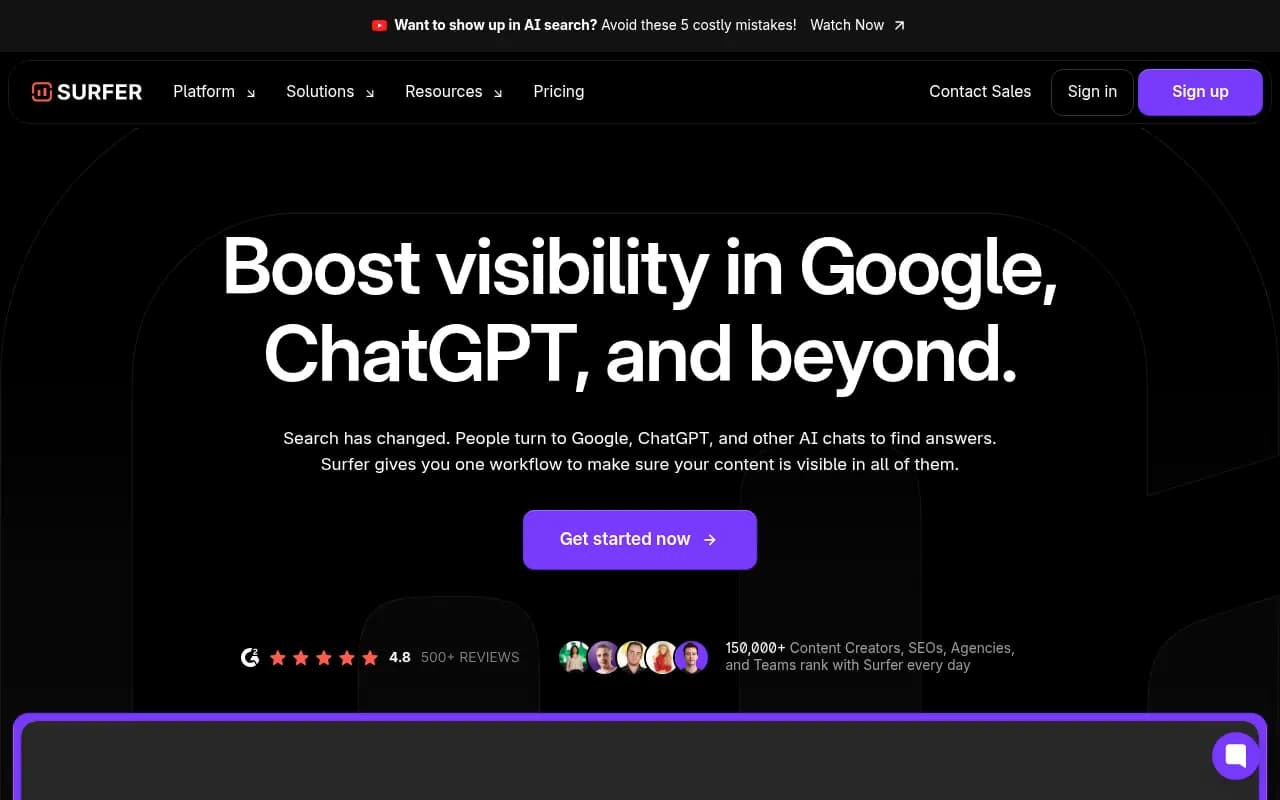
Surfer is the most direct competitor to ContentShake AI in terms of workflow. You start with a keyword, Surfer analyzes the top-ranking pages, and you write (or generate) content inside an editor that scores your work in real time against those competitors. The content score system is genuinely useful -- it tells you which NLP terms to include, how long your content should be, and how many headings and images the top pages use.
Where Surfer pulls ahead of ContentShake: the SERP analysis is more detailed and actionable. ContentShake leans on Semrush's keyword data but doesn't give you the same granular on-page breakdown. Surfer's editor feels more like a writing co-pilot; ContentShake feels more like a content generator you then have to manually optimize.
The catch: Surfer AI articles (the fully automated generation feature) cost additional credits on top of your plan. So if you're running high volume, the costs add up. The Essential plan at $99/mo gives you the optimizer but limits AI generation. Surfer has also moved into AI search visibility tracking, which is a newer addition and still maturing compared to dedicated GEO tools.
Pricing: $99/mo (Essential), $179/mo (Advanced), $299/mo (Max). 7-day money-back guarantee.
Best for: SEO teams and content marketers who want the tightest integration between SERP analysis and the writing process. If you care about content scores and NLP optimization more than raw generation speed, Surfer is the better tool.
Copy.ai

Copy.ai has made a significant pivot. It started as a quick copywriting tool for overcoming writer's block -- short-form stuff like email subject lines, social posts, ad copy. It's still good at that. But the company has repositioned itself as a "GTM AI Platform," which means it's now targeting sales and marketing teams who want to automate go-to-market workflows, not just generate blog posts.
Compared to ContentShake, Copy.ai is less focused on SEO. There's no built-in keyword research, no content scoring, no SERP analysis. What it does well is volume and variety -- if you need to generate a lot of marketing copy across different formats quickly, Copy.ai's template library and workflow automation are genuinely fast.
The GTM platform angle is interesting but also a bit of a mismatch if you're primarily a content marketer. It's built more for RevOps and sales teams now. Pricing has also become less transparent as they've moved upmarket -- the free tier exists but is limited, and enterprise pricing requires a conversation.
Best for: Marketing and sales teams that need to automate repetitive copy tasks across email, social, and outreach -- not for SEO-focused blog content.
Writesonic

Writesonic has gone through a notable transformation. It used to be a straightforward AI writing tool competing with Jasper and Copy.ai on blog generation. Now it's positioning itself as an AI search visibility and GEO platform -- tracking brand mentions across ChatGPT and other AI engines, monitoring citations, and helping you create content that gets cited by LLMs.
This is a meaningful shift. If you came to ContentShake looking for AI-assisted blog writing, Writesonic still does that. But if you're thinking about the next layer -- how do you show up in ChatGPT's answers, not just Google's -- Writesonic has built tooling for that. They cover Reddit and UGC forum tracking, citation gap analysis, and content refresh workflows.
The honest caveat: Writesonic's GEO features are newer and the platform is still evolving. Pricing isn't fully transparent on the website, which makes comparison harder. For pure blog writing, it's a capable tool. For AI visibility specifically, there are more established options.
Best for: Content teams that want a single tool covering both AI writing and early-stage AI search visibility tracking.
Promptwatch

Promptwatch is a different kind of tool from ContentShake, and that's worth being upfront about. ContentShake helps you write SEO content for Google. Promptwatch helps you understand and improve how AI search engines like ChatGPT, Claude, Perplexity, and Gemini talk about your brand -- and then helps you create content specifically engineered to get cited by those models.
The core workflow: Promptwatch's Answer Gap Analysis shows you which prompts your competitors are visible for in AI search that you're not. You see the exact content gaps -- topics, angles, questions -- that AI models want answered but can't find on your site. Then the built-in content agent generates articles grounded in real citation data (880M+ citations analyzed) to close those gaps. Then you track whether your new content actually starts getting cited.
That loop -- find gaps, create content, track results -- is what separates it from most tools in this space. Most AI visibility tools stop at monitoring. Promptwatch is built around taking action.
It also has features ContentShake doesn't touch: AI crawler logs (see when ChatGPT or Claude actually crawls your pages), ChatGPT Shopping tracking, Reddit and YouTube citation analysis, and prompt volume/difficulty scoring so you know which AI search queries are worth targeting.
Pricing: Essential $99/mo (1 site, 50 prompts, 5 articles), Professional $249/mo (2 sites, 150 prompts, 15 articles), Business $579/mo (5 sites, 350 prompts, 30 articles). Free trial available.
Best for: Brands and agencies that want to rank in AI search engines specifically -- not just Google. If your goal is to show up when someone asks ChatGPT or Perplexity for a recommendation in your category, Promptwatch is built for that.
Scalenut

Scalenut covers a lot of ground. On the self-serve side, it's an AI-SEO platform with keyword planning, content optimization, and AI writing tools. On the managed services side, it's positioned as an agency-style offering where a dedicated strategist plus AI agents handle your content and GEO strategy end-to-end.
The managed service angle is unusual in this space and worth noting. If you're a business that doesn't want to run the tools yourself -- you just want results -- Scalenut's managed GEO service (starting around $3,000/mo) handles strategy, content creation, AI visibility, and Reddit targeting with human oversight. That's a very different value proposition from ContentShake.
For the self-serve platform, Scalenut is competitive with Frase and Surfer at the lower price tiers. The AI writing quality is solid, and the keyword clustering and content planning features are genuinely useful for building out topic authority. The GEO tracking features are newer additions.
Pricing: Self-serve from ~$39-79/mo (basic) to $149-499/mo (full platform). Managed GEO services from ~$3,000/mo. 7-day free trial.
Best for: Businesses that want either a capable self-serve SEO content platform OR a fully managed content and AI visibility service. The two-tier model means it scales from solo marketers to enterprise.
Frase
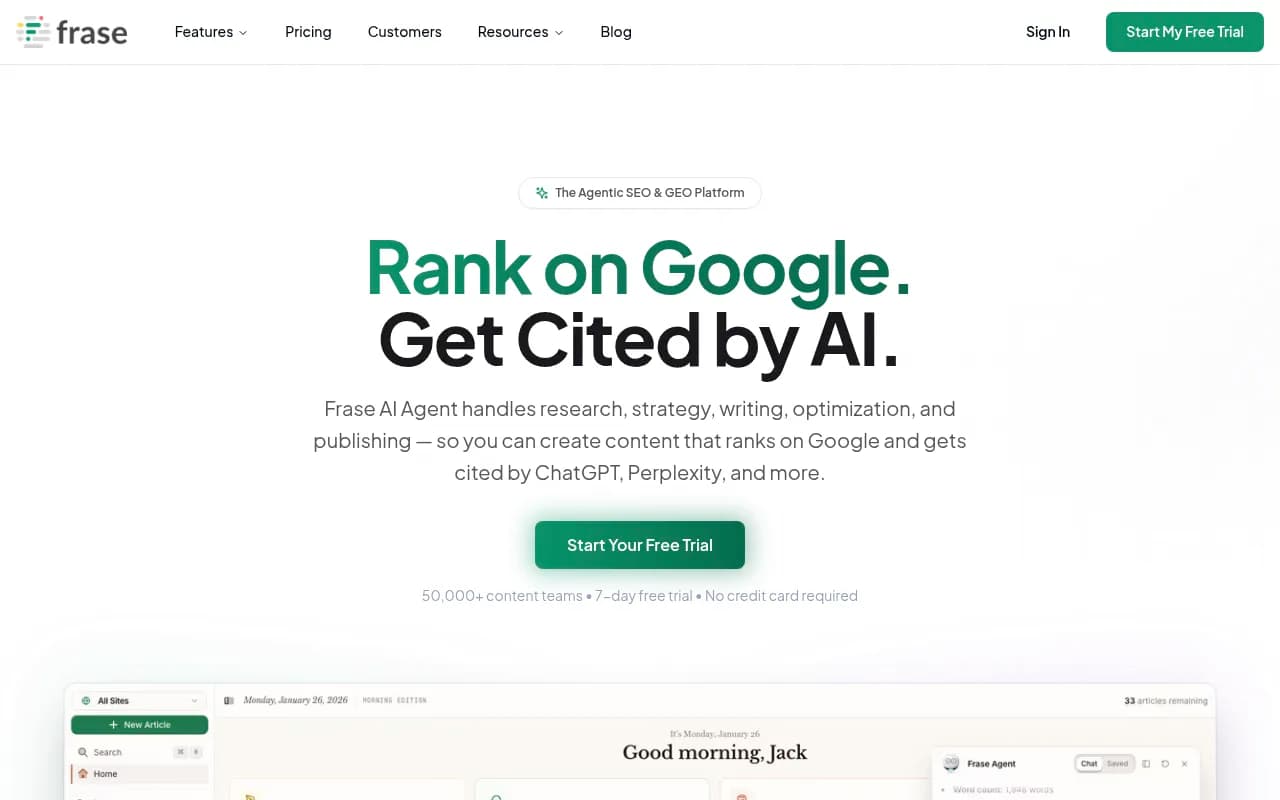
Frase is one of the more thoughtfully designed tools in this category. The workflow is research-first: you enter a keyword, Frase pulls the top SERP results, extracts the key topics and questions those pages cover, and builds you a content brief. Then you write (or generate) inside the editor with that research visible alongside.
What Frase does better than ContentShake: the research and briefing phase. ContentShake is faster to generate a draft, but Frase gives you more control over what goes into that draft. The competitor analysis is more transparent -- you can see exactly which topics the top-ranking pages cover and which ones you're missing.
Frase has also moved into GEO territory, adding a "GEO Score" feature that tracks your content's visibility in ChatGPT and Perplexity. It's a newer addition (they were running a 30% launch discount in April 2026) and still developing, but the direction is clear.
Pricing is genuinely competitive: $39/mo Starter, $103/mo Professional, $239/mo Scale. The 7-day money-back guarantee makes it easy to test.
Best for: Content teams that want a research-heavy workflow at a lower price point than Surfer or Clearscope. Good for writers who want to understand why they're writing what they're writing, not just get a generated draft.
Clearscope

Clearscope is the premium option for content optimization, and it's unapologetically so. At $189/mo for the Essentials plan with no free trial, it's not for everyone. But the teams that use it tend to stick with it because the editor experience and content grading are genuinely best-in-class.
The key difference from ContentShake: Clearscope doesn't generate content. It optimizes content you've already written (or are writing). You paste your draft in, and Clearscope grades it against the top-ranking pages for your keyword, surfacing the terms and topics you're missing. It's a tool for writers who want to improve their work, not replace it.
Clearscope has added AI visibility tracking -- monitoring your discoverability in ChatGPT and Gemini alongside Google -- which is a meaningful addition. The topic exploration feature for building content clusters is also strong.
The no-contract, month-to-month billing is a plus. But the price point means it's really suited to established content teams with consistent output, not individuals or small teams just getting started.
Pricing: $189/mo (Essentials). Business and Enterprise custom pricing.
Best for: Content teams that prioritize quality over speed and want the best-in-class optimization editor. Not for teams looking for AI generation -- this is an optimization and grading tool.
NeuronWriter
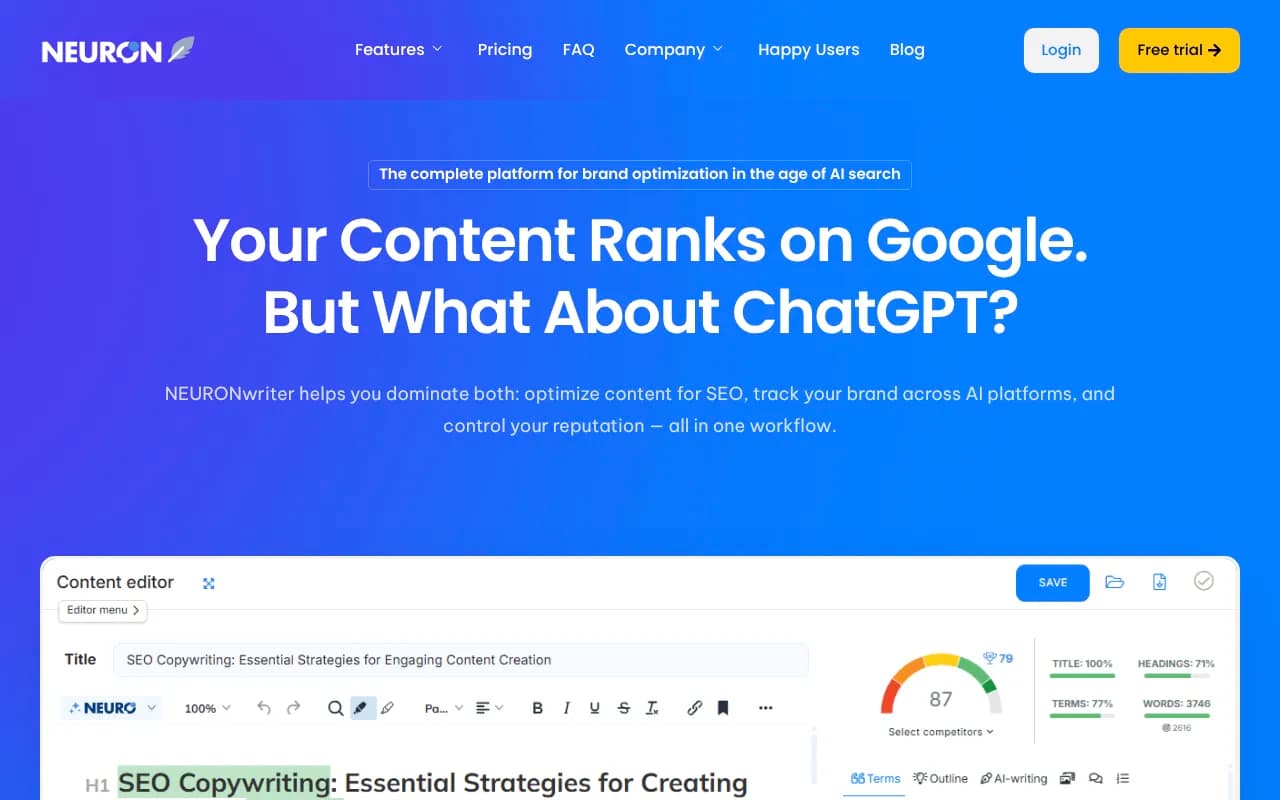
NeuronWriter is the budget-friendly pick for semantic SEO optimization. At $19/mo (annual billing), it's significantly cheaper than any other tool on this list while still offering genuine NLP-based content analysis, competitor research, and AI writing assistance.
The core feature is the content editor, which analyzes top-ranking pages for your keyword and extracts the NLP terms and semantic topics you should cover. It's similar to Surfer and Clearscope in concept, but less polished and with fewer integrations. The WordPress integration works well. The Google Search Console connection is useful for tracking existing content performance.
Where NeuronWriter falls short compared to ContentShake: the AI generation quality is more variable, and the interface feels less refined. It also lacks the Semrush data integration that makes ContentShake useful for keyword discovery. But for teams on tight budgets who need solid semantic optimization guidance, it punches above its price.
NeuronWriter has also added AI visibility tracking features, though these are newer and less developed than dedicated GEO platforms.
Pricing: From $19/mo (annual) or $23/mo (monthly). Gold plan at $57/mo annual is the recommended tier for most users.
Best for: Freelancers, small agencies, and budget-conscious teams that need semantic SEO optimization without paying Surfer or Clearscope prices.
Jasper AI
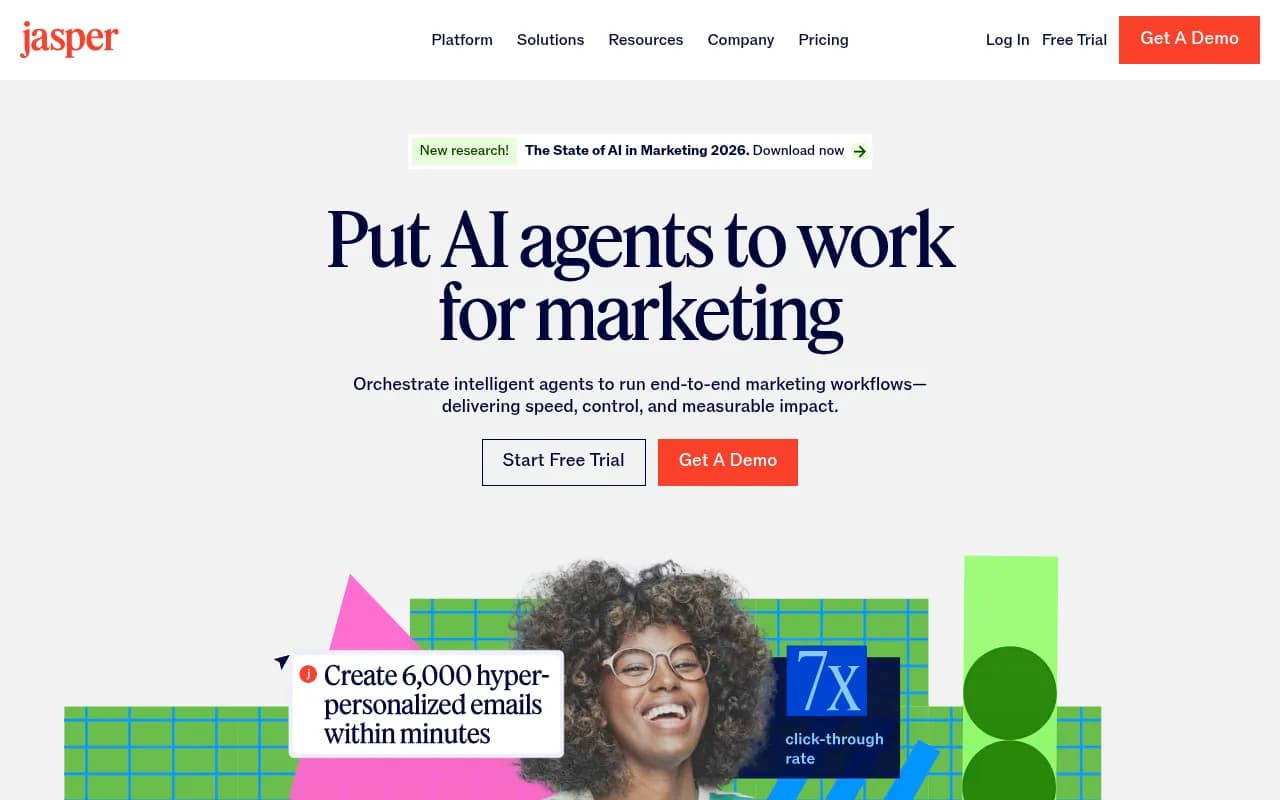
Jasper is the enterprise-grade option in this comparison. It started as an AI writing tool, but it's now a full marketing platform with 100+ AI agents, content pipelines, brand governance tools, and deep personalization capabilities. The Brand IQ system -- which stores your brand voice, visual guidelines, and style guide -- means every piece of content Jasper generates stays on-brand without manual editing.
Compared to ContentShake, Jasper is in a different league in terms of scope. ContentShake is a content generation tool with SEO data baked in. Jasper is a platform for running entire marketing workflows -- campaigns, SEO/AEO/GEO content, personalization, research -- with AI agents handling the execution.
The SEO/AEO/GEO solution is worth noting specifically: Jasper has built out content creation workflows for ranking in traditional search, answer engines, and AI search simultaneously. For large teams producing content at scale across multiple channels, that's genuinely useful.
The trade-off is complexity and cost. The Pro plan starts around $59/mo (annual), but enterprise features require custom pricing. For a solo marketer or small team, it's more tool than you need.
Best for: Mid-market and enterprise marketing teams that need brand-governed AI content at scale across multiple channels and formats. Not for individuals or small teams who just need blog posts.
How to choose
The right tool depends on what's actually frustrating you about ContentShake.
If the pricing is the issue -- you're paying for Semrush but not getting enough value from the content tools -- Frase or NeuronWriter give you solid SEO content workflows at lower price points.
If you want better SEO optimization (not just generation), Surfer SEO or Clearscope will give you more granular feedback on what your content needs to rank.
If you need enterprise-scale content with brand governance and multi-channel campaigns, Jasper is the obvious upgrade path.
If you're thinking beyond Google and want to rank in AI search engines -- showing up when someone asks ChatGPT or Perplexity for a recommendation in your category -- that's a different problem that ContentShake doesn't really solve. Promptwatch is built specifically for that: finding the prompts where competitors are visible and you're not, generating content to close those gaps, and tracking whether AI models actually start citing you. It's the tool to look at if AI search visibility is the goal, not just traditional SEO.