Key takeaways
- Crayon is the closest like-for-like Klue alternative -- same battlecard + CI focus, similar pricing, slightly more flexible for mid-market teams.
- Kompyte (now part of Semrush) is worth considering if you want CI automation without the full Klue price tag, especially if you're already a Semrush customer.
- AlphaSense is the right call if your competitive intelligence work is research-heavy -- earnings calls, filings, broker reports -- rather than sales enablement.
- Visualping and Feedly are much cheaper options that cover basic competitor monitoring, but they won't build battlecards or connect to your CRM.
- Valona and Contify serve enterprise strategy teams who need broad market and geopolitical signals, not just competitor tracking for sales.
Klue is a well-built platform. If you're a competitive intelligence analyst at a mid-to-large B2B company and you need battlecards that actually get used by sales reps, Klue does that job well. Its Compete Agent (launched in 2025) automates a lot of the manual collection work, and its win-loss module gives you buyer feedback alongside the competitive data.
So why are people looking for alternatives? Usually one of three reasons. First, price -- Klue starts around $16,000/year and scales up significantly, which rules it out for smaller teams. Second, scope -- some teams need broader market intelligence that goes beyond competitor tracking for sales. Third, fit -- Klue is built around a specific workflow (collect intel, build battlecard, push to sales), and if your team doesn't operate that way, you're paying for a lot you won't use.
Here's an honest look at what else is out there.
Crayon
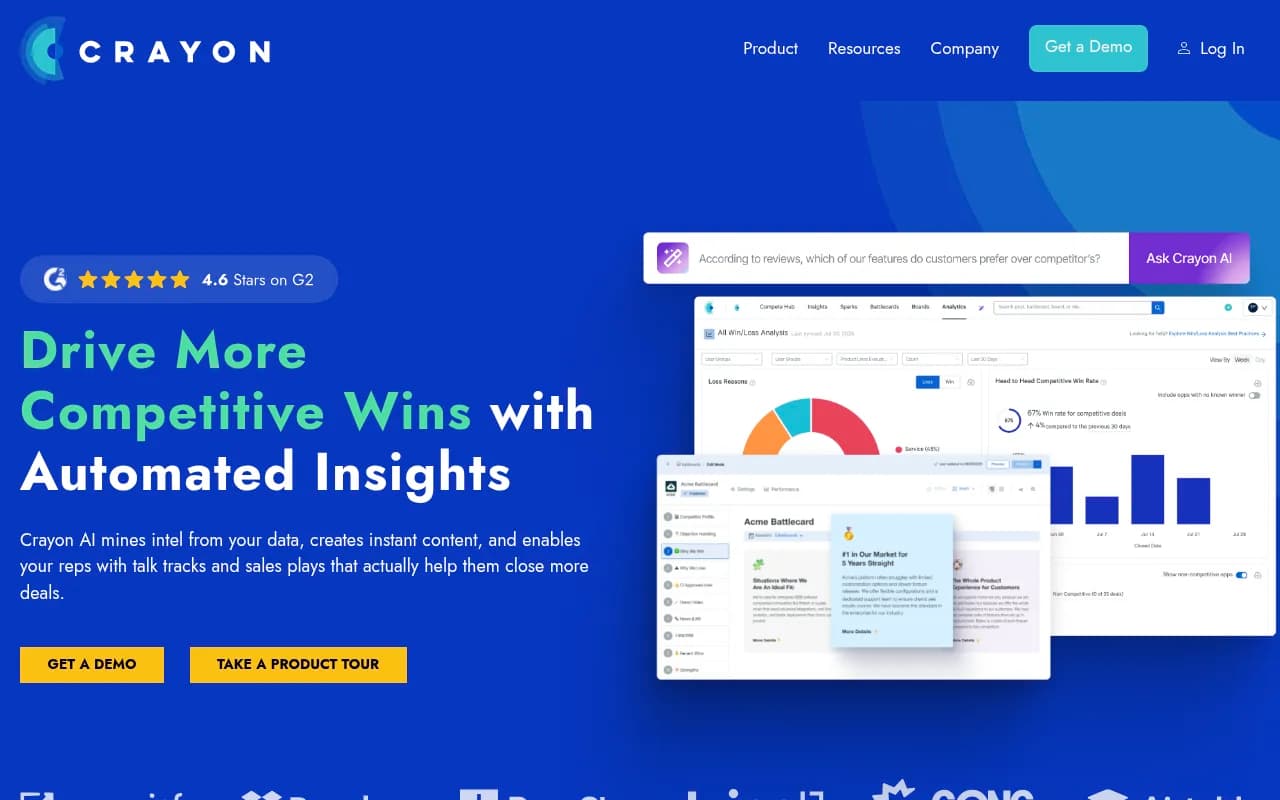
Crayon is the most direct Klue competitor. Both platforms do the same core job: monitor competitors across web, social, and content channels, then turn that intel into battlecards and sales enablement assets. If you're evaluating Klue, you're almost certainly evaluating Crayon at the same time.
The differences are real but subtle. Crayon's AI-generated talk tracks and sales plays are a genuine strength -- the platform doesn't just surface intel, it suggests what reps should say in specific competitive situations. Klue's battlecard editor is arguably more polished, and its win-loss integration is tighter. Crayon has historically been stronger on the volume of sources monitored; Klue has been stronger on the quality of the battlecard output.
Pricing is similarly opaque -- both require a demo and a custom quote. Crayon typically starts around $1,500-$2,500/month for smaller teams, which can make it slightly more accessible than Klue at the low end. At enterprise scale, they're comparable.
One thing worth noting: Crayon's case studies (Cognism citing $6M in influenced revenue, Salsify reporting a 22% increase in competitive win rate) are specific enough to be credible. These aren't vague claims.
Where Crayon falls short: the platform can feel noisy if you don't invest time in configuring what signals matter. The raw volume of tracked changes is high, and filtering that down to what's actually actionable takes work.
Best for: B2B companies that want a Klue-like experience with slightly more flexibility on deal size, or teams that prioritize AI-generated sales talk tracks alongside battlecards.
Kompyte
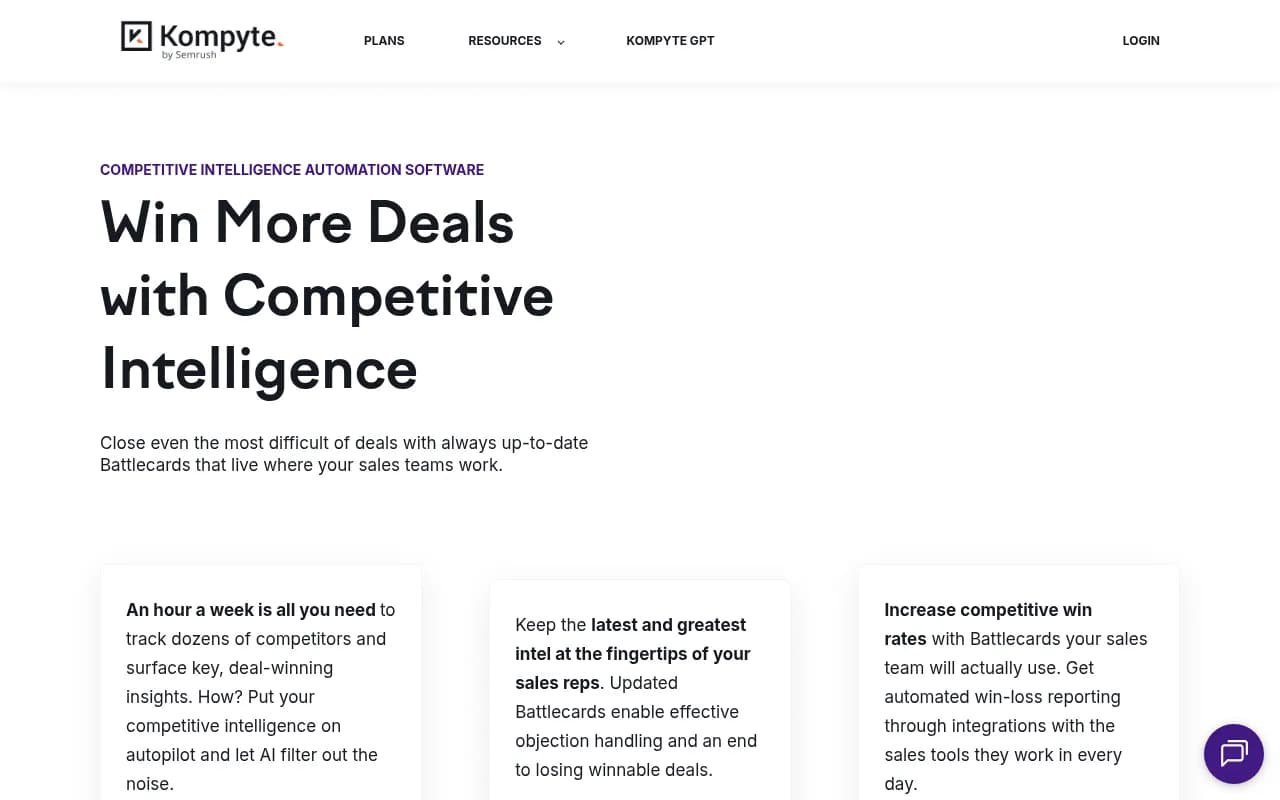
Kompyte was acquired by Semrush in 2022 and now operates as Semrush's competitive intelligence module. That context matters when you're evaluating it -- you're essentially buying into the Semrush ecosystem.
The core pitch is automation. Kompyte tracks competitor websites, reviews, job postings, ads, and social content, then uses AI to filter out noise and surface what's actually worth paying attention to. The "AI Daily Summaries" feature is genuinely useful -- instead of wading through hundreds of raw updates, you get a digest of what changed and why it might matter.
Battlecard functionality is solid. Templates sync into Salesforce and other CRM tools, which means reps can pull up competitive context without leaving their workflow. That's the same promise Klue makes, and Kompyte delivers it reasonably well.
The trade-off: Kompyte is less sophisticated than Klue on the win-loss side. If buyer feedback and deal analysis are important to your CI program, Kompyte doesn't have a strong answer there. It's also less customizable for complex battlecard structures.
Pricing isn't public, but being part of Semrush means you can sometimes bundle it with existing Semrush subscriptions, which changes the economics considerably.
Best for: Teams already using Semrush who want to add competitive intelligence without onboarding a completely separate platform, or companies that prioritize automated tracking over deep win-loss analysis.
Semrush
Semrush is a different kind of tool -- it's primarily an SEO and digital marketing platform that has added competitive intelligence features, not the other way around. Comparing it directly to Klue is a bit like comparing a Swiss Army knife to a scalpel.
What Semrush does well in the competitive space: traffic analysis, keyword gap analysis, ad intelligence, and backlink comparison. If you want to understand how a competitor is growing their organic search presence or where they're spending on paid ads, Semrush is excellent. It also now includes Kompyte's CI capabilities and an AI Visibility Toolkit for tracking brand presence in AI search results.
What it doesn't do: build battlecards, integrate with your CRM for sales enablement, or run win-loss analysis. The competitive data is rich but it's designed for marketing teams, not sales reps in the middle of a deal.
Pricing is more accessible than Klue -- plans start at $165/month, and even the higher tiers are cheaper than Klue's annual contract. There's a 7-day free trial.
Best for: Marketing teams that need competitive intelligence for SEO, content strategy, and paid media -- not sales teams looking for battlecards and deal support.
Similarweb
Similarweb's core strength is traffic and audience data. It can tell you how much traffic a competitor gets, where it comes from, which pages perform best, and how their audience overlaps with yours. That's genuinely useful competitive intelligence, just not the kind that helps a sales rep handle an objection in a live deal.
The platform has been expanding into AI search visibility (their "AEO Suite" tracks brand presence in AI-generated answers), which is interesting but still maturing. For traditional competitive analysis -- market share, traffic trends, channel mix -- Similarweb remains one of the best tools available.
The pricing gap with Klue is significant. Similarweb's competitive intelligence plan starts at $125/month, though enterprise plans for the full feature set run $1,000-$5,000+/month. Either way, you're getting a different kind of tool.
Where it falls short as a Klue alternative: no battlecards, no CRM integration for sales enablement, no win-loss capability. The data is excellent for strategy and marketing; it's not built for sales teams.
Best for: Strategy and marketing teams that need traffic intelligence, market sizing, and audience analysis -- particularly useful for benchmarking your digital performance against competitors.
AlphaSense
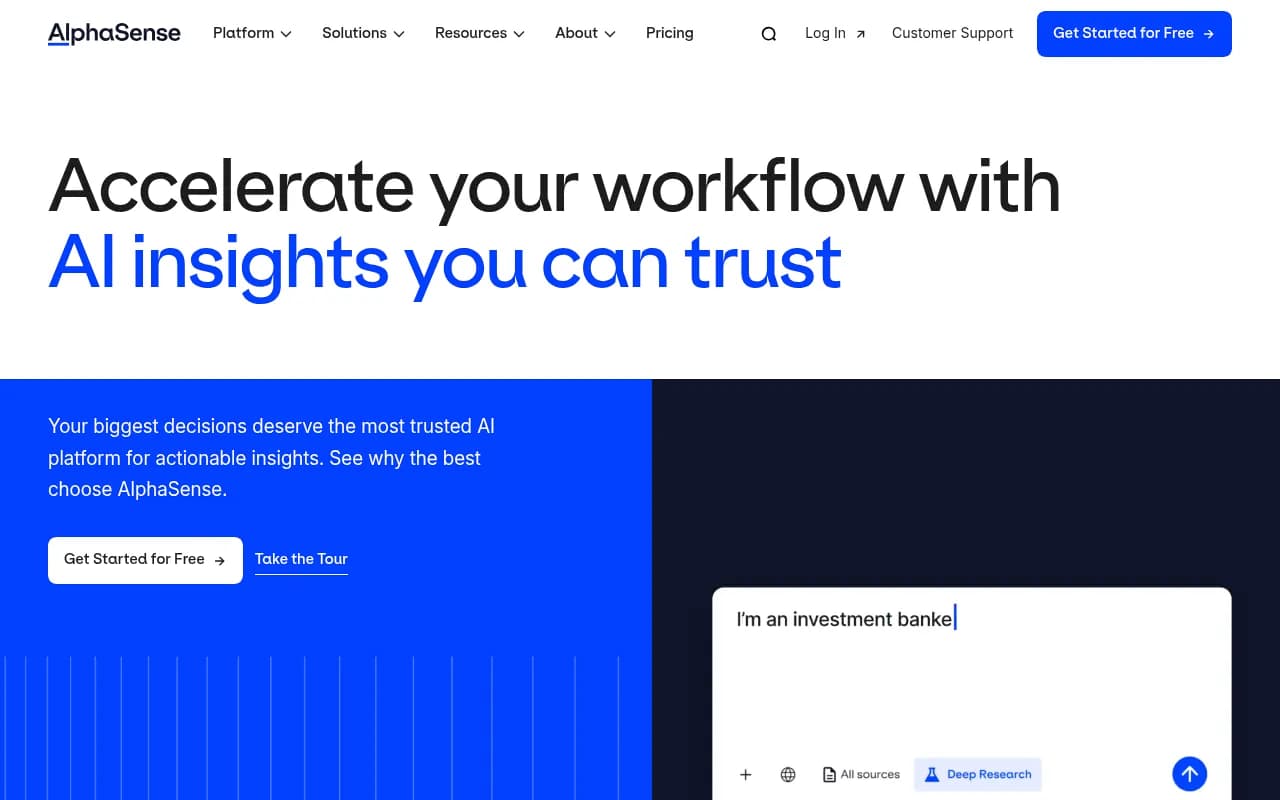
AlphaSense is in a different category from Klue, and that's worth being clear about upfront. It's built for research-intensive competitive intelligence -- the kind where you're reading earnings call transcripts, SEC filings, broker research, and expert interviews to understand what a competitor is actually doing strategically.
The platform searches across 500M+ documents (including Tegus expert transcripts, which is a significant differentiator) and uses AI to surface relevant passages and synthesize findings. If you need to understand a competitor's financial position, strategic priorities, or how they're talking to investors, AlphaSense is genuinely excellent.
What it doesn't do: monitor competitor websites for tactical changes, build sales battlecards, or push intel to reps in their CRM. It's a research tool, not a sales enablement tool.
Pricing is enterprise-level and annual-contract-based. It's not cheap, but the content library justifies the cost for teams that need it.
Best for: Strategy teams, corporate development, and research-heavy CI functions at large companies -- especially in financial services, life sciences, and tech. Not a fit for sales-focused competitive enablement.
Contify
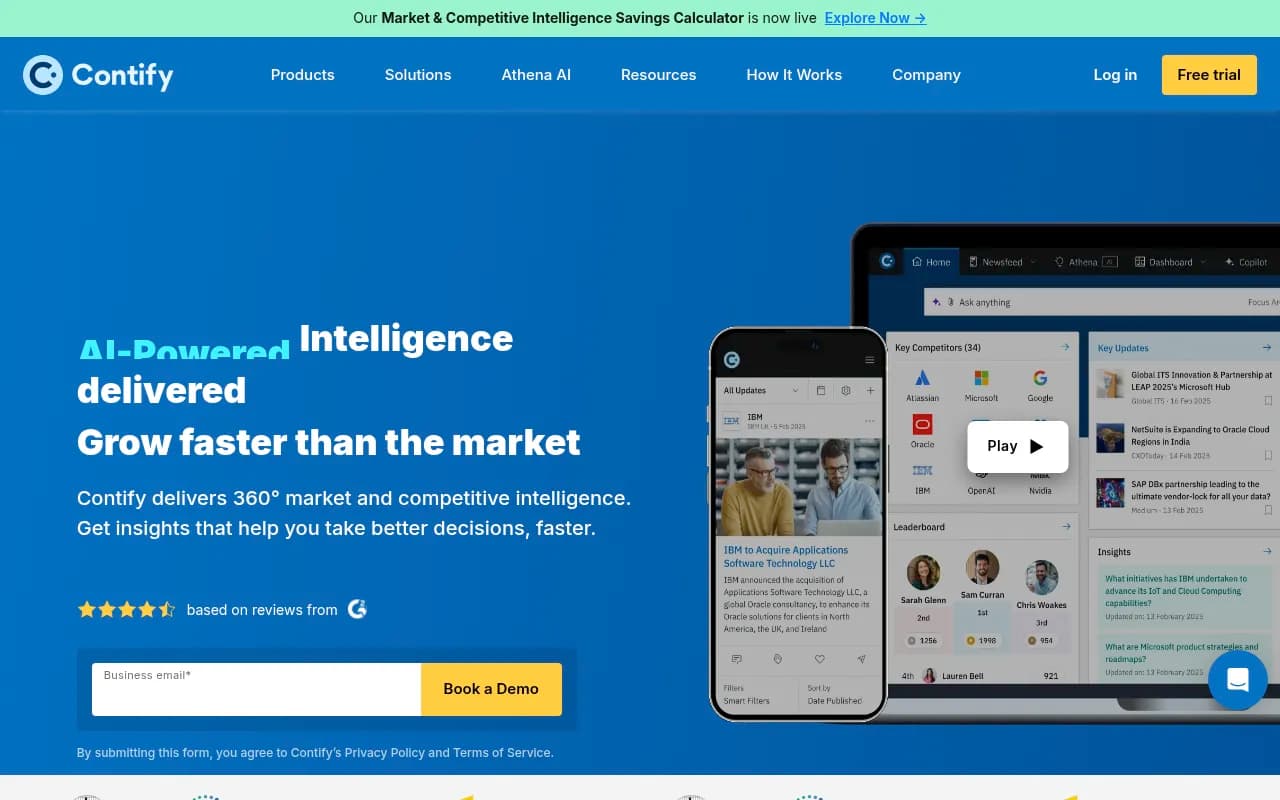
Contify sits somewhere between a news aggregator and a competitive intelligence platform. It monitors competitors, customers, and market trends across news, web, and social sources, then delivers curated intelligence feeds to different teams.
The breadth of coverage is a strength -- Contify tracks a wide range of signals and lets you configure what matters for different stakeholders (strategy vs. sales vs. product). The customer list (Wipro, EY, Cisco, BCG, Accenture) suggests it's found a home in large enterprises with distributed intelligence needs.
Compared to Klue, Contify is more of a monitoring and distribution tool than a sales enablement platform. It doesn't have Klue's battlecard depth or win-loss integration. What it does have is flexibility -- you can configure it for a broader range of use cases than Klue's more opinionated workflow.
Pricing isn't public, but there's a 7-day free trial, which Klue doesn't offer. That alone makes it worth exploring if you're budget-conscious.
Best for: Enterprise teams that need competitive and market intelligence distributed across multiple functions (strategy, product, sales, marketing) rather than a dedicated sales battlecard platform.
Visualping
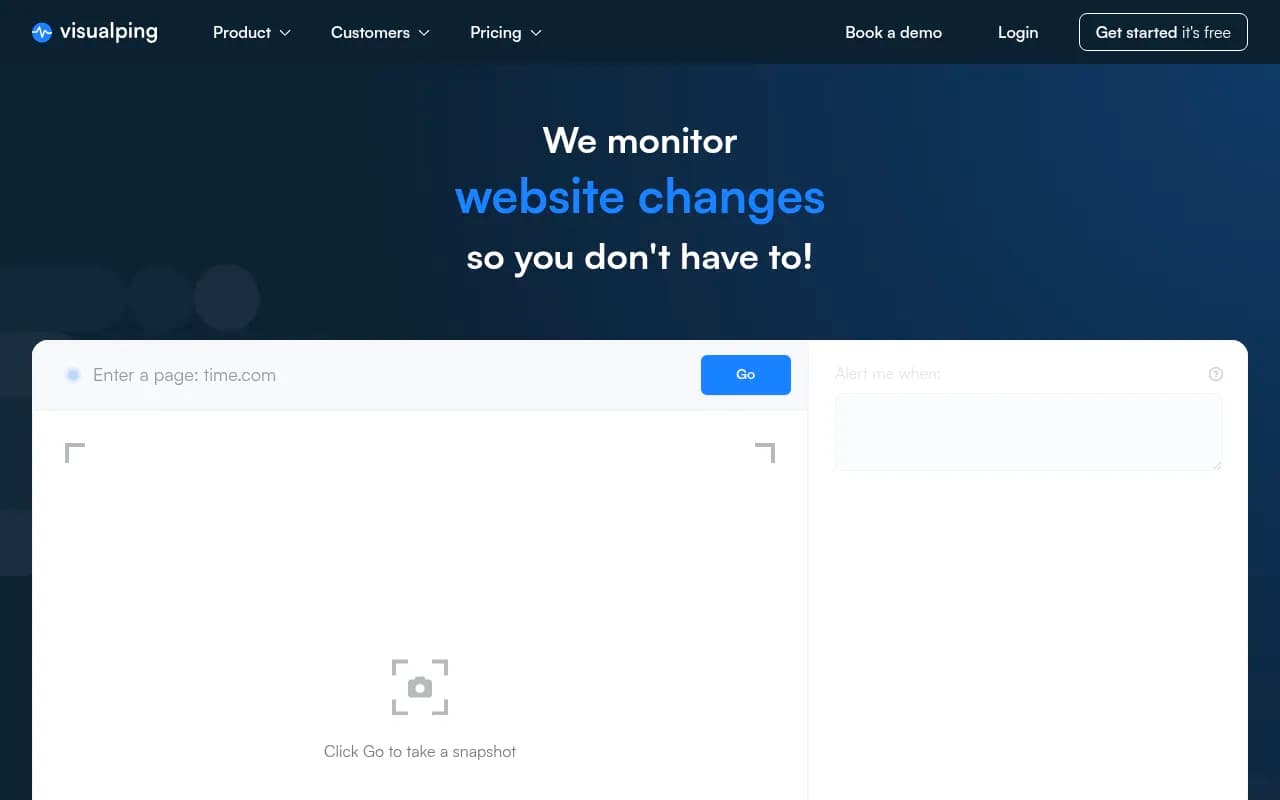
Visualping is the budget option here, and it's worth being honest about what that means. It monitors web pages for changes and sends you alerts. That's it. There's no AI-generated analysis, no battlecard builder, no CRM integration, no win-loss module.
What it does, it does well. You point it at a competitor's pricing page, product page, or careers section, and it tells you when something changes -- with a before-and-after screenshot. The AI layer flags whether a change is significant. It's simple, reliable, and cheap (free tier available, paid plans from $10/month).
For a small team or a startup that can't justify Klue's price tag, Visualping plus a shared doc for battlecards is a legitimate DIY approach. You lose automation, depth, and sales integration, but you gain a lot of money back.
Best for: Small teams or individuals who need basic competitor monitoring on a tight budget. Not a real alternative to Klue for any team with dedicated CI or sales enablement needs.
Valona Intelligence

Valona is an enterprise-grade market and competitive intelligence platform aimed at strategy teams at large organizations. Its agentic AI monitors 200,000+ verified sources, tracks geopolitical signals, regulatory changes, and competitor moves, and packages intelligence for decision-makers.
The "early warning system" positioning -- claiming to spot disruptions 3-6 months ahead -- is ambitious, but the customer list (Unilever, Bosch, Philips, IKEA, Kellogg's) suggests it's delivering something real for large enterprises with complex intelligence needs.
Compared to Klue, Valona is broader and more strategic. It's not trying to help a sales rep win a deal this week -- it's trying to help a strategy team see what's coming in the next quarter. The price reflects that: starting around $25,000/year, it's in Klue's range or above.
Best for: Large enterprises with dedicated strategy or intelligence functions that need broad market, competitive, and geopolitical monitoring -- not sales-focused competitive enablement.
Feedly Market Intelligence
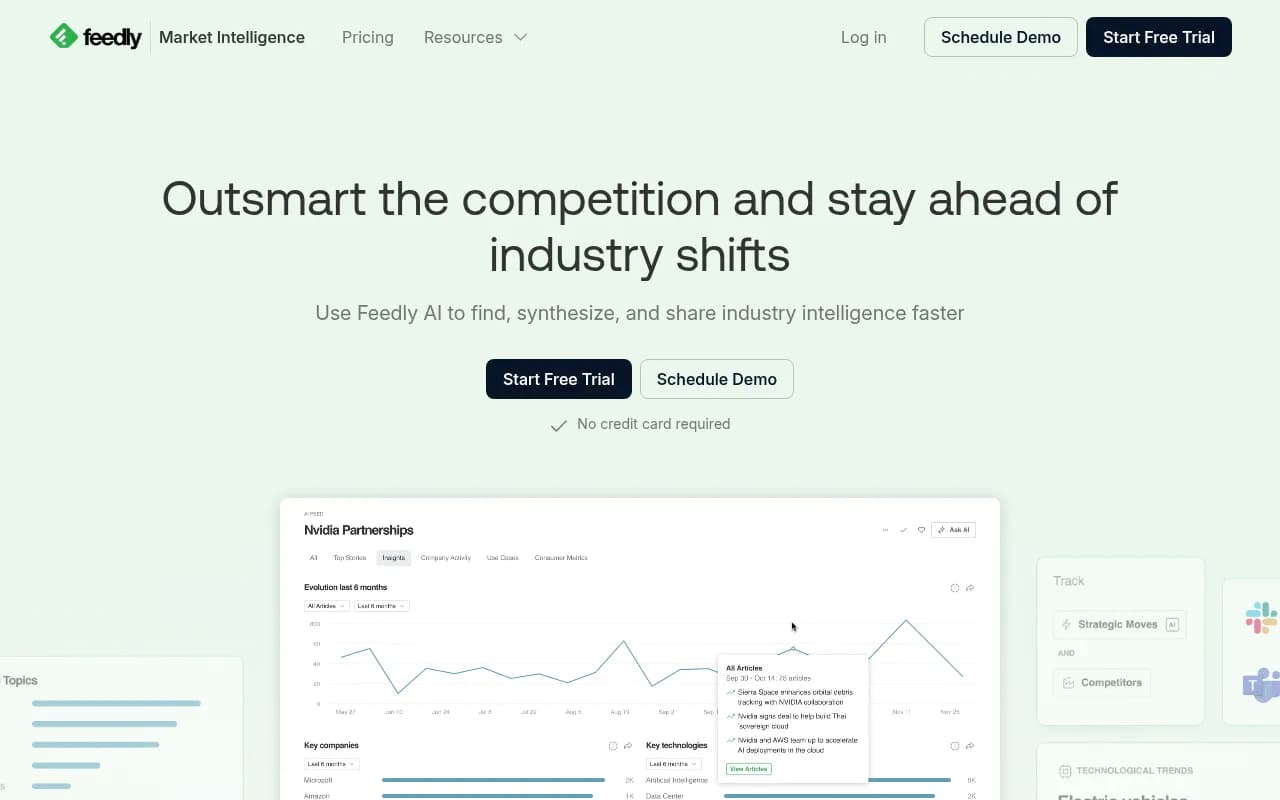
Feedly started as an RSS reader and has evolved into a legitimate market intelligence platform. The Market Intelligence tier uses AI to monitor thousands of sources -- trade publications, research journals, tech blogs, social media -- and synthesize what's relevant for strategy and innovation teams.
The Lufthansa Innovation Hub case study (3-5x faster intelligence gathering) is a useful data point. Feedly's AI Actions feature, which creates ready-to-use insights from monitored content, is genuinely useful for teams that need to synthesize a lot of information quickly.
Where it falls short as a Klue alternative: it's a monitoring and synthesis tool, not a sales enablement platform. There are no battlecards, no CRM integrations for deal support, no win-loss analysis. It's closer to a smarter news aggregator than a competitive intelligence platform in Klue's sense.
Pricing is much more accessible -- the free tier covers basic use, and enterprise pricing is negotiated separately. For teams that need market intelligence without the sales enablement layer, it's worth a look.
Best for: Strategy, innovation, and product teams that need to stay on top of industry trends and competitor moves without the overhead of a full CI platform. Not a fit for sales teams needing battlecards.
Which alternative should you pick?
The right answer depends almost entirely on what you're actually trying to do.
If you want a direct Klue replacement with battlecards and sales enablement, Crayon is the obvious first call. It's the closest competitor in terms of feature set and workflow, with slightly more pricing flexibility at the lower end.
If you're already in the Semrush ecosystem, Kompyte (now part of Semrush) is worth evaluating before you commit to a standalone CI platform. The integration benefits are real.
If your CI work is research-heavy -- earnings calls, filings, expert interviews -- AlphaSense is in a different league from Klue for that use case. It's not a battlecard tool, but for strategic research it's hard to beat.
If budget is the primary constraint, Visualping handles basic competitor monitoring for almost nothing. Pair it with Feedly Market Intelligence for broader trend monitoring and you have a functional (if manual) CI setup for a fraction of Klue's cost.
If you're at a large enterprise with a strategy team that needs broad market and geopolitical intelligence, Valona or Contify are worth evaluating -- both serve that use case better than Klue, which is optimized for sales enablement rather than strategic foresight.
Semrush and Similarweb are best treated as complementary tools rather than replacements -- they cover digital and marketing intelligence that Klue doesn't touch, but they won't replace Klue's sales enablement capabilities.