Key takeaways
- Peec AI tracks ChatGPT, Perplexity, and Google AI Overviews well, but struggles with multi-engine coverage, high costs at scale, and the lack of optimization guidance beyond monitoring.
- The best alternatives vary significantly: some focus on enterprise brand safety, others on content gap analysis, and a few on budget-friendly monitoring for small teams.
- Engine coverage matters more than ever in 2026 — Claude, Gemini, DeepSeek, Grok, and Meta AI are all driving real traffic, and most tools still don't track all of them.
- If you want to move beyond monitoring and actually fix your AI visibility, look for platforms that combine gap analysis with content generation and traffic attribution.
- Promptwatch is the only platform in this comparison rated as a "Leader" across all categories — it tracks 10+ AI engines and includes built-in content generation to close the loop from gap to fix.
Peec AI had a good run as an early mover. When AI Overviews first started eating into organic traffic and marketers scrambled to understand what was happening, Peec gave teams a clean dashboard to see where their brand showed up in ChatGPT and Perplexity responses. For many, it was the first tool that made AI search visibility feel measurable.
But "measurable" and "actionable" are different things. By 2026, the questions teams are asking have changed. It's not just "are we showing up?" anymore. It's "why aren't we showing up for these 40 prompts our competitors own?" and "what do we actually do about it?"
That's where Peec starts to show its limits. Costs climb fast when you scale up prompt tracking. The platform doesn't tell you what content to create. And with AI search now spread across Claude, Gemini, DeepSeek, Grok, and Meta AI alongside ChatGPT and Perplexity, single-engine or dual-engine tools leave too many blind spots.
Here's a look at 10 alternatives worth considering, what each one does well, and where each one falls short.
What to look for before switching
Before jumping to a specific tool, it helps to be clear about what's actually missing from your current setup.
A few things worth checking:
- How many AI engines does the tool monitor? ChatGPT and Perplexity are table stakes. Claude, Gemini, Google AI Mode, DeepSeek, Grok, and Meta AI are where the gaps usually are.
- Does it go beyond monitoring? Seeing that you're invisible for a prompt is useful. Knowing what content to create to fix that is far more useful.
- How does pricing scale? Credit-based and prompt-based models can get expensive fast. Flat monthly fees are easier to budget.
- Does it support agencies or multi-brand setups? White-label reports, client workspaces, and multi-site tracking matter if you're managing more than one brand.
- Can you connect it to your existing stack? GA4, Looker Studio, GSC integrations, and API access determine whether the data actually gets used.
Keep those in mind as you read through the options below.
The 10 best Peec AI alternatives in 2026
1. Promptwatch
Promptwatch is the most complete option on this list, and the one most worth considering if you're serious about AI search visibility rather than just monitoring it.

Where most tools stop at showing you a visibility score, Promptwatch builds the whole loop: find the gaps, create content to fill them, track the results. The Answer Gap Analysis shows you exactly which prompts your competitors rank for that you don't — not just that a gap exists, but the specific topics and angles your site is missing. The built-in AI writing agent then generates articles, listicles, and comparisons grounded in real citation data (880M+ citations analyzed), so the content is engineered to get cited by ChatGPT, Claude, Perplexity, and others rather than just written to sound good.
Engine coverage is broad: ChatGPT, Claude, Gemini, Perplexity, Google AI Overviews, Google AI Mode, Meta AI, DeepSeek, Grok, Copilot, and Mistral. That's 10+ models from one dashboard. The AI Crawler Logs feature is genuinely rare — it shows you which AI crawlers are hitting your pages, which pages they're reading, and what errors they're encountering, so you can fix indexing issues before they affect your visibility scores.
Traffic attribution closes the loop: you can connect visibility to actual revenue via a code snippet, GSC integration, or server log analysis.
Pricing starts at $99/month for the Essential plan (1 site, 50 prompts, 5 articles), $249/month for Professional (2 sites, 150 prompts, 15 articles, crawler logs), and $579/month for Business (5 sites, 350 prompts, 30 articles). Agency and enterprise pricing is available. A free trial is offered.
The honest limitation: it's more platform than some teams need. If you just want a quick pulse check on brand mentions, the feature depth might feel like overkill. But if you're trying to actually improve your AI visibility rather than just report on it, there's nothing else quite like it.
2. Scrunch AI
Scrunch sits at the premium end of the market and earns it with the broadest brand safety focus of any tool here. It tracks ChatGPT, Claude, Perplexity, Gemini, Google AI Overviews, AI Mode, and Meta AI, and it's particularly strong on hallucination detection — flagging when AI models make false claims about your brand.
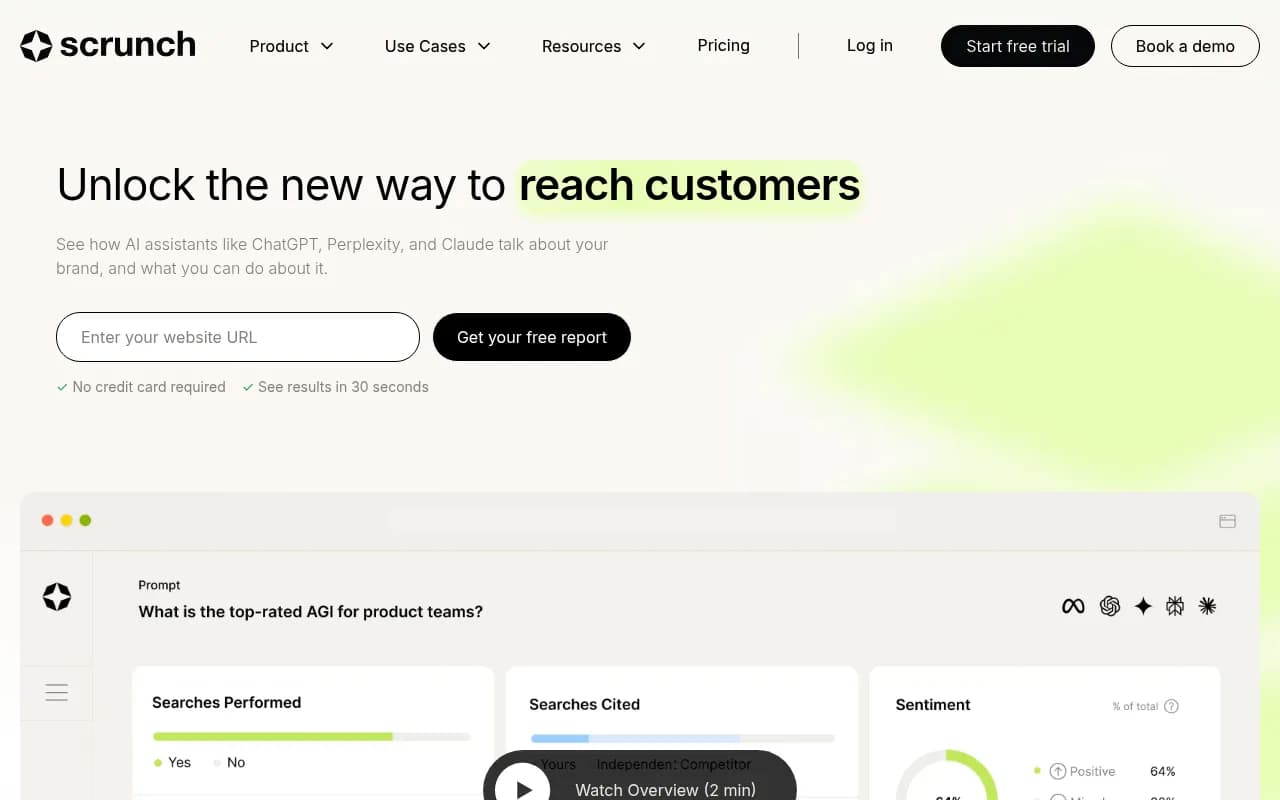
The GA4 integration is a genuine differentiator. You can see actual traffic flowing from AI search into your site, not just visibility scores. For enterprise teams worried about brand misinformation or trying to connect AI visibility to revenue, Scrunch makes a strong case.
The downside is price. It's positioned for enterprise budgets, and smaller teams or agencies managing multiple clients may find the cost hard to justify without a clear ROI story to back it up.
3. Profound
Profound has built a reputation for precise AI Overview tracking and entity extraction. It maps which entities your content is associated with, how competitors are represented, and where attribution is happening across AI responses.
Profound

It's particularly useful for teams doing entity-driven SEO or trying to understand why certain brands get cited consistently while others don't. The competitor presence monitoring is detailed and the data quality is generally well-regarded.
Starting at $99/month, it's accessible. The gap is optimization: Profound tells you what's happening but doesn't have the content generation tools to help you change it. It's a strong analytics layer, but you'll need other tools to act on what you find.
4. AthenaHQ
AthenaHQ covers Google AI Overviews, Perplexity, ChatGPT, and Claude from a single dashboard. It's positioned for brands competing in AI-native search and teams that need competitive intelligence across multiple models.

The platform is monitoring-focused, which is both its strength and its limitation. The data is solid and the interface is clean, but like most tools in this space, it stops at showing you the picture rather than helping you paint a different one. Starting at $295/month, it's priced for teams that already know what they're doing with the data.
5. Otterly.AI
Otterly is one of the more budget-friendly options for basic AI visibility monitoring. It tracks brand mentions across ChatGPT, Perplexity, and Google AI Overviews, and the setup is genuinely quick.
Otterly.AI

For small teams or solo marketers who just want to know whether they're showing up in AI responses, Otterly works fine. The limitations become apparent when you need more: no crawler logs, no content generation, no traffic attribution, and engine coverage that doesn't extend to Claude, Gemini, or DeepSeek. It's a starting point, not a full solution.
6. SE Visible (by SE Ranking)
SE Visible is SE Ranking's dedicated AI visibility layer, built for marketing leaders who want strategic visibility tracking without building a custom analytics stack.
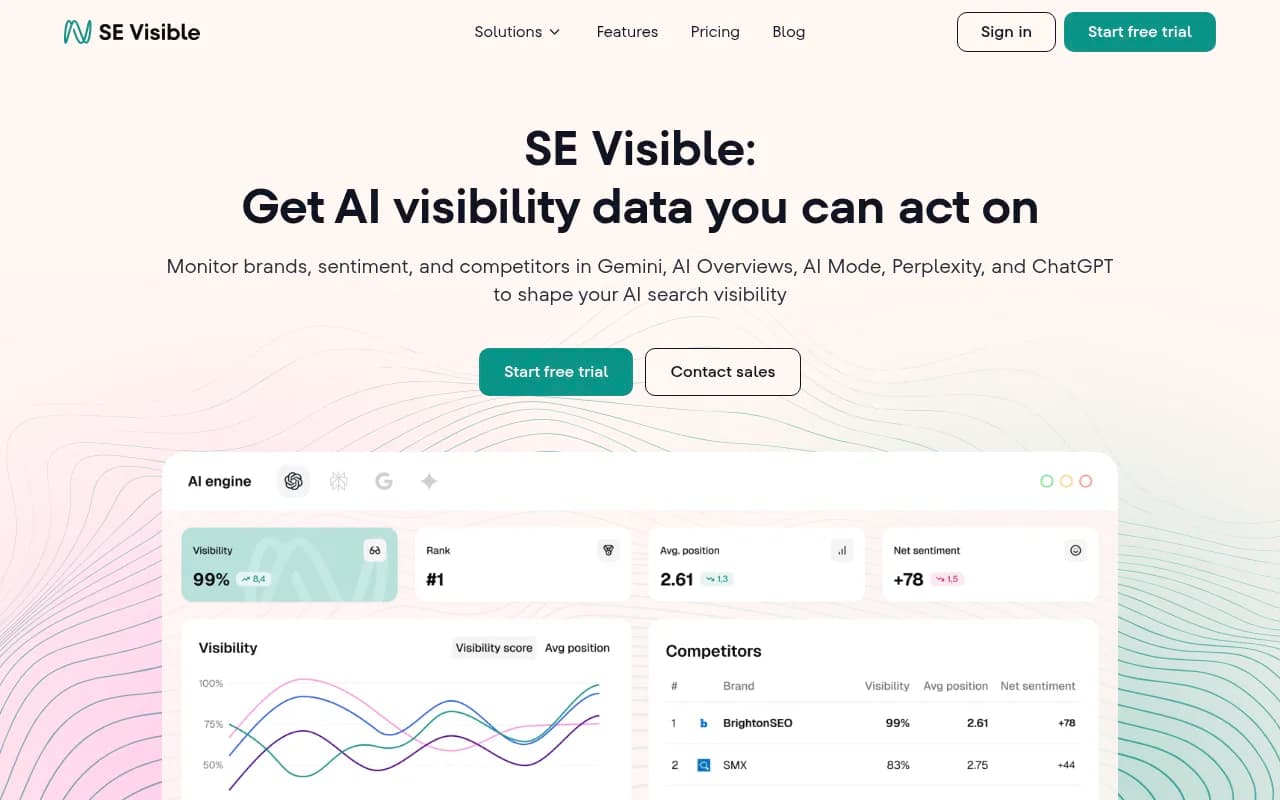
It covers Google AI Overviews well and includes competitor benchmarking and sentiment analysis. For CMOs and agency owners who want a clean dashboard to report on AI visibility alongside traditional SEO metrics, it's a practical option. The starting price of $189/month is reasonable for what you get.
The limitation is depth: it's better for reporting than for optimization, and the engine coverage doesn't match the broader platforms on this list.
7. Evertune AI
Evertune is the enterprise end of the market. Founded by early Trade Desk team members and backed by $19M in funding, it analyzes over 1 million AI responses monthly per brand and covers ChatGPT, Claude, Gemini, Perplexity, Meta AI, and DeepSeek.
For Fortune 500 brands that need GEO insights at scale, Evertune is worth a conversation. The depth of analysis is real. But it's not built for mid-market teams or agencies, and the pricing reflects that. If you're not at enterprise scale, there are better fits on this list.
8. Gauge
Gauge positions itself as an all-in-one competitor analysis and AI visibility platform. It tracks where your brand and competitors appear in AI answers and provides some competitive benchmarking.
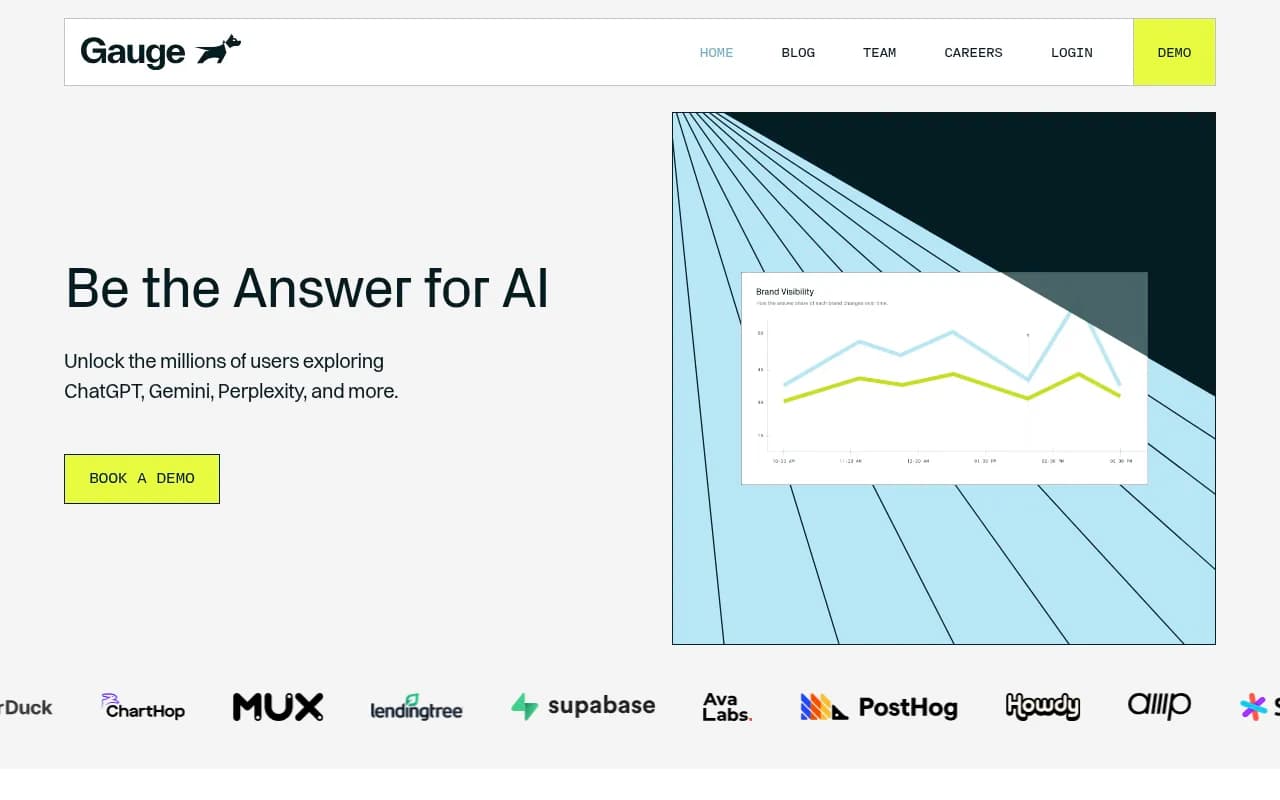
It's a reasonable mid-market option for teams that want more competitive context alongside their visibility data. The interface is straightforward and the setup isn't complicated. Like several others here, it's primarily a monitoring tool — the optimization side is limited.
9. LLM Pulse
LLM Pulse is a lighter-weight option focused on tracking brand visibility across ChatGPT, Perplexity, and a handful of other models. It's built for teams that want quick answers without a complex setup.
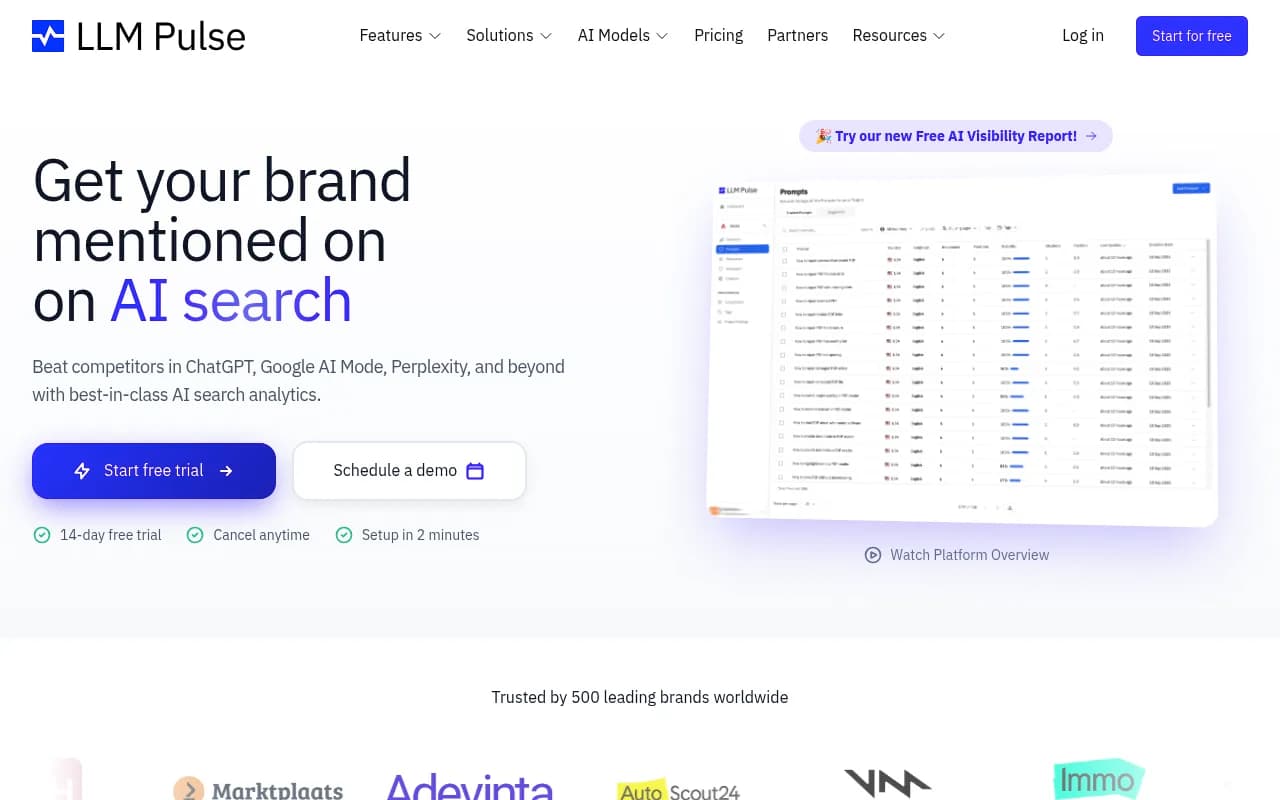
The appeal is simplicity and price. If you're early in your AI visibility journey and want to establish a baseline before committing to a more comprehensive platform, LLM Pulse is a reasonable first step. It doesn't have the depth for serious optimization work, but it gets the monitoring job done.
10. Ranksmith
Ranksmith offers AI search visibility tracking with a focus on actionable insights rather than just raw data. It's positioned as a strong value option for teams that want more than basic monitoring without paying enterprise prices.
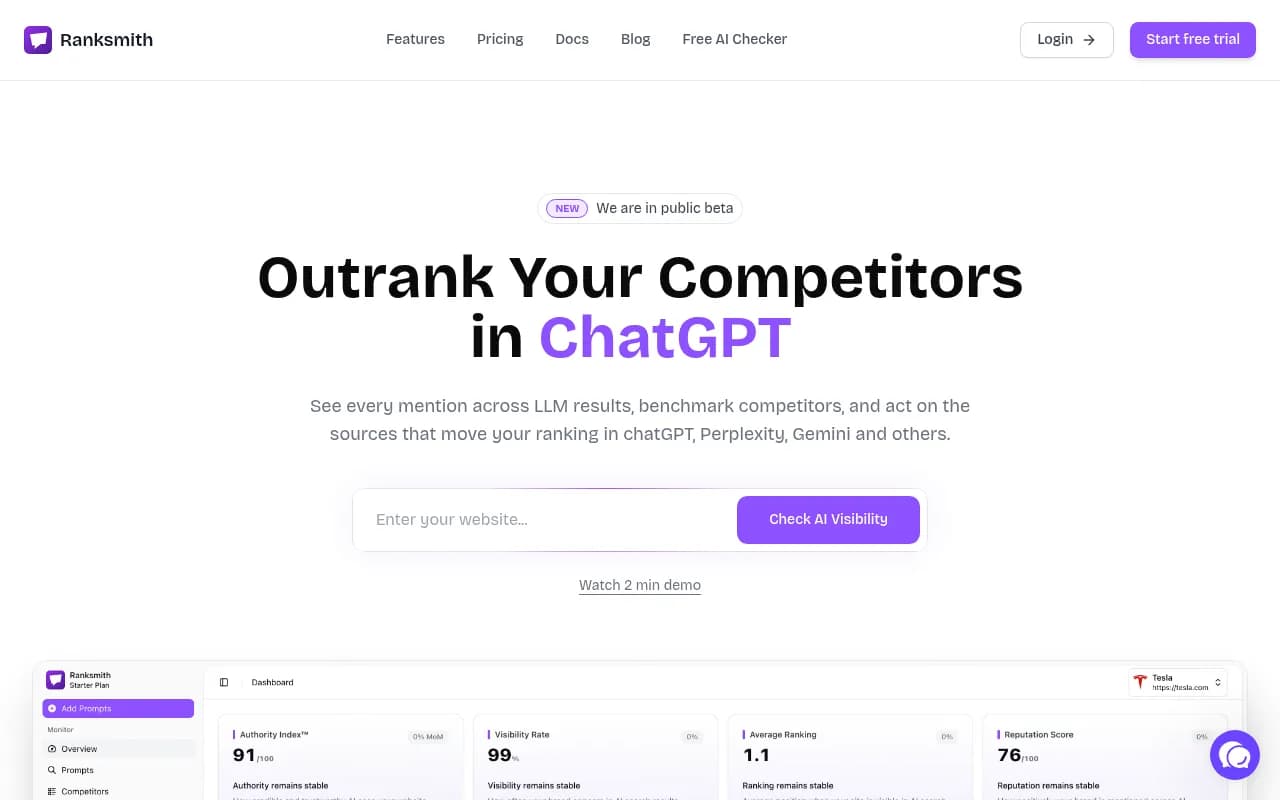
The platform includes some guidance on what to fix, which puts it a step ahead of pure monitoring tools. Engine coverage is more limited than the top options on this list, but for teams with a tighter budget who want a practical starting point, it's worth evaluating.
Side-by-side comparison
| Platform | AI engines covered | Content generation | Traffic attribution | Crawler logs | Starting price |
|---|---|---|---|---|---|
| Promptwatch | 10+ (ChatGPT, Claude, Gemini, Perplexity, DeepSeek, Grok, Meta AI, Copilot, Mistral, Google AI Mode) | Yes | Yes | Yes | $99/mo |
| Scrunch AI | 7 (ChatGPT, Claude, Perplexity, Gemini, AI Overviews, AI Mode, Meta AI) | No | Yes (GA4) | No | Enterprise |
| Profound | 9+ | No | No | No | $99/mo |
| AthenaHQ | 4 (Google AIO, Perplexity, ChatGPT, Claude) | No | No | No | $295/mo |
| Otterly.AI | 3 (ChatGPT, Perplexity, AI Overviews) | No | No | No | ~$49/mo |
| SE Visible | 3-4 | No | No | No | $189/mo |
| Evertune AI | 6 (ChatGPT, Claude, Gemini, Perplexity, Meta AI, DeepSeek) | No | No | No | Enterprise |
| Gauge | 4-5 | No | No | No | Mid-market |
| LLM Pulse | 3-4 | No | No | No | Low |
| Ranksmith | 3-4 | Partial | No | No | Mid-market |
| Peec AI | 3 (ChatGPT, Perplexity, AI Overviews) | No | No | No | ~$49/mo |
How to choose the right one
The right tool depends on what stage you're at and what you actually need to do with the data.
If you're just starting out and want to establish a baseline, Otterly.AI or LLM Pulse will get you there without a big commitment. They're monitoring tools, not optimization platforms, but they're a reasonable first step.
If you're a mid-market brand or agency that needs competitive intelligence and multi-engine coverage, AthenaHQ, Gauge, or Profound are worth evaluating. They give you solid data but leave the optimization work to you.
If you're ready to move from monitoring to actually improving your AI visibility, Promptwatch is the clearest choice. The combination of Answer Gap Analysis, AI content generation grounded in citation data, crawler logs, and traffic attribution means you're not just watching the scoreboard — you're changing the score. Most platforms on this list stop at step one of that process.
If brand safety and hallucination detection are your primary concern at enterprise scale, Scrunch AI and Evertune AI are the strongest options.
One thing worth noting: the gap between monitoring tools and optimization platforms is widening fast. In 2026, knowing you're invisible for a prompt isn't enough — the teams winning in AI search are the ones that can identify the gap and close it quickly. That's the capability worth prioritizing when you evaluate any tool on this list.