Key takeaways
- A mention count tells you whether AI named you. Perception tracking asks what AI says, in what tone, next to whom, and which pages it learned that from.
- Most tools in this space still stop at mentions, sentiment and share of voice. A smaller group adds claim-level analysis, crawler data and traffic attribution.
- Monitoring alone does not change what AI says. Perception problems usually trace back to specific pages, so the tool needs to connect answers to sources.
- Prompt count and engine coverage drive pricing more than anything else. Check which engines are included in the tier you are quoted.
- Every tool measures a sample of a non-deterministic system. Treat scores as trends, not exact truth.
What perception tracking means (and what it does not)
A lot of articles about the state of AI in 2026 will not help you here. The big annual reports cover model progress, compute and policy. A computer-vision roundup that turned up in my research uses "perception software" to mean camera and LiDAR pipelines. Neither is about how ChatGPT or Gemini describes your company.
This guide is about brand perception inside AI answers. When a buyer asks "what's the best CRM for a 20-person agency," the model picks names, orders them, adds adjectives and cites sources. Perception tracking is measuring all of that.
The first generation of tools only answered one question: was my brand mentioned? That is a fine starting point and a poor stopping point. A brand can be mentioned in every response and still be described as "expensive with weak support." It can also be cited constantly from a third-party page you have never seen.
The layers beyond a mention count
Here is how I split the problem. Each layer needs different data, and tools differ a lot in how many they cover.
Layer 1: presence and prominence
Mention rate, position in the list of brands, and share of voice against competitors. Nearly every tool does this. The differences are in how many prompts you get and how often they run.
Layer 2: sentiment
Whether the context around your brand is positive, neutral or negative. Useful, but coarse. A single score hides which claims are driving it. Be wary of vendor-published sentiment league tables. Otterly's own comparison page, for example, ranks brands by sentiment with its own product near the top, and I found no independent testing of sentiment accuracy for any of these tools.
Layer 3: claims and accuracy
This is where "perception" becomes concrete. Instead of one number, you see the individual statements AI makes: "affordable for small teams," "lacks an API," "popular with enterprises." Then you check which are true. Few tools do this well. LLMClicks advertises hallucination detection, and Promptwatch's Brand Narrative groups repeated claims by theme (pricing, features, support, reputation) with a 0-100 score per theme you can compare against competitors. Its Fact Check feature lets you mark a claim accurate or inaccurate, then scans your crawled pages to find the ones stating it or its opposite.
Layer 4: sources
Which URLs does the model cite when it talks about you? This matters more than most people expect. Promptwatch Data found that for branded prompts in ChatGPT (Sep 28 to Oct 4, 2026), product pages got 23.3% of citations and landing pages 22.8%, but reviews rose to 5.6%, more than three times their share across all prompts, and social posts rose to 3.0%, almost four times. In other words, when someone asks about you by name, third-party opinion gets a bigger voice. Your perception is partly written elsewhere.
Layer 5: crawlers, traffic and outcomes
The last layer asks whether AI bots can actually read your pages, whether those pages get cited, and whether any of it sends visitors. This is the layer that separates a diagnostic from a dashboard, and it is rare. Profound has Agent Analytics for agent visits, and Promptwatch offers IP-verified crawler logs plus visitor analytics.
Why per-engine measurement matters
Different engines build answers differently. Promptwatch's average sources per response data (an older report, dated September 2025, so treat the exact figures as stale) showed ChatGPT citing about 5 sources per web-search answer, while Google AI Overviews and Perplexity cited about 10. Copilot's average swung from under 2 to nearly 17.
The point is not the numbers. It is that a blended score across engines can hide a real problem. If your buyers use Perplexity and your tool tier only covers ChatGPT, you are measuring the wrong thing. Also, social sources differ a lot by engine: in the same week, ChatGPT drew 0.46% of citations from social platforms while Google AI Overviews drew 12.2%. Perception shaped by Reddit threads or YouTube videos will look different depending on where you look.
The tool landscape
Prices below come from third-party roundups and change often. I could not verify most against official pricing pages, since several render dynamically. Confirm before buying.
Monitoring-first tools
Otterly.AI is the low-cost entry. Reported pricing is Lite at $29/mo for 15 prompts, Standard at $189/mo for 100 prompts and Premium at $489/mo for 400 prompts, with ChatGPT, AI Overviews, Perplexity and Copilot included and Gemini, AI Mode and Claude as paid add-ons.
Otterly.AI

Peec AI, a Berlin company, focuses on competitor gap analysis. Reported entry pricing is about 89 EUR/mo, with Starter at 50 prompts across 3 models.

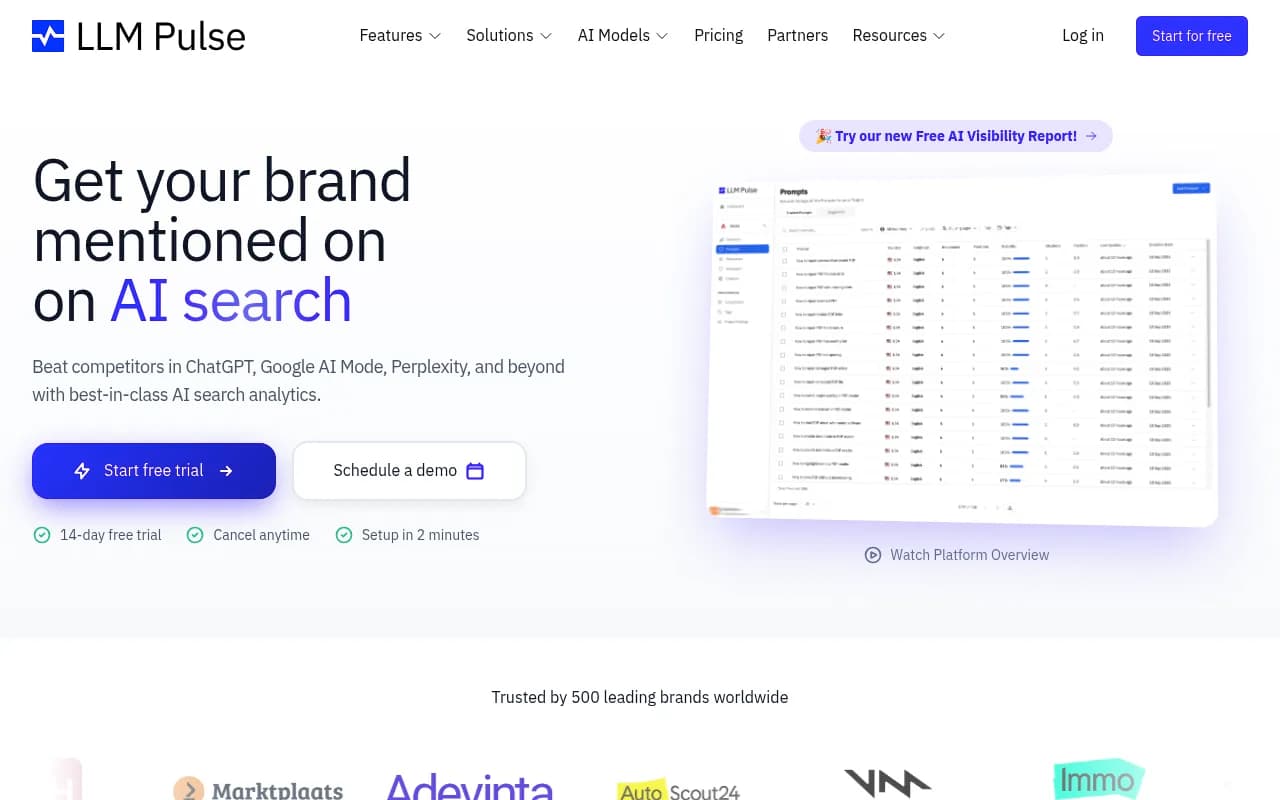
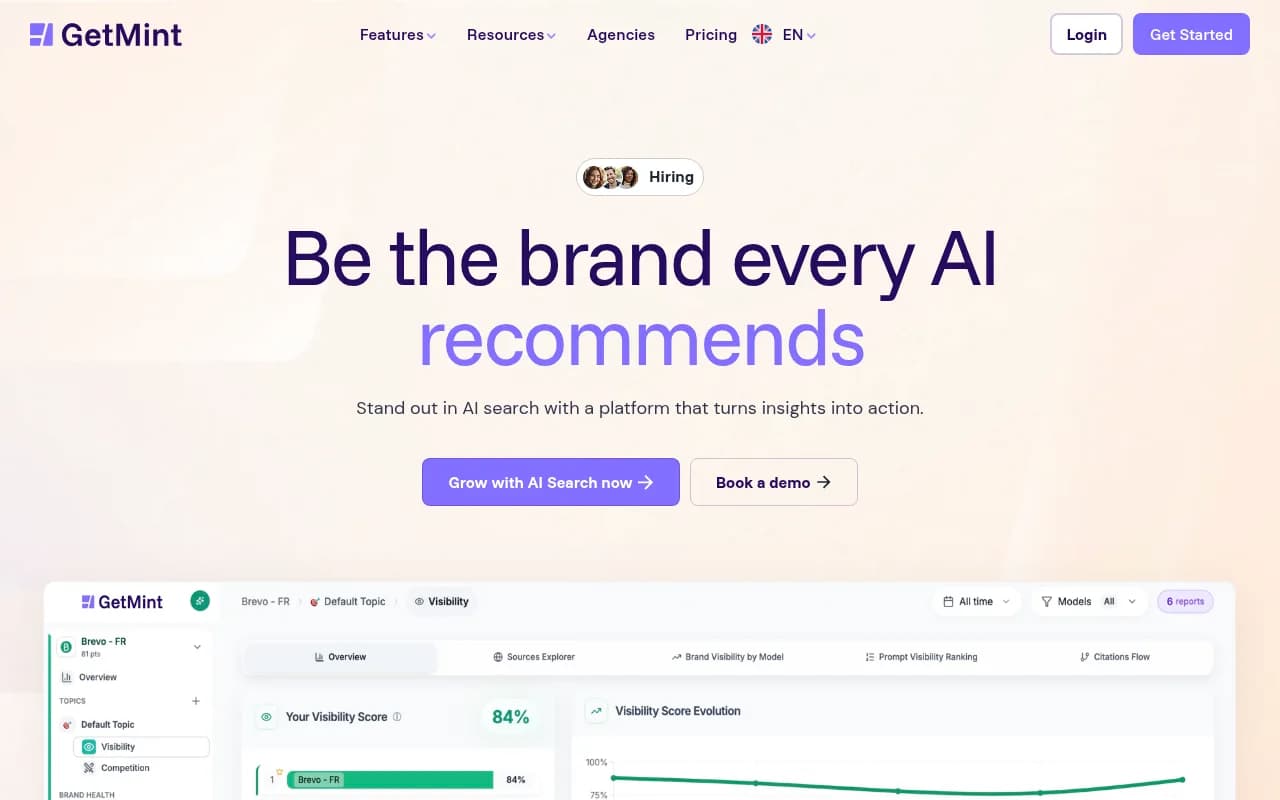
Rankshift, LLM Pulse and GetMint sit in a similar monitoring-focused space.

Enterprise and mid-market platforms
Profound is the best-funded name. Sources disagree on pricing: one lists Starter at $99/mo (ChatGPT only, 50 prompts) and Growth at $399/mo, another cites a Lite plan near $499/mo. That discrepancy is itself a warning to ask for a written quote.
Profound

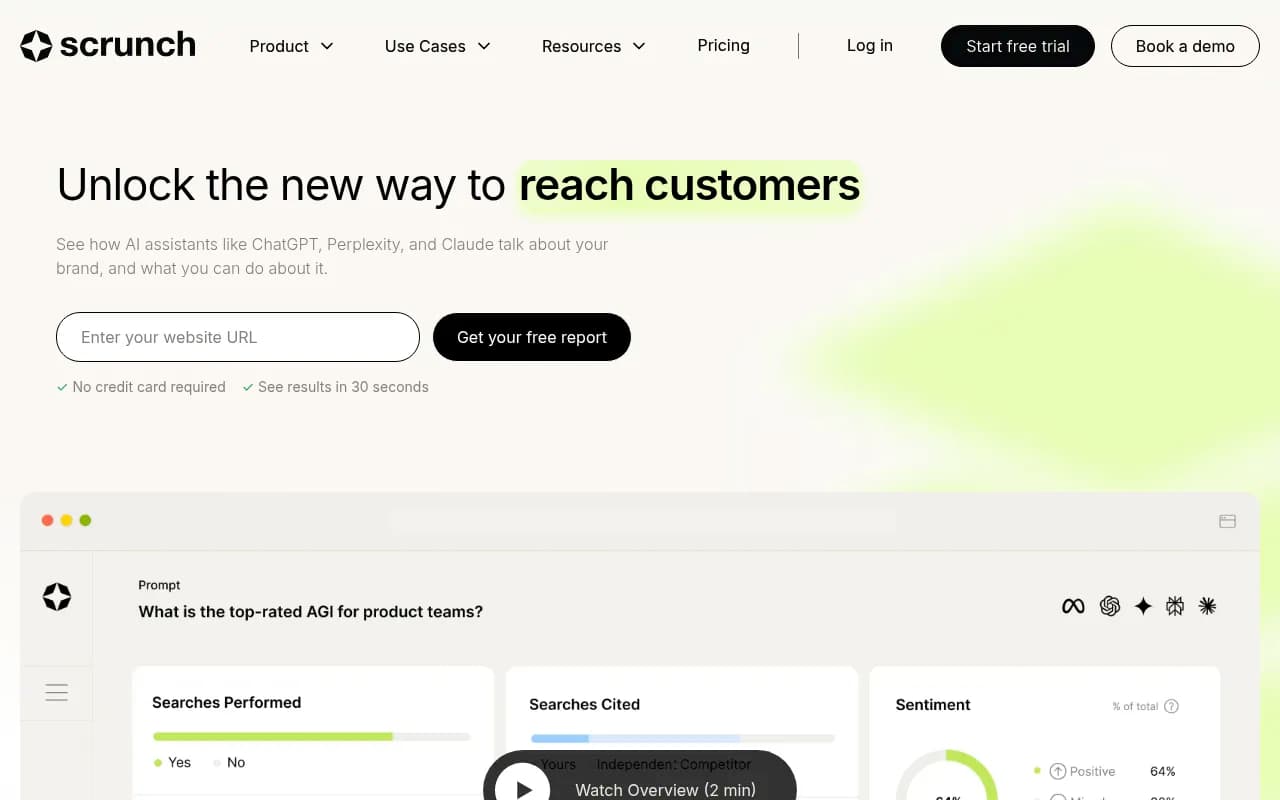
Scrunch and AthenaHQ are the other regularly compared names. AthenaHQ is credit-based, with Starter reported at $295 for 3,600 credits, where one credit is one AI response.

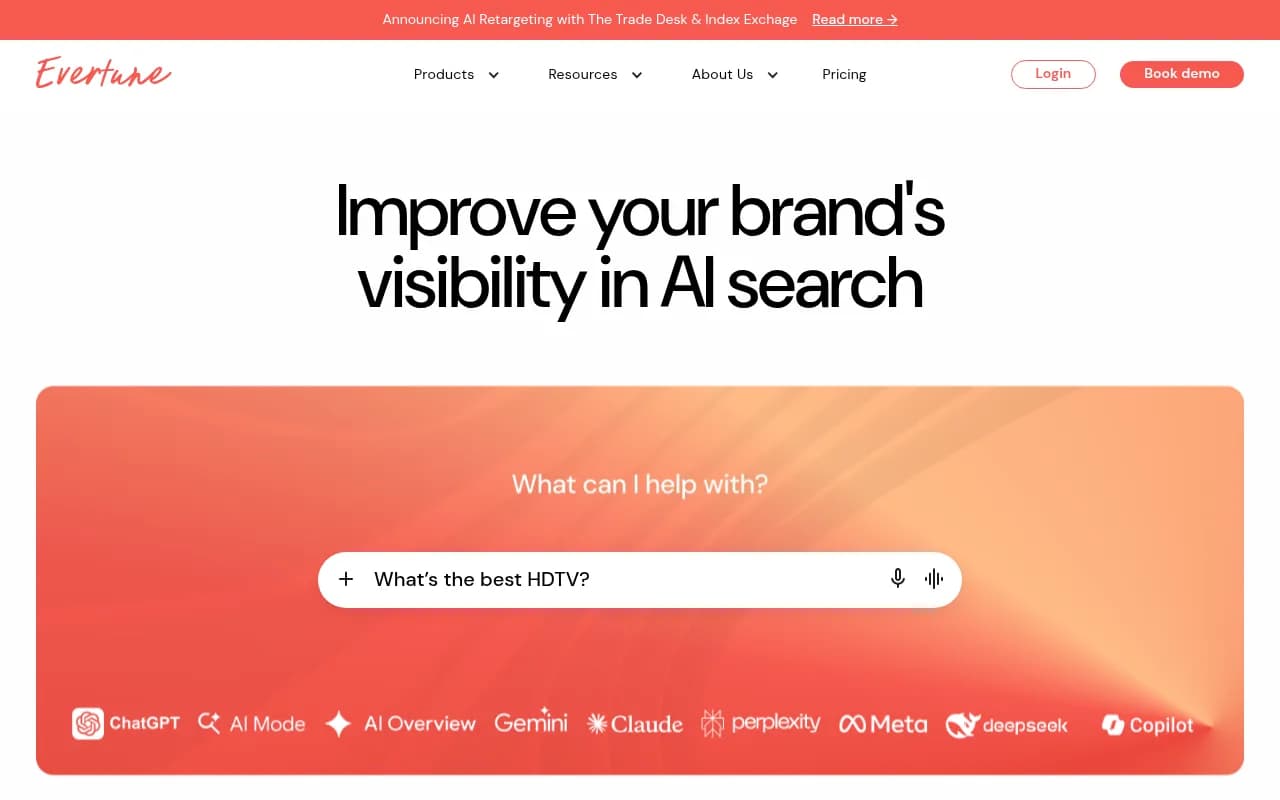
Evertune targets large brands and starts around $800/mo by one report.
SEO suites adding AI tracking
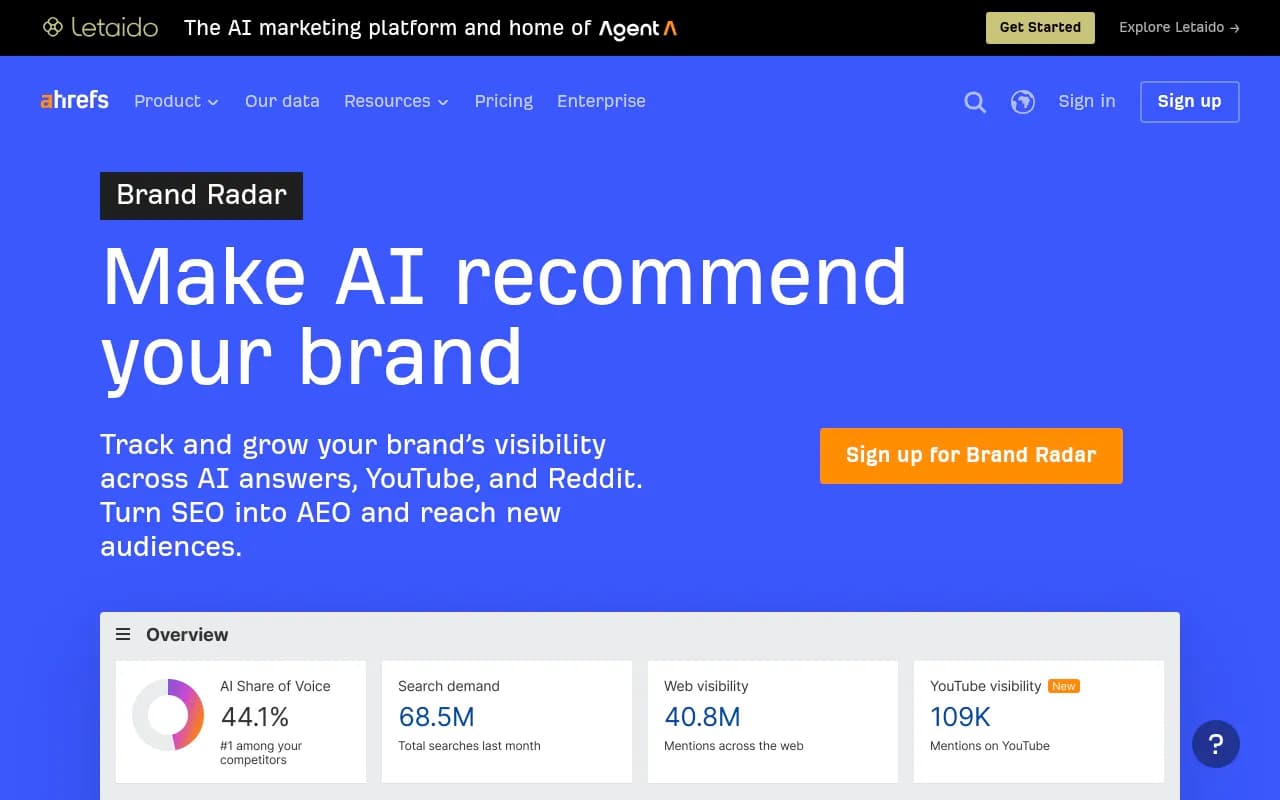
Semrush's AI Visibility Toolkit is reported at $99/mo per domain for 25 prompts. Ahrefs Brand Radar is an add-on reported at roughly $398 to $699/mo. If you already live in these suites, the convenience is real. The tradeoff is a smaller, fixed prompt set and less AI-specific depth.
Classic brand monitoring
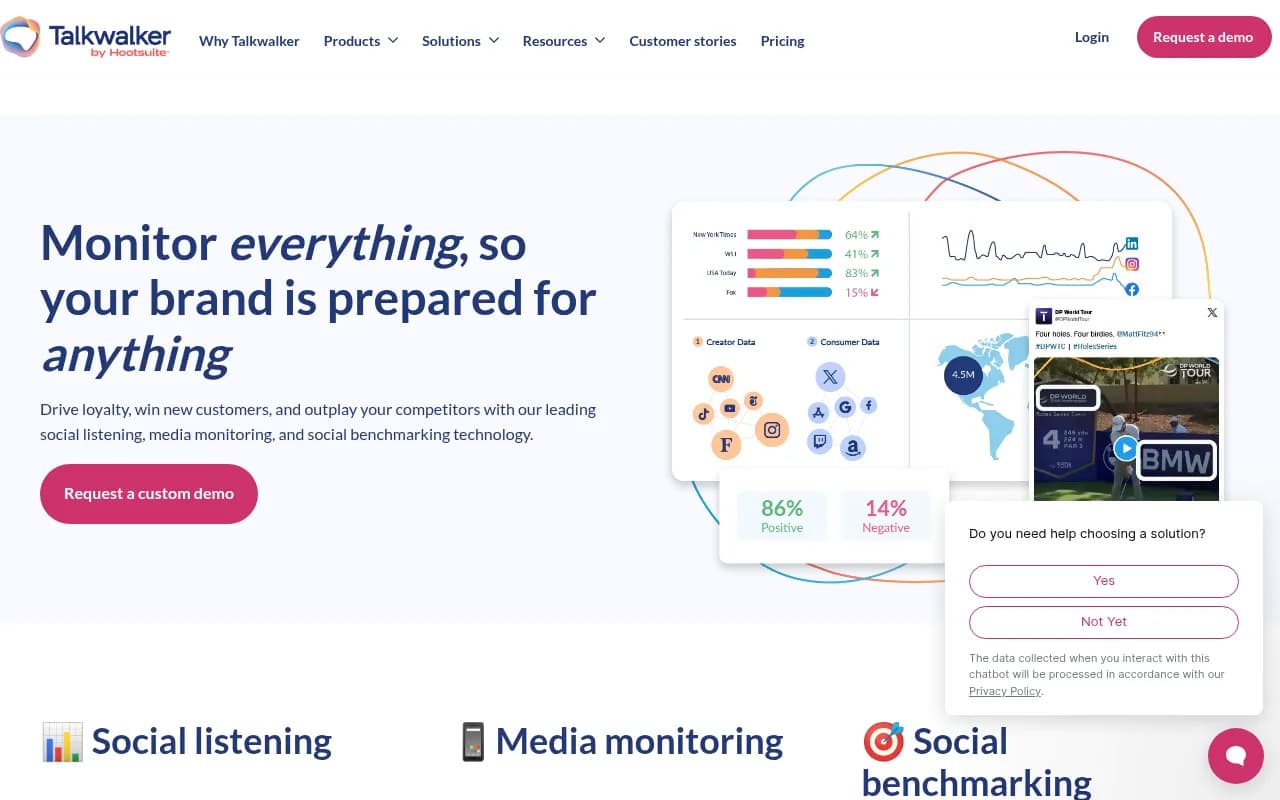
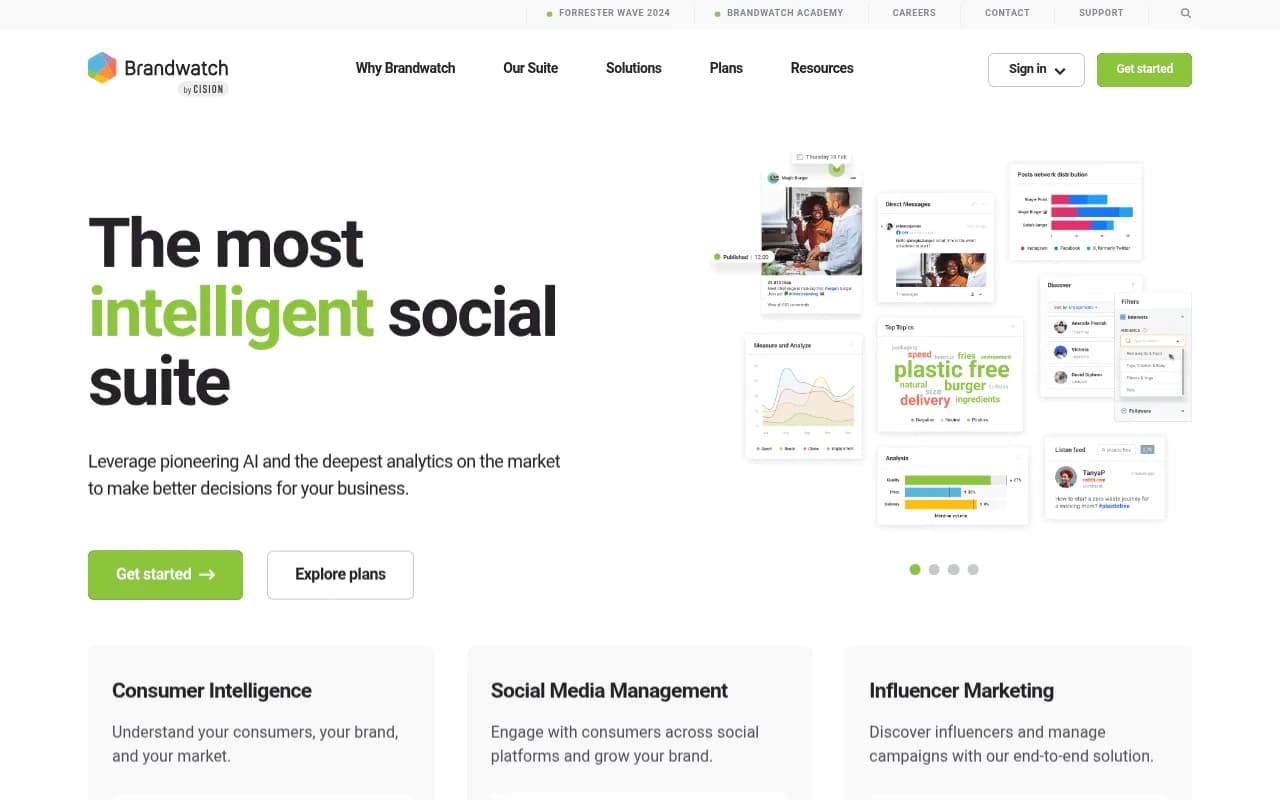
Talkwalker, Brandwatch and Meltwater are social listening tools. They are good at the open web and social, but they do not query ChatGPT or Gemini, so they cannot tell you what AI says about you. They are a complement, not a substitute.
Where Promptwatch fits
Promptwatch is the one I would point to for teams that want the full chain from perception to fix. It monitors the real interfaces of ChatGPT, Gemini, Perplexity, Google AI Overviews, AI Mode, Copilot and others rather than only APIs, which matters because user-facing answers and citations can differ from API output. On perception specifically, Brand Narrative breaks AI responses into claims, Fact Check ties inaccurate claims back to your own pages, and Persona insights show how sentiment and position differ for different buyer types.
Then it keeps going. The Action Board prioritizes fixes, the Content Agent writes and publishes to WordPress, Webflow or Framer, and crawler logs and visitor analytics check whether the new page got read, cited and clicked. Most monitoring tools hand you the diagnosis and stop there.

Plans start at $95/mo (Essential), $245/mo (Professional) and $579/mo (Business, which is the first tier with the Content Agent and Fact Check). Agency plans run from $199/mo. Confirm current pricing at promptwatch.com/pricing. There is a 7-day free trial, and the free AI visibility report gives a quick read on how ChatGPT, Gemini and Perplexity describe you with no login. A head-to-head view against the most common competitor is at Promptwatch vs Profound.
Comparison at a glance
| Tool | Mentions and share of voice | Sentiment | Claim-level analysis | Crawler logs | Content execution |
|---|---|---|---|---|---|
| Promptwatch | Yes | Yes | Yes (Brand Narrative, Fact Check) | Yes, IP-verified | Yes (Content Agent, CMS publishing) |
| Profound | Yes | Yes | Limited | Agent Analytics | Limited |
| Otterly.AI | Yes | Yes | No | No | No |
| Peec AI | Yes | Yes | No | No | No |
| Semrush AI toolkit | Yes | Basic | No | No | Via wider suite |
| AthenaHQ | Yes | Yes | Limited | No | Limited |
| Talkwalker | Social and web only | Yes | No | No | No |
This table reflects publicly described capabilities and my own read of vendor positioning. Verify details in a trial.
How to choose
Start from the question you need answered
- "Are we visible at all?" A monitoring tool at the low end of pricing will do.
- "Why do competitors outrank us, and where does AI get its facts?" You need citation and source analysis.
- "AI is saying something wrong about us." You need claim-level analysis and a way to trace it to pages.
- "Is any of this producing revenue?" You need crawler data and visitor analytics, not just visibility scores.
Watch the pricing mechanics
Prompt count drives cost more than anything else, and engine coverage is often an upsell. Listed prices frequently assume annual billing. Ask which engines are in your tier, how often prompts run, and whether country or city targeting is included if you sell locally.
Remember what you are measuring
One reviewer described these tools as producing a "synthetic approximation of a non-deterministic system." That is fair. The same prompt can return different brands on consecutive runs. Look for tools that run prompts repeatedly and report averages, and compare trends across weeks rather than reacting to a single day's dip.
A practical workflow
- Build a prompt set from how your buyers actually ask, including branded, comparison and category prompts. Persona-based prompts help if your buyers vary.
- Baseline visibility, position and sentiment per engine.
- Pull the claims AI makes about you and mark the wrong ones.
- Trace each wrong or weak claim to the cited sources. Fix your own pages first. For third-party pages, reviews and community posts, plan outreach.
- Check crawler access. If AI bots cannot read a page, no amount of rewriting helps.
- Re-measure after two to four weeks. Content decay varies by type: Promptwatch Data found landing pages and docs stayed cited longest, while news lost half its pages within 36 days.
For more options by category, the GEO software directory lists dozens of trackers beyond the ones above.
Final take
Mention tracking is now a commodity, and cheap versions exist from $29 a month. What costs more, and matters more, is knowing why AI says what it says and being able to change it. If a tool cannot show you the claims, the sources and whether bots can read your pages, you have a scoreboard, not a way to move the score.