Key takeaways
- Most of the work that earns AI citations is cheap: clear product pages, landing pages, docs, an FAQ and complete review profiles. Spend time before you spend money.
- A realistic first-year budget for a euro seed startup runs from about EUR 0 to 300 a month at the start, rising to the low hundreds as you add a tracker and content help.
- Buy measurement once you have something to measure. A tracker in month one, before your site is readable, mostly records absence.
- Social is not one channel. ChatGPT barely cites it, Google AI Overviews cites it a lot, so pick platforms by where your buyers search.
- Skip enterprise GEO platforms, big PR retainers and anything that bills for monitoring alone until you have revenue that justifies it.
Why seed budgets need a different plan
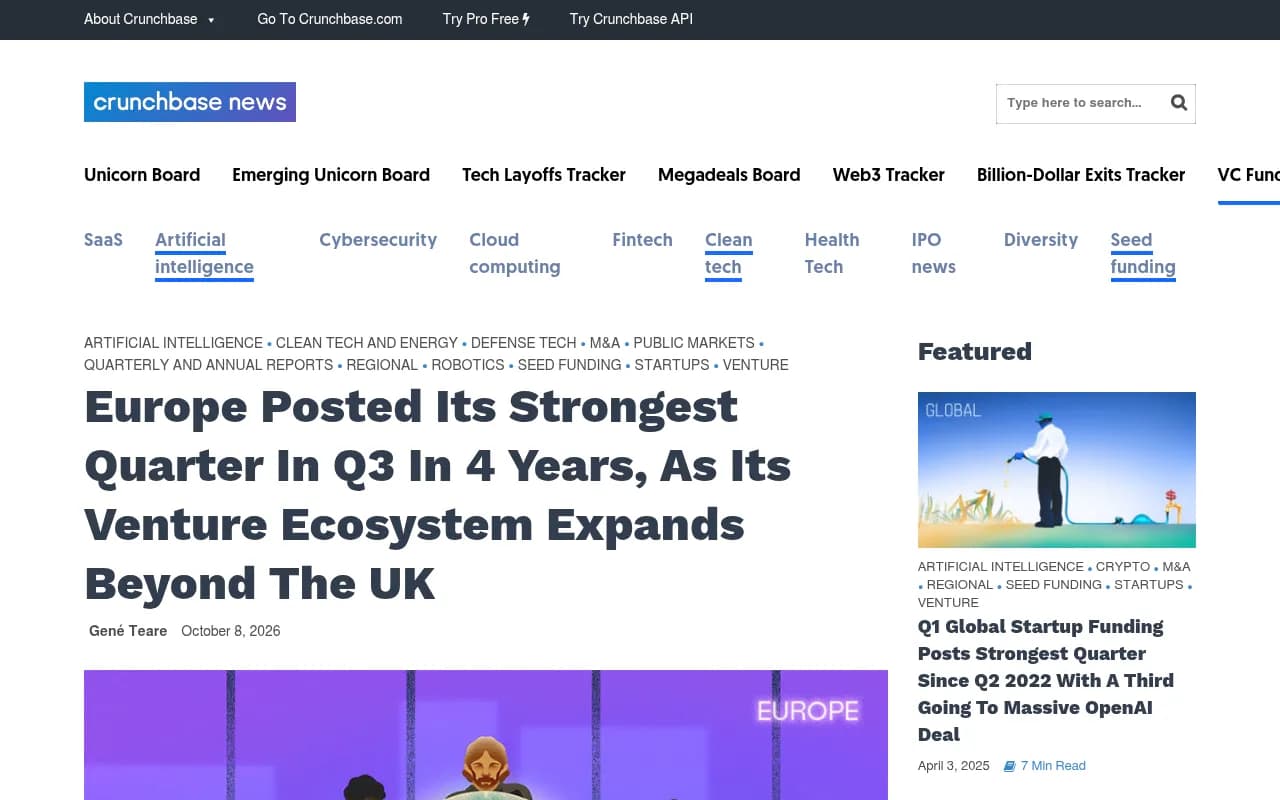
Most AI visibility advice is written for brands with a marketing team and a six-figure budget. A seed-stage startup in Europe has neither. According to Crunchbase's Q3 2026 data, around $2 billion went into more than 750 European companies at seed stage in the quarter. That is a lot of companies sharing a fairly modest amount each, and most of them are competing for the same buyer attention.
The typical 2026 AI pre-seed round is $500K to $700K, according to Waveup's fundraising playbook, and the advice there is to hit seed-stage traction on 12 to 18 months of runway. Europe tends to run 10 to 25% lower on both raise size and valuation. If your total marketing line is EUR 20K for the year, the question is not "which GEO platform is best". It is "what is the smallest set of things that gets us cited at all".
That reframing matters. I think a lot of founders buy a dashboard because a dashboard feels like progress. A dashboard tells you that nobody mentions you. It does not change that.
What actually earns AI citations
Before deciding what to buy, look at what AI systems actually cite. Promptwatch Data's report on ChatGPT citations by content type (Sep 28 to Oct 4, 2026) breaks down what the model pulls from:
- Product pages are 22.4% of classified citations, landing pages 16.8%. So 39% of citations go to pages describing what a company sells.
- Listicles are 13.6%, how-tos 8.7%, comparisons 5.9%, documentation 7.5%, FAQ pages 3.3% and reviews 1.7%.
- For commercial prompts like "best CRM for small businesses", product pages, landing pages, listicles and comparisons make up almost 70% of citations.
- For branded prompts, reviews reach 5.6%, more than three times their overall share.
The good news for a thin budget: the biggest single citation surface is your own product and landing pages. You already own them. They cost founder time and a decent writer, not a vendor contract.
For software startups the pattern is similar. Promptwatch's software citation data shows GitHub (1.2%), Microsoft Learn (0.98%) and G2 (0.73%) leading, with docs and help centers earning the largest source-type share at 2.64%. Vendor sites plus docs together are 4.65%, about three times review sites and analysts combined. Note that these are shares of all software citations, not startup-specific numbers, so treat them as direction rather than a forecast.
Pages also age differently. The half-life report tracked pages ChatGPT cited on July 6, 2026 for 90 days. News pages lost half their citations within about five weeks. Landing pages and docs kept most of theirs for months. For a startup with limited writing capacity, that says: invest in durable pages, not a news-style blog treadmill.
The channel question: where do your buyers search?
Social spend is where seed budgets leak. Promptwatch's social citations report (Sep 28 to Oct 4, 2026) shows how different the models are:
| AI surface | Social share of citations | Top social platforms |
|---|---|---|
| ChatGPT | 0.46% | LinkedIn (0.3%), Reddit down to 0.09% |
| Google AI Overviews | 12.2% | YouTube 4.28%, Facebook 2.38%, Reddit 2.15% |
| Perplexity | 2.7% | LinkedIn and Reddit 0.86% each, YouTube 0.79% |
Reddit's drop in ChatGPT is documented in this separate report: its share fell from roughly 4% to 0.5% on August 14, 2026. If your plan was "seed Reddit threads to get into ChatGPT", that plan got a lot weaker this summer.
My read: pick one platform per target engine. If your buyers use Google, a handful of YouTube videos does more than a daily LinkedIn habit. If they live in Perplexity, LinkedIn is worth the founder time. X is not worth it for this purpose.
A 12-month budget, phase by phase
These numbers are planning ranges, not quotes. Verify current tool pricing on each vendor's site. Euro figures are approximate.
Months 1 to 3: fix the foundation (EUR 0 to 300 per month)
The xraised 90-day visibility budget puts pre-seed spend at roughly EUR 0 to 300 a month plus 4 to 6 hours a week of founder time. That matches what I would do. The point is that AI visibility is mostly downstream of consistent messaging, earned placements and clear entity signals.
What to spend time on:
- Rewrite your product and landing pages so specs, prices and positioning are factual and crawlable.
- Publish docs and help pages if you sell software. Keep a public GitHub presence if it fits.
- Add an FAQ page.
- Complete your G2 and Capterra profiles, or the review sites that matter in your category.
- Check that AI crawlers can actually read your site. Robots.txt mistakes are common and silent.
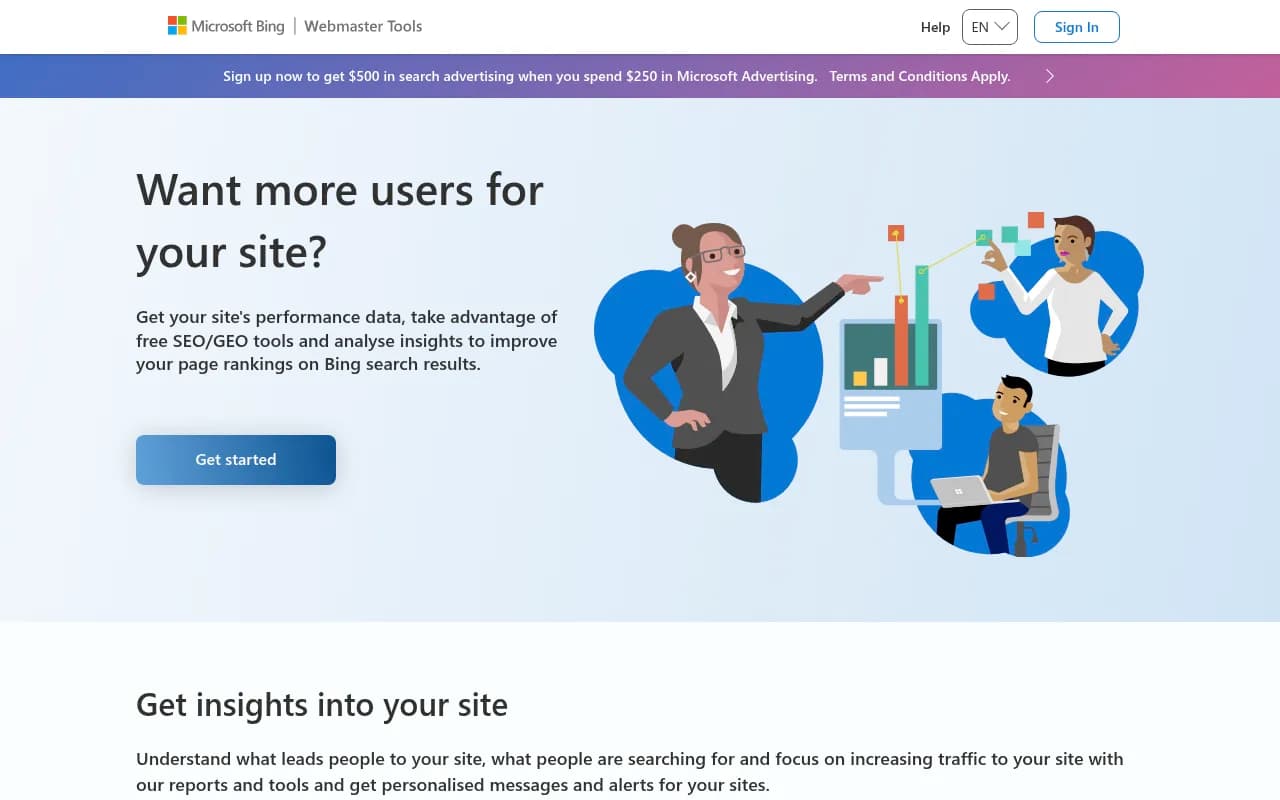
Free tools do most of this. Google Search Console and Bing Webmaster Tools cost nothing. Screaming Frog has a free crawl allowance for small sites. Promptwatch also publishes free utilities such as an Agentic Readiness Check and an AI Crawler URL Inspector that show whether crawlers can reach you.
Months 3 to 6: start measuring (EUR 100 to 400 per month)
Once your pages are readable, you need to know whether anything moved. This is where a tracker earns its place. Pick a modest prompt set, 30 to 60 prompts that mirror how buyers actually ask: category queries, comparison queries and a few branded ones.
The market splits into two types. Pure prompt trackers tell you whether you were mentioned. Platforms that go further show why, and help you act on it.
Promptwatch sits in the second group. Its Essential plan is $95 a month (EUR 85) with 50 prompts, all AI models, crawler-adjacent analytics, site audit and content gap analysis, and a free tier tracks 10 prompts on ChatGPT only. Confirm current pricing at promptwatch.com/pricing. For a seed startup that wants one tool covering tracking plus fix-it guidance, that is a sensible entry point.

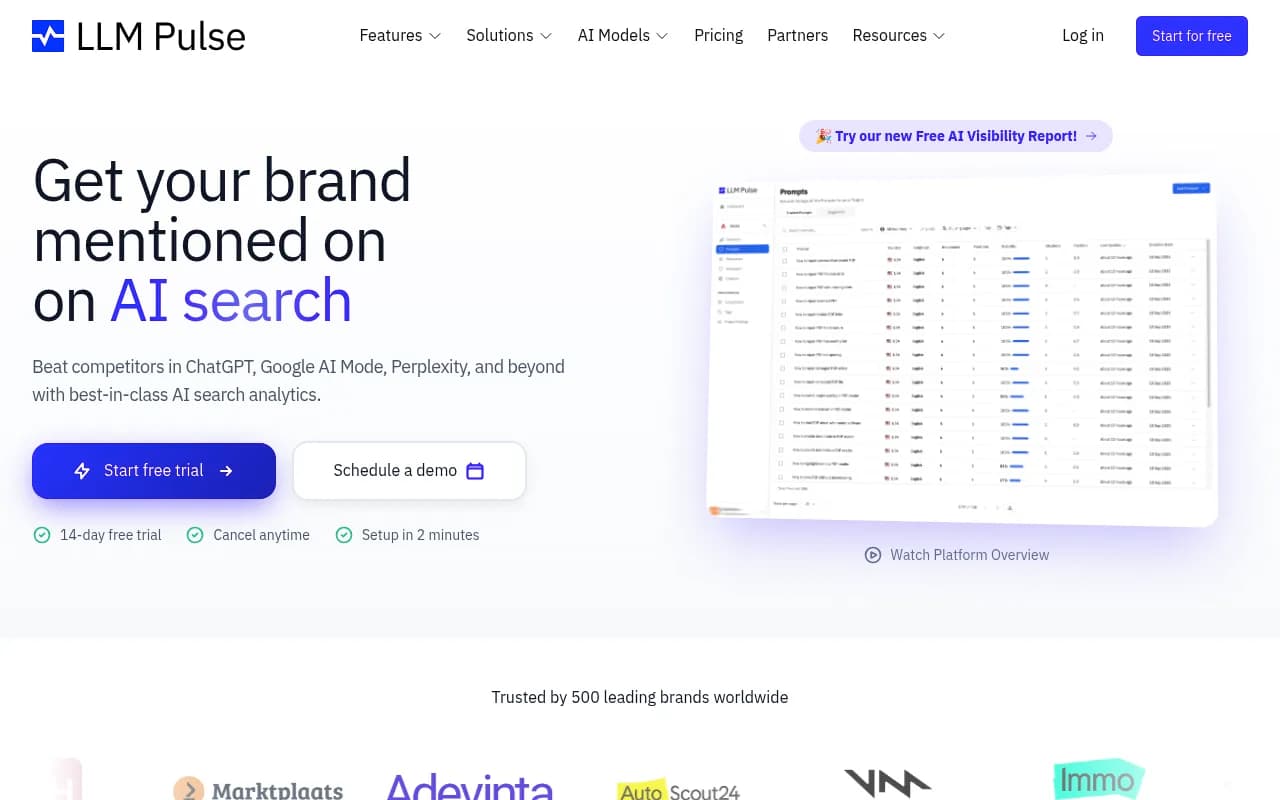
Cheaper trackers exist if you only want monitoring. Otterly.AI, Peec AI and Rankshift are common choices, and LLM Pulse is another. They answer "were we mentioned" well. They generally do not give you crawler logs or AI-referred traffic attribution, so you will be guessing about cause.
Otterly.AI



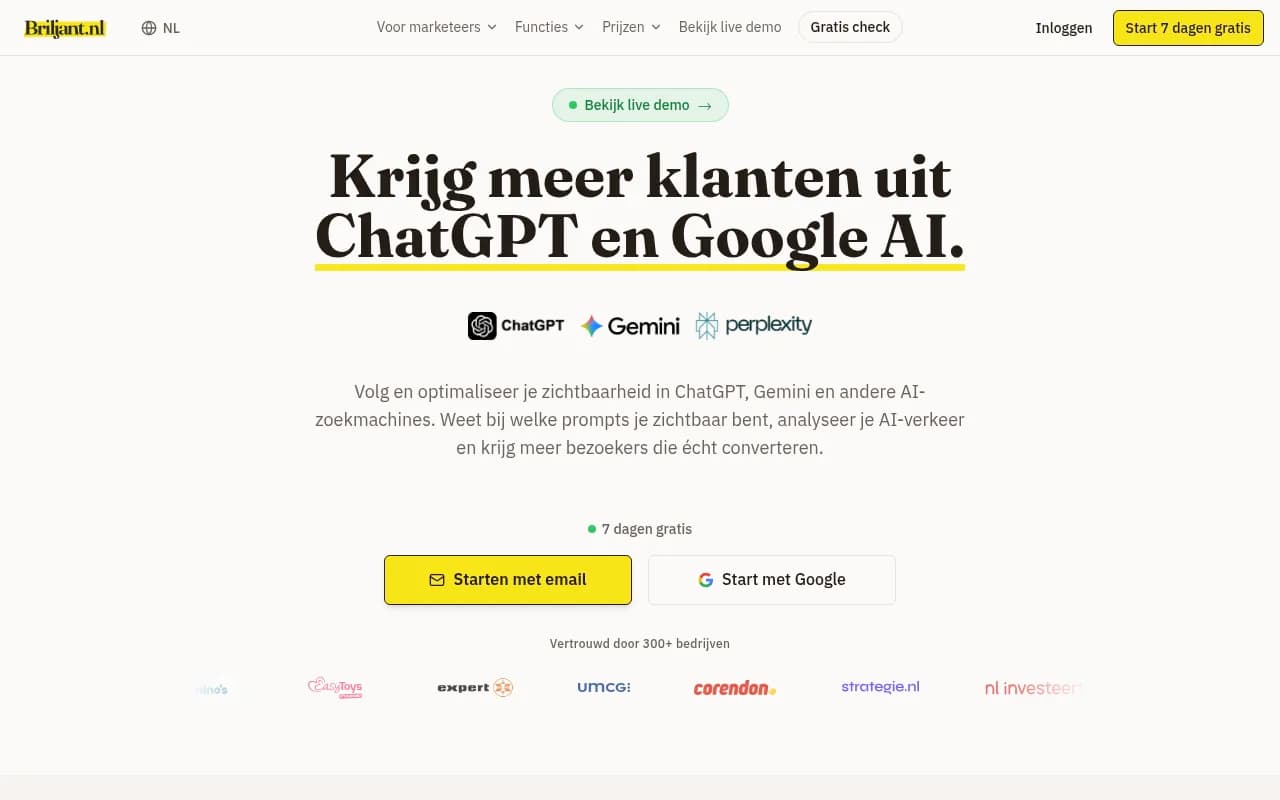
A European angle: Briljant is a Dutch GEO platform in the catalog, which may suit teams who want a local vendor.
Months 6 to 9: content and third-party presence (EUR 300 to 800 per month)
By now your tracker should show gaps: prompts where competitors get named and you do not. Fill them.
- Publish comparison pages for your category. Comparisons are 5.9% of ChatGPT citations overall and 7.9% for commercial prompts.
- Get listed in the "best of" roundups AI already cites for your category. A modest, honest outreach effort beats a PR retainer at this stage.
- Add a few YouTube videos if your buyers search on Google.
- Collect reviews on the sites that matter in your niche. Trustpilot is relevant for some categories, G2 for software.
For drafting help, a general assistant such as Claude or ChatGPT covers most needs. Keep a human editor on anything factual: wrong prices or specs on a product page are the very content AI systems repeat.
If you want content tooling that is grounded in visibility data, Promptwatch's higher plans include a Content Agent and content gap analysis. That makes sense once you have a steady cadence. Before that, a writer and a spreadsheet are enough.
Months 9 to 12: attribution and a decision on scaling (EUR 300 to 1,000 per month)
The last quarter is about proving the channel pays. Install analytics that separates AI-referred sessions from the rest. Google Analytics can do this with custom channel grouping, and privacy-first options like Matomo fit EU data-protection preferences. Promptwatch's visitor analytics also tracks AI-referred traffic and conversions directly.
If AI traffic converts, you have the evidence to ask for more budget in a seed extension or Series A conversation. If it does not, you found out cheaply.
Summary budget table
| Phase | Monthly spend (approx.) | Main spend | Founder time |
|---|---|---|---|
| Months 1 to 3 | EUR 0 to 300 | Free webmaster tools, copywriting, review profiles | 4 to 6 hours a week |
| Months 3 to 6 | EUR 100 to 400 | Entry-level tracker, small prompt set | 3 to 5 hours a week |
| Months 6 to 9 | EUR 300 to 800 | Comparison pages, outreach, a few videos | 3 to 5 hours a week |
| Months 9 to 12 | EUR 300 to 1,000 | Attribution, content refresh, possibly a content agent | 2 to 4 hours a week |
Over twelve months that lands somewhere between roughly EUR 3K and EUR 25K depending on how much you outsource. Most seed teams should sit near the lower-middle of that range.
What to skip
A few things I would deliberately not buy in year one:
- Enterprise GEO platforms. Tools aimed at Fortune 500 brands, such as Evertune or Bluefish AI, are priced and scoped for large teams.
- Monitoring-only tools sold at premium prices. If it cannot tell you what to fix, it is a nice chart.
- Traditional PR retainers. A launch announcement and a couple of earned placements are fine. A monthly retainer is not, at this stage.
- Content-at-scale tools without a visibility feed. Publishing 100 pages nobody is looking for is expensive noise.
- Anything that promises guaranteed AI rankings. Nobody can guarantee that.
EU-specific points
I did not find hard data on European agency rates, so treat your own quotes as the source of truth. Two practical notes, though. First, check vendors' GDPR posture and data-processing terms before pasting customer data into any tool. Promptwatch is ISO/IEC 27001 certified and GDPR compliant, which helps when procurement asks. Second, EU grants can offset costs: a program listed on the EU Funding Portal offers up to EUR 300,000 plus a curriculum and investor network, which is worth a look before you assume marketing has to come out of equity money.
Hiring help versus doing it yourself
Somewhere around months 6 to 9, some founders decide to bring in a specialist. An agency can make sense if nobody on the team can write well or run outreach. 1001 SEO Media is one option that covers technical SEO, content and GEO with no long-term contracts, which matters when your runway is fixed. Whoever you pick, ask for monthly reporting tied to citations and AI-referred traffic, not vanity metrics.
For wider tool research, the GEO software directory at bestgeosoftware.com lists many of the trackers mentioned above side by side.
A simple decision rule
If you can answer "yes" to all three, buy a tracker. If not, fix the site first.
- Do your product, landing and FAQ pages say plainly what you sell, for whom and at what price?
- Can AI crawlers reach those pages without errors?
- Do you have at least a few third-party mentions or reviews to point at?
The cheapest first-year AI visibility strategy is also the most boring one: clear pages, durable docs, honest reviews, one social channel chosen on evidence, and a modest tracker once there is something to track. Spend the rest of the money on the product.