Key takeaways
- The AI visibility platform category matured significantly through 2025, splitting into two camps: monitoring-only dashboards and full optimization platforms
- Profound, Peec AI, and Otterly.AI all track brand mentions across LLMs but stop at the data layer — they show you where you're invisible, not how to fix it
- Promptwatch is the only platform in this comparison rated as a "Leader" across all evaluation categories, largely because it closes the loop from gap detection to content creation to traffic attribution
- Pricing ranges from $29/month (Otterly.AI) to $499/month (Profound), but price alone doesn't tell you much about which platform will actually move the needle
- If your team lacks bandwidth to act on raw visibility data, the platform's ability to generate and optimize content matters as much as its tracking depth
A year ago, most marketing teams were still treating AI search as a "watch this space" topic. That changed fast. By mid-2025, Gartner was projecting a 25% decline in traditional search engine volume by 2026, NP Digital's analysis of 50 B2B companies found organic leads dropped 47% between January and October 2025, and research from Magenta Associates showed 66% of UK senior decision-makers were already using ChatGPT, Copilot, or Perplexity to research suppliers. Ninety percent of them trusted what those tools recommended.
So the question stopped being "should we care about AI visibility?" and became "which platform do we use to manage it?"
This guide is an honest look at where the four most-discussed platforms — Promptwatch, Profound, Peec AI, and Otterly.AI — actually stand after a full year of real-world use. Not what their landing pages say. What they actually do, what they cost, and where each one makes sense.
What "AI visibility" actually means now
Before getting into the platforms, it's worth being precise about what we're measuring. AI visibility is your brand's presence inside AI-generated responses. When someone asks ChatGPT "what's the best project management tool for agencies?" and your brand isn't mentioned, that's an AI visibility gap. When Perplexity cites a competitor's blog post instead of yours, that's a citation gap.
The core metrics that matter:
- Brand mention rate (how often your brand appears in relevant AI responses)
- Citation rate (how often AI models link to or reference your content)
- Share of voice (your mentions vs. competitors across a prompt set)
- Prompt coverage (which questions you appear for, and which you're missing)
Traditional SEO tools like Semrush and Ahrefs weren't built to measure any of this. They track keyword rankings and backlinks, which have limited correlation with AI citation behavior. That's why a new category of dedicated AI visibility platforms emerged in 2024-2025.
The problem is that "AI visibility platform" now covers a wide range of products, from basic brand mention trackers to full optimization suites. Knowing which type you're buying matters a lot.
The four platforms: what they actually are
Promptwatch
Promptwatch is the most complete platform in this comparison. It monitors 10 AI models (ChatGPT, Perplexity, Claude, Gemini, Google AI Overviews, Google AI Mode, Grok, DeepSeek, Copilot, and Mistral), but the monitoring is almost a secondary feature. The core value is what happens after you see the data.
The Answer Gap Analysis shows you exactly which prompts competitors rank for that you don't — not as a vague suggestion, but as a specific list of questions and topics your site is missing. From there, a built-in AI writing agent generates articles, listicles, and comparisons grounded in real citation data (over 880 million citations analyzed). The content isn't generic; it's engineered around what AI models actually cite.
Then there's the traffic attribution layer. A code snippet, Google Search Console integration, or server log analysis connects your AI visibility improvements to actual site traffic and revenue. Most platforms skip this entirely.
Other capabilities worth noting: real-time AI crawler logs (which pages ChatGPT, Claude, and Perplexity are crawling, how often, and what errors they hit), prompt volume and difficulty scoring, Reddit and YouTube citation tracking, ChatGPT Shopping monitoring, and competitor heatmaps.
Pricing: $99/month (Essential, 1 site, 50 prompts), $249/month (Professional, 2 sites, 150 prompts, crawler logs), $579/month (Business, 5 sites, 350 prompts). Agency and enterprise plans available.

Profound
Profound is the enterprise option. At $499/month, it's the most expensive platform here, and it earns that price with genuine analytical depth. It covers up to 10 AI models and has a strong research layer — prompt volume data, detailed share-of-voice breakdowns, and competitive analysis that goes beyond surface-level mention counts.
Where Profound falls short is the same place most enterprise tools do: it's built for analysis, not action. The platform gives you excellent data about where you stand, but content creation, schema implementation, and authority-building are left entirely to your team. For a company with a large in-house SEO team and the bandwidth to act on detailed reports, that's fine. For a lean marketing team that needs to move fast, it's a gap.
Profound

Peec AI
Peec AI sits in the middle of the market. Starting around €85-89/month, it offers multi-model tracking with flexible model selection and unlimited seats, which is genuinely useful for agencies managing multiple clients. Coverage extends to up to 10 models depending on add-ons.
The platform is fast and clean. It's a solid monitoring tool for teams that want to track brand mentions across LLMs without paying enterprise prices. The limitation is the same as Profound's: Peec AI shows you the data and leaves the optimization work to you. There's no content generation, no crawler log analysis, no traffic attribution.

Otterly.AI
Otterly.AI is the entry-level option. At $29/month, it's the most accessible platform in the category, and it earned a Gartner Cool Vendor designation in 2025, which is a real signal for a young product. It covers four base LLMs with two available as add-ons.
The trade-off is depth. Otterly works well for small teams or solo marketers who want a basic read on brand mentions without committing to a larger budget. It doesn't have the analytical depth of Profound, the flexibility of Peec AI, or the optimization capabilities of Promptwatch. For a first step into AI visibility monitoring, it's reasonable. For teams serious about improving their visibility, it's likely a temporary solution.
Otterly.AI

Head-to-head comparison
| Feature | Promptwatch | Profound | Peec AI | Otterly.AI |
|---|---|---|---|---|
| AI models tracked | 10 | Up to 10 | Up to 10 (add-ons) | 4 base + 2 add-ons |
| Starting price | $99/mo | $499/mo | ~€85/mo | $29/mo |
| Answer gap analysis | Yes | No | No | No |
| AI content generation | Yes (built-in agent) | No | No | No |
| AI crawler logs | Yes (Professional+) | No | No | No |
| Traffic attribution | Yes (3 methods) | No | No | No |
| Reddit/YouTube tracking | Yes | No | No | No |
| ChatGPT Shopping tracking | Yes | No | No | No |
| Prompt volume/difficulty | Yes | Partial | No | No |
| Competitor heatmaps | Yes | Yes | Partial | No |
| Multi-language/region | Yes | Yes | Yes | Limited |
| Unlimited seats | No | No | Yes | No |
| Free trial | Yes | Yes | Yes | Yes |
The table makes the split obvious. Profound, Peec AI, and Otterly.AI are monitoring tools. Promptwatch is a monitoring-plus-optimization platform. Whether that distinction matters depends on what your team can actually do with raw visibility data.
The monitoring-only problem
Here's the honest version of what happens with most AI visibility platforms: you sign up, you see a dashboard showing your brand mention rate is 12% and your top competitor is at 34%, and then... you're on your own.
The data is real and useful. But knowing you're invisible doesn't make you visible. Someone still has to figure out which content to create, write it in a way that AI models will actually cite, publish it, and then track whether it worked. For teams with dedicated SEO resources and content writers, that workflow is manageable. For everyone else, the gap between "seeing the problem" and "fixing the problem" is where AI visibility investments stall.
This is the core argument for Promptwatch's approach. The Answer Gap Analysis doesn't just show you that competitors appear for "best CRM for startups" — it tells you exactly what content your site is missing that would make you competitive for that prompt. The built-in writing agent then generates that content, grounded in citation data rather than generic SEO patterns. And the attribution layer tells you whether it worked.
Most platforms stop at step one. Promptwatch runs the full cycle.
Which platform fits which team
The right choice depends less on feature lists and more on what your team will actually do with the output.
If you have a large in-house team and need deep research data
Profound makes sense at the enterprise level. The analytical depth is real, and if you have SEO strategists and content writers who can act on detailed reports, the $499/month price is justifiable. Just go in knowing you're buying a research tool, not an optimization platform.
If you're an agency managing multiple clients on a budget
Peec AI's unlimited seats and flexible model selection make it practical for agencies. The mid-market price point and clean interface work well for client reporting. You'll still need to do the optimization work yourself, but the tracking data is solid.
If you're just starting out and want to test the category
Otterly.AI at $29/month is a reasonable entry point. It won't give you everything, but it gives you enough to understand what AI visibility monitoring looks like before committing to a larger investment.
If you want to actually improve your AI visibility, not just measure it
Promptwatch is the only platform here that closes the full loop. The combination of gap analysis, content generation, crawler logs, and traffic attribution means you're not just watching your visibility score — you're actively moving it. For marketing teams and SEO teams that need to show results, not just reports, that matters.
What the broader market looks like
These four platforms aren't the only options. The AI visibility category has expanded significantly, and a few other tools are worth knowing about.
For teams already invested in traditional SEO platforms, Semrush has added AI search tracking capabilities, though it uses fixed prompts rather than custom prompt sets, and lacks AI traffic attribution. Ahrefs has a Brand Radar feature with similar limitations.
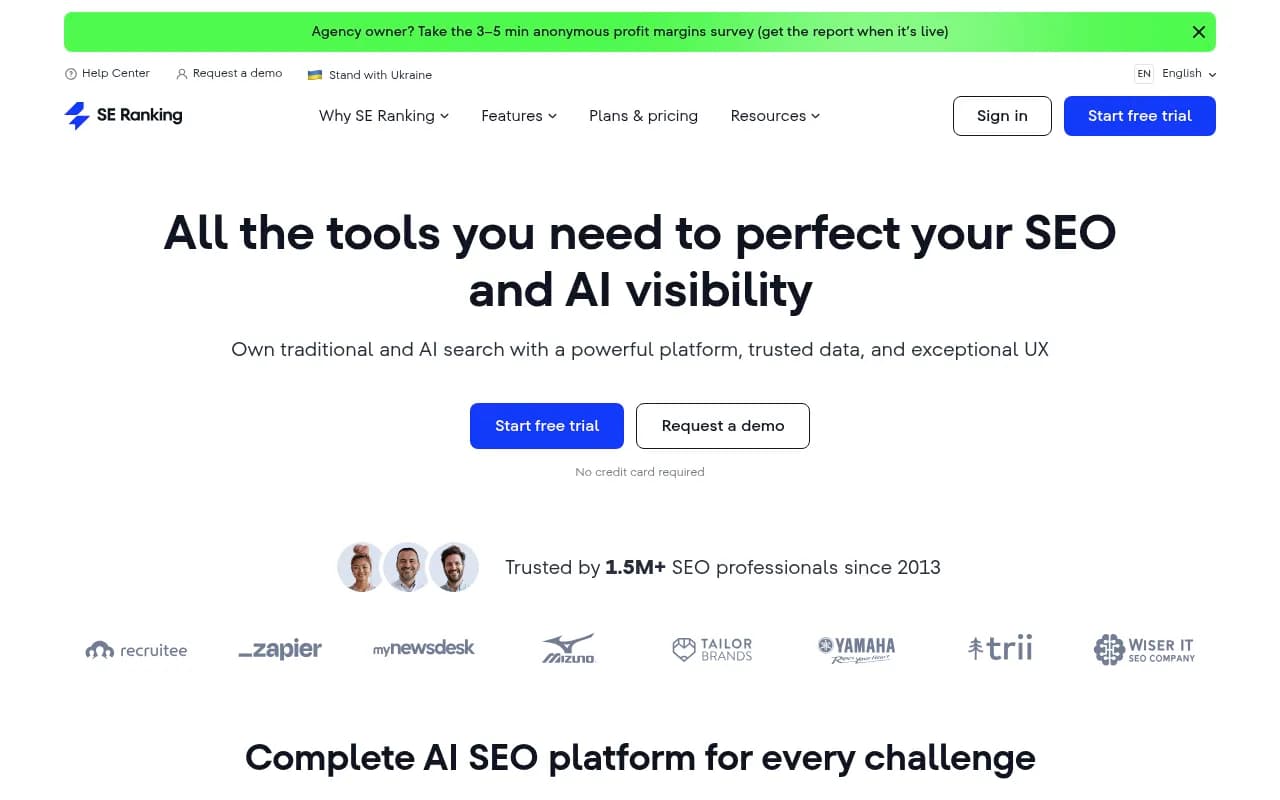
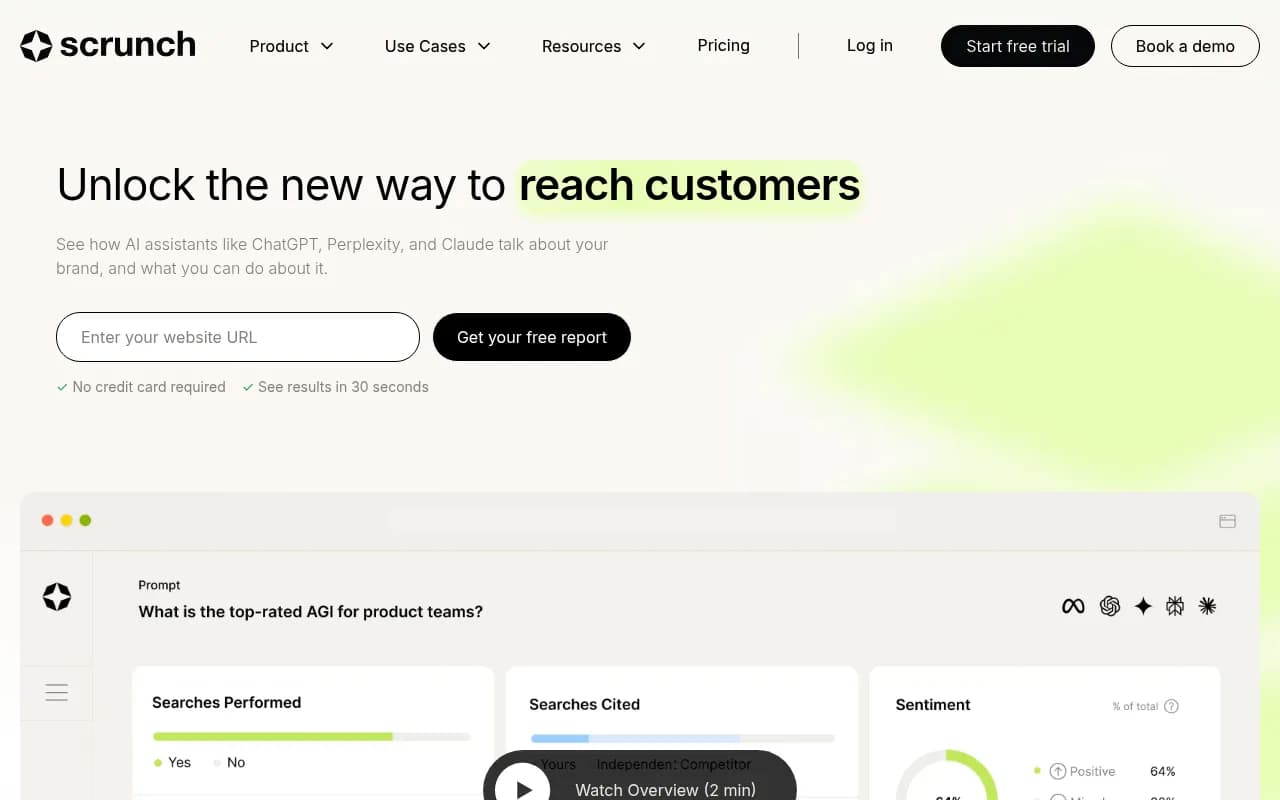
For teams that want monitoring without the full optimization suite, tools like Otterly.AI, Peec AI, and SE Visible (from SE Ranking) cover the basics. AthenaHQ is another monitoring-focused option that's worth evaluating if you're in the enterprise space.

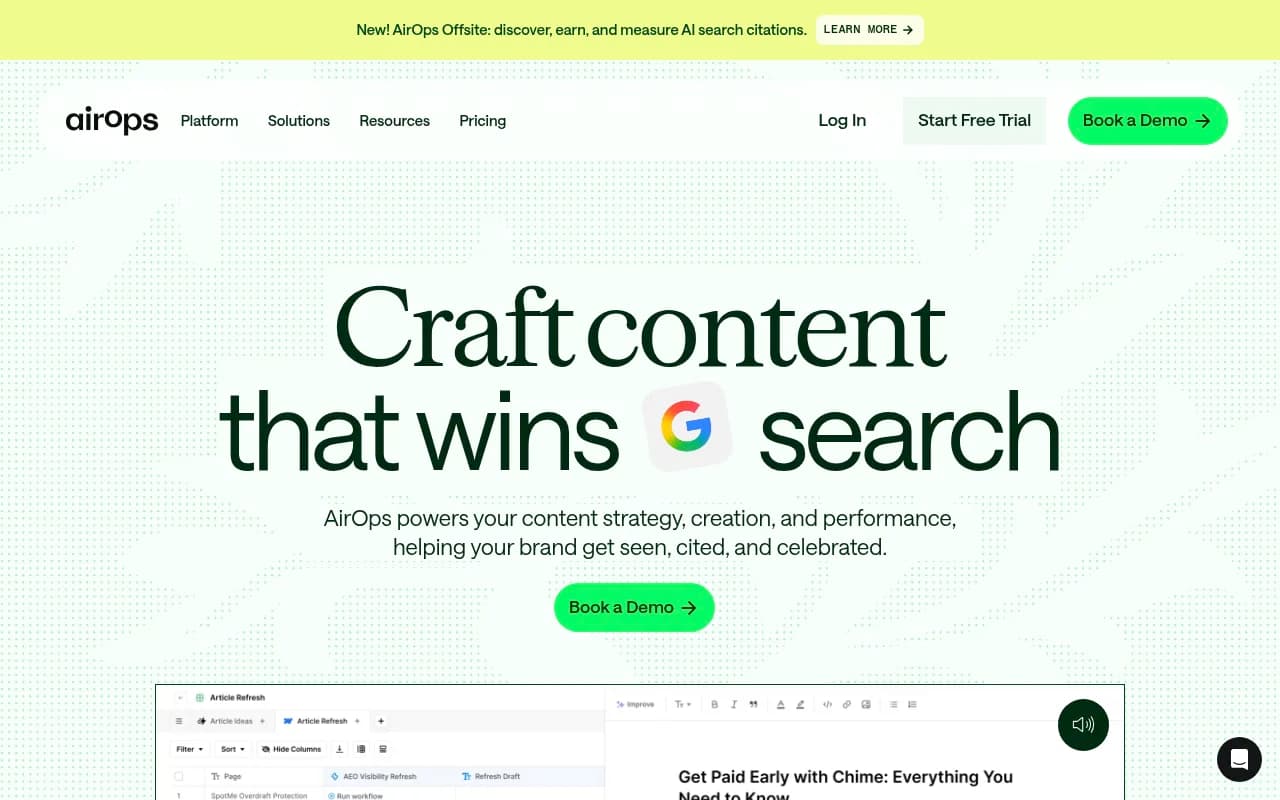
For teams that want to go deeper on content optimization specifically, AirOps combines content workflow automation with citation tracking, though it's more of a content operations tool than a pure AI visibility platform.
What to look for when evaluating any AI visibility platform
A few questions worth asking before committing to any platform in this category:
Does it track the AI models your customers actually use? ChatGPT and Perplexity get most of the attention, but Google AI Overviews and Google AI Mode are increasingly important for search traffic. Make sure the platform covers the models relevant to your audience.
Can you customize your prompt set? Fixed prompt libraries are a significant limitation. Your customers ask specific questions about your specific industry. A platform that only tracks generic prompts will miss most of what matters to you.
Does it tell you what to do, or just what's happening? The monitoring vs. optimization distinction is the most important one in this category. If you have the internal resources to act on raw data, monitoring is fine. If you don't, you need a platform that helps you take action.
Can you connect visibility to revenue? Brand mention rates are interesting. Revenue impact is what gets budget approved. Look for platforms that offer some form of traffic attribution, whether through a code snippet, GSC integration, or log analysis.
Does it track AI crawler activity on your site? This is an underrated capability. Knowing that the GPTBot is crawling your site but hitting errors on key pages is actionable information that pure monitoring tools don't surface.
The bottom line
The AI visibility platform category is no longer experimental. These tools are tracking real signals that correlate with real business outcomes, and the brands that started optimizing for AI search in 2024-2025 are already seeing measurable advantages.
The split in the market is clear: monitoring tools (Profound, Peec AI, Otterly.AI) vs. optimization platforms (Promptwatch). Both types have legitimate use cases, but the monitoring-only approach has a ceiling. You can track your visibility score indefinitely without it improving if you're not also creating content that AI models want to cite.
For most marketing teams in 2026, the more useful question isn't "which monitoring tool should I buy?" but "how do I actually get cited more?" That's where the platform choice starts to matter a lot.