Key takeaways
- AI-driven traffic to US retail sites rose 4,700% year over year as of mid-2025, making AI search visibility a real revenue channel, not a future concern.
- Most AI writing tools generate content but can't tell you whether that content gets cited by ChatGPT, Perplexity, or Google AI Overviews.
- The tools that actually move the needle combine content generation with citation tracking and gap analysis.
- ChatGPT Shopping is a distinct surface -- product recommendations inside ChatGPT conversations -- and monitoring it requires specialized tools beyond standard SEO platforms.
- For e-commerce brands serious about AI visibility, the stack that works is: a content writer that understands e-commerce structure + an AI visibility platform that tracks citations and proves ROI.
There's a gap in how most e-commerce teams think about AI content tools right now. They're asking "which tool writes the best product descriptions?" when the more important question is "which tool writes product descriptions that ChatGPT will actually recommend?"
Those are very different questions.
A well-written product description that lives in a content silo, never gets cited by an AI model, and doesn't show up in ChatGPT Shopping is just... words. Pretty words, maybe, but words that don't drive the kind of AI-referred traffic that's now growing faster than any other channel.
This guide covers both sides: the writing tools worth using for e-commerce content in 2026, and the visibility layer you need to know whether any of it is working.
Why "AI-ready" product content is different from regular SEO content
Traditional SEO content is written to satisfy Google's ranking signals: keyword density, backlinks, page authority, structured data. AI search works differently. Models like ChatGPT, Perplexity, and Google's AI Mode pull from sources they've crawled and indexed, but they also weight content based on how well it answers specific questions, how authoritative the source appears, and whether the content structure makes it easy to extract and cite.
For e-commerce specifically, this means:
- Product descriptions need to answer the "should I buy this?" question directly, not just list specs
- Comparison content ("X vs Y" or "best X for Y use case") gets cited far more often than standalone product pages
- FAQ-style content embedded in product pages helps AI models extract specific answers
- Review aggregation and structured data (schema markup) signal trustworthiness to AI crawlers
The tools that understand this are different from the tools that just generate fluent text.
The AI content writing tools worth using for e-commerce
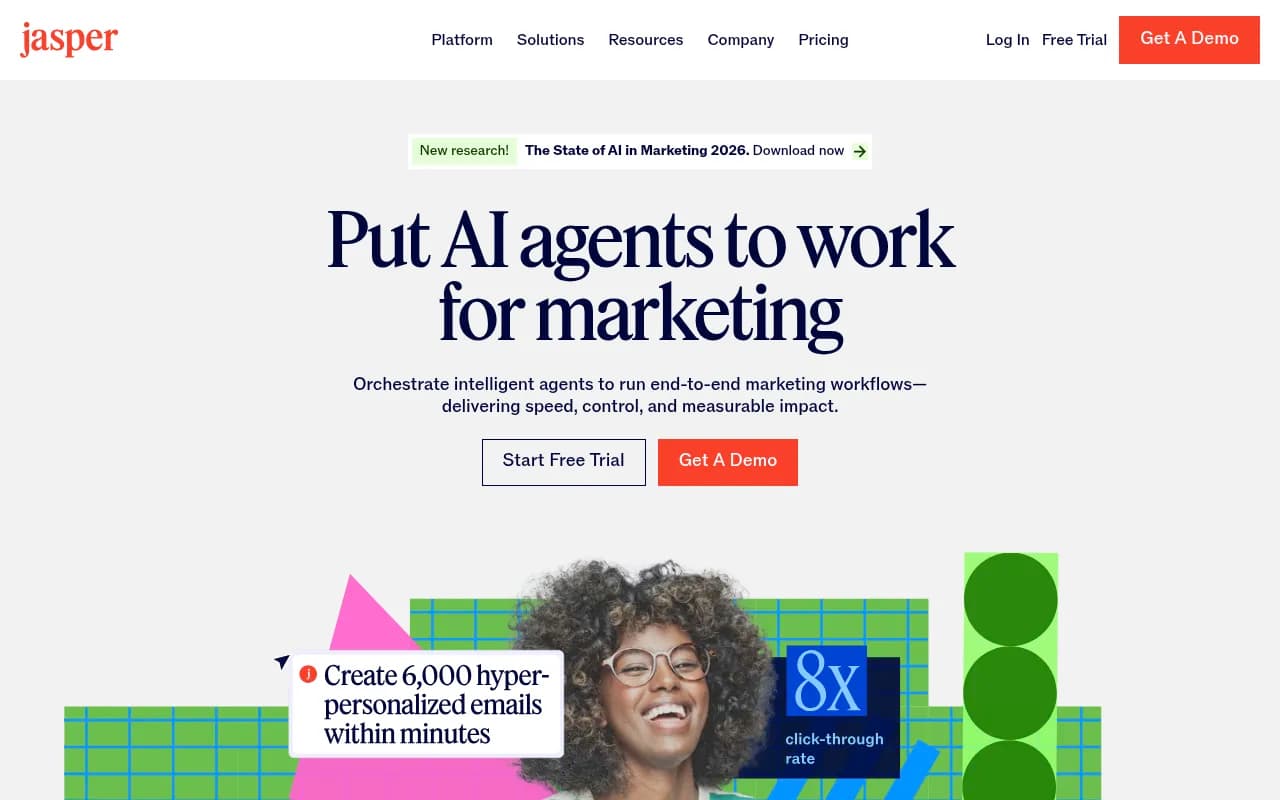
Jasper
Jasper has been around long enough to have gone through several identity crises, but its current form is genuinely useful for e-commerce teams. It's built around marketing use cases, which means it has templates for product descriptions, category pages, and ad copy baked in. The brand voice feature is actually good -- you can train it on your existing content and it'll stay consistent across hundreds of SKUs.
What it doesn't do: tell you whether the content it generates will get cited by AI models. It's a writing tool, not a visibility tool.
Writesonic
Writesonic is the budget-friendly option that punches above its weight for product content. The free tier gives you 10,000 words, which is enough to test it properly. It handles product descriptions, category page copy, and meta content reasonably well. The Chatsonic feature (their conversational AI layer) is useful for iterating on drafts.
For smaller stores and startups, Writesonic is a sensible starting point. It won't replace a dedicated content strategist, but it'll get you from zero to draft faster than anything else at the price point.

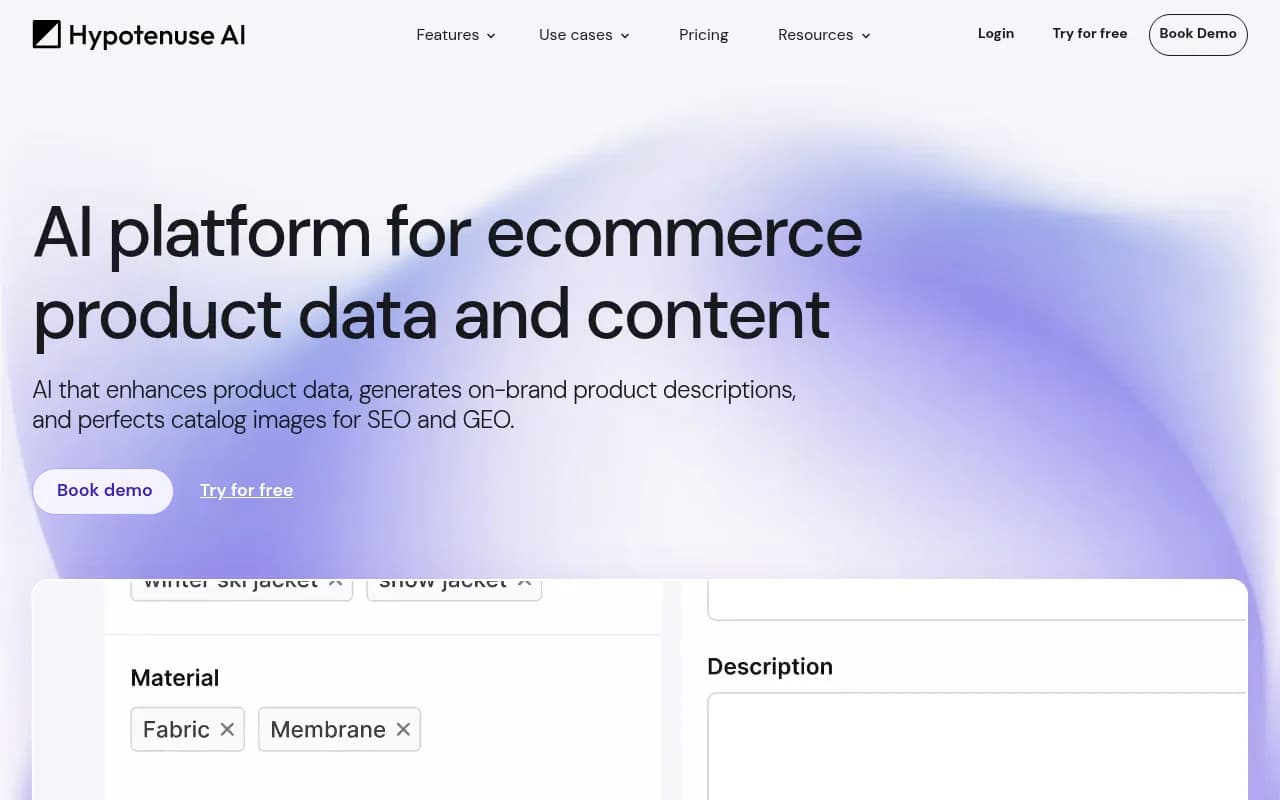
Hypotenuse AI
This one is specifically built for e-commerce at scale, and it shows. Hypotenuse AI can ingest a product catalog and generate descriptions in bulk while maintaining consistency across variants. It handles things like color/size variations without producing obviously templated output -- which is harder than it sounds.
If you're running a store with hundreds or thousands of SKUs and need to generate content at volume, Hypotenuse AI is probably the most purpose-built option available.
Copy.ai
Copy.ai is fast and flexible. It's less e-commerce-specific than Hypotenuse but more versatile -- useful when you need product descriptions, email sequences, and landing page copy from the same tool. The GTM AI platform positioning they've adopted in 2025-2026 means it's increasingly oriented toward workflow automation rather than one-off writing tasks.

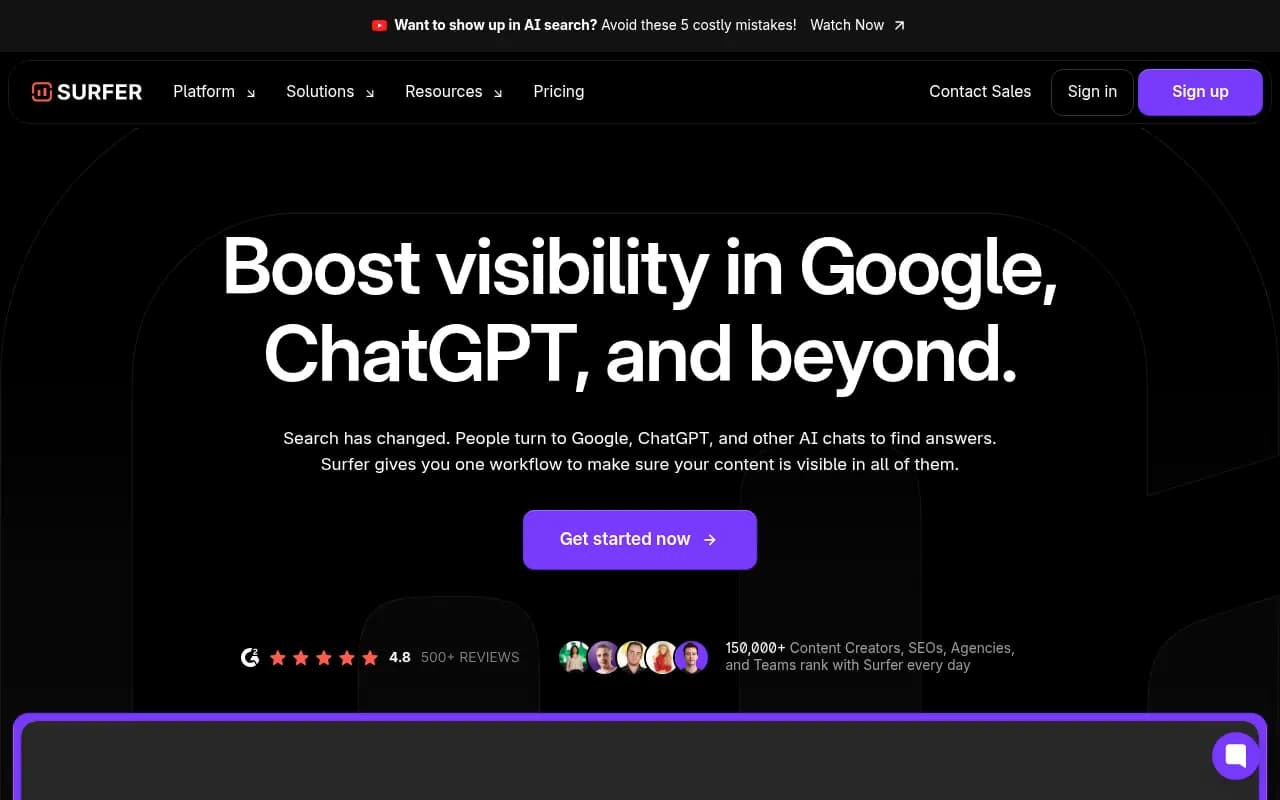
Surfer SEO
Surfer isn't primarily a writing tool -- it's a content optimization platform -- but it belongs in this list because it helps you structure content in ways that rank. The Content Editor scores your writing against top-ranking pages and tells you what topics and questions to cover. For e-commerce category pages and buying guides, that structure matters.
The catch: Surfer optimizes for Google, not for AI citation. Those overlap significantly but aren't identical.
SEO.ai
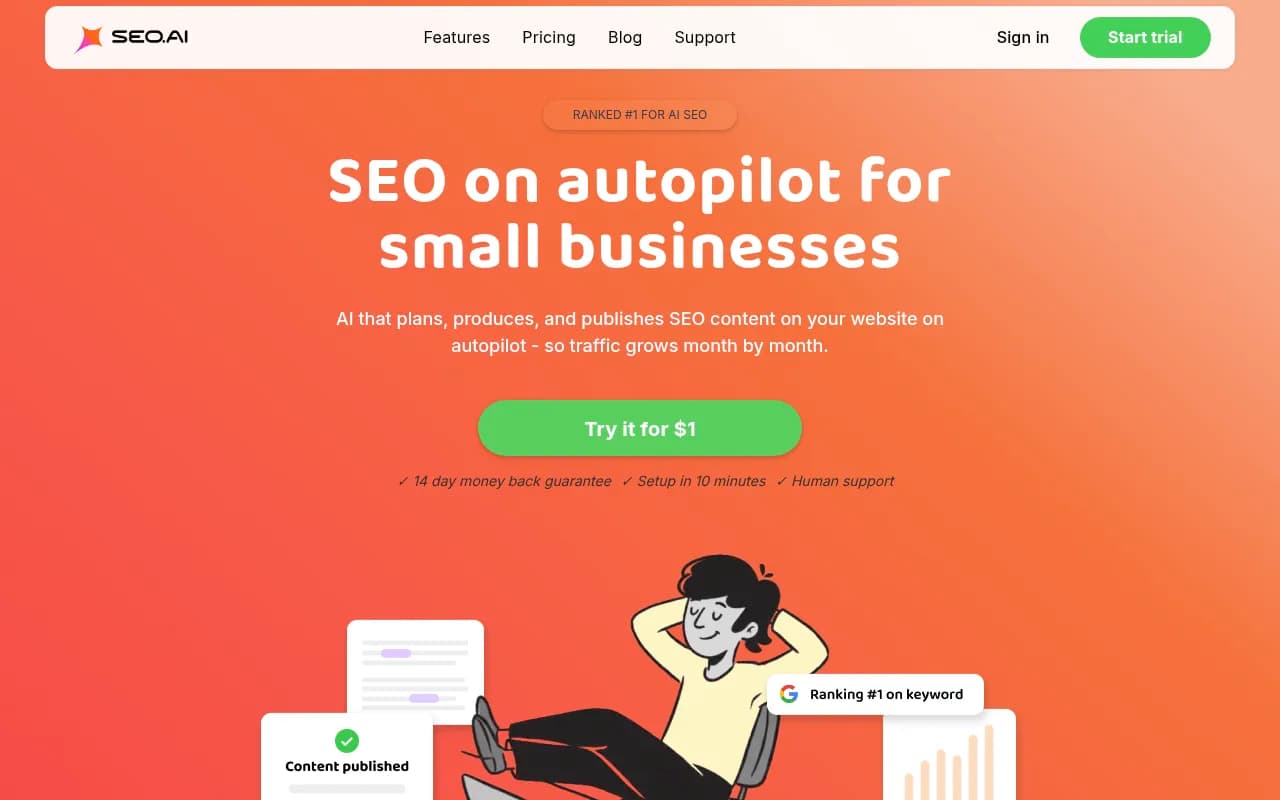
SEO.ai combines AI writing with SEO intelligence in a way that's particularly useful for e-commerce content teams. It generates content with keyword optimization built in rather than bolted on, which saves the back-and-forth of writing first and optimizing second.
The problem none of these tools solve on their own
Here's the honest version: every tool above can write decent product content. Some write great product content. But none of them can tell you whether that content is getting cited by ChatGPT when someone asks "what's the best [your product category] to buy?"
That's the gap. And in 2026, with AI-driven traffic to retail sites growing at the rate it is, that gap has real revenue implications.
ChatGPT Shopping is a specific surface -- product recommendations that appear directly inside ChatGPT conversations, sometimes with pricing and links. Appearing there requires your content to be crawled, understood, and trusted by OpenAI's systems. Knowing whether you're appearing there, and for which queries, requires a different kind of tool entirely.
The visibility layer: tracking whether your content actually shows up
Promptwatch
Promptwatch is the platform that closes this loop for e-commerce brands. It monitors how your brand and products appear across 10 AI models -- including ChatGPT, Perplexity, Google AI Overviews, Claude, Gemini, and more -- and specifically tracks ChatGPT Shopping appearances.
The part that matters most for e-commerce: Promptwatch's Answer Gap Analysis shows you exactly which prompts competitors are visible for that you're not. You can see "best waterproof hiking boots under $150" is sending traffic to a competitor's product page, and then use that insight to create content that targets that specific query. The built-in AI writing agent generates content grounded in citation data from 880M+ analyzed citations -- so it's not guessing at what AI models want to cite, it's working from evidence.
The traffic attribution layer (via code snippet, GSC integration, or server log analysis) connects AI visibility to actual revenue, which is the thing most e-commerce teams actually need to justify the investment.

ConvertMate
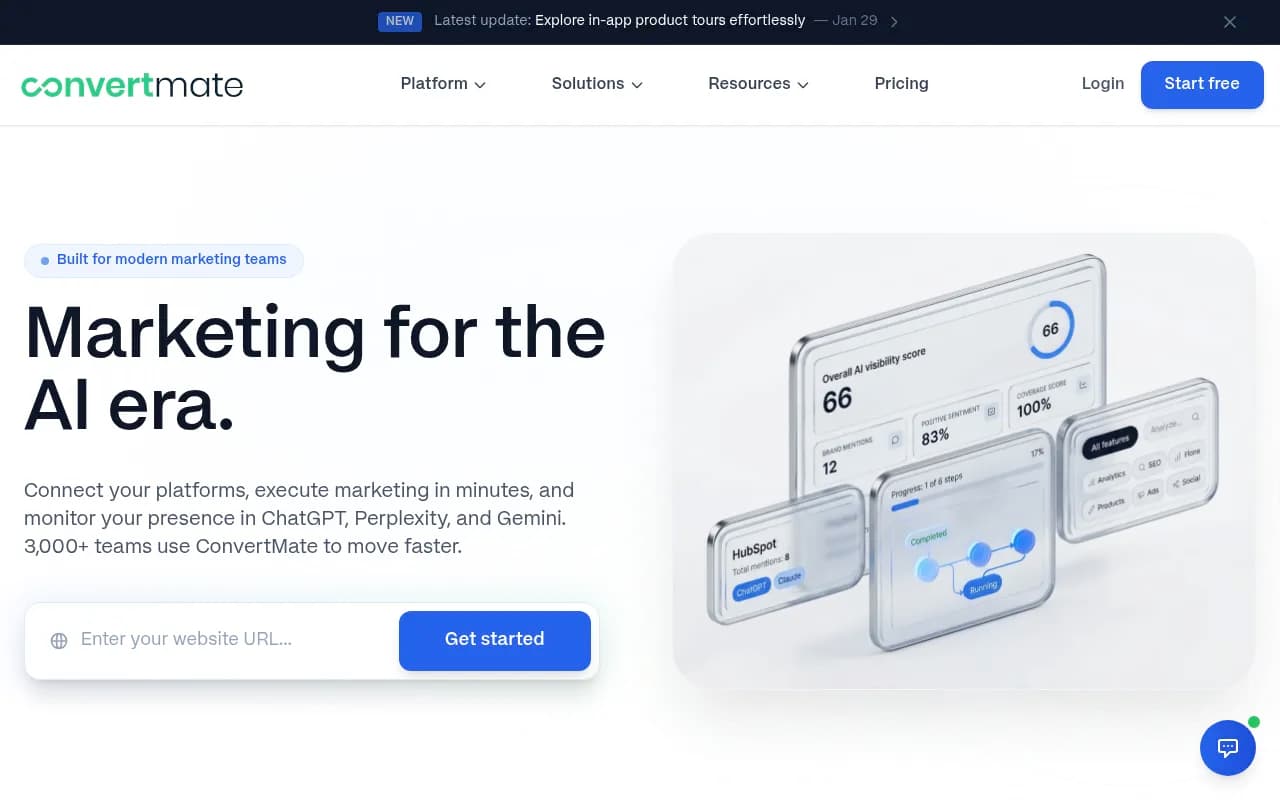
ConvertMate is an AI-powered SEO platform built specifically for e-commerce stores, with Shopify integration. It handles product page optimization, meta content, and structured data -- the technical foundation that AI crawlers need to properly index your products. It's not an AI visibility tracker, but it handles the on-page fundamentals that make your content crawlable and citable.
Ahrefs
Ahrefs has added AI search tracking through its Brand Radar feature, but it's worth being honest about the limitations: the prompts are fixed (you can't customize them to your specific product queries), and there's no AI traffic attribution. For e-commerce brands with specific product categories and long-tail queries, fixed prompts are a real constraint.

Comparison: which tools do what
| Tool | Content generation | E-commerce focus | AI citation tracking | ChatGPT Shopping | Traffic attribution |
|---|---|---|---|---|---|
| Jasper | Yes | Partial | No | No | No |
| Writesonic | Yes | Partial | No | No | No |
| Hypotenuse AI | Yes | Strong | No | No | No |
| Copy.ai | Yes | Partial | No | No | No |
| Surfer SEO | Partial (optimization) | Partial | No | No | No |
| SEO.ai | Yes | Partial | No | No | No |
| ConvertMate | Partial (meta/structured) | Strong | No | No | No |
| Ahrefs | No | No | Basic (fixed prompts) | No | No |
| Promptwatch | Yes (AI writing agent) | Yes | Yes (10 models) | Yes | Yes |
The table makes the gap obvious. Most tools handle one side of the equation. Promptwatch is the only one in this list that spans content generation, citation tracking, and traffic attribution in a single platform.
How to actually build a stack that works
The practical approach for most e-commerce teams in 2026 is a two-layer stack:
Layer 1: Content generation. Pick a writing tool that fits your catalog size and workflow. For high-volume SKU generation, Hypotenuse AI. For marketing content and buying guides, Jasper or Copy.ai. For SEO-structured category pages, Surfer SEO alongside your writing tool of choice.
Layer 2: Visibility and optimization. This is where you track whether the content is working in AI search. Promptwatch covers this comprehensively -- prompt monitoring, gap analysis, ChatGPT Shopping tracking, crawler logs, and traffic attribution. Without this layer, you're writing content and hoping for the best.
The brands winning in AI search right now aren't just producing more content. They're producing content targeted at specific AI prompts, tracking whether it gets cited, and iterating based on what the data shows. That loop -- generate, track, optimize -- is what separates brands that show up in ChatGPT Shopping from brands that don't.
What to look for when evaluating any AI content tool for e-commerce
A few things worth checking before committing to any platform:
Can it handle your catalog structure? Product variants, SKU-level content, and bulk generation are e-commerce-specific requirements. Generic writing tools often struggle here.
Does it understand structured data? Schema markup for products (price, availability, reviews, brand) is what helps AI crawlers understand and trust your product pages. Tools that ignore this are leaving citations on the table.
Can it write comparison content? "Best X for Y" and "X vs Y" formats get cited by AI models far more often than standalone product descriptions. If a tool can only write product descriptions, it's only solving part of the problem.
Does it integrate with your CMS or platform? Shopify, WooCommerce, and headless CMS setups all have different requirements. Check for native integrations before assuming a tool will fit your workflow.
Can you measure the output? This is the question most teams skip. If you can't track whether the content you're generating is getting cited by AI models, you have no way to know if the investment is working.
The ChatGPT Shopping opportunity most brands are missing
ChatGPT Shopping is still relatively new, and most e-commerce brands haven't figured out how to optimize for it. That's actually an opportunity -- the competitive landscape inside ChatGPT Shopping is less crowded than Google Shopping right now.
What gets products recommended in ChatGPT Shopping: clear product data, strong review signals, authoritative brand presence in AI-indexed content, and structured data that makes product attributes easy to extract. Brands that are monitoring their ChatGPT Shopping appearances (and their competitors') are finding gaps they can move on quickly.
The window where early movers have an advantage won't stay open forever. Traditional search took years to mature into a fully competitive channel. AI search is moving faster.
Bottom line
The best AI content writing tool for e-commerce in 2026 is the one that doesn't stop at writing. Content that gets cited by ChatGPT doesn't happen by accident -- it's the result of understanding what AI models are looking for, creating content that answers those specific queries, and tracking the results closely enough to iterate.
For most e-commerce teams, that means pairing a purpose-built writing tool (Hypotenuse AI for catalog scale, Jasper or Copy.ai for marketing content) with a visibility platform that can actually prove the content is working. Right now, Promptwatch is the platform that does that most completely -- from gap analysis through content generation through ChatGPT Shopping tracking and traffic attribution.
The brands that treat AI search as a real channel, with real measurement, are the ones that will own it.