Key takeaways
- Most AI writing tools are optimized for speed, not performance. Generating a draft fast means nothing if it never gets cited or ranked.
- The tools that produce the most citeable content combine real search demand data, semantic depth, and structured formatting -- not just a fast LLM.
- For pure writing quality, Claude and ChatGPT remain the strongest general-purpose options. For SEO-integrated writing, Surfer SEO, Frase, and Jasper lead the pack.
- If you care about AI search visibility (getting cited in ChatGPT, Perplexity, Google AI Overviews), you need a layer beyond writing -- content gap analysis and citation tracking.
- The most expensive tool isn't always the best ROI. A $16/month tool used consistently beats a $200/month platform that collects dust.
The AI writing tool market in 2026 is genuinely overwhelming. There are hundreds of options, most of them claiming to "10x your content output" or "write like a human." Some of them are good. Many are not.
But here's the thing most comparisons miss: writing quality and citation performance are two different problems. A tool can produce polished, grammatically perfect prose that never gets cited by a single AI model. And a rougher, more data-driven piece structured around real search intent can end up referenced in ChatGPT responses thousands of times a day.
This guide tries to separate those two questions. First, which tools actually produce good content? Second, which tools help you produce content that performs -- in traditional search, in AI Overviews, and in LLM citations?
How to think about AI writing tools in 2026
There are roughly three categories of tools in this space, and mixing them up leads to bad purchasing decisions.
Pure writing assistants -- Claude, ChatGPT, Rytr, Copy.ai, Writesonic -- are LLM-powered drafting tools. They're fast, flexible, and good at generating text. They don't inherently know what topics you should write about, what competitors rank for, or how to structure content for search.
SEO-integrated writing platforms -- Surfer SEO, Frase, Clearscope, Jasper, Search Atlas -- combine writing with keyword data, SERP analysis, and content scoring. These are better for producing content that ranks in Google, and increasingly, content that gets cited in AI search.
End-to-end content engines -- platforms like Averi AI or AirOps -- try to handle the full workflow: strategy, creation, optimization, publishing, and analytics. Higher price point, but potentially much lower time cost.
Most teams need a combination. The question is which combination makes sense for your budget and workflow.
The best AI writing tools in 2026
ChatGPT -- best general-purpose writing assistant
ChatGPT (GPT-4o) remains the most versatile writing tool available. It handles long-form drafts, rewrites, tone shifts, research summaries, and copywriting with impressive consistency. The free tier is genuinely useful; the $20/month Plus plan adds speed and access to newer models.
The limitation is that ChatGPT doesn't know what you should write about. It has no keyword data, no SERP analysis, no content scoring. You bring the strategy; it executes.
For teams that already have a content strategy and just need fast, high-quality drafts, it's hard to beat.
Claude -- best for long-form and human-sounding copy
Claude (Anthropic) has a reputation for producing the most natural-sounding prose of any major LLM. It handles nuance better than most, tends to avoid the hollow corporate tone that plagues a lot of AI content, and has a 200K token context window that makes it genuinely useful for long documents.
Reddit's writing communities consistently recommend Claude for copy that needs to sound like a real person wrote it. If you're producing thought leadership, editorial content, or anything where voice matters, Claude is worth testing.
Jasper -- best for marketing teams with brand guidelines
Jasper has evolved from a simple AI writer into something closer to a marketing platform. It supports brand voice training (you can feed it your style guide and past content), has templates for dozens of content types, and integrates with SEO tools.
At $49/seat/month, it's not cheap. But for larger marketing teams that need consistent brand voice across many writers and content types, the brand training features alone justify the cost. It's less useful for solo creators or small teams.
Surfer SEO -- best for content that ranks in Google and AI Overviews
Surfer's AI writing is good, but the real value is the Content Score -- a real-time optimization metric that measures how well your content covers the semantic territory of a topic compared to top-ranking pages. Write inside Surfer's editor and you get live feedback on keyword usage, structure, and depth.
This is the tool most likely to produce content that ranks in both traditional search and Google AI Overviews, because it's built around the same signals Google uses to evaluate topical authority. At $89/month for the basic plan, it's a serious investment, but teams that use it consistently see measurable ranking improvements.
Frase -- best value for SEO content research and writing
Frase does a lot of what Surfer does at a lower price point. It pulls SERP data, generates content briefs, scores your content against competitors, and has a decent AI writing assistant built in. The $15/month starter plan is genuinely useful, though the full feature set requires the $45/month Pro plan.
Where Frase stands out is research. The way it surfaces "People Also Ask" data, related questions, and competitor outlines makes brief creation much faster. If your bottleneck is research and planning rather than raw writing speed, Frase is worth a close look.
Writesonic -- best budget option for volume content
Writesonic has improved significantly. At $16/month, it offers a solid AI writer, a basic SEO mode, and enough templates to cover most marketing content types. It won't match Jasper for brand consistency or Surfer for SEO depth, but for teams that need a lot of content at low cost, it's a reasonable choice.

Copy.ai -- best for short-form and marketing copy
Copy.ai is optimized for shorter content: ad copy, email subject lines, social posts, product descriptions. It's fast and the output quality for these formats is genuinely good. For long-form blog content, it's less competitive. The free tier is generous.

Rytr -- best for structured, template-driven content
Rytr is a no-frills AI writing tool that works well for people who want structure. It has a large library of use-case templates (blog intros, product descriptions, interview questions, etc.) and produces clean, serviceable output. Not the most creative tool, but reliable and affordable at $9/month.
Grammarly -- best for editing and polishing existing content
Grammarly isn't a content generator -- it's an editor. But in 2026, its AI features go well beyond grammar checking. It can rewrite sentences for clarity, adjust tone, flag passive voice, and suggest structural improvements. For teams that use other tools to generate drafts and then want to polish them, Grammarly is the obvious choice.

Anyword -- best for performance-optimized copy
Anyword is interesting because it predicts performance before you publish. It scores copy variants based on historical conversion data, which makes it particularly useful for ad copy, landing pages, and email subject lines where small wording changes have measurable impact. Less useful for editorial content.
Clearscope -- best for content optimization at scale
Clearscope is the premium option for content optimization. At $170/month, it's expensive, but the content grading system is thorough and the keyword recommendations are more nuanced than most competitors. Enterprise SEO teams and agencies that need to optimize large volumes of existing content tend to get strong ROI from it.

Wordtune -- best for rewriting and improving existing drafts
Wordtune sits between a writing assistant and an editor. It's particularly good at rewriting sentences and paragraphs in different tones or styles, making it useful for repurposing content or adapting pieces for different audiences. The free tier covers basic use cases.
Comparison table
| Tool | Best for | Starting price | SEO integration | Long-form quality | AI citation potential |
|---|---|---|---|---|---|
| ChatGPT | General writing, versatility | Free / $20/mo | None | High | Medium |
| Claude | Human-sounding copy, long-form | Free / $20/mo | None | Very high | Medium |
| Jasper | Marketing teams, brand voice | $49/seat/mo | Via integrations | High | Medium |
| Surfer SEO | SEO-optimized content | $89/mo | Built-in | High | High |
| Frase | Research + SEO briefs | $15/mo | Built-in | Medium | High |
| Writesonic | Budget volume content | $16/mo | Basic | Medium | Low-Medium |
| Copy.ai | Short-form, ad copy | Free / $49/mo | None | Low | Low |
| Rytr | Template-driven content | $9/mo | None | Medium | Low |
| Grammarly | Editing and polishing | Free / $12/mo | None | N/A (editor) | N/A |
| Anyword | Performance-optimized copy | $49/mo | None | Medium | Low |
| Clearscope | Content optimization at scale | $170/mo | Built-in | N/A (optimizer) | High |
| Wordtune | Rewriting and repurposing | Free / $10/mo | None | Medium | Low |
The question most guides ignore: what actually gets cited?
Here's where things get more complicated. Producing good content is one thing. Producing content that gets cited by ChatGPT, Perplexity, Claude, or Google AI Overviews is a different challenge -- and it's increasingly where the real ROI lives.
AI models cite content that is:
- Specific and factual (data, statistics, named examples)
- Well-structured (clear headings, logical flow, direct answers to questions)
- Topically authoritative (covers a subject in depth, not just surface-level)
- Published on domains that AI crawlers trust and return to frequently
None of the writing tools above tell you whether your content is being cited. They help you create it. The monitoring and optimization layer is a separate problem.
This is where tools like Promptwatch become relevant. If you're investing in content creation and want to know whether that content is actually appearing in AI search responses, you need visibility into which pages are being cited, by which models, and for which prompts. Promptwatch tracks citations across 10 AI models and shows you which of your pages are being referenced -- and which competitor pages are getting cited instead of yours.

The combination that works: use a strong writing tool to create content, use an SEO platform to optimize it, and use an AI visibility tracker to close the loop on whether it's actually performing in AI search.
Which tool should you actually use?
The honest answer depends on your situation.
If you're a solo creator or small team on a tight budget, start with ChatGPT or Claude for drafting and Frase for SEO research. That combination costs under $65/month and covers most use cases well.
If you're a marketing team producing regular blog content with SEO goals, Surfer SEO plus Claude (or ChatGPT) is a strong combination. Surfer tells you what to write and how to structure it; Claude makes it sound like a human wrote it.
If you're an enterprise team with brand consistency requirements and multiple writers, Jasper's brand voice features are worth the premium. Pair it with Clearscope for optimization.
If you're producing content specifically to rank in AI search (get cited in ChatGPT, Perplexity, Google AI Overviews), the writing tool matters less than the strategy behind it. Focus on topical depth, specific data, and clear structure -- and track your citation performance so you know what's working.
Tools worth watching
A few tools not covered above are worth mentioning for specific use cases:
Search Atlas has built an interesting combination of SEO automation and AI writing that's particularly useful for agencies managing multiple client sites.

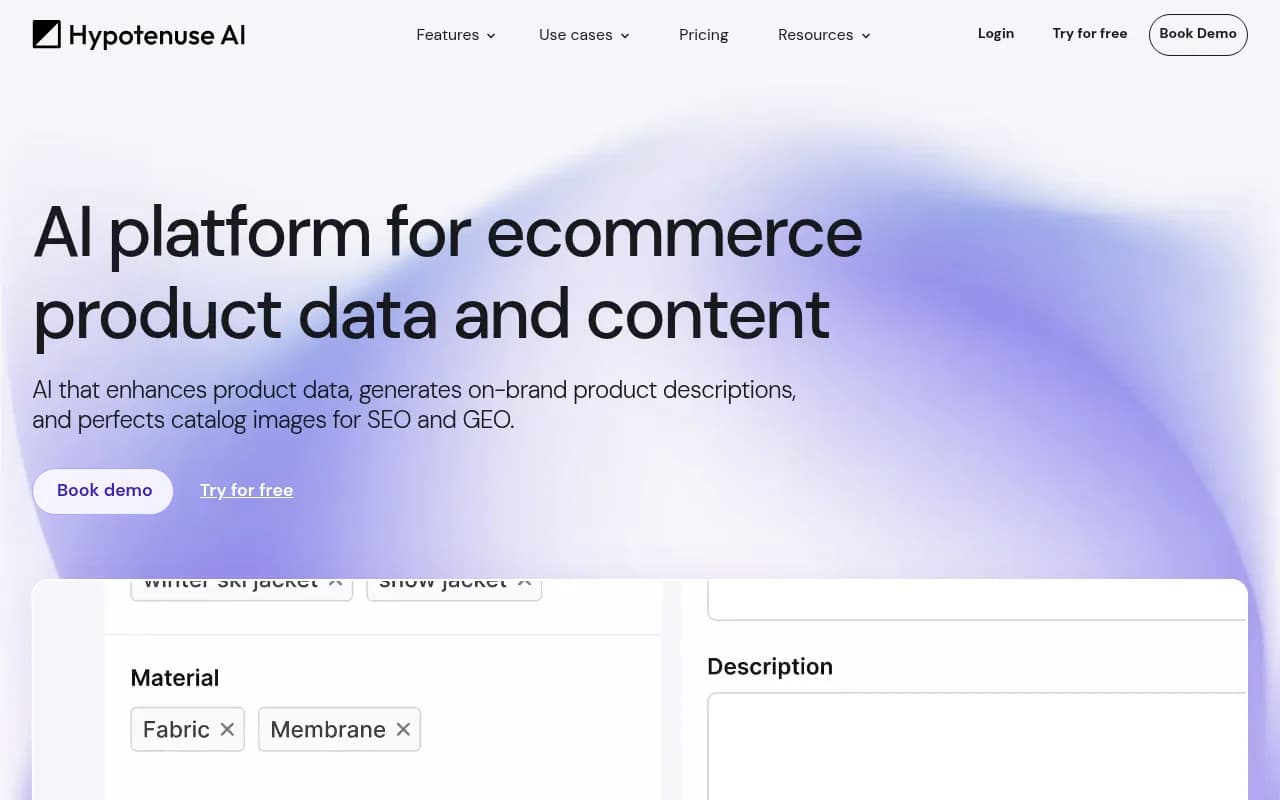
Hypotenuse AI is purpose-built for ecommerce content at scale -- product descriptions, category pages, and catalog content. If that's your use case, it's worth a look.
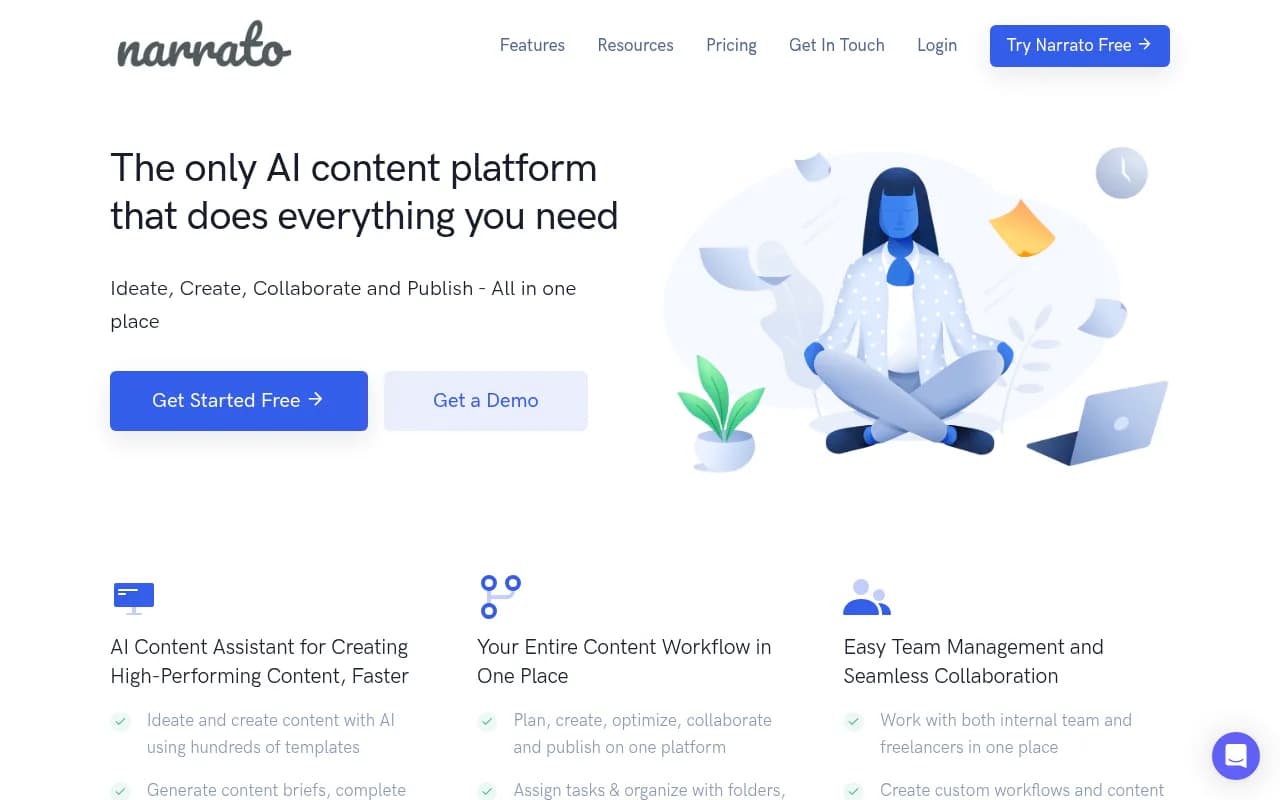
Narrato AI handles content workflow and creation together, which is useful for teams that struggle with the handoff between strategy, writing, and publishing.
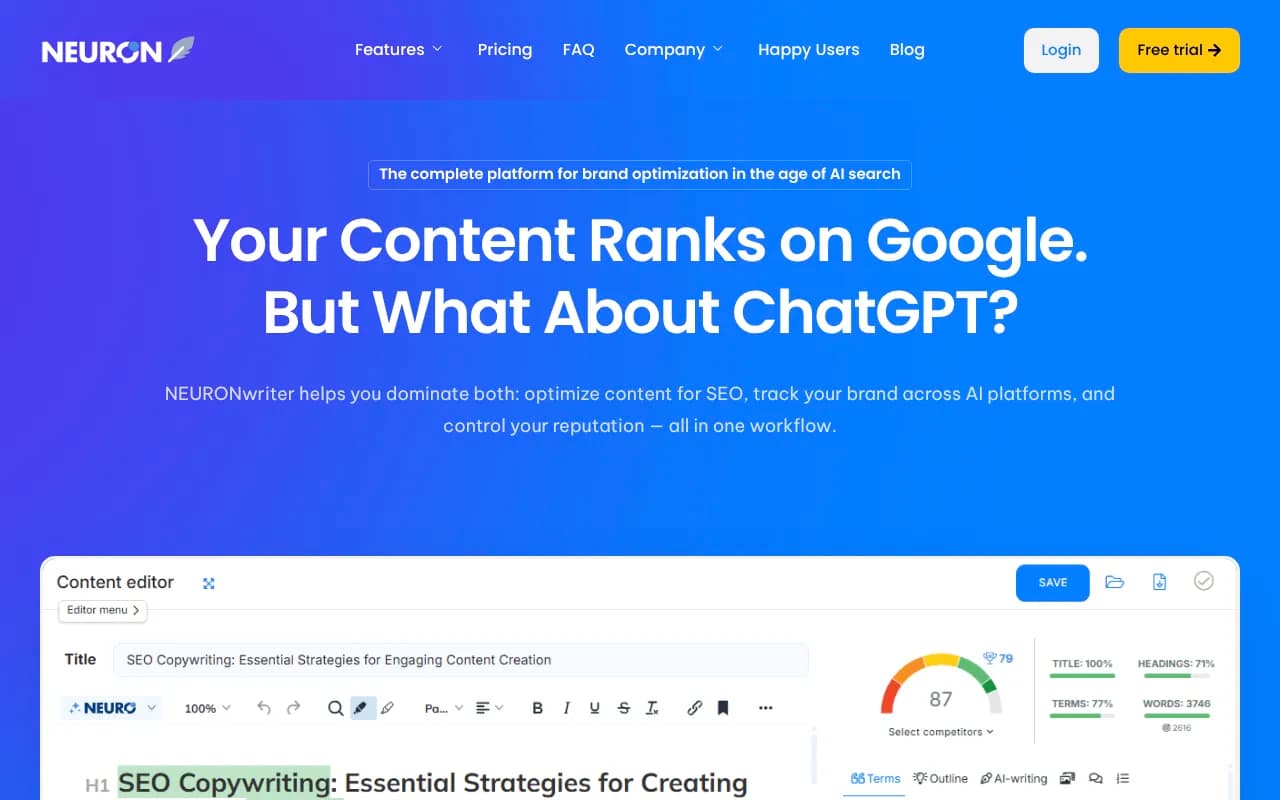
NeuronWriter is a solid mid-market option for SEO content optimization that sits between Frase and Clearscope on both price and features.
The ROI question
The research data from Averi AI's 2026 comparison is worth noting: teams using disconnected tool stacks (separate tools for writing, optimization, publishing, and analytics) often spend $205-$382/month across 6+ tools, and the person managing the handoffs between those tools is the real bottleneck.
If your content operation is spending more time on tool management than on actual writing and strategy, that's a sign to consolidate. End-to-end platforms like Averi AI or Search Atlas trade some flexibility for much lower operational overhead.
The best ROI doesn't come from the cheapest tool or the most feature-rich one. It comes from the tool your team actually uses consistently, paired with a clear strategy for what you're trying to achieve -- whether that's Google rankings, AI citations, or both.
Start with one tool, use it seriously for 90 days, and measure the output against your actual goals. That's more valuable than any feature comparison table.