Key takeaways
- Google has two AI answer surfaces, AI Overviews and AI Mode. They use different retrieval and often name different brands for the same question, so a tool that reports them as one number hides problems.
- Check three things before buying: whether the tool tracks AI Overviews and AI Mode as separate engines, whether it reads the real Google interface or an API, and whether it records citation position or just presence.
- Peec AI, Rankscale, Omnia, AthenaHQ, Scrunch AI and Gauge are the names that come up most for Google-specific tracking. Coverage and pricing differ a lot between them.
- If you want to compare classic rankings with AI Overview presence, an SEO suite like Semrush, Ahrefs, SE Ranking or Advanced Web Ranking is the simpler route.
- If you want to fix gaps and not just watch them, pick a platform that connects tracking to content and crawler data. Promptwatch is built that way.
Why AI Overviews and AI Mode need their own tracking
A classic rank tracker answers one question: where does my URL sit in the blue links? That is no longer the whole story. Google now puts an AI-generated answer above the results (AI Overviews) and offers a conversational tab (AI Mode). In both, being cited matters more than being position three.
The tricky part is that the two surfaces are not the same. AI Mode handles longer, conversational questions and can cite different pages than AI Overviews. Plenty of tools still fold them into one "Google AI" metric. If your brand shows up in one and not the other, that blended number tells you nothing useful.
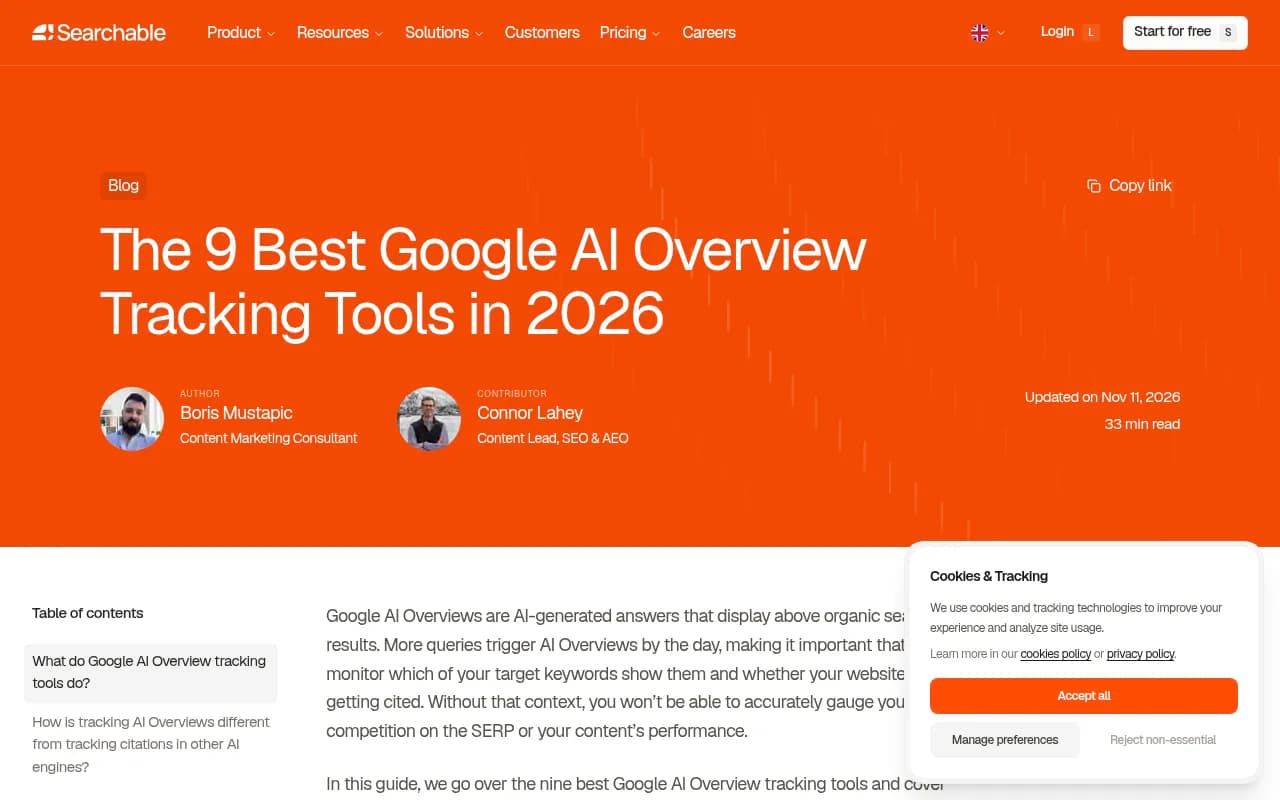
It also isn't safe to assume that ChatGPT tracking covers Google. Searchable analyzed 80,525 prompt-and-domain pairs cited by AI Overviews and found only 25.2% were also cited by ChatGPT. That is a vendor's number (and Searchable ranks itself first in its own listicle), but it matches what most people see when they compare engines side by side.
What the citation data says about Google's surfaces
Promptwatch's data for November 3 to 16, 2026 shows that the engines pull from different places. The median cited domain is DR 57 in ChatGPT and Perplexity and DR 56 in AI Overviews and AI Mode, but the tails differ. DR 91 and up earns 17.9% of AI Overviews citations and 8.2% of AI Mode, against 3.0% for ChatGPT. Promptwatch attributes that high-DR peak to social platforms like YouTube, Facebook and Reddit. Details are in the Domain Rank Distribution of AI Citations by Engine report.
The same dataset points the same way: in Promptwatch's social media citations report for late September to early October, social platforms made up 12.2% of Google AI Overviews citations and 0.46% of ChatGPT's. And in June 2026 (month-to-date), YouTube held 4.16% of AI Overviews citations, Reddit 2.72% and google.com itself 2.30%. Google increasingly cites its own properties.
Practical consequence: a good tracker for Google should show you which source types are winning, not only whether your domain appeared.
What to look for in a Google AI tracker
Before comparing tools, settle on the criteria. Here are the ones that actually change the decision.
- Separate surfaces. AI Overviews, AI Mode and the Gemini app should be distinct engines in the dashboard, not one merged line.
- Real interface vs API. Google's user-facing answers and citations can differ from what an API returns. Tools that collect from the actual UI give numbers closer to what a customer sees.
- Position, not just presence. Most AI Overview trackers only log whether a citation is there. Position in the source list and order among brands tell you far more.
- Location and language. Overviews vary by region. If you sell in more than one market, you need monitors fixed to a country and language.
- Keyword-level view. Do you need to know which tracked keywords trigger an Overview at all? SEO suites do this well. Pure GEO tools often start from prompts instead.
- What happens after the insight. A report is nice. A prioritized list of fixes, or content produced against the gaps, is better.
Comparison table
Pricing below comes from the vendor listicles in the research set and was last checked against vendor pages by Masters of Search on November 17, 2026. Prices change often, so confirm on each vendor's site.
| Tool | Separates AIO and AI Mode | Entry price (published) | Best for |
|---|---|---|---|
| Peec AI | Yes, plus the Gemini interface | From $95/mo (50 prompts); Pro $245 for 150 prompts | Teams that need to see which Google surface is failing |
| Rankscale | Yes, credit-based | Pro $99/mo, Growth $385 | Tight budgets, one or two surfaces |
| Omnia | Yes | From 79 EUR/mo (25 prompts) | Small teams that want a trial first |
| AthenaHQ | AI Mode from Starter | Free tier; Starter $295/mo | Teams that want to see data before paying |
| Scrunch AI | AI Overviews on Core; AI Mode on Enterprise | Core $250/mo (125 prompts) | Larger brands wanting crawler analytics too |
| Gauge | AI Mode focus | Growth $599/mo | Teams that want AI Mode fixes drafted |
| Promptwatch | Yes, real UI collection for AI Overviews and AI Mode | Essential $95/mo, Professional $245/mo, Business $579/mo | Teams that want to track, fix and measure in one loop |
| SE Visible | Yes, separate engines | See vendor | SEO teams already on SE Ranking |
The tools, one by one
Promptwatch
Promptwatch tracks Google AI Overviews and Google AI Mode through their real user interfaces, in the country and language you set for each monitor, alongside ChatGPT, Gemini, Perplexity, Copilot and others. That matters for the point above: UI-collected answers and citations can differ from API outputs.

Where it differs from most trackers on this list is what comes after the dashboard. It shows citations and where your pages land in the source list, then IP-verified AI crawler logs tell you whether the problem is access or content. The Action Board turns gaps into a prioritized to-do list, and the Content Agent can write and publish pages to WordPress, Webflow or Framer. Visitor analytics then show whether any of it sent traffic. Its Google AI Overviews page is at promptwatch.com/google-ai-overviews.
Plans start at $95/mo (Essential), with Professional at $245/mo and Business at $579/mo, which is the first tier with the Content Agent, faster-than-daily tracking and local targeting. Confirm at promptwatch.com/pricing. There is a 7-day free trial, and a free AI visibility report if you just want a quick look. For comparisons, see the 2026 platform comparison.
Honest caveat: if all you want is a cheap prompt counter for Google, this is more platform than you need.
Peec AI
Peec AI separates Google into three tracked surfaces: AI Overviews, AI Mode and the Gemini interface. That is the cleanest breakdown in the group. In Masters of Search's pricing exercise (150 daily prompts across the three surfaces), Peec's Pro plan at $2,940 a year was the lowest-priced published option.

It is a monitoring tool. Expect good reporting on where you are failing, and less help with the fix.
Rankscale
Rankscale charges by credits, roughly 0.25 credits per engine per prompt, AI Mode included. That makes it cheap if you track one or two surfaces and gets less attractive when you add engines. Growth at $385 covers three.
Omnia
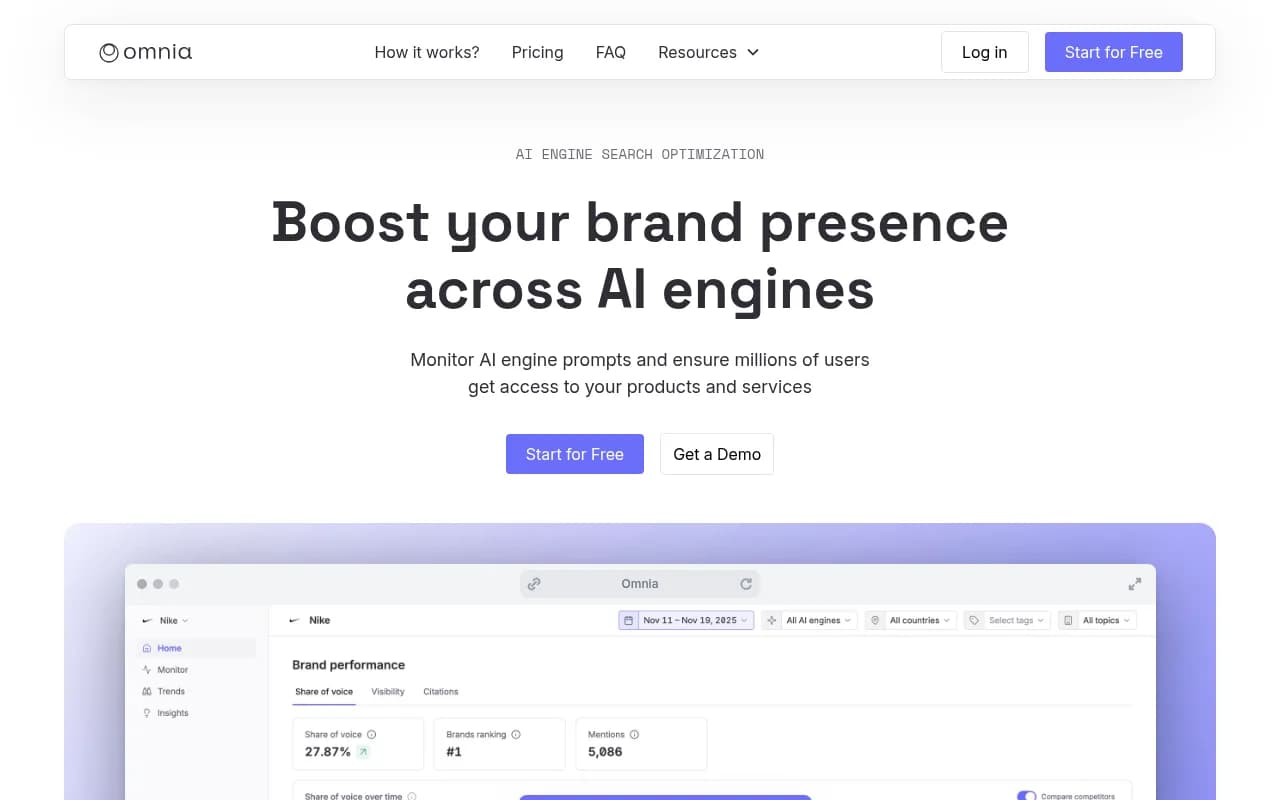
Omnia, based in Madrid, starts at 79 EUR a month for 25 prompts and has both Google surfaces on a trial. Extra 25-prompt packs cost 89 EUR a month, so the small plan is a good fit only if your prompt list really is small.
AthenaHQ
AthenaHQ puts AI Mode on its Starter plan ($295/mo) and has a free Essential tier with 300 credits, which is useful for seeing your own data before committing.

Scrunch AI
Scrunch's Core plan covers Google AI Overviews with 125 prompts and 5,000 responses a month at $250. AI Mode and Gemini sit on Enterprise. If AI Mode matters to you, check that before getting excited about the entry price.
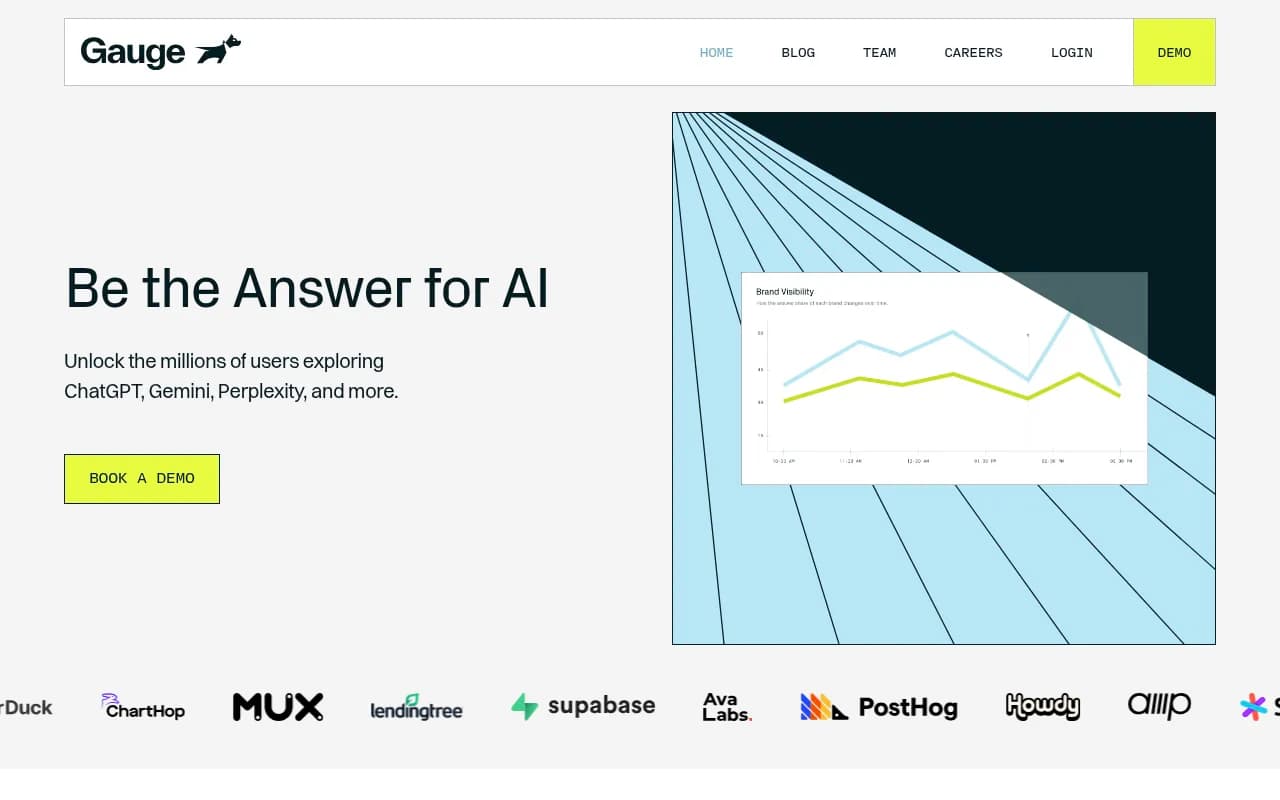
Gauge
Gauge is aimed at teams focused on AI Mode who want something that drafts the fix. Growth starts at $599/mo, so it is the priciest entry point on this list.
SE Visible
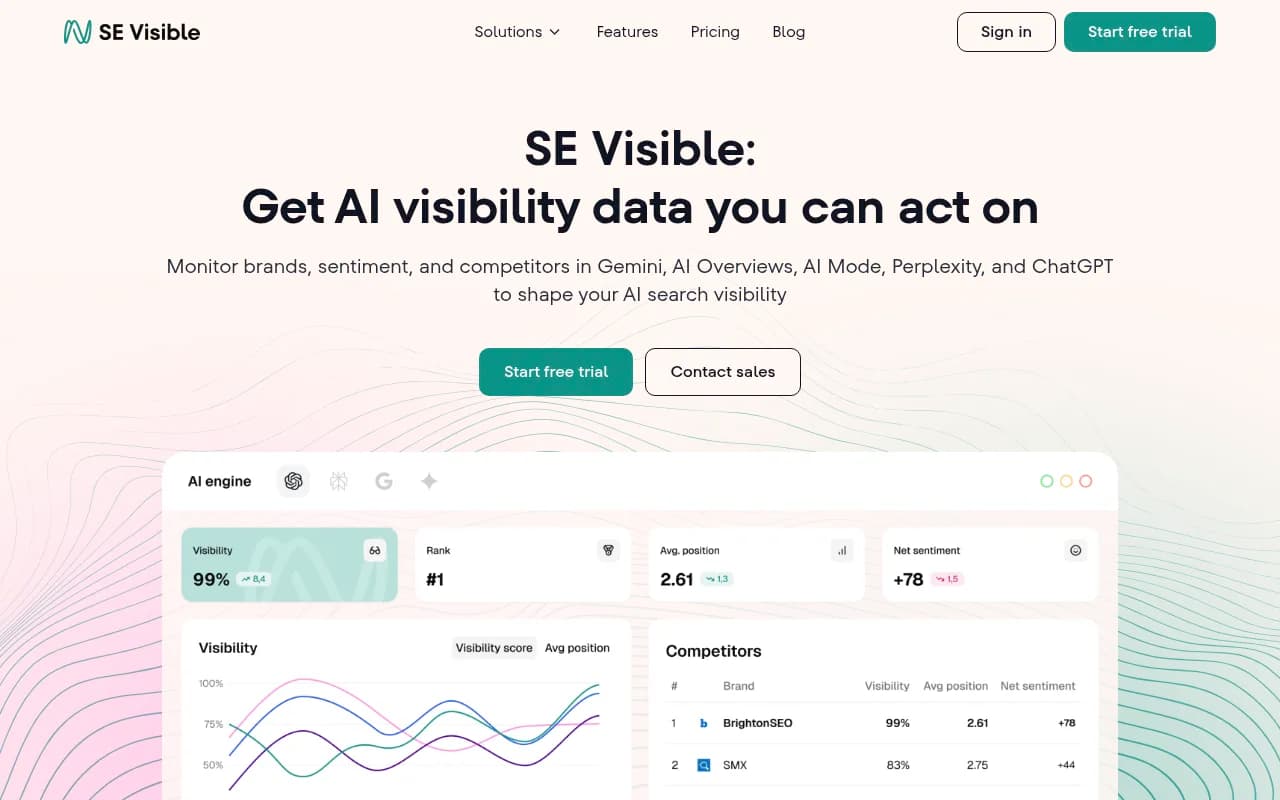
SE Visible, from SE Ranking, tracks AI Mode and AI Overviews as separate engines on its Basic, Core and Agency plans, next to ChatGPT, Gemini and Copilot. A reasonable pick if you already live in the SE Ranking ecosystem.
Rankshift
Rankshift runs the same prompts on Google AI Mode and Google AI Overview as two models and reports visibility per model. Its trial gives you a month of AI Mode data before paying, which is a nice way to test.

Otterly.AI
Otterly.AI covers ChatGPT, AI Overviews, AI Mode, Gemini, Perplexity, Copilot and Claude, with alerts when brand mentions change and a content audit. It is straightforward monitoring for marketing teams.
Otterly.AI

ZipTie
ZipTie tracks prompts across Google AI Overviews and six other engines, and its Google Search Console integration puts AI Overview visibility next to traditional rankings, clicks and impressions.
AIclicks
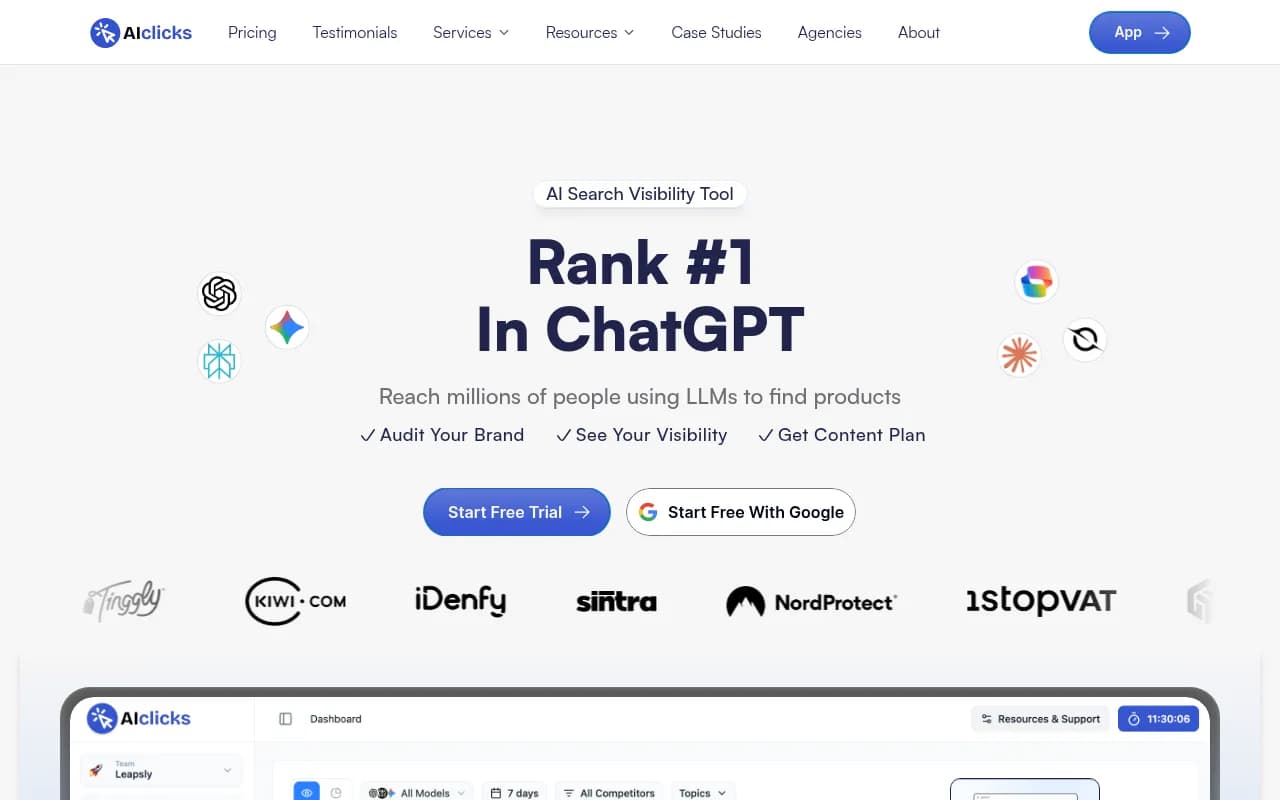
AIclicks lets you add a domain and the queries you want monitored, then checks Google daily. Simple setup.
Profound and Searchable
Profound and Searchable both appear in vendor listicles. One of those listicles notes that Google AI Mode is not named on either homepage, so confirm coverage before buying. Searchable's own guide ranks itself first, so weigh that with a pinch of salt.
Profound

SEO suites that flag AI Overviews
If your core need is keyword-level rank tracking and you just want to know which tracked terms trigger an AI Overview, the big suites are the easier route. A Reddit thread on r/AISearchLab notes that Semrush and Ahrefs both flag AI Overview presence for tracked keywords, with caveats on depth.
Advanced Web Ranking is the one Searchable recommends for comparing organic rankings and AI Overview citations side by side. These tools are good at the "does an Overview show for this keyword" question. They are generally weaker at prompt-based tracking, competitor sentiment and crawler data.
Which one should you pick?
| If you are... | Look at |
|---|---|
| An SEO team that wants rankings and AIO flags in one place | Semrush, Ahrefs, SE Ranking, Advanced Web Ranking |
| A small team on a budget tracking Google only | Peec AI, Rankscale, Omnia |
| Focused on AI Mode specifically | Gauge, Rankshift, Peec AI |
| Wanting to fix gaps, publish content and measure traffic | Promptwatch |
| Enterprise with crawler analytics needs | Scrunch AI, Promptwatch |
Two short rules. First, price the same workload across tools: 150 prompts daily on three Google surfaces is 13,500 answers a month, and entry prices are not comparable because they buy different volumes. Second, take any ranking written by a vendor about itself as marketing. That includes the vendor lists I leaned on here for pricing.
How to use the data once you have it
Tracking is the easy part. Some moves that pay off with Google's surfaces specifically:
- Audit which of your target queries cite google.com surfaces such as Business Profile or Merchant Center, because Google cites its own properties for roughly 6.5% of AI Overview sources (YouTube plus google.com, June 2026 month-to-date).
- Treat YouTube as a real channel. It was the top AI Overviews citation source in June 2026, per Promptwatch Data.
- Mine Reddit threads for content briefs. Note that Reddit has nearly vanished from ChatGPT citations, but not from Google's surfaces, according to the Reddit citation drop report.
- Don't chase only the biggest domains. Domains at DR 1 to 30 still earn 10.9 to 12.2% of citations in every engine, so smaller sites get cited.
If you want more options in the category, the GEO software directory at bestgeosoftware.com lists a much longer set of trackers.
Bottom line
Pick a tool that splits AI Overviews from AI Mode, reads the real interface, and shows position. For simple Google-only monitoring on a budget, Peec AI and Rankscale are the sensible starting points. For SEO teams that live in a suite, Semrush, Ahrefs or SE Ranking are enough. For teams that want the whole loop, from seeing the gap to publishing the page and checking traffic, Promptwatch is the better fit, and the 7-day trial costs nothing to try.