Key takeaways
- Writing a draft is only half the job. The full content ROI loop includes research, optimization, publishing, and tracking whether AI engines cite your content.
- Most AI writing tools (Jasper, Copy.ai, Writesonic) are generation-only. They don't tell you if your content is being cited by ChatGPT, Perplexity, or Google AI Overviews.
- Proving ROI now requires connecting content output to AI search visibility, not just Google rankings or pageviews.
- The best-performing teams in 2026 use a layered stack: a writing tool, an SEO/GEO optimization layer, and an AI visibility tracker that closes the attribution loop.
- Tools like Promptwatch go beyond tracking to show you which content gaps to fill and generate content engineered to get cited by AI models.
Why "did it rank?" is no longer enough
In 2023, proving content ROI meant checking Google Analytics and Search Console. Did traffic go up? Did the keyword move? Good enough.
That's not enough anymore. A growing share of search queries now get answered directly by AI engines -- ChatGPT, Perplexity, Google AI Overviews, Gemini -- without the user ever clicking through to your site. According to eMarketer's 2026 MarTech Report, 90.3% of marketing organizations are now using AI agents and content tools. But most of those teams are still measuring success with metrics that predate AI search.
The result: content teams are producing more than ever, spending more on tools than ever, and struggling to show the business what any of it is worth.
The ROI problem in 2026 is really three problems stacked on top of each other:
- Generation: Can you produce content fast enough, at quality high enough, to compete?
- Optimization: Is that content actually structured to rank in both Google and AI search?
- Attribution: Can you prove that specific pieces of content drove visibility, traffic, and revenue?
Most AI writing tools solve problem one. Some solve one and two. Very few solve all three. This guide maps out the full stack.
The content ROI stack: how to think about it
Before diving into specific tools, it helps to understand the layers. Content teams that can prove ROI in 2026 typically operate across four distinct functions:
- Research and ideation: What should we write? What are competitors ranking for? What are AI models being asked that we're not answering?
- Writing and production: Generating drafts, outlines, and finished articles at speed.
- Optimization: Making sure content is structured correctly for both traditional SEO and AI citation (GEO/AEO).
- Tracking and attribution: Monitoring whether content appears in AI-generated answers, which pages are being cited, and connecting that visibility to actual traffic and pipeline.
The tools below are organized by where they fit in this stack. Some span multiple layers. Most don't.
Research and ideation tools
Frase
Frase sits at the research end of the pipeline. It pulls together SERP data, People Also Ask questions, and competitor content to build detailed briefs before you write a word. For teams that struggle with "what angle should we take on this topic," it's genuinely useful.
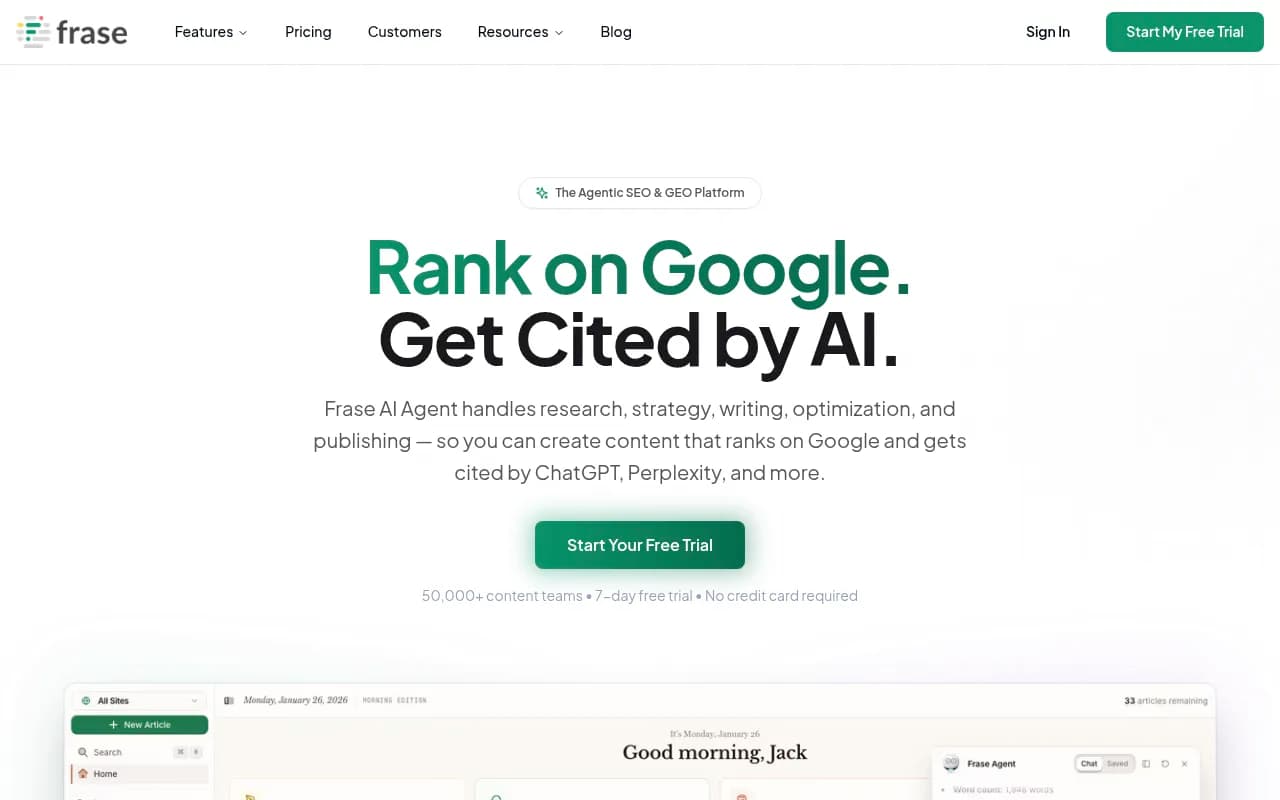
The brief quality is solid. Where Frase falls short is post-publish: once the article is live, Frase doesn't tell you whether it's being cited by AI engines or driving traffic. It's a research and brief tool, not a visibility platform.
MarketMuse
MarketMuse takes a more strategic view. It analyzes your entire content library against competitors to identify topical authority gaps -- not just individual keyword opportunities. For larger teams managing hundreds of pages, this kind of site-level intelligence is valuable.
The content briefs are detailed and the topic modeling is genuinely sophisticated. The price point ($149+/month) puts it out of reach for smaller teams, and like Frase, it doesn't track AI citation performance.
Surfer SEO
Surfer is probably the most widely used content optimization tool in 2026. Its Content Editor gives writers a real-time score based on NLP analysis of top-ranking pages, and the brief builder is fast. Most SEO-focused content teams have Surfer somewhere in their stack.
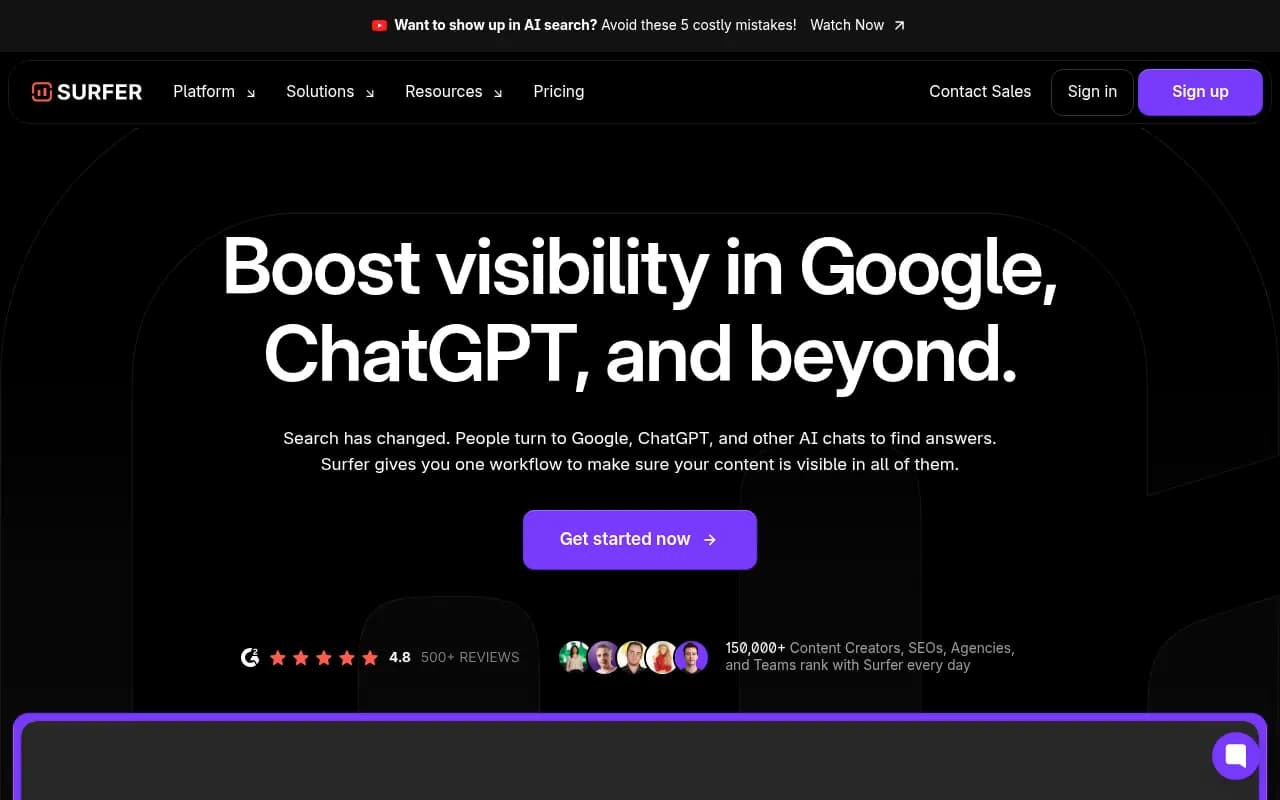
It's worth noting that Surfer optimizes for Google. AI search engines like Perplexity and ChatGPT don't rank content the same way Google does -- they prioritize clarity, authority signals, and citation-worthiness. Surfer doesn't account for that.
Writing and production tools
Jasper
Jasper is the enterprise-grade AI writing platform. At $49/seat, it's positioned for larger marketing teams that need brand voice consistency across multiple writers. The Campaigns feature lets you brief an AI agent on a campaign goal and get a full suite of assets -- blog posts, emails, social copy -- in one workflow.
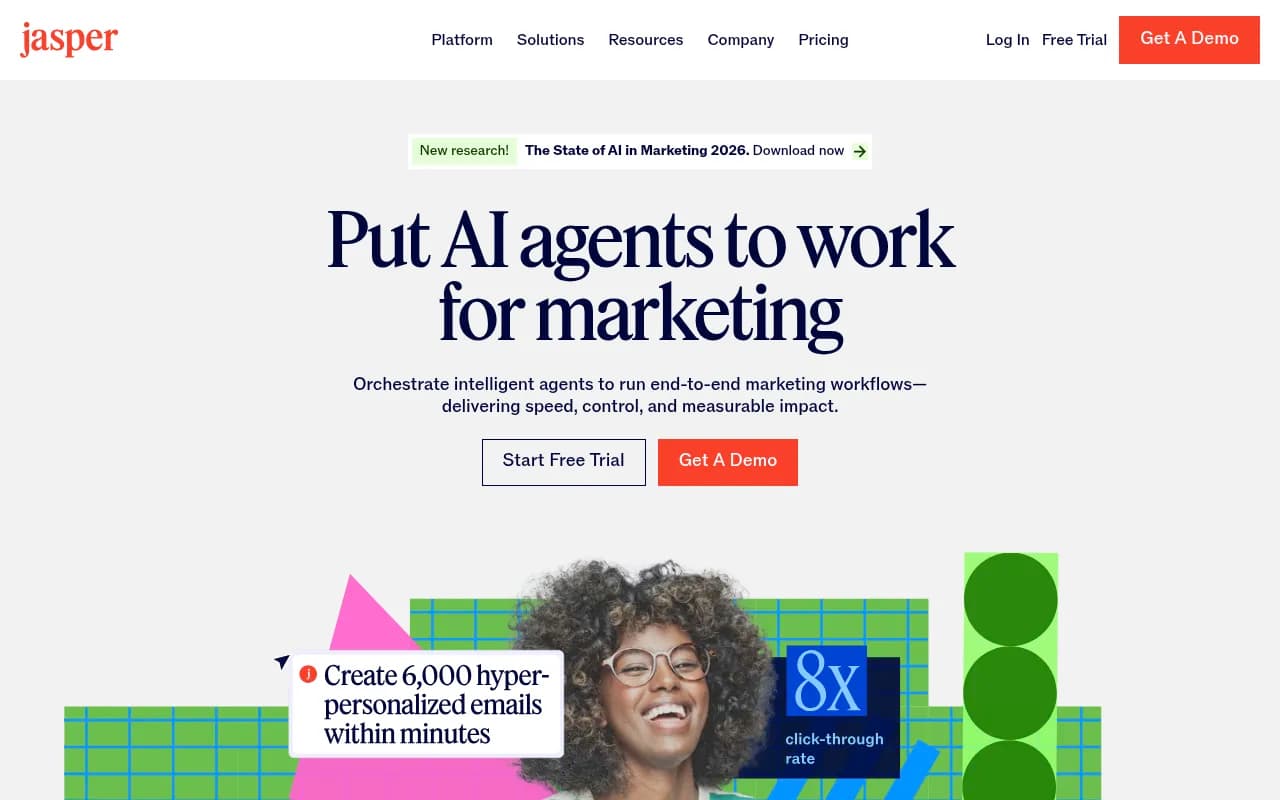
The writing quality is high. Jasper also has some SEO integration via Surfer. What it doesn't have is any visibility into whether your content is being cited by AI models, or what topics you're missing relative to competitors in AI search.
Copy.ai
Copy.ai has evolved from a copywriting tool into something closer to a workflow automation platform. The GTM AI workflows let teams build multi-step content processes -- research, draft, review, repurpose -- without stitching together separate tools.

For teams that need to produce a lot of short-form and mid-length content quickly, Copy.ai is efficient. The AI search tracking piece is absent, though. You'll need to pair it with a separate visibility tool.
Writesonic
Writesonic sits in an interesting middle position. It started as a lightweight AI writer and has expanded to include some GEO and AI search tracking features. The Chatsonic product handles conversational content, and there's basic brand mention monitoring built in.

It's a reasonable choice for teams that want writing and basic AI visibility in one platform without paying for two separate subscriptions. The tracking capabilities are less deep than dedicated visibility tools, but for smaller teams it reduces stack complexity.
ChatGPT
It would be strange to write this guide without mentioning ChatGPT directly. The free tier is genuinely capable for long-form drafts, and GPT-4o handles multiple tones and content types well. For individual writers or small teams, it's the most accessible starting point.
The obvious limitation: ChatGPT doesn't know what your competitors are ranking for, doesn't optimize for SEO or GEO, and has no idea whether your content is being cited anywhere. It's a writing assistant, not a content strategy platform.
Narrato AI
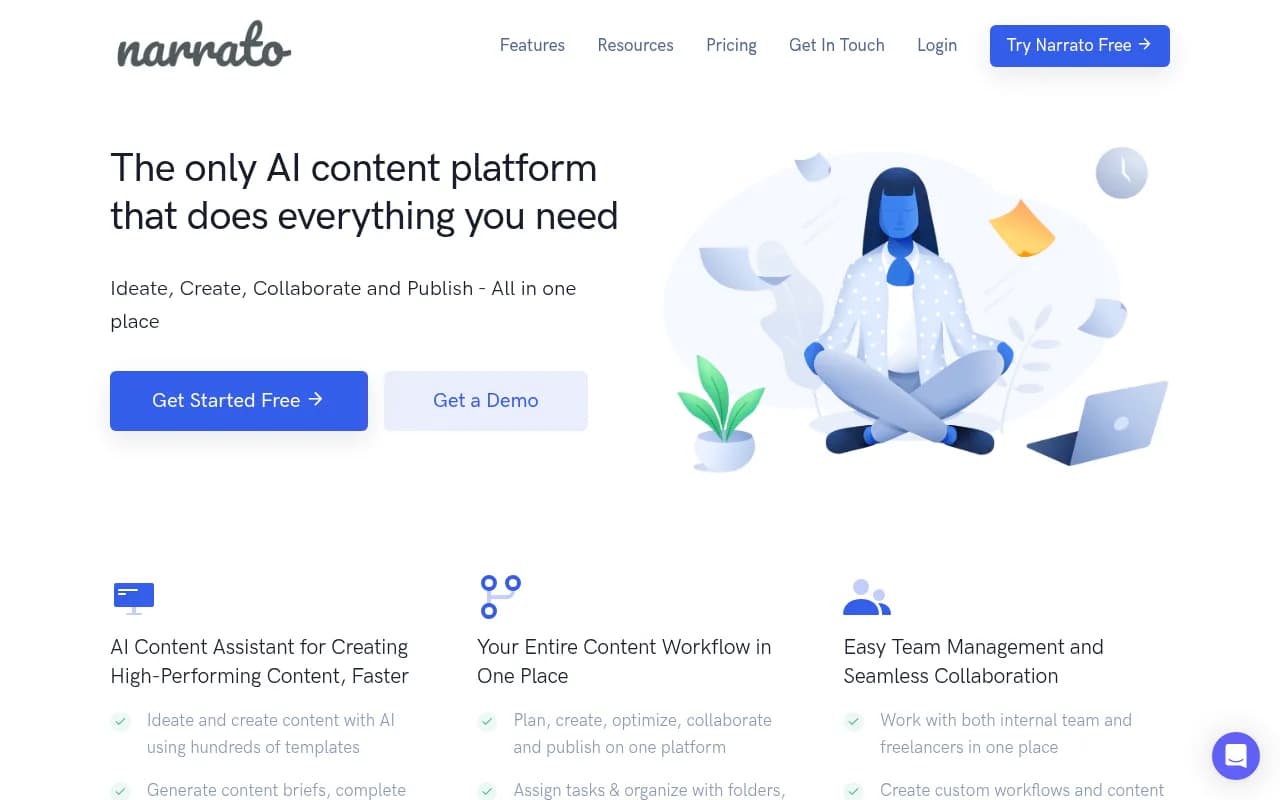
Narrato is worth a mention for teams that need workflow management alongside writing. It combines AI content generation with editorial workflows, SEO briefs, and team management in one platform. If your bottleneck is coordination rather than raw writing speed, Narrato addresses that.
Koala AI
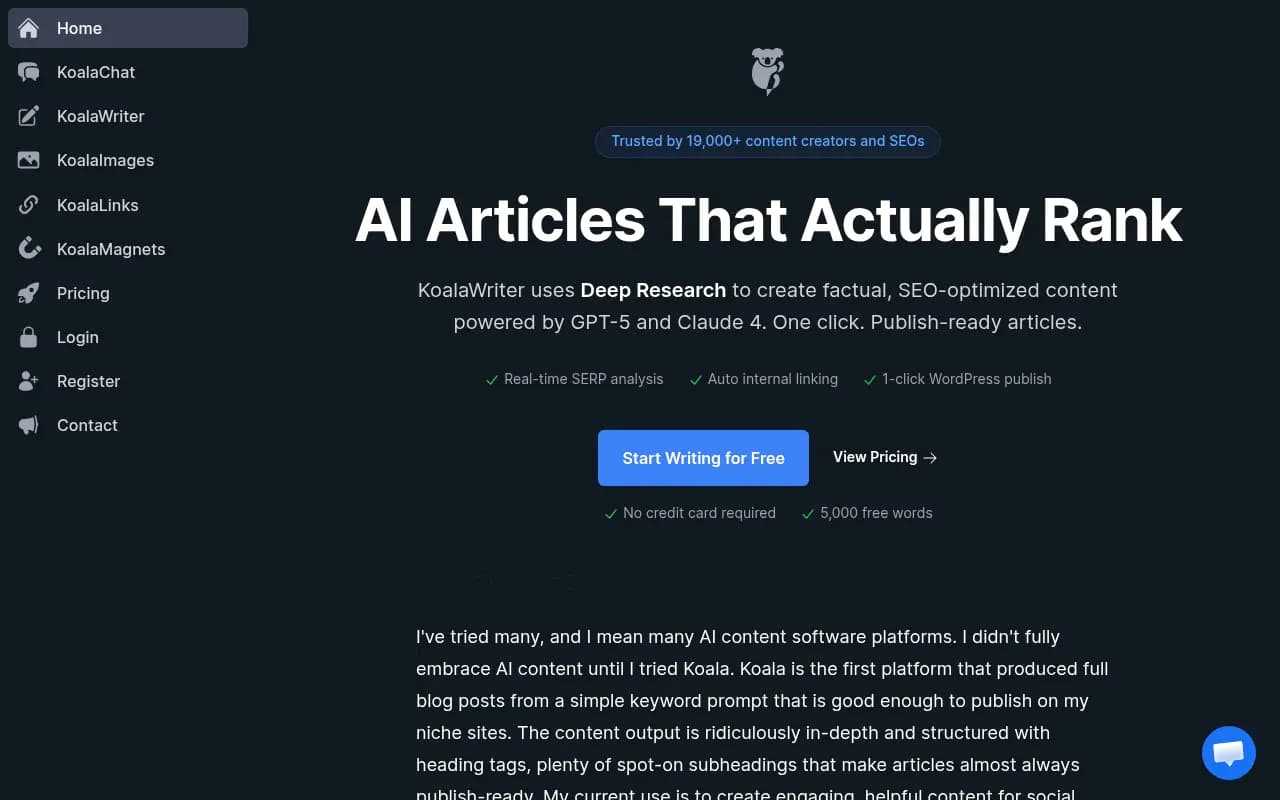
Koala AI has built a strong reputation for generating publish-ready SEO articles with minimal editing. It pulls real-time data from Google and integrates with WordPress for direct publishing. For teams running content at scale -- think 50+ articles per month -- the automation is appealing.
Optimization tools
Clearscope
Clearscope is the premium option for content optimization. Its NLP-based grading system is well-regarded among SEO teams, and the integration with Google Docs makes it easy to use in existing workflows. At $170/month for the entry tier, it's priced for teams that take content quality seriously.

Like most optimization tools, Clearscope focuses on Google relevance signals. It doesn't tell you whether your content will be cited by AI models.
SEO.ai
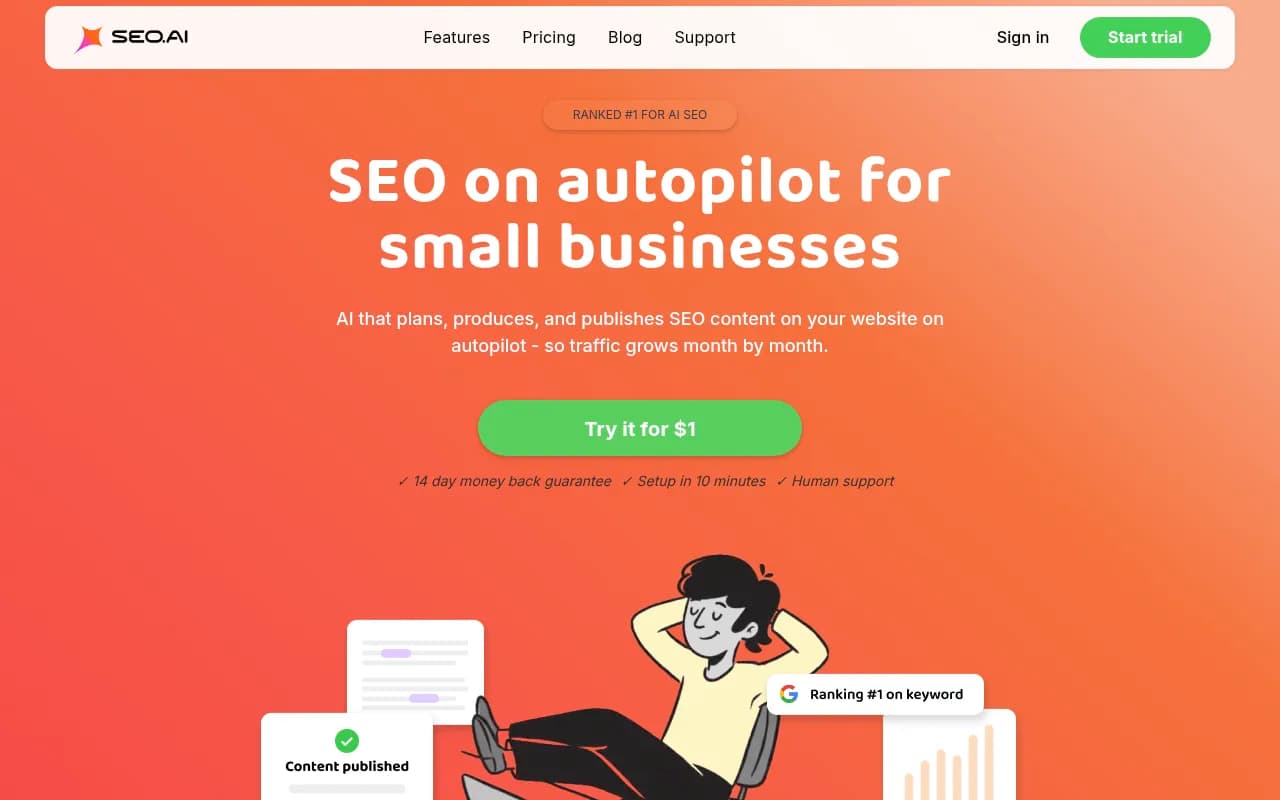
SEO.ai combines keyword research, content briefs, and an AI writer in one platform. The interface is clean and the output quality is competitive with Jasper at a lower price point. It's a reasonable all-in-one for teams that don't want to manage separate research and writing tools.
AirOps
AirOps occupies a distinct position: it's built specifically for content engineering at scale, with workflows designed around AI search visibility rather than just Google. The platform lets teams build content pipelines that account for citation patterns in LLMs, not just keyword density.
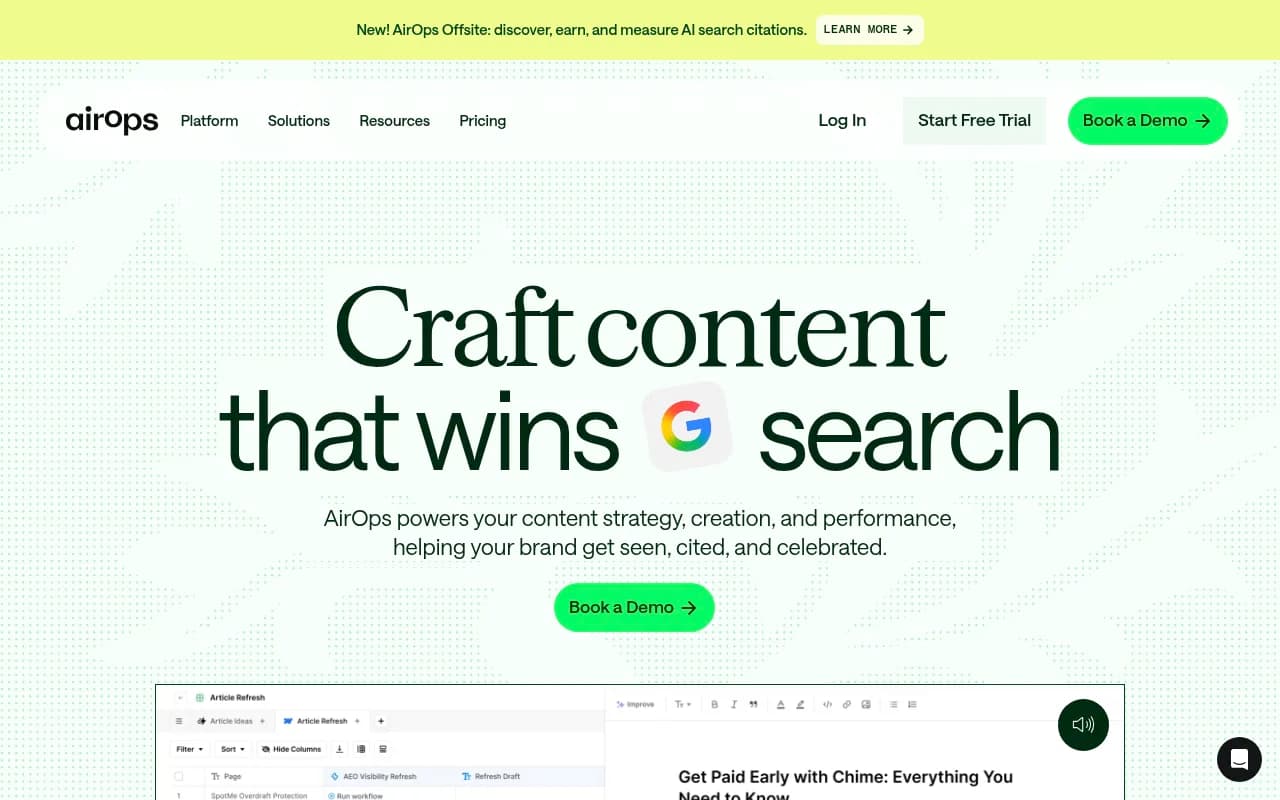
For teams that have moved beyond basic SEO and are thinking seriously about GEO (Generative Engine Optimization), AirOps is worth evaluating.
AI visibility and citation tracking tools
This is where most content teams have the biggest gap. Writing and optimization tools are well understood. Tracking whether your content is actually being cited by AI models -- and connecting that to revenue -- is newer territory.
Why this layer matters for ROI
When ChatGPT or Perplexity answers a question in your category, they cite sources. If your content isn't one of those sources, you're invisible to a growing share of your potential audience. Knowing which of your pages are being cited, which aren't, and why is now a core content performance metric.
The challenge: most AI visibility tools are monitoring dashboards. They show you data. They don't help you act on it.
Promptwatch
Promptwatch is the most complete platform for this layer. It monitors 10 AI models (ChatGPT, Perplexity, Claude, Gemini, Google AI Overviews, Grok, DeepSeek, Copilot, Meta AI, Mistral) and tracks which of your pages are being cited, how often, and for which prompts.

What separates it from monitoring-only tools is the action loop. The Answer Gap Analysis shows you exactly which prompts competitors are visible for that you're not -- the specific content your site is missing. The built-in AI writing agent then generates articles grounded in 880M+ citations analyzed, designed to get cited by AI models rather than just rank in Google. Page-level tracking closes the loop by showing which new content is getting picked up.
For teams that need to prove ROI, the traffic attribution features matter: a code snippet, Google Search Console integration, or server log analysis connects AI visibility to actual sessions and revenue. That's the number your CMO wants to see.
The crawler logs feature is also worth highlighting. Real-time logs of AI crawlers (ChatGPT, Claude, Perplexity) hitting your site show which pages they're reading, errors they encounter, and how often they return. Most competitors don't offer this at all.
Pricing starts at $99/month for the Essential plan (1 site, 50 prompts, 5 articles), with Professional at $249/month adding crawler logs, state/city tracking, and 15 articles per month.
Otterly.AI
Otterly.AI is a solid entry-level option for teams just starting to track AI visibility. It's well-regarded in SEO circles and more affordable than enterprise platforms. The monitoring covers ChatGPT, Perplexity, and Google AI Overviews.
Otterly.AI

The limitation is that Otterly stops at monitoring. There's no content gap analysis, no writing tools, and no traffic attribution. You'll see where you're invisible, but you won't get help fixing it.
Profound
Profound is an enterprise-grade AI visibility platform with strong tracking across 9+ AI engines. It's a good fit for larger brands with dedicated SEO teams who need deep data.
Profound

The price point is higher, and like most enterprise tools, it's more focused on reporting than on the content creation side of the equation.
Peec AI
Peec AI tracks brand visibility across ChatGPT, Perplexity, and Claude. It's a cleaner, simpler interface than some of the enterprise options, which makes it accessible for smaller teams.

Again, monitoring-only. No content generation or gap analysis.
Comparison: which tool does what
| Tool | AI writing | SEO optimization | GEO/AI citation tracking | Content gap analysis | Traffic attribution |
|---|---|---|---|---|---|
| Jasper | Yes | Via Surfer | No | No | No |
| Copy.ai | Yes | Basic | No | No | No |
| Writesonic | Yes | Basic | Basic | No | No |
| Surfer SEO | No | Yes | No | No | No |
| Frase | Brief only | Yes | No | Partial | No |
| Clearscope | No | Yes | No | No | No |
| AirOps | Yes | Yes | Partial | Partial | No |
| Otterly.AI | No | No | Yes (monitoring) | No | No |
| Profound | No | No | Yes (monitoring) | No | No |
| Promptwatch | Yes (AI agent) | Via GEO | Yes (10 models) | Yes | Yes |
How to build a stack that actually proves ROI
The honest answer is that no single tool covers everything. But you can get close with two or three well-chosen tools.
For small teams on a budget: ChatGPT for drafts + Surfer SEO for optimization + Promptwatch for AI visibility tracking. You get writing speed, Google optimization, and the ability to show leadership that your content is appearing in AI-generated answers.
For mid-size teams: Jasper or AirOps for production + Promptwatch for visibility and gap analysis. The Answer Gap Analysis in Promptwatch essentially replaces a separate research tool by showing you exactly what to write next based on where competitors are visible in AI search.
For enterprise teams: A full content operations platform (Narrato, Contentful, or similar) for workflow management + Clearscope or MarketMuse for optimization + Promptwatch for AI visibility and attribution. The Looker Studio integration and API in Promptwatch make it easier to pull AI visibility data into existing reporting dashboards.
The key principle: whatever stack you build, make sure at least one tool in it can answer the question "is our content being cited by AI models, and is that driving traffic?" Without that, you're flying blind on an increasingly important channel.
The measurement question
Here's what makes AI visibility different from traditional SEO measurement: the feedback loop is faster, but the attribution is harder.
In Google SEO, you publish, wait 3-6 months, and check rankings. In AI search, models can start citing new content within days of it being indexed. But the traffic doesn't always show up as a clean referral in Google Analytics -- AI-generated answers often drive "dark traffic" that looks like direct visits.
This is why tools with proper attribution matter. Promptwatch's traffic attribution (via code snippet or server log analysis) is one of the few ways to actually connect AI citations to sessions. Without it, you're left arguing that AI visibility is important without being able to show the numbers.
The teams that will win the ROI argument in 2026 are the ones that can show: we identified a content gap in AI search, we created content to fill it, AI models started citing it, and here's the traffic and pipeline that resulted. That's a complete story. Most teams can only tell the first half.
What to look for when evaluating tools
A few practical questions worth asking before committing to any tool in this space:
- Does it track the AI models your audience actually uses? (ChatGPT and Perplexity are the priority for most B2B audiences; Google AI Overviews matters for high-volume consumer queries.)
- Does it show page-level citation data, or just brand-level mentions? Page-level data is what you need to optimize individual pieces of content.
- Does it have any content creation capability, or is it monitoring only? Monitoring tells you what's wrong. Creation tools help you fix it.
- Can it connect AI visibility to actual traffic? Without this, you're reporting a vanity metric.
- Does it track competitor visibility? Knowing you're cited 40% of the time is less useful than knowing your competitor is cited 70% of the time for the same prompts.
The market for AI visibility tools is moving fast. What was enterprise-only 18 months ago is now available at $99/month. The gap between teams that are tracking this and teams that aren't is widening quickly.
Content teams that can answer "how much traffic and pipeline came from AI search this quarter" will have a very different conversation with their CMO than teams that can't. That's the ROI story worth building toward.