Key takeaways
- ChatGPT has no rankings. A "ChatGPT rank tracker" measures mentions, position inside an answer, citations and sentiment across many prompts, not a number on a results page.
- For software prompts, ChatGPT leans on docs, vendor sites and review sites. A tracker that only says "mentioned: yes/no" will miss the pages that drive those mentions.
- ChatGPT's search behavior can change overnight, so pick a tool that re-runs prompts continuously and captures fan-out queries.
- Monitoring-only dashboards are fine for a quick baseline. SaaS teams that want to act on the data should favor tools that connect tracking to content, crawler data and traffic.
- Verify pricing on each vendor's page before buying. Plans in this category change often.
What a ChatGPT rank tracker actually does
Google gives you ten links and a position. ChatGPT gives you one answer, built from several searches it runs behind the scenes, and names a handful of brands. You are either in that answer or you are not.
So a ChatGPT rank tracker runs a set of prompts that your buyers would plausibly type, records the response, and measures how you show up: whether you are mentioned, where in the answer, how you are described, which sources were cited, and which competitors appear next to you.
For SaaS this matters more than for most categories. Software buying starts with prompts like "best project management software for small teams" or "Asana vs Monday.com", and those are exactly the prompts ChatGPT answers with a shortlist.
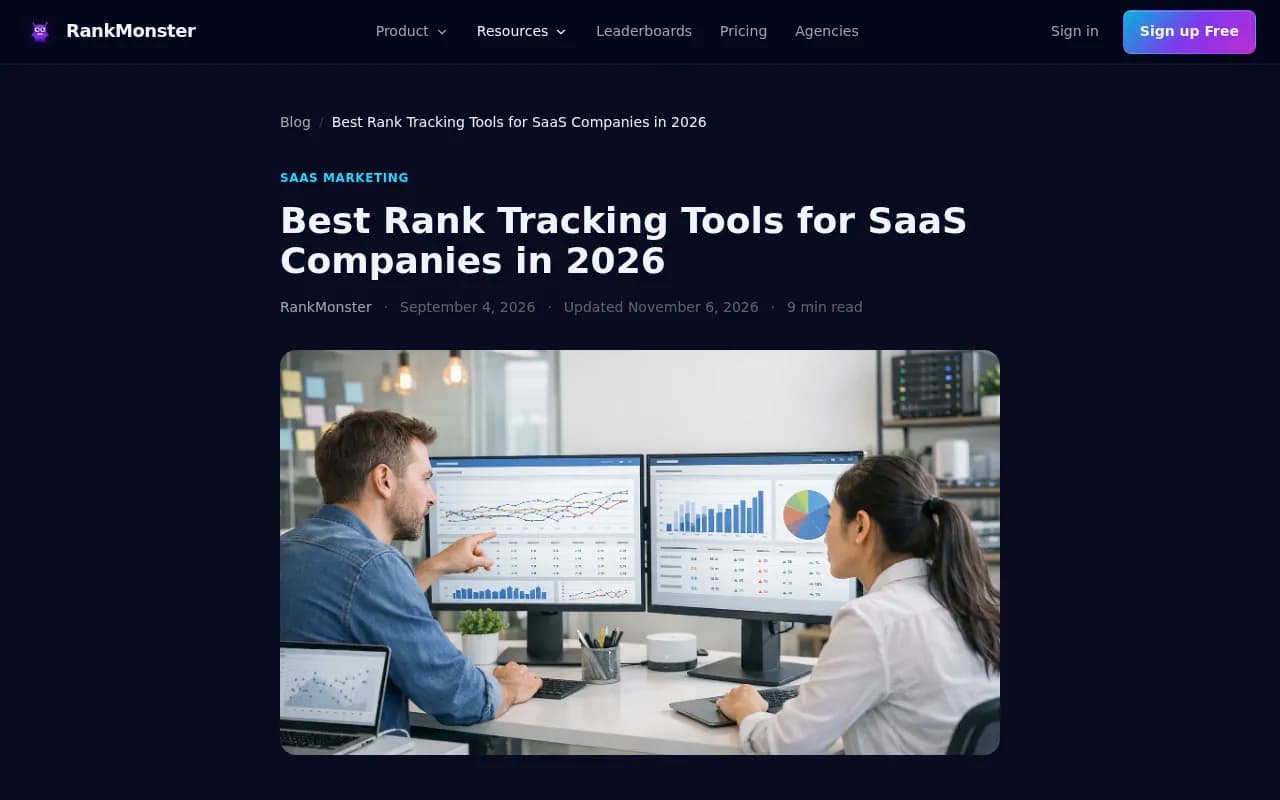
The screenshot above is one of the many vendor listicles on this topic. Most of them cover the same dimensions: suite versus specialist, integration depth and pricing model. Useful, but they are written by vendors who sell something, so read them with that in mind.
What the data says about how ChatGPT cites software brands
Before comparing tools, it helps to know what you are trying to measure. Promptwatch's first-party data is the best public source I know of here.
Software prompts lean on docs, vendors and review sites
In Promptwatch Data's report on software prompts (Sep 28 to Oct 4, 2026), GitHub, Microsoft's Learn docs and G2 were the most cited domains. By source type, docs and help centers earned the largest share at 2.64%, then vendor sites at 2.01%, then review sites and analysts at 1.57%.
Two details are worth noting. Vendor pages and docs together earn about 3x what review sites and analysts do. But G2, Gartner, Capterra and Software Advice together out-cite any single vendor, Microsoft included.
The takeaway for a SaaS team: your own docs, your pricing and feature pages, and your G2 profile are all citation candidates. A tracker should show you which of those domains are being cited, not only whether your brand name appeared.
Responses cite a lot of domains
According to Promptwatch Data on unique domains per response (Sep 28 to Oct 4, 2026), 47.6% of ChatGPT responses cite 10 or more domains, and only 6% cite three or fewer. For organic prompts like "best project management software for small teams", 52.5% cite 10 or more. Brand-specific prompts like "is Asana good for small teams" cite fewer: 21.3% reach 10, and five domains is the most common count.
That means one citation is rarely decisive. You are competing for a slot in a crowded source list, so position and description matter as much as presence.
ChatGPT changes its behavior without warning
On August 8, 2026, ChatGPT started using the site: operator at scale. Promptwatch Data shows site: fan-out queries jumping from 0.37% to 16.8% of all fan-outs in one day, while the average number of fan-out queries per response rose from about 1.08 to about 1.83.
If you had keyword-to-fan-out mappings built before that date, they went stale overnight. A one-off audit would not have caught it. Continuous monitoring would have.
There is a related pitfall. Promptwatch's citation drop report shows average citations per response falling across GPT-5.3, GPT-5.4 and GPT-5-Mini around the March 4, 2026 rollout. If your visibility chart dips on that date, the cause may be the model, not your content. A decent tracker lets you tell the difference.
How to evaluate a ChatGPT rank tracker
I would put these questions to any vendor on a demo call.
- Does it collect from the real ChatGPT interface? User-facing answers and citations can differ from API output. This is the single biggest quality difference between tools.
- How many prompts and how often? One prompt tells you almost nothing. Daily runs are the floor.
- Does it capture fan-out queries? Those are the actual searches ChatGPT runs, and they tell you what to write.
- Does it show citations by domain and page? Mentions without sources leave you guessing.
- Can it compare competitors in the same responses? Share of voice is the number your CMO will ask about.
- Does it connect to traffic? If ChatGPT visibility never shows up as visits and signups, it is hard to justify the budget.
- Does it help you fix anything? A score with no next step is a report, not a tool.
The best ChatGPT rank trackers for SaaS in 2026
I have grouped these by what they are good at. Prices come from vendor listicles and may be stale, so check each pricing page.
Promptwatch
Promptwatch is the one I would start with for a SaaS team that wants to do something with the data. It monitors the real interfaces of ChatGPT, Google AI Overviews, Google AI Mode, Gemini, Perplexity, Copilot and others, across countries and languages, then goes beyond the dashboard.

For SaaS specifically, the useful parts are:
- Prompt tracking with volumes, difficulty and query fan-outs, so you can see what ChatGPT actually searches for.
- Brand Narrative, which pulls out the individual claims ChatGPT makes about you ("affordable for small teams", "lacks integrations") and scores them by theme such as Pricing or Support.
- Citation Trends and Page Tracker, so you can see whether it is your docs, a G2 page or a competitor's comparison that gets cited.
- IP-verified AI crawler logs, which separate an access problem (bots cannot read the page) from a content problem (they read it and still do not cite it).
- Visitor analytics for AI-referred traffic and conversions. This matters now that ChatGPT stopped sending a referrer on October 8, 2026; an optional setting counts visits tagged utm_source=chatgpt.com.
- The Action Board and Content Agent, which turn gaps into prioritized tasks and publish content to WordPress, Webflow or Framer.
Pricing, per the vendor: Essential is $95/mo (50 prompts), Professional is $245/mo (150 prompts, 25M crawler logs), and Business is $579/mo (350 prompts, the Content Agent, hourly tracking options, Fact Check). Annual billing gives 12 months for the price of 10. There is a 7-day free trial on monthly billing, and a free AI visibility report if you want a quick look first. Confirm everything at promptwatch.com/pricing.
The honest caveat: if you only need a lightweight weekly check for a handful of prompts, the Essential plan may be more than you need. Crawler logs start on Professional.
Profound
Profound is the enterprise name most often mentioned in listicles, with strong monitoring and a narrative-control angle for large brands.
Profound

It fits big companies with budget and a dedicated team. The trade-off is price, and it is more monitoring than execution: no Reddit tracking and no agentic content workflow compared with Promptwatch. See Promptwatch vs Profound for the detailed comparison.
Otterly.AI
Otterly is a popular entry point for agencies and small teams that want cross-engine brand monitoring at a low price. One listicle puts it from $29/mo.
Otterly.AI

It is a straightforward prompt tracker. That is its appeal and its limit: no crawler logs, no visitor analytics, no content generation.
ZipTie
ZipTie focuses on deeper analysis of AI visibility for ChatGPT and Perplexity, with an emphasis on clear optimization actions. Listicles put it around $69/mo.
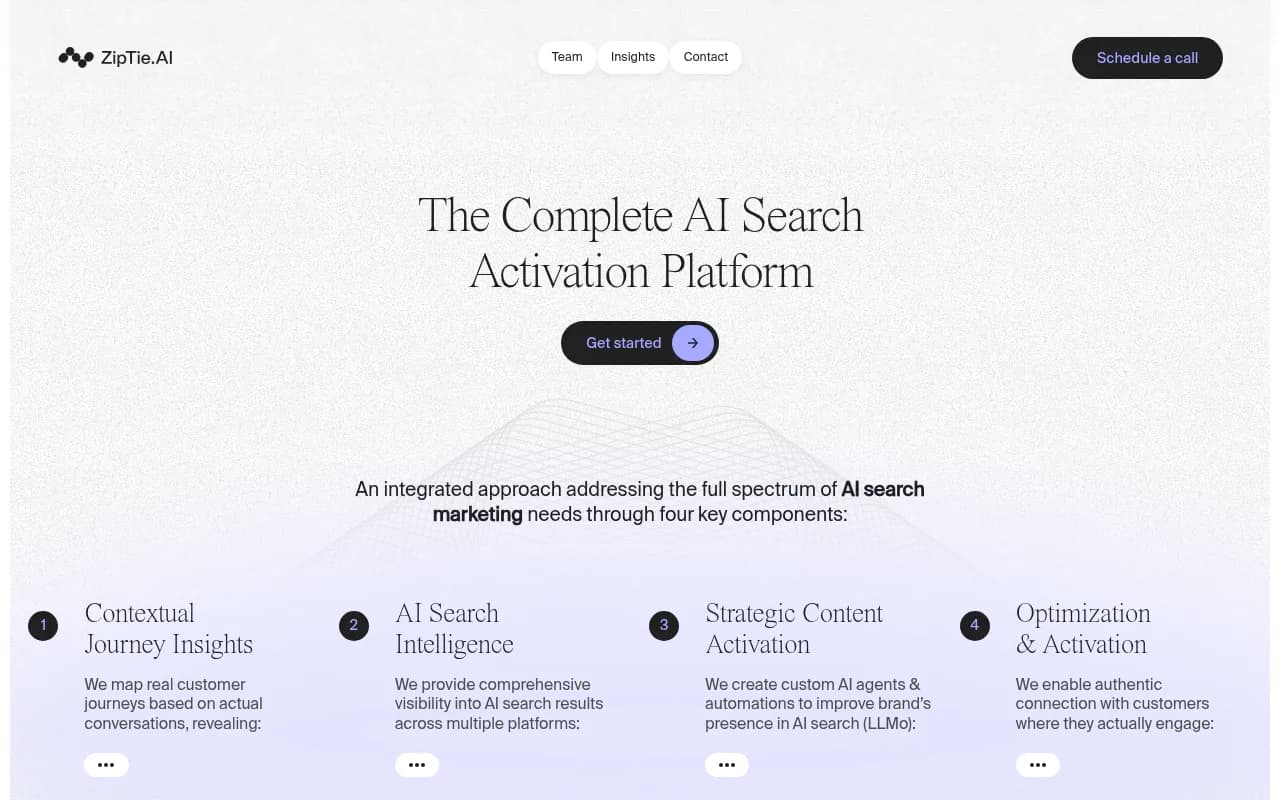
Worth a trial if you are a small marketing team and mostly care about ChatGPT and Perplexity.
LLM Pulse
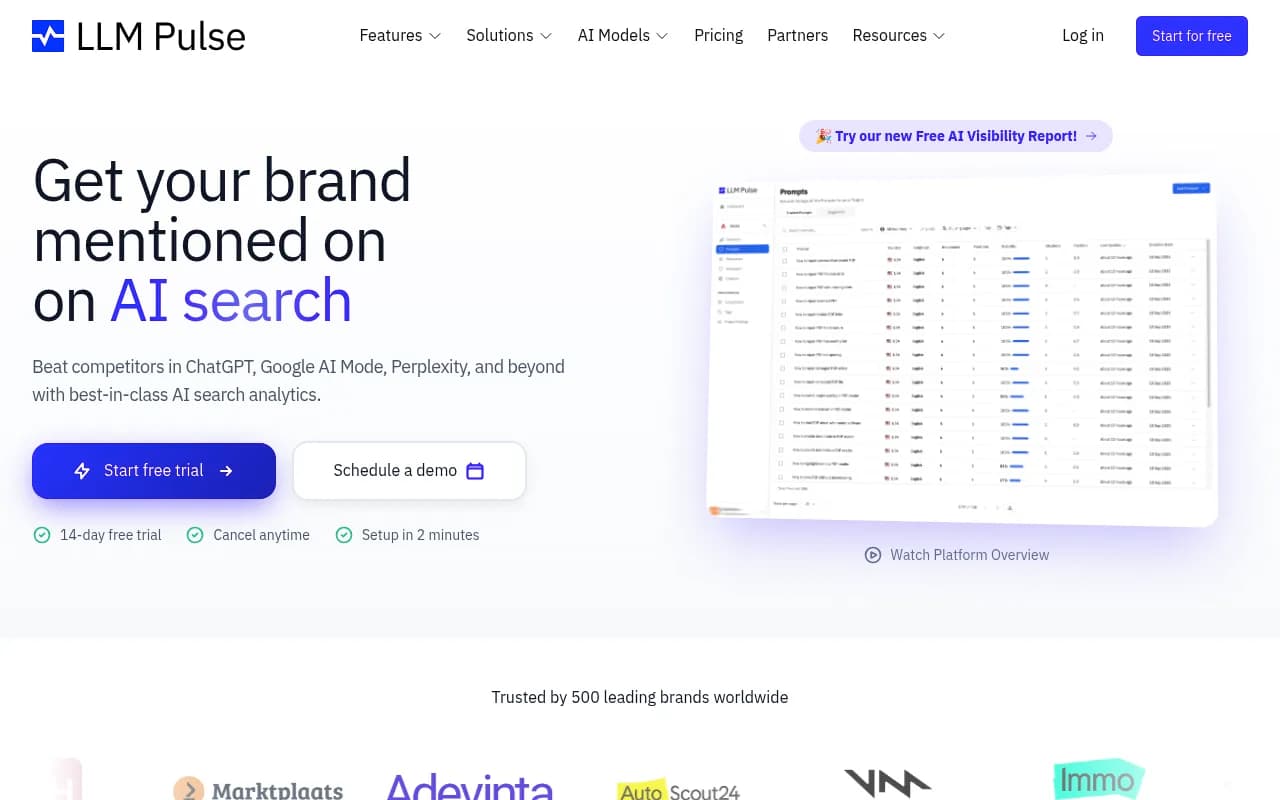
LLM Pulse positions itself for SaaS companies from seed stage upward, which is a relevant angle if you are tracking a small prompt set on a startup budget.
Xofu
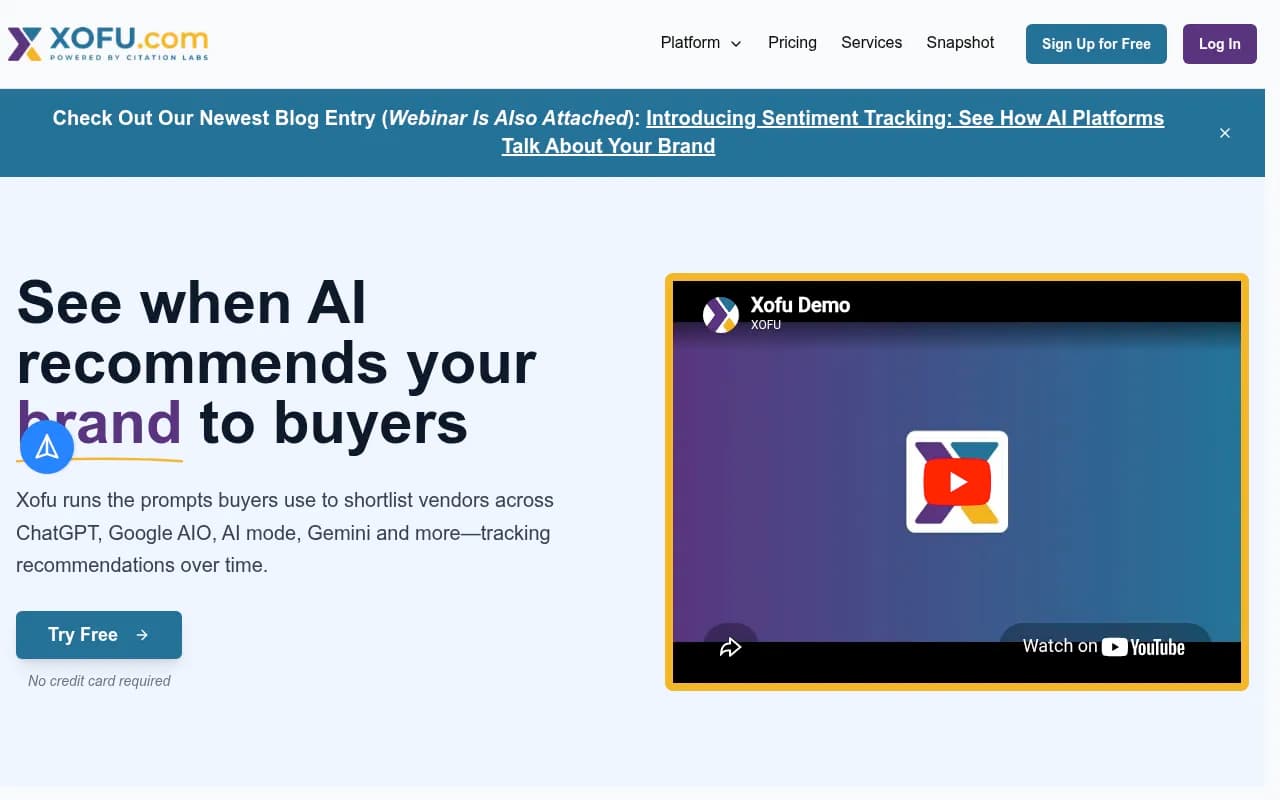
Xofu is a ChatGPT-focused tracker aimed at bottom-of-funnel, high-intent prompts. That is a sensible framing for SaaS, where "best X for Y" and "X vs Y" prompts convert.
Nightwatch and Morningscore
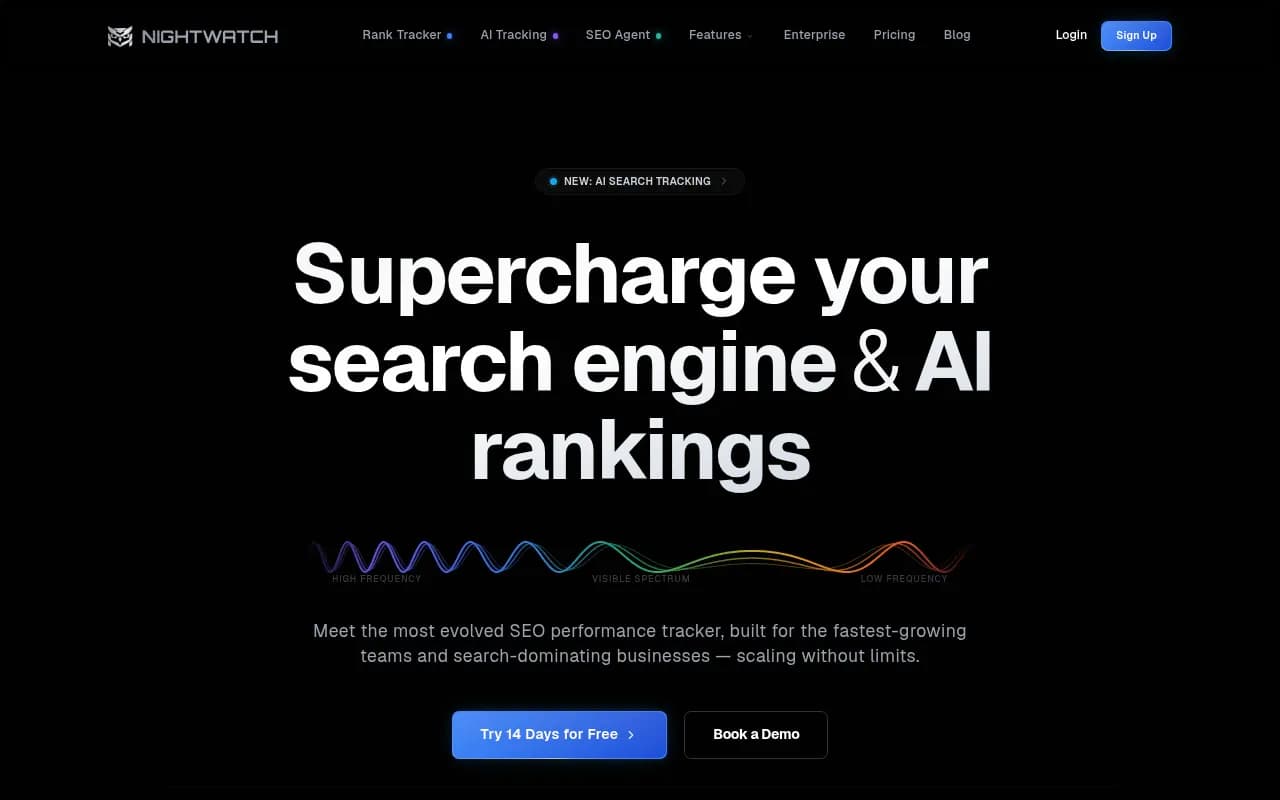
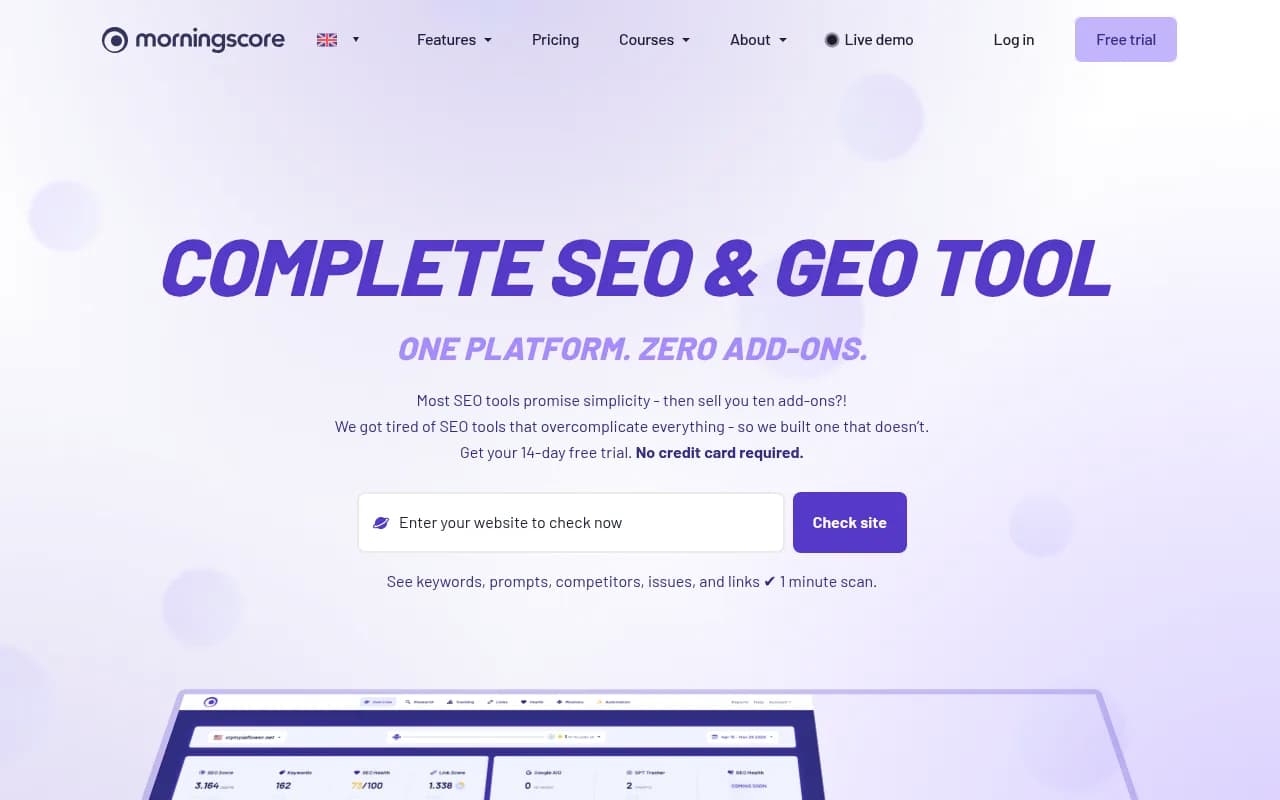
Nightwatch adds AI tracking on top of a traditional rank tracker, which suits teams that want Google and AI positions in one place. Morningscore is a gentler, gamified option for startups with no SEO specialist.
Peec AI, Rankshift and AthenaHQ
These are monitoring-focused platforms with clean dashboards. They work if your question is "are we mentioned?" and you plan to handle the fixing elsewhere.



Traditional suites with AI add-ons
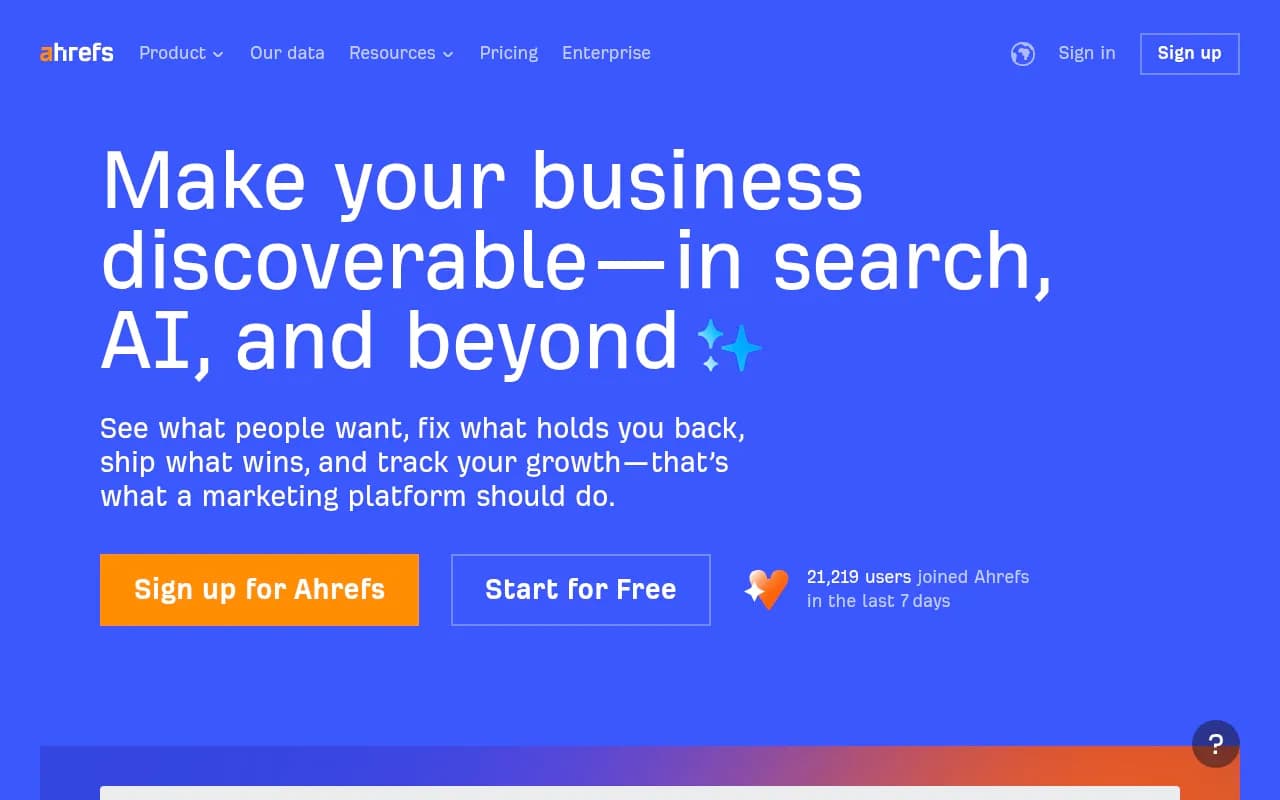
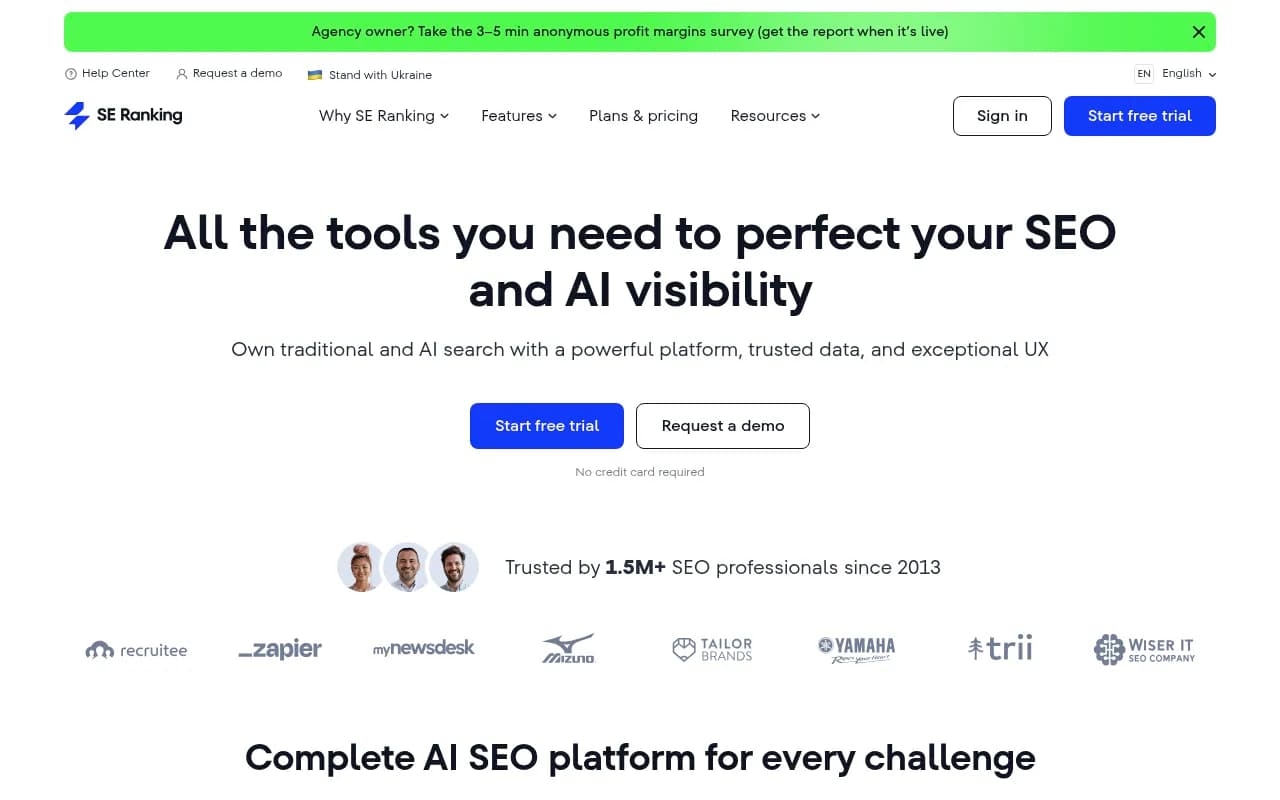
If you already pay for Semrush, Ahrefs or SE Ranking, their AI modules are the lowest-friction way to get a first look. The downside is fixed prompt sets and shallower AI-specific data, with no crawler logs or AI traffic attribution.
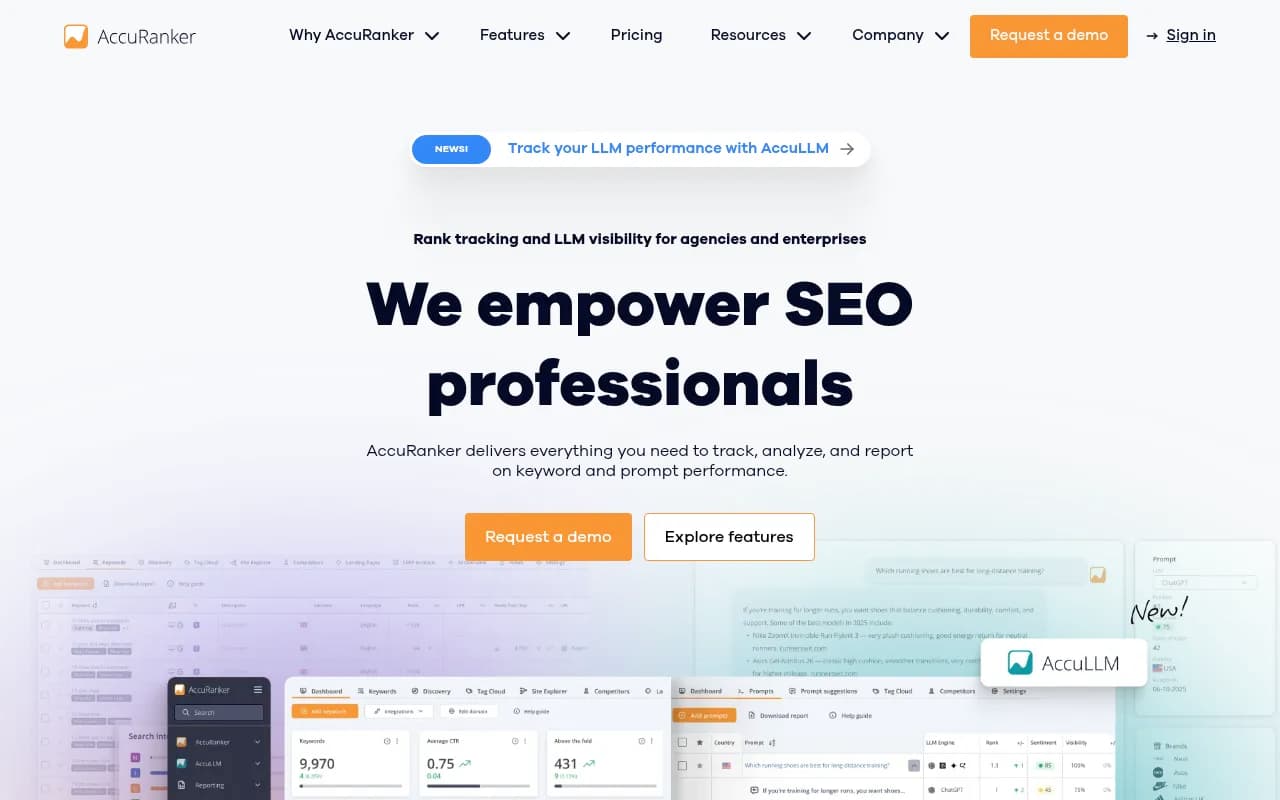
For classic Google keyword tracking next to your AI work, a specialist like AccuRanker is still the better tool.
Comparison table
| Tool | Real-interface tracking | Fan-outs and citations | Crawler logs and traffic | Helps you fix gaps | Best for |
|---|---|---|---|---|---|
| Promptwatch | Yes | Yes | Yes | Yes (Action Board, Content Agent) | SaaS teams that want to act on the data |
| Profound | Yes | Yes | Limited | Limited | Large enterprises |
| Otterly.AI | Yes | Basic | No | No | Agencies, tight budgets |
| ZipTie | Yes | Yes | Limited | Some guidance | Small marketing teams |
| LLM Pulse | Yes | Yes | Limited | Limited | Startups tracking a small set |
| Semrush / Ahrefs / SE Ranking | Varies | Shallow | No | No | Teams already in the suite |
Ratings here are directional. I have not verified each vendor's current feature set, so test before you commit.
How to choose by company stage
Seed to Series A
Track 30 to 50 prompts: your category, your top three competitors, and a few "alternative to X" queries. A low-cost tracker or the free AI visibility report is enough to get a baseline. Do not buy enterprise software to answer a question you can answer with a spreadsheet and a week of prompts.
Series A to growth
This is where the fixing starts to matter. You have competitors getting cited and a content team that needs to know what to write. A platform that links gaps to content and measures whether the new page got crawled, cited and clicked will save more time than another dashboard. Promptwatch's SEO teams and marketing teams pages describe that workflow.
Enterprise
You need audit logs, SSO, security reviews and multiple markets. Promptwatch is ISO/IEC 27001 certified and GDPR compliant, which tends to matter in procurement. Profound and other enterprise-focused tools are also in the running.
A simple setup that works
- Write 40 to 60 prompts in three buckets: organic category prompts, competitor comparisons, and brand-specific questions. Promptwatch's data shows those buckets behave differently, so keep them separate.
- Add buyer personas if your product serves distinct roles, such as a developer versus a finance lead.
- Run daily for two weeks to get a stable baseline. Single-day numbers are noisy.
- Look at which domains are cited alongside you. For software, expect docs, G2 and Capterra pages, and competitor sites.
- Fix the biggest gap first. That is often a missing comparison page, an outdated docs page, or a thin G2 profile.
- Tie it to traffic. Check AI-referred sessions and signups, not just visibility.
If you want to explore more options beyond this list, the directory at bestgeosoftware.com covers GEO software by category.
What I would skip
- Any tool that will not say whether it collects from the real ChatGPT interface or the API.
- Vendor claims that a large share of all organic traffic now comes from AI. The numbers in some listicles are unsourced marketing. Measure your own AI traffic instead.
- Tools that give a single visibility score with no way to see the underlying responses.
Bottom line
ChatGPT rank tracking for SaaS comes down to two questions: can you see exactly what ChatGPT says and cites about you, and can you act on it? Cheap trackers answer the first. Start with a free baseline, then pick a platform that closes the loop if your team will actually do the work. For most SaaS teams past the earliest stage, that is Promptwatch, with the 7-day trial as the lowest-risk way to test it against your own prompts.