Key takeaways
- A prompt budget of 25 to 150 prompts covers categories, not thousands of SKUs. Plan around topics, product families and your best sellers, then sample the long tail.
- Brand-level tracking and product-level tracking are different things. Many vendors sell the first as the second, and SKU-level features are often gated to enterprise tiers.
- Product pages and landing pages together earn about 39% of ChatGPT citations, so your catalog pages are the asset that matters most.
- Shopping surfaces read merchant feeds, not just pages. Feed quality, schema and crawler access all need monitoring.
- Pick a platform that closes the loop (monitor, fix, measure). A dashboard alone will not scale across a large catalog.
Why retail catalogs break ordinary AI visibility tools
Most AI visibility tools answer one question: does an assistant say your brand name? That is nearly useless when you sell 12,000 SKUs and the shopper asked for a waterproof hiking boot under $150. The brand might be mentioned. The boot might not.
The demand side is real. Adobe Analytics reported that AI-referred traffic to US retail sites grew 138% year over year in May 2026. BrightEdge found only 16.7% of AI Overview sources overlap with the organic top 10, so ranking well in classic search does not carry over automatically.
The second problem is arithmetic. Prompt-based tracking charges you per prompt. If you try to track one prompt per SKU, you will blow through any plan. The practical approach is to track prompts at the category, attribute and use-case level, then watch a short list of hero products closely.
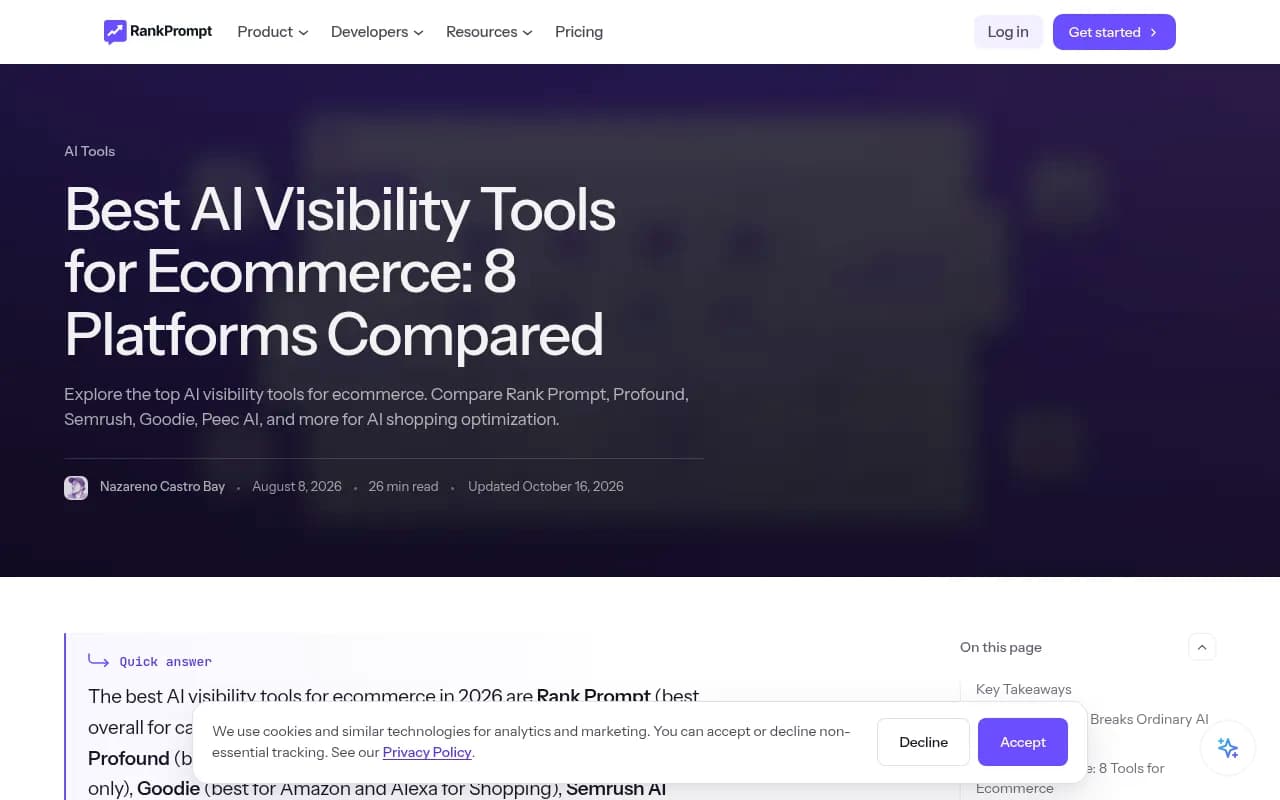
A caveat on sources: the Rank Prompt article above is from a vendor that discloses it sells a competing product, and the Yotpo list ranks its own product first. I use them for the framing and the cited third-party figures, not for rankings.
What retail brands should demand from an enterprise tool
Citation data that maps to your pages
Promptwatch Data shows what AI actually cites. For the week of Sep 28 to Oct 4, 2026, product pages were the most cited content type in ChatGPT at 22.4%, with landing pages at 16.8%. For commercial prompts, product pages reach 26.0% and landing pages 20.6%. Your tool needs to show which of your product and category pages are cited, in which position, and which competitor pages win instead.
Crawler visibility
If AI bots cannot read a product page, no amount of content work will help. With large catalogs, crawl failures hide in the long tail: faceted URLs, JavaScript-rendered listings, blocked directories. Look for IP-verified crawler logs, not just a robots.txt check. Promptwatch's Meta-WebIndexer data is a reminder that crawler mixes change fast, and a bot that barely existed in July can be a large share of traffic by August.
Shopping and feed coverage
Shopping features in ChatGPT appear in a low single-digit share of web-search responses and concentrate on commercial and transactional prompts, per Promptwatch's ChatGPT shopping usage data. The rate moves in steps, which suggests OpenAI tunes it actively. For a retailer that means tracking shopping carousels as their own surface, keeping Product schema complete, keeping prices and availability accurate, and keeping the merchant feed clean.
Ads awareness
ChatGPT showed no ads until May 27, 2026. By the 90 days ending Aug 17, ads appeared in an average of 20.1% of web-search responses, with a 7-day average of 32.4% (Promptwatch's ChatGPT ads data). Paid placement now competes with organic citations on category prompts. Retailers should know which advertisers show up on their prompts.
Traffic and revenue attribution
Adobe's data, cited by Rank Prompt, put AI traffic conversion 42% above non-AI traffic in March 2026. That is a vendor-relayed figure, so treat it as directional. Either way, you need visitor analytics that tie AI referrals to conversions, or you will argue about this in budget meetings with nothing but screenshots.
Scale, security and access
Enterprise procurement asks about certifications, SSO, audit logs and API access. A retailer with a data team also wants an API or MCP server so visibility data lands in the warehouse and BI stack, not just a dashboard.
Comparison of platforms for large-catalog retailers
Pricing below is only given where it comes from Promptwatch's published plans. I did not verify current pricing for the other vendors, so check each vendor's page.
| Platform | Best for | Retail-relevant strengths | Watch out for |
|---|---|---|---|
| Promptwatch | Retailers that want to monitor, fix and measure in one place | Crawler logs, shopping tracking, Ads Radar, Content Agent, visitor analytics, local targeting | Content Agent and shopping start on Business |
| Profound | Enterprise monitoring and SKU-level tracking in ChatGPT Shopping | Strong real-time monitoring, share of voice | Enterprise-gated product tracking per vendor claims; no agentic execution |
| Scrunch | Enterprise retailers making the storefront legible to shopping agents | Agent-readiness focus | Higher price point; product-level tiers |
| Semrush AI toolkit | Ecommerce SEO teams already in Semrush | Familiar workflow | Fixed prompt sets, shallow AI-specific data |
| Peec AI | Multi-market retail groups | Simple multi-market tracking | Basic tracker; no crawler logs or content generation |
| Nudge | Teams wanting SKU-level catalog optimization | Claims to unify citation tracking and shoppable funnels | Vendor claims; verify in a demo |
| Yotpo Discover | Review-led brands wanting agents that build review-backed pages | Ties into review data | Vendor ranks itself first; verify scope |
The tools, one by one
Promptwatch
Promptwatch is an end-to-end AI visibility platform rather than a prompt tracker. For a retailer, the pieces that matter are:
- Real-UI tracking of ChatGPT, Google AI Overviews, AI Mode, Gemini, Perplexity, Copilot, Alexa and Meta AI, per country and language.
- AI Shopping tracking that shows which products ChatGPT and Alexa recommend and which competitors it picks instead, including how your uploaded catalog performs (Business and Enterprise).
- Ads Radar, which shows advertisers bidding on your prompts, their ad copy and landing pages.
- IP-verified AI crawler logs that tell an access problem from a content problem, page by page.
- Page Tracker, which watches specific URLs, such as your hero SKUs or a competitor's, and shows the prompts that cite them.
- Content gap analysis plus the Content Agent, which writes and publishes to WordPress, Webflow or Framer, then follows each page through crawls, citations and AI traffic.
- Local GEO targeting at exact coordinates for store-level queries.
- A hosted MCP server and REST API for warehouse and BI integration, plus ISO/IEC 27001 certification and GDPR compliance.
Crisp reported 2x higher conversion rates from AI traffic than from traditional channels, and TreeHouse (Pararius) grew AI search to roughly 25% of organic conversions after fixing crawler access and publishing proprietary data. Neither is a retailer, but the pattern of crawl fix, content, then measure carries over to catalogs.
Pricing: Business is $579/mo (350 prompts, shopping, Ads Radar, Content Agent, 25,000 audited pages), and Enterprise is custom for larger prompt and crawler volumes, SSO and white-label needs. Confirm at promptwatch.com/pricing. There is a 7-day free trial on monthly billing, and a free AI visibility report if you want a baseline first. See also the head-to-head with Profound and with Scrunch.

Profound
Profound is the usual enterprise shortlist name. It is strong on real-time monitoring and share of voice, and per Rank Prompt it offers SKU-level tracking inside ChatGPT Shopping on its Enterprise tier. The gap is execution: it reports, and your team does the fixing. Whether that matters depends on how big your content team is.
Profound

Scrunch
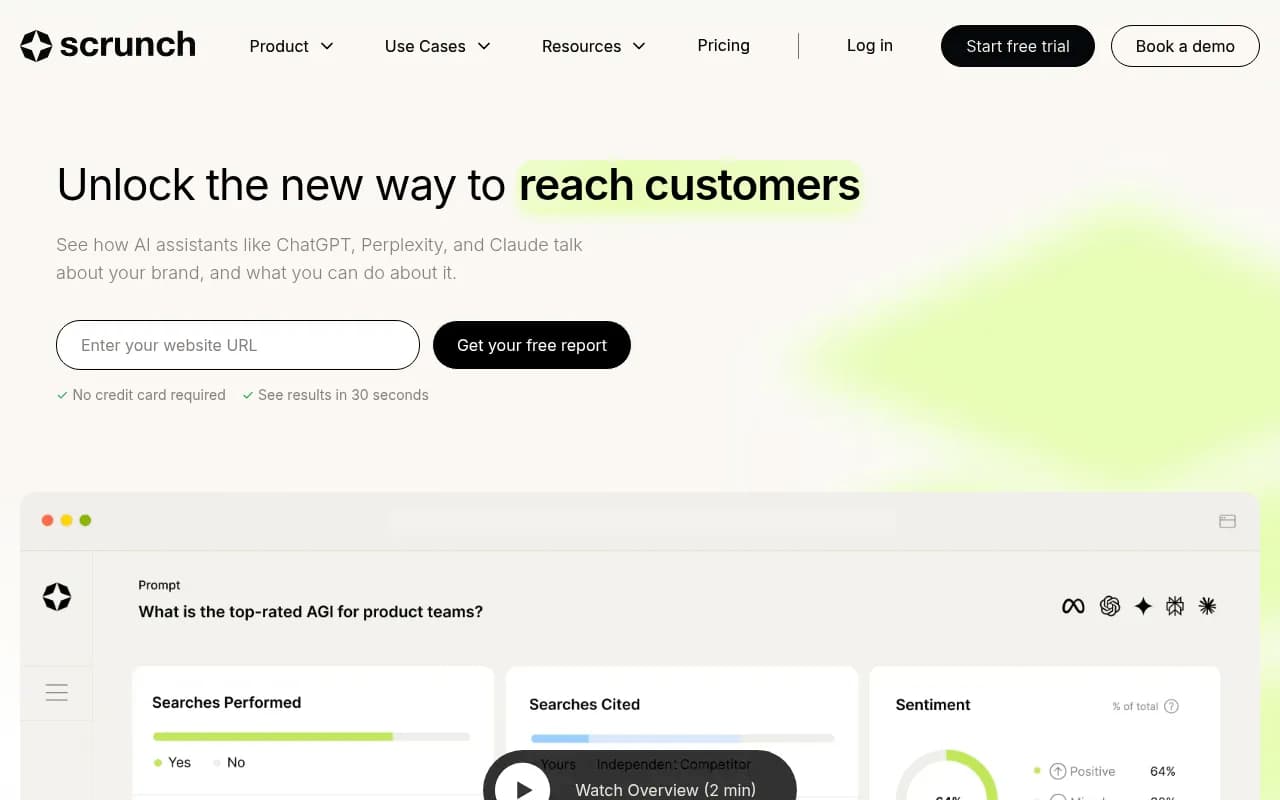
Scrunch positions itself around making the storefront legible to shopping agents, which fits retailers worried about agent-driven buying. Expect an enterprise price point and a sales-led process.
Semrush and Ahrefs Brand Radar
If your ecommerce SEO team lives in Semrush or Ahrefs, the AI add-ons are the lowest-friction start. The trade-off is depth. Fixed prompt sets and no crawler logs or AI traffic attribution means you will outgrow them on a big catalog.

Peec AI and Otterly.AI
Both are affordable trackers and good for a pilot or a single market. Neither gives you crawler logs, visitor analytics or content generation, so they answer "are we mentioned?" and stop there.

Otterly.AI

Nudge
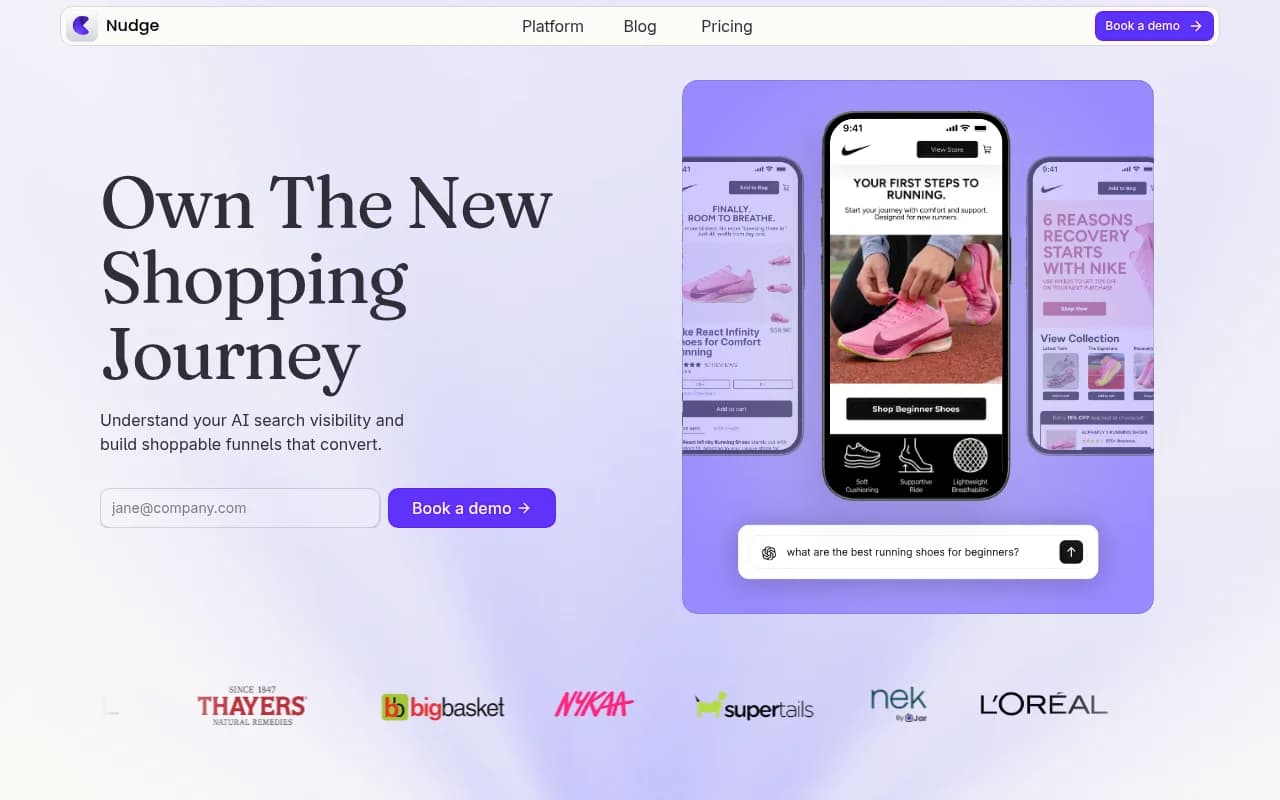
Nudge pitches itself as unifying prompt-level citation tracking, SKU-level catalog optimization and shoppable AI funnels. That is a bold claim and I could not verify it independently. Ask for a demo using your actual catalog.
Other names worth a look
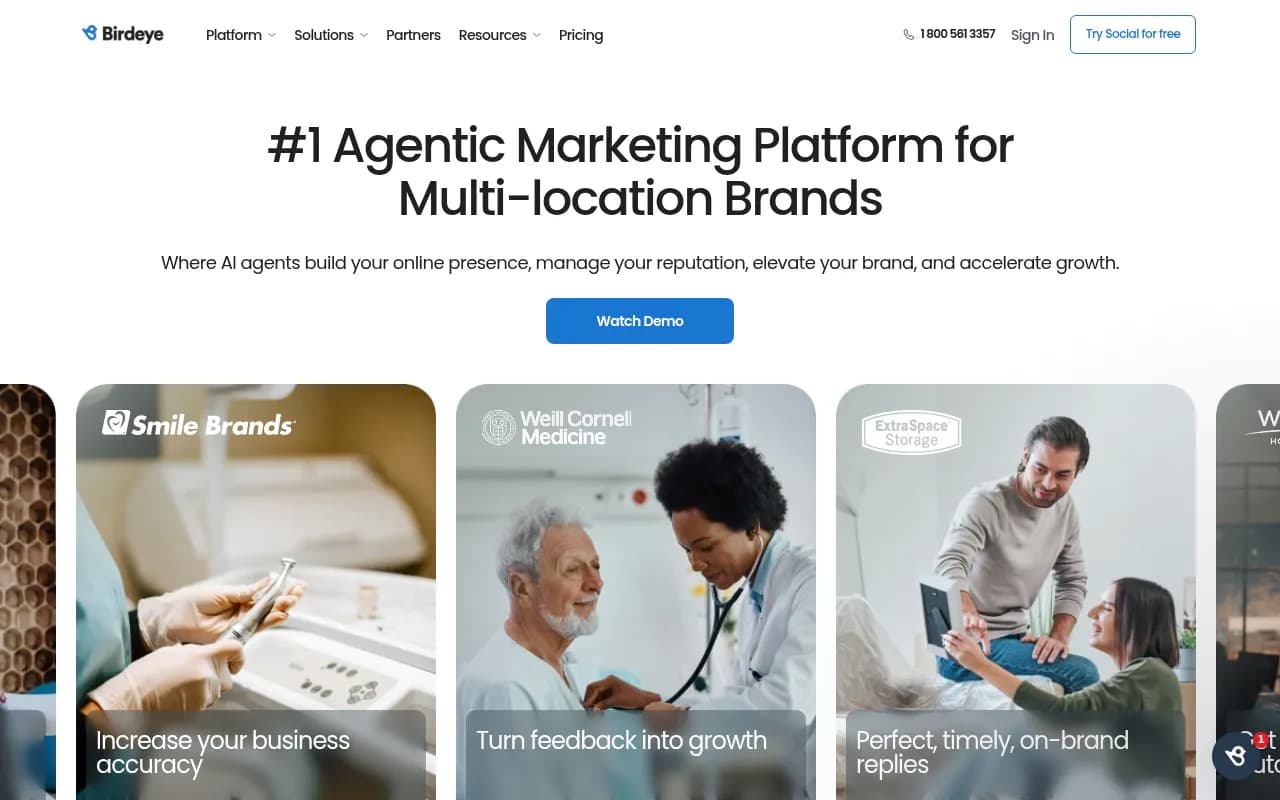
Birdeye is aimed at multi-location brands, Triple Whale ties AI visibility to ecommerce revenue signals, and Evertune and Bluefish target Fortune 500 brands. For more options, the GEO software directory at bestgeosoftware.com lists the wider field.
How to run AI visibility across thousands of SKUs
Step 1: tier your catalog
Split the catalog into three buckets. Hero SKUs get individual page tracking. Mid-tier products get tracked by category and attribute prompts. The long tail gets monitored through feed health, schema coverage and crawler logs, not prompts.
Step 2: build prompts around shopper intent
Use commercial and transactional phrasing: "best waterproof hiking boots under $150", "running shoes for flat feet", comparison prompts against named competitors. Query fan-outs show the actual searches ChatGPT runs, which is useful for choosing attributes to put on product pages. Promptwatch Data reported that ChatGPT started using the site: operator at scale on August 8, 2026 (report), which is one more reason to keep your own domain cleanly structured.
Step 3: fix the technical base first
Check robots.txt for AI bots, rendering of JavaScript product grids, canonical handling on faceted URLs, and Product schema completeness. Adobe scored US retail product pages at 66% machine readable, the lowest of any page type it measured, per Rank Prompt's summary. So this is where most retailers lose.
Step 4: make product pages comparable
Prices, specs, audience and availability in plain, structured text. Promptwatch Data's advice from the content-type report is the same: easy comparison, inclusion in best-of roundups AI already cites, reviews on trusted sites and FAQ sections. Marketplaces matter too. In automotive, Autotrader and Cars.com outranked every car brand in ChatGPT citations, and retail categories often behave the same way.
Step 5: plan for content decay
Promptwatch's content half-life report found landing pages and docs stay cited longest, while news loses half its pages within 36 days. Evergreen category pages are a better investment than seasonal blog posts.
Step 6: measure revenue, not just mentions
Connect AI referrals to conversions. Note that ChatGPT stopped sending a referrer on October 8, 2026, so you will want UTM tagging or a tool that counts utm_source=chatgpt.com visits as ChatGPT traffic. The Promptwatch Academy's guide to attributing AI traffic walks through this.
Questions to ask in every vendor demo
- Can you show product-level visibility for my catalog, and on which plan?
- How many prompts, responses and audited pages are included, and what happens when I exceed them?
- Is data collected from real consumer interfaces or only APIs? Shopping carousels often differ between the two.
- Do you ingest merchant feeds, and which surfaces do you track (ChatGPT Shopping, Alexa, AI Overviews)?
- Do you provide IP-verified crawler logs?
- Can I pull data via API or MCP into our warehouse?
- What are the security certifications, SSO and audit log options?
- Who does the fixing, you or my team?
Which tool for which retailer
| Situation | Start with |
|---|---|
| Large catalog, small content team, need fixes not just reports | Promptwatch (Business or Enterprise) |
| Enterprise monitoring across many engines, in-house content ops | Profound or Promptwatch |
| Storefront readiness for shopping agents is the main concern | Scrunch, with Promptwatch crawler logs for validation |
| Already in Semrush, early-stage pilot | Semrush AI toolkit, then reassess |
| Multi-market pilot on a tight budget | Peec AI or Otterly.AI |
| Multi-location store network | Promptwatch local targeting or Birdeye |
For broader comparisons of rank trackers, the directory at ai-rank-tools.com is a handy next stop.
Bottom line
No tool tracks every SKU with a prompt each, and any vendor implying otherwise deserves a harder demo. Tier your catalog, track categories and heroes by prompt, watch the long tail through crawler logs and feed health, and choose a platform that helps you fix pages rather than only score them. Run a trial against your top 50 products before signing an annual contract.
If you want an outside team to run the strategy, 1001 SEO Media offers GEO consulting and uses Promptwatch for its own AI visibility work.