Key takeaways
- AI search is now a real acquisition channel for e-commerce. AI referral traffic converts at 4.4x the rate of traditional organic search, so being cited in ChatGPT or Perplexity product recommendations is no longer a nice-to-have.
- Most GEO platforms stop at monitoring. They show you where you're invisible but don't help you fix it. For e-commerce brands, that gap matters enormously.
- Promptwatch is the only platform in this comparison that closes the full loop: find visibility gaps, generate optimized content, track results, and attribute revenue.
- Relixir is worth considering for enterprise brands that want autonomous content publishing and fast ranking flips.
- AirOps is a strong content engineering tool but requires more hands-on workflow setup -- it's not a pure GEO tracker.
- Searchable has content generation built in but lacks the depth of citation data and attribution that serious e-commerce teams need.
Why e-commerce brands need GEO right now
Think about how your customers actually shop in 2026. A significant portion of product research now starts with a question to ChatGPT, Perplexity, or Google's AI Mode -- not a keyword typed into a search bar. The answer they get back often names two or three brands and never shows a list of ten blue links.
That's the zero-click problem. If your brand isn't in the AI's response, you don't exist for that customer. Traditional SEO rankings still matter, but they're increasingly downstream of AI citations. The brands getting cited are the ones that will capture this traffic.
According to data from Generate More's 2026 testing of AI visibility platforms, AI search traffic already accounts for 1.08% of all website traffic across major industries -- with some sectors seeing nearly 3%. That number is growing fast. And critically, that traffic converts at 4.4x the rate of organic search, which means even a small share of AI citations can have an outsized revenue impact.
For e-commerce brands specifically, the stakes are even higher. Product recommendation queries ("best running shoes under $150", "which protein powder is best for weight loss") are exactly the kind of prompts AI models answer with specific brand citations. If your competitors are being cited and you're not, you're losing customers before they ever reach your site.
The four platforms compared
Here's a quick overview before we go deeper:
| Platform | Best for | Monitoring | Content generation | Attribution | Pricing starts at |
|---|---|---|---|---|---|
| Promptwatch | E-commerce brands wanting end-to-end GEO | 10 AI models | Yes (built-in AI writer) | Yes (GSC, snippet, logs) | $99/mo |
| Relixir | Enterprise brands wanting autonomous publishing | Multiple engines | Yes (autonomous) | Limited | Custom/enterprise |
| AirOps | Content teams building AI search workflows | Yes | Yes (workflow-based) | Limited | Custom |
| Searchable | SMBs wanting simple GEO with content tools | Basic | Yes | Basic | Varies |
Promptwatch: the full-loop platform
Promptwatch is the platform that comes up most consistently when e-commerce teams ask "which GEO tool actually helps us do something." The reason is straightforward: it's built around a complete optimization cycle rather than just a monitoring dashboard.

The core workflow goes like this. First, Answer Gap Analysis shows you exactly which prompts your competitors are being cited for that you're not. Not vague "topic clusters" -- specific questions and prompts that AI models are answering right now, with your competitors' names in the response and yours absent. For an e-commerce brand, this might surface something like "best sustainable activewear brand" or "which mattress brand has the best trial period" -- prompts with real purchase intent where you're invisible.
Second, Promptwatch's built-in AI writing agent generates content designed to get cited. This isn't generic blog content -- it's engineered using data from over 880 million citations analyzed, so the output reflects what AI models actually cite. Articles, listicles, comparisons -- the formats that get pulled into AI responses.
Third, page-level tracking shows which of your pages are being cited, by which AI models, and how often. The attribution layer (Google Search Console integration, a code snippet, or server log analysis) connects those citations to actual traffic and revenue.
For e-commerce specifically, Promptwatch also tracks ChatGPT Shopping -- monitoring when your products appear in ChatGPT's shopping carousels and product recommendations. That's a channel most GEO platforms don't touch at all.
The platform monitors 10 AI engines: ChatGPT, Perplexity, Google AI Overviews, Google AI Mode, Claude, Gemini, Meta/Llama, DeepSeek, Grok, and Mistral. It also logs AI crawler activity in real time -- you can see when GPTBot or ClaudeBot visits your site, which pages they read, and whether they hit errors. That's genuinely useful for diagnosing why certain pages aren't being cited.
Pricing: Essential at $99/mo (1 site, 50 prompts, 5 articles), Professional at $249/mo (2 sites, 150 prompts, 15 articles, crawler logs), Business at $579/mo (5 sites, 350 prompts, 30 articles). A free trial is available.
Relixir: autonomous content publishing for enterprise
Relixir positions itself as an "autonomous GEO engine" -- the pitch is that it can flip your AI search rankings within 30 days through automated content publishing. For enterprise e-commerce brands with large catalogs and aggressive growth targets, that speed-to-result framing is appealing.
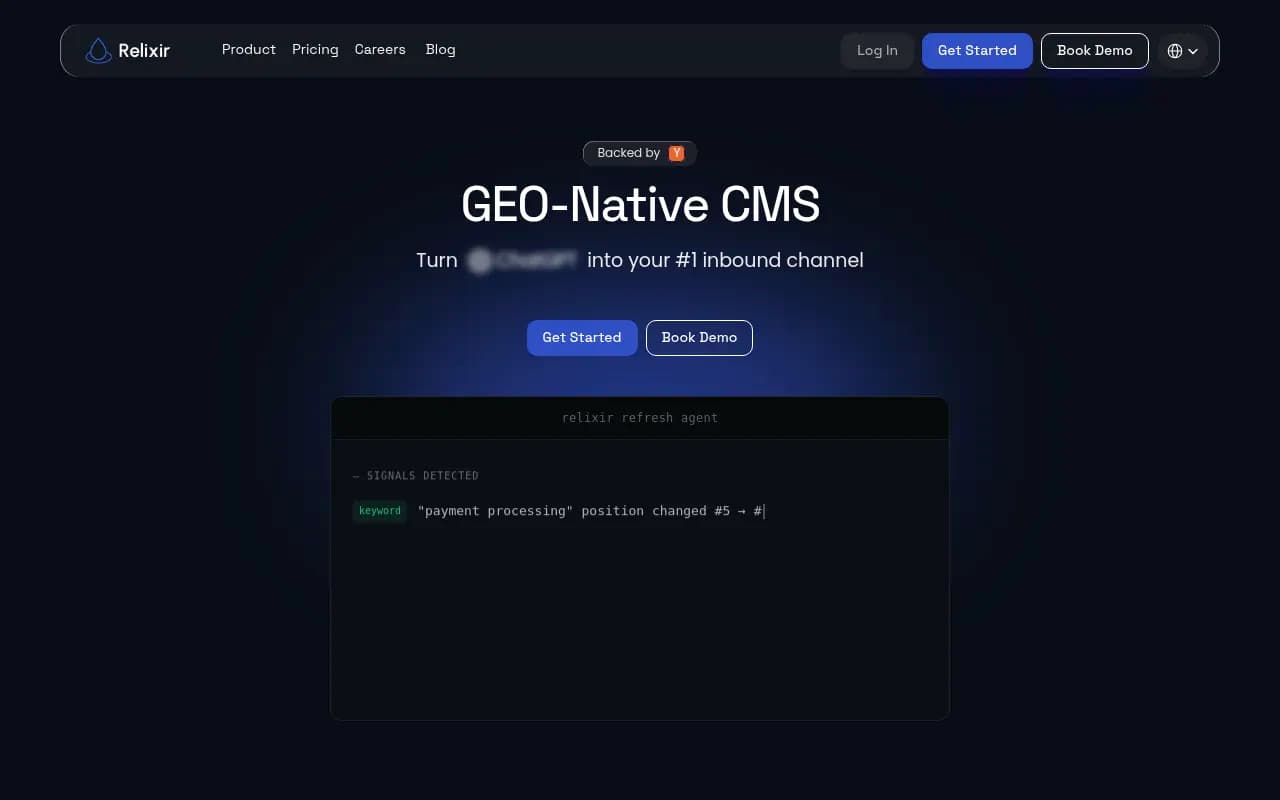
The platform handles competitive gap analysis, content generation, and publishing in a more hands-off way than most tools. If you want to set a strategy and have the platform execute it without a lot of manual intervention, Relixir is designed for that.
The trade-off is that Relixir is enterprise-focused and priced accordingly. It's not the right fit for a mid-market e-commerce brand with a lean marketing team that needs to understand what's happening and why. The "autonomous" approach also means less granular control over the content being published -- which matters if you have strict brand voice guidelines or compliance requirements.
Relixir also lacks some of the attribution depth that Promptwatch offers. Knowing your AI visibility is improving is useful; knowing which citations are driving revenue is better.
AirOps: content engineering for AI search
AirOps takes a different angle. It's less of a GEO monitoring platform and more of a content engineering tool -- you use it to build workflows that research, write, and optimize content for AI search visibility.
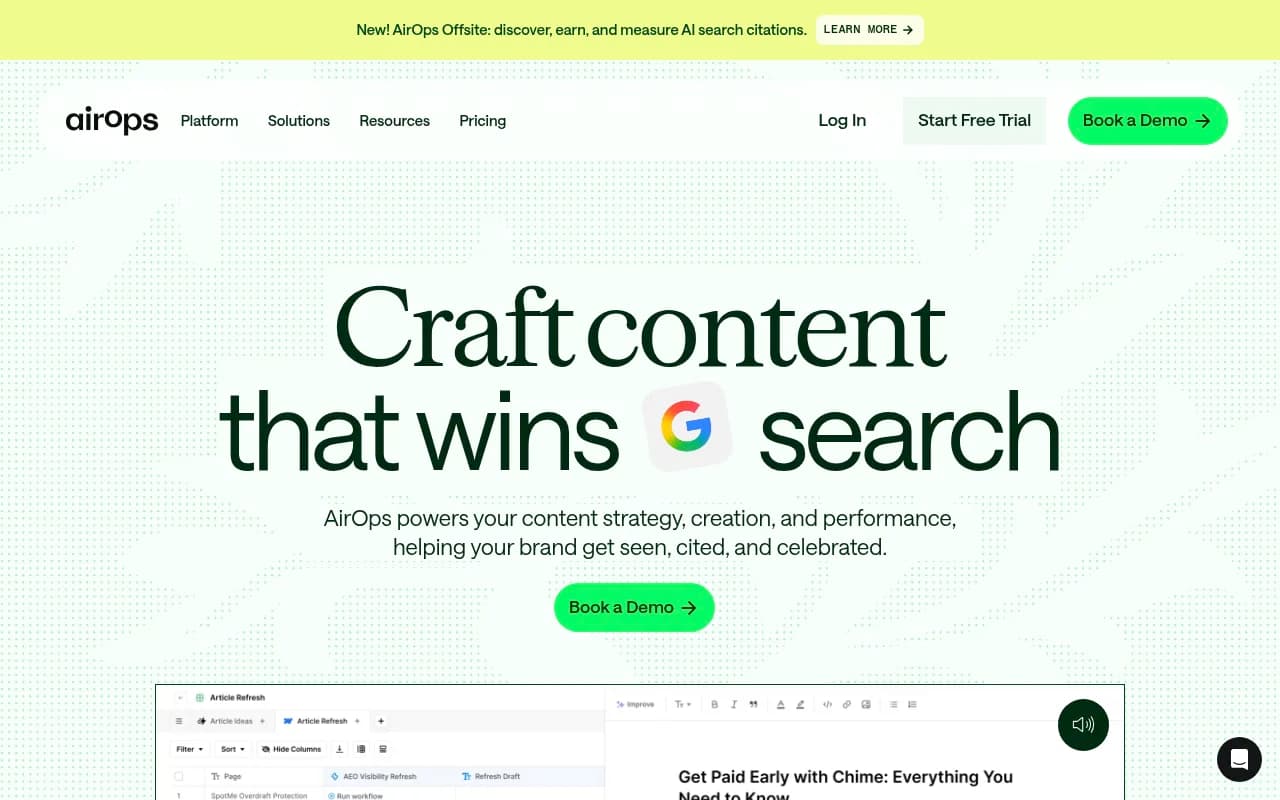
The platform is genuinely powerful for teams that want to build systematic content operations. You can create workflows that pull in competitor data, generate content briefs, write drafts, and push them through an approval process. For e-commerce brands with large content teams or agencies managing multiple clients, that workflow infrastructure has real value.
The limitation is that AirOps requires more setup and ongoing management than a purpose-built GEO platform. It's not going to tell you "here are the 20 prompts you're invisible for -- go fix them." You need to bring your own strategy and use AirOps to execute it. That's fine if you have the team and expertise, but it's a meaningful gap if you're looking for strategic direction alongside execution.
AirOps also doesn't have the same depth of AI visibility monitoring as Promptwatch. You're not getting real-time crawler logs, ChatGPT Shopping tracking, or prompt-level difficulty scores out of the box.
Searchable: simpler GEO with content tools
Searchable is a newer entrant that combines AI visibility tracking with built-in content generation. The positioning is accessible -- it's designed for brands that want to get started with GEO without a steep learning curve or enterprise pricing.
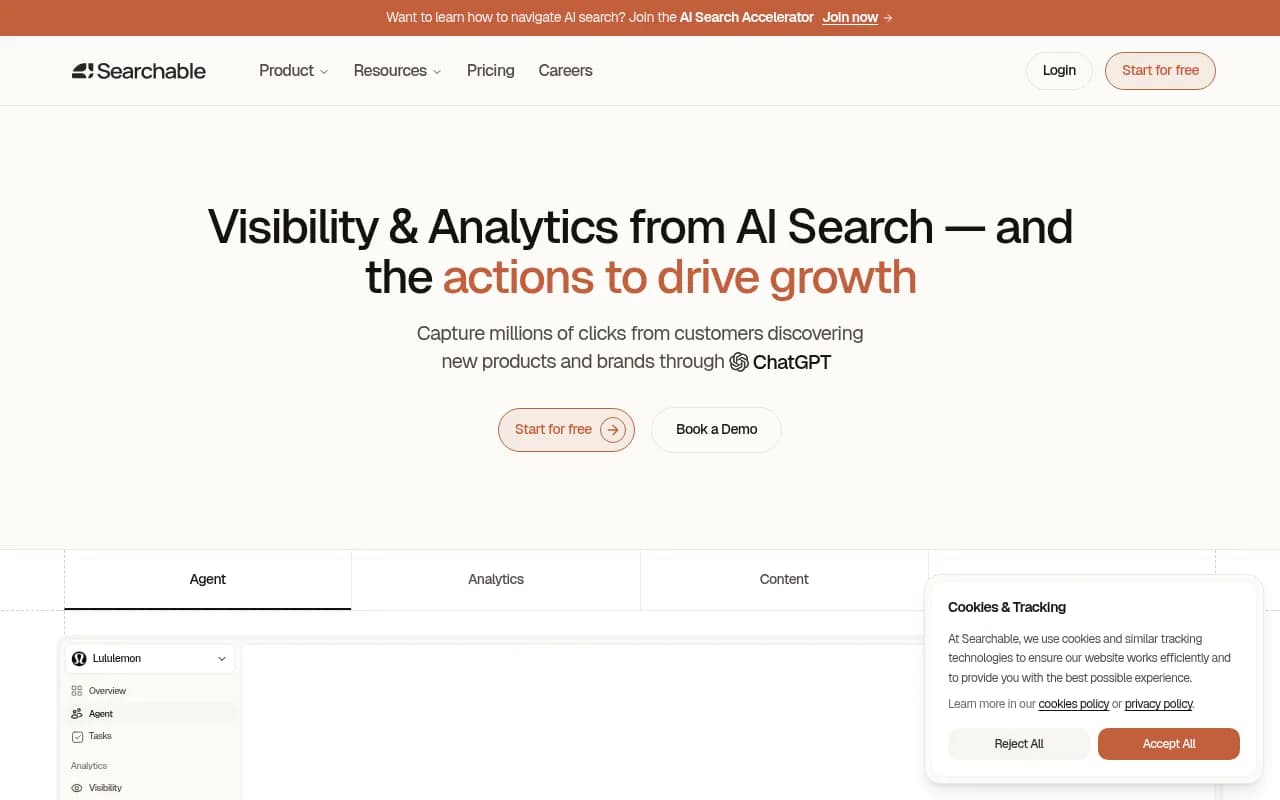
For smaller e-commerce brands or those just beginning to think about AI search visibility, Searchable is a reasonable starting point. The content generation tools are functional, and the monitoring covers the major AI engines.
Where Searchable falls short for serious e-commerce teams is depth. The citation database isn't as large, the attribution capabilities are more limited, and features like AI crawler logs, Reddit/YouTube citation tracking, and ChatGPT Shopping monitoring aren't part of the offering. If you're running a significant e-commerce operation where AI search is a meaningful acquisition channel, you'll likely outgrow Searchable fairly quickly.
Head-to-head: what matters for e-commerce
Let's get specific about the features that actually matter for e-commerce brands.
Product recommendation tracking
When someone asks ChatGPT "what's the best [product category]," you want to know if your brand is being recommended. Promptwatch tracks this at the prompt level and specifically monitors ChatGPT Shopping carousels. Relixir monitors product-level visibility as part of its enterprise offering. AirOps and Searchable don't have dedicated product recommendation tracking.
Content gap analysis
This is the most important feature for e-commerce brands that want to actually improve their AI visibility, not just measure it. Promptwatch's Answer Gap Analysis is the most detailed implementation -- it shows you specific prompts with competitor citations and no mention of your brand. Relixir does competitive gap analysis as part of its autonomous workflow. AirOps requires you to define the gaps yourself. Searchable has basic gap analysis but less granularity.
Attribution and revenue connection
Knowing your AI visibility score improved is nice. Knowing it drove $50,000 in revenue last month is what gets budget approved. Promptwatch is the only platform in this comparison with a dedicated attribution layer that connects AI citations to traffic and revenue through GSC integration, a tracking snippet, or server log analysis.
Multi-region and multi-language support
E-commerce brands often operate across multiple markets. Promptwatch supports monitoring in any language, from any country, with customizable personas. This matters if you're running separate storefronts for different regions. Relixir has multi-market capabilities at the enterprise tier. AirOps and Searchable have more limited international support.
Pricing and team fit
| Platform | Starting price | Best team size | Setup complexity |
|---|---|---|---|
| Promptwatch | $99/mo | Solo marketer to large team | Low -- guided setup |
| Relixir | Custom (enterprise) | Large enterprise teams | Medium-high |
| AirOps | Custom | Content teams with technical resources | High |
| Searchable | Varies | Small to mid-market | Low |
Other tools worth knowing about
These four platforms don't cover every option. A few others are worth mentioning depending on your specific situation.
If you want enterprise-scale monitoring with strong prompt intelligence, Profound is worth evaluating:
Profound

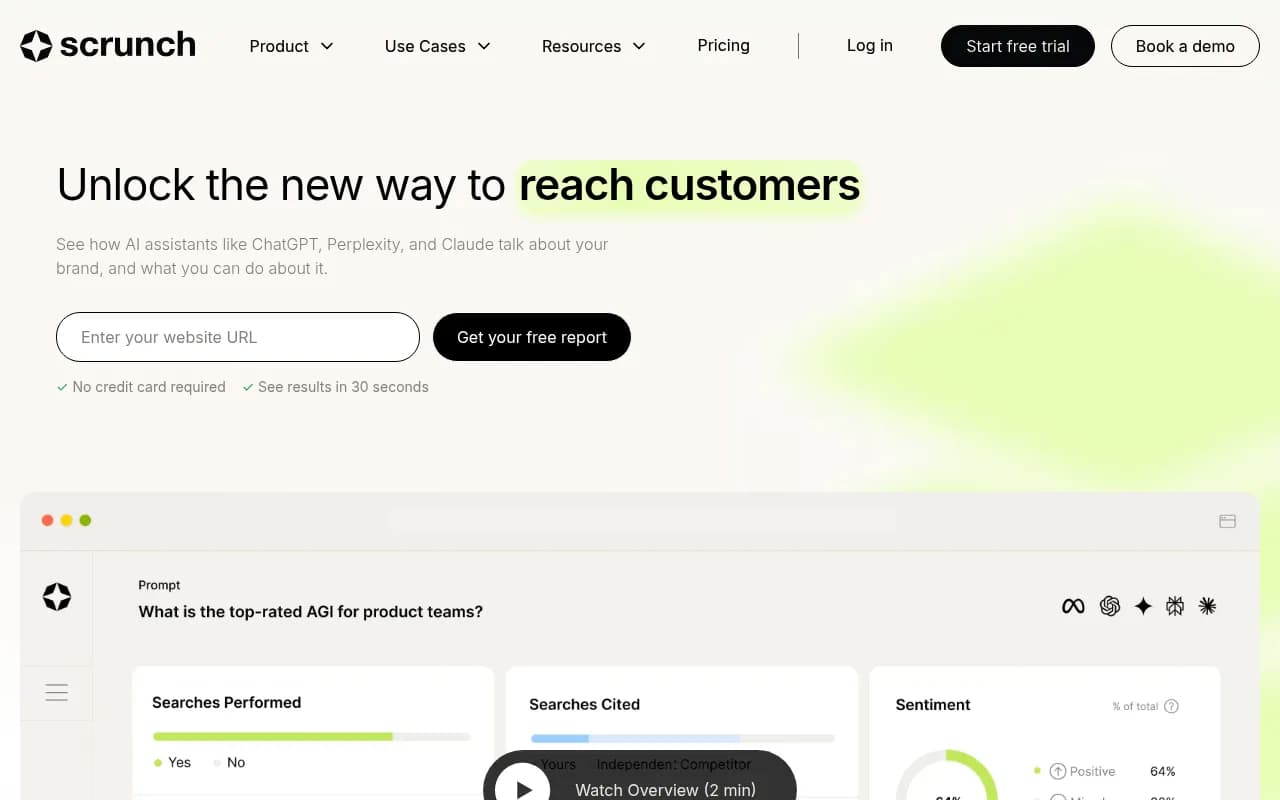
For agencies managing multiple e-commerce clients, Scrunch AI has solid multi-engine citation monitoring:
If you're already deep in the Semrush ecosystem, their AI toolkit adds some visibility monitoring without requiring a separate platform:
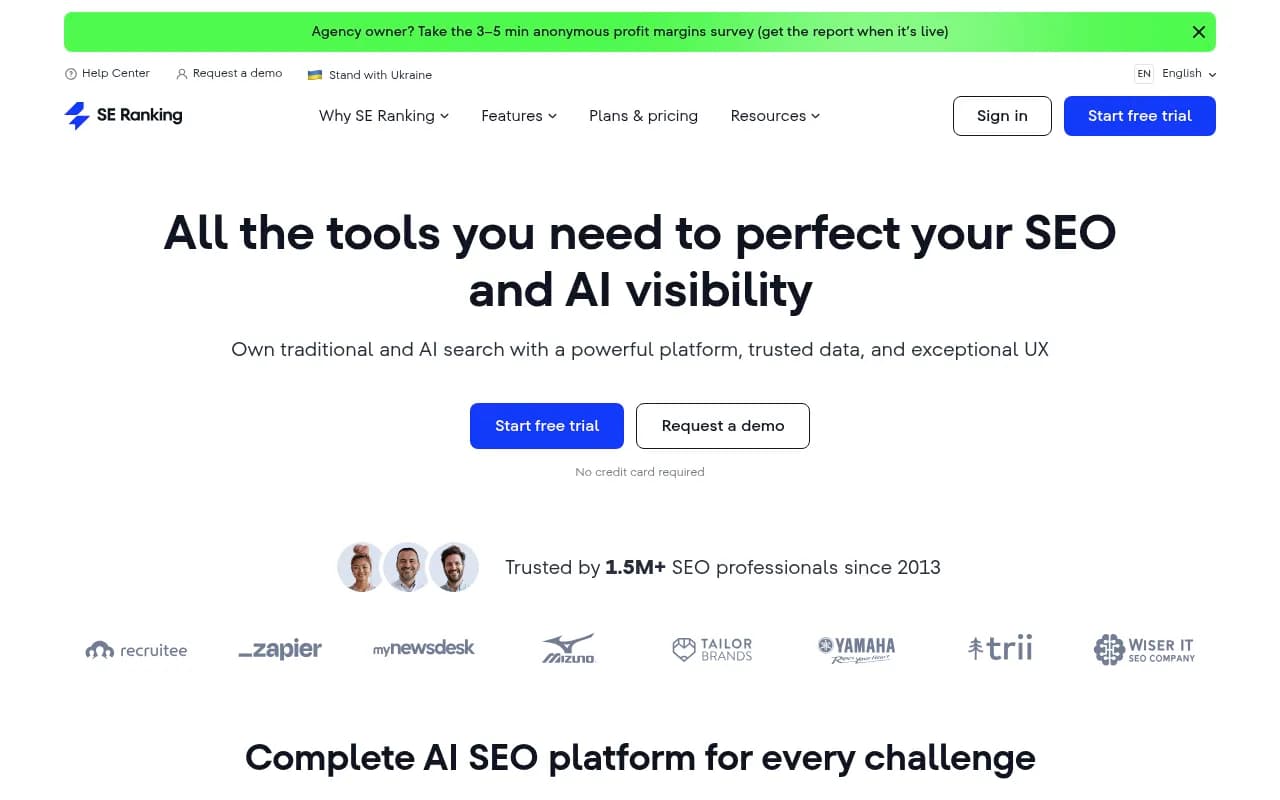
And for brands that want to track AI visibility alongside traditional rank tracking in a single tool, SE Ranking has added AI monitoring capabilities:
Which platform should you choose?
The honest answer depends on where you are and what you need.
If you're an e-commerce brand that wants to understand where you're invisible in AI search, generate content to fix those gaps, and connect the results to revenue -- Promptwatch is the clearest choice. It's the only platform in this comparison that handles the full cycle, and the pricing is accessible enough that you don't need an enterprise budget to get started.
If you're a large enterprise brand with a significant content team and you want to automate GEO at scale with minimal manual intervention, Relixir is worth a serious look -- just be prepared for the enterprise sales process and pricing.
If you have a strong content operations team and want to build custom AI search workflows, AirOps gives you the infrastructure to do that. But you'll need to bring your own GEO strategy.
If you're just starting out and want a simple, affordable way to get visibility into your AI search presence, Searchable is a reasonable entry point -- with the understanding that you may need to upgrade as your program matures.
The broader point: e-commerce brands that treat AI search as a real acquisition channel and invest in optimizing for it now are building a meaningful advantage. The brands that wait until AI search traffic is obviously large are going to find the citations already locked up by competitors who moved earlier.