Key Takeaways
- For jewelry and luxury shopping, ChatGPT leans on product pages and landing pages. In Promptwatch Data (Sep 28 to Oct 4, 2026), product pages made up 22.4% of ChatGPT citations and landing pages 16.8%.
- Visual, brand-led categories should watch Google AI Overviews for social citations (12.2% of its citations come from social platforms, versus 0.46% in ChatGPT).
- Monitoring-only tools tell you that you are invisible. Luxury teams with small content teams get more from platforms that also close the loop on content, crawler access, and AI traffic.
- Most "best GEO tools" lists are written by vendors who rank themselves first. Treat them as feature checklists, not verdicts.
- Start with a free baseline scan, shortlist two or three tools, and test them on 30 to 50 real shopping prompts before you pay for anything.
Why jewelry and luxury need their own GEO approach
A jewelry shopper does not ask an AI assistant for "project management software." They ask things like "best lab-grown engagement ring under $5,000," "is [brand] worth the price," or "what watch should I buy for a 40th birthday." These are commercial, high-consideration, emotionally loaded prompts. The answers name specific brands, quote prices, and often link to specific products.
That changes what you need from a tool. Generic share-of-voice dashboards are fine, but luxury has a few quirks:
- Brand perception matters more than raw mentions. Being named next to the wrong price tier is worse than not being named.
- Products are visual, and AI engines still pull from text. Your product pages need complete specs (metal, carat, clarity, provenance, certification) written in words, not buried in images.
- Heritage and authenticity claims get repeated by AI. If an answer says something wrong about your materials or origin, you want to find it and fix the source.
- Many luxury sites are heavy on JavaScript, gated, or slow. AI crawlers may never see the pages you care about.
- Resellers and marketplaces often outrank the brand itself in citations.
GEO (generative engine optimization) is the practice of earning mentions and citations inside AI-generated answers from ChatGPT, Perplexity, Gemini, Claude, and Google AI Overviews. Some vendors call it AEO. For a retailer, the practical question is simple: when someone asks an AI what to buy, are you in the answer, and is it accurate?
What AI engines actually cite for shopping prompts
Before choosing a tool, it helps to know what you are optimizing. Promptwatch's ChatGPT citation share by content type report (Sep 28 to Oct 4, 2026) breaks down what ChatGPT links to.
Over all prompts, product pages led at 22.4%, followed by landing pages at 16.8% and listicles at 13.6%. For commercial prompts, the "best X" type closest to jewelry shopping, the picture is sharper:
| Content type | Share of commercial-prompt citations |
|---|---|
| Product pages | 26.0% |
| Landing pages | 20.6% |
| Listicles | 15.0% |
| Comparisons | 7.9% |
Those four types make up almost 70% of commercial citations. For branded prompts like "is [brand] good," reviews jump to 5.6%, more than three times their share across all prompts, and FAQ pages reach 4.8%.
What this means for a jeweler: your collection pages and product detail pages are the main asset. Thin pages with a hero image and a price get passed over. Pages with complete specs, care instructions, sizing, sourcing, and a plain-language FAQ are what get cited. Third-party reviews and "best of" roundups also matter, because ChatGPT reaches for them when someone asks about your brand directly.
Two more data points shape priorities. Promptwatch's data shows almost half of ChatGPT responses cite 10 or more unique domains (Sep 28 to Oct 4, 2026), so you are competing for one slot among many, including marketplaces and editorial sites. And the domain rank report for August 2026 found sites with domain rank 46-75 earned almost half of ChatGPT citations, while DR 91-100 fell to about 3%. A mid-sized specialist jeweler with focused pages can compete.
Where social fits
Luxury is a visual category, so the social question comes up fast. The answer depends on the engine. In Promptwatch's social media citations by AI model report (Sep 28 to Oct 4, 2026), social platforms made up just 0.46% of ChatGPT citations, down from 5.8% in the earlier report. Reddit fell from 5.19% to 0.09%. Google AI Overviews, in contrast, drew 12.2% of its citations from social, with YouTube at 4.28%, Facebook at 2.38%, Reddit at 2.15%, and Instagram at 1.61%. Perplexity sat at 2.7%.
So a YouTube watch-review channel or an active Instagram presence helps you in Google's AI surfaces, but it will not move the needle much in ChatGPT. Do not spend your whole budget on Reddit seeding in 2026.
What to look for in a GEO tool as a luxury retailer
The generic buyer checklist (engine coverage, mention and citation tracking, sentiment, share of voice) is a starting point. For jewelry and luxury, I would weight these more heavily:
- Real-interface tracking, not just APIs. What a shopper sees in ChatGPT or AI Overviews can differ from API output. Ask how the tool collects responses.
- Prompt control and personas. You need to model a gift buyer, a collector, and a first-time engagement ring shopper separately.
- Claim-level sentiment. Knowing AI says your brand is "overpriced" or "not ethically sourced" is more useful than a sentiment score of 62.
- Citation source reporting. Which pages, marketplaces, and roundups does AI pull from when it recommends a competitor?
- Crawler visibility. Can GPTBot, ClaudeBot, and PerplexityBot actually read your product pages?
- Shopping surfaces. ChatGPT shopping carousels and product results matter for ecommerce brands.
- Multi-region tracking. Luxury brands often sell across countries and languages.
- Execution. Does the tool help you write and publish the pages, or just report?
- Traffic attribution. Can you see visits and conversions from AI engines?
The tools worth shortlisting
This list is built from the vendor-neutral categories that show up across 2026 buyer guides: all-in-one platforms, pure trackers, SEO suite add-ons, and ecommerce-specific products. I did not benchmark jewelry-specific pricing for each tool, so confirm current plans on each vendor's site.
Promptwatch: monitoring plus execution
Promptwatch is the option I would put first for a retailer that has a small team and a lot of product pages to fix. It tracks ChatGPT, Gemini, Perplexity, Claude, Google AI Overviews, Google AI Mode, Copilot, Meta AI and others through the real interfaces, then goes further than a tracker: Brand Narrative pulls out the individual claims AI makes about you (for example "affordable for small teams" style claims, which for jewelry become things like "lab-grown options are limited"), grouped by theme such as Pricing or Reputation. Fact Check lets you mark a claim inaccurate and finds the pages on your site that may be teaching AI the wrong thing.

For shopping-heavy brands, it also covers ChatGPT Shopping visibility and Ads Radar, and its AI crawler logs show whether bots actually read your collection pages. The Content Agents write and publish pages to WordPress, Webflow, or Framer, and visitor analytics measure what traffic and conversions follow. Local GEO targeting at exact coordinates is useful for boutiques with physical stores, since "jeweler near me" prompts are a real thing.
Pricing starts at $95/mo (Essential), with Business at $579/mo adding the Content Agent, Shopping insights, and local targeting. Confirm at promptwatch.com/pricing. There is a 7-day free trial, and a free AI visibility report is a good first step. If you are weighing it against others, see the Promptwatch vs Profound page.
Profound
Profound is an enterprise AI visibility platform that tracks mentions across ChatGPT, Perplexity, and several other engines. It is strong on monitoring, and it tends to be priced for larger brands. A global luxury house with a big in-house team may be comfortable there. A single-location jeweler probably is not.
Profound

Scrunch
Scrunch tracks brand visibility across LLMs and has been associated with serving AI-friendly versions of sites. Worth a look if your main problem is how AI crawlers read a heavy front end.
AirOps
AirOps is a content engineering platform aimed at AI search visibility. It suits teams that want to build repeatable content workflows at scale, though it does not replace dedicated citation and crawler tracking.
Otterly.AI and Peec AI
Both are lighter, lower-cost prompt monitors. They answer "was my brand mentioned?" well. They do not give you crawler logs, visitor analytics, or content creation, so you will need other tools to act on what they show.
Otterly.AI


Semrush and Ahrefs Brand Radar
If your team already lives in an SEO suite, the AI add-ons are the easy first step. Expect fixed prompt sets and shallower AI-specific data, but the convenience is real and the keyword data you already pay for stays in one place.
Ecommerce-specific options
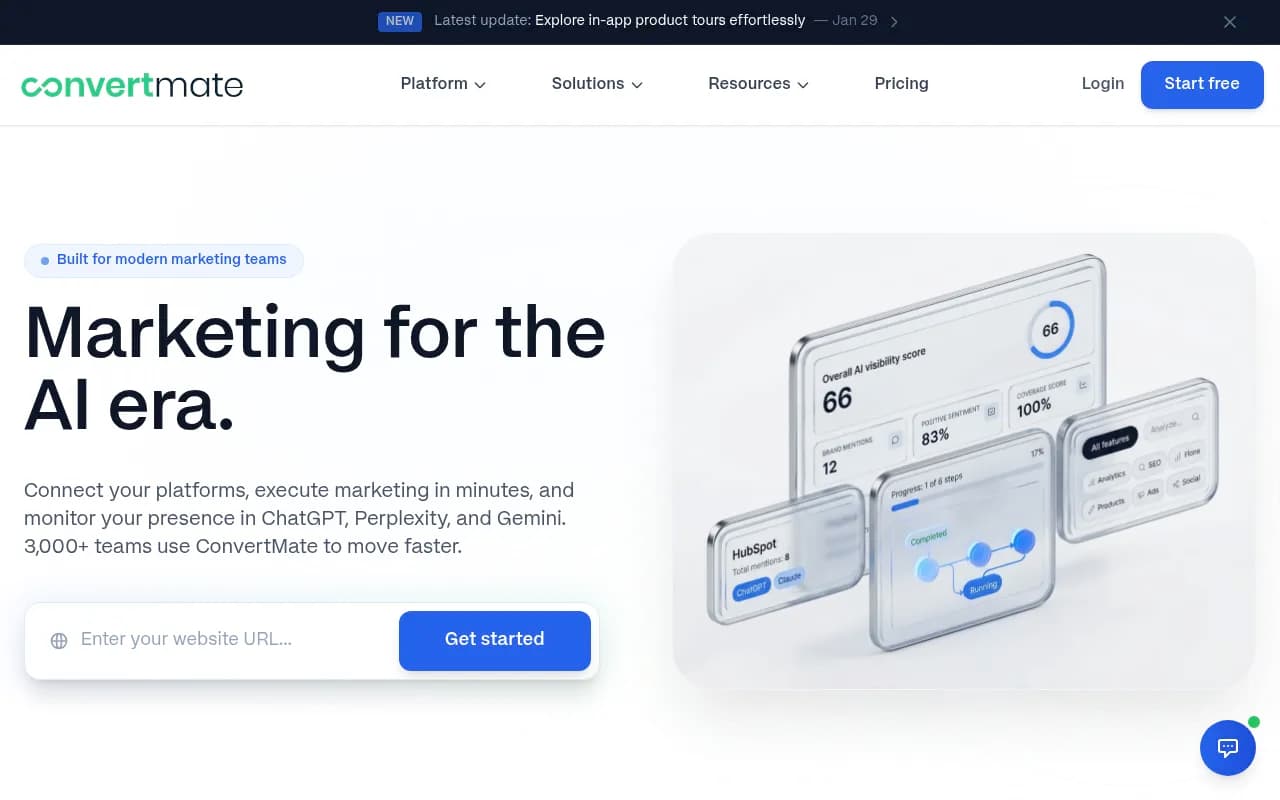
The Yotpo guide lists Yotpo Discover first. It is built for ecommerce and runs on Yotpo's reviews, verified purchases, and loyalty data. That is genuinely relevant for jewelry, where reviews carry weight. Note the bias: Yotpo is the vendor and ranks its own product first. Hypotenuse AI is another catalog option aimed at ecommerce content at scale, and ConvertMate is an AI SEO platform for ecommerce stores.
Reputation and local tools
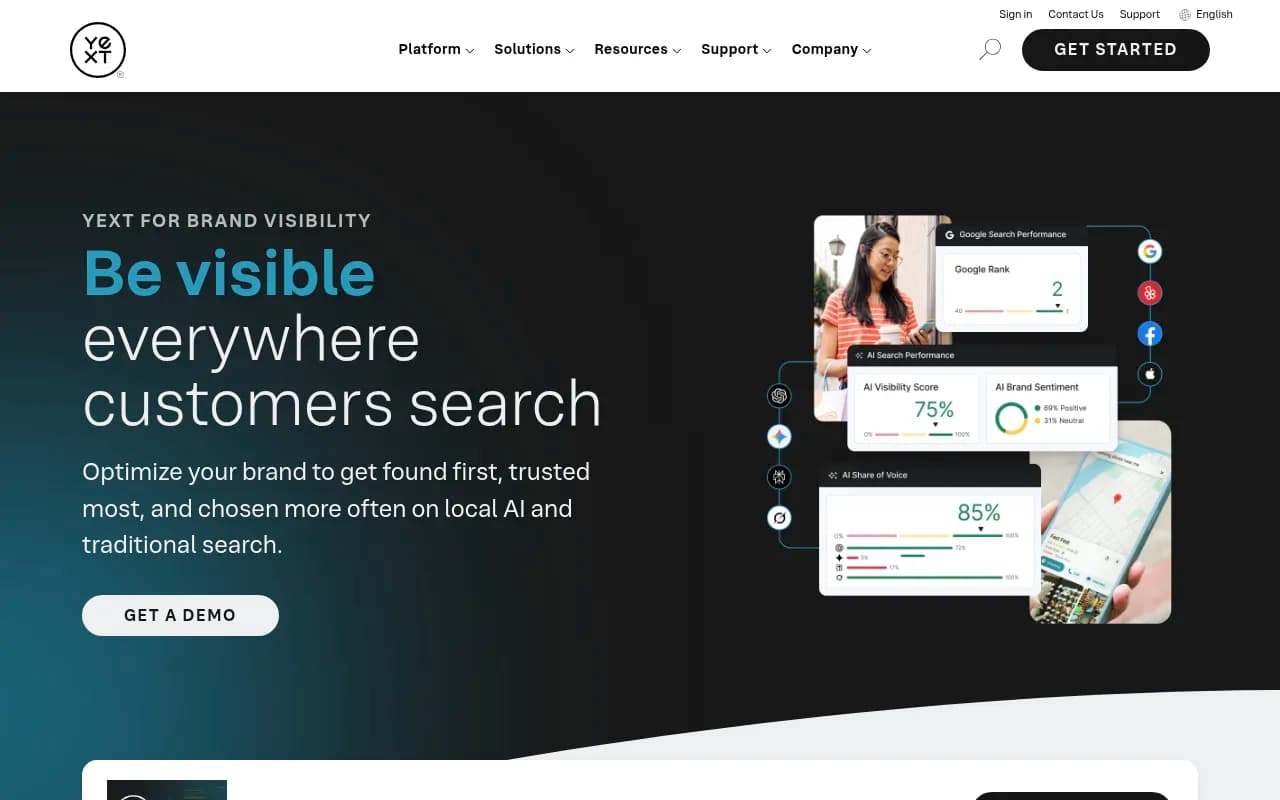
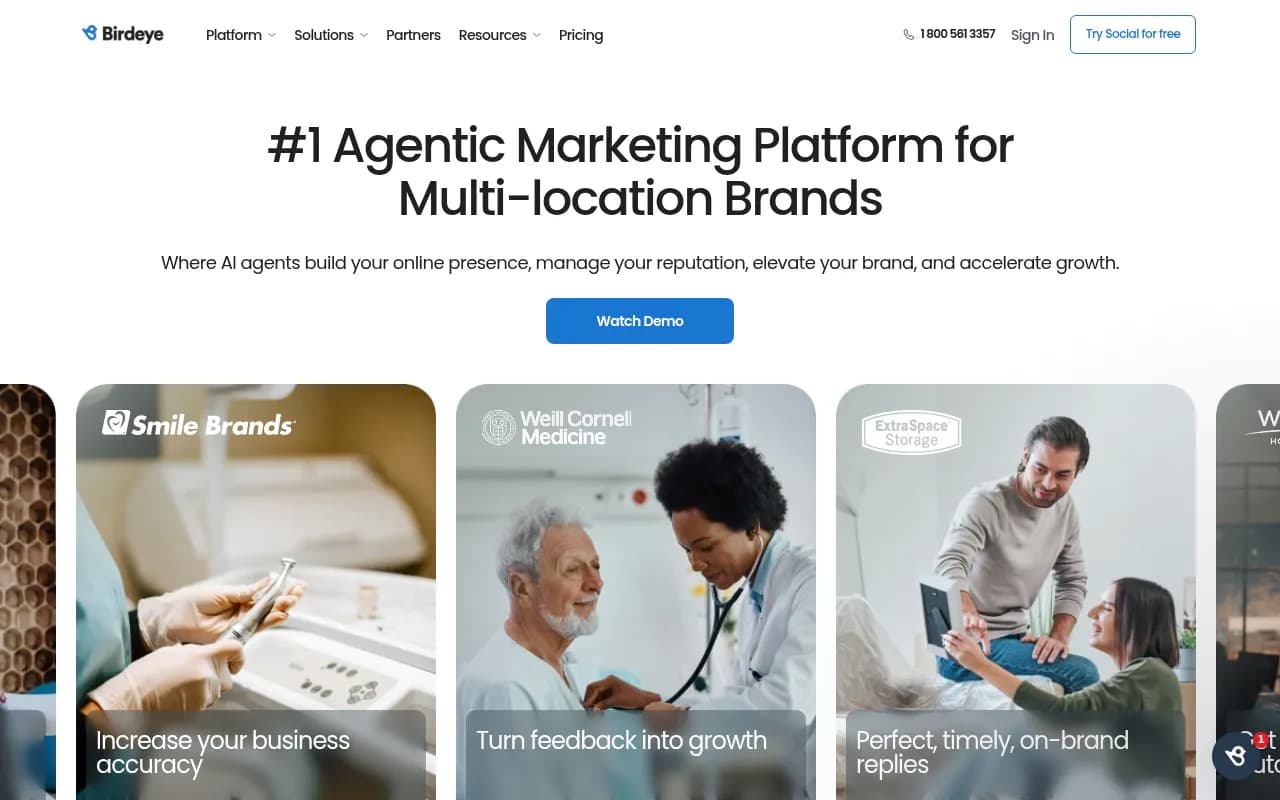
For jewelry boutiques with several locations, platforms like Yext and Birdeye cover listings, reviews, and local visibility across traditional and AI search. They are not GEO-first, but luxury retail is often decided by local reputation, and these tools feed the data AI engines read.
Comparison table
| Tool | Real-interface tracking | Crawler logs | Content creation | Best for |
|---|---|---|---|---|
| Promptwatch | Yes | Yes | Yes (Content Agent on Business) | Small to mid teams that want to fix, not just monitor |
| Profound | Monitoring focus | Limited | No | Large enterprise brands |
| Scrunch | Monitoring focus | Varies | Limited | Sites with crawl-readability issues |
| AirOps | Not core | No | Yes | Content engineering at scale |
| Otterly.AI | Basic | No | No | Budget monitoring |
| Peec AI | Basic | No | No | Simple tracking for marketing teams |
| Semrush / Ahrefs | Fixed prompt sets | No | Partial | Teams already in an SEO suite |
| Yotpo Discover | Ecommerce-focused | Not stated | Not core | Review-driven ecommerce |
Feature claims for non-Promptwatch tools are based on how the categories are generally described. Verify before buying.
A practical rollout for a jewelry retailer
You do not need a six-month program. Here is an order of operations that works.
Week 1: baseline
Run a free scan of how ChatGPT, Gemini, and Perplexity describe you. Then write 30 to 50 prompts across three buyer types: gift buyers ("best anniversary gift for wife under $1,000"), ring shoppers ("lab-grown vs natural diamond engagement ring"), and brand checkers ("is [your brand] good quality"). Track the same prompts weekly.
Week 2: check access
Confirm AI crawlers can read your collection and product pages. Review robots.txt, JavaScript rendering, and any bot-blocking from your CDN. The free Agentic Readiness Check and AI crawler URL inspector help with a quick look. Promptwatch's AI crawler traffic report is a useful benchmark for what normal bot activity looks like.
Weeks 3 to 6: fix product and landing pages
Since product pages and landing pages take the largest citation share, start there:
- Write complete specs in text: metal, stone details, certification, dimensions, origin.
- Add a short plain-language FAQ to category pages (resizing, returns, ethical sourcing, financing).
- Publish comparison pages such as lab-grown vs natural, or gold karat guides.
- Get your brand into the "best of" roundups AI already cites. The citation reports of your tool will tell you which.
- Gather reviews on trusted third-party sites, not only on your own.
Ongoing: measure and refresh
Promptwatch's content half-life data shows landing pages and docs stay cited longest, while news loses half its pages within 36 days. Evergreen category pages are worth the refresh effort. Seasonal gift guides need updates before each season, not after.
A note on virtual try-on and visual tech
GemFind reports that 67% of luxury jewelry buyers use virtual try-on before buying online, and that AR adopters see an average 18% conversion lift within 90 days. That is a vendor-published figure, so treat it as directional. The GEO angle is that try-on experiences do nothing for AI engines unless the product page also carries the text description. Do both.
How to pick, honestly
If you are one boutique with one site and a tight budget, start with a free scan and a low-cost monitor, then add execution only when you know what to fix. If you manage a multi-brand catalog or several regions, an end-to-end platform saves you from stitching together a tracker, a crawler tool, an analytics script, and a content workflow. If you are a global house with a big team and procurement requirements, shortlist enterprise options and check security certifications.
For more options by category, browse the GEO software directory and compare them against the criteria above. Run the same 30 to 50 prompts in any trial, because a tool that looks great on a demo dataset can look very different on your own category.
The simplest next step is to pick ten prompts a real customer would ask this week, run them in ChatGPT and Google AI Mode, and write down who gets named. That list is your brief.