Key takeaways
- The most important split in this market is monitoring versus optimization. Most tools tell you where you appear in AI answers. Far fewer help you change it.
- Prompt caps and engine coverage, not headline price, are what actually limit you. A $29 plan with 15 prompts and a $95 plan with 50 prompts are not the same product.
- Solo marketers and small teams can start cheap with a monitor. Mid-size teams need an action layer. Agencies need multi-client workspaces and reporting. Enterprises need security reviews, SSO, and scale.
- Citation behaviour differs by engine, so pick a tool that reports each engine separately rather than blending them.
- Pricing in this category moves fast. Confirm every number on the vendor's pricing page before you buy.
Why team size should drive the decision
Most "best GEO tools" lists are ranked by feature count, and most are written by vendors who rank themselves first. That is not much help when you are a three-person marketing team with a budget and a to-do list that already runs long.
A better question: what can your team execute on this quarter? A dashboard that shows a 12% mention rate is useless if nobody has time to write the pages that would move it to 25%. The DerivateX buyer's guide makes the same point: pick the tool that fits what your team can actually do today, and treat the monitoring-versus-optimization gap as the main evaluation criterion.
The Olostep guide frames it the same way: the right pick depends on your engines, your data standards, your team size, and your budget. I would add a fifth factor, which is workflow. Where does the data go after you see it?
What a GEO tool actually does
GEO (generative engine optimization) tools measure and improve how a brand shows up inside AI-generated answers from ChatGPT, Perplexity, Google AI Overviews, Gemini, Copilot and others. Most do four jobs:
- Mention tracking: does the engine name your brand?
- Citation tracking: which of your pages does it link to?
- Sentiment: is the mention positive, neutral, or negative?
- Share of voice: how often do you appear compared with competitors?
The tools differ in what happens after that. Some stop at the dashboard. Others tie the data to crawler logs, AI-referred traffic, content briefs, and publishing.
Three things to check before you compare features
Engine coverage, and whether each engine is reported separately
Citation slots are not the same across engines. According to Promptwatch's average sources per response data, ChatGPT cites about 5 sources per web-search answer, AI Overviews cites about 10, and Perplexity holds almost exactly 10 every day. Copilot swung from under 2 to nearly 17 within weeks. A tool that blends these into one number hides what is happening. Look for per-engine reporting.
Social citations vary just as much. In Promptwatch's October 2026 social media citation data, covering Sep 28 to Oct 4, ChatGPT drew only 0.46% of its citations from social platforms while Google AI Overviews drew 12.2%. If your plan depends on Reddit or YouTube, your tool needs to show you which engine is actually rewarding it.
Prompt caps and tier gating
Prompt limits are the real pricing lever. Profound's listed $99 tier was ChatGPT only, and Industry Lens reported in October 2026 that the Starter plan was pulled from its public pricing page. Peec's lower tiers cover three models. Semrush notes some tools do not include every model by default. Always check which engines are in the tier you are paying for.
Real interface data versus API outputs
What a user sees in the ChatGPT or AI Overviews interface can differ from what the API returns. Ask vendors how they collect responses. Tools that monitor the real interfaces give you a more accurate picture of what customers see.
Solo marketers and small teams (1 to 3 people)
Your constraint is time, not data. You need something cheap, fast to set up, and clear enough to act on without an analyst.
Otterly.AI is the common starting point for pure monitoring. Its paid plans start at $29 a month for 15 prompts on the Semrush list, with a free trial. It is a monitor with no action layer, which is fine if you only need to know where you stand.
Otterly.AI

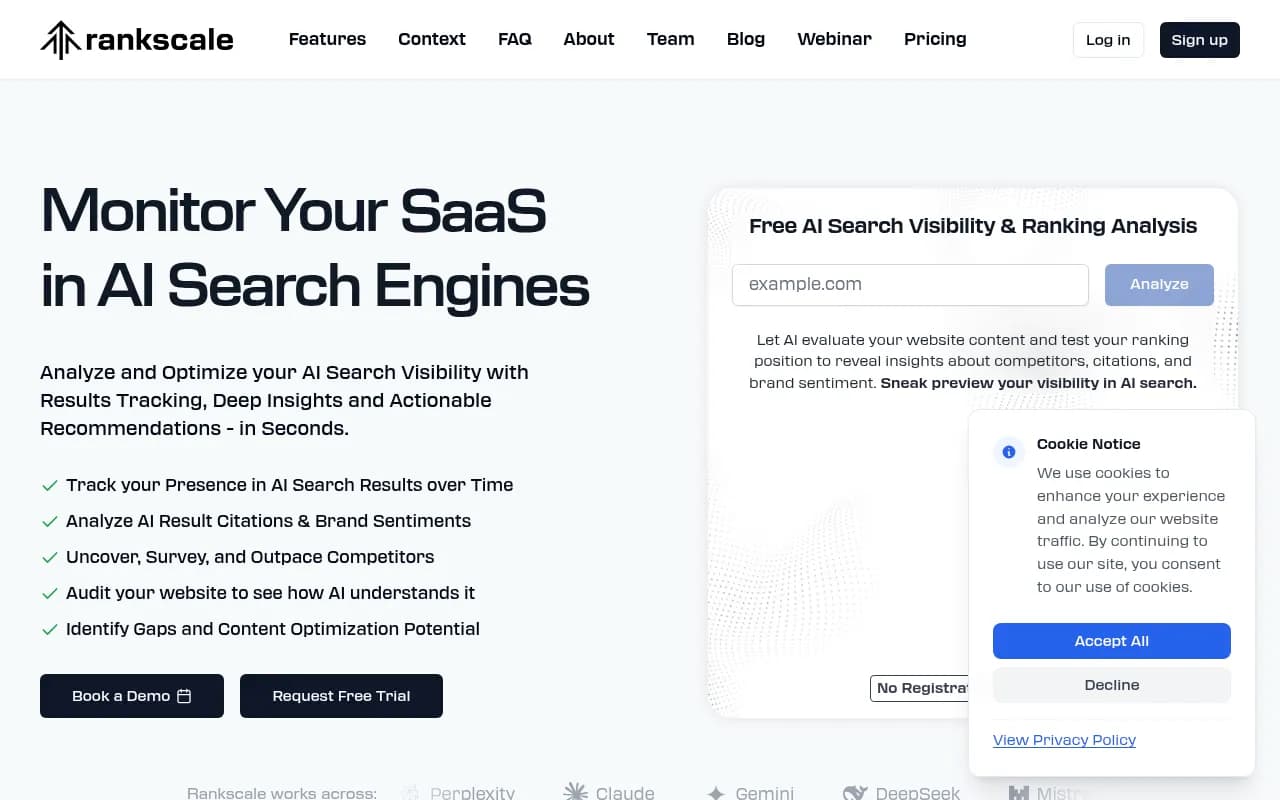
Rankscale is another budget option, starting around 20 euros a month.
If you want a free first look before spending anything, tools like Promptwatch offer a free Explore plan (1 project, 10 prompts, ChatGPT only) and a no-login AI visibility report. It is a fast way to learn what your baseline looks like.

AthenaHQ also added a free Essential tier with $25 in credits around the end of July 2026.

My take: at this size, do not pay for a big dashboard you will open twice. Pick a monitor, track 15 to 50 prompts tied to your buying questions, and spend the saved time on content.
Teams already living inside an SEO suite
If your team runs on Semrush or Ahrefs, the lowest-friction path is the AI add-on you can already log into. Semrush's AI Visibility Toolkit is listed at $99 a month per domain, and Semrush One bundles SEO and AI visibility from $199 a month. Sources conflict on whether the toolkit is standalone or sits on top of a base plan, so check before you commit.
Ahrefs Brand Radar starts around $199 a month.

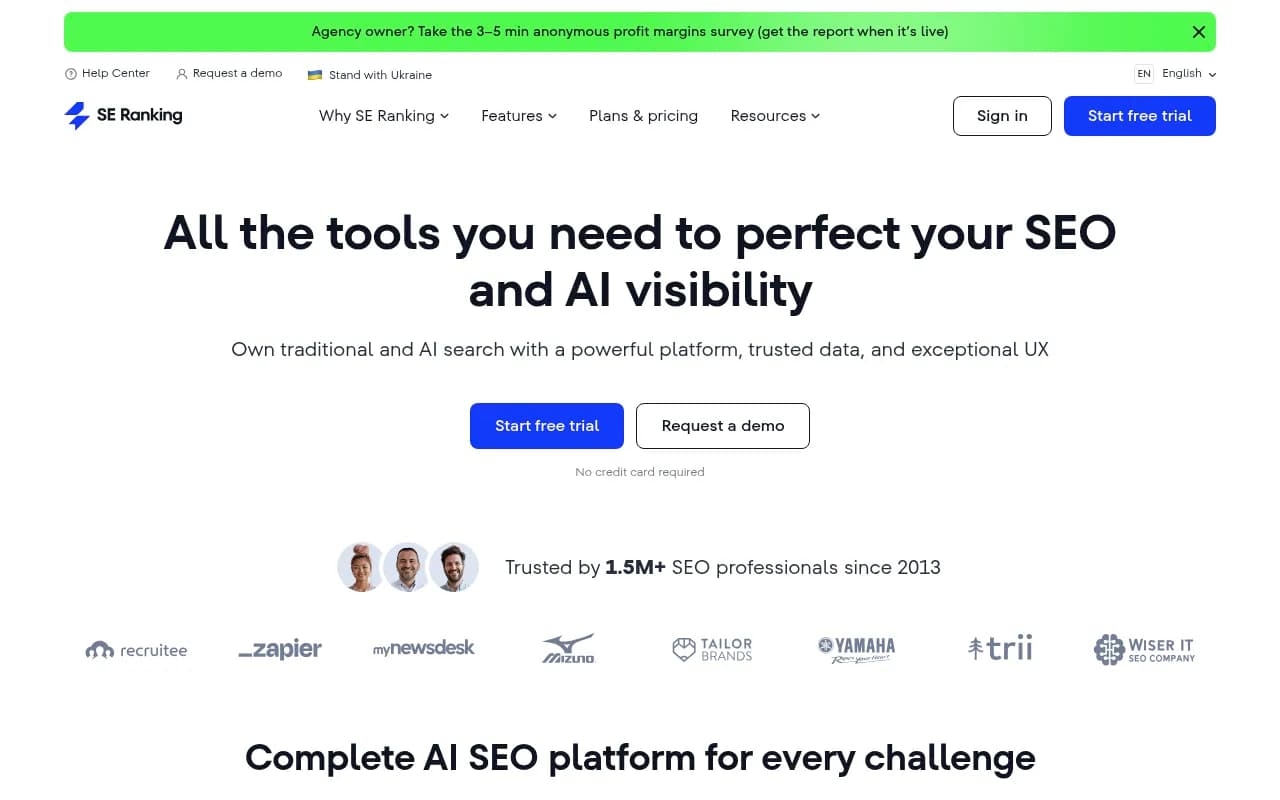
The tradeoff is depth. Reviewers describe these add-ons as shallow but bundled. You get a convenient start and a shared login. You do not get the prompt-level, crawler-level, or traffic-level detail of a dedicated platform. SE Ranking is a similar option at about $129 a month for its Core plan.
Mid-size marketing teams (4 to 15 people)
This is where the monitoring-versus-optimization gap starts to cost you. You have writers, an SEO lead, and a stakeholder asking what AI search is worth. You need to connect visibility data to actions and to traffic.
Peec AI is a popular analytics-first choice. Starter is listed at $95 a month for 50 prompts and three models, Pro at $245 for 150 prompts, and Advanced at $495 for 350 prompts with multi-country tracking and Looker Studio. The action layer is limited, so plan to pair it with your own content process. Prices vary by currency and source, so confirm.

AthenaHQ's Starter is listed at $295 a month with $300 in monthly credits, nine models, and a content agent, which puts more of the workflow in one place.
Promptwatch sits in the optimization camp. Its Essential plan is $95 a month (50 prompts, all models, site audit, content gap analysis), Professional is $245 (150 prompts, 5 AEO articles, Knowledge Base, 25M crawler logs), and Business is $579 (350 prompts, the automated Content Agent, local GEO/SEO targeting, Shopping Insights). What separates it from trackers is the loop: IP-verified AI crawler logs show whether bots can read your pages, citation data shows what gets cited, visitor analytics show real AI-referred traffic, and the Action Board and Content Agent turn gaps into published pages that are then tracked again. Confirm current pricing at promptwatch.com/pricing.
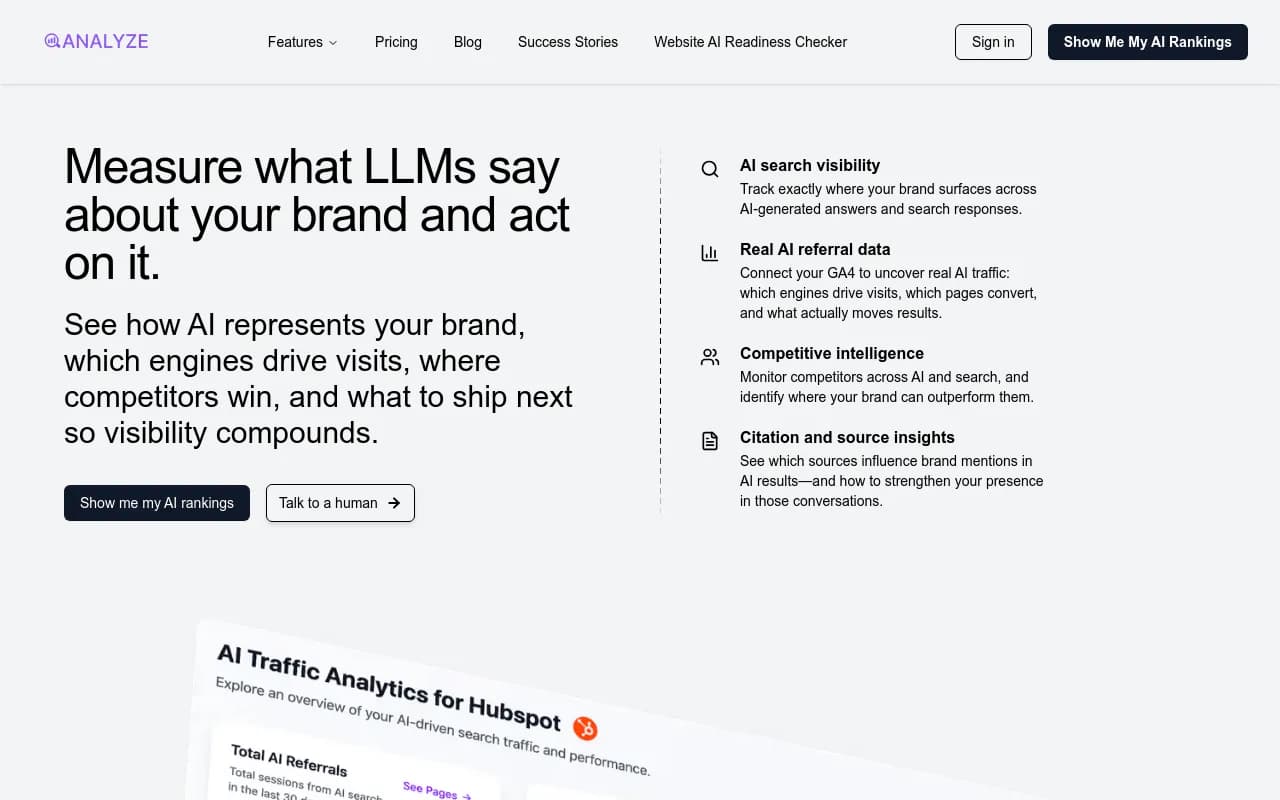
Other tools worth a look in this tier include Rankshift, Gauge and Analyze AI, which ties AI visibility to real traffic.

Agencies managing multiple clients
Agencies have different constraints. You need unlimited or high project counts, white-label reporting, client-facing access, and pricing that scales without every new client adding a new subscription.
Peec's agency tiers run from $245 to $795 a month, with custom pricing above that. Profound has an agency offering aimed at high-profile clients. Rankshift and Rankscale are also pitched at agencies.
Profound

Promptwatch's agency plans are Kick-off at $199, Growth at $399, and Scale at $799 a month, with unlimited projects and prompts, 10 seats, white-label PDF reports, branded read-only client access, crawler logs and visitor analytics. Note that agency plans do not include the Content Agent or Knowledge Base.
A practical test for any agency pick: set up a pilot project for a prospect, run the report, and see whether you could hand it to a client without rebuilding it in slides.
Enterprise teams
Enterprise buyers care about security reviews, SSO, audit logs, and the ability to cover many brands, countries, and languages. Profound, Conductor, Bluefish, Scrunch, Evertune and Brandlight all play here. Profound's enterprise tier reportedly covers up to ten engines, ChatGPT Shopping, API access, SSO and SOC 2. Brandlight lists enterprise tiers reaching $25K a month.
Promptwatch is ISO/IEC 27001 certified and GDPR compliant, with SSO, audit logs, a dedicated success manager, and custom prompt and crawler volumes on Enterprise. That matters when procurement asks for paperwork before anyone looks at a demo.
Comparison by team size and workflow
| Team profile | Good starting options | Typical entry price | Watch out for |
|---|---|---|---|
| Solo or small team | Otterly.AI, Rankscale, free tiers | From about $20 to $29 a month | Low prompt caps, monitoring only |
| Already on an SEO suite | Semrush AI Toolkit, Ahrefs Brand Radar | $99 to $199 a month | Shallow data, unclear base plan requirements |
| Mid-size marketing team | Peec AI, AthenaHQ, Promptwatch | $95 to $295 a month | Analytics without an action layer |
| Agency | Peec agency plans, Profound Agency, Promptwatch agency plans | $199 to $795 a month | Per-client cost, white-label support |
| Enterprise | Profound, Conductor, Bluefish, Scrunch, Promptwatch Enterprise | Custom | Procurement timelines, engine gating |
All prices are third-party snapshots from around October 2026 and change often. Check each pricing page.
Monitoring versus optimization: a workflow test
Before you buy, walk through this list with the tool open:
- Can it tell me why I am not cited, not just that I am not cited? Look for crawler logs, site audits, and content gap analysis.
- Can it tell me where AI finds my content? Citation reports by page, domain, and source type.
- Can it connect visibility to traffic or conversions? Without this, you cannot defend the budget.
- Can it help produce the fix? Briefs, drafts, refreshes, CMS publishing.
- Does it check whether the fix worked? Page-level tracking after publish.
If a tool covers the first two, it is a monitor. If it covers all five, it is an optimization platform. Neither is wrong. They suit different teams.
Content type also matters when you plan the fixes. Promptwatch's content type data shows product pages were the most cited type in ChatGPT at 22.4% of citations from Sep 28 to Oct 4, 2026, followed by landing pages and listicles. Its content half-life report found landing pages and docs stayed cited longest while news lost half its pages within 36 days. That should shape what your team writes first.
Beware of vendor-written rankings
Otterly, Semrush, Frase and ReachLLM all publish "best GEO tools" lists that feature their own products. ziptie.ai is upfront that it ranks itself first and lists its own limits, which is the honest way to do it. Olostep and The SEO Agent say they use no affiliate links.
Treat every list, including this one, as a starting point. Run a trial with your own prompts. Most platforms offer free trials: Otterly has 14 days, and Promptwatch has 7 days on its monthly Essential and Professional plans.
How to run a two-week pilot
Pick two or three tools and give each the same job.
- Write 20 prompts that mirror real buyer questions, plus 5 competitor comparison prompts.
- Track them across at least three engines.
- Note which tool surfaces the citations and competitors you did not already know about.
- Check whether each tool explains a gap or just reports it.
- Time how long it takes to go from insight to a content task.
The winner is rarely the one with the prettiest dashboard. It is the one your team will still open in month three.
Where to find more options
The category is crowded. For a broader list, the GEO software directory at bestgeosoftware.com and the AI rank tracker directory at ai-rank-tools.com are useful for scanning alternatives by category.
If you would rather hand the strategy to specialists than pick tooling yourself, 1001 SEO Media is an SEO and GEO agency that works with Promptwatch for AI visibility.
The short version
Small team with no budget: start with a free tier or a cheap monitor and put your time into content. SEO suite users: try the add-on first, and expect shallow data. Mid-size teams: pay for an action layer, because the gap between knowing and doing is where results stall. Agencies: test client reporting before anything else. Enterprise: let security and scale requirements narrow the list, then pilot two finalists with your own prompts.