Key takeaways
- AI-referred traffic grew 527% between January and May 2025 -- this isn't a future trend, it's already happening to your competitors
- Getting cited inside a Google AI Overview drives 35% higher CTR than a traditional organic result, making citations more valuable than rankings in many cases
- The 90-day playbook breaks into three phases: audit and baseline (days 1-30), content execution (days 31-60), and optimization and scaling (days 61-90)
- Most GEO tools only monitor -- the ones worth paying for help you find gaps and create content to close them
- Sites with strong domain authority (32,000+ referring domains) are roughly 3.5x more likely to be cited by ChatGPT, so authority-building runs in parallel with content work
Why this matters right now
Organic CTR has dropped 61% for queries where a Google AI Overview appears. That's not a rounding error -- it's a structural shift in how people consume search results. And yet, when your brand is the cited source inside that AI Overview, CTR jumps 35% above what a traditional organic result would get.
The math is uncomfortable: if you're not cited, you lose traffic. If you are cited, you win more than you would have before AI search existed.
AI platforms generated over 1.13 billion referral visits in a single month in mid-2025, up 357% year-over-year. ChatGPT, Perplexity, Google AI Overviews, and Claude are now meaningful traffic sources -- and 62% of users start their search journey with an AI tool rather than typing into Google directly.
The brands winning right now aren't doing anything magical. They've figured out that AI models cite content that is clear, authoritative, and structured to answer specific questions. This guide gives you a 90-day plan to become one of those brands.
Understanding GEO before you start optimizing
Generative Engine Optimization (GEO) is the practice of making your content the source AI models reach for when constructing an answer. It's related to traditional SEO but different in a few important ways.
Traditional SEO is about ranking in a list. GEO is about being quoted. An AI model isn't showing ten links -- it's synthesizing an answer and deciding which sources to trust. That means the signals it cares about are different:
- Can it extract a clear, direct answer from your page?
- Does your domain have enough authority to be trusted?
- Is your content structured so a language model can parse it?
- Do other credible sources reference you?
According to SE Ranking's research, sites with over 32,000 referring domains are 3.5x more likely to be cited by ChatGPT. Authority still matters -- but so does content structure, entity clarity, and whether your pages actually answer the prompts people are typing into AI tools.
One more thing worth knowing: AI models don't all behave the same way. ChatGPT, Perplexity, Google AI Overviews, and Claude each have different citation patterns, different source preferences, and different response formats. A strategy that works for one won't automatically transfer to another.
Phase 1: Audit and baseline (days 1-30)
Before you create anything, you need to know where you stand. Most teams skip this and end up optimizing blindly.
Step 1: Establish your AI visibility baseline
You need to know which prompts your brand appears in, which ones your competitors appear in, and which ones nobody in your category is answering well. That last group is your fastest opportunity.
Run a set of 20-50 prompts that represent how your customers actually ask questions in AI tools. Not keyword research queries -- conversational prompts. "What's the best [category] for [use case]?" "How do I [problem your product solves]?" "Which [product type] should I use if [specific scenario]?"
For each prompt, note:
- Does your brand appear?
- Which competitors appear?
- What sources does the AI cite?
- What format does the answer take (list, paragraph, comparison)?
Tools like Promptwatch automate this at scale -- tracking your brand across ChatGPT, Perplexity, Google AI Overviews, Claude, Gemini, and more, with prompt volume estimates and competitor heatmaps so you can prioritize the gaps that actually matter.

For lighter monitoring, tools like Otterly.AI and Peec AI can give you a starting snapshot.
Otterly.AI


Step 2: Audit your existing content for AI-readiness
Go through your top 30-50 pages and ask these questions for each:
- Does the page have a clear, direct answer to a specific question within the first 200 words?
- Are headings written as questions or clear statements (not vague labels)?
- Is there a definition, explanation, or summary that a language model could extract as a standalone answer?
- Does the page cover related subtopics, or does it stay shallow?
- Is the page well-linked from other authoritative sources?
Pages that fail most of these checks are your quick wins -- they already have some authority, they just need restructuring.
Step 3: Map your content gaps
Compare what AI models are citing in your category against what you've actually published. The gaps between "what AI models want to answer" and "what's on your site" are your content roadmap.
This is where Answer Gap Analysis becomes genuinely useful. Promptwatch's version shows you the specific prompts competitors are visible for that you're not -- not just topic categories, but the actual questions, with volume estimates and difficulty scores. That's a content brief waiting to be written.
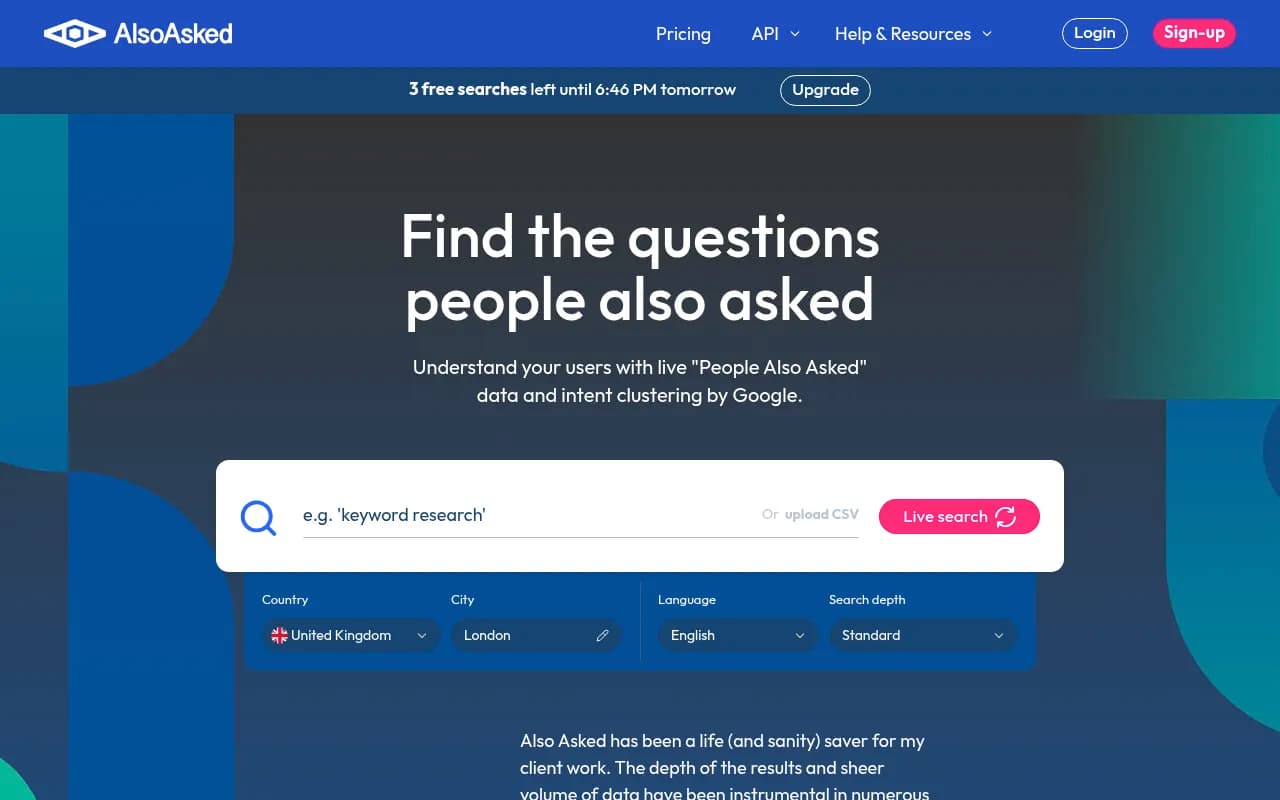
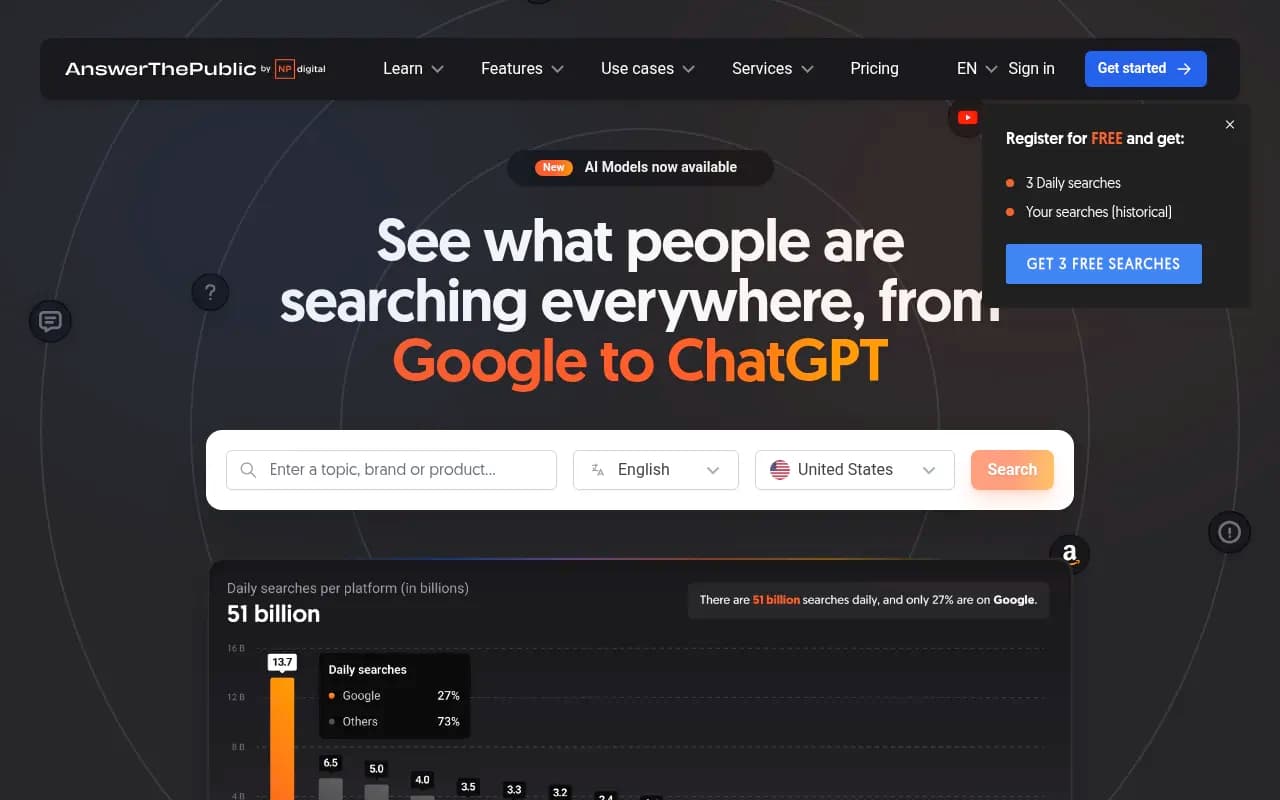
For manual gap analysis, tools like AlsoAsked and AnswerThePublic surface the question clusters around any topic.
Phase 1 deliverables
By day 30, you should have:
- A baseline visibility score across 3-5 AI platforms
- A list of 10-20 high-priority prompts where competitors appear but you don't
- An audit of your top 30 pages with AI-readiness scores
- A prioritized content gap list
Phase 2: Content execution (days 31-60)
This is where most of the work happens. The goal is to publish content that's specifically engineered to answer the gaps you identified.
What AI-citable content actually looks like
AI models favor content that is:
- Direct: The answer appears early, not buried after three paragraphs of preamble
- Structured: Headers, lists, and tables make it easy to extract specific facts
- Comprehensive: Covers related angles and subtopics, not just the surface question
- Authoritative: Cites data, research, or specific sources rather than making vague claims
- Entity-clear: Your brand, product, and category are explicitly named and described
The format matters too. Comparison tables, numbered lists, FAQ sections, and definition blocks all get cited more frequently than dense prose. This isn't because AI models prefer bullet points aesthetically -- it's because structured content is easier to parse and extract.
Content types that get cited
Based on what's working in 2026, these formats consistently earn citations:
- Definitional content: "What is [X]?" pages with clear, extractable definitions
- Comparison content: "[Tool A] vs [Tool B]" or "Best [category] tools" with structured tables
- How-to guides: Step-by-step content with numbered steps and clear outcomes
- FAQ pages: Clusters of specific questions with direct answers
- Data and research: Original statistics that other sources want to reference

Building your content calendar
Take your top 10-20 gap prompts and turn each into a content brief. For each piece:
- Write the target prompt at the top (the exact question you're answering)
- Identify the answer format (list, comparison, how-to, definition)
- Note which AI platforms are currently answering this prompt and what they're citing
- List the subtopics and related questions to cover
- Identify any data or statistics to include
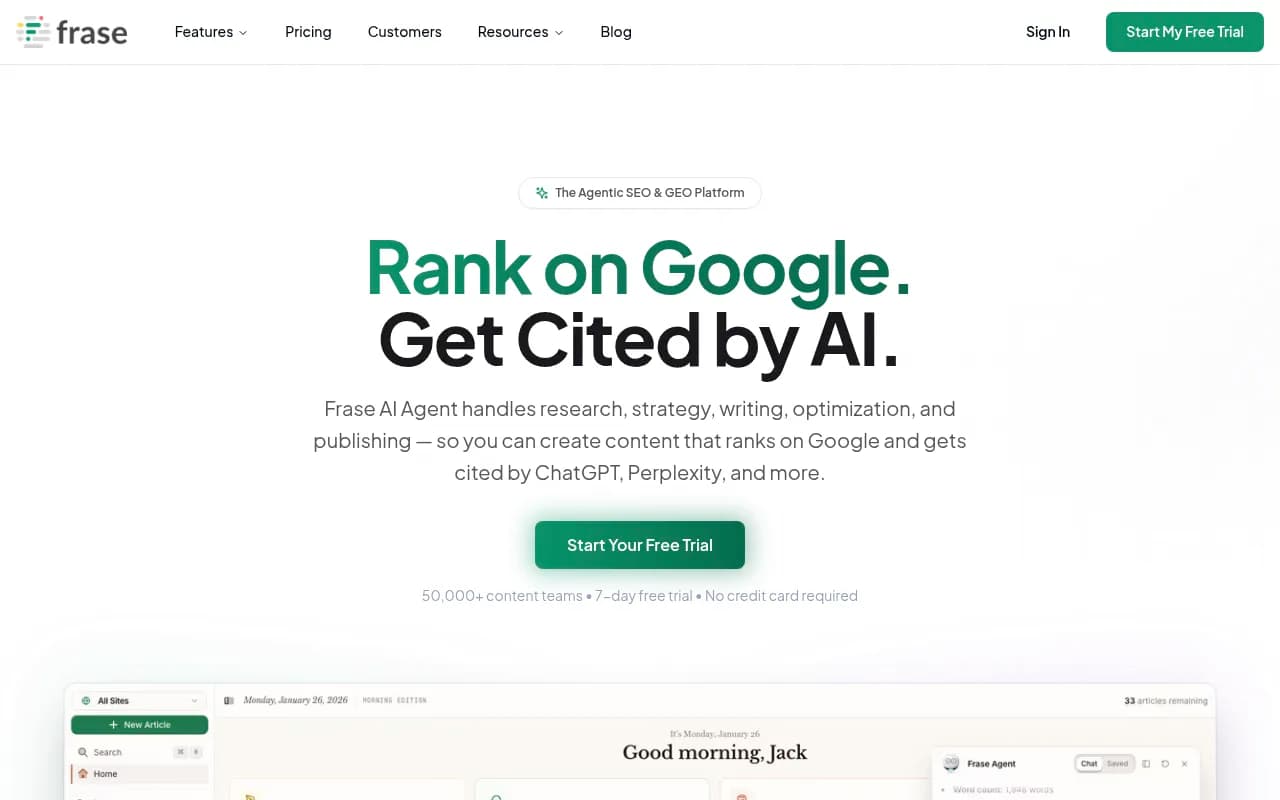
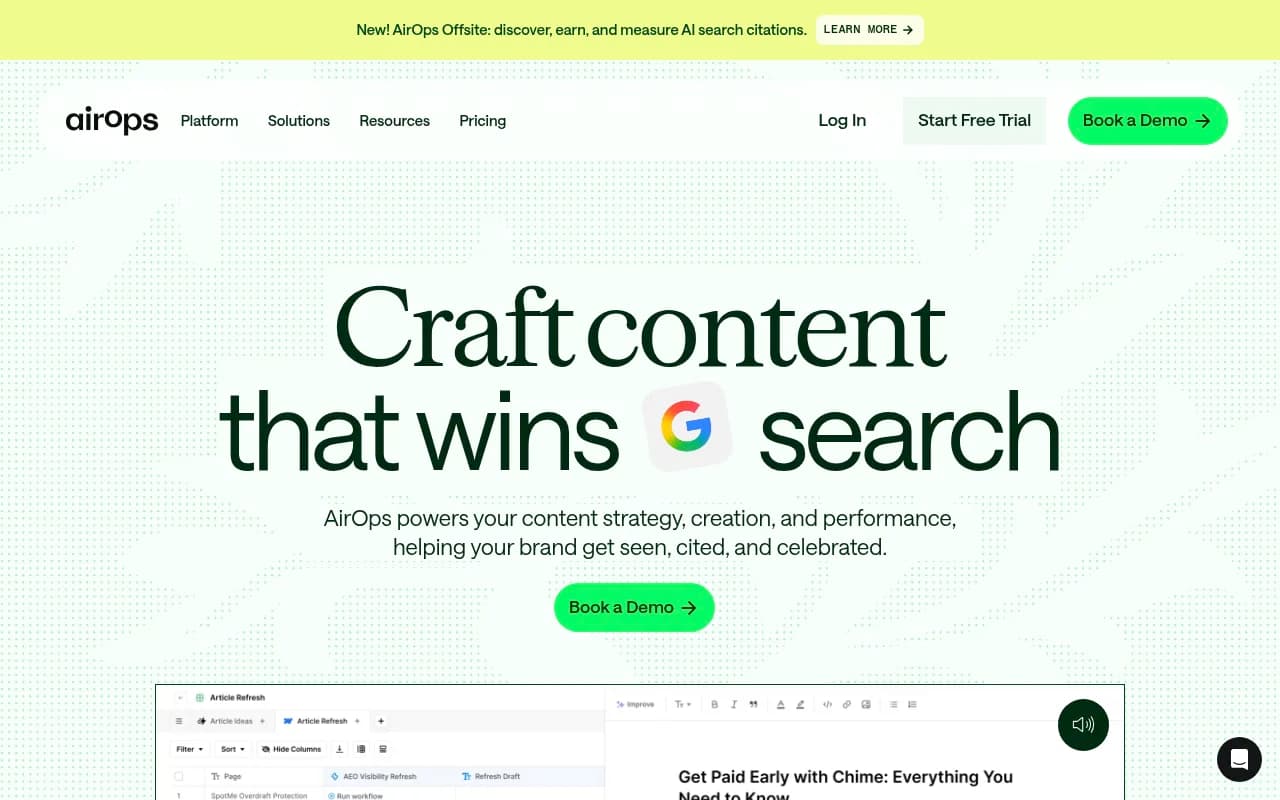
For content creation at scale, tools like Frase help you research and optimize content against what's already being cited. AirOps goes further with content engineering workflows built specifically for AI search visibility.
For SEO-grounded content optimization, Surfer SEO and Clearscope help ensure your content covers the right topics with the right depth.

Technical considerations that affect AI citations
A few technical factors that teams often overlook:
- Page speed: Slow pages get crawled less frequently. AI crawlers have the same impatience as Googlebot.
- JavaScript rendering: If your content is rendered client-side, AI crawlers may not see it. Tools like Prerender.io solve this.
- Structured data: Schema markup (FAQ, HowTo, Article) helps AI models understand your content's structure and purpose.
- Crawlability: Check your robots.txt. Some sites accidentally block AI crawlers like GPTBot and ClaudeBot.
Screaming Frog is still the fastest way to audit crawlability issues at scale.
Phase 2 deliverables
By day 60, you should have:
- 8-15 new or substantially revised pages targeting your priority gaps
- Structured data implemented on key pages
- Technical crawlability issues resolved
- A content publishing cadence you can sustain
Phase 3: Optimization and scaling (days 61-90)
Publishing content is the start, not the finish. Phase 3 is about tracking what's working, fixing what isn't, and building the systems to keep improving.
Tracking citations and measuring progress
Go back to your baseline prompts and run them again. For each one, note:
- Has your citation rate improved?
- Which pages are being cited?
- Which AI platforms are citing you vs. which aren't?
- What changed between the pages that get cited and those that don't?
Page-level citation tracking is where monitoring tools earn their keep. Promptwatch's page-level tracking shows exactly which pages are being cited, how often, and by which models -- plus the timeline from publish to crawl to first citation. That feedback loop is what lets you iterate intelligently rather than guessing.
For teams that want to connect AI visibility to actual revenue, Analyze AI ties citation data to traffic attribution.
Offsite citation building
Your own website isn't the only place AI models pull citations from. Reddit threads, YouTube videos, industry publications, and third-party listicles all feed into AI responses. If you're not appearing in those places, you're missing a significant part of the citation picture.
Practical offsite moves:
- Get listed in relevant "best of" roundups and comparison posts
- Answer questions on Reddit in your category (genuinely, not spammy)
- Publish data or research that other sites will reference
- Earn mentions in industry newsletters and publications
- Create YouTube content that answers the same prompts you're targeting on your site
Brand24 and Awario can help you monitor where your brand is being mentioned across the web, so you know which offsite citations are already working.
Building authority in parallel
The 3.5x citation advantage for high-authority domains doesn't go away just because you've published great content. Authority-building is a longer game, but these actions compound:
- Earn backlinks from relevant, authoritative sites
- Get cited in industry reports and research
- Build your entity presence (consistent NAP data, Wikipedia presence if relevant, knowledge panel)
- Publish original research that others reference
WordLift helps with entity optimization and structured data, which directly affects how AI models understand and trust your brand.
Scaling what works
By day 90, you should have enough data to know which content types, formats, and topics are generating citations. Double down on those patterns.
If comparison content is getting cited, build more comparisons. If FAQ sections are being extracted, add FAQ sections to your existing high-traffic pages. If a particular AI platform is citing you more than others, study what that platform prefers and optimize for it specifically.
Tool comparison: GEO platforms for tracking and optimization
| Tool | Monitoring | Content generation | Crawler logs | Prompt volume data | Best for |
|---|---|---|---|---|---|
| Promptwatch | 10 AI models | Yes (AI agents) | Yes | Yes | Full GEO optimization cycle |
| Otterly.AI | Yes | No | No | No | Basic monitoring |
| Peec AI | Yes | No | No | Limited | Lightweight tracking |
| Profound | Yes | No | No | Limited | Enterprise monitoring |
| AthenaHQ | Yes | No | No | No | Monitoring-focused teams |
| Frase | No | Yes | No | No | Content optimization |
| AirOps | No | Yes | No | No | Content engineering |
| Analyze AI | Yes | No | No | No | Traffic attribution |
The pattern is clear: most tools stop at monitoring. They show you where you're invisible but leave you to figure out what to do about it. The tools that help you close the loop -- find gaps, create content, track results -- are the ones worth investing in for a 90-day sprint.
90-day GEO playbook at a glance
| Phase | Days | Key actions | Success metrics |
|---|---|---|---|
| Audit & baseline | 1-30 | Prompt audit, content audit, gap analysis | Baseline visibility score, gap list |
| Content execution | 31-60 | Publish gap-filling content, fix technical issues | Pages published, crawl coverage |
| Optimization & scaling | 61-90 | Track citations, build offsite presence, iterate | Citation rate improvement, traffic from AI |
What to expect at day 90
Realistic expectations matter here. Some brands see citation improvements within 2-3 weeks of publishing well-structured content. Others take longer, especially in competitive categories where established sources have a head start.
What you should see by day 90:
- Measurable improvement in citation rate for your target prompts
- At least a few pages being cited regularly by one or more AI platforms
- A clear picture of which content types and formats work in your category
- A repeatable system for finding gaps, creating content, and tracking results
What you probably won't see by day 90:
- Domination across all AI platforms for all prompts
- Immediate traffic spikes from every piece of content
- Citations in highly competitive, high-volume prompts where established authorities have years of head start
The 90-day sprint is about building the foundation and proving the model. The compounding happens in months 4-12.
Common mistakes that slow progress
A few patterns that consistently derail GEO efforts:
Optimizing for keywords instead of prompts. AI models respond to conversational questions, not keyword-stuffed phrases. Write content that answers how people actually talk to ChatGPT.
Publishing thin content quickly. Quantity doesn't help here. A single comprehensive, well-structured page beats five shallow ones. AI models favor depth.
Ignoring the technical layer. Beautiful content that AI crawlers can't access doesn't get cited. Crawlability and rendering issues are worth fixing before you publish anything new.
Measuring only traditional SEO metrics. If you're only tracking Google rankings and organic traffic, you'll miss the AI citation story entirely. Add citation rate and AI-referred traffic to your reporting from day one.
Treating GEO as a one-time project. AI models update their knowledge, new competitors publish content, and prompt patterns shift. GEO is an ongoing practice, not a campaign.
Getting started today
The gap between brands that are cited in AI answers and those that aren't is widening every month. The good news is that the fundamentals aren't complicated: understand what prompts your customers use, publish content that directly answers those prompts, build the authority signals that make AI models trust you, and track the results so you can iterate.
Start with the audit. Know your baseline before you build anything. Then work the 90-day plan.