Key Takeaways
- Start with strategy, not tools: Build your stack around four core layers—research & planning, creation & optimization, distribution & promotion, and measurement & analysis
- Match tools to team size: Solo marketers need 4-6 affordable tools ($0-200/month), small teams need 6-8 strategic platforms ($200-500/month), enterprises need integrated systems that scale
- Avoid tool sprawl: More tools create fragmentation, inflate costs, and reduce efficiency through constant context switching—focus on platforms that integrate with each other
- AI visibility matters: In 2026, optimizing for AI search engines (ChatGPT, Perplexity, Claude, Gemini) is as critical as traditional SEO—tools like Promptwatch help you track and improve how AI models cite your content
- Action beats monitoring: The best tools don't just show you data—they help you fix problems with content gap analysis, AI-powered writing, and optimization workflows
Your competitor's 10-person marketing team publishes 30 articles monthly, dominates social channels, and captures leads you should be getting. They have specialized tools for every task. You have a Google Doc and hope.
Here's the reality: 74% of new web content now comes from generative AI, but the real advantage doesn't lie in creating more content—it's in creating the right content with the proper tools, based on solid customer and market intelligence.
Small teams don't need enterprise software costing $5,000/month. You need a strategic stack of 6-8 tools that handle research, creation, distribution, and measurement without overwhelming your budget or adding management complexity.
This guide breaks down exactly how to build a content marketing tech stack in 2026—what tools to choose, how they fit together, and which capabilities actually move the needle.
Why Your Content Marketing Stack Matters More Than Ever
Content marketing tools in 2026 have moved from being 'nice to have' add-ons to being the operating system for marketing teams. The challenge is building a stack that delivers results without requiring a full-time person just to manage the tools.
The temptation to adopt every promising tool creates more problems than it solves. Tool sprawl fragments workflows, inflates budgets, and paradoxically reduces efficiency through constant context switching.
Most effective content operations run on four to six core tools selected strategically based on team structure, goals, and resources. Your ideal stack depends heavily on your specific circumstances.
The Hidden Cost of Tool Sprawl
Every additional tool in your stack creates:
- Context switching overhead: Jumping between 15 different platforms wastes 2-3 hours daily
- Integration complexity: Tools that don't talk to each other require manual data transfer
- Training burden: Each new platform requires onboarding time and ongoing support
- Subscription fatigue: Multiple $50-200/month tools quickly balloon to $2,000+ monthly spend
The solution isn't fewer capabilities—it's smarter tool selection that consolidates functions and integrates seamlessly.
The 4-Layer Content Marketing Stack Framework
Your tool stack should support four core functions. Think of these as layers that build on each other:
Layer 1: Research & Planning (What to Create)
Tools that identify topics, keywords, content opportunities, and audience insights. This layer answers: What should we write about? What questions are our customers asking? What content gaps exist?
Core capabilities needed:
- Keyword research and search volume data
- Competitor content analysis
- Topic clustering and content gap identification
- Audience research and persona insights
- AI search visibility tracking (new in 2026)
Essential tools for this layer:
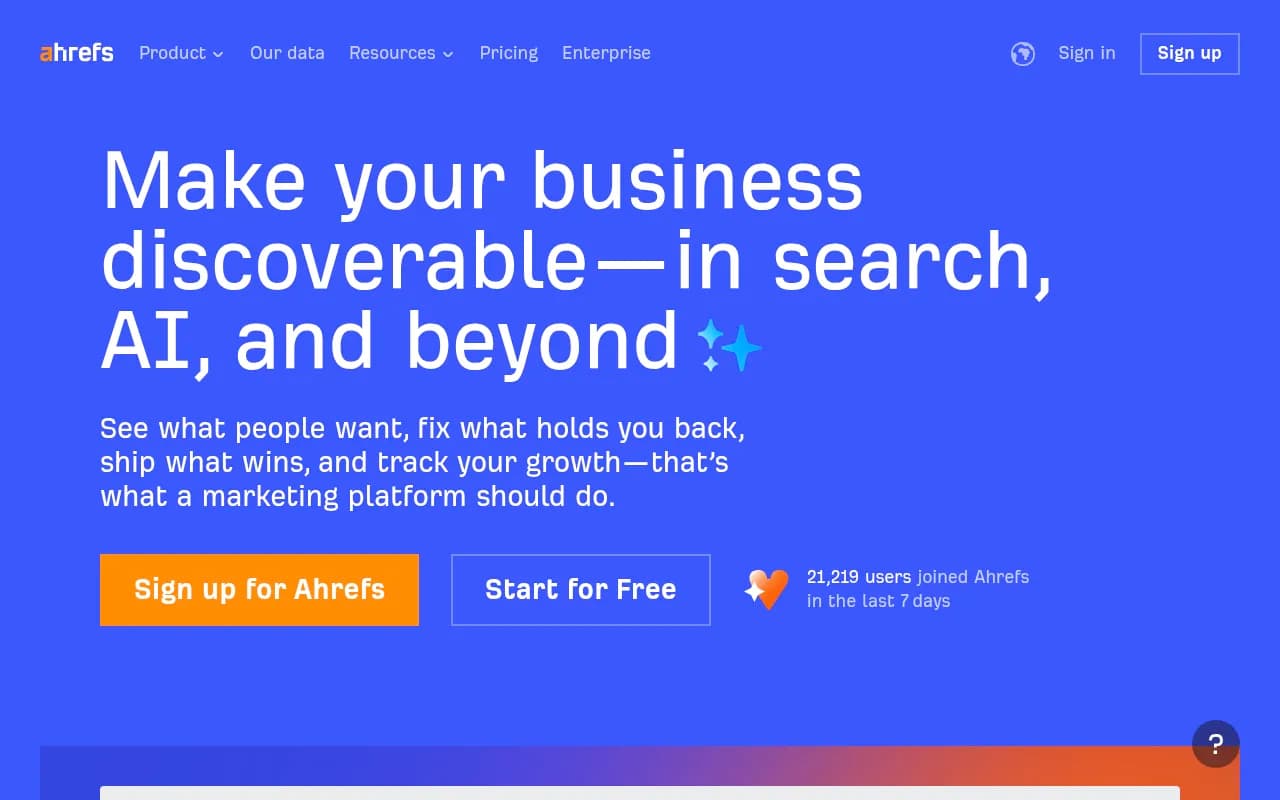
Ahrefs remains the gold standard for traditional SEO research—keyword difficulty scores, competitor analysis, backlink intelligence, and content gap reports. The 2026 version now includes basic AI search tracking, though it's not as comprehensive as dedicated GEO platforms.
Semrush offers similar capabilities with stronger competitor intelligence features and topic research tools. Their Keyword Magic Tool generates thousands of related keywords, while Topic Research identifies trending angles.
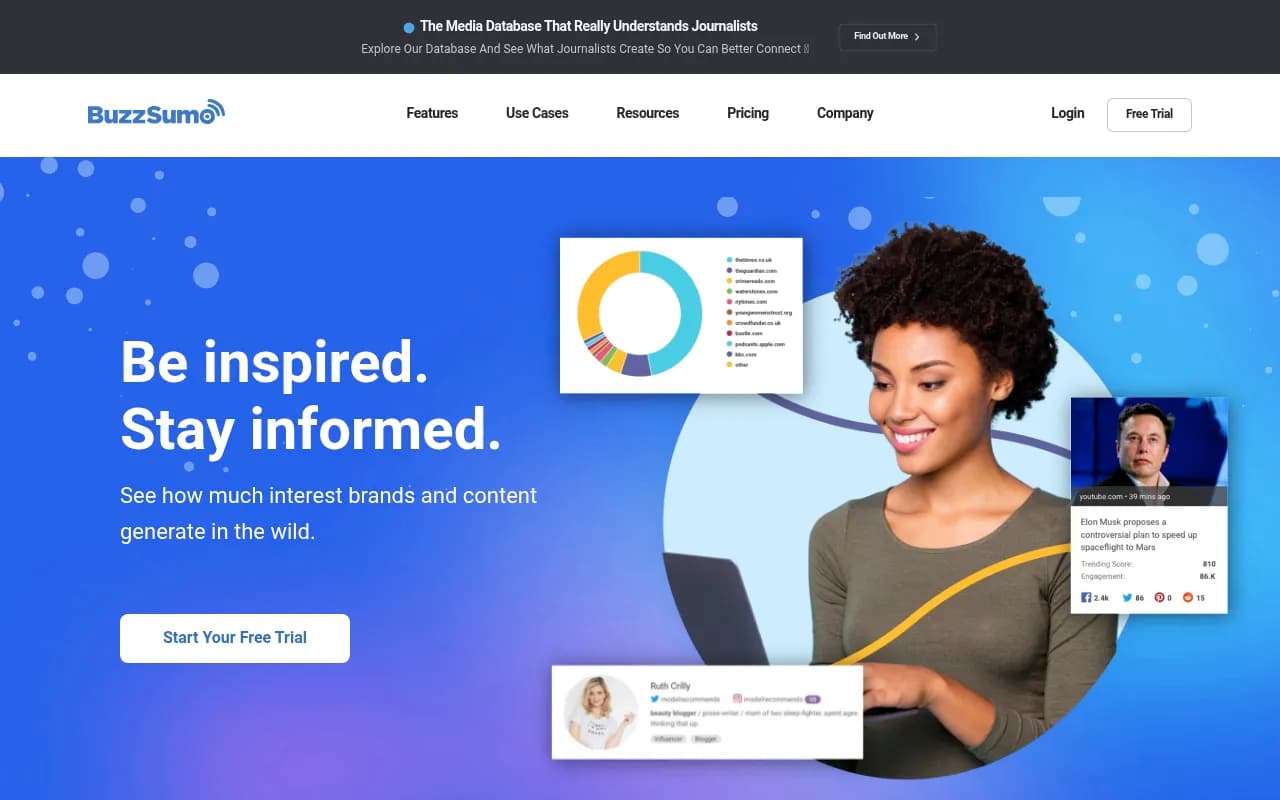
BuzzSumo specializes in content performance analysis—see what's actually getting shared and engaged with across social platforms. Use it to validate topics before investing in creation.
For AI search visibility specifically, tools like Promptwatch help you understand how AI models like ChatGPT, Perplexity, and Claude cite your content. This matters because AI search is rapidly becoming a primary discovery channel—if your brand isn't visible in AI responses, you're missing a massive opportunity.
Layer 2: Creation & Optimization (How to Create It)
Tools that help produce, edit, and optimize content efficiently. This layer handles: How do we create high-quality content at scale? How do we optimize for both traditional search and AI search?
Core capabilities needed:
- AI-assisted writing and content generation
- SEO optimization and content scoring
- Grammar and readability checking
- Content brief creation
- Visual content creation (images, videos, infographics)
Essential tools for this layer:
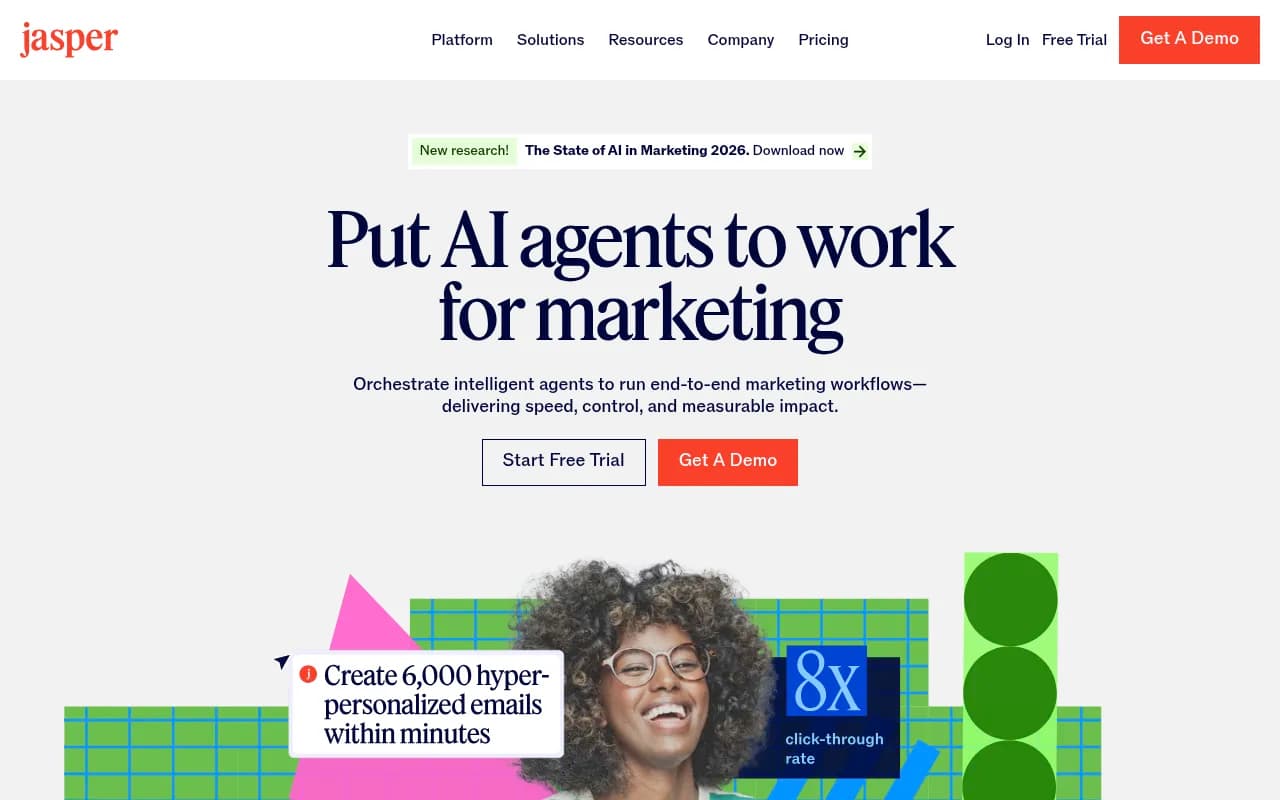
Jasper has evolved from a simple AI writer into a full marketing platform with agents and content pipelines. Use it for first drafts, content briefs, and scaling production across multiple formats.
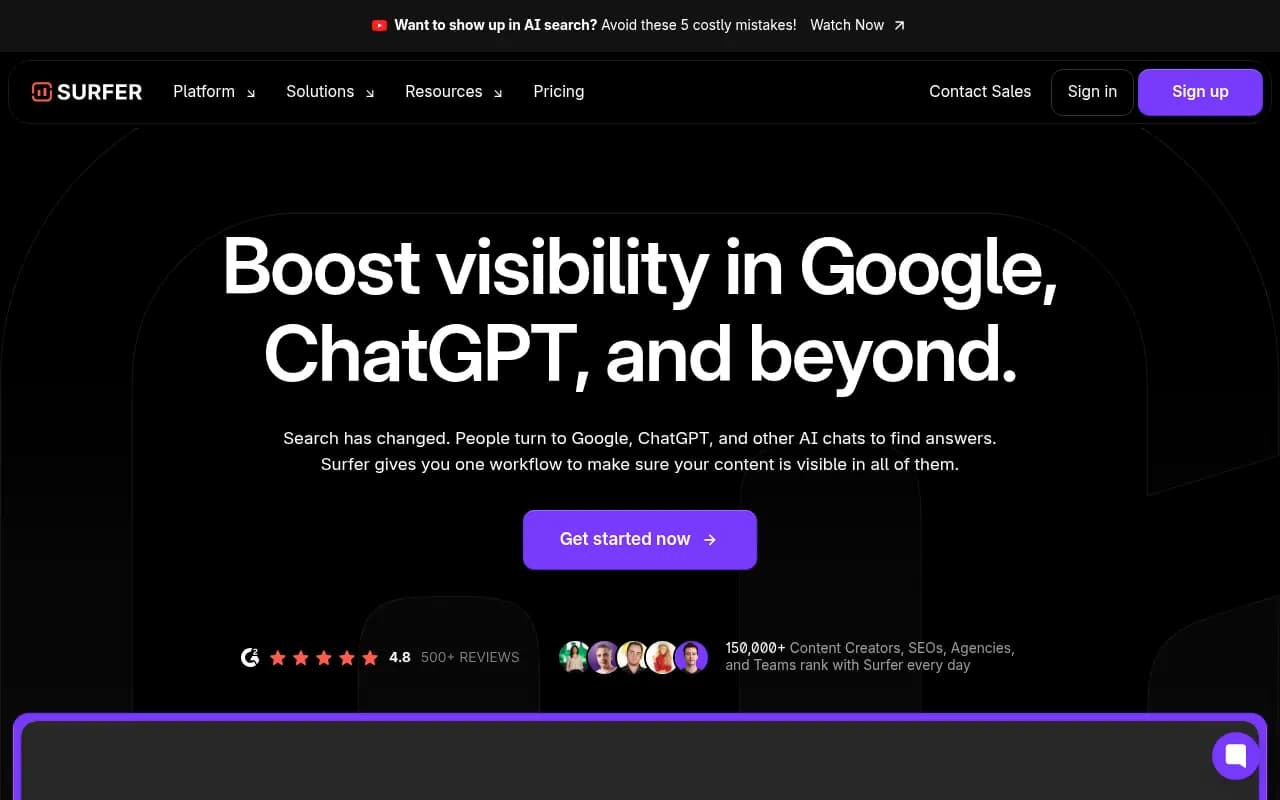
Surfer SEO analyzes top-ranking content and provides specific optimization recommendations—keyword density, content structure, related terms to include. The Content Editor gives you a real-time score as you write.

Clearscope takes a similar approach but focuses more on semantic relevance and natural language. It's particularly strong for teams that prioritize content quality over volume.

Grammarly handles the editing layer—grammar, tone, clarity, and readability. The Business tier includes brand voice consistency and plagiarism detection.
Canva's AI features now generate custom images, resize designs for multiple platforms, and create video content from templates. Essential for visual content creation without a dedicated designer.
The AI search optimization gap:
Most traditional SEO tools optimize for Google's algorithm but ignore how AI models evaluate and cite content. This is where platforms like Promptwatch become critical—they show you exactly which prompts competitors rank for but you don't, then help you generate content engineered to get cited by ChatGPT, Claude, and other AI models. The built-in AI writing agent creates articles grounded in real citation data (880M+ citations analyzed), not generic SEO filler.
Layer 3: Distribution & Promotion (Where to Share It)
Tools that publish and amplify content across channels. This layer handles: How do we get content in front of our audience? How do we maximize reach without manual posting?
Core capabilities needed:
- Social media scheduling and management
- Email marketing automation
- Content distribution workflows
- Influencer and partnership outreach
- Paid promotion management
Essential tools for this layer:
Buffer offers simple, affordable social media scheduling across all major platforms. The analytics dashboard shows what's working without overwhelming you with data.
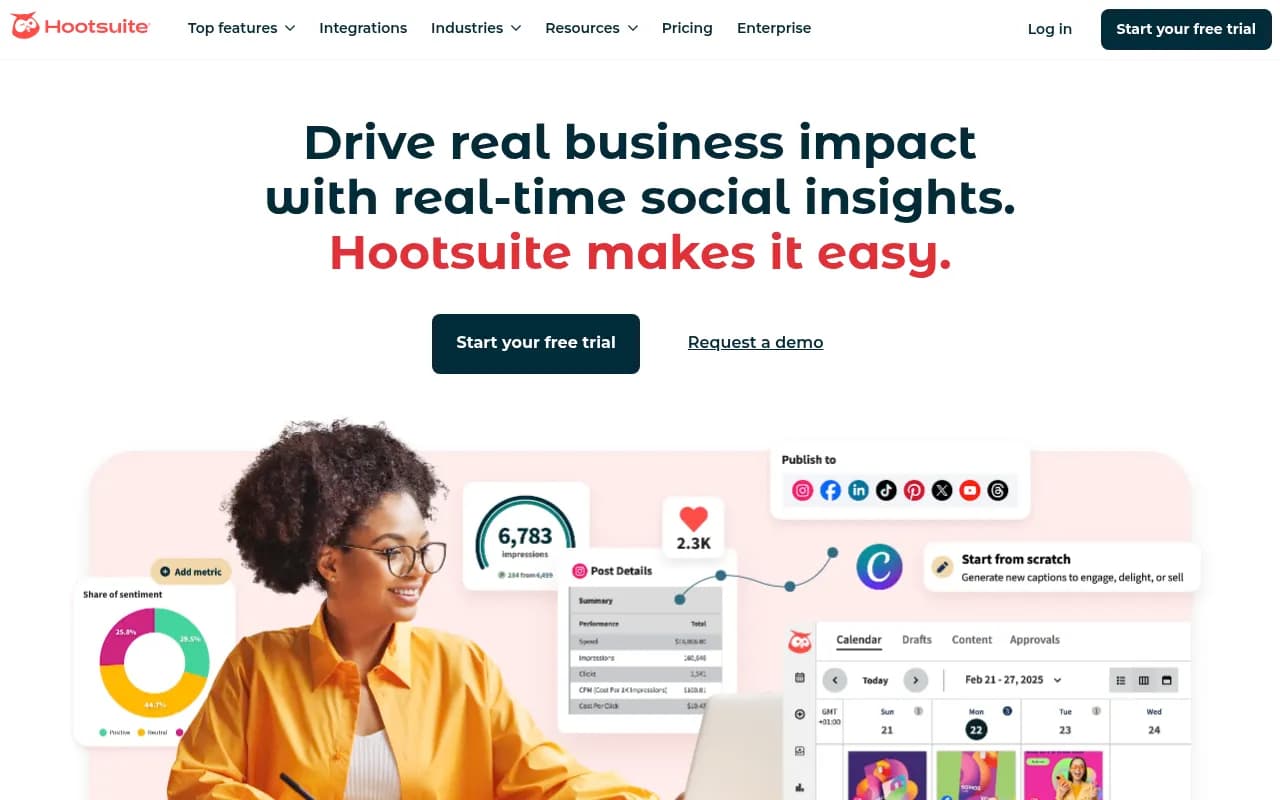
Hootsuite provides more advanced features—team collaboration, social listening, and AI-powered content recommendations. Better for teams managing multiple brands or high posting volumes.
Mailchimp remains the standard for email marketing—automation workflows, segmentation, A/B testing, and basic CRM functionality. The AI optimization features now predict best send times and subject lines.
ActiveCampaign offers more sophisticated automation and CRM integration. Use it when email marketing is a primary channel and you need complex nurture sequences.
Distribution strategy matters more than tools:
The best distribution tools won't help if your content isn't reaching the right channels. In 2026, that includes optimizing for AI search engines—when someone asks ChatGPT or Perplexity a question your content answers, you want to be cited. This requires understanding which prompts drive visibility and creating content that AI models recognize as authoritative.
Layer 4: Measurement & Analysis (What's Working)
Tools that track performance and prove ROI. This layer answers: What content drives results? Where should we invest more? What's our actual return on content investment?
Core capabilities needed:
- Web analytics and traffic attribution
- Content performance tracking
- Conversion and revenue attribution
- AI search visibility monitoring
- Competitive benchmarking
Essential tools for this layer:
Google Analytics 4 remains free and essential—traffic sources, user behavior, conversion tracking, and basic attribution. Set up custom events to track content engagement.
Search Console shows exactly which queries drive traffic from Google, which pages rank, and technical SEO issues. Essential for understanding organic performance.
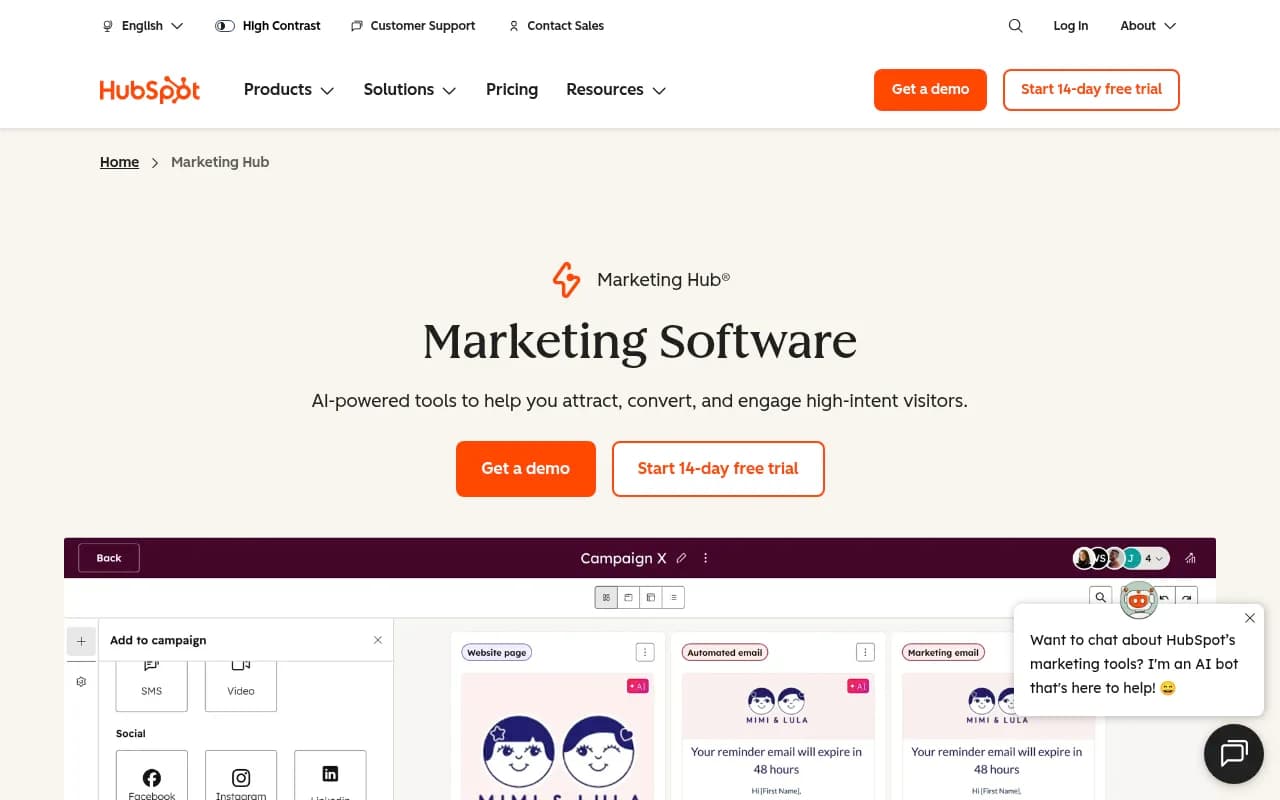
HubSpot provides end-to-end attribution—see which content pieces contribute to deals, track the full customer journey, and prove content ROI. The all-in-one approach eliminates data silos.
For AI search visibility tracking, platforms like Promptwatch monitor how often your brand appears in ChatGPT, Perplexity, Claude, and other AI models. Page-level tracking shows exactly which content gets cited, how often, and by which models. Traffic attribution (via code snippet, GSC integration, or server log analysis) connects visibility to actual revenue.
How to Choose Tools Based on Team Size and Budget
Your team structure and budget determine which tools make sense. Here's how to build the right stack for your situation:
Solo Marketers and Independent Bloggers ($0-200/month)
Core stack (4-6 tools):
- Research: Ubersuggest or KWFinder (affordable keyword research)
- Creation: ChatGPT or Jasper (AI writing assistance)
- Optimization: Yoast SEO or Rank Math (WordPress SEO)
- Distribution: Buffer (social scheduling) + MailerLite (email)
- Analytics: Google Analytics + Search Console (both free)
Total monthly cost: $50-150
Key principle: Focus on free or affordable tools that handle core functions. Avoid feature-rich platforms you'll never fully utilize.
Small Content Teams (2-5 people, $200-500/month)
Core stack (6-8 tools):
- Research: Ahrefs or Semrush (comprehensive SEO platform)
- Creation: Jasper + Surfer SEO (AI writing + optimization)
- Collaboration: Google Workspace or Notion (content planning)
- Distribution: Hootsuite (social) + Mailchimp (email)
- Analytics: Google Analytics + Search Console + Promptwatch (AI visibility)
- Design: Canva Pro (visual content)
Total monthly cost: $300-500
Key principle: Invest in tools that enable collaboration and provide data to guide strategy. Prioritize platforms with strong integrations.
Mid-Size Marketing Teams (6-15 people, $500-2000/month)
Core stack (8-12 tools):
- Research: Ahrefs + BuzzSumo + Promptwatch (SEO + content + AI visibility)
- Creation: Jasper + Clearscope + Canva (writing + optimization + design)
- Collaboration: Asana or Monday.com (project management)
- Distribution: Hootsuite + HubSpot Marketing Hub (social + email + automation)
- Analytics: Google Analytics + HubSpot + Promptwatch (web + CRM + AI)
- Video: Loom or Vidyard (video messaging and content)
Total monthly cost: $800-1500
Key principle: Consolidate where possible—HubSpot replaces 3-4 point solutions. Invest in platforms that scale with team growth.
Enterprise and Agencies (15+ people, $2000+/month)
Core stack (10-15 tools):
- Research: Ahrefs + Semrush + Promptwatch (comprehensive intelligence)
- Creation: Jasper + Clearscope + Adobe Creative Suite (enterprise-grade)
- Collaboration: Asana + Slack + Google Workspace (workflow management)
- Distribution: Hootsuite + HubSpot + Salesforce (integrated GTM)
- Analytics: Google Analytics 360 + HubSpot + Promptwatch (enterprise analytics)
- Content management: Contentful or Sanity (headless CMS)
Total monthly cost: $3000-8000+
Key principle: Focus on enterprise platforms with robust APIs, multi-user support, and advanced features. Prioritize tools that integrate with your CRM and marketing automation.
The AI Search Visibility Layer: Why It Matters in 2026
Traditional SEO tools optimize for Google's algorithm. But in 2026, AI search engines—ChatGPT, Perplexity, Claude, Gemini, Google AI Overviews—are rapidly becoming primary discovery channels.
When someone asks ChatGPT "What's the best project management tool for remote teams?" or Perplexity "How do I reduce customer churn?", you want your brand cited in the response. That's AI search visibility.
Why most teams miss this:
Most content teams still optimize exclusively for Google. They track keyword rankings, build backlinks, and measure organic traffic. But they have no idea if AI models cite their content—or worse, if competitors dominate AI search while they're invisible.
The action loop that drives results:
Platforms like Promptwatch solve this with a three-step cycle:
-
Find the gaps: Answer Gap Analysis shows exactly which prompts competitors are visible for but you're not. You see the specific content your website is missing—the topics, angles, and questions AI models want answers to but can't find on your site.
-
Create content that ranks in AI: The built-in AI writing agent generates articles, listicles, and comparisons grounded in real citation data (880M+ citations analyzed), prompt volumes, persona targeting, and competitor analysis. This isn't generic SEO filler—it's content engineered to get cited by ChatGPT, Claude, Perplexity, and other AI models.
-
Track the results: See your visibility scores improve as AI models start citing your new content. Page-level tracking shows exactly which pages are being cited, how often, and by which models. Close the loop with traffic attribution to connect visibility to actual revenue.
This cycle—find gaps, generate content, track results—is what makes it an optimization platform, not just another tracker.
Additional capabilities that support the action loop:
- AI Crawler Logs: Real-time logs of AI crawlers (ChatGPT, Claude, Perplexity) hitting your website—which pages they read, errors they encounter, how often they return
- Prompt Intelligence: Volume estimates and difficulty scores for each prompt, plus query fan-outs that show how one prompt branches into sub-queries
- Citation & Source Analysis: See exactly which pages, Reddit threads, YouTube videos, and domains AI models cite in their responses
- Reddit & YouTube Insights: Surface discussions that directly influence AI recommendations
- ChatGPT Shopping Tracking: Monitor when your brand appears in ChatGPT's product recommendations
- Competitor Heatmaps: Compare your AI visibility vs competitors across LLMs
Common Tech Stack Mistakes (and How to Avoid Them)
Mistake 1: Buying Tools Before Defining Process
Many teams buy tools hoping they'll solve process problems. They won't. Tools amplify existing processes—good or bad.
Solution: Document your content workflow first. Identify specific bottlenecks and inefficiencies. Then find tools that address those specific problems.
Mistake 2: Choosing Tools That Don't Integrate
Standalone tools that require manual data transfer create massive friction. You spend hours copying data between platforms instead of creating content.
Solution: Prioritize tools with native integrations or robust APIs. Check if they connect with your existing stack before committing.
Mistake 3: Ignoring AI Search Optimization
Most teams still optimize exclusively for Google while AI search engines rapidly gain market share. By the time they realize AI visibility matters, competitors have already established authority.
Solution: Add AI search monitoring to your stack now. Track how AI models cite your content and optimize accordingly.
Mistake 4: Paying for Features You'll Never Use
Enterprise platforms with 50+ features sound impressive. But if you only use 10% of capabilities, you're overpaying.
Solution: Start with simpler, more affordable tools. Upgrade only when you consistently hit limitations.
Mistake 5: No Clear Ownership or Training
Tools sit unused because no one knows how to use them properly or who's responsible for managing them.
Solution: Assign clear tool ownership. Invest in proper onboarding and training. Create documentation for common workflows.
Building Your Stack: A Step-by-Step Implementation Plan
Step 1: Audit Your Current Situation (Week 1)
- List all tools you currently use (include free tools and spreadsheets)
- Calculate total monthly cost
- Identify overlapping functionality
- Document what's working and what's not
- Survey your team about pain points
Step 2: Define Your Content Goals (Week 1)
- What content types do you produce? (blog posts, videos, social, email, etc.)
- What's your target publishing frequency?
- What metrics matter most? (traffic, leads, revenue, brand awareness)
- What's your realistic budget?
Step 3: Map Required Capabilities (Week 2)
For each content goal, identify required capabilities:
- Research: keyword research, competitor analysis, topic identification, AI visibility tracking
- Creation: writing assistance, optimization, design, video production
- Distribution: social scheduling, email automation, paid promotion
- Measurement: traffic analytics, conversion tracking, AI citation monitoring
Step 4: Research and Evaluate Tools (Week 2-3)
For each capability:
- Identify 3-5 potential tools
- Compare features, pricing, and integrations
- Read user reviews (G2, Capterra, Reddit)
- Start free trials for top contenders
- Test with real workflows
Step 5: Make Decisions and Implement (Week 4)
- Select tools based on trials and evaluation
- Negotiate annual contracts for discounts
- Set up integrations between tools
- Create documentation and training materials
- Assign ownership for each tool
Step 6: Monitor and Optimize (Ongoing)
- Review tool usage monthly
- Track ROI for paid tools
- Eliminate tools that aren't being used
- Stay current on new capabilities and alternatives
- Adjust stack as team and goals evolve
Essential Tool Categories and Top Picks for 2026
Here's a quick reference guide to the best tools in each category:
SEO & Content Research
Best overall: Ahrefs (comprehensive data, intuitive interface) Best value: Semrush (more features per dollar) Best for beginners: Ubersuggest (simple, affordable) Best for AI visibility: Promptwatch (tracks citations across ChatGPT, Perplexity, Claude, etc.)
AI Writing & Content Creation
Best overall: Jasper (full marketing platform with agents) Best for long-form: ChatGPT or Claude (versatile, conversational) Best for SEO: Surfer SEO (optimization built-in) Best for teams: Writer (brand voice consistency)
Content Optimization
Best overall: Clearscope (semantic relevance focus) Best value: Surfer SEO (real-time scoring) Best for WordPress: Yoast SEO or Rank Math (free, powerful)
Social Media Management
Best for small teams: Buffer (simple, affordable) Best for agencies: Hootsuite (advanced features, team collaboration) Best for visual content: Later (Instagram-focused)
Email Marketing
Best for beginners: Mailchimp (easy to use, generous free tier) Best for automation: ActiveCampaign (sophisticated workflows) Best value: MailerLite (powerful features, low cost)
Analytics & Performance
Best free option: Google Analytics + Search Console Best all-in-one: HubSpot (full attribution, CRM integration) Best for AI visibility: Promptwatch (tracks citations, shows content gaps, generates optimized content)
Visual Content Creation
Best overall: Canva (templates, AI features, easy to use) Best for video: Synthesia (AI video generation) Best for design: Adobe Creative Suite (professional-grade)
Project Management & Collaboration
Best for content teams: Asana or Monday.com (visual workflows) Best for agencies: Wrike (client collaboration) Best free option: Trello (simple kanban boards)
Integration Strategies: Making Your Tools Work Together
Tools that don't communicate create data silos and manual work. Here's how to build an integrated stack:
Native Integrations
Most modern tools offer native integrations with popular platforms. Check for:
- CRM connections (HubSpot, Salesforce)
- Analytics integrations (Google Analytics, Search Console)
- Social platform connections (Facebook, LinkedIn, Twitter)
- Email marketing sync (Mailchimp, ActiveCampaign)
Zapier and Automation Platforms
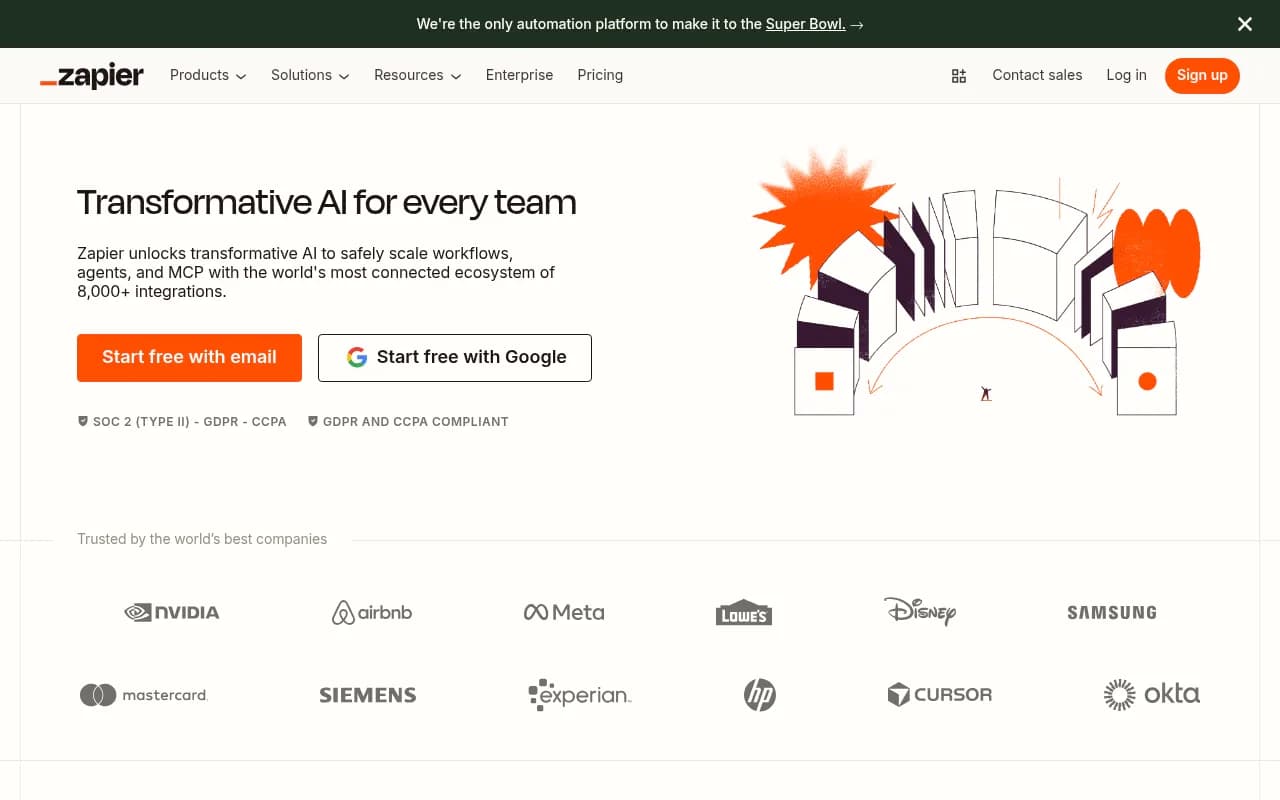
Zapier connects tools that don't have native integrations. Create automated workflows like:
- New blog post published → share on social media
- New lead captured → add to email list
- Content published → notify team in Slack
- Analytics milestone hit → send report to stakeholders
API Connections for Custom Workflows
For advanced use cases, most tools offer APIs that developers can use to build custom integrations. This works well for:
- Pulling data into custom dashboards
- Syncing data between proprietary systems
- Building automated reporting workflows
- Creating custom tool combinations
Data Warehouses and Business Intelligence
Enterprise teams often centralize data in warehouses (Snowflake, BigQuery) and visualize it in BI tools (Looker, Tableau). This approach:
- Eliminates data silos
- Enables cross-platform analysis
- Supports custom reporting
- Scales with data volume
Future-Proofing Your Content Marketing Stack
Technology evolves rapidly. Here's how to build a stack that adapts:
Choose Tools with Strong APIs
Platforms with robust APIs give you flexibility to integrate with future tools and build custom workflows as needs change.
Prioritize Platforms Over Point Solutions
All-in-one platforms (HubSpot, Jasper, Promptwatch) reduce integration complexity and often cost less than multiple point solutions.
Stay Current on AI Capabilities
AI features are being added to existing tools constantly. Review your stack quarterly to see if new capabilities eliminate the need for separate tools.
Monitor Emerging Categories
New tool categories emerge as marketing evolves. In 2026, AI search visibility monitoring is the newest essential category. Stay informed about what's coming next.
Build Flexibility Into Contracts
Avoid long-term contracts when possible. Annual contracts with monthly payment options give you flexibility to switch if better alternatives emerge.
Measuring Your Tech Stack ROI
Your content marketing stack should drive measurable results. Here's how to prove ROI:
Track Time Savings
Measure how much time tools save vs manual processes:
- Hours saved on keyword research
- Time eliminated from content creation
- Reduction in manual social posting
- Faster performance reporting
ROI calculation: (Hours saved × hourly rate) - tool cost = monthly ROI
Measure Content Performance Improvements
Compare metrics before and after implementing tools:
- Increase in organic traffic
- Growth in AI search citations
- Improvement in conversion rates
- Increase in content output
Calculate Revenue Attribution
Connect tools to revenue:
- Leads generated from content
- Deals influenced by content
- Revenue from organic channels
- Customer acquisition cost reduction
Monitor Team Satisfaction
Tools should make work easier, not harder:
- Survey team regularly about tool satisfaction
- Track adoption rates
- Monitor support ticket volume
- Measure time to onboard new team members
Conclusion: Building Your Ideal Content Marketing Stack
The right content marketing tech stack amplifies your team's capabilities without overwhelming your budget or workflow. Start with the four-layer framework—research, creation, distribution, measurement—and choose tools strategically based on your team size, goals, and resources.
Key principles to remember:
- Start simple: 4-6 core tools beat 20 underutilized platforms
- Prioritize integration: Tools that connect reduce manual work
- Match tools to team: Solo marketers need different tools than enterprises
- Include AI visibility: Optimize for AI search engines, not just Google
- Measure ROI: Track time savings, performance improvements, and revenue impact
- Stay flexible: Review and adjust your stack quarterly
Most importantly, remember that tools amplify strategy—they don't replace it. The best tech stack in the world won't save bad content or unclear goals. Define your strategy first, then choose tools that execute it efficiently.
In 2026, the teams winning at content marketing aren't necessarily the ones with the biggest budgets or largest teams. They're the ones with the right tools, used strategically, integrated seamlessly, and optimized for both traditional search and emerging AI channels.