Key takeaways
- "Local GEO platform" covers three jobs that few vendors do well together: keeping location data and reviews clean, tracking how AI engines talk about each location, and fixing the content gaps that keep you out of answers.
- Product pages and landing pages together earned about 39% of ChatGPT citations in Promptwatch Data's Sep 28 to Oct 4, 2026 report. For a franchise, location pages are the equivalent surface, so you need to see which ones get cited.
- Listings and reputation suites (Yext, Uberall, Birdeye, SOCi and similar) manage the data layer. AI visibility platforms measure and improve the answer layer. Most franchises need both, and should avoid paying twice for the same job.
- Ask every vendor for per-location reporting, prompt-level evidence, crawler or indexation data, and a named owner for franchisee adoption before you sign anything.
- Franchisors also sell to future owners. Check whether a vendor can cover that audience too, or whether it only treats the nearest-address customer as the goal.
What a local GEO platform actually is
The label is slippery. Vendors selling listing management, review software, social scheduling and AI prompt tracking all now describe themselves as local GEO or AI search tools. Some of them genuinely do it. Some added a dashboard tab in 2026 and updated the homepage.
So start with what the job is. A local GEO platform should help a multi-location brand get named, described correctly and recommended when someone asks an AI assistant a question like "best pet groomer near me" or "which waxing studio in Austin does packages." That breaks into three layers:
- Data layer. Business name, address, phone, hours, services and categories being identical everywhere, plus reviews flowing in and getting answered.
- Content layer. Location pages, service pages, FAQs and schema that give AI engines something specific to cite for each branch.
- Measurement layer. Knowing which prompts mention you, which locations appear, which pages get cited, and whether any of that leads to bookings.
Most older local marketing tools are strong at layer one. Newer AI visibility tools are strong at layer three. Layer two is where franchises quietly fail, because 200 near-identical location pages are easy to create and hard to make useful.
If you want a refresher on the basics underneath all of this, Big Eye Agency's local SEO and GEO guide covers Google Business Profile completion, NAP consistency, schema and FAQ structure in a clear phase-by-phase way.

Why franchises have a different problem than single-location shops
A single restaurant needs to show up within five miles. A franchise needs that 300 times, with consistent facts, while franchisees with different skill levels touch the content. Three things make it harder.
Variance. One location has 400 reviews and a perfect profile. The one across town has a stale phone number and a duplicate listing. AI engines don't average these out for you. They cite whichever source they find.
Governance. Headquarters wants brand control. Franchisees want to run a local promo on Tuesday. A platform that cannot support approved local campaigns will get bypassed. The MyTime franchise software guide makes the same point for operations software: the system has to give corporate control and local flexibility at once, and franchisee adoption is a buying criterion, not an afterthought.
Two audiences. A franchise brand sells to customers and to prospective franchise owners. Onely's October 2026 research on franchise GEO agencies found that none of the five AI engines it checked named franchise sales as a criterion for choosing a GEO provider, and none of the two franchise GEO lists it opened mentioned future owners. If you are still recruiting franchisees, ask whether your platform can track prompts like "best franchise to start with $100,000" or "what does it cost to open a [your category] franchise." Many cannot.
The five categories of tool you will meet
You will not buy a single product that does everything well. Here is how the market breaks down, with examples from the tools catalog.
Listings and local presence platforms
These push accurate business data to directories, maps and AI-facing data sources, and keep it synced. Yext, Uberall, Rio SEO, Synup, Moz Local, Partoo and Whitespark live here.
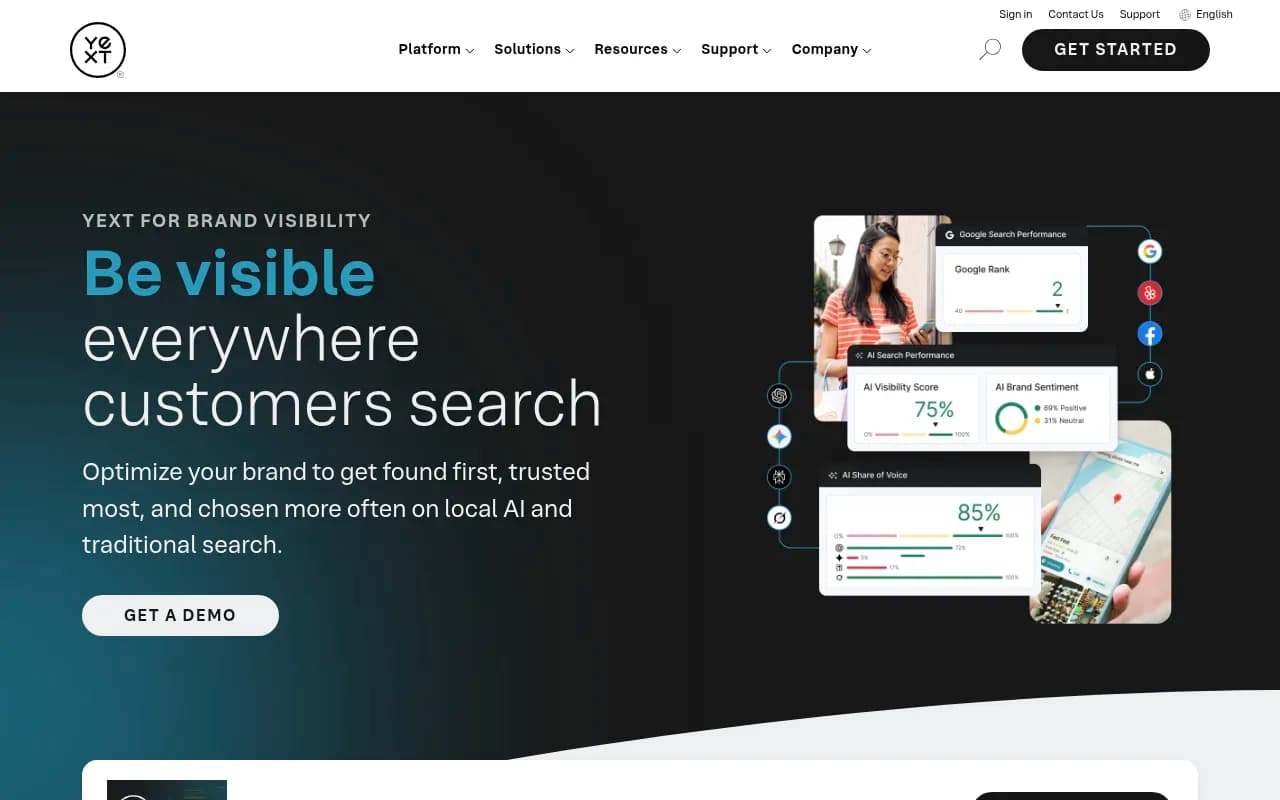
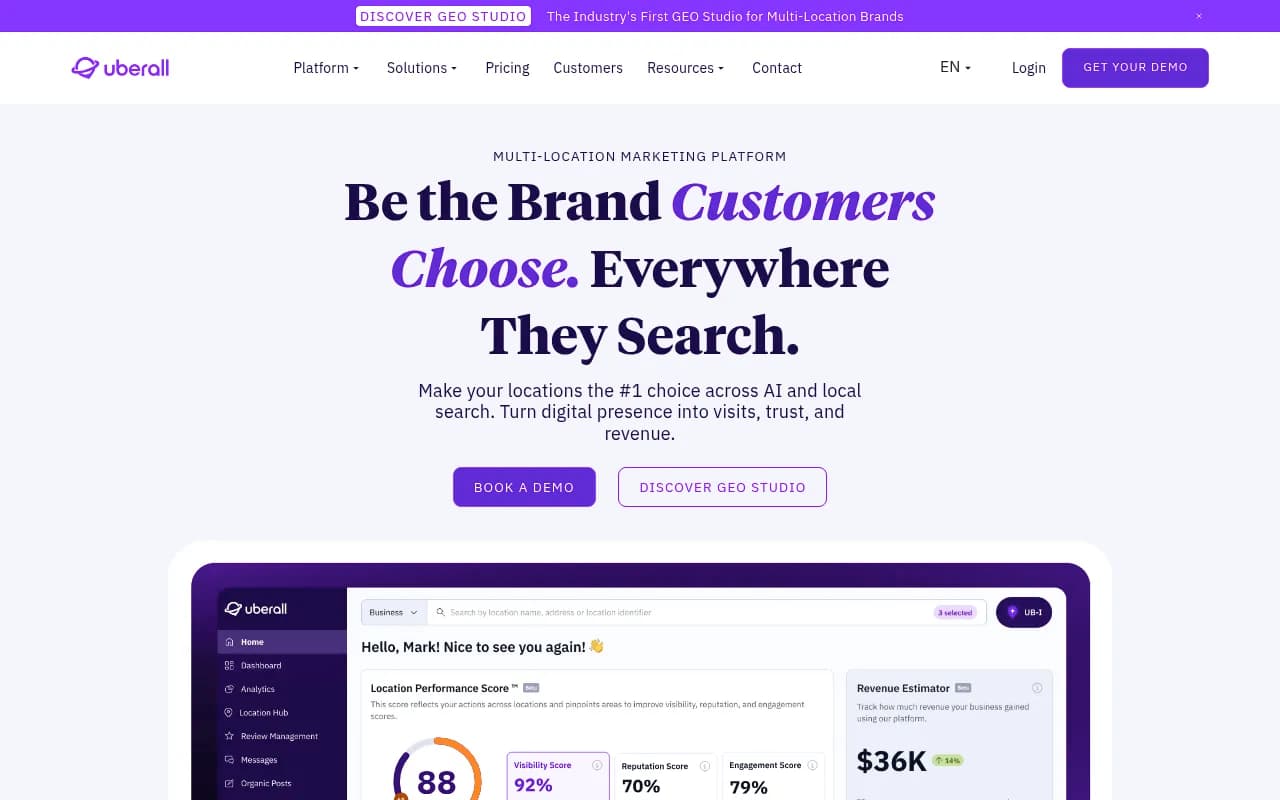
They are the right answer when your problem is dirty data across hundreds of locations. Their weakness is usually the measurement layer: they can tell you a listing is synced, less often which prompts mention you or which page an AI engine cited.
Reputation and review platforms
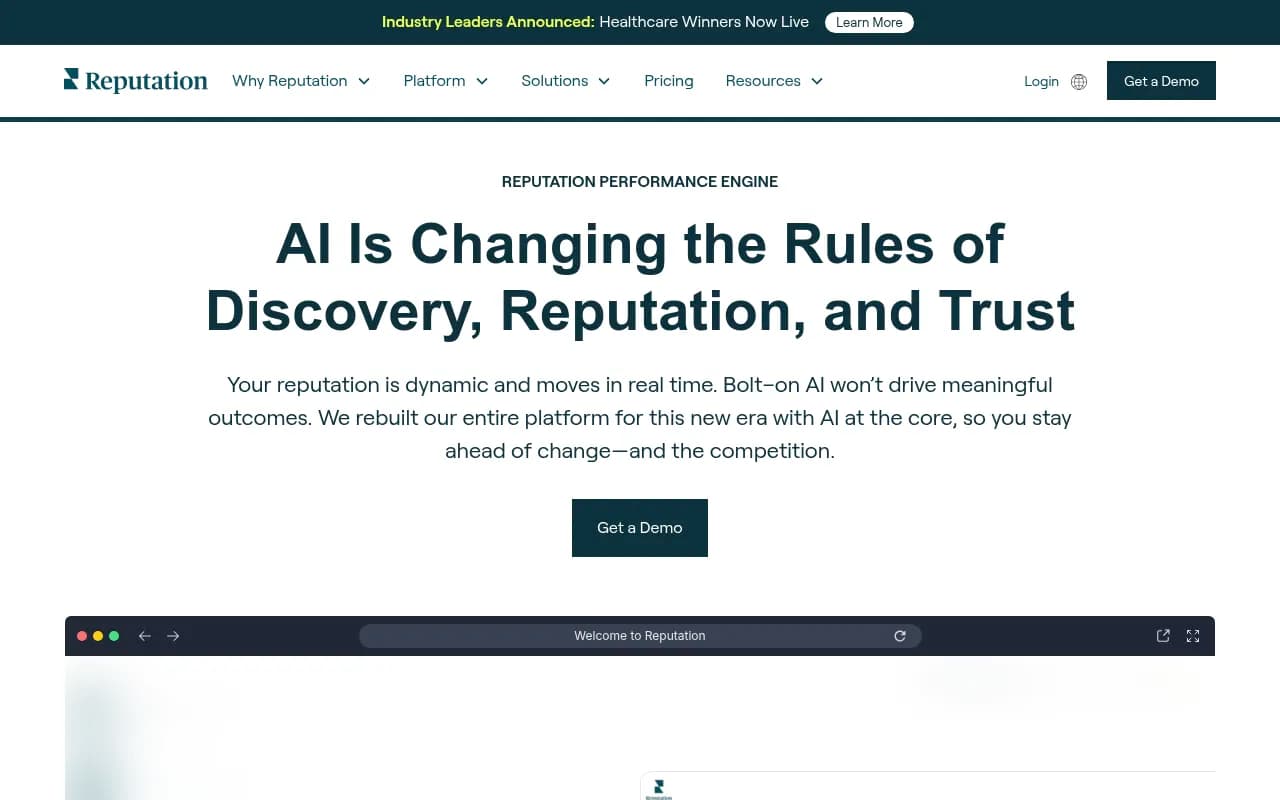
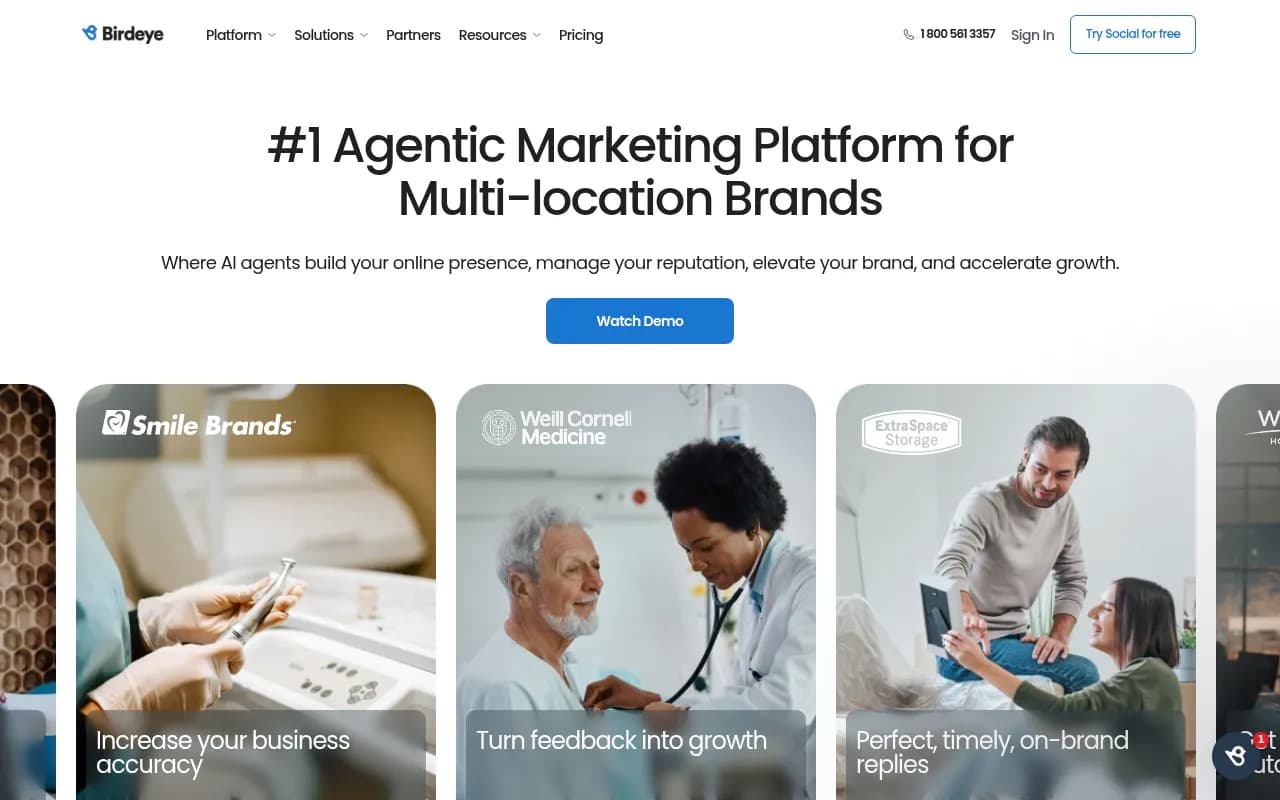
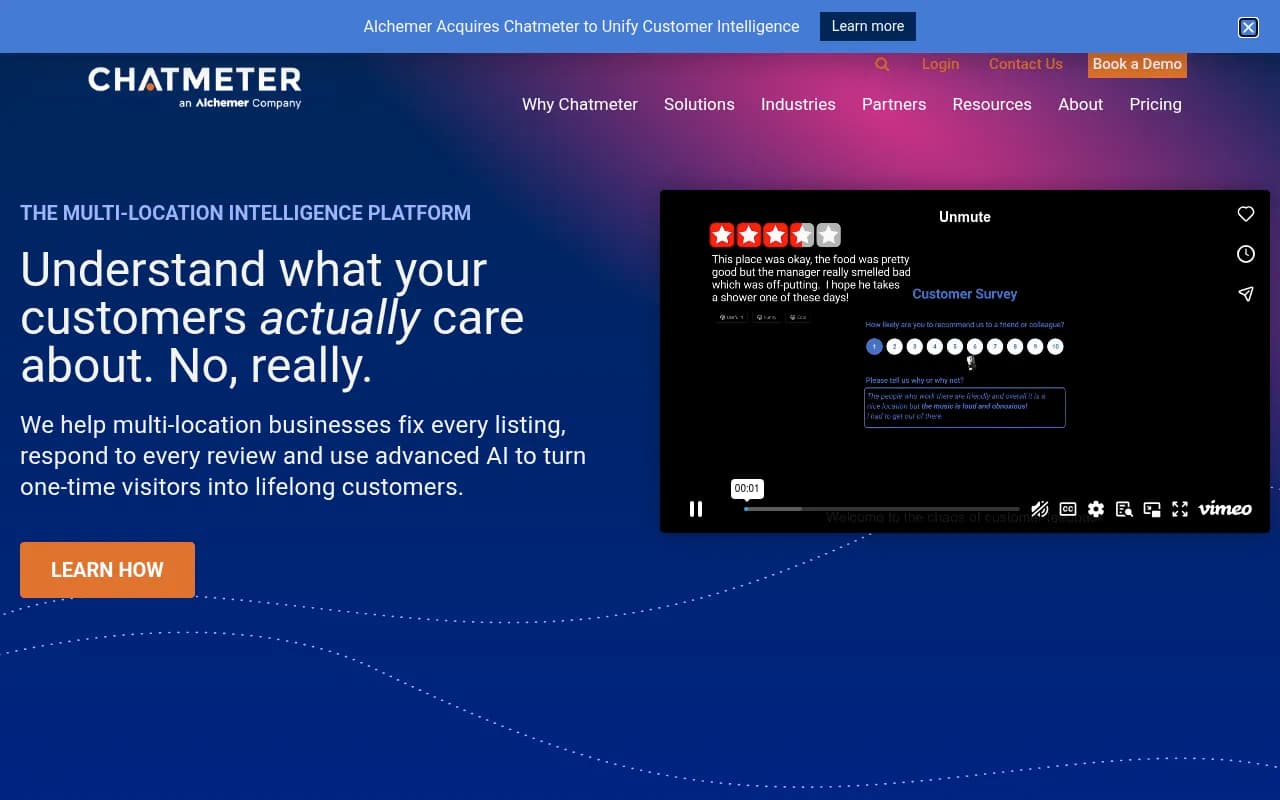
Reviews are the evidence layer AI engines lean on for local recommendations, and in Promptwatch Data's content-type report, reviews rise to 5.6% of citations for branded prompts, more than three times their share across all prompts. Reputation, Birdeye and Chatmeter handle collection, response and sentiment across locations.
Local marketing automation
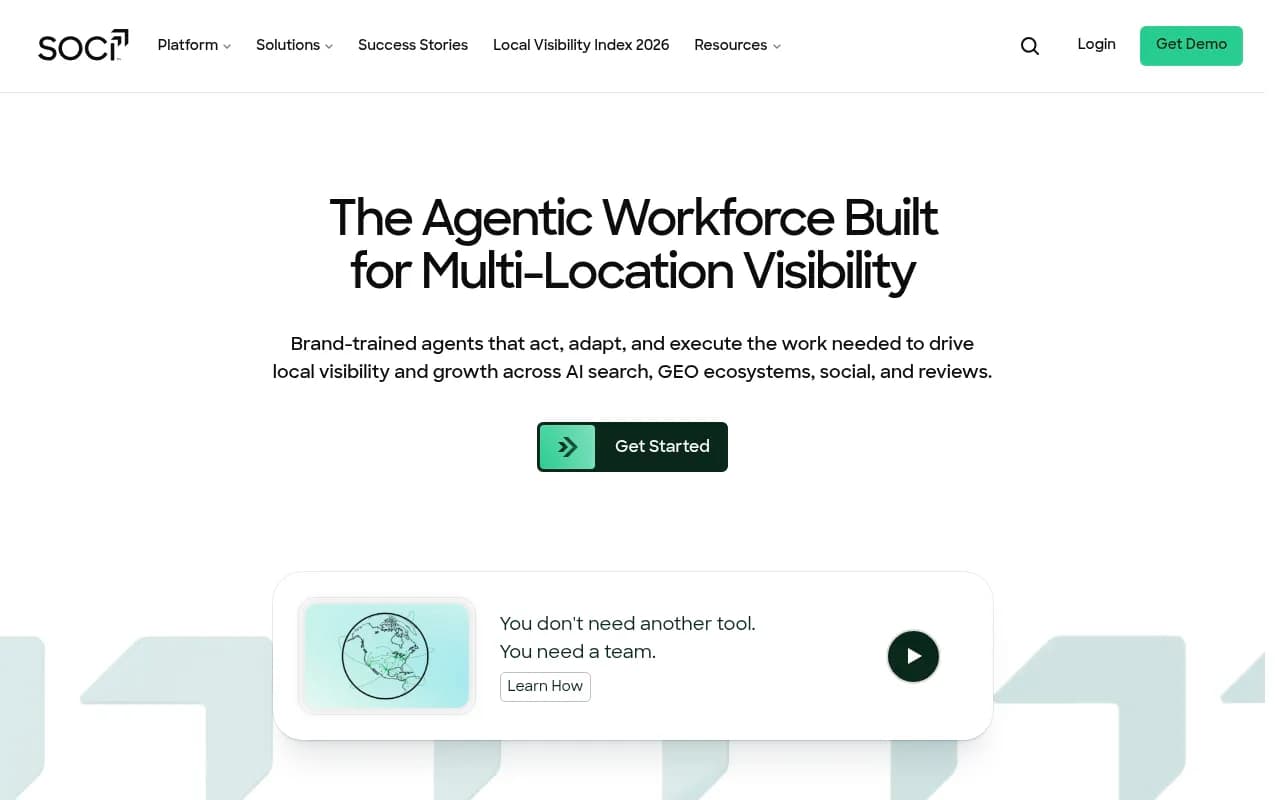
SOCi, Vendasta and Podium cover campaigns, social, messaging and lead conversion. Useful for the local execution loop, but check what they measure. Posting more is not the same as being cited more.
Local rank tracking
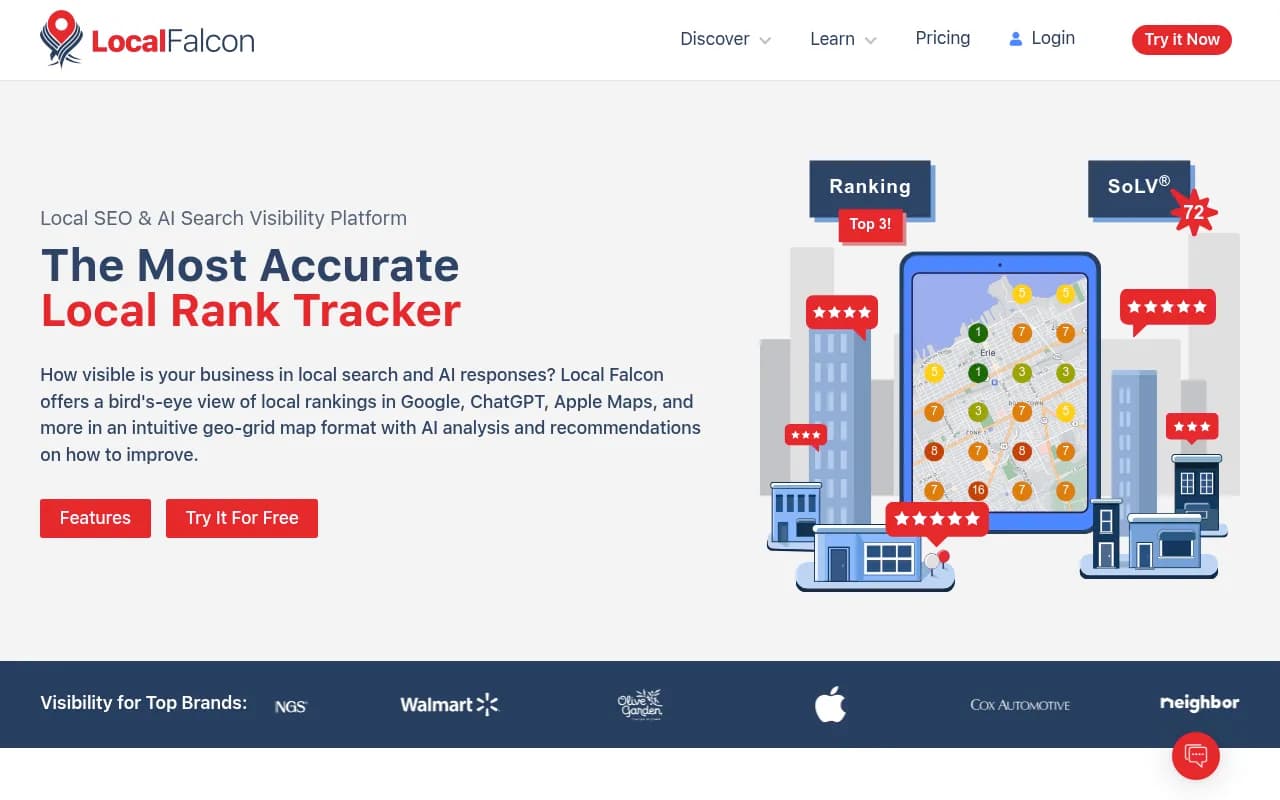
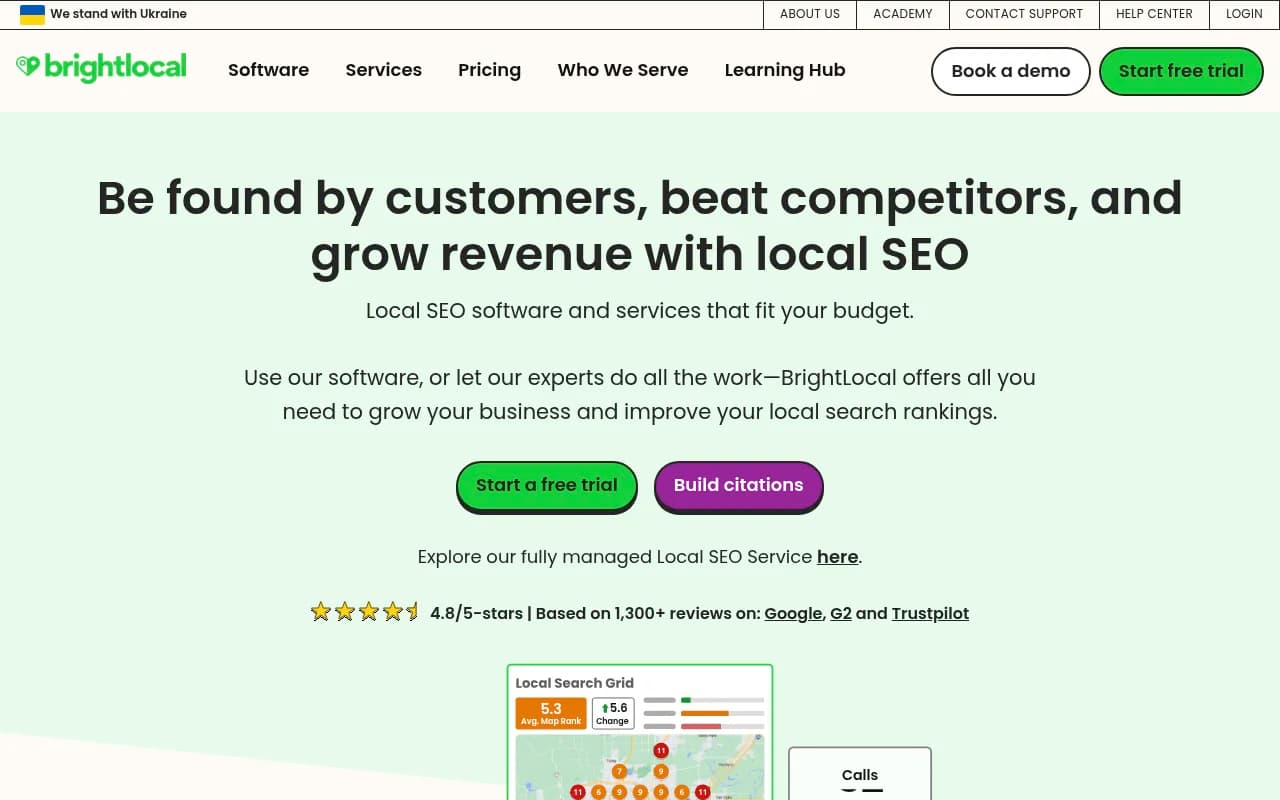
Local Falcon and Local Rank Tracker show map-pack visibility on a geo grid. BrightLocal covers local SEO reporting for multi-location businesses. These are worth keeping for the Google Maps side, but a geo grid tells you nothing about ChatGPT.
AI visibility and GEO platforms
This is where prompt tracking, citation analysis and content optimization sit. Promptwatch, Profound, Peec AI, Otterly.AI, AthenaHQ and others compete here. They differ a lot in whether they only monitor or also help you fix things.
Promptwatch is the one I would put first on a shortlist for franchises that want the full loop, because it connects tracking to action: it monitors the real interfaces of ChatGPT, Google AI Overviews, AI Mode, Gemini and Perplexity by country, and from the Business plan adds state and city tracking, which matters when "best dentist" gives different answers in Denver and Dallas. It also logs AI crawler visits to your site, so you can check whether location pages are being read at all, and its Action Board and Content Agent turn gaps into drafted, publishable pages.

Monitoring-only alternatives are cheaper and fine if you have a content team that already knows what to do with the data:
Profound


Otterly.AI

For a wider list, the directories at bestgeosoftware.com and ai-rank-tools.com track the field as it changes.
Comparison: what to expect from each category
| Category | Fixes data accuracy | Manages reviews | Tracks AI answers | Helps create location content | Typical gap |
|---|---|---|---|---|---|
| Listings platforms (Yext, Uberall, Rio SEO) | Strong | Partial | Limited | Limited | Weak citation and prompt evidence |
| Reputation suites (Reputation, Birdeye, Chatmeter) | Partial | Strong | Limited | No | Reviews without content strategy |
| Local marketing automation (SOCi, Podium) | Partial | Partial | Limited | Social and campaigns | Output not tied to AI citations |
| Local rank trackers (Local Falcon, BrightLocal) | No | Some | No | No | Maps only, no LLM view |
| AI visibility platforms (Promptwatch, Profound, Peec AI) | No | No | Strong | Varies, strongest in optimization platforms | Need a data layer underneath |
The honest conclusion is that a franchise usually pairs one data-layer tool with one AI visibility tool. Trying to stretch either one across both jobs is where budgets get wasted.
What to measure, and what Promptwatch Data says about it
It is tempting to judge a platform by its dashboard. Judge it by what it lets you change.
Citation by content type
In Promptwatch Data's content type report (Sep 28 to Oct 4, 2026), product pages were 22.4% of ChatGPT citations and landing pages 16.8%. For commercial prompts, the kind where someone compares options before buying, product pages hit 26.0% and landing pages 20.6%. For a service franchise, the equivalent pages are location pages and service pages. This is my inference rather than something the report states, but it means your platform should be able to break citations down by page type and prompt intent, not just count mentions.
Query fan-outs and indexation
On August 8, 2026, ChatGPT began using the site: operator at scale. Promptwatch Data shows these queries jumping from 0.37% to 16.8% of fan-outs in a day, and average fan-out queries per response rising from about 1.08 to 1.83. The report's advice is to treat your own domain as a retrieval surface and make sure key pages are crawlable and indexed.
For a franchise with hundreds of location pages, that is a real warning. Thin or broken location pages now cost you answers. Ask each vendor whether it shows fan-out queries, and whether it can tell you which location pages are not being crawled.
Where the citations actually come from
Source mix varies by industry. In Promptwatch Data's travel report, booking and search sites earn more than half of ChatGPT citations. In automotive, marketplaces like Autotrader and Cars.com outrank every car brand. If your category is similar, a good chunk of your "local visibility" lives on third-party sites, so your platform needs to track offsite sources, not only your domain.
Social is another trap. Promptwatch's October 2026 social citation data shows ChatGPT drew 0.46% of citations from social platforms while Google AI Overviews drew 12.2%. A franchise social calendar might matter a lot for AI Overviews and barely at all for ChatGPT, so you want model-level breakdowns, not one blended score.
A scorecard for the buying committee
Franchise purchases are committee purchases. The MyTime guide lays out how COOs, CFOs, CMOs, IT and franchisee-success teams each judge software differently, and the same logic applies here.
| Stakeholder | What they should check in a local GEO platform |
|---|---|
| CMO / marketing | Prompt coverage by location and market, citation and sentiment trends, tie to bookings or leads |
| Franchisor / COO | Location-level variance, approval workflows, onboarding for new franchisees |
| Finance | Per-location pricing, response or prompt caps, cost as location count grows |
| IT | SSO, role-based access, API or MCP access, CDN or log integration |
| Franchisee | Simple view of their own location, clear actions, minimal extra work |
| Franchise development | Ability to track prompts from prospective owners, not only customers |
Questions to ask on every demo
- Do you track the real consumer interface of ChatGPT, AI Overviews and Gemini, or API outputs? The answers can differ.
- Can I track prompts by city or state, and how many locations are included in the price?
- Show me which of my location pages were cited last month, and by which prompts.
- Can you show AI crawler activity on my site, including errors on location pages?
- How do you handle a franchisee changing a page? Is there an approval flow?
- What happens when a gap is found? Do I get a to-do list, a draft, or only a chart?
- How does reporting roll up from location to region to brand?
- Can you track Reddit, YouTube and review-site citations, or only my own domain?
- What is the contract term, and what does it cost at 50, 200 and 500 locations?
- How do you handle prompts from prospective franchise owners?
The fifth and sixth questions end more demos than anything else. Plenty of tools can show a chart. Fewer can say what to do on Monday.
Pricing and the per-location math
Pricing models are inconsistent across the field. Some charge per location, some per prompt, some per tracked response. Do the math at your actual scale before the demo, not after.
Promptwatch lists plans from a free Explore tier up through Essential at $95 per month, Professional at $245, Business at $579 with state and city tracking and the automated Content Agent, and agency tiers from $199 per month. Confirm current numbers on its pricing page. Listings and reputation suites typically price per location and often require a sales call, so ask for written numbers at 50, 200 and 500 locations.
A practical rule: do not let the AI visibility tool be priced per location unless you are certain the location count will stay small. Prompts and responses are what drive cost for tracking, so a flat prompt-based plan often scales better for a growing franchise.
A sensible stack by franchise size
Under 25 locations
Get the Google Business Profile and listings basics right first, using a lightweight tool such as Moz Local or Whitespark. Add an AI visibility tool with enough prompts to cover your top services across your main markets. Fix location pages by hand. You do not need an enterprise suite yet.
25 to 150 locations
This is where variance starts to hurt. Pair a listings and reviews platform (Yext, Uberall, Birdeye, Reputation) with an AI visibility platform that gives city-level tracking and a prioritized action list. Make one person at HQ own both.
150+ locations
You need governance, SSO, API access and reporting by region. Expect a procurement process. Run a pilot on two or three markets with the shortlisted tools, compare which one produces changes in citations, and pick on evidence. Also consider a managed service if your team cannot absorb the content volume. If you want an outside team to run it, 1001 SEO Media works on GEO and local SEO for multi-location brands and uses Promptwatch for AI visibility, though you should still run the same questions above past any agency.
Mistakes I see buyers make
Buying on mentions. A count of times your brand was named does not show whether a customer booked. Insist on page-level citations and, where possible, AI traffic and conversion data.
Cloning location pages. If 150 pages differ only by the city name, expect them to be treated as such. Add local details: neighborhoods, staff, local FAQs, real photos and reviews.
Ignoring franchise development. As Onely points out, a franchisor needs AI search for two sales. Don't buy a tool that can only see one.
Skipping the crawl check. If AI bots hit errors on your location pages, no amount of prompt tracking will fix that. Look for crawler logs or at least a strong site audit.
Treating the platform as the strategy. The tools measure and speed up the work. Someone still has to approve content, brief franchisees and decide which markets matter.
The short version
Start by deciding which layer is broken. If your data is a mess, buy a listings platform first. If your data is fine but you have no idea how AI engines describe you, buy an AI visibility platform. If both are true, buy one of each and make sure they do not overlap. Then pilot, measure citations on location pages, and expand only when the numbers move. For general software comparisons beyond GEO, surferstack.com is a useful place to keep browsing.