Key takeaways
- A content gap in 2026 isn't just a missing keyword — it's a missing answer, perspective, or topic that AI engines need but can't find on your site.
- The most valuable gaps to close are the ones where competitors are getting cited by ChatGPT, Perplexity, or Google AI Overviews and you're not.
- Effective gap analysis combines traditional competitor research with AI-specific prompt testing and citation tracking.
- Prioritize gaps by prompt volume, buyer intent, and how winnable the position is — not just by search volume.
- Closing gaps requires both creating new content and improving existing pages to be more structured, specific, and citable.
What "content gap analysis" means now
The classic definition still holds: a content gap analysis finds topics you haven't covered, or haven't covered well enough, so you can improve visibility. Semrush defines it as finding relevant topics a site hasn't covered or could cover better to improve visibility in both traditional search and AI platforms. That's accurate, but it undersells how much the scope has expanded.
In 2025 and into 2026, the gap that actually costs you traffic isn't always a missing blog post. It might be:
- A question your competitors answer in detail that you only mention in passing
- A prompt that ChatGPT users type every day where your brand never appears in the response
- A comparison article that exists on three competitor sites but not yours
- An existing page that's technically correct but too vague for an AI model to extract a clear, citable answer from
The shift to AI search has made one thing clear: AI engines don't just index your content, they evaluate whether it's specific enough to use. If your answer is generic, you won't get cited even if you technically cover the topic.
So the goal of a modern content gap analysis is to find where you're invisible in AI answers, understand why, and fix it.
Step 1: Define your prompt universe
Before you can find gaps, you need to know what prompts you're targeting. This is different from building a keyword list, though there's overlap.
Start by thinking about how your actual customers use AI search. They're not typing "best CRM software" into a search bar — they're asking ChatGPT "what's the best CRM for a 10-person sales team that uses HubSpot?" or asking Perplexity "compare Salesforce and HubSpot for mid-market companies."
To build your prompt universe:
- List the core questions your customers ask at each stage of the buyer journey (awareness, consideration, decision)
- Include comparison prompts ("X vs Y"), recommendation prompts ("best X for Y"), and how-to prompts
- Add brand-specific prompts ("what do people say about [your brand]?", "is [your brand] good for X?")
- Pull "People Also Ask" data from Google for your main topics — tools like AlsoAsked and AnswerThePublic are useful here
Aim for 50-150 prompts to start. You can always expand later, but you need enough coverage to spot patterns without drowning in data.
Step 2: Audit your current AI visibility
Now run your prompt list through the actual AI engines your customers use. This is where most traditional SEO tools fall short — they can tell you about Google rankings, but not whether you're appearing in ChatGPT or Perplexity responses.
For each prompt, you want to know:
- Does your brand appear in the AI-generated answer?
- Are you cited as a source?
- Which competitors are cited instead?
- What does the AI say about your topic area, and does your content match that framing?
You can do this manually for a small prompt set — just open ChatGPT, Perplexity, and Google AI Overviews and run through your prompts. Document what you find. It's tedious but revealing.
For anything at scale, you need a dedicated tool. Promptwatch tracks your visibility across 10 AI models simultaneously, shows you which prompts you appear in and which you don't, and surfaces exactly which competitors are getting cited in your place.

Other tools worth knowing about:
Semrush and Ahrefs both have AI visibility features, though they're primarily traditional SEO platforms with AI monitoring bolted on. They're useful for the keyword research side of gap analysis but less precise for prompt-level AI citation tracking.
Step 3: Identify competitor content that's getting cited
The most actionable gaps aren't abstract — they're specific pieces of competitor content that AI engines are actively using. Find those pages and you've found your targets.
For each prompt where a competitor appears and you don't, dig into:
- What page is being cited? (blog post, product page, comparison article, FAQ?)
- What format is it? (listicle, how-to guide, data-driven report, expert opinion?)
- What does it say that your content doesn't?
- Is it more specific, more structured, or more authoritative?
This is where tools like Screaming Frog or Ahrefs help you crawl competitor sites and understand their content structure.
Pay attention to format patterns. If every cited competitor page is a structured comparison table, that's a signal. If they're all long-form guides with specific data points, that tells you something about what the AI model is looking for. The Yotpo research on modern content gap analysis makes a useful point here: the gap is often not a missing keyword but a missing "information gain" — unique data or perspectives that AI models can't generate from consensus alone.
Step 4: Map gaps to your content inventory
Now compare what you found in steps 2 and 3 against what you actually have published.
Pull a full list of your existing content (a Screaming Frog crawl works, or export from your CMS). For each gap you identified, ask:
- Do we have any content on this topic at all?
- If yes, is it specific enough to be cited? Does it actually answer the prompt directly?
- Is it structured in a way AI can parse? (Clear headings, direct answers, factual claims)
- Is it current? Outdated content gets deprioritized by AI models.
You'll end up with three buckets:
- True gaps — topics you haven't covered at all. These need new content.
- Weak coverage — you have something, but it's too thin, too vague, or poorly structured to get cited. These need improvement.
- Format gaps — you cover the topic but in the wrong format. A wall of text when a comparison table would work better, for example.
The weak coverage bucket is often bigger than people expect, and it's frequently faster to fix than creating from scratch.
Step 5: Analyze the four types of gaps
Not all gaps are the same. Before you start creating content, it helps to categorize what kind of gap you're dealing with. The Yotpo framework identifies four types that are particularly relevant for AI search:
Semantic gaps — You cover a topic but miss related subtopics that AI models expect to see together. If you write about "email marketing" but never mention deliverability, segmentation, or automation, an AI model may not consider your content comprehensive enough to cite for broader email marketing prompts.
Intent gaps — Your content is aimed at the wrong stage of the buyer journey. A prompt like "how do I choose between X and Y?" is a consideration-stage question. If your only content on the topic is a top-of-funnel awareness piece, you'll miss it.
Format gaps — The content exists but in the wrong format. AI models tend to cite content that directly answers a question. If your answer is buried in paragraph 8 of a 3,000-word article with no clear structure, it won't get pulled.
Value gaps — Your content says the same thing as everyone else. AI models are increasingly good at identifying when content adds nothing new. Original data, specific examples, expert quotes, and proprietary insights are what create "information gain" — the quality that makes your content worth citing over a generic competitor piece.
Step 6: Prioritize by impact
You now have a list of gaps. You can't fix all of them at once, so you need to prioritize.
The right prioritization framework balances three factors:
Prompt volume and intent — How often are people asking this? Is it a high-intent prompt (someone ready to buy or decide) or informational? High-volume, high-intent prompts are worth more.
Winnability — How competitive is the current AI response? If five well-established brands are already being cited and they all have comprehensive, structured content, it's harder to break in. If the current AI answer is weak or cites only one source, there's an opening.
Business value — Does this prompt connect to your actual revenue? A prompt about a topic adjacent to your product is less valuable than one that directly leads to purchase decisions.
Tools like Promptwatch provide prompt difficulty scores and volume estimates that make this prioritization more data-driven. Without that, you're making educated guesses — which is fine to start, but you'll want to move to data-driven prioritization as your program matures.
For content research and brief building, MarketMuse and Frase are worth looking at:
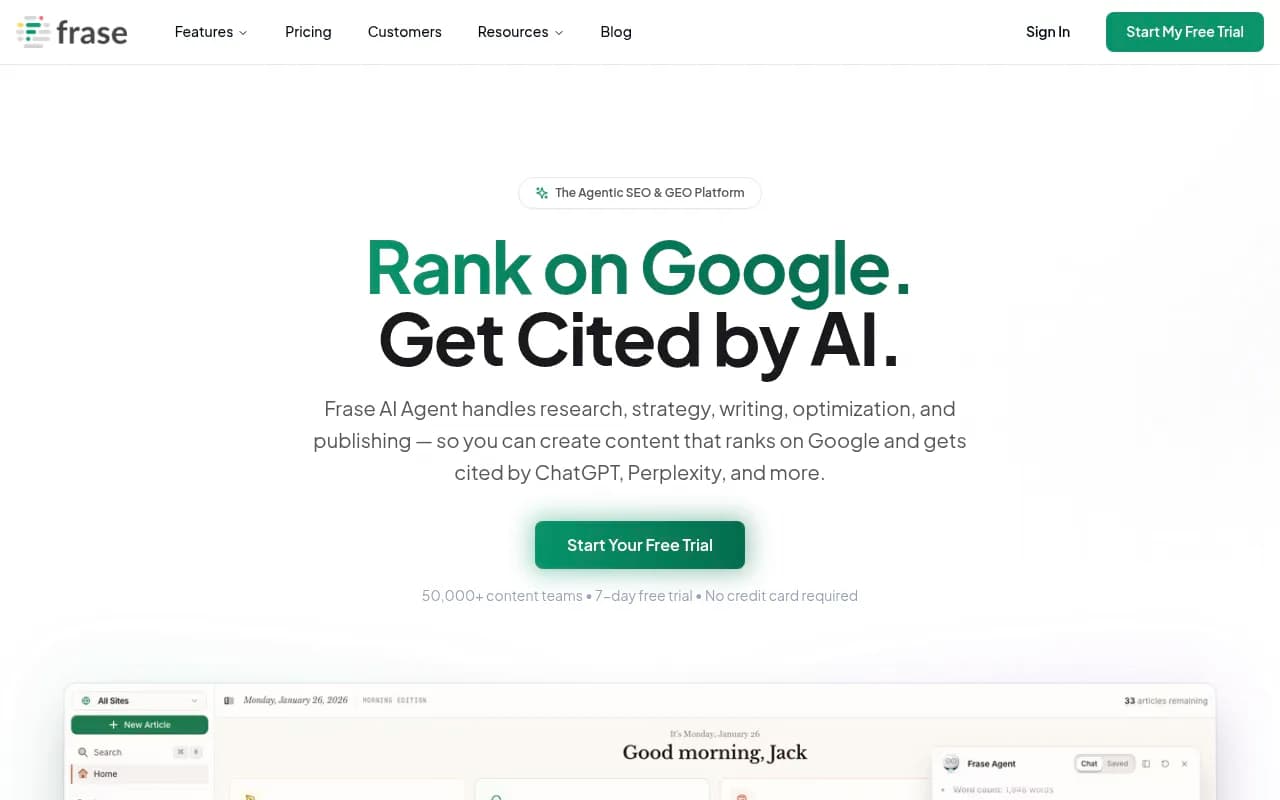
MarketMuse maps topic coverage and identifies semantic gaps at scale. Frase helps you build content briefs grounded in what's actually appearing in search results and AI answers for a given query.
Step 7: Create content that AI engines will actually cite
This is where most gap analysis guides stop being useful. They tell you to "create content" without explaining what makes content citable by AI.
Here's what actually works:
Answer the prompt directly, early. Don't bury the answer. If someone asks "what is X?", your first paragraph should answer that question clearly. AI models extract direct answers — they don't read your whole article looking for the good part.
Use structured formats. Headers, numbered lists, comparison tables, and definition blocks all help AI models parse your content. A well-structured H2 with a clear answer beneath it is much more likely to get cited than the same information in flowing prose.
Be specific. Vague claims don't get cited. "Our tool helps improve efficiency" is useless. "Our tool reduces reporting time from 4 hours to 20 minutes" is citable. Specific numbers, named examples, and concrete outcomes are what AI models extract.
Add something original. If your content says exactly what ten other pages say, there's no reason for an AI to cite you specifically. Original data, case studies, expert quotes, or a genuinely different angle give AI models a reason to include you.
Keep it current. AI models weight recency. An article last updated in 2022 will lose to a comparable article updated in 2026. Add a "last updated" date and actually update the content.
For content creation at scale, tools like Surfer SEO and Clearscope help you optimize content structure and semantic coverage:

Step 8: Track results and close the loop
Gap analysis isn't a one-time project. AI models update their training data and citation patterns constantly. A prompt where you're invisible today might be winnable in three months if you publish the right content. A prompt where you're cited today might slip if a competitor publishes something better.
Set up tracking for:
- Your visibility score across target prompts (are you appearing more or less often?)
- Which new pages are getting cited, and how quickly after publication
- Which competitor pages are gaining ground
- Traffic from AI referrals (Perplexity and some other AI engines pass referral data)
Google Search Console is still useful for tracking traditional search performance alongside AI visibility:
For AI-specific tracking, Promptwatch's page-level citation tracking shows exactly which of your pages are being cited, by which models, and how that changes over time. The crawler log feature shows when AI bots are visiting your pages — useful for understanding how quickly new content gets picked up.
Tool comparison: what to use for each stage
| Stage | Task | Tools to consider |
|---|---|---|
| Prompt discovery | Build your prompt universe | AlsoAsked, AnswerThePublic, Frase |
| AI visibility audit | See where you appear (and don't) | Promptwatch, Semrush AI Toolkit, Ahrefs |
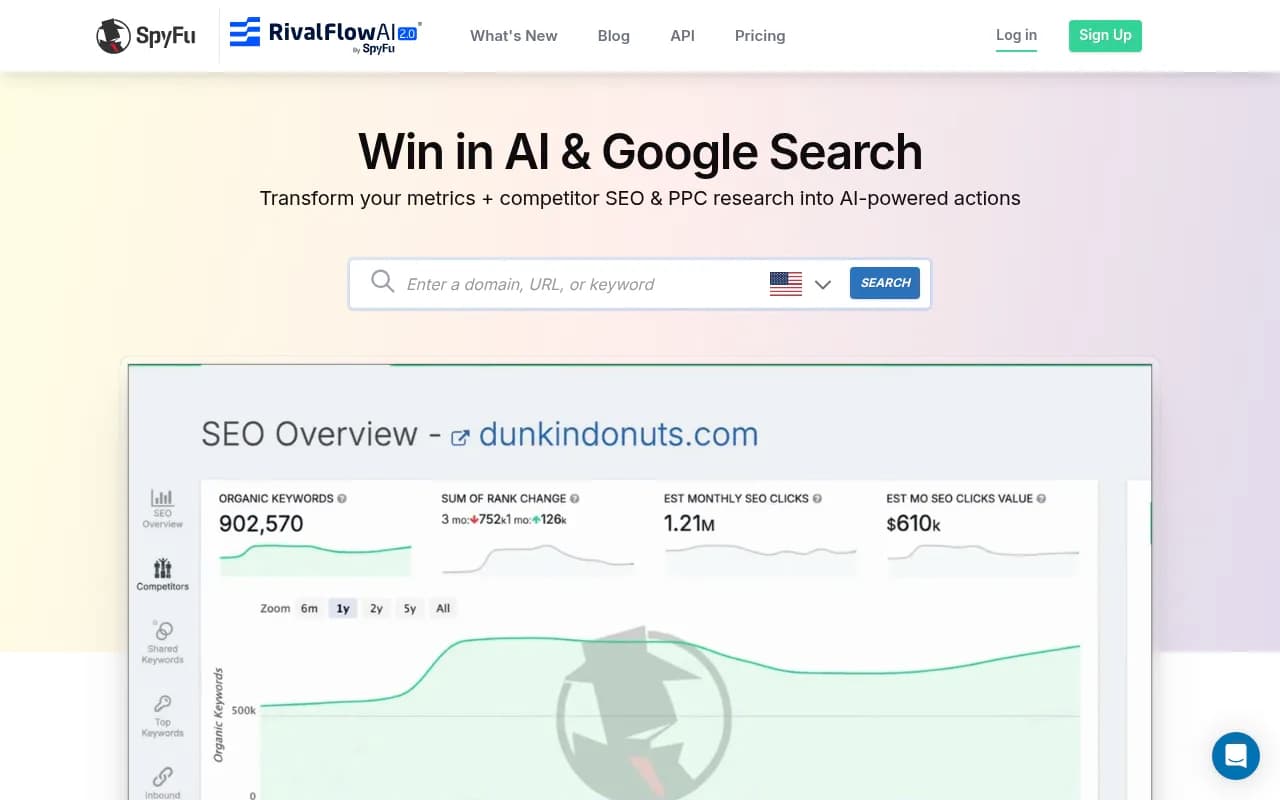
| Competitor analysis | Find what's getting cited | Screaming Frog, Ahrefs, SpyFu |
| Content inventory | Audit existing pages | Screaming Frog, Google Search Console |
| Topic modeling | Find semantic gaps | MarketMuse, Frase, Clearscope |
| Content creation | Write and optimize | Surfer SEO, Clearscope, Frase |
| Tracking | Monitor citation changes | Promptwatch, Google Search Console |
Common mistakes that waste your effort
Treating AI gap analysis like keyword gap analysis. The mechanics look similar but the output is different. A keyword gap tells you what to rank for in Google. An AI gap tells you what questions AI engines are answering without you. They overlap but they're not the same list.
Only looking at new content opportunities. In most cases, improving existing pages delivers faster results than publishing new ones. AI models already know your domain. A well-improved existing page can start getting cited within weeks. A brand new page needs to be discovered, crawled, and evaluated first.
Ignoring format. You can write the most comprehensive answer in the world and still not get cited if it's buried in an unstructured wall of text. Structure matters as much as substance.
Not tracking. Gap analysis without measurement is just guessing. You need to know whether your changes are working so you can double down on what's effective and stop doing what isn't.
Chasing every gap. A long list of gaps is not a strategy. Prioritize ruthlessly. Ten well-executed pieces of content that close high-value gaps will outperform fifty mediocre ones every time.
Putting it together
A practical AI content gap analysis in 2026 follows this sequence: build a prompt universe that reflects how your customers actually use AI search, audit your current visibility across those prompts, identify what competitor content is getting cited in your place, map those gaps against your existing content, categorize the gaps by type, prioritize by volume and winnability, create or improve content with AI citation in mind, and track what changes.
The whole process can be done manually for a small site with a focused prompt set. For anything at scale, you need tooling that tracks AI citations in real time and connects visibility data to content performance.
The brands winning in AI search right now aren't necessarily the ones with the most content. They're the ones whose content is specific enough, structured enough, and original enough to be worth citing. That's the gap worth closing.