Key takeaways
- Google AI Mode is transitioning from an opt-in tab to a default search experience, making AI visibility a business-critical priority in 2026.
- Most brands have strong traditional SEO health but near-zero AI visibility -- these are now two separate problems requiring separate strategies.
- The 30-day plan breaks into three phases: audit and baseline (days 1-10), content and structure fixes (days 11-20), and authority building and tracking (days 21-30).
- Google's own guidance boils AI visibility down to three things: unique content, helpful content, and being agent-ready.
- Tracking your progress requires dedicated AI visibility tools -- Google Search Console alone won't cut it.
Google AI Mode has quietly become one of the most consequential changes to search in over two decades. At Google I/O 2026, the company announced that AI Mode is no longer just a toggle users can switch on -- it's becoming a permanent tab, and there are strong signals it will eventually take over the main SERP entirely.
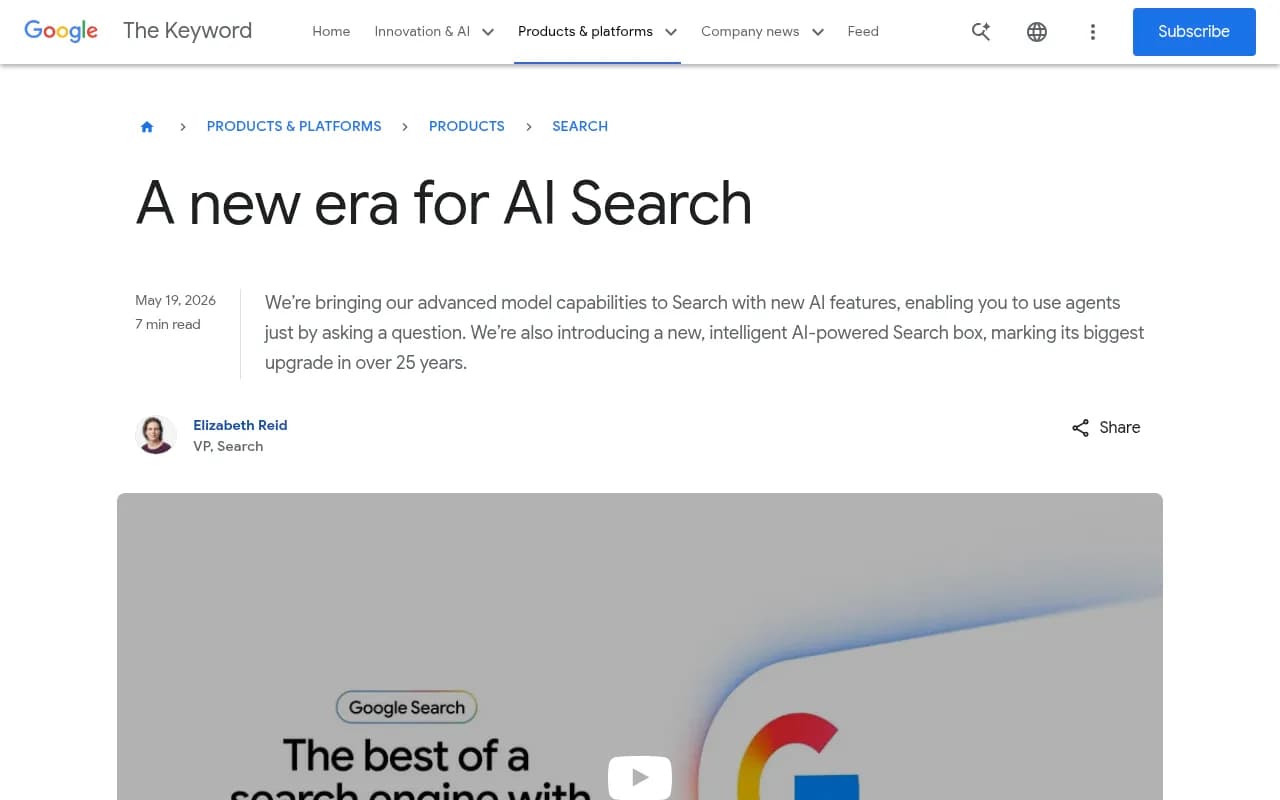
That means the question isn't whether AI Mode matters for your brand. It's whether you're visible in it at all.
Here's the uncomfortable reality: a site can have 90%+ technical SEO health and still score under 20 out of 100 on AI visibility. Those two numbers measure completely different things. Traditional SEO optimizes for crawlability, keyword rankings, and backlinks. AI Mode visibility depends on whether Google's models can synthesize your content into a useful answer -- and whether they trust you enough to cite you.
This 30-day plan is built around closing that gap. It's practical, sequenced, and grounded in what Google has actually told us about how AI Mode works.
Why Google AI Mode is different from traditional search
Before diving into tactics, it's worth understanding what you're actually optimizing for.
In traditional search, Google returns a list of links. The user clicks one. Your traffic goes up. In AI Mode, Google synthesizes an answer from multiple sources and presents it directly. If your content is cited, you get a source attribution link -- but the user may never click through. If you're not cited, you're invisible.
The sources Google AI Mode draws from aren't just the top-ranked pages. The model looks for content that directly answers the query, is structured clearly, and comes from sources it considers authoritative on that topic. A page that ranks #3 for a keyword might never appear in AI Mode if it's written for keyword density rather than genuine helpfulness.
Google's VP of Search, Elizabeth Reid, described the goal at I/O 2026 as "bringing together the best of a search engine with the best of AI." What that means in practice: AI Mode rewards content that would satisfy a knowledgeable friend, not content engineered to rank.
The three rules Google has publicly stated for AI visibility are:
- Unique content -- original data, perspectives, or expertise that can't be found elsewhere
- Helpful content -- content that actually answers the question, not content that circles around it
- Agent-ready -- structured so AI agents can parse, understand, and act on your information
These aren't new concepts. But they're weighted differently in AI Mode than in traditional search. Let's build a plan around them.
Phase 1: Audit and baseline (days 1-10)
Day 1-2: Run your AI Mode baseline
Open Google and run your 10-15 most important brand and category queries through AI Mode. Don't just check if you appear -- document:
- Which queries trigger AI Mode responses vs. standard results
- Which sources are cited in those responses
- Where your competitors appear and you don't
- What the AI's answer actually says (copy it into a doc)
This is your baseline. You can't measure improvement without it.
For tracking at scale, manual spot-checking won't hold up. Tools like Promptwatch track your brand's citation rate across Google AI Mode and other AI engines automatically, showing you which prompts you're winning and which you're losing to competitors.

Day 3-4: Technical audit for agent readiness
Google's AI agents need to be able to crawl, parse, and understand your content. Run a technical audit focused on:
- Crawlability: Check your robots.txt. Make sure you're not accidentally blocking Googlebot or AI-specific crawlers. Some sites block GPTBot or other AI crawlers without realizing it affects how Google's own systems index content.
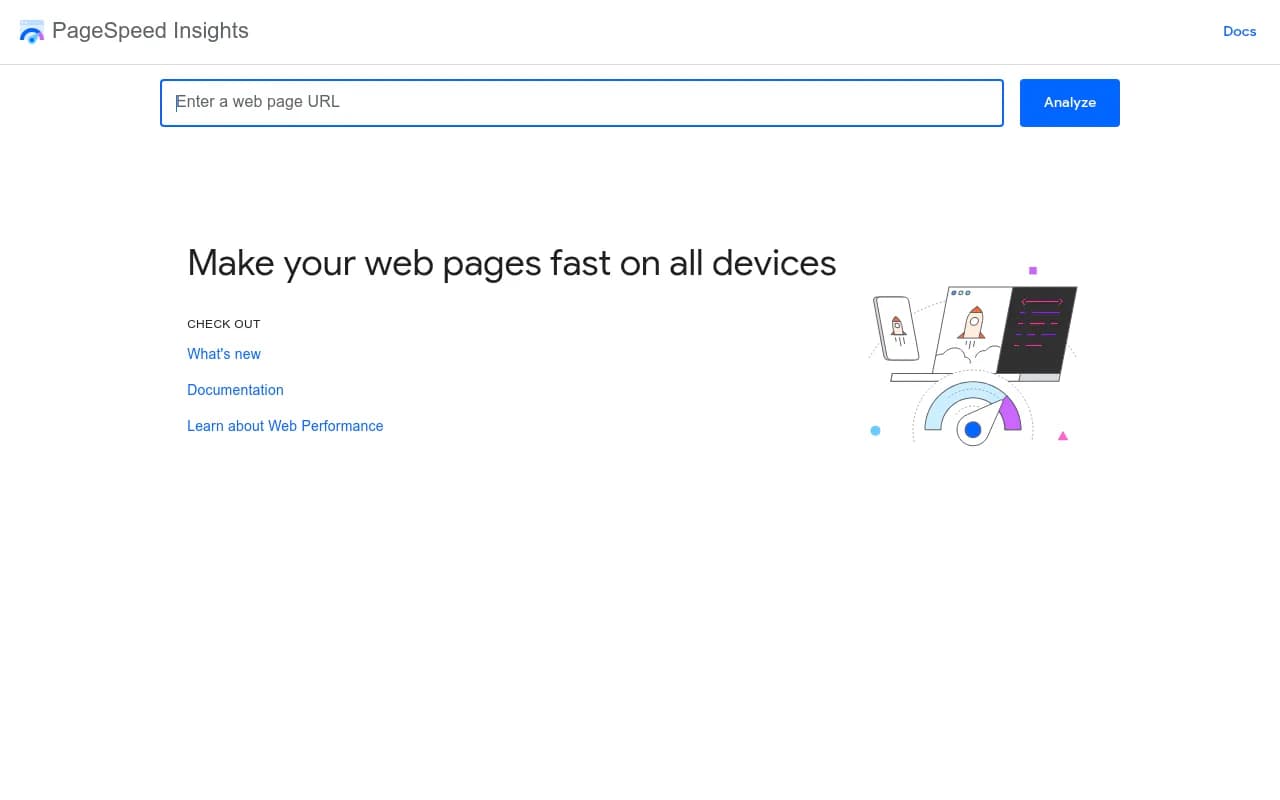
- Page speed: Slow pages get deprioritized. Run your key pages through Google PageSpeed Insights and fix anything scoring below 70 on mobile.
- Structured data: Schema markup helps AI models understand what your content is about. Check that your organization, article, FAQ, and product schemas are implemented correctly.
- JavaScript rendering: If your content is rendered client-side, AI crawlers may not see it. Consider server-side rendering or prerendering for important pages.
Day 5-7: Map your content against AI responses
Take the AI Mode responses you documented on days 1-2 and compare them to your existing content. For each query:
- Does your site have a page that directly addresses this question?
- If yes, does the page actually answer it clearly, or does it bury the answer in marketing copy?
- If no, which competitor is filling that gap?
This is your content gap map. It's the most important output of phase 1. Every gap you identify is a specific opportunity to create content that AI Mode can cite.
Tools like Promptwatch's Answer Gap Analysis automate this process at scale -- showing you exactly which prompts competitors are visible for that you're not, so you can prioritize by opportunity size rather than guessing.
Day 8-10: Competitor citation analysis
Look at who's consistently appearing in AI Mode for your target queries. For each competitor that shows up:
- What type of content is being cited (guides, comparison pages, data reports, FAQ pages)?
- What's the structure of that content?
- Are they being cited for their own site, or for third-party mentions (Reddit, review sites, industry publications)?
This tells you two things: what content formats AI Mode prefers in your niche, and where you need to build authority off your own site.
Phase 2: Content and structure fixes (days 11-20)
Day 11-13: Fix existing content first
Before creating anything new, fix what you have. Go through your top 20 pages and ask:
- Does this page have a clear, direct answer to the question it's targeting?
- Is the answer near the top of the page, or buried after 500 words of preamble?
- Does the page use clear headings that match how users would phrase questions?
- Is there original data, a unique perspective, or genuine expertise -- or is it a rewrite of what's already out there?
The most common problem isn't missing content -- it's content that technically covers a topic but never commits to an actual answer. AI Mode pulls direct, quotable statements. If your content hedges everything, it won't get cited.
Rewrite the introductions of your most important pages to lead with the answer. Add FAQ sections with direct Q&A format. Remove filler paragraphs that exist to hit word counts.

Day 14-16: Create content for your top gaps
Take the gap map from days 5-7 and prioritize the 3-5 highest-value gaps. For each one, create a page that:
- Directly answers the query in the first 100 words
- Uses clear H2/H3 structure that mirrors how users ask questions
- Includes original data, examples, or perspectives where possible
- Has a FAQ section at the bottom covering related questions
- Is at least 800 words but doesn't pad for length
The format matters. AI Mode tends to cite content that's structured like a reference document -- clear sections, direct answers, no fluff. Listicles, comparison tables, and step-by-step guides perform well because they're easy to parse.
Day 17-18: Add structured data and entity markup
If you haven't already, implement:
- FAQPage schema on any page with Q&A content
- HowTo schema on step-by-step guides
- Article schema with author information on editorial content
- Organization schema on your homepage with your brand's key attributes
Entity clarity matters for AI Mode. Google needs to understand what your brand is, what it does, and what topics it's authoritative on. The more clearly your structured data communicates this, the more likely AI Mode is to include you when those topics come up.
Day 19-20: Optimize for conversational queries
AI Mode is built for conversational, multi-part questions -- not short keyword searches. Review your content for how well it handles:
- "What is the best X for Y situation?"
- "How does X compare to Y?"
- "What should I consider when choosing X?"
- "Why does X happen and how do I fix it?"
These are the query patterns AI Mode handles most. If your content is optimized for "best X" but not "best X for small teams with limited budget," you're leaving citations on the table.
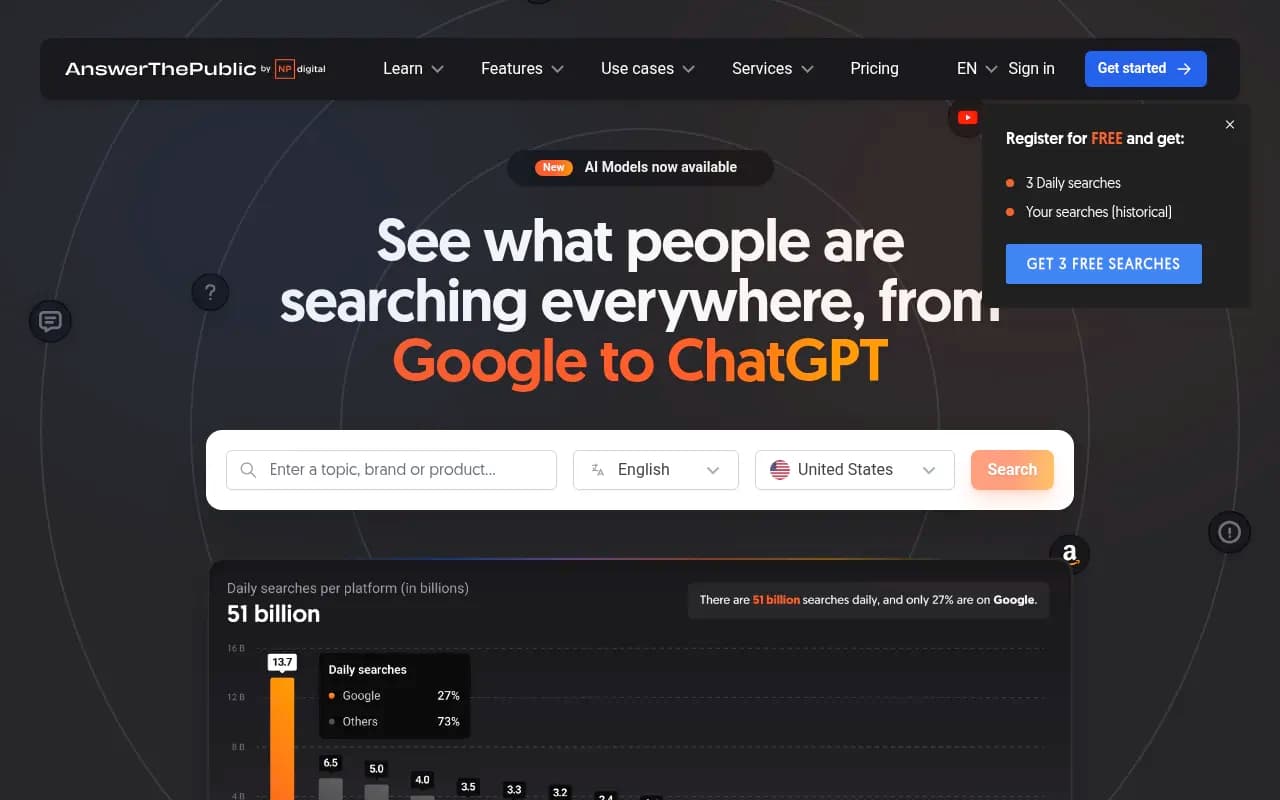
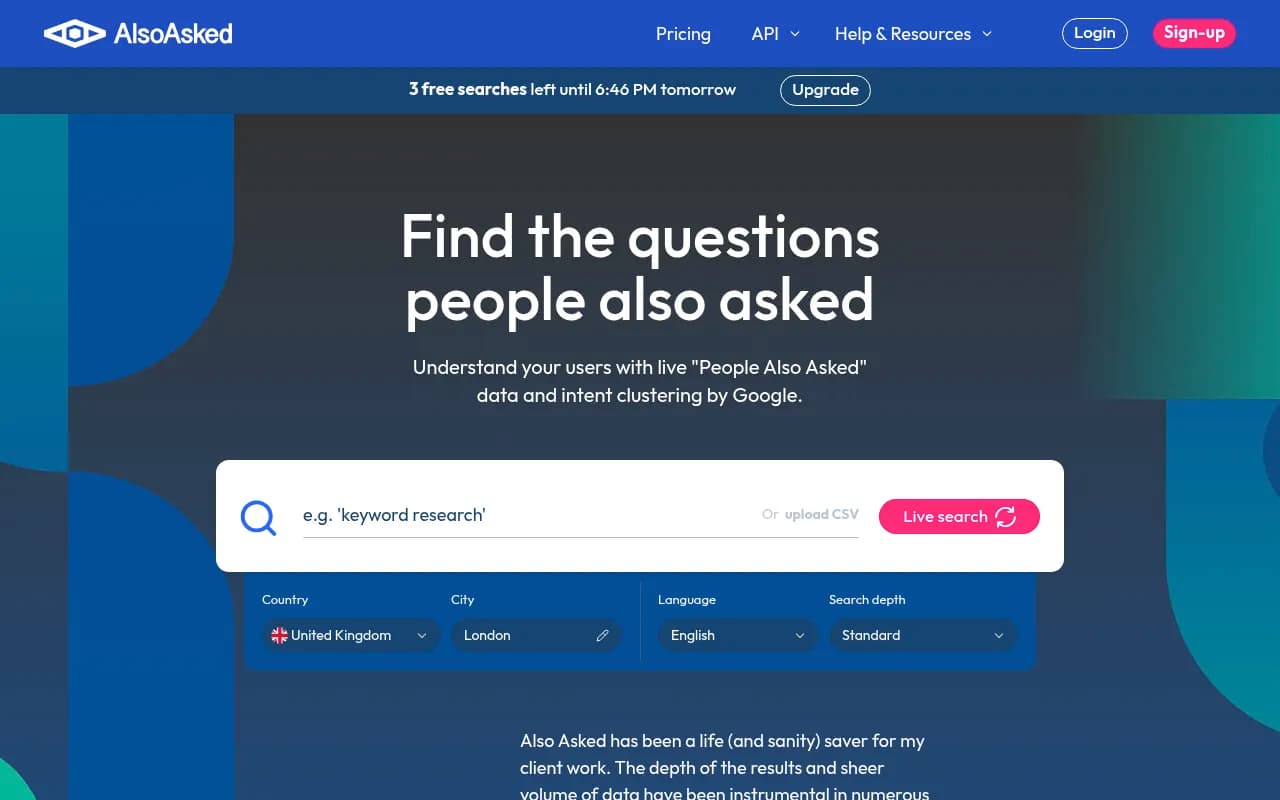
Use tools like AnswerThePublic or AlsoAsked to find the specific question variants your audience is asking, then make sure your content addresses them directly.
Phase 3: Authority building and tracking (days 21-30)
Day 21-23: Build off-site citations
AI Mode doesn't only pull from your own website. It synthesizes answers from across the web -- including Reddit threads, industry publications, review sites, and YouTube videos. If your brand is mentioned positively in those places, it increases the chance you'll appear in AI responses even when users don't specifically ask about you.
Practical actions:
- Identify 5-10 industry publications that AI Mode regularly cites in your niche and pitch them content or data
- Find Reddit threads where your category is discussed and contribute genuinely helpful answers (not promotional ones)
- Look for "best X" listicles that rank well and reach out to get included
- Create a data study or original research piece that journalists and bloggers will want to cite
The goal is to build a web of mentions that AI Mode can triangulate to establish your authority on a topic.
Day 24-26: Set up ongoing tracking
By now you've made changes. You need to know if they're working.
Set up tracking for:
- Your brand citation rate in Google AI Mode (how often you appear when relevant queries are run)
- Which specific pages are being cited
- Which competitors are gaining or losing ground
- How your visibility compares across different query types
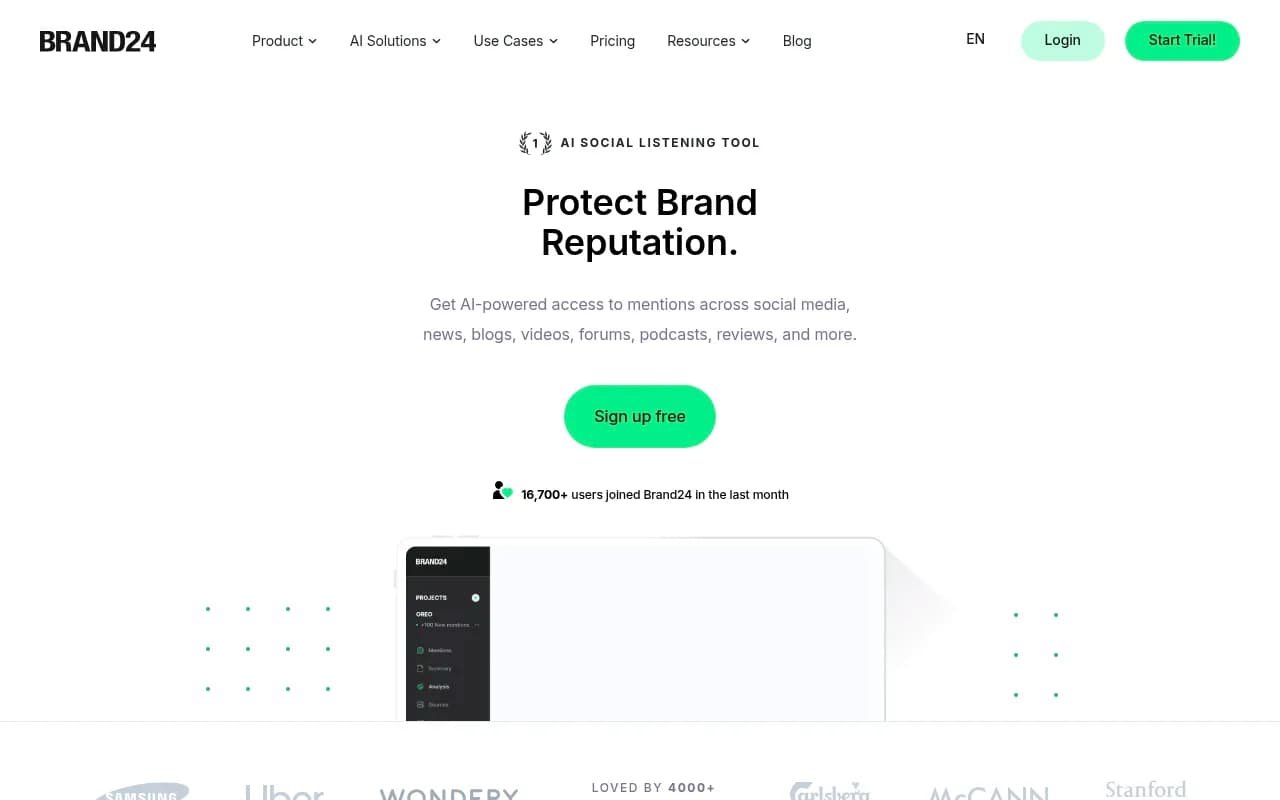
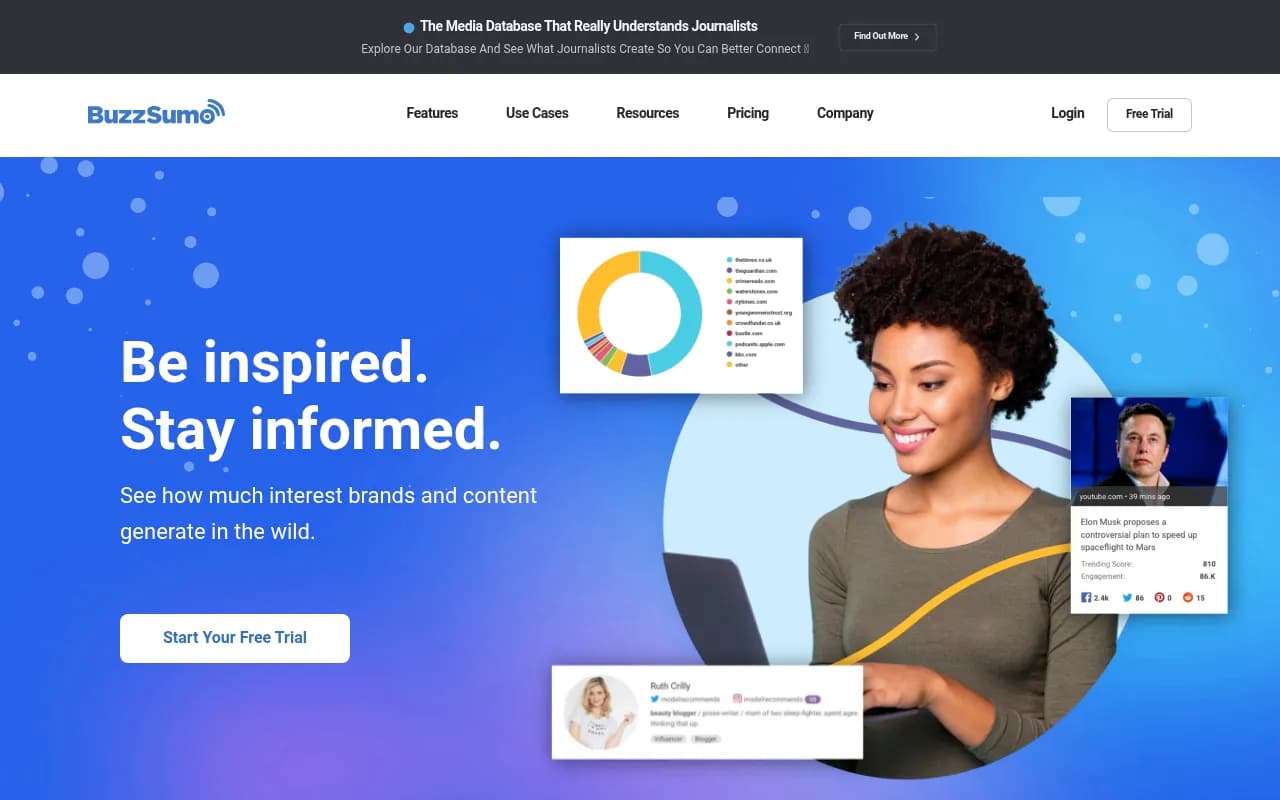
Manual tracking is fine for a handful of queries but breaks down quickly. Dedicated AI visibility platforms give you the scale to track hundreds of prompts across multiple AI engines simultaneously.
| Tool | AI Mode tracking | Content gap analysis | Crawler logs | Pricing |
|---|---|---|---|---|
| Promptwatch | Yes | Yes | Yes | From $99/mo |
| Semrush | Partial | No | No | From $139/mo |
| Otterly.AI | Yes | No | No | From $29/mo |
| Profound | Yes | No | No | Higher price point |
| Peec AI | Yes | No | No | From $49/mo |
Otterly.AI


Profound

Day 27-28: Check AI crawler access
One thing most brands miss: AI crawlers behave differently from Googlebot, and some sites accidentally block them. Check your server logs or use a crawler monitoring tool to verify that:
- Google's AI-related crawlers are accessing your key pages
- Pages aren't returning errors when crawled
- Crawl frequency is reasonable (very infrequent crawls suggest your content isn't being prioritized)
Promptwatch's AI Crawler Logs feature shows you exactly which AI crawlers are hitting your site, which pages they're reading, and when pages move from crawl to citation. This is the kind of data that tells you whether your content fixes are actually being picked up.
Day 29-30: Review, prioritize, and repeat
At the end of 30 days, run the same baseline queries you ran on days 1-2. Compare:
- Has your citation rate improved?
- Are you appearing for queries you weren't before?
- Which content pieces got cited?
- Which gaps still exist?
This review becomes the input for your next 30-day cycle. AI visibility isn't a one-time fix -- it's an ongoing optimization process. The brands that win in AI Mode are the ones that treat it like a channel with its own metrics, not an afterthought to their traditional SEO work.
The tools you'll actually use
Here's a practical toolkit for the full 30-day plan:
Tracking and gap analysis
Otterly.AI
Content optimization
Technical SEO and crawling
Off-site monitoring
What to expect
Thirty days is enough time to see early signals, not a complete transformation. Some brands see citation improvements within two to three weeks of publishing well-structured content. Others take longer, especially in competitive niches where established players have deep authority.
The most reliable predictor of success is specificity. Brands that try to rank for everything in AI Mode tend to rank for nothing. Brands that pick 10-15 high-value queries, create genuinely excellent content for those specific questions, and build off-site authority in those topic areas -- those are the brands that start appearing consistently.
Google AI Mode is rewarding the same thing good content has always rewarded: being the most useful answer to a specific question. The difference now is that "useful" is being evaluated by a language model, not a human clicking through search results. Structure your content for clarity, lead with answers, and back it up with authority signals. That's the whole game.