Key takeaways
- Google AI Overviews appear on roughly 30% of all searches in 2026, and that number keeps climbing -- traditional rankings alone won't protect your traffic.
- AI Overviews don't "rank" pages the way Google used to. They select content that is easy to extract, topically authoritative, and backed by strong E-E-A-T signals.
- The tactics that work are structural: direct answers up front, question-based headings, schema markup, and content that explains why, not just what.
- Monitoring your AI visibility -- which prompts trigger your citations, which pages get pulled, which competitors are beating you -- is now as important as tracking keyword rankings.
- Tools like Promptwatch can show you exactly where you're missing from AI-generated answers and help you close those gaps with content engineered for citation.
Why Google AI Overviews changed everything
Here's the uncomfortable truth: you can rank #1 on Google and still be invisible.
When an AI Overview appears above the organic results -- which happens on a growing share of searches -- users get their answer without scrolling past the summary. According to research tracked across 150+ campaigns by upGrowth, click-through rates on traditional blue links drop by 25-40% when an AI Overview is present. That traffic doesn't disappear. It goes to whoever Google's AI decided to cite.
So the question isn't "how do I rank higher?" anymore. It's "how do I become the source Google's AI trusts enough to quote?"
Those are very different problems with very different solutions.
How Google actually selects sources for AI Overviews
Before diving into tactics, it helps to understand the selection logic. Google's AI doesn't pick the "best" page in any traditional sense. It assembles answers from content that passes three filters:
- Extractability: Can the AI pull a clean, self-contained answer from your page without ambiguity? Low-entropy content -- clear sentences, defined structure -- wins here.
- Topical authority: Google favors sites with deep, interconnected coverage of a subject over isolated posts that happen to rank for one keyword.
- Trust signals: E-E-A-T (Experience, Expertise, Authoritativeness, Trustworthiness) alignment and factual consistency with Google's knowledge graph are the final gatekeepers.
Notice what's not on that list: keyword density, domain authority alone, or raw traffic. Those still matter as baseline signals, but they don't determine whether your content gets cited. Structure and trust do.
10 tactics that actually work in 2026
1. Lead every section with a direct answer
This is the single highest-leverage change most sites can make. Google's AI extracts passages, not pages. If your answer to a question is buried in paragraph four after two paragraphs of context-setting, the AI will often skip your page entirely and pull from a competitor who answered in the first sentence.
The pattern that works: state the answer in the first one or two sentences of each section, then expand with context, evidence, and nuance. Think of it like an inverted pyramid -- conclusion first, reasoning second.
For example, instead of:
"There are many factors to consider when choosing a CRM. Businesses have different needs depending on their size, industry, and sales process. With that in mind, here's what to look for..."
Write:
"The best CRM for most small businesses is HubSpot, because it combines a free tier with strong automation features. Here's what to consider as you grow..."
The second version is extractable. The first one isn't.
2. Use question-based H2 headings
Google AI Overviews are triggered by questions. Your headings should match the way people actually ask those questions in search.
Instead of "Content Structure Best Practices," write "What content structure does Google AI prefer?" Instead of "Schema Markup Overview," write "Does schema markup help with AI Overviews?"
This isn't just about keyword matching. It signals to Google's AI that your page is organized around answering specific queries -- which is exactly what the AI is trying to do when it constructs an Overview.
Tools like AlsoAsked and AnswerThePublic are genuinely useful here for finding the exact question phrasing real users type.
3. Add structured data (schema markup)
Schema markup doesn't guarantee AI Overview inclusion, but it makes your content significantly easier for Google's systems to parse. The most relevant schema types for AI Overview optimization in 2026:
FAQPage-- for pages structured around questions and answersHowTo-- for step-by-step guidesArticlewithauthoranddatePublished-- signals freshness and authorshipOrganizationwithsameAslinks -- connects your brand to the knowledge graph
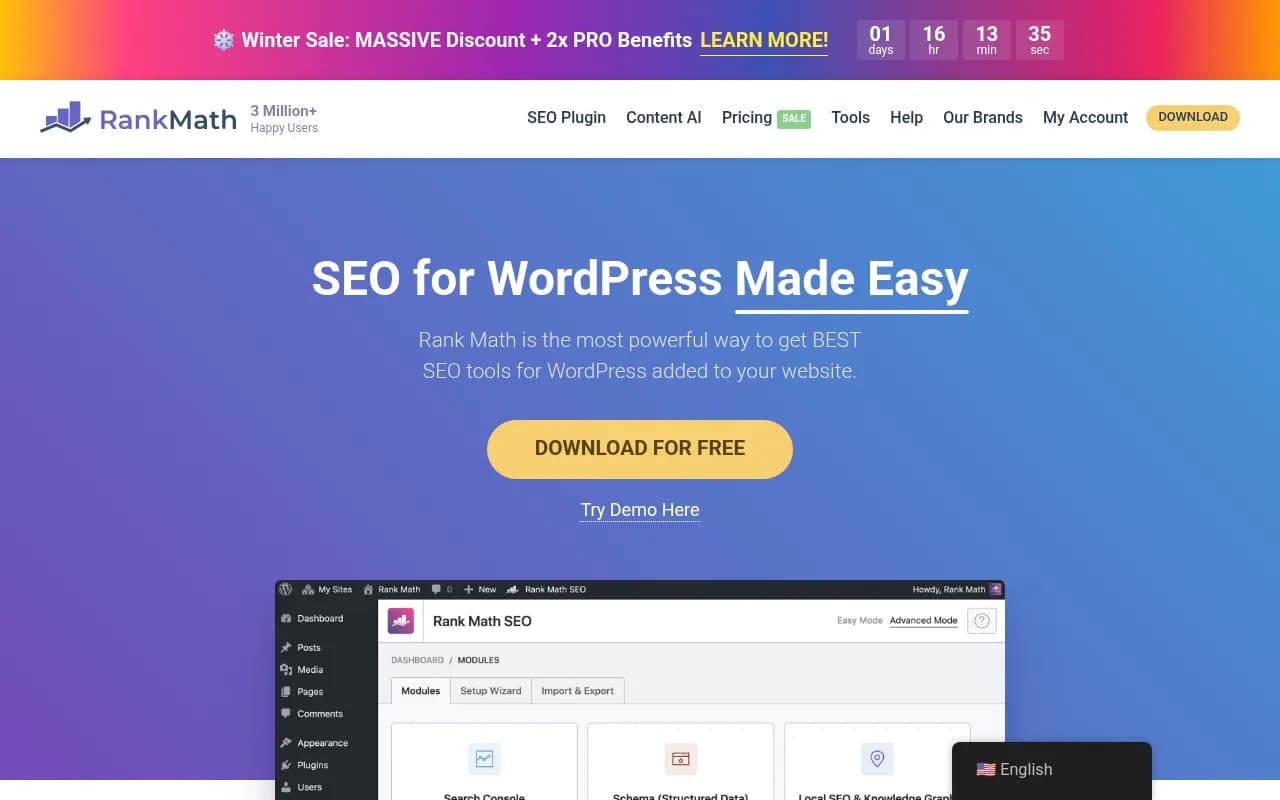
If you're on WordPress, plugins like Yoast SEO and Rank Math handle most of this without touching code.
4. Build topical authority, not just individual pages
A single well-optimized page rarely earns consistent AI Overview citations. What works is having a cluster of interconnected content that covers a topic from multiple angles -- the main concept, related sub-topics, common questions, comparisons, and use cases.
Google's AI treats your site as a knowledge source, not a collection of individual documents. If you have one good page on "email marketing automation" but nothing on segmentation, deliverability, A/B testing, or list hygiene, you look like a surface-level source. A site with 15 well-linked pages on those topics looks like an authority.
This is where content planning tools earn their keep. Platforms like MarketMuse and Clearscope can map your topical coverage gaps and show you what you're missing relative to the sites that are already being cited.

5. Demonstrate real E-E-A-T signals
Google added the first "E" (Experience) to E-E-A-T in 2022, and it matters more than ever for AI Overview selection. The AI is trained to prefer content that shows genuine first-hand knowledge, not just aggregated information.
Concrete signals that help:
- Named authors with credentials, bios, and links to other published work
- Original data, case studies, or research (even small-scale internal studies)
- Specific examples drawn from real experience, not generic advice
- Citations to credible external sources (linking out to authoritative sources actually helps)
- Regular content updates with visible "last updated" dates
The Reddit thread on this topic makes a good point: AI prefers content that explains the why, not just the what. "Use H2 headings" is the what. "Use H2 headings because Google's AI extracts passages at the section level, and headings help it identify where each answer begins" is the why. The second version demonstrates understanding. The first just states a rule.
6. Optimize for featured snippets first
There's a strong correlation between featured snippet eligibility and AI Overview inclusion. This makes sense -- both require the same thing: a clean, extractable answer to a specific question.
The formatting that earns featured snippets also earns AI citations:
- Short definition paragraphs (40-60 words) for "what is" queries
- Numbered lists for "how to" queries
- Comparison tables for "X vs Y" queries
- Bullet lists for "types of" or "examples of" queries
If you're not already tracking your featured snippet performance, Google Search Console shows which queries you're appearing for in rich results -- a useful proxy for AI Overview readiness.
7. Keep content fresh and update it visibly
Google's AI has a bias toward recent content, especially for topics that evolve quickly. A page last updated in 2023 will often lose out to a comparable page updated in early 2026, even if the older page has more backlinks.
"Fresh" doesn't mean rewriting everything. It means:
- Updating statistics and data points when newer figures are available
- Adding sections that address questions that have emerged since the original publish date
- Changing the "last updated" date (only when you've made substantive changes -- Google can tell the difference)
- Refreshing examples and case studies to reflect current tools and practices
A tool like ContentKing can monitor your pages for content drift and alert you when competitors update pages that are outranking you.
8. Make your site technically accessible to AI crawlers
This one gets overlooked, but it's foundational. If Google's AI crawlers can't read your pages cleanly, none of the content optimization matters.
Key technical checks:
- Ensure your
robots.txtisn't accidentally blocking Googlebot or AI crawlers - Avoid putting critical content inside JavaScript that requires rendering (or use server-side rendering)
- Keep page load times fast -- slow pages get crawled less frequently
- Use clean URL structures and proper canonical tags
- Make sure your sitemap is up to date and submitted in Search Console
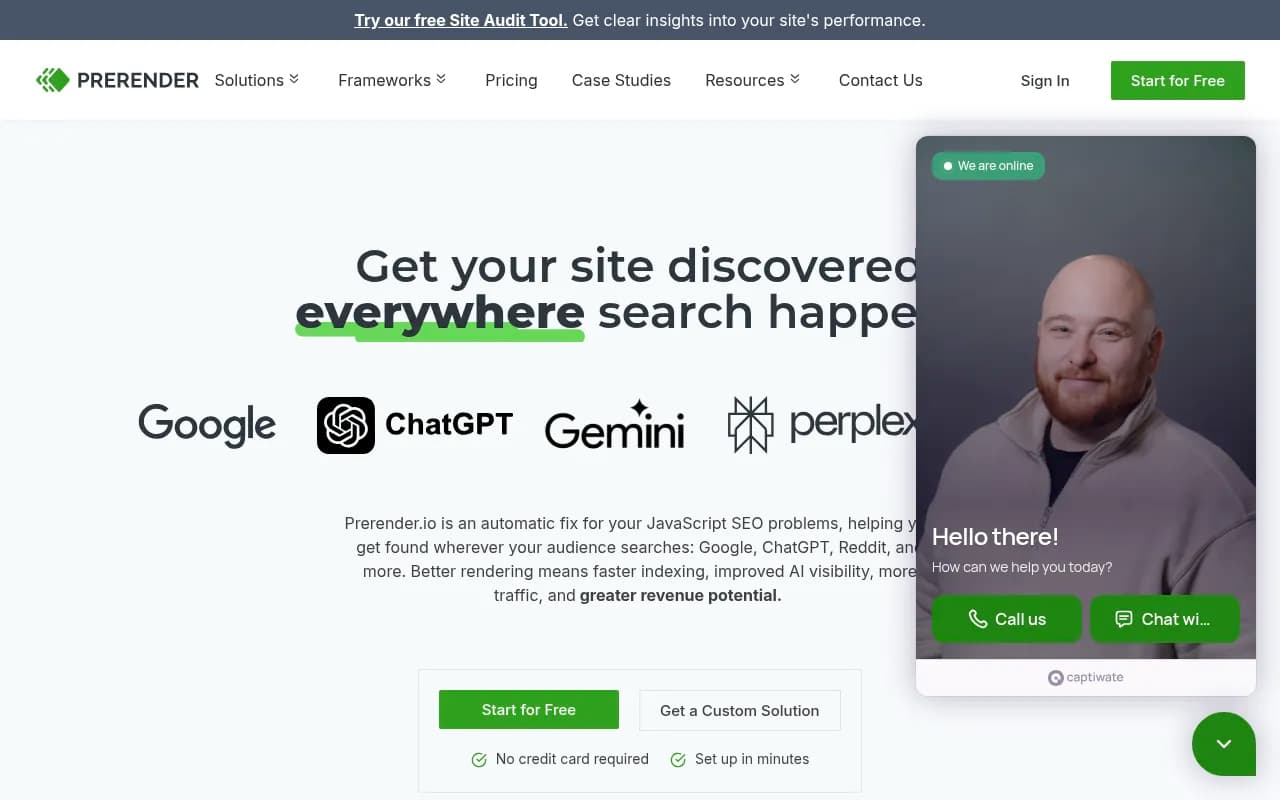
For JavaScript-heavy sites, Prerender.io and similar tools can serve pre-rendered HTML to crawlers, solving the rendering problem without changing your front-end architecture.
9. Target informational and consideration-stage queries
AI Overviews appear most frequently on informational queries -- "how to," "what is," "best way to," "difference between." They're less common on pure transactional queries like "buy X" or branded searches.
This means your AI Overview strategy should focus on the top and middle of your funnel. Product pages and pricing pages rarely get cited. Guides, explainers, comparisons, and tutorials do.
Map your content to the query types where AI Overviews actually appear, and prioritize creating content for those. A comparison like "HubSpot vs Salesforce for small teams" is far more likely to earn an AI Overview citation than a product landing page.
10. Monitor your AI visibility and close the gaps
Here's where most teams fall short. They implement tactics, then have no idea whether they're working -- because they're still measuring success with traditional rank tracking tools that don't show AI Overview performance.
You need to know: Which prompts trigger AI Overviews where your competitors appear but you don't? Which of your pages are currently being cited? When you publish new content, does it start getting pulled into AI answers?
Promptwatch is built specifically for this. It tracks your visibility across Google AI Overviews (and nine other AI models), shows you which prompts your competitors are winning that you're missing, and has a built-in content generation tool that creates articles engineered to earn citations -- not generic SEO filler. The Answer Gap Analysis feature is particularly useful: it shows you the specific questions AI models are answering from competitor content, so you know exactly what to write next.

For teams that want lighter-weight monitoring, Otterly.AI and Peec AI track AI Overview appearances without the full optimization layer.
Otterly.AI


Comparison: what actually moves the needle vs. what doesn't
| Tactic | Impact on AI Overview visibility | Effort |
|---|---|---|
| Direct answers in first 1-2 sentences | High | Low |
| Question-based H2 headings | High | Low |
| Schema markup (FAQ, HowTo, Article) | Medium-High | Medium |
| Topical authority / content clusters | High | High |
| Named authors + E-E-A-T signals | Medium-High | Medium |
| Featured snippet optimization | High | Medium |
| Regular content freshness updates | Medium | Low-Medium |
| Technical crawlability fixes | Medium (foundational) | Varies |
| Targeting informational query types | High | Low (strategy) |
| AI visibility monitoring + gap analysis | High (enables everything else) | Low-Medium |
| Keyword density optimization | Low | Low |
| Building more backlinks (alone) | Low-Medium | High |
| Publishing more content without structure | Low | High |
The pattern is clear: structural and strategic changes outperform volume-based tactics. Writing 50 more blog posts in the old format won't help. Restructuring your existing content so it's extractable, and filling the specific gaps your competitors are winning, will.
A note on what doesn't work anymore
A few things that used to move the needle in traditional SEO but have minimal effect on AI Overview visibility:
- Keyword stuffing or exact-match keyword repetition
- Thin content padded to hit a word count target
- Generic "ultimate guides" that cover a topic broadly without depth
- Content that defines terms without explaining context, reasons, or outcomes
- Pages with no clear author or publication date
The AI is essentially asking: "Would I trust this source if I were a knowledgeable person researching this topic?" If the honest answer is "probably not," the page won't get cited regardless of its traditional ranking.
Where to start if you're doing this from scratch
If your site has no AI Overview presence right now, the fastest path forward is:
- Run an audit of your top 20-30 pages and check whether each one leads with a direct answer to the query it targets.
- Add FAQ schema to your most important informational pages.
- Identify three or four topics where you have multiple pages and link them into a proper content cluster.
- Pick one high-value informational query where a competitor is appearing in AI Overviews and you're not, then write a better-structured piece targeting that exact question.
- Set up monitoring so you can see when your citations start appearing.
That last step matters more than most teams realize. Without visibility data, you're optimizing blind. You won't know which changes worked, which pages are getting cited, or where the next opportunity is.
The shift from traditional SEO to AI search visibility isn't a future trend -- it's already the reality for a significant portion of search traffic in 2026. The brands that adapt their content strategy now will have a compounding advantage as AI Overviews expand further into commercial and transactional queries over the next 12-18 months.