Key takeaways
- Google AI Overviews now appear on roughly 48% of tracked queries, up from 31% in early 2025. When one triggers, organic CTR for non-cited results drops by up to 61%.
- Google Search Console doesn't separate AI Overview data from standard organic results, so you need dedicated tools or manual tracking to measure competitor citations.
- The core metric to track is AI Share of Voice: how often your brand gets cited vs. your competitors across the queries that matter to you.
- Tracking competitor citations is only useful if you act on the gaps. The best workflows close the loop between finding gaps and publishing content that fills them.
- Several tools now handle this automatically, ranging from lightweight monitors to full optimization platforms.
Why competitor AI Overview citations matter more than you think
Here's the situation in 2026: Google AI Overviews appear on nearly half of all search queries. When one shows up, users are far less likely to click anything below it. Pew Research found that traditional result click rates drop to 8% when an AI summary is present, compared to 15% without one.
But there's a flip side. If your brand gets cited inside that AI Overview, you actually gain visibility. Otterly.ai's research found that cited brands earn 35% more organic clicks than those that don't appear. So the question isn't just "is an AI Overview triggering for this keyword?" It's "who's getting cited, and why isn't it us?"
That's where competitor citation tracking comes in. If you can see that a competitor is consistently cited across a cluster of queries you care about, you have a roadmap. You know what content to create, what format it should take, and what topics you're missing.
The problem is that Google Search Console gives you almost nothing useful here. It logs AI Overview appearances as standard impressions under the "Web" search type, with no way to filter by citation vs. non-citation, and no competitor data at all. You're flying blind unless you build a separate tracking system.
What to actually measure
Before picking tools, get clear on what you're tracking. There are four distinct things worth measuring:
AIO trigger rate -- which of your target keywords trigger an AI Overview at all? Not every query does. Knowing this helps you prioritize which keywords to focus on.
Your citation rate -- when an AI Overview triggers for a query, how often does it cite your site? This is your baseline.
Competitor citation rate -- for the same queries, how often do competitors get cited? This is the gap you're trying to close.
AI Share of Voice -- the aggregate metric. Calculate it as: (your brand citations / total AI Overviews triggered for tracked queries) × 100. Do the same for each competitor. This single number tells you who's winning the AI search channel.
Method 1: Manual tracking (free, slow, but surprisingly useful)
Manual tracking is tedious, but it's worth doing at least once to understand what you're dealing with before investing in tools.
The process: pick 20-50 high-intent queries relevant to your business. Search each one in an incognito window. Log whether an AI Overview appears, which brands it cites, and what content it's pulling from. Do this weekly.
A simple spreadsheet works fine:
| Query | AIO triggered? | Your site cited? | Competitor A cited? | Competitor B cited? | Source URL cited |
|---|---|---|---|---|---|
| best CRM for startups | Yes | No | Yes | No | competitor.com/crm-guide |
| how to track email opens | Yes | Yes | No | Yes | yourdomain.com/email-guide |
| HubSpot alternatives | Yes | No | Yes | Yes | competitor.com/alternatives |
After a few weeks, patterns emerge. You'll see which competitors dominate certain topic clusters, which content formats get cited (guides, comparison pages, listicles), and which queries you're completely invisible for.
The obvious downside: this doesn't scale. At 50 queries, it's manageable. At 500, it's a full-time job. That's where tools come in.
Method 2: Dedicated AI Overview tracking tools
Several tools now automate what the manual process does, running queries on a schedule and logging citation data across your tracked keywords.
Otterly.AI
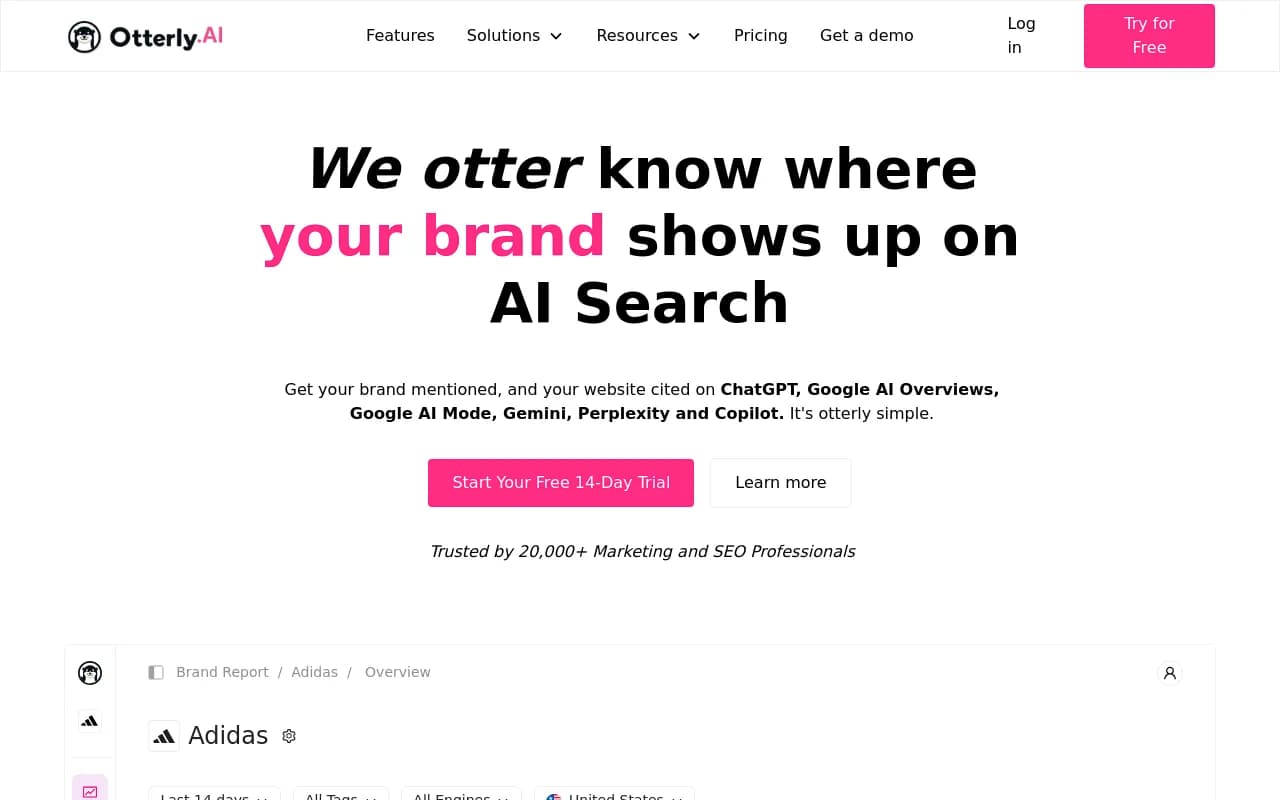
Otterly.AI is one of the more established options specifically built for AI search monitoring. It tracks which queries trigger AI Overviews, whether your site is cited, and which competitors appear instead. Pricing starts at $29/month, which makes it accessible for smaller teams.
SE Ranking
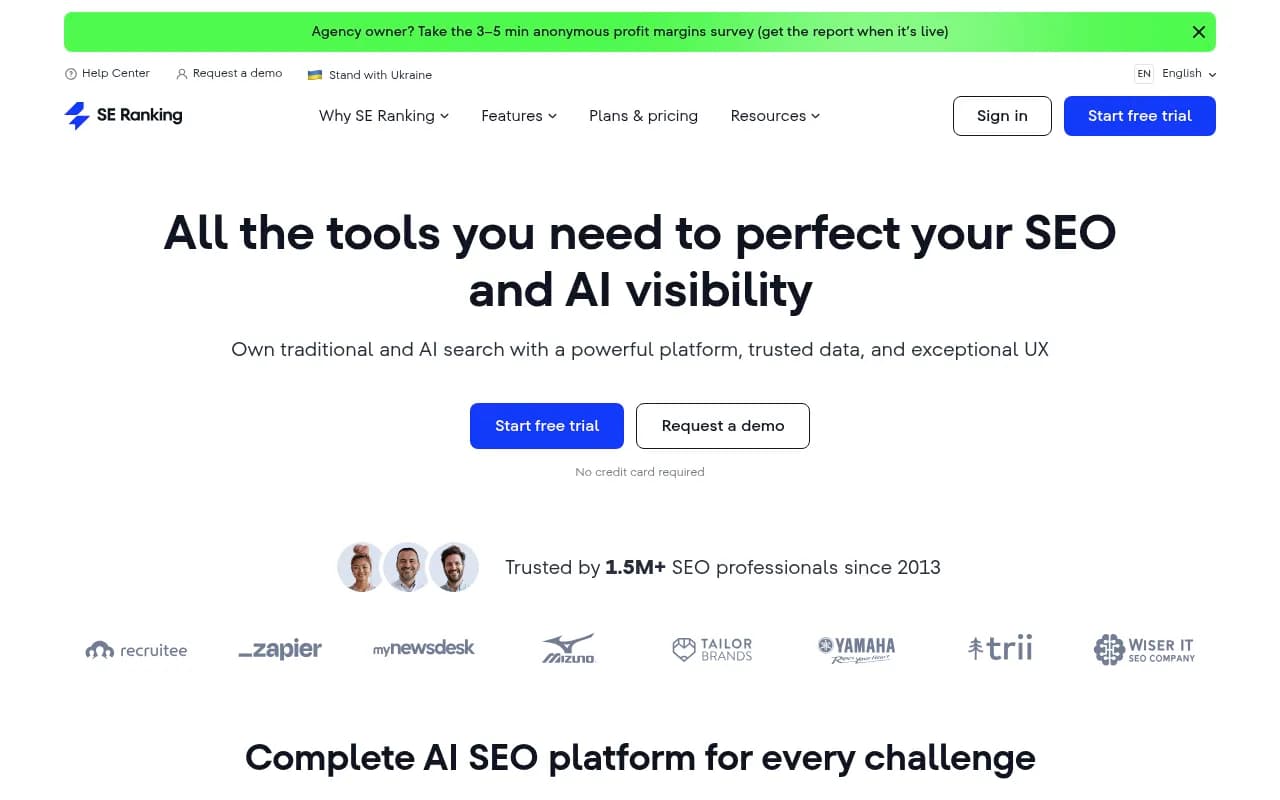
SE Ranking includes AI Overview tracking in its Pro plan at around $95/month billed annually. If you're already using SE Ranking for traditional rank tracking, this is a cost-effective way to add AI Overview monitoring without a separate tool subscription.
Ahrefs Brand Radar
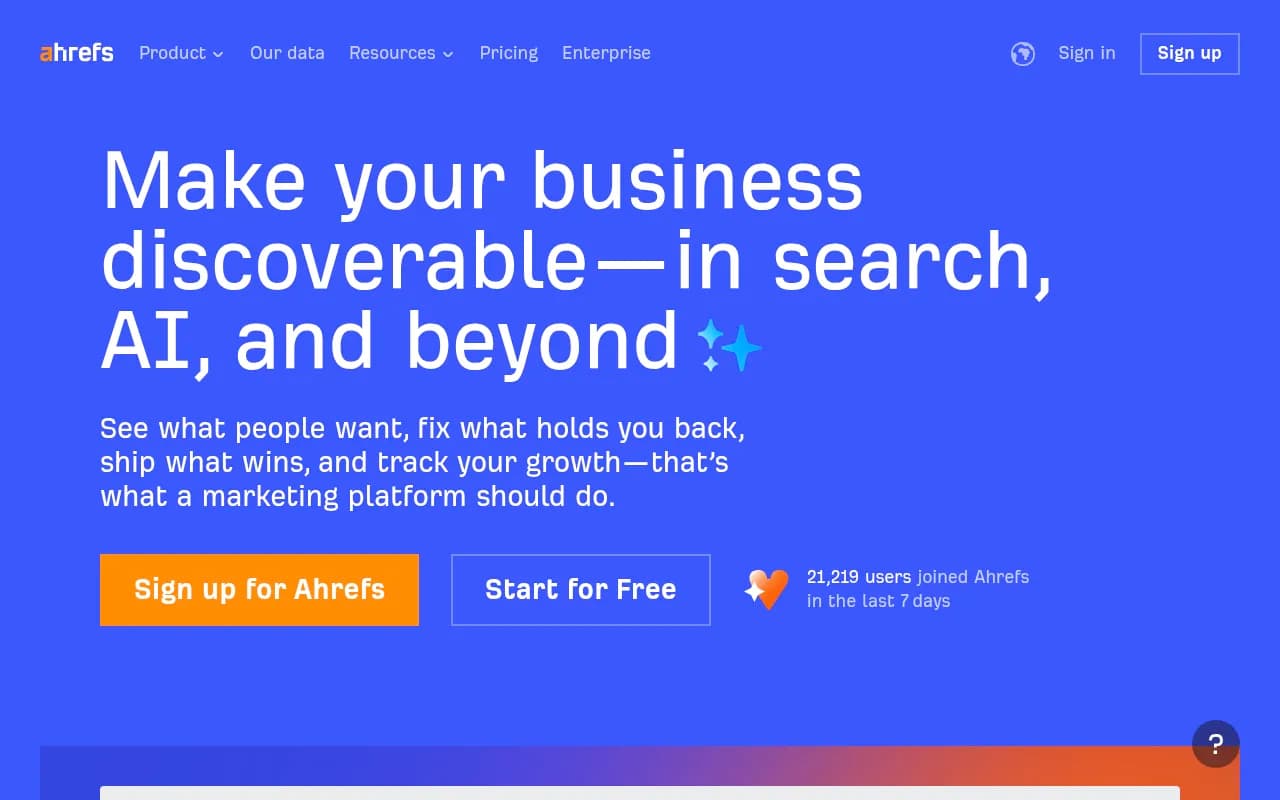
Ahrefs has added AI search visibility features through its Brand Radar product. The caveat: it uses fixed prompts rather than your custom keyword list, and there's no AI traffic attribution. Useful for a high-level view, but limited for deep competitor analysis.
Semrush
Semrush has integrated AI Overview tracking into its platform. Like Ahrefs, it uses fixed prompts, which limits how precisely you can track your specific competitive landscape.
Rankability
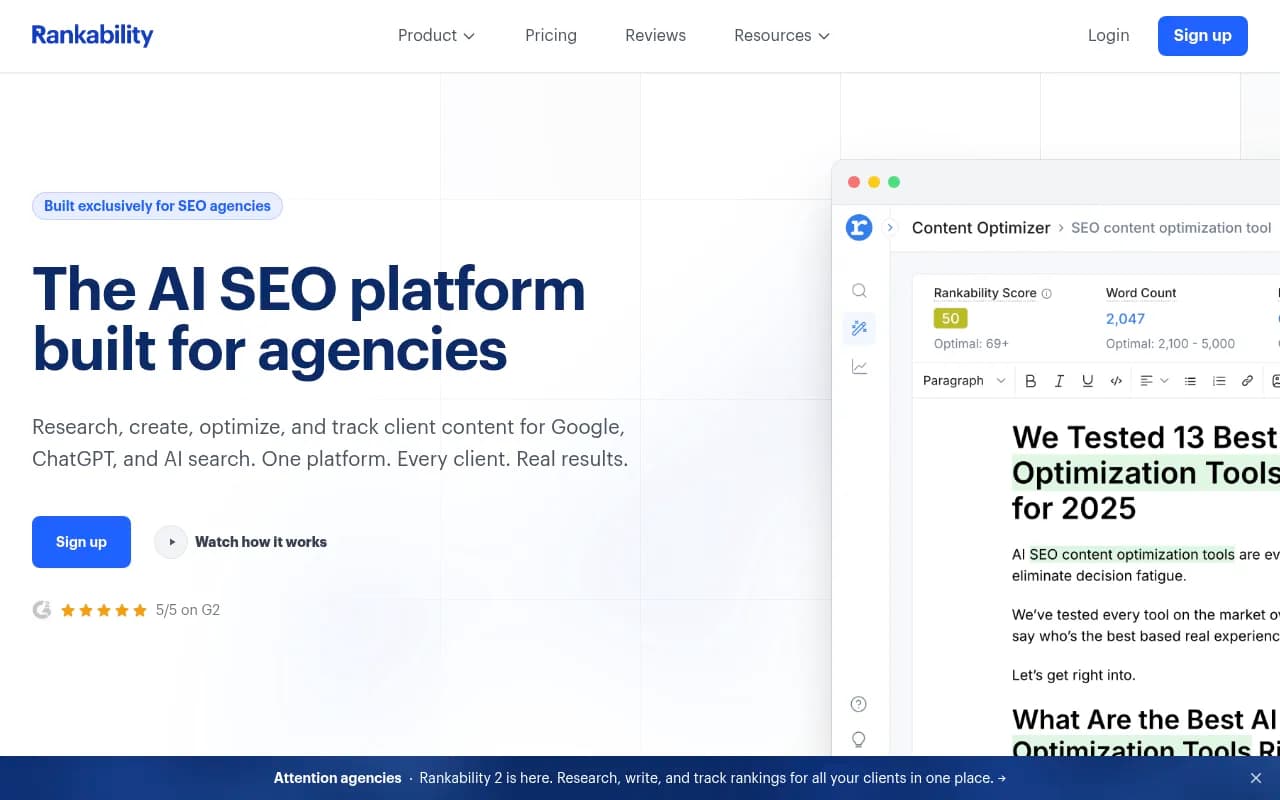
Rankability focuses specifically on AI Overview citation and history tracking with white-label reporting, making it popular with agencies. It's one of the few tools that tracks citation history over time, so you can see when competitors gained or lost citations.
Method 3: Full AI visibility platforms
If you're tracking Google AI Overviews as part of a broader AI search strategy (which you probably should be, since ChatGPT, Perplexity, and Gemini are all eating into Google's share), a dedicated AI visibility platform makes more sense than a point solution.
These platforms track citations across multiple AI engines, not just Google, and the better ones help you act on what you find rather than just showing you a dashboard.
Promptwatch is the platform I'd point most teams toward here. It tracks AI Overview citations alongside ChatGPT, Perplexity, Claude, Gemini, Grok, and several others -- so you're not building separate tracking systems for each engine. More importantly, it closes the loop between finding gaps and fixing them. The Answer Gap Analysis shows you exactly which prompts competitors are being cited for that you're not, and the Content Agents generate briefs and articles designed to fill those specific gaps. Most competitor tools stop at the monitoring step.

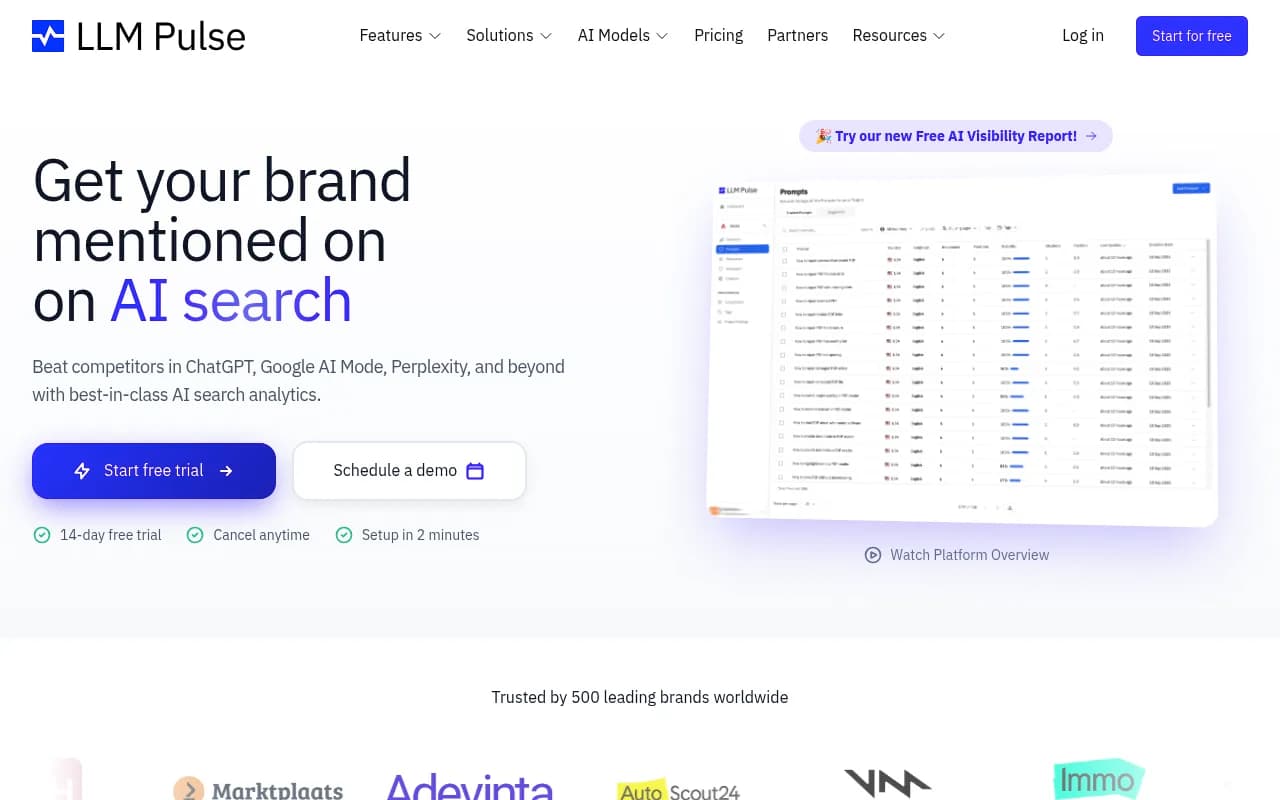
For teams that want a lighter-weight option focused on AI visibility monitoring, Peec AI and LLM Pulse are worth evaluating.

Comparison: which tool fits which use case
| Tool | Google AIO tracking | Competitor citations | Multi-engine | Content gap analysis | Starting price |
|---|---|---|---|---|---|
| Otterly.AI | Yes | Yes | Partial | No | $29/mo |
| SE Ranking | Yes | Limited | No | No | ~$95/mo |
| Ahrefs Brand Radar | Yes (fixed prompts) | Limited | No | No | $199/mo per index |
| Semrush | Yes (fixed prompts) | Limited | No | No | Included in plans |
| Rankability | Yes | Yes | No | No | Custom |
| Promptwatch | Yes | Yes | Yes (10 engines) | Yes | $99/mo |
| Peec AI | Yes | Yes | Partial | No | Custom |
The key differentiator to look for: does the tool let you track custom queries (your actual target keywords), or does it use a fixed prompt set? Fixed prompts give you a benchmark but won't tell you what's happening for the specific queries your customers use.
What to do with the data
Tracking competitor citations is pointless if you don't act on it. Here's how to turn citation data into a content strategy.
Step 1: Identify the gap clusters
Don't look at individual queries in isolation. Group them by topic. If a competitor is cited across 15 queries about "email marketing for e-commerce" and you're cited for none of them, that's a content cluster gap, not 15 separate problems.
Step 2: Analyze what's getting cited
For each query where a competitor is cited, look at the actual page Google is pulling from. What format is it? How long is it? Does it answer the query directly in the first paragraph? Google's AI Overviews tend to favor content that:
- Answers the query directly and early (within the first 100 words)
- Backs claims with specific data or quotes
- Uses clear structure (headers, lists, tables)
- Comes from a domain with topical authority in the subject area
Step 3: Create content that fills the gaps
Once you know what's missing, you need to create it. This is where most teams get stuck -- the tracking is easy, the content production is hard.
A few approaches that work:
- Write comparison pages that directly answer "X vs Y" queries where competitors are cited but you're not
- Create definitive guides on topic clusters where you have zero citations
- Update existing pages to answer queries more directly in the opening section
- Build FAQ sections that mirror the exact phrasing of queries that trigger AI Overviews
Platforms like Promptwatch can generate content briefs grounded in the actual citation data, which speeds this process up considerably. But even without a tool, the manual gap analysis gives you a clear brief: here's the query, here's what the cited competitor wrote, here's what you need to do better.
Step 4: Track the timeline from publish to citation
This is the part most teams skip. After publishing new content, you need to monitor whether AI engines actually start citing it, and how long that takes. The timeline varies -- some pages get picked up within days, others take weeks.
Tracking this matters because it tells you whether your content strategy is working. If you publish 10 pages targeting citation gaps and none of them get cited after 60 days, something is wrong with the content, the site's crawlability, or the targeting.
Common mistakes to avoid
Tracking too many queries at once. Start with 50-100 queries that represent your highest-value topics. Spreading thin across 500 queries means you'll never have enough data to act on any of it.
Ignoring the source URLs. When a competitor gets cited, the citation usually points to a specific page, not their homepage. That page is your direct competitor for that query. Study it.
Treating AI Overview citations as a vanity metric. The goal isn't citations for their own sake -- it's traffic and conversions. Make sure you're connecting citation gains to actual site traffic changes. Tools like Google Analytics can help you see whether pages that start getting cited show corresponding traffic lifts.
Forgetting that AI Overviews are dynamic. Google updates them frequently. A competitor that's cited today might not be cited next week, and vice versa. Point-in-time snapshots are less useful than trend data over time.
Only tracking Google. In 2026, AI search is fragmented. ChatGPT, Perplexity, and Gemini collectively handle a significant share of informational queries. A competitor might dominate Google AI Overviews but be invisible on Perplexity, or vice versa. If you're only tracking one engine, you're missing part of the picture.
Building a repeatable tracking workflow
Here's a simple weekly workflow that works for most teams:
- Run your tracked queries through your chosen tool (or manually, if you're starting out)
- Log new competitor citations that appeared since last week
- Identify any queries where you lost citations you previously had
- Add newly discovered gap queries to your content backlog
- Check whether recently published gap-filling content has started getting cited
Monthly, do a deeper review: calculate your AI Share of Voice vs. each competitor, identify which topic clusters have the biggest gaps, and prioritize content production accordingly.
The teams that win at AI search in 2026 aren't the ones with the most sophisticated tracking setup. They're the ones that have a consistent loop between tracking and acting. Most competitors are still just watching the data.