Key takeaways
- Traditional keyword tools optimize for search volume; AlsoAsked and AnswerThePublic reveal the conversational question patterns that AI search engines actually use to generate answers.
- AlsoAsked maps "People Also Ask" trees to show how one question branches into related sub-queries — mirroring how AI models chain reasoning.
- AnswerThePublic organizes questions by preposition and intent type, giving you a fast visual map of every angle people explore around a topic.
- Combining both tools lets you build content that answers entire conversation flows, not just isolated keywords.
- Once you've created that content, tracking whether AI engines actually cite it requires a separate layer of monitoring.
Most keyword research workflows are built around the same core loop: find a term with decent volume, check the difficulty score, write something targeting that term. That works fine for traditional search. But AI search engines don't rank pages the way Google's blue links do. ChatGPT, Perplexity, Claude, and Google's AI Overviews pull answers from content that directly addresses the questions users are asking in natural language — often multi-part, conversational questions that never show up in a keyword planner.
That's the gap. And it's where AlsoAsked and AnswerThePublic become genuinely useful in 2026.
Neither tool is new. But their value has shifted considerably now that conversational AI is a primary search channel. What used to be "nice to have" context for content writers is now a direct signal for what AI models want to cite.
Why standard keyword tools fall short for AI search
Tools like Ahrefs, Semrush, and Google Keyword Planner are built around search volume data. They're excellent at telling you how many people search for "best project management software" per month. What they don't tell you is what happens after that initial query — the follow-up questions, the clarifications, the comparisons, the "but what about..." threads that real users pursue.
Promptwatch data shows that AI models frequently respond to a single user prompt by internally generating multiple sub-queries to build a comprehensive answer. A user asking "what's the best CRM for a small team?" might trigger the AI to look for answers to questions like "how much does CRM software cost for small businesses," "what features matter most in a CRM," and "which CRM integrates with Gmail" — all at once.

If your content only answers the top-level keyword, you're invisible to that entire reasoning chain. AlsoAsked and AnswerThePublic help you map those chains before you write a single word.
AlsoAsked: mapping the question tree
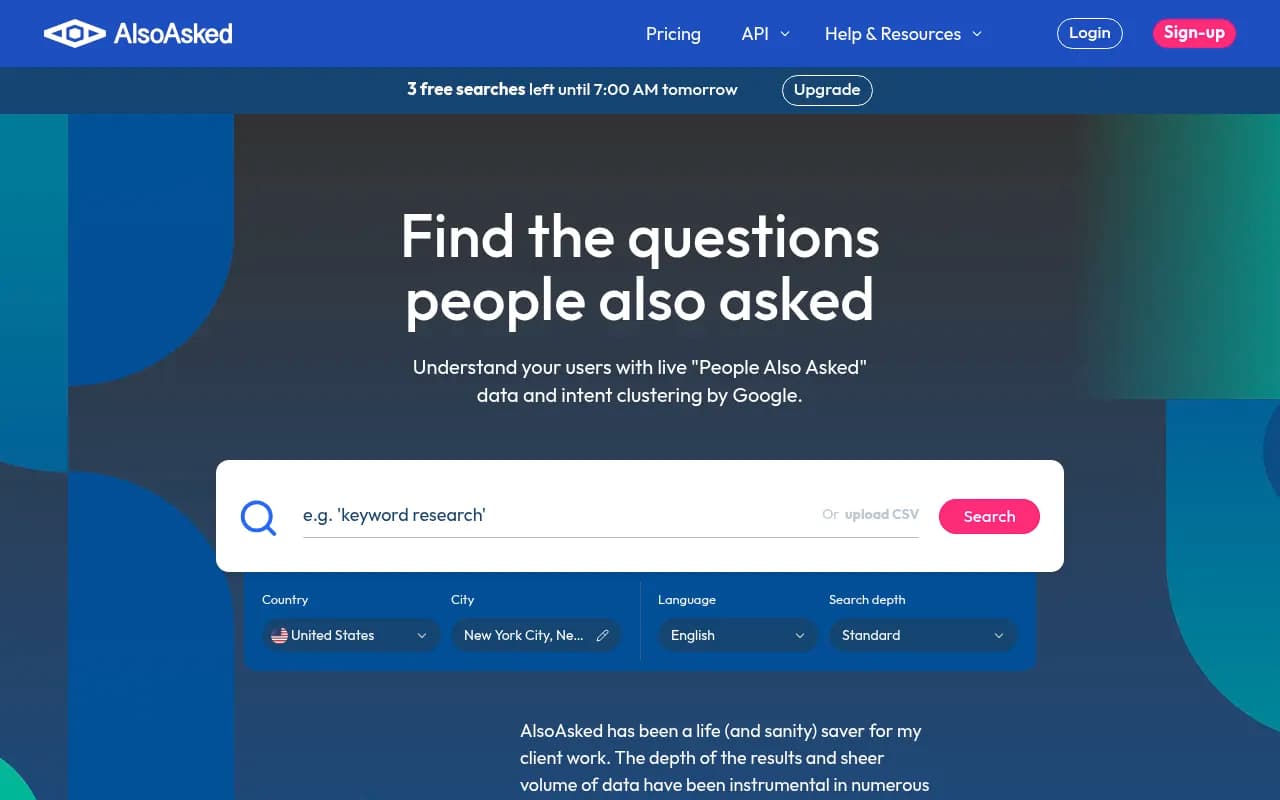
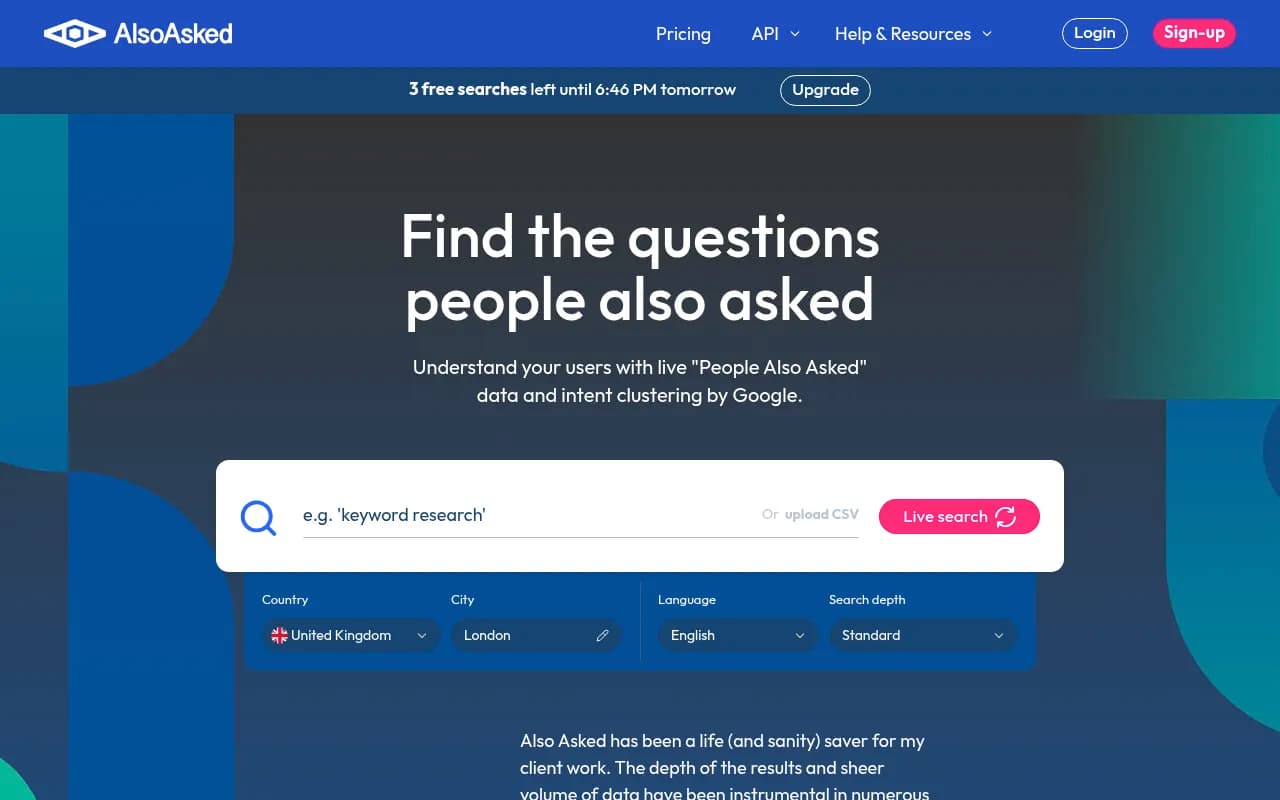
AlsoAsked pulls live data from Google's "People Also Ask" (PAA) boxes and organizes it into branching trees. You enter a seed term, and it shows you not just the immediate PAA questions but the questions that appear when users click on those questions — two or three levels deep.
This matters because PAA data is one of the clearest signals of how Google (and by extension, its AI systems) understands the semantic relationships between questions. When Google shows "What is the best time to post on Instagram?" followed by "Does posting time affect Instagram reach?" followed by "How does the Instagram algorithm decide what to show?", it's telling you something about how these topics connect in the minds of real users.
How to use AlsoAsked effectively
Start with your core topic, not a long-tail keyword. Enter something like "email marketing" rather than "best email marketing tools for small businesses." Broader seeds generate richer trees. You can always narrow down once you see the landscape.
Look for question clusters, not individual questions. The real value isn't any single PAA question — it's noticing that three or four questions in the tree are all circling the same underlying concern. That cluster is your content opportunity. If you see multiple questions about "when to send emails," "best send times," and "email open rates by day," that's a topic that deserves its own dedicated piece, not a paragraph buried in a longer article.
Use the depth setting strategically. AlsoAsked offers standard and deeper search modes. For AI content strategy, deeper searches are worth the credit cost because they reveal the sub-questions that most competitors haven't addressed. Those third-level questions are where AI models often struggle to find good sources — and where a well-structured answer can earn a citation.
Export and cluster by intent. Download the CSV and sort questions by the type of intent they represent: informational ("what is"), comparative ("X vs Y"), procedural ("how to"), and evaluative ("is X worth it"). Each intent type maps to a different content format. Procedural questions want step-by-step guides. Comparative questions want side-by-side breakdowns. Evaluative questions want honest assessments with specific criteria.
Map the conversation flow. AlsoAsked's own documentation notes that it can "tell you what is happening after the initial prompt, allowing you to map the conversation." That framing is exactly right for AI search. When you structure an article to follow the natural question progression — answering the parent question first, then addressing the child questions in order — you're essentially writing in the same sequence an AI model would use to build its response.
A practical AlsoAsked workflow
Say you're writing content for a project management software company. You enter "project management software" into AlsoAsked and get a tree that includes:
- What is project management software used for?
- What are the main features of project management software?
- What is the difference between project management and task management?
- How much does project management software cost?
- Is project management software worth it for small teams?
- What's the cheapest project management tool?
- What is the best project management software?
- What project management software do large companies use?
- Which project management tool is easiest to learn?
That tree tells you your content needs to cover: use cases, feature differentiation, the task management distinction, pricing tiers, ROI for small teams, and ease of use — not just a generic "best tools" list. An AI model asked "what project management software should I use?" will pull from sources that address this full range of sub-questions. A page that only answers one of them is a weaker citation candidate than a page that addresses several in a coherent flow.
AnswerThePublic: visualizing the full question universe
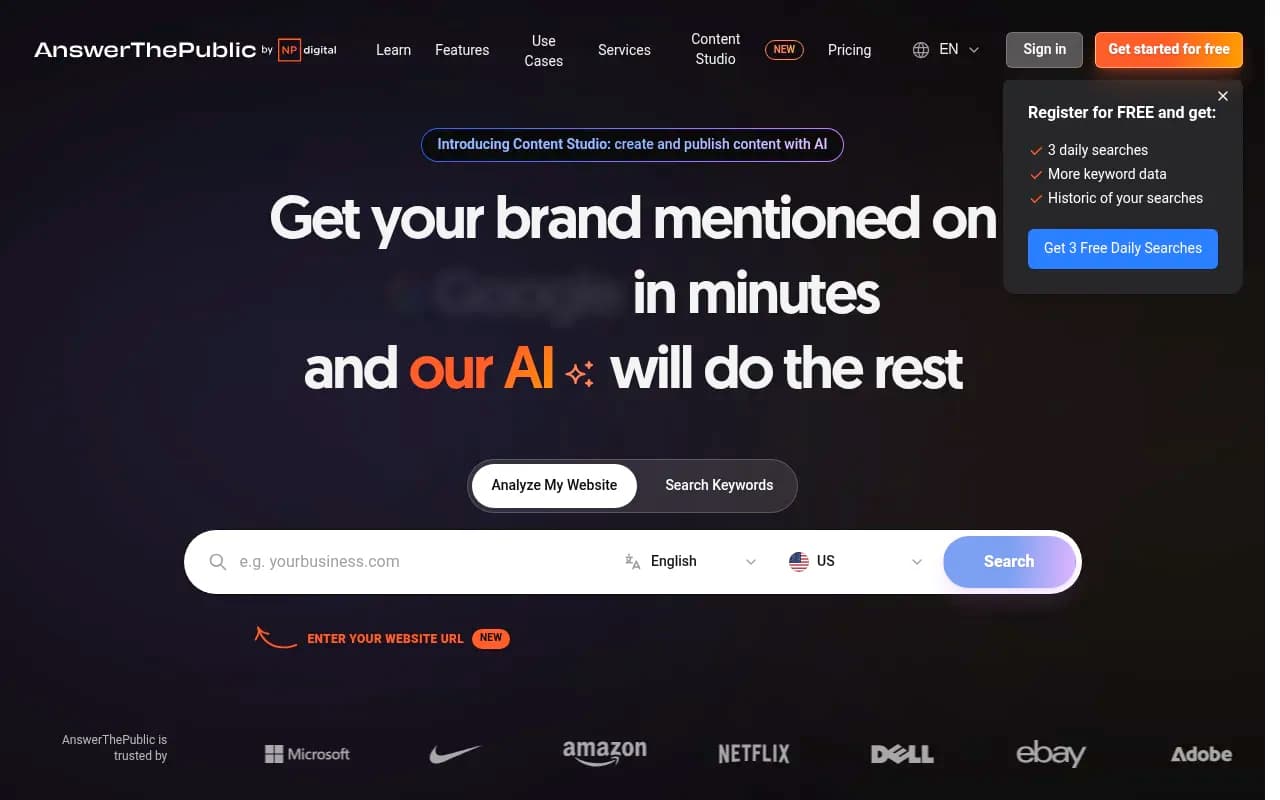
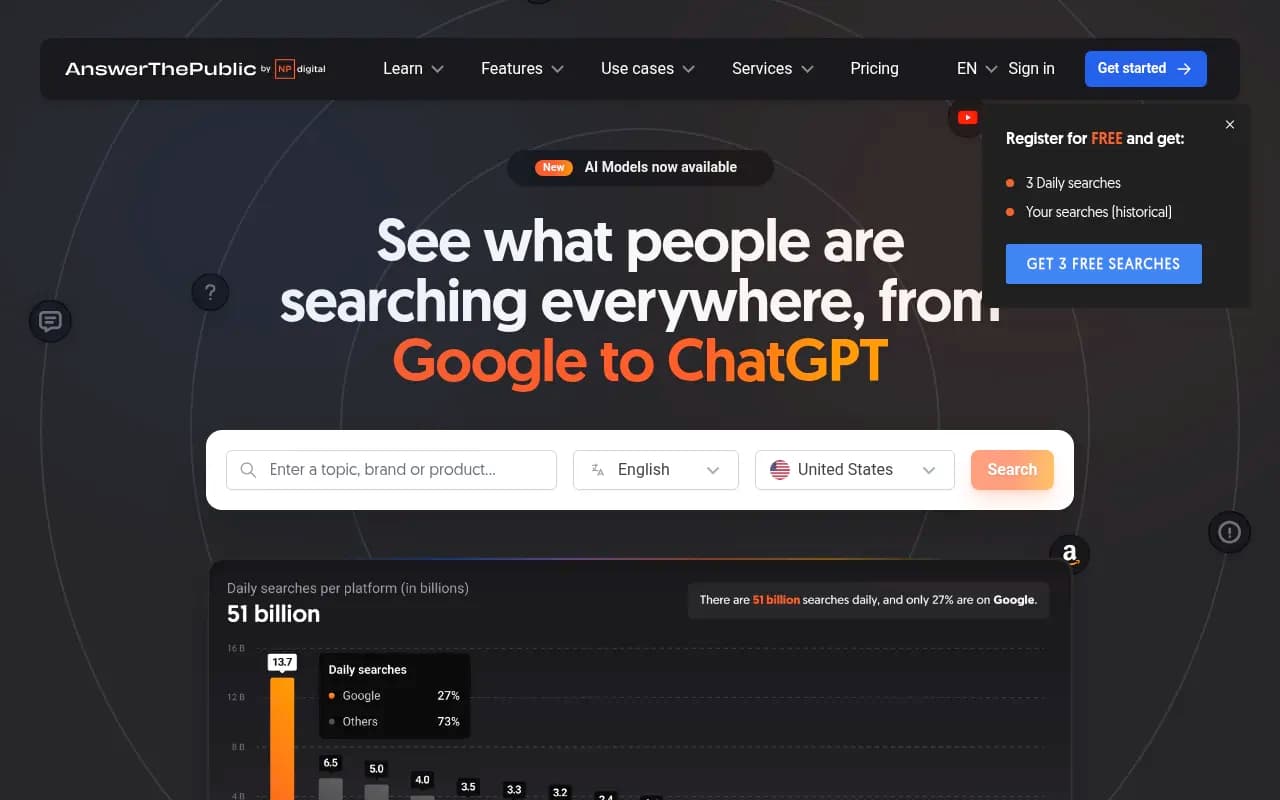
AnswerThePublic, now owned by Neil Patel's NP Digital, takes a different approach. Rather than showing you the PAA tree structure, it organizes questions by grammatical structure: questions starting with who, what, where, when, why, how; prepositions like "for," "with," "without," "near"; and comparisons using "vs" and "or."
The visual wheel format is useful for getting a fast overview, but the real power is in the data export. The list view gives you hundreds of question variations organized by type, which you can filter and prioritize.
How to use AnswerThePublic for AI content gaps
Use it to find the "why" and "how" questions your competitors ignore. Most content in competitive niches answers "what" questions well. "What is content marketing?" has been written to death. But "why does content marketing fail for B2B companies?" or "how long does content marketing take to show results?" — those are questions where good answers are harder to find, which means AI models are more likely to cite a page that answers them clearly.
Pay attention to preposition-based queries. Questions like "email marketing for nonprofits," "email marketing without a list," and "email marketing with Shopify" reveal specific audience segments and use cases. These are exactly the kinds of niche queries that AI search handles well — a user asking Perplexity about "email marketing for a nonprofit with no budget" expects a specific, tailored answer, not a generic overview.
Use the comparison data for entity optimization. The "vs" and "or" queries show you what alternatives people are actively considering. If you're writing about a product or service, these comparisons tell you which competitors you need to address directly. AI models frequently generate comparison answers, and they cite sources that explicitly cover the comparison — not sources that only talk about one side.
Run searches in multiple languages if you operate internationally. AnswerThePublic supports multiple languages, and question patterns vary significantly across markets. A question that's well-answered in English content might have almost no good sources in German or French, giving you a much easier path to AI citation in those markets.
Combining AnswerThePublic with AlsoAsked
These tools are complementary, not redundant. Here's a simple two-pass workflow:
- Run your seed topic through AnswerThePublic to get the full universe of question types. This gives you breadth — every angle, every preposition, every comparison.
- Take your most promising question clusters into AlsoAsked to get the depth — the branching sub-questions that reveal how one question leads to another.
The output of this two-pass process is a content map that covers both the full range of user concerns (AnswerThePublic) and the conversational flow between those concerns (AlsoAsked). That's the structure you need to write content that AI models can actually use.
Turning question data into AI-ready content
Finding the questions is step one. Writing content that AI models will actually cite requires a few specific structural choices.
Answer questions directly and early
AI models extract answers from content. If your answer to "how much does X cost?" is buried in paragraph seven after three paragraphs of preamble, the model may not surface it. Put the direct answer in the first sentence of the relevant section, then expand with context and nuance.
Use the question as a heading
Structuring your content with the actual question as an H2 or H3 heading makes it dramatically easier for AI models to match your content to user queries. "How much does project management software cost?" as a heading, followed by a clear answer, is a much stronger citation candidate than a section titled "Pricing" that eventually gets around to answering the question.
Cover the full question tree in one piece
If AlsoAsked shows you that "what is X" leads to "how does X work" leads to "what are the benefits of X" leads to "is X worth it," consider writing a single comprehensive piece that follows that exact sequence. This mirrors the conversational flow of an AI response and gives the model a single authoritative source to cite across multiple sub-questions.
Don't neglect the comparison questions
"X vs Y" content is consistently well-cited by AI models because comparison questions are extremely common in AI search. Users ask ChatGPT and Perplexity to compare options all the time. A dedicated comparison page that covers the specific alternatives your audience is considering — drawn from AnswerThePublic's "vs" data — is one of the highest-ROI content types for AI visibility.
Tool comparison: AlsoAsked vs AnswerThePublic vs alternatives
| Tool | Data source | Question depth | Export | Best for |
|---|---|---|---|---|
| AlsoAsked | Google PAA (live) | 3 levels deep | CSV | Mapping conversation flows and sub-query trees |
| AnswerThePublic | Google/Bing autocomplete | Broad, single level | CSV, list | Full question universe by intent type |
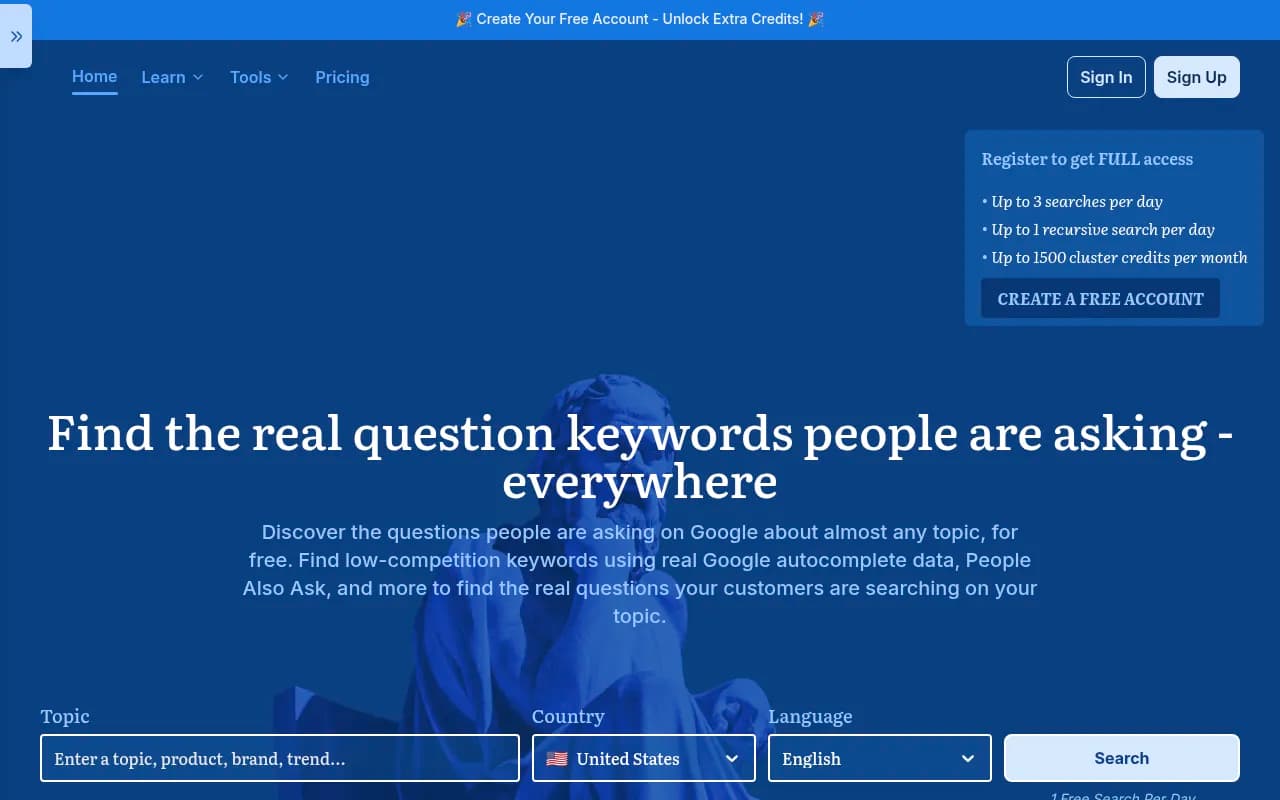
| Answer Socrates | Google PAA | 2 levels | CSV | Free alternative with solid PAA coverage |
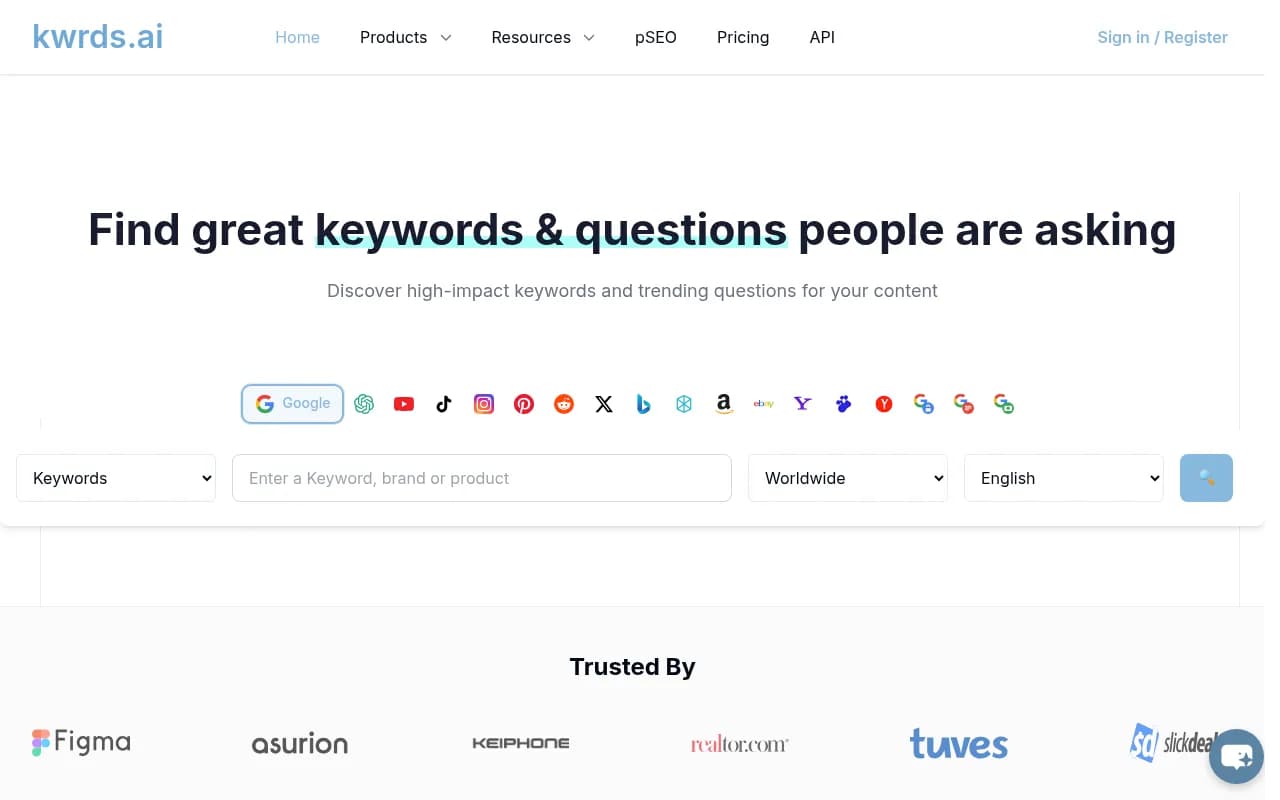
| kwrds.ai | Multi-platform | Variable | CSV | Combining PAA with keyword volume data |
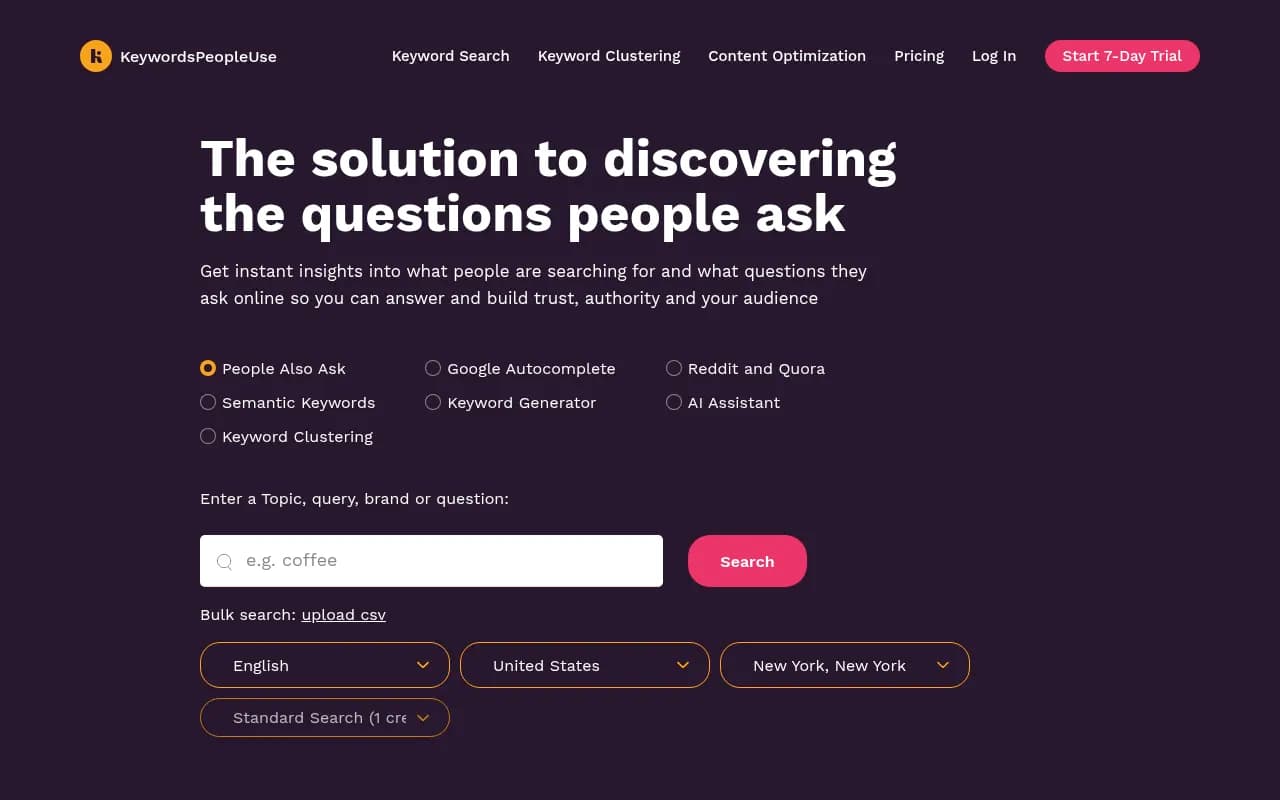
| KeywordsPeopleUse | Google, Reddit, Quora | Single level | CSV | Finding questions from community sources |
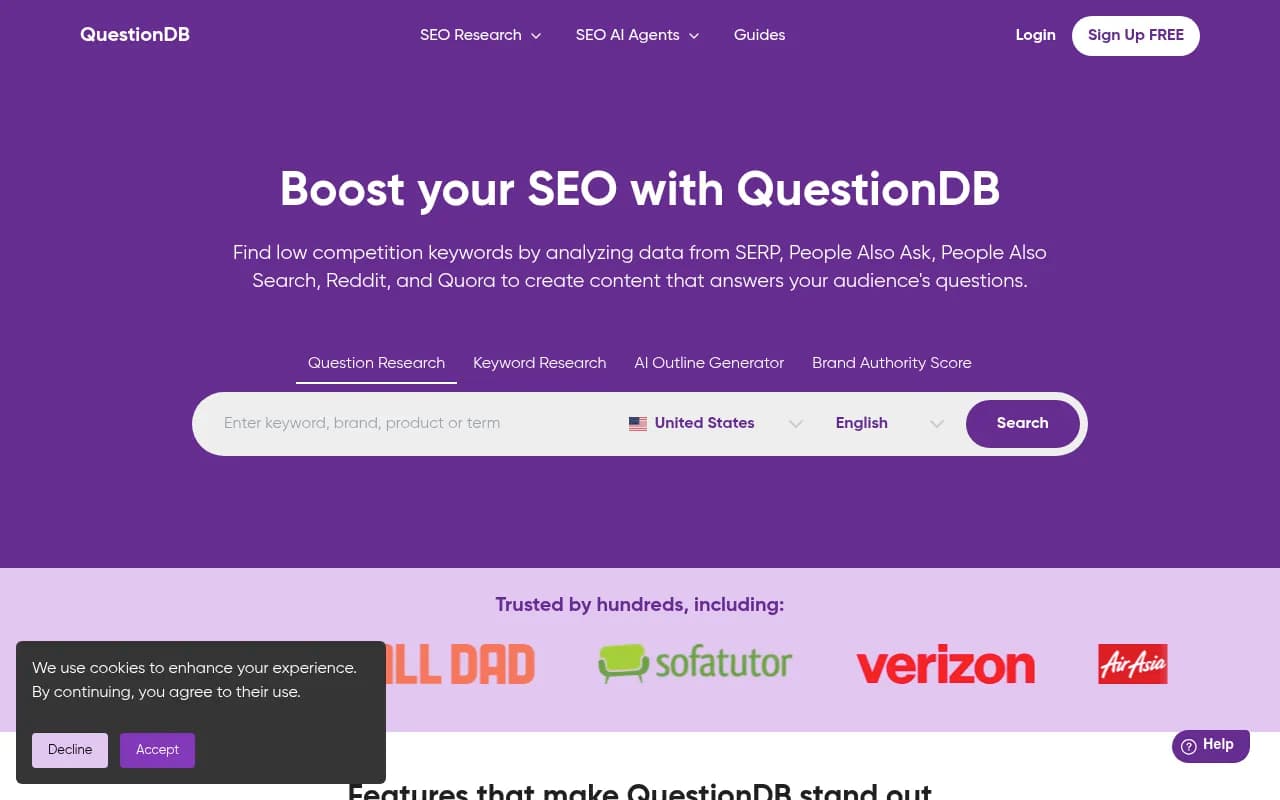
| QuestionDB | Community forums | Single level | CSV | Long-tail question discovery from real discussions |
The main limitation of all these tools is that they show you what questions people ask in traditional search. They don't tell you which of those questions AI models are actually answering, how well the current top sources address them, or whether your content is getting cited after you publish it.
The missing piece: tracking whether it's working
Here's the honest problem with a PAA-based content strategy: you can do everything right and still not know if AI models are citing your content. Publishing a well-structured piece that answers an entire question tree doesn't automatically mean ChatGPT or Perplexity will surface it.
You need to close the loop. That means tracking which of your pages are being cited by AI engines, which prompts are triggering those citations, and how your visibility changes over time as you publish new content.
Promptwatch is built specifically for this — it tracks citations across 10 AI models, shows you which pages are being cited and by which models, and includes Answer Gap Analysis that shows you exactly which prompts competitors are visible for but you're not. That last feature is essentially the AI-native version of what AlsoAsked does for PAA: it shows you the specific questions where you're invisible, so you know exactly what to write next.
The workflow that actually works in 2026 looks like this: use AlsoAsked and AnswerThePublic to find the question clusters and conversation flows, write content structured around those questions, then use an AI visibility platform to confirm whether the content is earning citations and where the remaining gaps are. Each step informs the next.
Practical tips to get more from both tools
A few things that make a real difference in practice:
- Run AlsoAsked searches at the city or regional level if you're targeting local audiences. PAA questions vary by location, and local AI search queries often include location-specific context.
- Use AnswerThePublic's "listening" feature to monitor how question patterns around a topic change over time. Emerging question clusters often signal topics that are gaining traction before they show up in keyword volume data.
- Don't ignore the "negative" questions. "Why doesn't X work?" and "what are the problems with X?" are high-intent queries that AI models handle frequently. Content that honestly addresses downsides and limitations tends to be more trusted and more cited than purely promotional content.
- Cross-reference your question clusters with Reddit and YouTube. AI models cite Reddit threads and YouTube videos regularly, and questions that appear in both PAA data and active Reddit discussions are strong signals of genuine user interest. Tools like Promptwatch surface Reddit and YouTube insights specifically because these channels influence AI recommendations in ways that traditional keyword tools completely miss.
The combination of question-mapping tools and AI visibility tracking is what separates teams that are guessing about AI search from teams that are actually optimizing for it. AlsoAsked and AnswerThePublic give you the map. Tracking tools tell you whether you're on the right road.