Key takeaways
- MarketMuse and Clearscope are not competing tools -- they solve different problems at different stages of the content workflow.
- MarketMuse is best used upfront: deciding what to write, which topics to prioritize, and where your site has authority gaps.
- Clearscope is best used during writing: grading drafts in real time and ensuring term coverage before you publish.
- Neither tool was built for AI search visibility. For that layer -- tracking citations in ChatGPT, Perplexity, Google AI Mode -- you need a separate platform.
- The combined workflow (strategy in MarketMuse, optimization in Clearscope, AI visibility in a GEO tool) is the most complete approach available in 2026.
Most "MarketMuse vs Clearscope" articles treat this as a binary choice. Pick one, ignore the other. But that framing misses something obvious: the two tools operate at completely different stages of the content process. Using them together -- with each doing what it's actually built for -- produces better results than either tool alone.
This guide walks through exactly how to do that, and how to extend the workflow to cover AI search visibility, which neither tool addresses on its own.
Why these two tools are complementary, not competing
The clearest way to understand the difference: Clearscope assumes you already know what to write. MarketMuse helps you figure that out.
Clearscope is a page-level optimization engine. You bring a keyword, it analyzes the current SERP, and within about 90 seconds you have a content grade, a target word count, a readability score, and a ranked list of semantically related terms. The whole system is designed around one question: "How do I make this specific page more competitive?"

MarketMuse starts further back. It analyzes your entire domain to model your topical authority, identifies gaps relative to competitors, and builds a content inventory that shows you which topics you own, which you're weak on, and which you haven't touched. The system is designed around a different question: "What should I write next, and why?"
Put those together and you get a complete workflow:
- MarketMuse tells you what to build and in what order
- Clearscope tells you how to build each piece well
Neither step is optional if you want to compete seriously in 2026.
Stage 1: Use MarketMuse for strategy and prioritization
Before anyone writes a word, MarketMuse does the planning work. Here's how to use it effectively.
Build your topic inventory first
Start by running a full site analysis in MarketMuse. The platform crawls your domain and maps your existing content against topic clusters, giving you a "personalized difficulty" score for each topic -- which is different from generic keyword difficulty because it accounts for what you've already published.
A site that has written extensively about "email marketing automation" will find it much easier to rank for related terms than a site starting from scratch. MarketMuse surfaces this. Generic keyword tools don't.
What you're looking for in this phase:
- Topics where your authority score is high but you have content gaps (quick wins)
- Topics where competitors are strong and you're absent (strategic priorities)
- Topics where you have thin or outdated coverage (refresh candidates)
Use the content inventory to prioritize refreshes
One underused MarketMuse feature is its ability to identify existing pages that are underperforming relative to their topic potential. A page ranking on page two for a topic where your site has strong authority is often a better investment than writing something new.
Sort your inventory by pages with high topic authority but low content scores. These are your refresh priorities. Clearscope comes in later to actually improve them.
Generate briefs for new content
MarketMuse's content briefs go deeper than most tools. They include subtopic coverage requirements, questions to answer, and related topics that signal topical depth to search engines. The brief is what you hand to a writer -- or use yourself -- before opening Clearscope.
The brief answers: what should this page cover, how long should it be, and what adjacent topics need to exist on your site for this page to perform?
Stage 2: Use Clearscope for real-time optimization
Once you have a brief from MarketMuse and a draft in progress, Clearscope takes over.
Run the report before you write, not after
A common mistake is treating Clearscope as a proofreading tool -- something you check at the end. It works better as a writing companion. Run the report for your target keyword before you start drafting, keep the term list visible, and weave the relevant terms in naturally as you write.
This is faster than retrofitting terms into a finished draft, and the result reads more naturally because you're incorporating context rather than inserting keywords.
Understand what the content grade actually measures
Clearscope's grade (A++ down to F) reflects how well your content covers the semantically related terms that appear across top-ranking pages for your keyword. It's not a measure of quality in any subjective sense -- it's a measure of topical coverage relative to what's currently ranking.
An A grade means you've covered the topic breadth that Google's current results reward. It doesn't mean the content is well-written, accurate, or useful. That's your job.
Use the term list selectively
Not every term in Clearscope's list belongs in your article. Some are tangentially related, some are brand names of competitors, some are just noise. The tool ranks terms by importance -- focus on the high-importance ones first, then work down. If a term feels forced, skip it. A slightly lower grade with better prose beats an A+ that reads like a keyword list.
Check competitor outlines
Clearscope shows you the outlines and word counts of top-ranking pages. Use this to calibrate your structure, not copy it. If every competitor has an H2 about "pricing" and you've omitted it, that's probably a gap worth filling. If they all have the same generic introduction, that's an opportunity to do something different.
Stage 3: The gap neither tool fills -- AI search visibility
Here's the honest limitation of this workflow: MarketMuse and Clearscope were built for Google. They analyze SERPs, grade content against ranking pages, and optimize for traditional search signals. Neither tool tells you whether ChatGPT, Perplexity, Claude, or Google AI Mode is citing your content -- or your competitors' content -- when users ask questions in your category.
In 2026, that's a significant blind spot. AI search engines are now a meaningful traffic source for many B2B and consumer categories, and the factors that drive AI citations don't perfectly overlap with traditional ranking signals.
For this layer, you need a dedicated AI visibility platform. Promptwatch tracks how your brand and content appear across 10 AI models -- ChatGPT, Perplexity, Google AI Overviews, Claude, Gemini, and others -- and shows you which pages are being cited, which prompts trigger competitor citations but not yours, and what content you'd need to create to close those gaps.

The answer gap analysis is particularly useful alongside a MarketMuse/Clearscope workflow: it shows you which prompts your competitors are visible for that you're not, which you can then feed back into MarketMuse as new topic priorities. The loop becomes: identify AI visibility gaps, plan content with MarketMuse, optimize with Clearscope, track citations with Promptwatch.
How the combined workflow looks in practice
Here's a concrete example using a B2B SaaS company selling project management software.
Step 1 (MarketMuse): Run a site analysis. Discover that your topical authority score for "resource management" is 3.2 while a competitor sits at 18.4. The platform shows you've never written about "capacity planning for remote teams" or "resource allocation templates" -- foundational subtopics that support the broader cluster.
Step 2 (MarketMuse): Generate briefs for the two missing subtopics and identify three existing pages on "project scheduling" that have high authority scores but thin content grades. Queue those for refresh.
Step 3 (Clearscope): Open the brief for "capacity planning for remote teams." Run a Clearscope report for that keyword. Write the article with the term list visible. Target an A or A+ grade. Check competitor outlines to make sure you're covering the expected subtopics.
Step 4 (Clearscope): Pull up the three refresh candidates. Run Clearscope reports for each. Add missing terms, expand thin sections, update outdated examples. Publish the refreshes.
Step 5 (AI visibility tracking): After publishing, monitor whether AI search engines start citing the new content. Check which prompts in your category are driving competitor citations. Feed newly discovered prompt gaps back into MarketMuse as the next round of topic priorities.
This cycle -- strategy, optimization, tracking -- is what separates teams that grow AI visibility systematically from teams that publish and hope.
Comparing the tools side by side
| Dimension | MarketMuse | Clearscope |
|---|---|---|
| Primary use case | Content strategy and prioritization | Page-level optimization |
| Best stage in workflow | Before writing | During writing |
| Content briefs | Deep (subtopics, questions, related topics) | Moderate (terms, headings, length) |
| Site-wide analysis | Yes (full content inventory) | No |
| Real-time editor | No | Yes |
| Writer adoption | Moderate friction | Low friction |
| Pricing | Free tier available; paid from ~$149/mo | From $129/mo |
| AI search visibility | No | No |
| Best for | Strategists, content managers | Writers, editors |
Neither tool covers AI search. That requires a separate layer.
Common mistakes to avoid
Using Clearscope without a strategy layer
Clearscope is excellent at what it does, but it can't tell you whether the keyword you're optimizing for is worth pursuing. You might write a perfectly optimized A+ article for a topic where your site has no topical authority, competing against domains that have published 40 related pieces. MarketMuse's personalized difficulty score catches this before you waste the effort.
Using MarketMuse briefs without optimization
MarketMuse briefs are thorough, but they're strategic documents, not optimization checklists. A writer following a MarketMuse brief without Clearscope might produce a well-structured article that still misses the semantic coverage that top-ranking pages have. Running the Clearscope report adds the real-time SERP signal that briefs alone don't capture.
Treating AI search as an afterthought
The biggest mistake in 2026 is optimizing purely for traditional search while ignoring how AI models are answering questions in your category. A page can rank well on Google and never appear in a Perplexity or ChatGPT response -- and vice versa. The content signals that drive AI citations (direct question-answering, clear entity mentions, structured factual claims) are worth building into your content from the start, not bolted on later.
Ignoring refresh opportunities
Most content teams spend the majority of their time on new content. MarketMuse consistently surfaces the counterintuitive finding that refreshing existing pages with strong authority often produces faster ranking improvements than publishing new content. Build refresh cycles into your workflow, not just new content production.
Other tools worth knowing in this workflow
A few other platforms that fit into different parts of this workflow:
For content research and brief building:
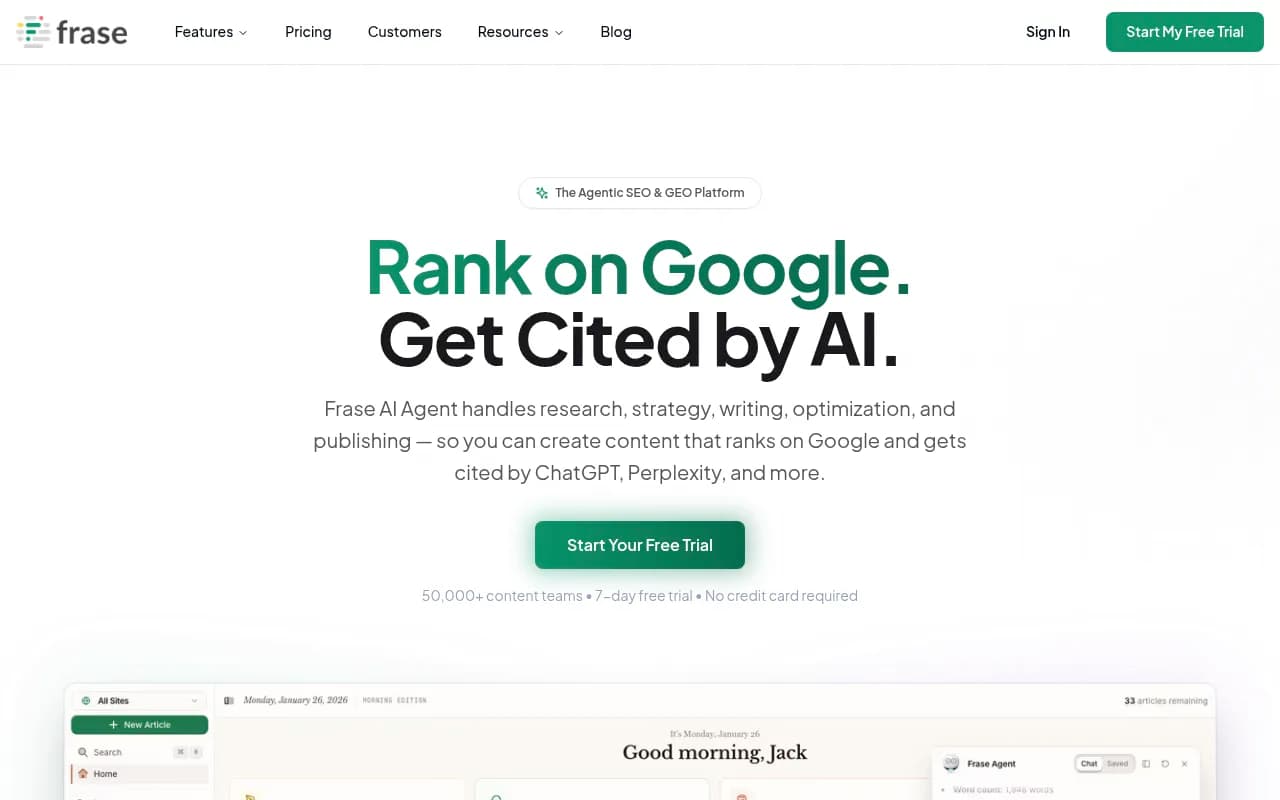
Frase is a lighter alternative to MarketMuse for teams that want AI-assisted brief generation without the full site-wide analysis. It's faster to onboard and cheaper, but less powerful for strategic prioritization.
For SEO content writing at scale:
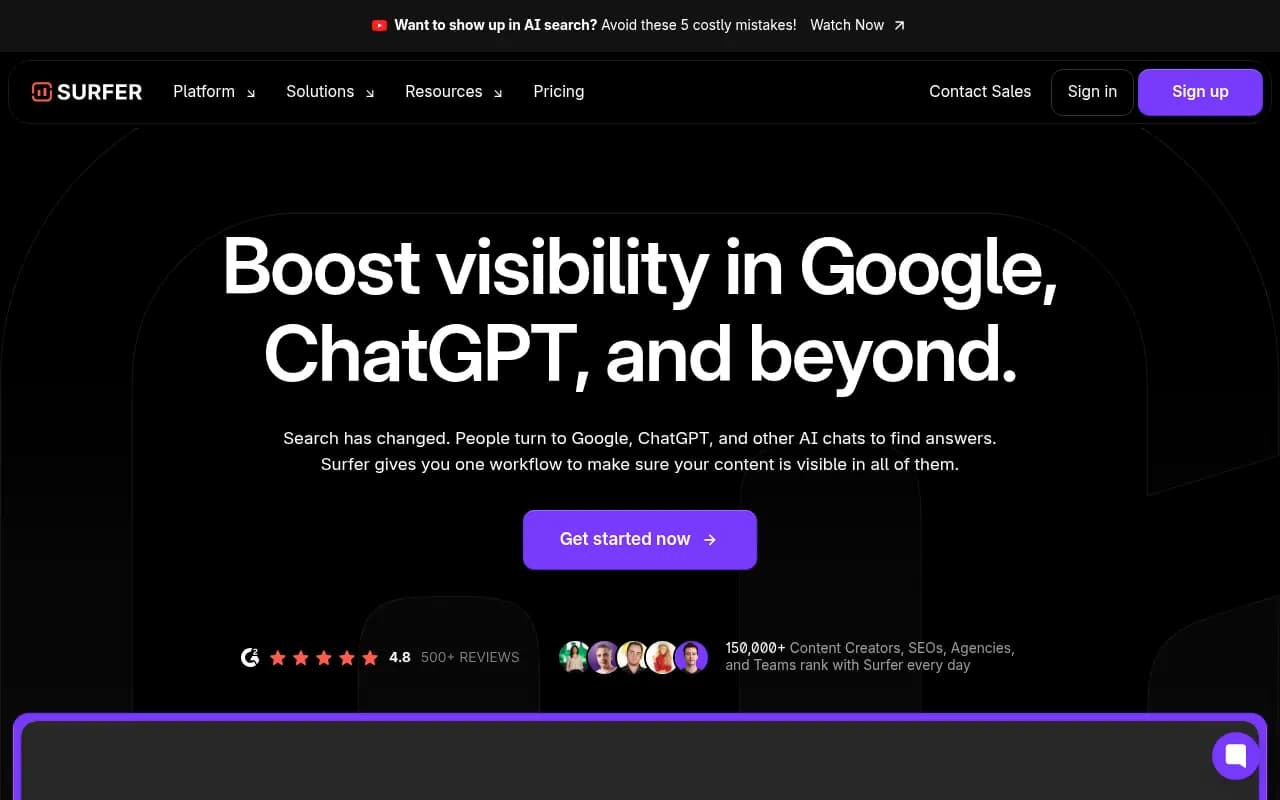
Surfer SEO occupies similar territory to Clearscope with a slightly different approach to content scoring. Some teams use Surfer for its built-in AI writing features alongside its optimization grading.
For keyword research feeding into MarketMuse:
Semrush and Ahrefs both provide the keyword volume and competitive data that help you validate which topics MarketMuse identifies as priorities. Neither replaces MarketMuse's topical authority modeling, but they add useful context.

For content brief building:
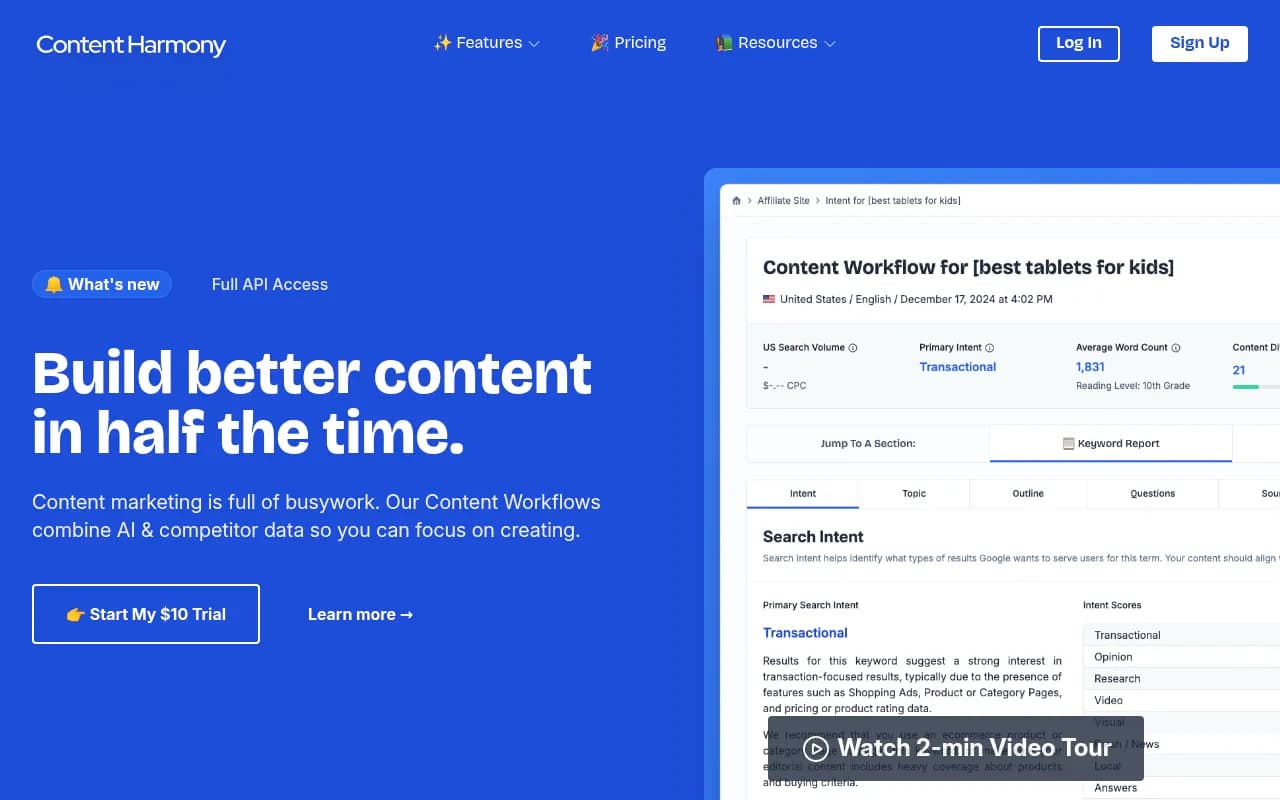
Content Harmony is worth a look for teams that want a dedicated brief-building tool with strong SERP analysis, sitting between MarketMuse's strategic depth and Clearscope's optimization focus.
The honest verdict
MarketMuse and Clearscope together cover the strategy-to-optimization pipeline better than either tool alone. MarketMuse is genuinely useful for deciding what to build and in what order -- its personalized difficulty scores and content inventory are things no other tool in this category replicates well. Clearscope is genuinely useful for making each piece as competitive as possible against the current SERP.
The gap is AI search. Both tools were built for a world where Google is the only search engine that matters. That world still exists, but it's no longer the complete picture. Adding an AI visibility layer -- tracking which prompts trigger citations, which pages AI models are reading, and where your competitors are appearing -- closes the loop that MarketMuse and Clearscope leave open.
The teams winning in 2026 aren't choosing between traditional SEO and AI search. They're running both in parallel, with tools that actually cover each layer.