Key takeaways
- AirOps is a workflow platform for scaling AI content production, not a writing assistant or an AI visibility tool — that distinction matters a lot for ROI.
- It earns strong G2 ratings (4.6/5 across 111+ reviews) but 21+ reviewers specifically flag pricing as too steep for the value delivered.
- The platform delivers genuine ROI for content and SEO teams with mature workflows and large backlogs. It's a poor fit for GTM, sales, or early-stage teams without established content strategy.
- Task-based billing and setup demands create hidden costs that aren't obvious from the pricing page alone.
- Only 41% of marketers can demonstrate ROI on their AI investments in 2026, per Benchmarkit's State of AI report — making honest ROI evaluation more important than ever before committing to any platform.
What AirOps actually is (and isn't)
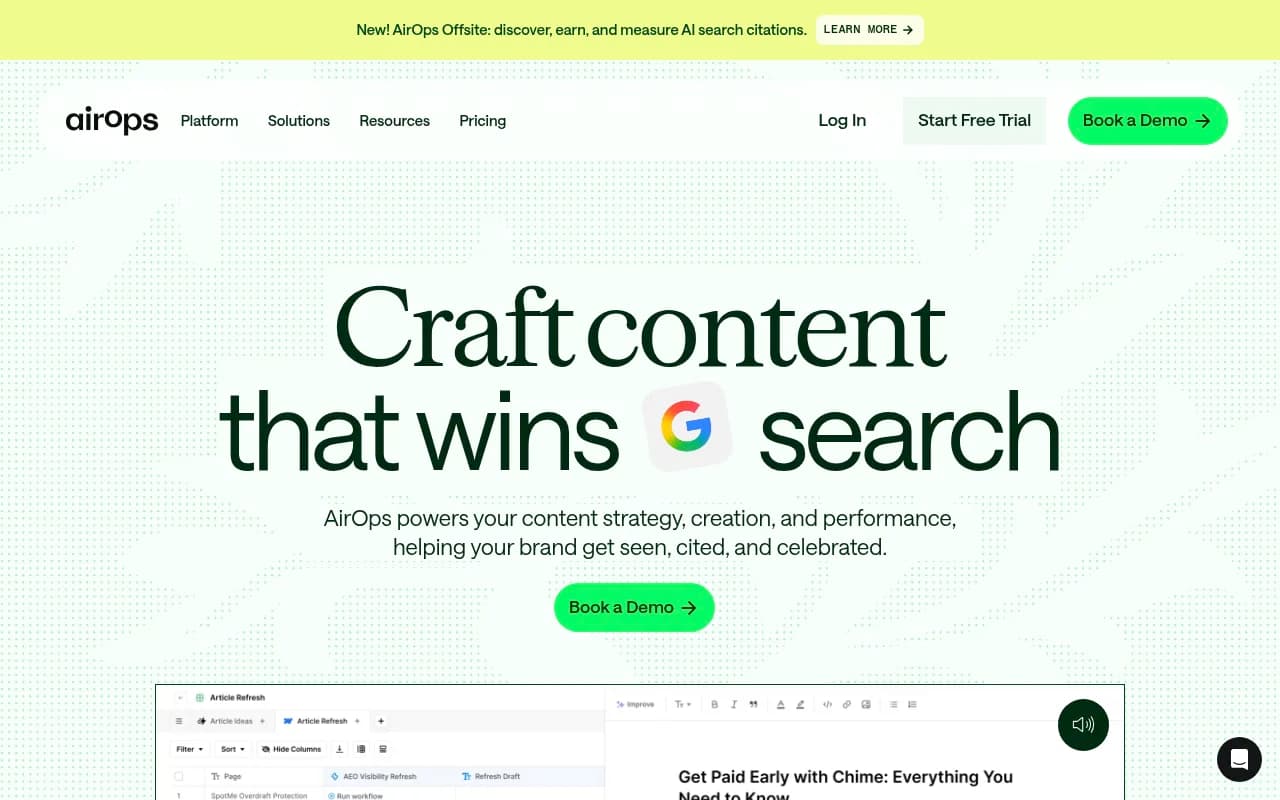
Before running any ROI calculation, you need to be clear on what you're buying. AirOps is not a writing assistant. It's not a chatbot wrapper. It's a workflow platform that lets content and SEO teams build repeatable, multi-step AI pipelines for content production, optimization, and publishing.
Think of it like this: instead of prompting ChatGPT manually for every article, AirOps lets you build a pipeline where a brief goes in, runs through a series of AI steps (research, outline, draft, SEO check, brand voice pass), and a near-publish-ready article comes out. That's genuinely useful if you're managing hundreds of content refreshes or running a high-volume SEO program.
The platform has earned notable customers — Webflow, Ramp, and Carta among them — and its 4.6/5 G2 rating across 111+ reviews reflects real satisfaction from teams that fit its use case. But those same reviews also reveal a consistent pattern: teams that buy AirOps expecting a plug-and-play solution often find something more demanding than they anticipated.
The real cost of AirOps in 2026
Sticker price vs. total cost
AirOps pricing is not straightforward. The platform uses task-based billing, meaning your monthly cost scales with usage in ways that can be hard to predict upfront. Across G2 reviews and practitioner analyses, 21+ reviewers specifically call out pricing as too steep relative to the ROI they experienced.
The issues tend to cluster around a few areas:
- Setup time is substantial. AirOps is a platform you configure, not a tool you install. Building effective workflows requires meaningful investment in time and often a dedicated person or team to manage it.
- Task-based billing can surprise you. As your team runs more workflows, costs compound in ways the initial pricing page doesn't make obvious.
- Below the Pro tier, integrations are limited. CRM sync, outbound, and lead enrichment aren't available, which matters if you expected AirOps to connect to your broader marketing stack.
For a targeted AI content program, realistic ROI expectations from AI investments generally land in the 15-40% efficiency improvement range, according to Helium42's AI business case analysis. AirOps can hit that range — but only for teams that are already operationally mature enough to configure and maintain the platform.
The hidden cost: learning curve
54+ of the 111 G2 reviews reference learning difficulties. That's not a minority complaint — it's a majority experience. The platform assumes you already understand content strategy, SERP analysis, and editorial operations. If your team doesn't have those foundations, AirOps will help you produce mediocre content faster. That's not a feature.
The learning curve has a real dollar cost: onboarding time, workflow iteration, and the opportunity cost of content that doesn't perform while you're still figuring out the setup.
Who actually gets ROI from AirOps
Based on G2 reviews, case studies, and practitioner analyses, AirOps delivers genuine value in specific situations:
Large content refresh backlogs. If you're an SEO manager sitting on hundreds of URLs that need updating, and you have a clear strategy for what "good" looks like, AirOps can dramatically accelerate execution. The workflow automation is real and meaningful at that scale.
Agencies running repeatable SEO campaigns. Agencies with multiple clients doing similar work benefit from the ability to build once and run many times. The ROI math works when you can amortize setup costs across many clients.
Content teams with established editorial workflows. If you already have a proven content process and your bottleneck is execution speed, AirOps addresses that bottleneck directly. It won't fix a broken strategy, but it will accelerate a working one.
Teams adapting to AI search. AirOps has positioned itself around AEO (Answer Engine Optimization) content workflows, combining LLM pipelines with brand-specific knowledge to produce content designed for AI search visibility. For teams actively building toward this, it's a credible operational layer.
Who should skip it
The research is pretty clear on who AirOps doesn't serve well:
- GTM and sales teams. There's no lead enrichment, no outbound prospecting, no CRM sync at standard tiers. AirOps is a content platform, full stop.
- Teams without a proven content strategy. The platform accelerates execution. If what you're executing isn't working, you'll just get more of what isn't working.
- Early-stage teams with small content volumes. The setup investment doesn't pay off at low volume. At that scale, a simpler AI writing tool or even a well-configured ChatGPT workflow will likely outperform AirOps on cost-per-output.
- Teams that need AI visibility monitoring. AirOps produces content but doesn't tell you whether that content is being cited by AI search engines, which prompts you're winning or losing, or how your brand appears in ChatGPT, Perplexity, or Google AI Overviews. That's a separate problem requiring a separate tool.
AirOps vs. alternatives: a realistic comparison
The market for AI content and visibility tools has matured considerably. Here's how AirOps stacks up against the tools most commonly considered alongside it:
| Tool | Primary focus | Content generation | AI visibility tracking | Best for |
|---|---|---|---|---|
| AirOps | Content workflow automation | Yes (workflow-based) | No | High-volume SEO/content teams |
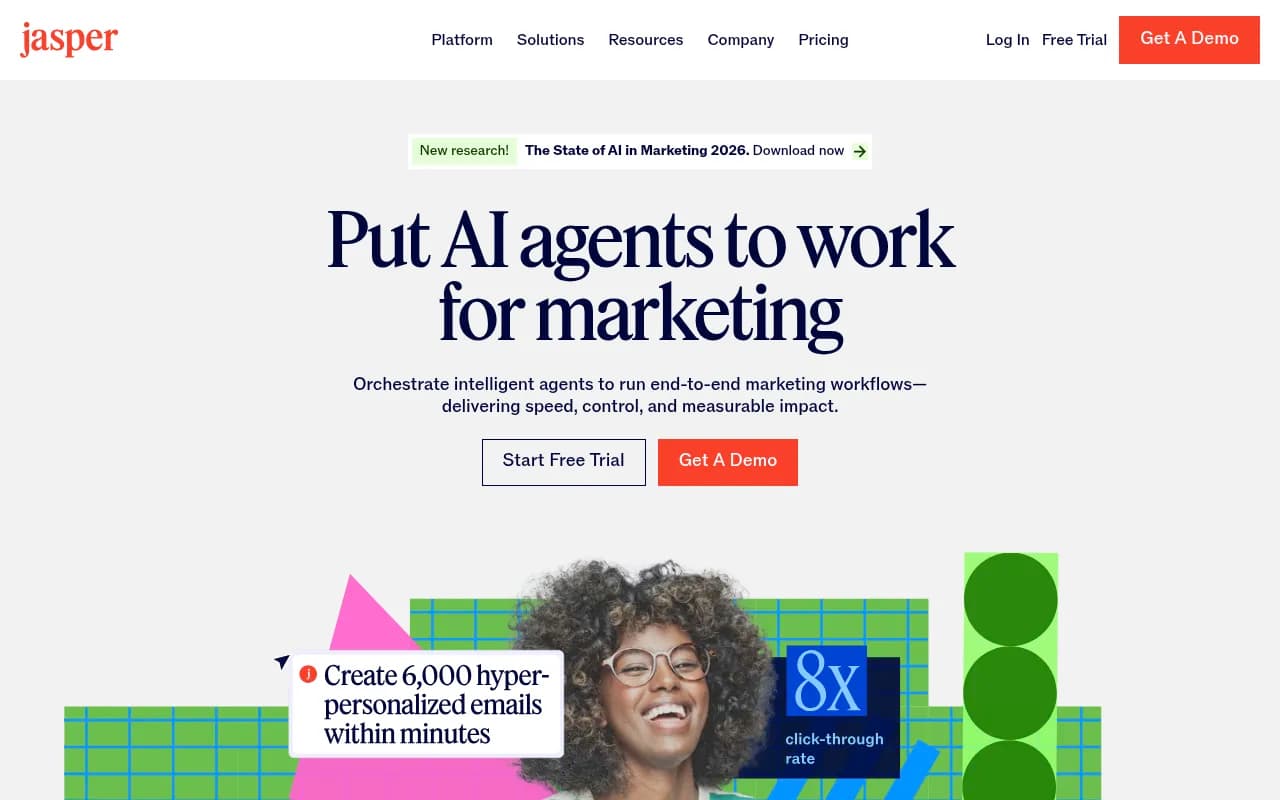
| Jasper | AI marketing content | Yes (agent-based) | No | Marketing copy at scale |
| Writer | Enterprise AI platform | Yes | No | Brand-consistent enterprise content |
| Promptwatch | GEO & AI visibility | Yes (gap-driven) | Yes (10 models) | Teams tracking and improving AI search presence |
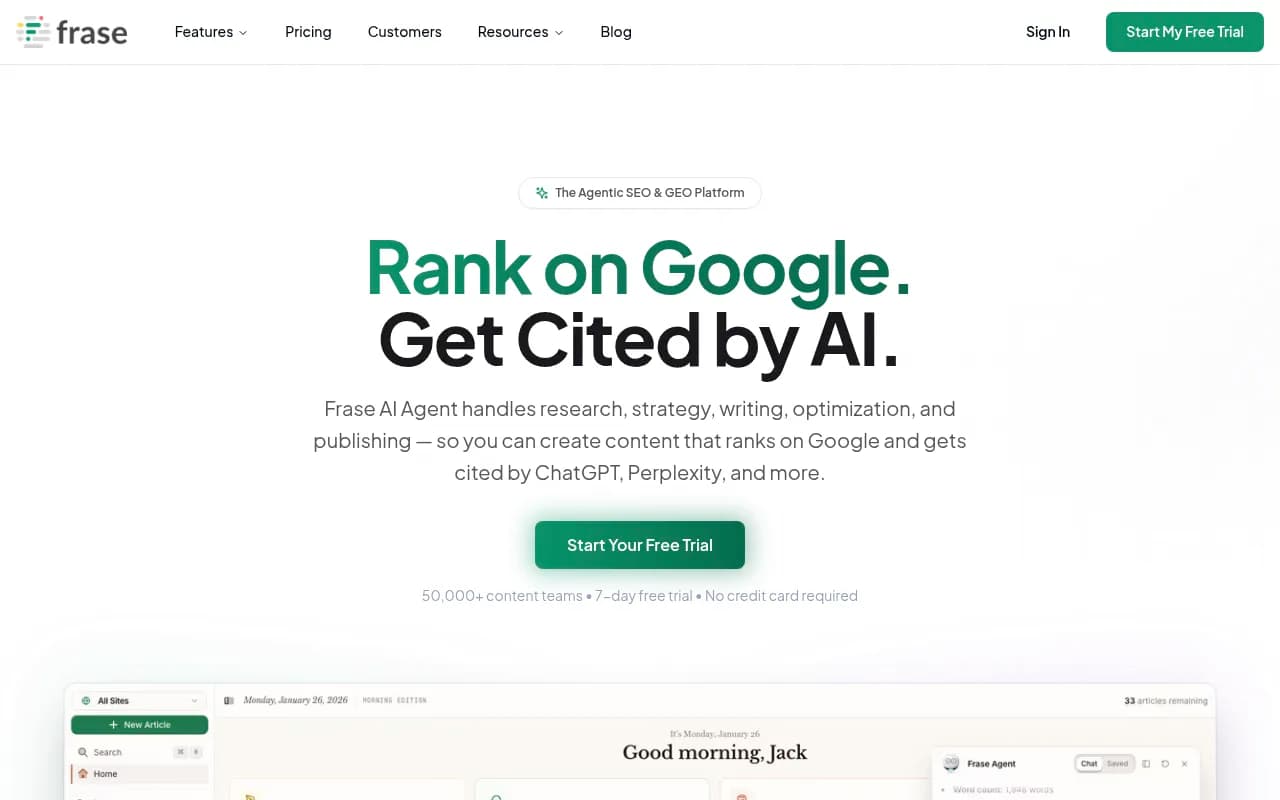
| Frase | SEO content research | Yes | No | Brief-to-article SEO workflows |
| MarketMuse | Content intelligence | Partial | No | Content strategy and topic authority |
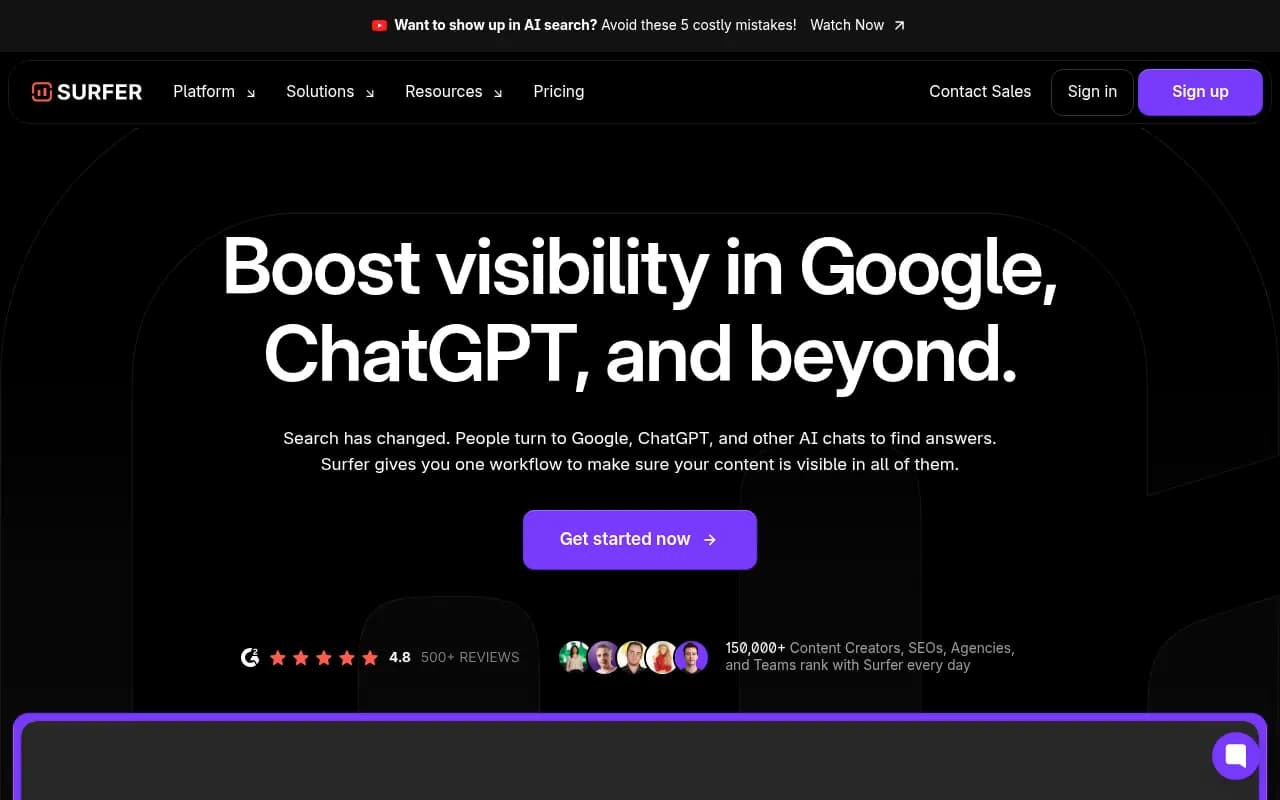
| Surfer SEO | On-page SEO optimization | Yes | No | SEO-optimized drafts |

The gap worth noting: AirOps helps you produce content at scale, but it doesn't close the loop on whether that content is actually working in AI search. For teams whose goal is to appear in ChatGPT answers, Perplexity citations, or Google AI Overviews, content production is only half the equation. You also need to know which prompts you're missing, which competitors are being cited instead of you, and whether your new content is getting picked up.
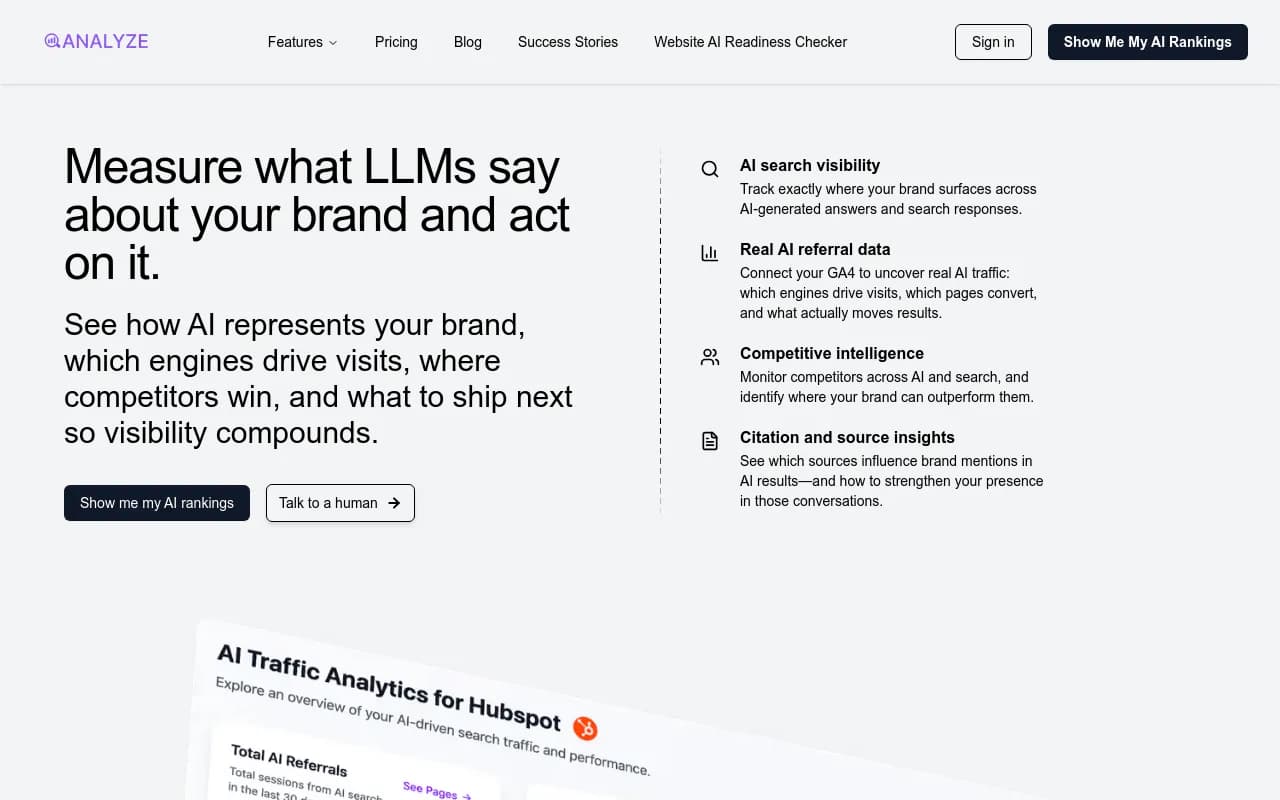
That's where a platform like Promptwatch becomes relevant — it's built specifically around that visibility loop, from identifying content gaps to tracking whether published content starts getting cited by AI models.

The ROI calculation: a framework for marketing teams
Rather than give you a generic "it depends," here's a practical framework for running your own AirOps ROI calculation.
Step 1: Estimate your current content cost per article
Take your fully-loaded cost (writer time, editor time, SEO review, publishing) and divide by monthly article output. Most teams land somewhere between $150-$600 per article depending on quality tier and team structure.
Step 2: Estimate AirOps' impact on that cost
Realistically, AirOps can reduce the human time per article by 40-60% for teams with mature workflows. But factor in:
- Platform cost (task-based, so model this at your expected volume)
- Setup and maintenance time (ongoing, not just one-time)
- Editorial review time (AI output still needs human review — don't assume zero)
Step 3: Factor in quality and performance
This is where most ROI analyses go wrong. If AI-assisted articles perform worse in search than human-written ones, the cost savings don't matter. Track performance separately for AI-assisted vs. human-written content before committing to full-scale deployment.
Step 4: Account for the visibility gap
Content production ROI is increasingly tied to AI search visibility, not just Google rankings. If your content isn't being cited by AI models, the ROI calculation is incomplete. Build in a way to track this — whether through AirOps' own metrics or a dedicated visibility platform.
What the broader AI ROI data tells us
The context here matters: just 41% of marketers can demonstrate ROI on their AI investments in 2026, down from 49% a year earlier, according to Benchmarkit's State of AI in Marketing report. That's a meaningful drop, and it reflects a real problem — teams are buying AI tools without clear measurement frameworks.

The teams that do demonstrate ROI tend to share a few characteristics: they started with a specific, measurable use case; they had baseline metrics before deploying; and they tracked outcomes at the content level, not just the platform level. AirOps can fit into that framework, but the platform itself won't build the framework for you.
Honest verdict: is AirOps worth it in 2026?
For the right team, yes. For most teams evaluating it, probably not yet.
AirOps is a serious platform for serious content operations. If you're running a high-volume SEO program, have established workflows, and need to scale execution without proportionally scaling headcount, it's worth a genuine evaluation. The G2 ratings reflect real satisfaction from teams in that situation.
But if you're earlier in your content maturity, if your team is still figuring out what content strategy works, or if you need AI visibility tracking alongside content production, AirOps will leave gaps that cost money to fill elsewhere.
The honest ROI question isn't "is AirOps good?" — it's "does my team have the operational maturity to extract value from it, and is content production actually my bottleneck?" If the answer to both is yes, the platform has a real case. If either answer is no, the money is better spent elsewhere.
For teams whose primary goal is improving how their brand appears in AI search results — not just producing more content — the tooling landscape has evolved enough that you should look at platforms built around that specific problem from the ground up, rather than adapting a content workflow tool to serve a visibility use case it wasn't designed for.