Key takeaways
- Peec AI and Nightwatch are solid monitoring tools -- they show you where you stand in AI search but don't help you close the gap.
- Promptwatch is the only platform in this group that combines monitoring, content gap analysis, AI content generation, and crawler logs in one place.
- Gauge and Orchly are lighter-weight options worth considering if your needs are simple and your budget is tight.
- For growing teams that need to actually improve AI visibility (not just track it), the monitoring-only tools will hit a ceiling fast.
- Pricing across all five tools sits in the $95--$249/month range for mid-market plans, so the real differentiator is what you can do with the data.
AI search has changed how buyers find products, vendors, and answers. When someone asks ChatGPT to recommend a project management tool, or asks Perplexity which CRM is best for a small sales team, the brands that show up in those responses are winning deals that never touch a Google results page.
The problem is that most marketing teams are still flying blind. They have no idea whether they're appearing in AI-generated answers, which competitors are getting cited instead, or what content they'd need to create to change that.
A new category of tools has emerged to fix this -- AI visibility platforms. But the category is crowded, and the tools vary wildly in what they actually do. Some are sophisticated optimization platforms. Others are dashboards that show you a number and leave you to figure out the rest.
This guide compares five tools that sit in the mid-market sweet spot: Peec AI, Promptwatch, Nightwatch, Gauge, and Orchly. All five are priced for growing teams (not enterprise budgets), and all five claim to help you track AI search visibility. Here's what they actually deliver.
What to look for in an AI visibility tool
Before diving into the tools, it's worth being clear about what actually matters.
Tracking whether your brand appears in AI responses is table stakes. The harder and more valuable problem is understanding why you're not appearing, and knowing what to do about it. That means you want a tool that can:
- Monitor brand mentions across multiple AI models (ChatGPT, Perplexity, Claude, Gemini, etc.)
- Show competitive share of voice -- not just your own numbers in isolation
- Identify content gaps: the prompts where competitors get cited but you don't
- Help you create content that addresses those gaps
- Track whether your new content actually improves your visibility over time
- Ideally, show you how AI crawlers are interacting with your site
Most tools in this space do the first two things. Far fewer do the rest.
The five tools at a glance
| Feature | Peec AI | Promptwatch | Nightwatch | Gauge | Orchly |
|---|---|---|---|---|---|
| Starting price | ~$95/mo | $99/mo | ~$39/mo | ~$49/mo | ~$79/mo |
| AI models tracked | ChatGPT, Perplexity, Google AI | 10+ (incl. Claude, Gemini, Grok, DeepSeek) | ChatGPT, Perplexity, Google AI | ChatGPT, Perplexity, Google AI | ChatGPT, Perplexity, Gemini |
| Competitor tracking | Yes | Yes | Limited | Yes | Yes |
| Content gap analysis | No | Yes | No | No | No |
| AI content generation | No | Yes | No | No | No |
| AI crawler logs | No | Yes | No | No | No |
| Traffic attribution | No | Yes (GSC, snippet, logs) | No | No | No |
| Reddit/YouTube insights | No | Yes | No | No | No |
| ChatGPT Shopping tracking | No | Yes | No | No | No |
| Free trial | 7 days | 7 days | Yes | Yes | Yes |
| Best for | Monitoring-focused teams | Full optimization cycle | Budget-conscious teams | Simple brand tracking | Multi-platform monitoring |
Peec AI
Peec AI is a Berlin-based monitoring platform that tracks brand visibility across ChatGPT, Perplexity, and Google AI Overviews. It uses UI scraping to simulate real user queries -- which means the data reflects what actual users see, not just API responses.

The platform does a few things well. Its share-of-voice reporting is clean and easy to read. You can see which competitors are getting cited for specific prompts, which sources AI models are pulling from, and how your visibility has changed over time. The interface is genuinely intuitive -- probably the cleanest UI in this comparison.
Where Peec AI hits its limit is the "now what?" question. It tells you that a competitor is getting cited for "best CRM for startups" and you're not. But it doesn't tell you what content you'd need to create to change that, and it doesn't help you create it. You get the diagnosis without the treatment plan.
Pricing starts around $95/month. The team seat policy is generous -- unlimited seats on all plans, which is a real advantage for agencies or larger marketing teams. Customer support reportedly includes direct Slack access to the founders, which is unusual and genuinely useful when you're getting started.
If your primary need is a clean monitoring dashboard with solid competitive data and you have a separate content workflow, Peec AI is a reasonable choice. If you need to actually move the needle on AI visibility, you'll outgrow it.
Promptwatch
Promptwatch takes a different approach. Where Peec AI stops at monitoring, Promptwatch is built around an optimization loop: find the gaps, create content to fill them, track the results.

The Answer Gap Analysis feature is the core of this. It shows you exactly which prompts your competitors are visible for but you're not -- not as a vague observation, but as a specific list of topics and questions that AI models want answers to but can't find on your site. That's genuinely actionable in a way that most monitoring dashboards aren't.
From there, the built-in AI writing agent generates articles, listicles, and comparisons grounded in citation data. This isn't generic content -- it's engineered around the specific prompts and sources that AI models actually cite. The platform has processed over 880 million citations, so the content recommendations are based on real patterns in how AI models select sources.
Beyond content, Promptwatch covers ground that none of the other tools in this comparison touch:
- AI crawler logs that show which pages ChatGPT, Claude, and Perplexity are actually reading on your site, and any errors they're hitting
- Traffic attribution that connects AI visibility to actual revenue (via Google Search Console integration, a code snippet, or server log analysis)
- Reddit and YouTube insights showing discussions that directly influence AI recommendations
- ChatGPT Shopping tracking for brands that sell products
- Prompt volume estimates and difficulty scores so you can prioritize high-value, winnable prompts
Coverage spans 10 AI models: ChatGPT, Perplexity, Google AI Overviews, Google AI Mode, Claude, Gemini, Meta/Llama, DeepSeek, Grok, Mistral, and Copilot. That's broader than any other tool in this comparison.
Pricing: Essential at $99/month (1 site, 50 prompts, 5 articles), Professional at $249/month (2 sites, 150 prompts, 15 articles, plus crawler logs and local tracking), Business at $579/month (5 sites, 350 prompts, 30 articles). A 7-day free trial is available.
The one honest caveat: the interface is more complex than Peec AI's. There's more to learn because there's more to do. Teams that want a simple monitoring dashboard might find it overwhelming at first. But for teams that are serious about improving their AI visibility rather than just watching it, that complexity pays off.
Nightwatch
Nightwatch started as a traditional rank tracking tool and has expanded into AI search monitoring. It tracks brand mentions across ChatGPT, Perplexity, and Google AI Overviews, with a focus on making the data accessible to teams that don't have dedicated SEO resources.
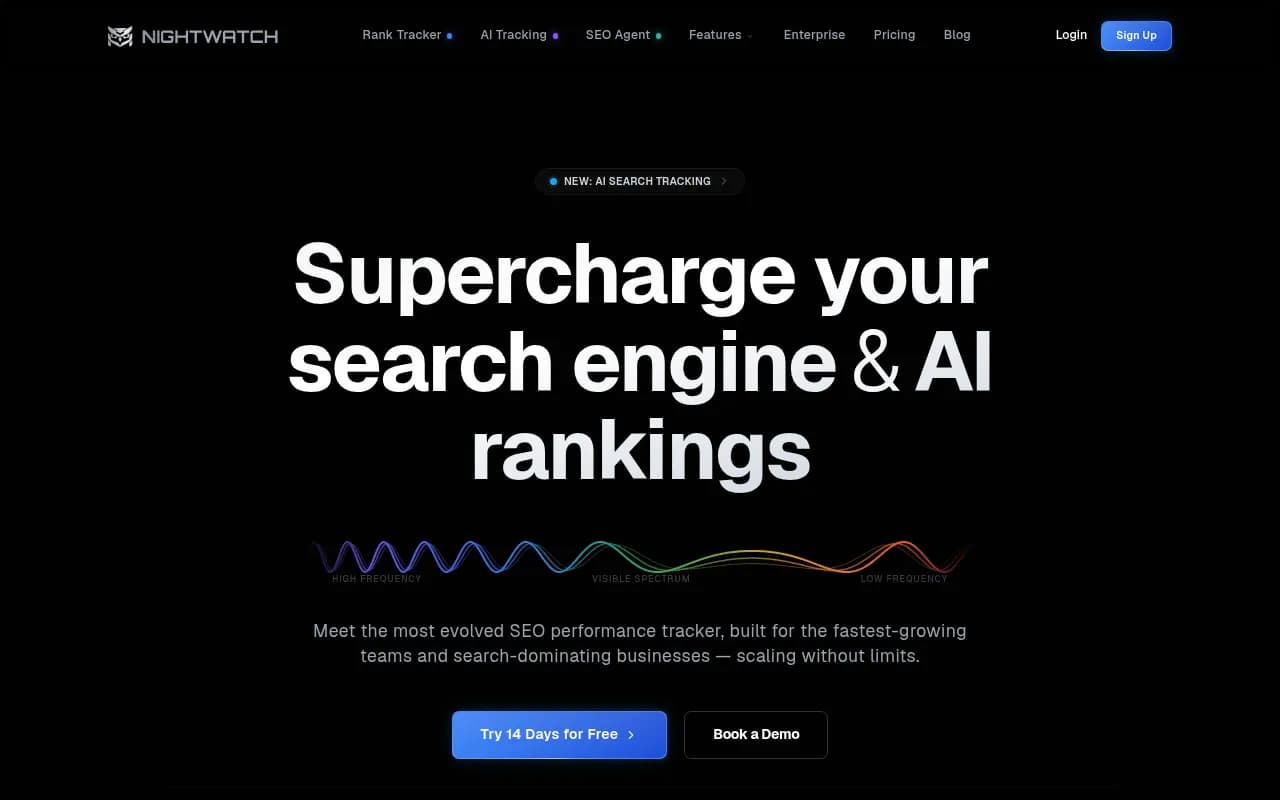
The pricing is the most accessible in this group -- plans start around $39/month, which makes it attractive for smaller teams or companies just starting to pay attention to AI visibility. The interface is straightforward, and the traditional SEO features (rank tracking, site audits) are solid if you still care about Google rankings alongside AI visibility.
The limitations are significant for teams with serious AI visibility goals. Competitor tracking is limited compared to Peec AI or Promptwatch. There's no content gap analysis, no content generation, no crawler logs, and no traffic attribution. It covers fewer AI models than Promptwatch.
Nightwatch makes sense as a starting point -- particularly if you're already using it for traditional SEO and want to add basic AI monitoring without switching tools. For teams that need to understand and improve their AI visibility in depth, it's not built for that job.
Gauge
Gauge is a focused AI visibility tracking tool that monitors brand mentions across ChatGPT, Perplexity, and Google AI Overviews. It's positioned as a straightforward, accessible option for marketing teams that want visibility data without a steep learning curve.
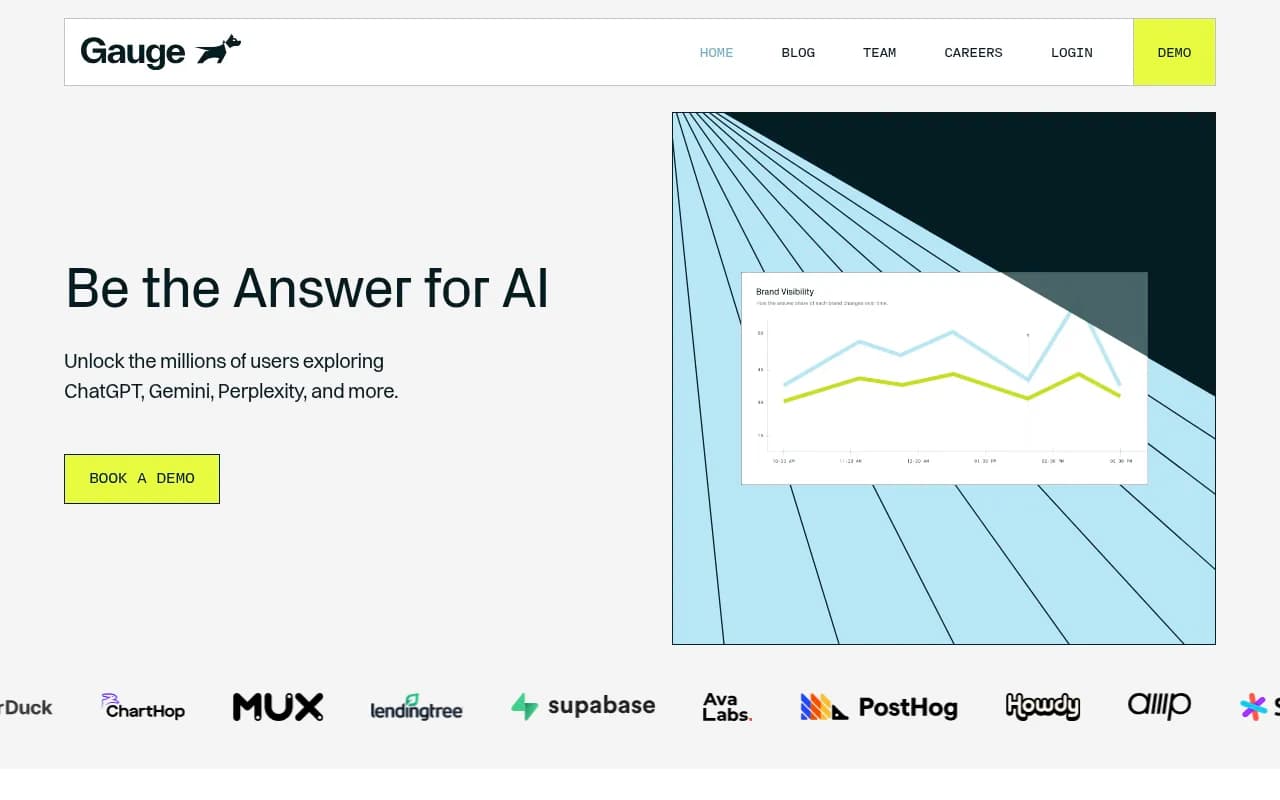
Plans start around $49/month, and the setup is quick. Gauge shows you brand mention frequency, competitive comparisons, and which prompts are driving visibility for you and your competitors. The reporting is clean and shareable, which makes it useful for teams that need to present AI visibility data to stakeholders who aren't deep in the weeds.
Like Peec AI, Gauge is a monitoring tool. It doesn't generate content, identify specific content gaps, or show you how AI crawlers interact with your site. The competitive tracking is present but less detailed than Peec AI's. Model coverage is limited to three platforms.
For a team that needs a simple, affordable way to answer "are we showing up in AI search?" and report that to leadership, Gauge works. For a team that needs to understand why they're not showing up and fix it, Gauge won't get them there.
Orchly
Orchly is a multi-platform AI visibility tracking tool that monitors brand mentions across ChatGPT, Perplexity, and Gemini. It's positioned as a mid-market option with a clean interface and reasonable pricing starting around $79/month.
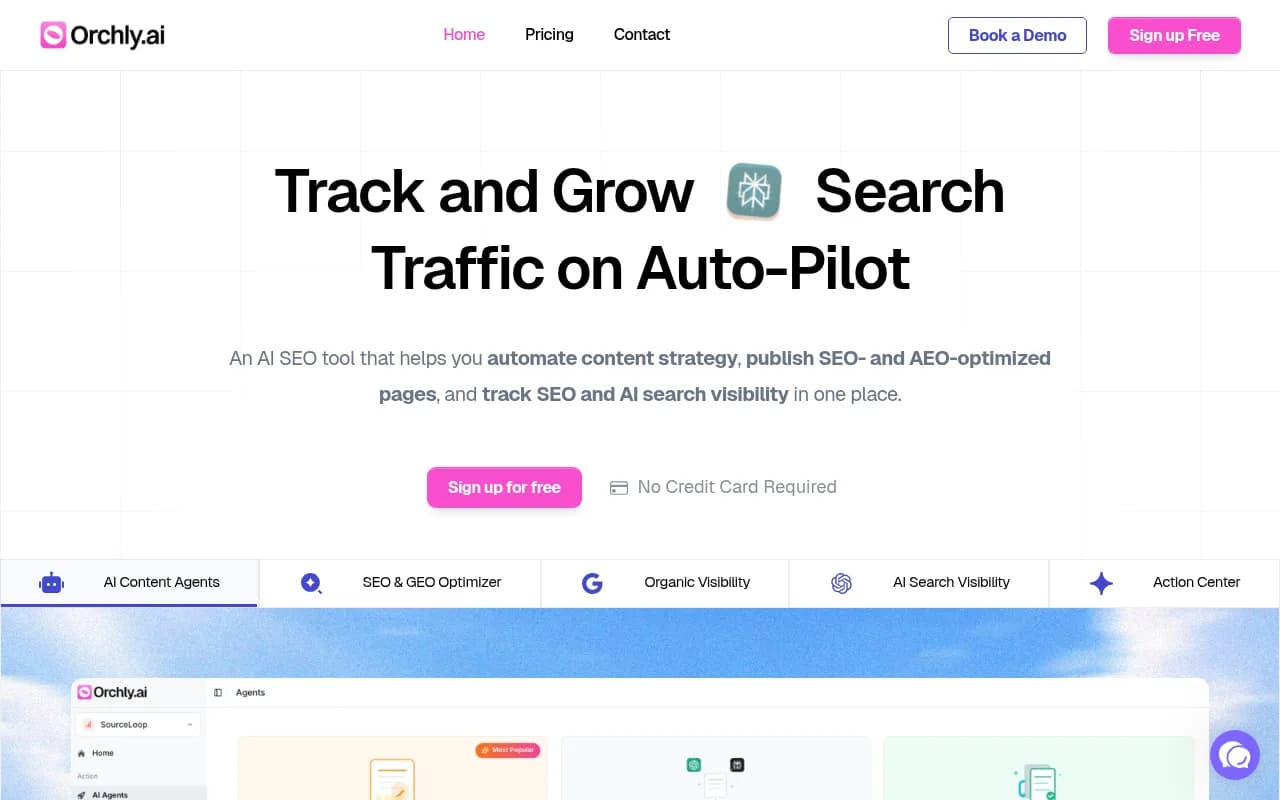
The platform's strength is breadth of monitoring across its supported models. Orchly shows share of voice, citation sources, and competitive positioning in a format that's easy to digest. It's a reasonable option for teams that want to track visibility across multiple AI platforms without committing to a more complex tool.
The limitations follow the same pattern as Gauge and Peec AI: Orchly monitors but doesn't optimize. No content gap analysis, no content generation, no crawler logs. Coverage is limited to three AI models, which misses Claude, Grok, DeepSeek, and others that are increasingly relevant.
How to choose
The right tool depends on what you actually need to accomplish.
If you just need to monitor and report: Peec AI, Gauge, or Orchly will do the job. Peec AI has the most detailed competitive data. Gauge is the simplest to use and present. Orchly sits in between. Nightwatch is worth considering if you're already using it for traditional SEO.
If you need to improve your AI visibility: Promptwatch is the only tool in this group that closes the loop. The monitoring tools will show you that you're losing to competitors in AI search -- Promptwatch shows you why and helps you fix it. The Answer Gap Analysis, AI content generation, and crawler logs are capabilities that don't exist in the other four tools.
If budget is the primary constraint: Nightwatch at $39/month or Gauge at $49/month are the most accessible entry points. Just go in knowing they're monitoring tools, not optimization platforms.
If you're an agency managing multiple clients: Promptwatch's agency pricing and multi-site support make more sense than the per-site pricing on the monitoring tools. The ability to generate content for clients directly from the platform also changes the economics.
One thing worth saying plainly: the monitoring-only tools in this comparison are useful, but they have a ceiling. Knowing that your competitor is getting cited for 40 prompts where you're not cited at all is valuable information -- but it's not a strategy. The teams that will win in AI search over the next few years are the ones that can act on that data, not just observe it.
A note on the broader landscape
These five tools represent the mid-market tier of a category that's expanding fast. There are also lighter-weight free or near-free options like ProductRank and AI Rank Checker for teams just getting started, and enterprise platforms like Profound and Evertune for large organizations with complex needs.
Profound

The mid-market is where most growing teams will spend their time. The tools in this comparison are all priced accessibly and don't require enterprise procurement cycles. The key question is whether you need a dashboard or an engine -- and that question is worth answering before you commit to any of them.
For most teams that are serious about AI search visibility in 2026, the monitoring-only tools are a starting point, not a destination. The gap between "we track our AI visibility" and "we actively improve our AI visibility" is where competitive advantage actually lives.