Key takeaways
- Profound has moved toward an "AI Marketer" with Agents, but its agent work runs on credits, so content is metered rather than simply included. Its public pricing page now shows a free trial and custom Enterprise pricing for brands.
- Older articles cite $99 Starter and $399 Growth plans. Our research could not confirm those on the current pricing page, so check before you budget around them.
- The real question is what "included" means: a fixed number of articles, a pool of credits, or unlimited drafts. Read the caps.
- Content formats matter more than volume. Promptwatch Data shows ChatGPT cites product pages, landing pages, listicles, how-tos and comparisons far more than news.
- Most comparison articles on this topic are written by vendors who rank themselves first. Treat prices as starting points and verify them on the vendor's own page.
Why "content included" is the right filter
A visibility tracker tells you that ChatGPT recommends three competitors and not you. Then you are left with a to-do list and no one to do it. That gap is why people look past monitoring-only tools.
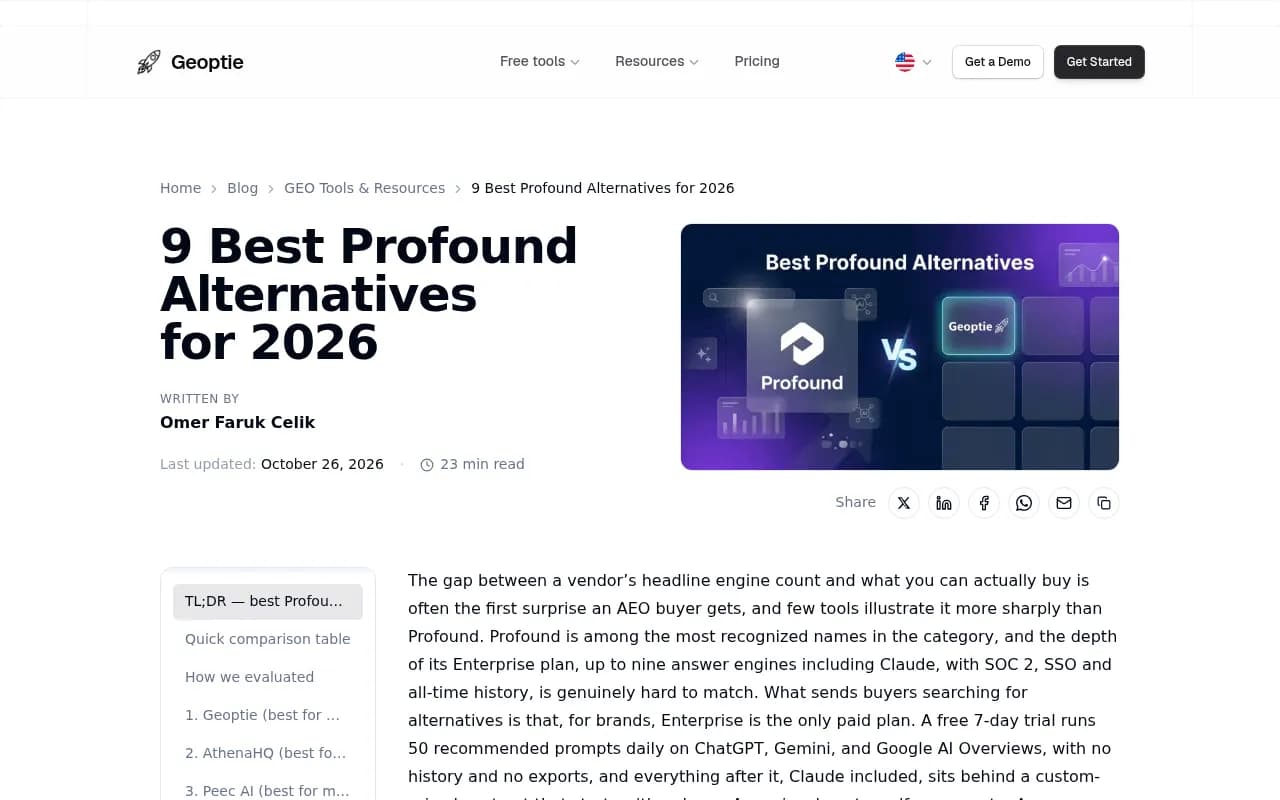
Profound is a strong product. It has real-user prompt volume data, front-end response capture and, at the Enterprise level, up to nine answer engines including Claude, with SOC 2 and SSO. Profound is what a lot of enterprise buyers shortlist first.
Profound

The friction is on the buying side. According to the official pricing page, brands get a free 7-day trial (50 prompts a day on ChatGPT, Gemini and Google AI Overviews, no history, no exports) and then a custom Enterprise contract. Agencies have a self-serve Agency Growth plan with 400 credits per month per client workspace. Geoptie reports that it costs $99/mo plus $399/mo per client workspace, covering only ChatGPT, Perplexity and Google AI Overviews per workspace.
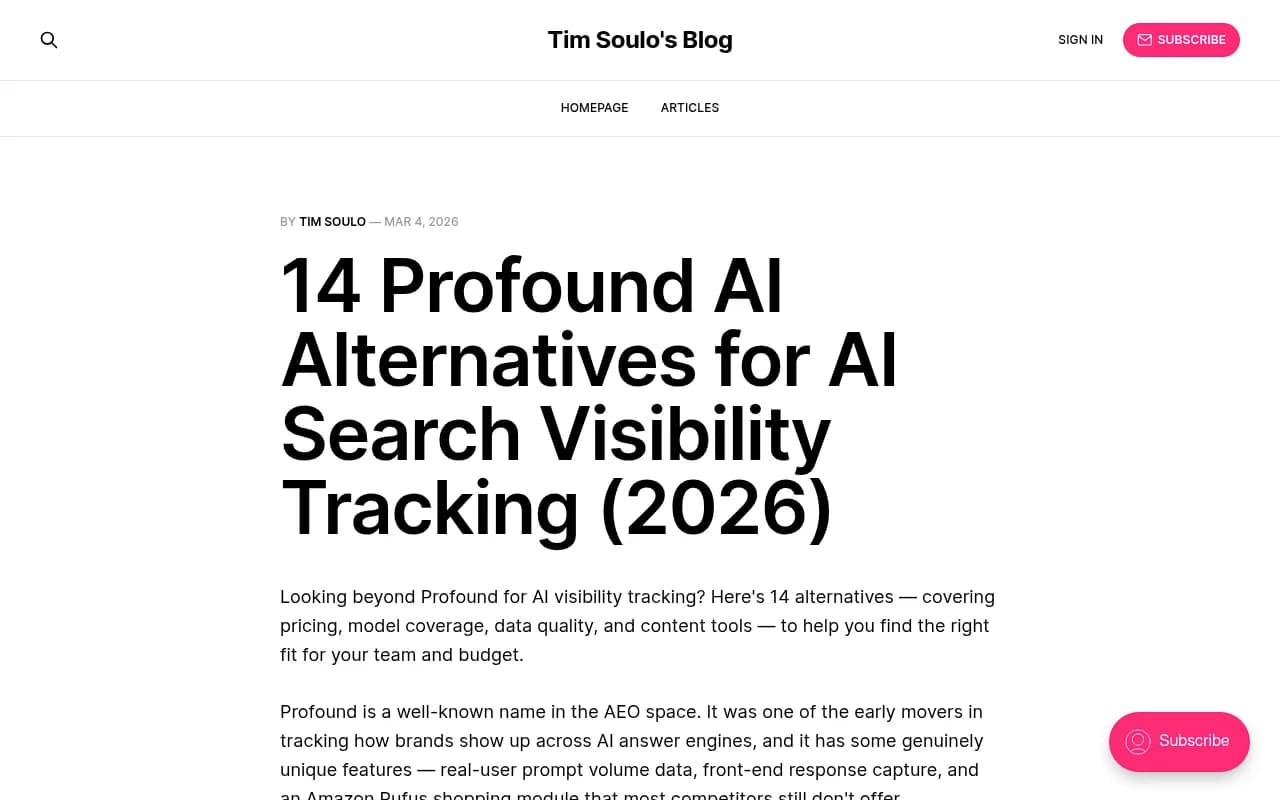
Older write-ups, including the Tim Soulo post and a Frase article from September 2026, quote a $99 Starter (ChatGPT only) and a $399 Growth plan (three engines, 100 prompts, three seats). They may be stale, or they may sit behind a brands/agencies toggle. I can't tell which, so I'd treat them as unverified.
One more detail matters for this topic. Profound does include content and agent work, but it is credit-metered, and overage can either bill or pause. "Content included" there means "content up to your credit pool."
What to look for before you pick
Four things decide whether a bundled content feature is worth anything.
The cap, not the headline
A plan that says "AI content included" might mean 10 articles a month, a credit pool that drains on every agent run, or per-page optimizations metered by tier. ContentMonk, for example, lists 10 articles a month and 10,000 repurposing credits at $49/mo. Ten articles is a fine number for a small team and a bottleneck for anyone planning a daily publishing cadence.
Whether content is grounded in your data
A generic AI writer does not know which prompts you lose or which pages AI crawlers actually read. Content that comes from citation data, prompt gaps and crawler logs is more likely to hit a real gap than content from a keyword list.
Formats that get cited
Promptwatch Data's ChatGPT citation share by content type report (Sep 28 to Oct 4, 2026) found product pages were 22.4% of classified citations and landing pages 16.8%. Listicles were 13.6%, how-tos 8.7%, comparisons 5.9% and news 5.7%. For commercial prompts, product pages, landing pages, listicles and comparisons made up almost 70% of citations.
So judge a content generator by whether it can produce those formats, not by how many blog posts it can spit out. News-style content is a poor bet: in Promptwatch's content half-life report, news lost half its cited pages within 36 days, while landing pages and docs stayed cited longest.
Publishing and measurement
Drafts that sit in a dashboard are not a result. Look for CMS publishing and some way to see whether the published page got crawled, cited and clicked.
Comparison table
Prices come from vendor pages and third-party roundups as of our research. Verify them before buying.
| Tool | Starting price (reported) | Content generation | Publishing | Watch out for |
|---|---|---|---|---|
| Promptwatch | Free tier; $95/mo Essential; $579/mo Business | Content Creation, Content Refresh, gap analysis; automated Content Agent on Business | WordPress, Webflow, Framer | Agent Credits and article counts vary by plan |
| Frase | Verify on vendor page | Research, briefs, drafting in brand voice, SEO and GEO scoring | Configurable autonomy level | Frase's own article ranks itself first |
| Writesonic | Verify on vendor page | Tracking turned into to-do list, on-page edits | CMS push | Check plan limits |
| AthenaHQ | $295/mo (Geoptie) | Action center, content agent | Shopify path | Higher entry floor |
| ContentMonk | $49/mo | 10 articles/mo, 10,000 repurposing credits | Not verified | Small article cap |
| AIclicks | $59/mo Starter | Actionable insights, content tools | Not verified | Check tier caps |
| Geoptie | $49/mo | Unmetered audits and content generation (vendor claim) | Not verified | Four engines per brand at a time |
| SE Ranking | Verify on vendor page | Writing help, on-page checker | Not verified | Tracking is a module in a wider suite |
The options, in more detail
Promptwatch
Full disclosure: 1001 SEO Media, which publishes this site, uses Promptwatch as its AI visibility platform. That's a reason to be careful in how I describe it, so here are the facts rather than adjectives.
Promptwatch is built around a loop: find the prompts where competitors get cited and you don't, generate content for those gaps, publish it, then check whether AI crawlers and citations picked it up. The Content Agent (Business and Enterprise) plans, writes and publishes on a calendar with a monthly budget and a review inbox, or hands-off. Content Creation writes single articles from a brief, and Content Refresh gives diff-style updates for existing pages. A Knowledge Base and Brand Book keep tone consistent.

Where it differs from tracker-first tools is the grounding data: IP-verified AI crawler logs, visitor analytics for AI-referred traffic, prompt volumes and difficulty, and Search Console and Bing data next to AI data. Published pages come back as actions if they underperform.
The pricing has caps you should read. Essential ($95/mo) has 50 prompts and 500 Agent Credits but no AEO articles. Professional ($245/mo) includes 5 AEO articles, and Business ($579/mo) includes 10 AEO articles plus the automated Content Agent. Agency plans don't include the Content Agent or AEO articles. Confirm current numbers at promptwatch.com/pricing.
For a wider view of the category, the GEO software directory lists tools that track and optimize for AI search.
Frase
Frase comes from the content side and added AI visibility tracking. Its own comparison article describes daily tracking across ChatGPT, Perplexity, Claude, Gemini and Google AI, plus research, briefs, drafting in brand voice and publishing at a chosen autonomy level. It also has Content Guard, which watches for decay through Search Console and drafts corrections, an AI crawler log, and a 7-day free trial without a card.
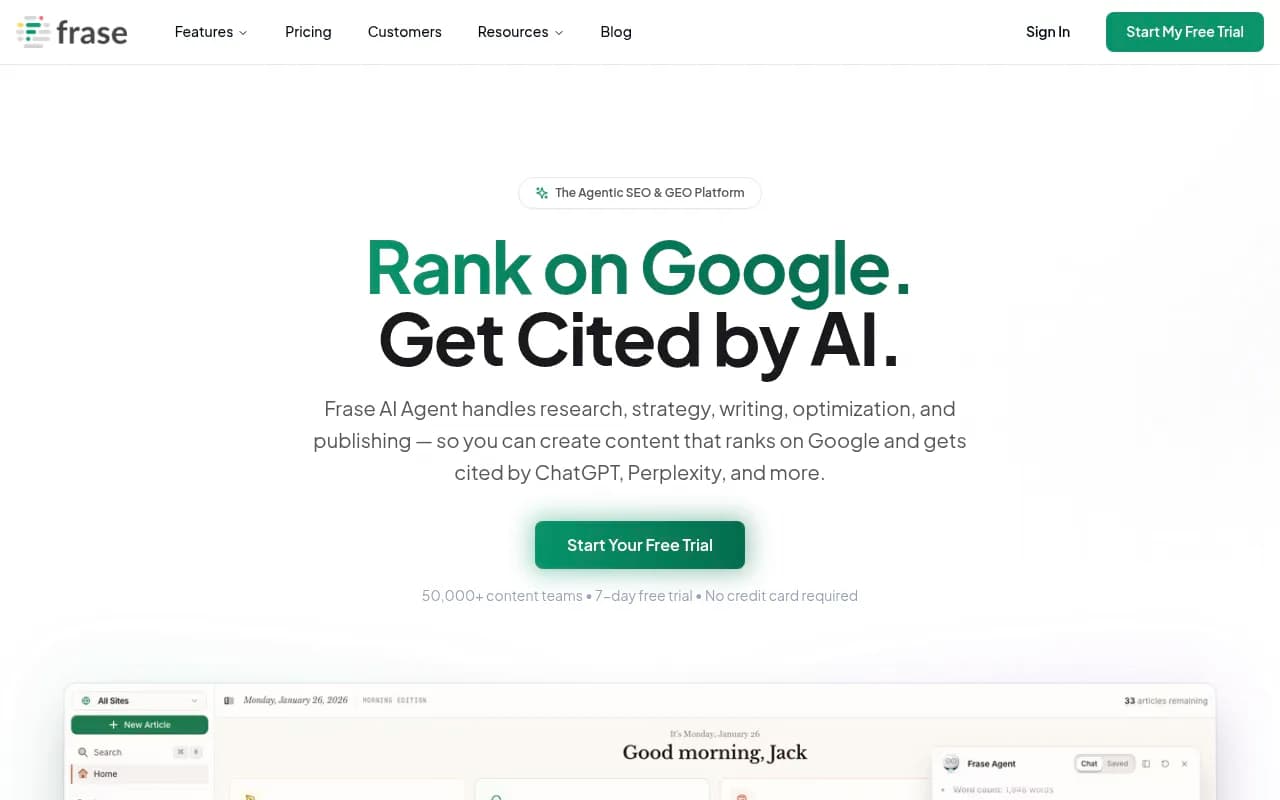
The caveat is obvious: that article ranks Frase first on Frase's own blog. The features are plausible and worth a trial, but the ranking is marketing.
Writesonic
Writesonic is a writing tool that added visibility tracking. Frase's ranking describes it as turning tracking into a to-do list and pushing on-page edits to a CMS. If your team already writes in Writesonic, this is the path of least resistance.

AthenaHQ
AthenaHQ has an action center, a content agent and a Shopify publishing route. Geoptie lists it at $295/mo with eight engines on a single self-serve plan. That's a higher floor than most on this list, but you get coverage and execution in one plan.

SE Ranking
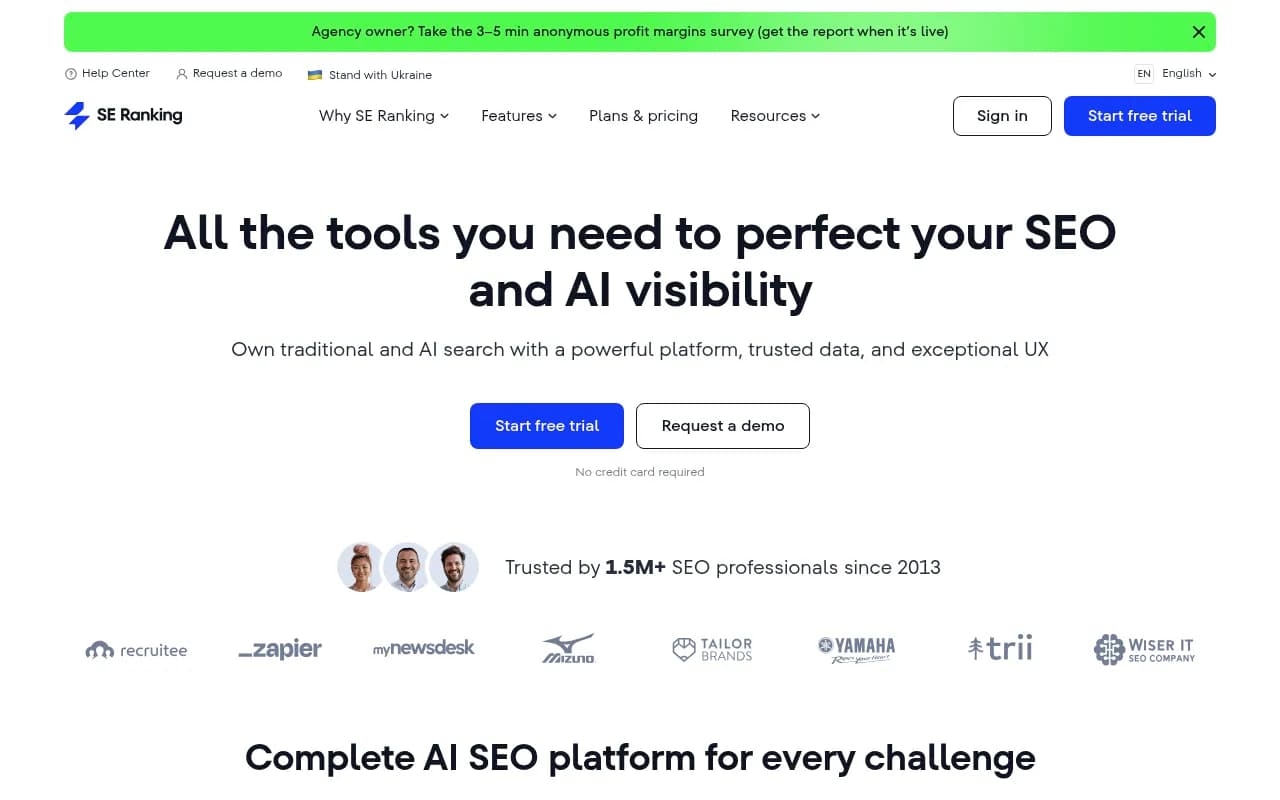
SE Ranking pairs daily AI prompt tracking with writing help and an on-page checker. It makes sense if you want classic rank tracking and audits in the same login, and are fine with AI visibility being one module among many.
ContentMonk and AIclicks
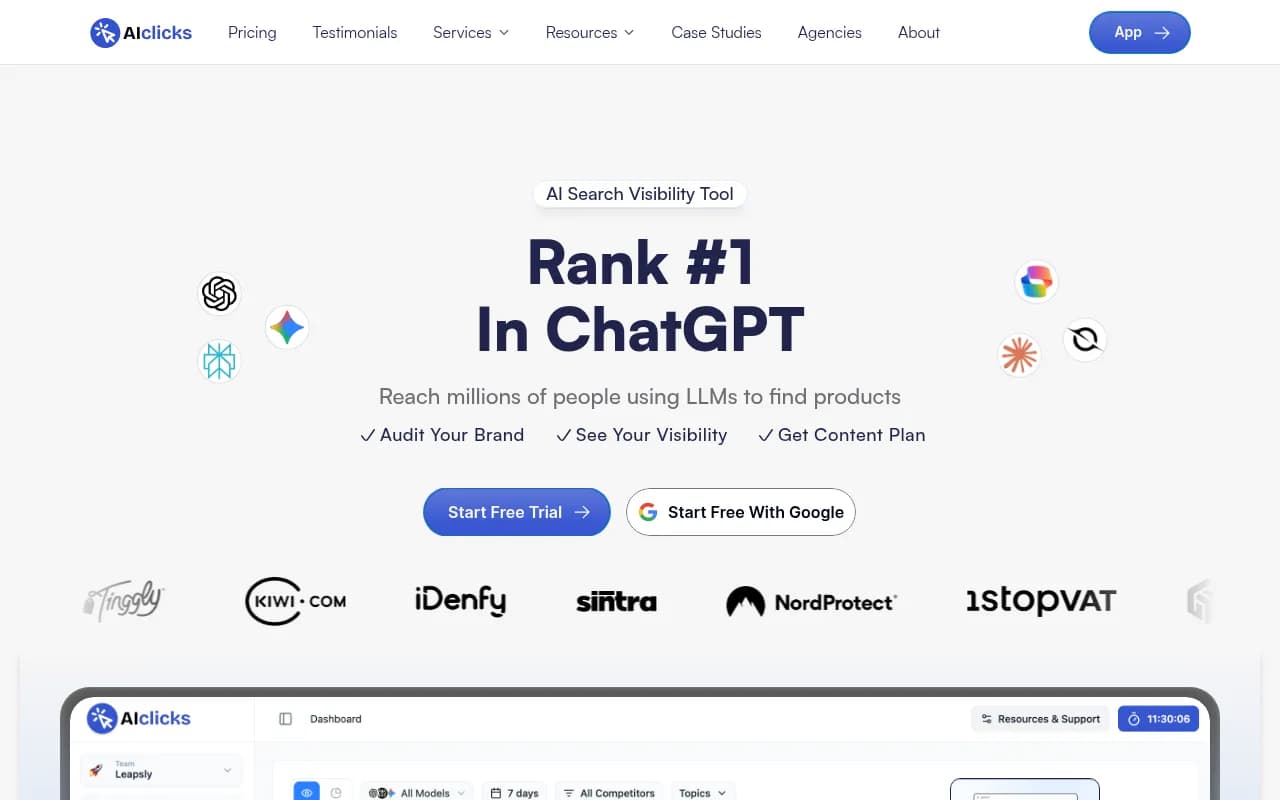
ContentMonk's $49/mo Starter includes 10 AI articles a month and 10,000 credits for repurposing into LinkedIn posts, newsletter sections and Reddit content. Pro is $99+/mo. AIclicks runs $59 Starter, $189 Pro and $499 Business with a 7-day trial. Both come from a single AnyLeads roundup, so I'd check each vendor's site.
Geoptie
Geoptie is the cheapest multi-engine entry on this list at $49/mo, with seven engines including Claude and, per the vendor, unmetered audits and content generation. The limitation, also from its own comparison, is four engines per brand at a time. The pricing claims are vendor-published.
Content-first tools with tracking added
Tim Soulo's list also names Surfer SEO, AirOps and Clearscope as tools that mix tracking with content. They're optimizers and workflow engines first, so they fit teams that already have a content process and want AI visibility added.

Tracking-only options to skip for this purpose
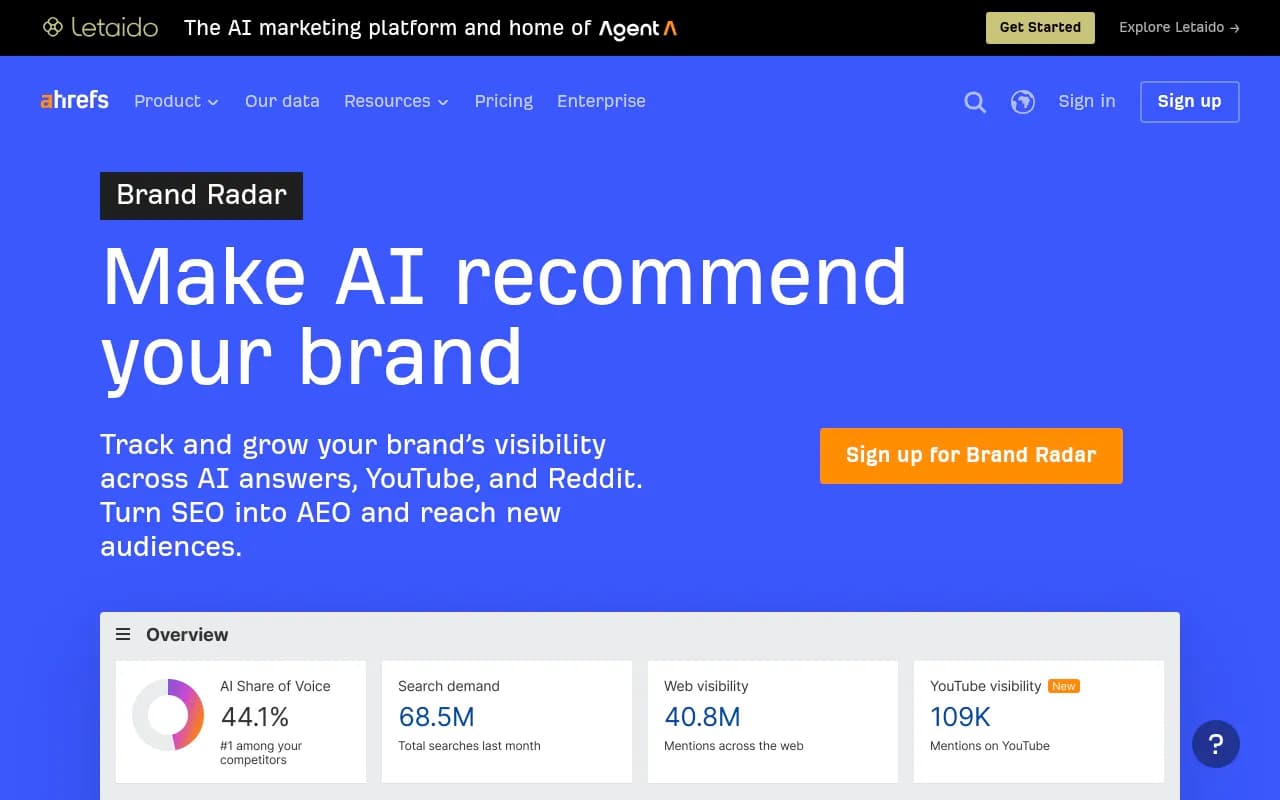
Ahrefs Brand Radar is worth knowing about for data quality: its 243M+ prompts come from People Also Ask data, and pricing runs from $50/mo for 2,500 checks up to $699/mo for all six AI indexes. But it is a tracking tool without content generation, so it doesn't meet the "included" test. Peec AI and Otterly are in the same camp.
Which one fits your situation
If you want the whole loop, from prompt gap to published page to measured result, Promptwatch and Frase are the two that describe all of it. If you're price-driven and just need articles plus some tracking, ContentMonk, AIclicks and Geoptie sit around $49 to $59. If you already live inside a writing tool or an SEO suite, Writesonic or SE Ranking saves a migration.
Enterprise buyers who need SOC 2, SSO and nine engines may still land on Profound itself. It's a legitimate choice. You just won't get a public price for it.
Questions to ask on a demo
- How many articles or optimizations are included per month, and what happens when I hit the cap?
- Is content generated from my citation and crawler data, or from a generic brief?
- Which formats can it produce: product pages, comparisons, listicles, FAQs?
- Where does it publish, and can I review drafts before they go live?
- How do I see whether a published page was crawled, cited and clicked?
- Do agent runs, refreshes and image generation draw from the same credit pool?
Before you buy
Price pages change fast in this category, and the sources behind this guide are mostly vendor blogs. We did not verify current pricing for Writesonic, AirOps, AthenaHQ, Scrunch, Surfer or Frase on their own pages, so do that first. For broader coverage of AI visibility trackers, see the AI rank tracking directory. To start with something free, Promptwatch has a free AI Visibility Report that scans how ChatGPT, Gemini and Perplexity talk about your brand, and Frase offers a 7-day trial with no card.