Key takeaways
- Relixir is a capable end-to-end GEO platform with strong content automation, but its $500+ entry price makes it a tough sell for SMBs and agencies managing multiple clients.
- Most competitors fall into two camps: monitoring-only dashboards (Otterly.AI, Peec.ai, AthenaHQ) or full-stack optimization platforms (Relixir, Promptwatch, Profound).
- Promptwatch is the only platform rated "Leader" across all categories in a 2026 comparison of 12 GEO tools — and it covers the full loop from gap analysis to content generation to traffic attribution.
- Pricing matters a lot here. Promptwatch starts at $99/mo vs Relixir's $500+ entry, which changes the calculus significantly for smaller teams.
- No single tool wins on every dimension. The right choice depends on whether you need monitoring, content creation, technical crawl data, or all three.
The GEO platform market has gotten crowded fast. Two years ago, "AI visibility" wasn't even a category. Now there are dozens of tools claiming to help you rank in ChatGPT, Perplexity, Claude, and Google AI Overviews — and the differences between them are genuinely hard to parse from a marketing page alone.
Relixir is one of the more ambitious entrants. It positions itself as an "autonomous" GEO engine, combining visibility tracking with automated content generation. But ambitious doesn't always mean best fit. At $500+ per month for entry-level access, it's priced for enterprise teams — and the feature set reflects that.
This guide breaks down how Relixir stacks up against the strongest alternatives in 2026, including what each platform actually does well and where the gaps are.
What Relixir actually does
Relixir is built around the idea that GEO should be largely automated. The platform combines an AI-native CMS for publishing content, a GEO analytics suite for tracking AI search visibility, and automated content generation workflows. The pitch is that you can run a continuous loop — monitor visibility, identify gaps, generate content, publish — without heavy manual intervention.
That's a genuinely useful vision. The execution is solid for large enterprise teams with the budget and technical resources to configure it properly. But several reviewers on third-party sites note that the $500+ entry price is a real barrier, and the platform's complexity can be overkill for teams that just want to know why ChatGPT isn't recommending their product.
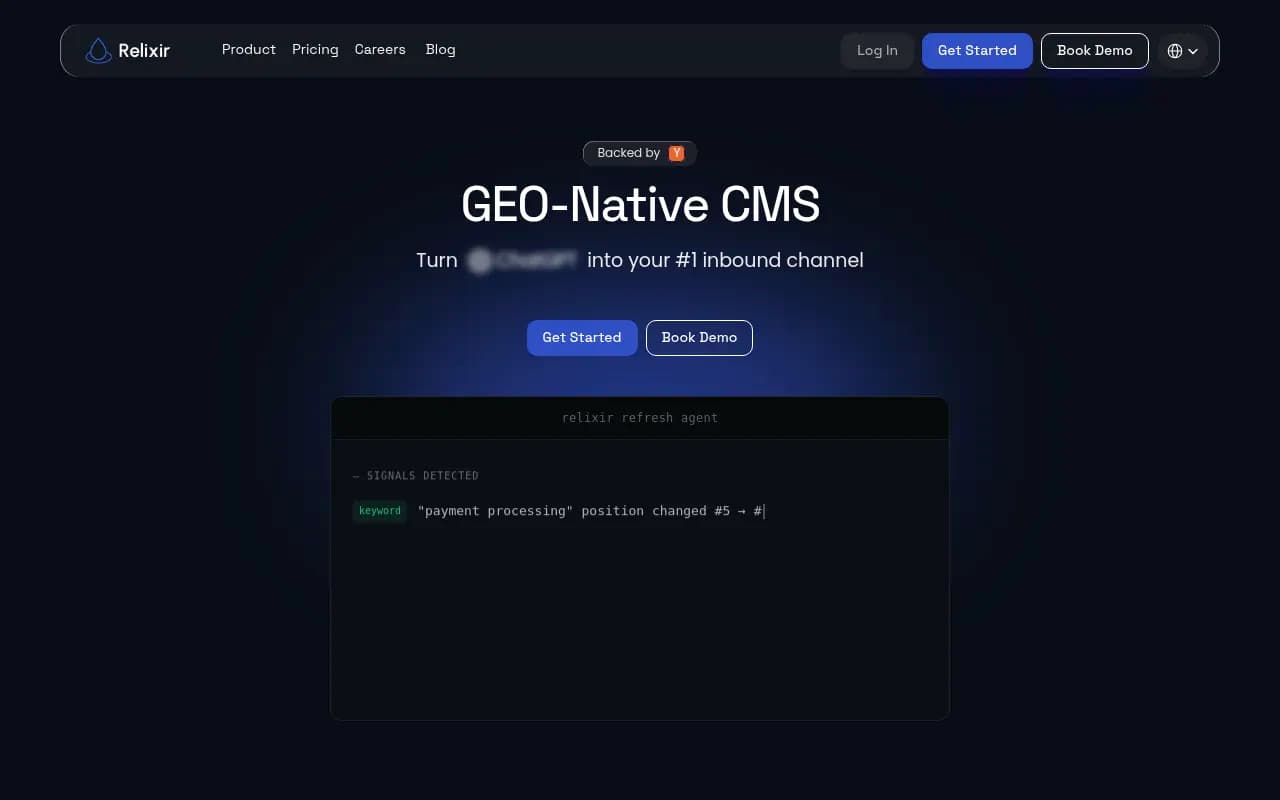
Key capabilities Relixir offers:
- AI search visibility monitoring across major LLMs
- Automated content generation tied to visibility gaps
- An AI-native CMS for publishing and managing GEO content
- Competitor visibility comparisons
- Analytics for tracking how content changes affect AI citations
What it's missing or where it's weaker:
- No Reddit or YouTube citation tracking (a real gap, since both heavily influence AI recommendations)
- No AI crawler logs showing which pages AI bots are actually visiting
- No ChatGPT Shopping tracking
- Pricing makes it inaccessible for most agencies and SMBs
The competitive landscape in 2026
Before getting into individual comparisons, it helps to understand the three tiers of GEO tools that exist right now:
Tier 1 — Monitoring only. These tools show you where you appear (or don't) in AI responses. They're useful for awareness but don't help you fix anything. Examples: Otterly.AI, Peec.ai, AthenaHQ, SE Visible.
Tier 2 — Monitoring + content guidance. These platforms identify gaps and give you recommendations, but the actual content creation is still on you. Examples: Profound, Scrunch AI, Search Party.
Tier 3 — Full-stack optimization. These platforms close the loop: find gaps, generate content, track results, attribute traffic. Examples: Relixir, Promptwatch.
Relixir sits in Tier 3, which is the right place to be. The question is whether it's the best option within that tier.
Head-to-head comparison
Relixir vs Promptwatch
This is the most direct comparison, because both platforms aim to be end-to-end GEO solutions rather than just trackers.
Promptwatch covers 10 AI models (ChatGPT, Perplexity, Claude, Gemini, Google AI Overviews, Google AI Mode, Grok, DeepSeek, Copilot, Mistral, Meta AI) and is built around what it calls the "action loop": find gaps via Answer Gap Analysis, generate content with its built-in AI writing agent, then track results at the page level with traffic attribution.

Where Promptwatch pulls ahead of Relixir:
- AI crawler logs: Real-time logs showing which pages ChatGPT, Claude, and Perplexity bots are actually visiting, how often, and what errors they encounter. Relixir doesn't have this.
- Reddit and YouTube tracking: Promptwatch surfaces discussions and videos that directly influence AI recommendations. This matters because AI models frequently cite Reddit threads and YouTube content. Relixir ignores this channel entirely.
- ChatGPT Shopping tracking: Monitor when your brand appears in ChatGPT's product recommendations and shopping carousels. Not available in Relixir.
- Prompt intelligence: Volume estimates and difficulty scores for each prompt, plus query fan-outs showing how one prompt branches into sub-queries. Useful for prioritizing what to work on.
- Pricing: Promptwatch starts at $99/mo (Essential tier: 1 site, 50 prompts, 5 articles). Relixir's entry point is $500+. That's a significant difference for smaller teams.
Where Relixir holds its own:
- The AI-native CMS is a genuine differentiator for teams that want to manage all GEO content in one place
- Automated content workflows are mature and well-integrated with the visibility data
For most marketing teams and agencies, Promptwatch covers more ground at a lower price point. The 2026 comparison of 12 GEO platforms rated Promptwatch as the only "Leader" across all categories — monitoring, content generation, crawler data, and traffic attribution.
Relixir vs Otterly.AI
Otterly.AI is a monitoring-only platform. It tracks brand mentions across ChatGPT, Perplexity, and Google AI Overviews, and it does that reasonably well. But it stops there. No content generation, no crawler logs, no gap analysis that tells you what to do about what you're seeing.
Otterly.AI

If you're just starting out and want to understand your current AI visibility before committing to a full platform, Otterly.AI is a reasonable starting point. But you'll quickly hit its ceiling.
Relixir is the better choice if you want to act on what you find. The gap is meaningful.
Relixir vs Peec.ai
Peec.ai tracks brand visibility across ChatGPT, Perplexity, and Claude. It's clean, easy to use, and more affordable than Relixir. But like Otterly.AI, it's fundamentally a monitoring tool.

The Hikoo comparison between Peec.ai and Relixir (though the page returned a 404 during research) is a common question teams ask when evaluating entry-level vs. full-stack options. The honest answer: if your budget is tight and you just need visibility data, Peec.ai works. If you need to actually move the needle, you need something that generates and optimizes content — which means Relixir, Promptwatch, or a similar full-stack platform.
Relixir vs AthenaHQ
AthenaHQ has a strong feature set for monitoring — competitor analysis, sentiment analysis, AI search volume tracking. It's more capable than Otterly.AI or Peec.ai. But it's still primarily a monitoring platform. The content optimization and generation capabilities that define Tier 3 tools aren't there.

Relixir's own blog positions itself as the top AthenaHQ alternative, and that's a fair claim. If you're on AthenaHQ and frustrated that you can see your visibility gaps but can't do anything about them from within the platform, Relixir (or Promptwatch) is the logical next step.
Relixir vs Profound
Profound is an enterprise AI visibility platform with solid monitoring across 9+ AI search engines. It has a strong feature set and is trusted by larger brands. Pricing is higher than Promptwatch and comparable to or above Relixir.
Profound

Profound's weakness is the same as AthenaHQ's: it's monitoring-heavy. The content generation and optimization capabilities that Relixir and Promptwatch offer aren't Profound's core strength. For pure enterprise visibility tracking, Profound is credible. For teams that need to close the loop with content, it falls short.
Relixir vs Scrunch AI
Scrunch AI tracks brand visibility across LLMs and has some content optimization features. It's a mid-tier option — more capable than pure monitoring tools, less comprehensive than Relixir or Promptwatch.
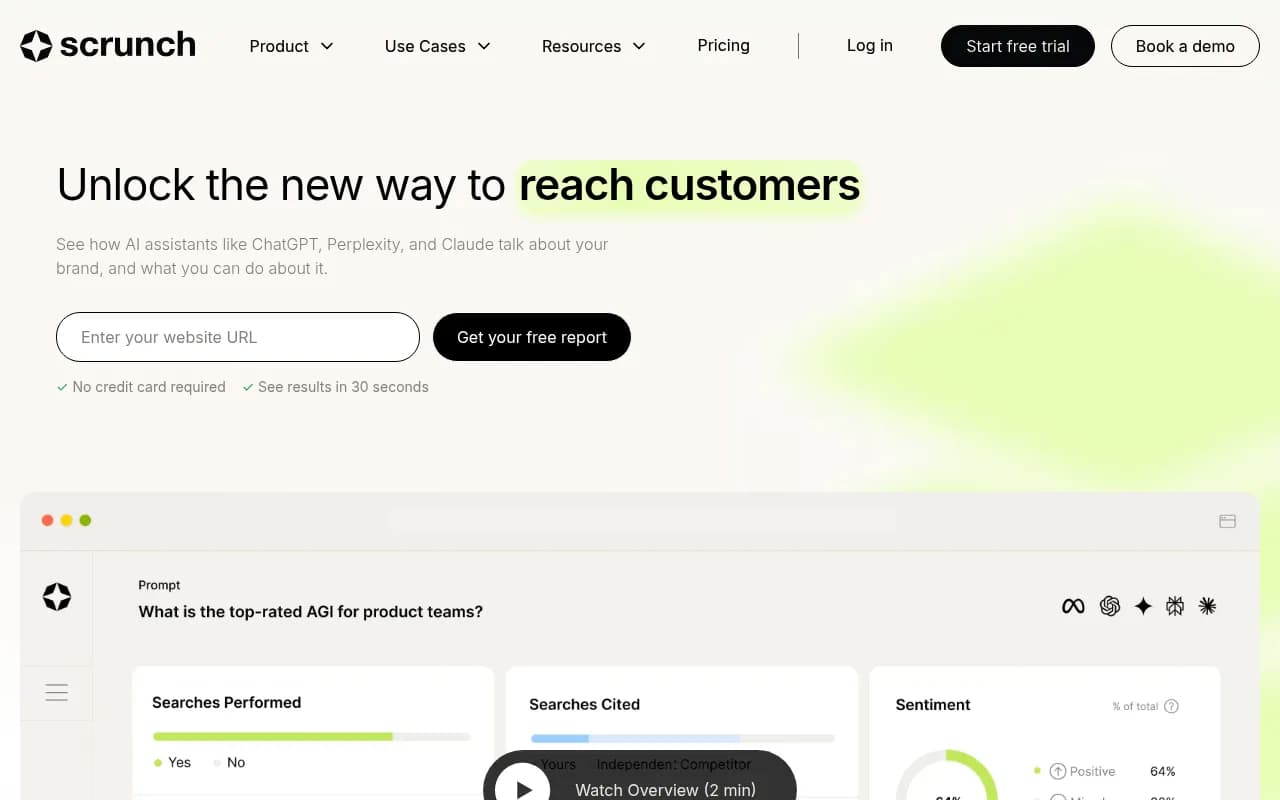
Relixir's blog explicitly targets Scrunch AI users looking for alternatives, positioning itself as "the most comprehensive GEO platform" with "automated content generation and measurable AI search visibility." That positioning is accurate — Relixir does more than Scrunch AI. Whether the price difference is justified depends on your scale.
Feature comparison table
| Feature | Relixir | Promptwatch | Profound | AthenaHQ | Otterly.AI | Peec.ai |
|---|---|---|---|---|---|---|
| AI visibility monitoring | Yes | Yes | Yes | Yes | Yes | Yes |
| Content gap analysis | Yes | Yes | Limited | Limited | No | No |
| AI content generation | Yes | Yes | No | No | No | No |
| AI crawler logs | No | Yes | No | No | No | No |
| Reddit/YouTube tracking | No | Yes | No | No | No | No |
| ChatGPT Shopping tracking | No | Yes | No | No | No | No |
| Prompt volume + difficulty | Limited | Yes | Limited | No | No | No |
| Page-level citation tracking | Yes | Yes | Yes | Limited | No | No |
| Traffic attribution | Limited | Yes | Limited | No | No | No |
| Multi-LLM coverage | Yes | 10 models | 9+ models | Yes | 3 models | 3 models |
| Starting price | $500+/mo | $99/mo | High | Mid | Low | Low |
| Best for | Enterprise GEO teams | Marketing teams, agencies | Enterprise monitoring | Mid-market monitoring | Beginners | Beginners |
Who should use Relixir?
Relixir makes the most sense for:
- Enterprise marketing teams with dedicated GEO resources and a $500+/mo budget
- Brands that want an AI-native CMS bundled with their visibility platform
- Teams running high-volume content operations where automation ROI is clear
It's probably not the right fit for:
- Agencies managing 5+ clients (the pricing model gets expensive fast)
- SMBs or early-stage companies testing GEO for the first time
- Teams that need Reddit/YouTube insights or AI crawler data
- Anyone who wants traffic attribution baked in from day one
Who should use Promptwatch instead?
If Relixir's price is a barrier, or if you need features Relixir doesn't cover (crawler logs, Reddit tracking, ChatGPT Shopping, prompt difficulty scoring), Promptwatch is the stronger option for most teams.
The Essential plan at $99/mo covers 1 site, 50 prompts, and 5 AI-generated articles per month — enough to get started and see real results. The Professional plan at $249/mo adds crawler logs, state/city tracking, and 15 articles, which is where most active GEO teams will land.
For agencies, the Business plan ($579/mo for 5 sites) and custom Agency/Enterprise pricing make multi-client management viable in a way Relixir's pricing structure doesn't.
Other tools worth knowing about
A few other platforms are worth a mention depending on your specific needs:
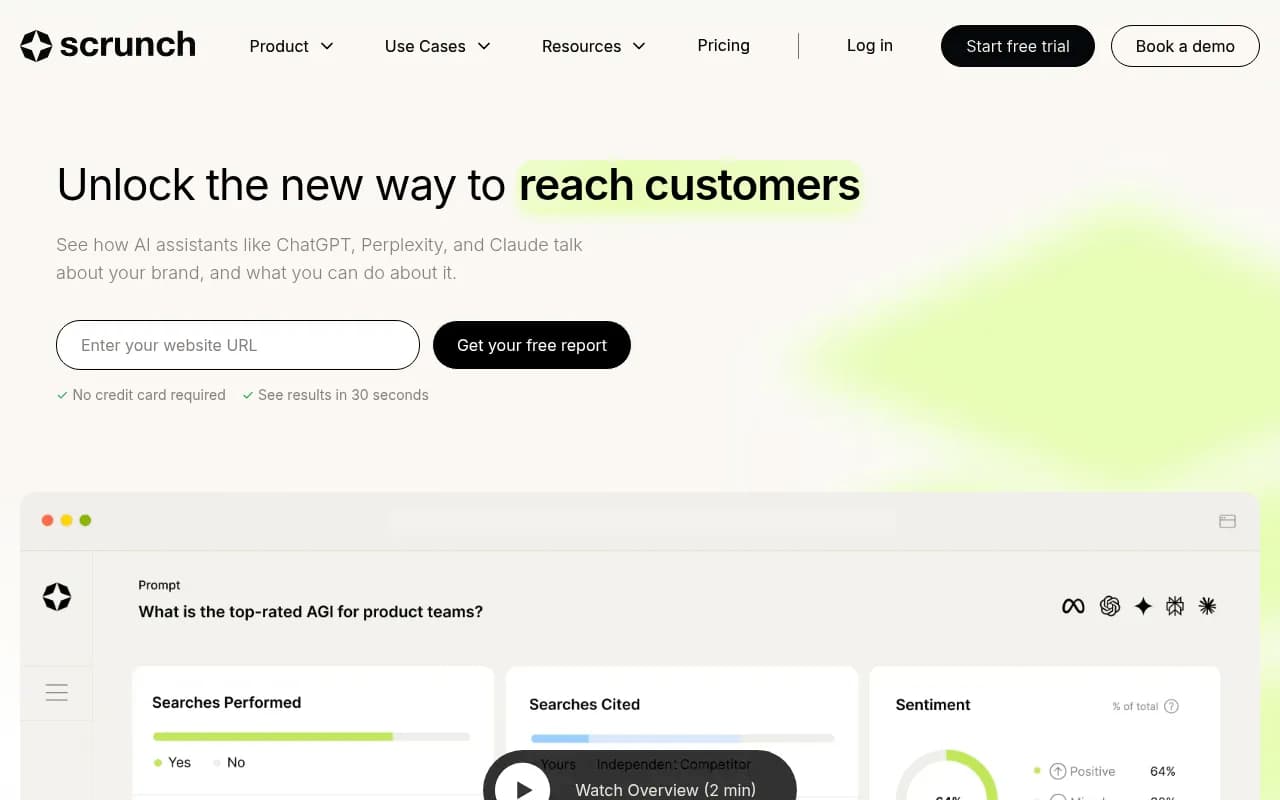
Scrunch AI — If you want a mid-tier option between pure monitoring and full-stack platforms, Scrunch AI is worth evaluating.
Brandlight.ai — Focused on how AI engines discover and recommend your brand. Narrower scope than Relixir or Promptwatch, but useful for brand-specific tracking.

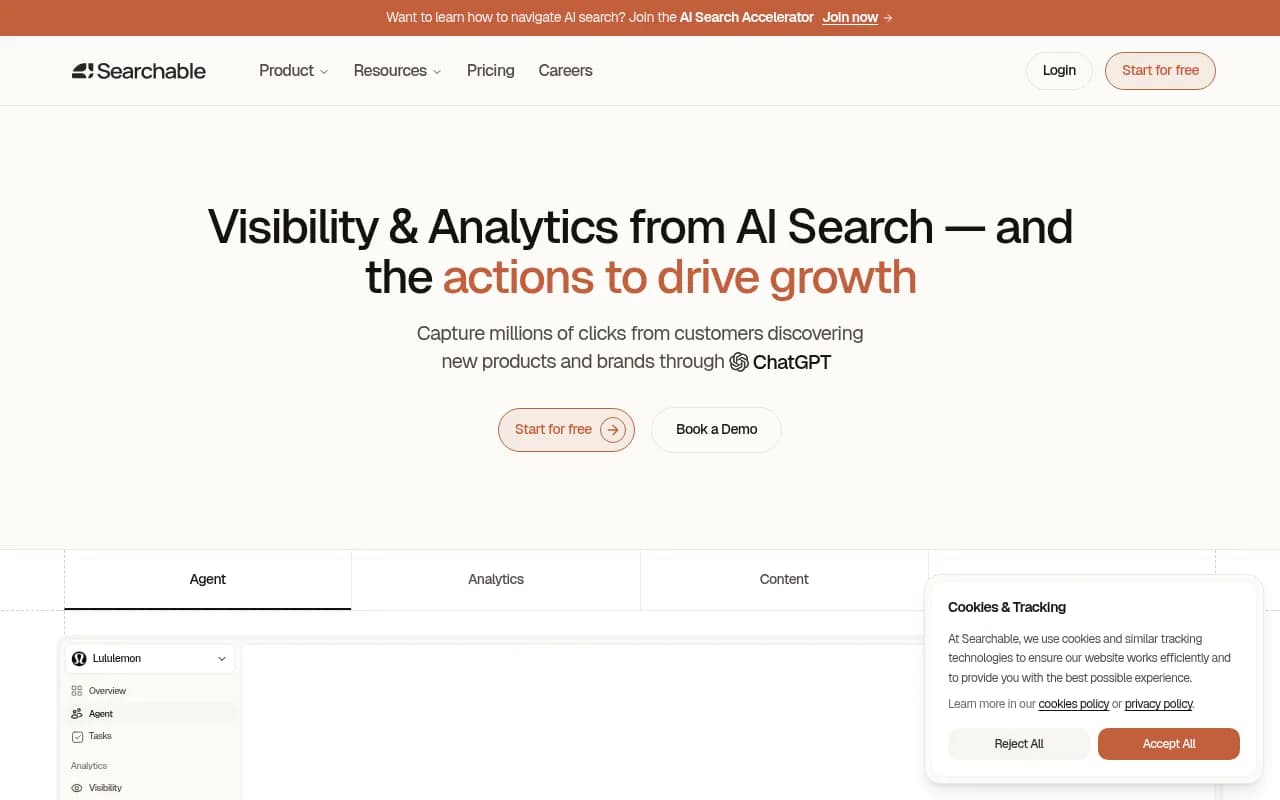
Searchable — Has built-in content generation alongside AI search visibility tracking. A smaller player but worth comparing if you're evaluating Relixir.
Evertune — Enterprise-focused GEO platform for Fortune 500 brands. If Relixir feels too small for your scale, Evertune is the next step up.

The bottom line
Relixir is a legitimate GEO platform. The content automation is real, the visibility tracking is solid, and the AI-native CMS is a genuine differentiator. For large enterprise teams with the budget and the need for deep content automation, it's worth evaluating seriously.
But for most marketing teams, agencies, and growth-stage companies, the combination of price, missing features (crawler logs, Reddit/YouTube, ChatGPT Shopping), and limited traffic attribution makes Relixir a harder sell than it should be. Promptwatch covers more ground at a lower entry price, with a clearer path from visibility data to content to measurable results.
The GEO market in 2026 rewards teams that can close the full loop — find gaps, create content, track what works. The tool you pick should make that loop as tight as possible.