Key takeaways
- Traditional rank tracking tells you nothing about whether ChatGPT, Perplexity, or Google AI Overviews recommend your brand
- The most important distinction in 2026 is between monitoring-only tools and platforms that help you act on what they find
- Seven features separate genuinely useful AI visibility tools from dashboards that just look impressive
- Multi-model coverage, prompt intelligence, AI crawler logs, content gap analysis, and traffic attribution are the features that actually move the needle
- Most tools cover one or two of these well; very few cover all of them
Something shifted in early 2026 that most SEO teams haven't fully processed yet. About 68% of Google searches ended without a click in the first quarter of the year, according to SparkToro's analysis of Similarweb clickstream data. ChatGPT hit roughly 900 million weekly active users in February. Perplexity has become the default research tool for a meaningful chunk of buyers.
When the answer is the destination, your position on a results page matters less than whether you're cited inside the answer itself. That's a different problem, and it requires different tools.
The market responded with a wave of "AI visibility" platforms. Some are genuinely useful. A lot are monitoring dashboards with a new coat of paint. This guide cuts through that by focusing on the seven features that actually matter, then mapping which platforms have them.
Feature 1: Multi-model coverage that reflects how real users search
The bare minimum in 2026 is tracking your brand mentions across more than one or two AI engines. But coverage alone isn't enough -- the tool needs to query models the way real users do, not just through API calls.
This matters because user-facing answers, citations, and shopping recommendations often differ from what you get through an API. A tool that only pings the OpenAI API might tell you you're cited when the actual ChatGPT interface shows something completely different.
The models worth tracking: ChatGPT, Perplexity, Google AI Overviews, Google AI Mode, Claude, Gemini, Grok, DeepSeek, Meta AI/Llama, Mistral, and Copilot. Any platform covering fewer than six of these is leaving significant blind spots.
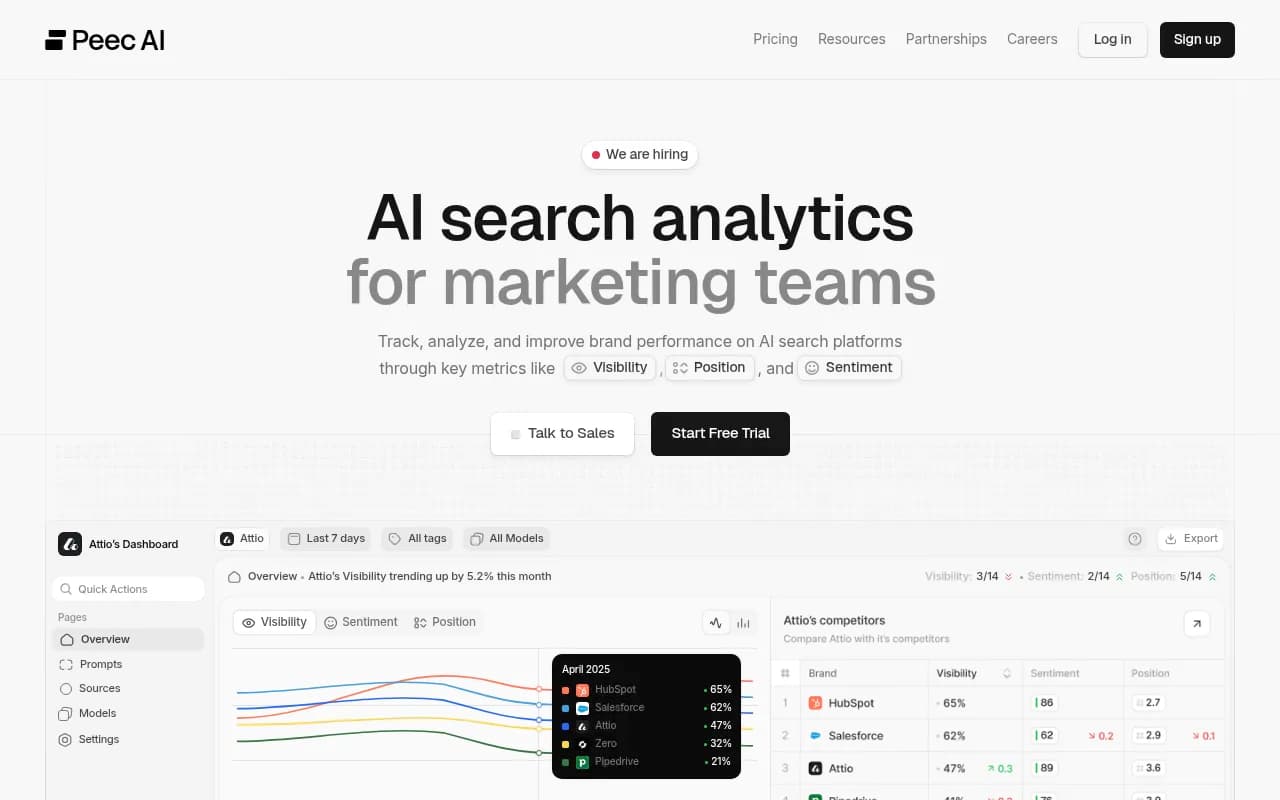
Who has it: Promptwatch covers 10+ models with real user-interface monitoring. Profound covers 9+. Otterly.AI and Peec.ai cover the major four or five but miss the long tail.

Profound

Otterly.AI

Feature 2: Prompt intelligence with volume and difficulty data
Knowing you're not mentioned in AI answers is step one. Knowing which prompts to target first -- because they have high volume and you have a realistic chance of winning them -- is where strategy actually happens.
Prompt intelligence means volume estimates for each query (how often real users ask this), difficulty scores (how competitive the prompt is), and query fan-outs that show how one prompt branches into related sub-queries. Without this, you're guessing at priority.
Most monitoring tools show you a list of prompts where competitors appear and you don't. That's useful, but it doesn't tell you whether those prompts are worth pursuing. A prompt with 50 monthly queries isn't the same as one with 50,000.
Who has it: Promptwatch includes volume estimates, difficulty scoring, and query fan-out analysis. Profound has some prompt-level data but lighter on volume estimates. Most other tools in this category -- Otterly.AI, Peec.ai, AthenaHQ -- don't surface this at all.

Feature 3: Answer gap analysis that shows exactly what's missing
This is the feature that separates tools built for action from tools built for reporting. Answer gap analysis compares what AI models say in response to a prompt against what's actually on your website, then tells you specifically what content is missing.
Not "you're not cited for this prompt." But: "here are the specific topics, angles, and questions AI models want to answer that your site doesn't address."
That's a fundamentally different output. One gives you a problem. The other gives you a to-do list.
The best implementations map your existing content against AI responses at scale, identify which pages are close to being cited but missing key elements, and surface competitor content that IS being cited so you understand what the bar looks like.
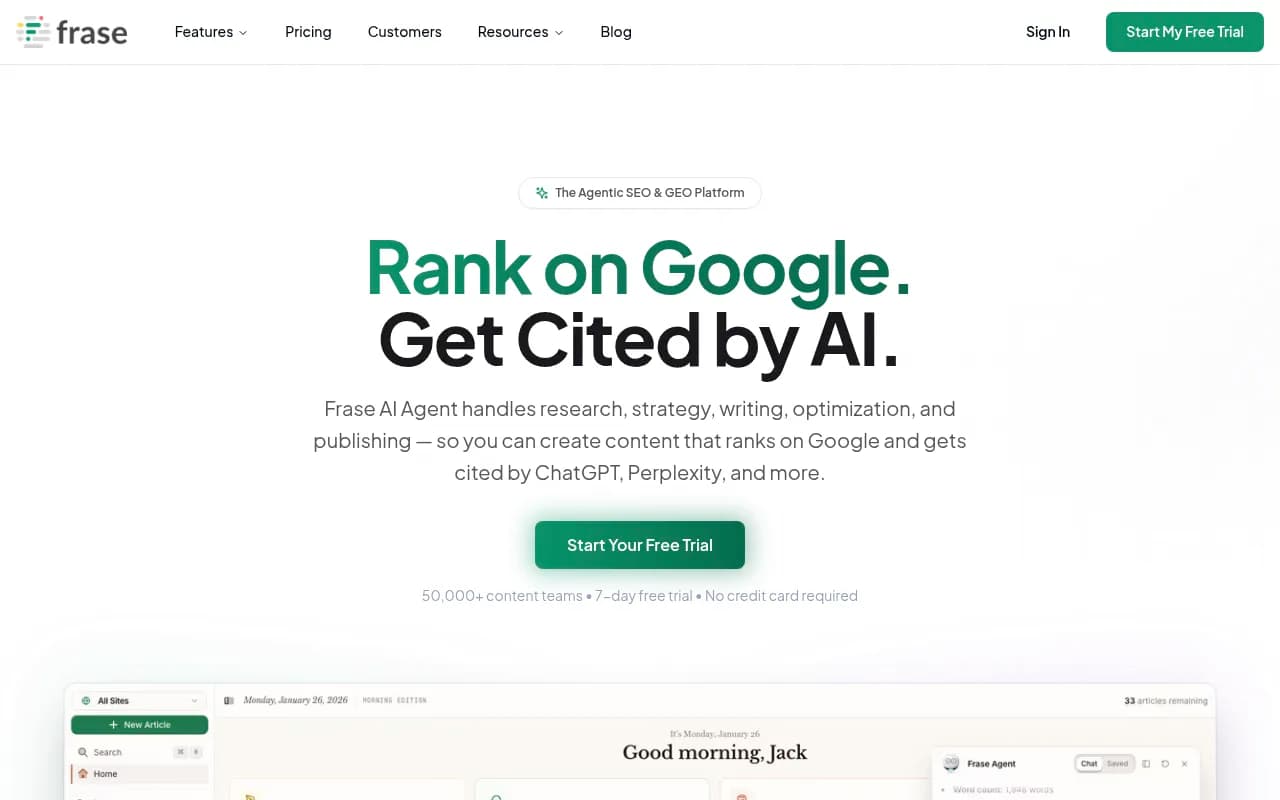
Who has it: Promptwatch's Answer Gap Analysis is the most complete implementation. Frase does content gap work but from a traditional SEO angle rather than AI-response analysis. Semrush has some gap features but they're built around keyword data, not AI citation patterns.
Feature 4: AI content generation grounded in real prompt data
Here's where most of the market falls short. A tool can show you every gap in your AI visibility, but if it can't help you close those gaps, you're back to doing the hard work manually.
The feature to look for isn't generic AI writing. It's content generation that's grounded in: the specific prompts you're trying to win, citation data showing what sources AI models currently trust, competitor analysis, prompt volume data, and your own brand guidelines. That combination produces content that's actually engineered to rank in AI search, not just SEO filler with a different label.
The workflow matters too. The best tools let you go from "gap identified" to "brief generated" to "article published" without leaving the platform. Every handoff between tools is friction that kills momentum.
Who has it: Promptwatch's Content Agents generate articles, listicles, comparisons, and briefs grounded in real prompt and citation data. Frase has strong content creation features but they're more traditional SEO-oriented. Writesonic and Jasper generate content but aren't connected to AI visibility data.

Feature 5: AI crawler logs and agent analytics
This one is almost entirely missing from the market, which is why it's worth calling out explicitly.
When ChatGPT, Claude, or Perplexity crawl your website, they leave traces -- which pages they read, how often they return, what errors they encounter, and how long it takes for a crawled page to show up as a citation. AI crawler logs capture this data in real time.
This matters for a few reasons. First, you can see whether AI engines are even finding your content. A page that never gets crawled will never get cited, and you'd have no way of knowing that without crawler logs. Second, you can track the timeline from publish to crawl to citation -- which tells you how long your content strategy takes to pay off and where the bottlenecks are. Third, you can catch indexing errors before they silently tank your visibility.
Most traditional SEO tools have log file analysis, but it's built for Googlebot. AI crawler logs require tracking a different set of agents (GPTBot, ClaudeBot, PerplexityBot, etc.) and connecting that data to citation outcomes.
Who has it: Promptwatch includes real-time AI crawler logs as part of its Professional plan and above. This feature is largely absent from Otterly.AI, Peec.ai, AthenaHQ, and most of the monitoring-only tools.
Feature 6: Traffic attribution connecting AI visibility to revenue
Visibility scores are nice. Revenue is better. The tools that will matter most in 2026 are the ones that can close the loop between "we're cited in Perplexity" and "that citation drove X sessions and Y conversions."
This requires two things working together: website integrations that capture when traffic arrives from AI search engines, and attribution logic that connects those sessions to downstream outcomes. Some platforms can tell you that LLM.txt referrals are up. Fewer can tell you what those visitors actually did.
The integration options matter here. Cloudflare, Fastly, Vercel, server logs, Google Search Console, and tracking snippets all offer different levels of fidelity and latency. A tool that only works through one integration method will have gaps for teams on different infrastructure.
Who has it: Promptwatch supports multiple integration methods (Cloudflare, Fastly, Vercel, server logs, GSC, tracking snippet) and connects crawler data to traffic attribution. Ahrefs and Semrush have traffic data but it's not specifically tied to AI referral sources. Most pure-play AI visibility tools don't touch attribution at all.
Feature 7: Offsite citation and Reddit/YouTube tracking
Your AI visibility isn't just about your own website. AI models cite Reddit threads, YouTube videos, third-party listicles, review sites, and industry publications. If a Reddit thread is driving most of Perplexity's recommendations in your category, you need to know that -- and you need to know what that thread says about you.
Offsite citation analysis shows you which external sources AI models trust in your space. Reddit and YouTube tracking surfaces the specific discussions and videos that influence recommendations. This is a channel most tools ignore entirely, which means most teams are optimizing only the part of AI visibility they can directly control while missing the part that often has more influence.
Who has it: Promptwatch tracks offsite citations, Reddit discussions, and YouTube content that influences AI recommendations. This is a genuine differentiator -- most competitors, including Profound, Otterly.AI, and AthenaHQ, don't surface Reddit or YouTube as distinct channels.
How the major platforms stack up
Here's an honest comparison across the seven features. "Partial" means the feature exists but is limited in scope or depth.
| Platform | Multi-model coverage | Prompt intelligence | Answer gap analysis | AI content generation | Crawler logs | Traffic attribution | Offsite/Reddit tracking |
|---|---|---|---|---|---|---|---|
| Promptwatch | 10+ models | Yes (volume + difficulty) | Yes | Yes (Content Agents) | Yes | Yes | Yes |
| Profound | 9+ models | Partial | Partial | No | No | No | No |
| Frase | 4-5 models | No | Partial | Yes (traditional SEO) | No | No | No |
| Otterly.AI | 4-5 models | No | No | No | No | No | No |
| Peec.ai | 4-5 models | No | No | No | No | No | No |
| AthenaHQ | 5-6 models | No | No | No | No | No | No |
| Semrush | 3-4 models | Partial | Partial | Partial | No | Partial | No |
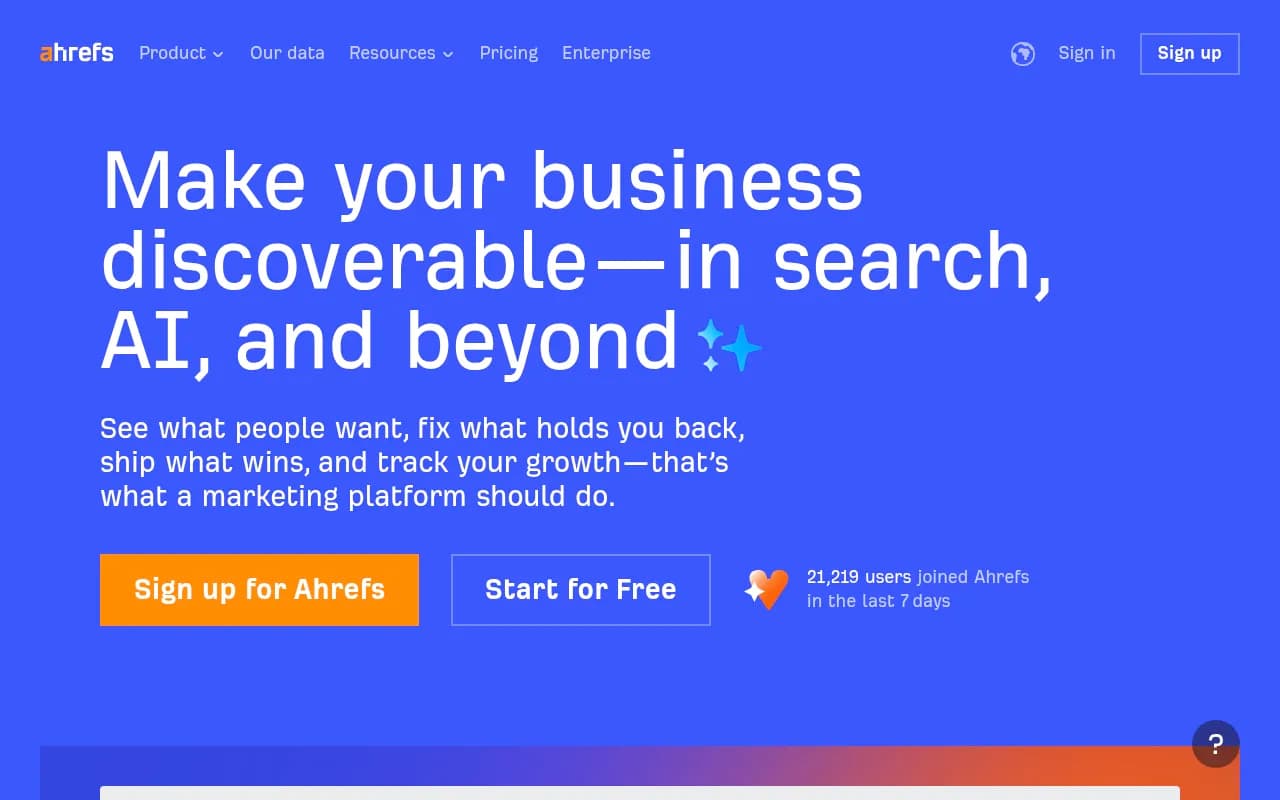
| Ahrefs | 3-4 models | No | No | No | No | Partial | No |
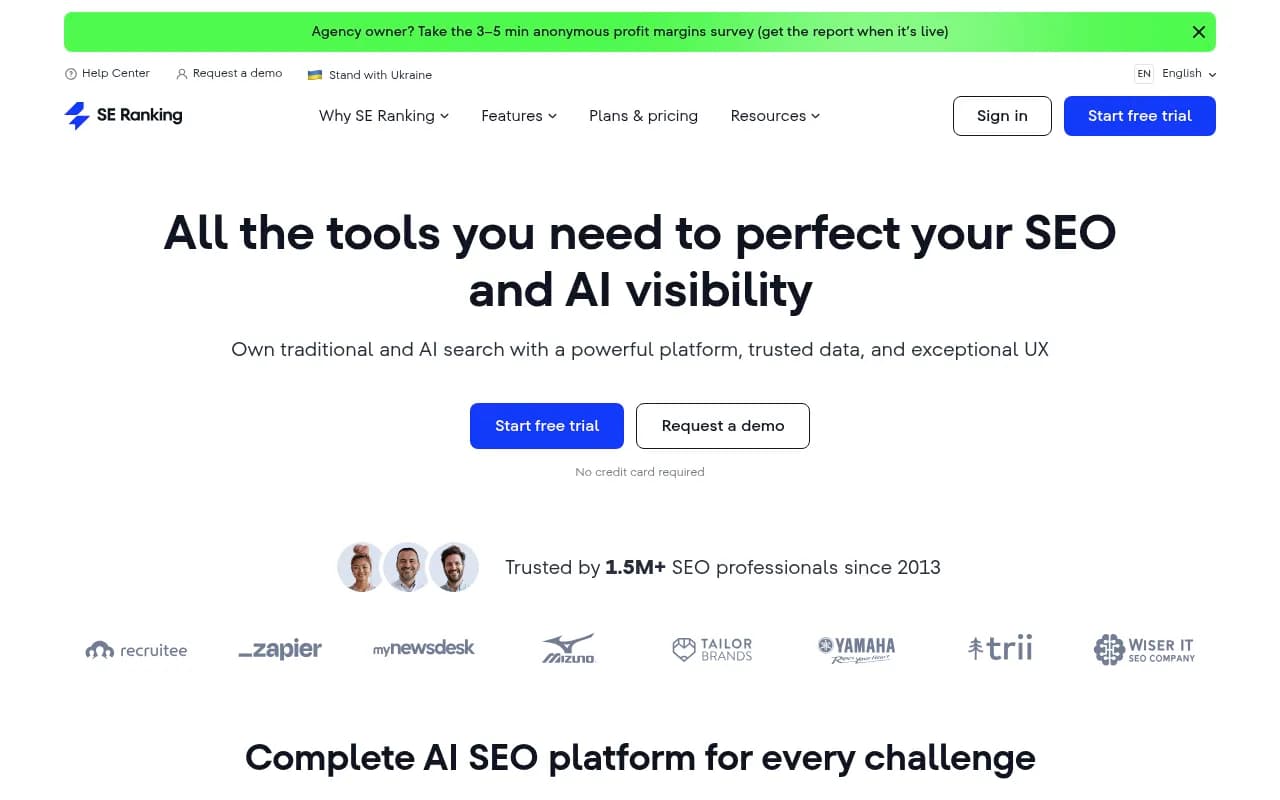
| SE Ranking | 3-4 models | No | No | No | No | No | No |
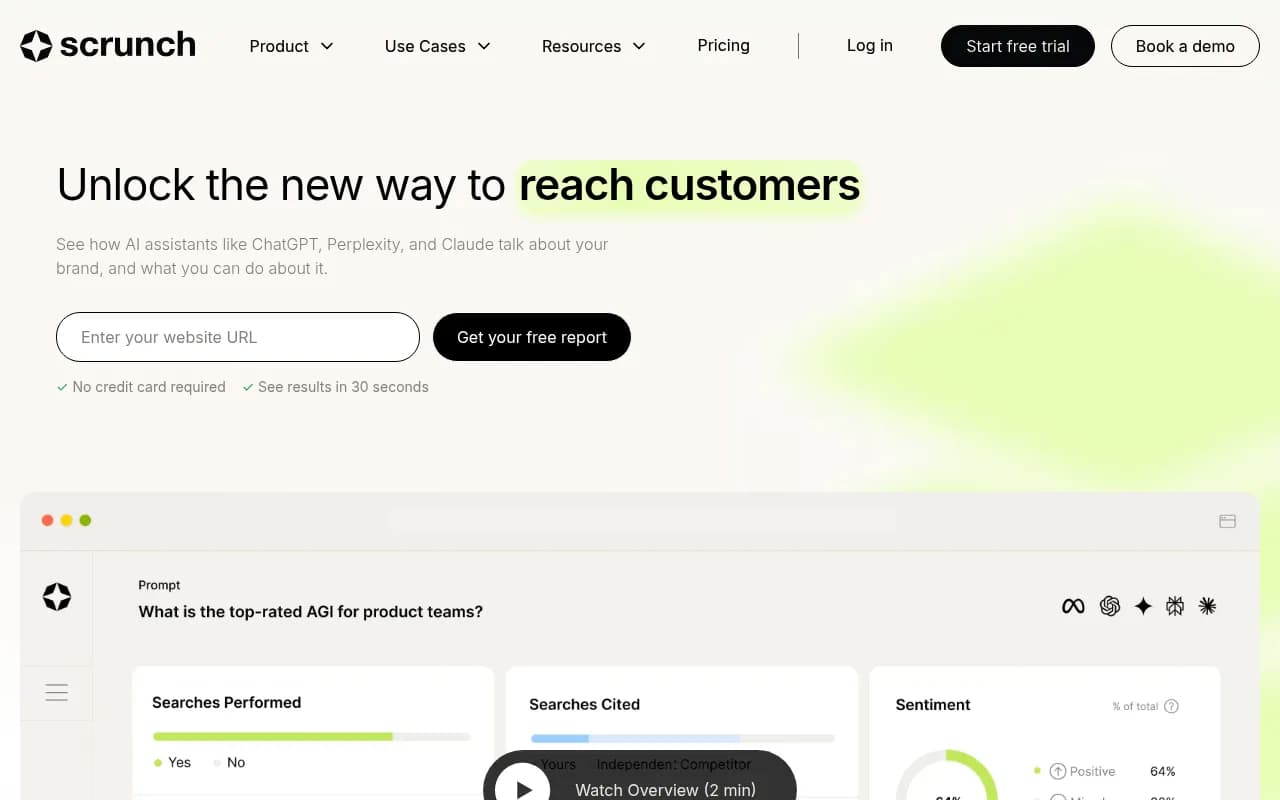
| Scrunch AI | 5-6 models | No | Partial | No | No | No | No |
A few things stand out from this table. First, the monitoring-only tools (Otterly.AI, Peec.ai, AthenaHQ) cover the first feature reasonably well and fall off a cliff after that. They're useful for brand monitoring but not for actually improving your AI visibility. Second, traditional SEO platforms like Semrush and Ahrefs have added AI tracking features, but they're bolt-ons to tools built for a different era -- the depth isn't there yet. Third, the gap between "has the feature" and "the feature is actually useful" is significant. Semrush has content gap analysis, but it's built around keyword data, not AI citation patterns.
Otterly.AI
Which tool fits which situation
Not every team needs all seven features. Here's a practical breakdown:
If you're a small team or solo marketer who just wants to know whether AI engines mention your brand, a lighter tool like Otterly.AI or Peec.ai covers the basics at a lower price point. You'll hit the ceiling quickly if you want to act on what you find, but for pure monitoring it's fine.
If you're a marketing or SEO team that wants to actually improve AI visibility -- not just track it -- you need a platform that covers features 2 through 7. The monitoring-only tools will show you a problem and leave you to solve it yourself. Promptwatch is the clearest option here because it's built around the full loop: find gaps, generate content, track results.
If you're an agency managing multiple clients, the economics and workflow requirements are different. You need multi-site support, white-label reporting, and ideally API access for custom workflows. Promptwatch has agency and enterprise pricing with custom configurations. Search Party is agency-oriented but lighter on prompt metrics and content generation.
Search Party
If you're already deep in the Semrush or Ahrefs ecosystem, their AI tracking features are worth using as a starting point. Just go in knowing they're not purpose-built for this and you'll hit gaps -- especially on crawler logs, offsite tracking, and content generation grounded in AI citation data.
The feature most teams underestimate
Of the seven features above, AI crawler logs consistently get the least attention from buyers and the most surprise from teams that start using them.
The reason is simple: most people assume that if they publish good content, AI engines will find it. Sometimes that's true. Often it isn't. Pages get crawled irregularly, errors go undetected, and content that should be cited sits invisible because a bot hit a 404 or a JavaScript rendering issue and never came back.
Crawler logs make this visible. They turn "why aren't we being cited?" from a mystery into a diagnosable problem. That's a different kind of value than a visibility score -- it's operational intelligence that tells you what to fix, not just what's broken.
What to do next
If you're evaluating tools, the quickest way to cut through the noise is to ask one question of any platform you're considering: "After you show me a gap, what does the tool do to help me close it?"
If the answer is "we show you the data and you take it from there," you're looking at a monitoring tool. That's fine if monitoring is all you need. If you want to actually move your AI visibility scores, you need a platform built around the full cycle.
The market is moving fast enough that the tools you evaluate today will look different in six months. But the seven features in this guide are the right framework for evaluating any platform, now or later -- because they map directly to the work that actually produces results.