Key takeaways
- "Rank" is the wrong word. ChatGPT and Google AI Mode return one synthesized answer, not an ordered list, so trackers sample mentions and citations across many runs.
- Frequency across many samples holds up. Any single answer, position, or "AI ranking" figure is mostly noise.
- No tracker can see real prompts, real clicks from Google's AI features, or a complete count of AI sessions. Pair trackers with Search Console, Bing Webmaster Tools, analytics, and crawler logs.
- Many "free AI Mode trackers" don't query AI Mode at all. Check the surface list before you trust the number.
- Pick one tool, keep it for a full reporting period, and read it as directional.
Why "rank tracking" is a borrowed phrase
Google gave us ten blue links and a number to chase. ChatGPT has no results page. Google AI Mode reads a question, fans it out into sub-questions, and writes one answer with a handful of inline citations. There is no position three to hold.
So what does a tracker do? It runs a fixed set of prompts on a schedule and records two things: was your brand named, and was one of your URLs cited. That is sampling a moving target. The honest vendors say so. The ones selling you "ranking position in AI" with a decimal point are selling confidence they can't deliver.
In January 2026, SparkToro and Gumshoe.ai published a study where 600 volunteers ran 12 prompts through ChatGPT, Claude and Google's AI tools 2,961 times in total. Rand Fishkin's takeaway was blunt: a tool that reports a ranking position in AI is reporting noise. But how often a brand appeared across many runs was fairly stable. That is the whole game. Frequency holds. Single answers don't.
What trackers measure well
A decent tracker is good at relative, repeated observation. Run the same prompts every day or week and you can learn:
- How often your brand is mentioned versus competitors (share of voice)
- Which of your pages get cited, and which third-party pages get cited instead
- Whether the way AI describes you is accurate and what the tone is
- Which sources shape answers in your category
None of that was visible three years ago, so I don't want to undersell it. The mention versus citation split alone is worth the subscription. AI Mode can describe your product without linking you, and only the link can send a click. A brand can be named in 40% of answers on a topic and cited in 10%. Tracking both tells you where the content gap is.
What they can't measure
Real prompts and real volumes
AI platforms don't publish prompt volumes the way Keyword Planner publishes search volumes. Any "reach" or "impressions" figure in an AI visibility tool is modeled from proxies. Treat it as a prioritization hint, not a forecast.
The answer your buyer actually saw
Answers vary by run, account history, and location. A tracker sees its own sampled sessions. The Supermetrics team puts it plainly: you can't see the prompt behind a ChatGPT or Perplexity mention, and you can't get a complete count of AI-driven sessions.
Clicks from Google's AI features
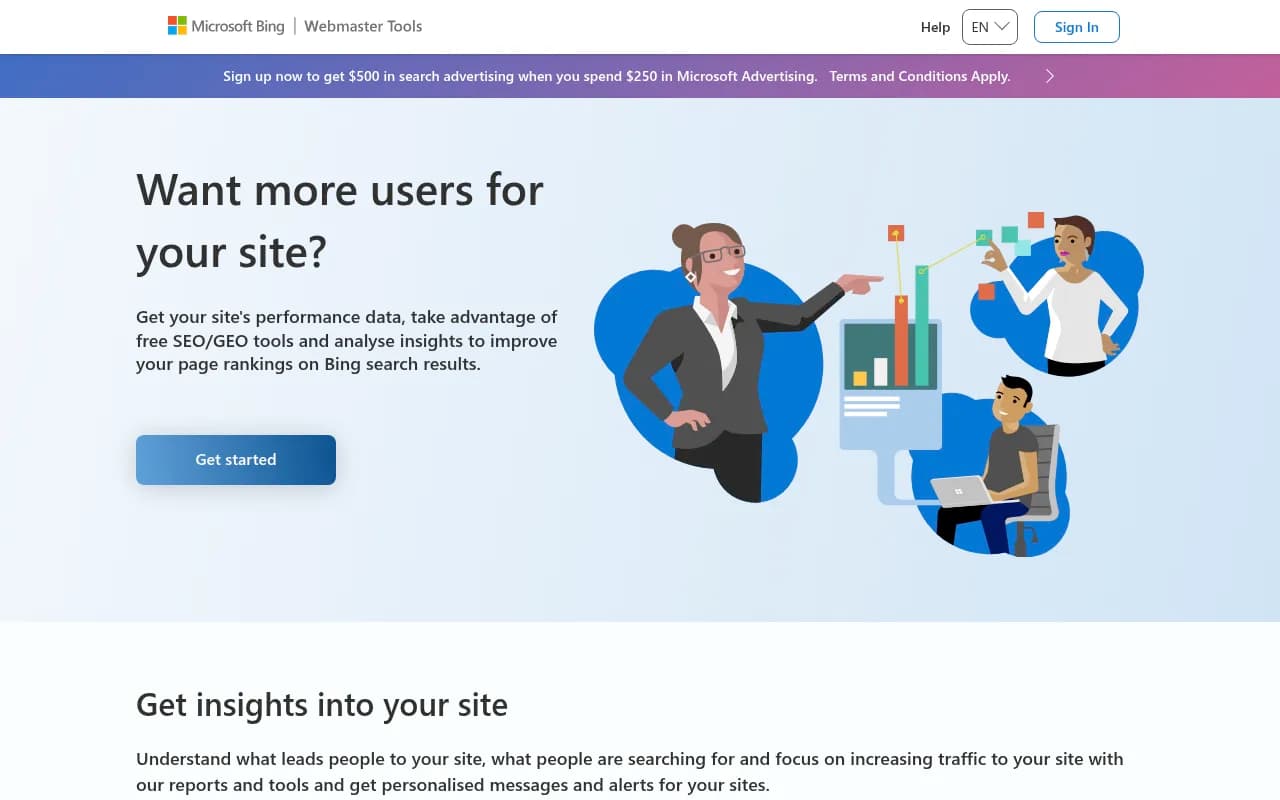
Google's Search Generative AI performance reports, announced in June 2026, give impressions for AI Overviews, AI Mode and Discover AI features by page, country, device and date. They carry no click, CTR or query data, a limitation Search Engine Land flagged at launch. Bing Webmaster Tools added an AI Performance report in public preview in February 2026. Both are worth wiring in, but neither closes the click gap.
What happened next
Did the buyer remember you, search your name later, or book a call? No tracker sees that. Watch branded search volume and direct traffic next to your AI referrals so the influence shows up somewhere.
Why one prompt run tells you almost nothing
The hidden queries behind an answer matter more than most dashboards admit. Promptwatch's data on ChatGPT query fanouts shows that fanouts per response averaged about 2.15 in early December 2026 data and about 1.84 by early March, and that the queries themselves are short and keyword-like (average length fell from roughly 117 characters to the high 80s, then about 53 once fanouts returned in April, at 1.0 per response). The report doesn't explain the gap or the drop. The practical lesson: the prompt you track is not the query that retrieves your content, and the behavior changes over time. Some older material says a prompt triggers 3-8+ searches. Don't present that as today's average.
Citation breadth is just as spread out. In Promptwatch's unique domains report (Sep 28 to Oct 4, 2026, responses with at least one citation), 47.6% of ChatGPT responses cited 10 or more domains and 66.1% cited at least 8. Organic prompts with no brand named hit 52.5% at 10 or more. Brand-specific prompts are tighter: the most common count was 5 domains (14.9%), and only 21.3% cited 10 or more.
There is a wrinkle. Promptwatch's older average-sources report put ChatGPT at about 5 sources per web-search answer, against roughly 10 for Google AI Overviews and Perplexity. The two figures likely count different things (averages per message versus distinct domains in cited responses), so don't mix them in one chart.
What this means for you: a crowded citation list means one run is a tiny slice. Measure across many prompts, and track where you appear in the answer and how you're described, not just whether you were cited.
ChatGPT: the surface problem
"ChatGPT" is not one thing. Per the Rework review, a default turn with no web search can only report what the model remembers from training, which can be months stale and can't cite anything. ChatGPT Search with retrieval produces grounded, linked answers. A tracker that doesn't say which mode it samples is giving you a number you can't interpret.
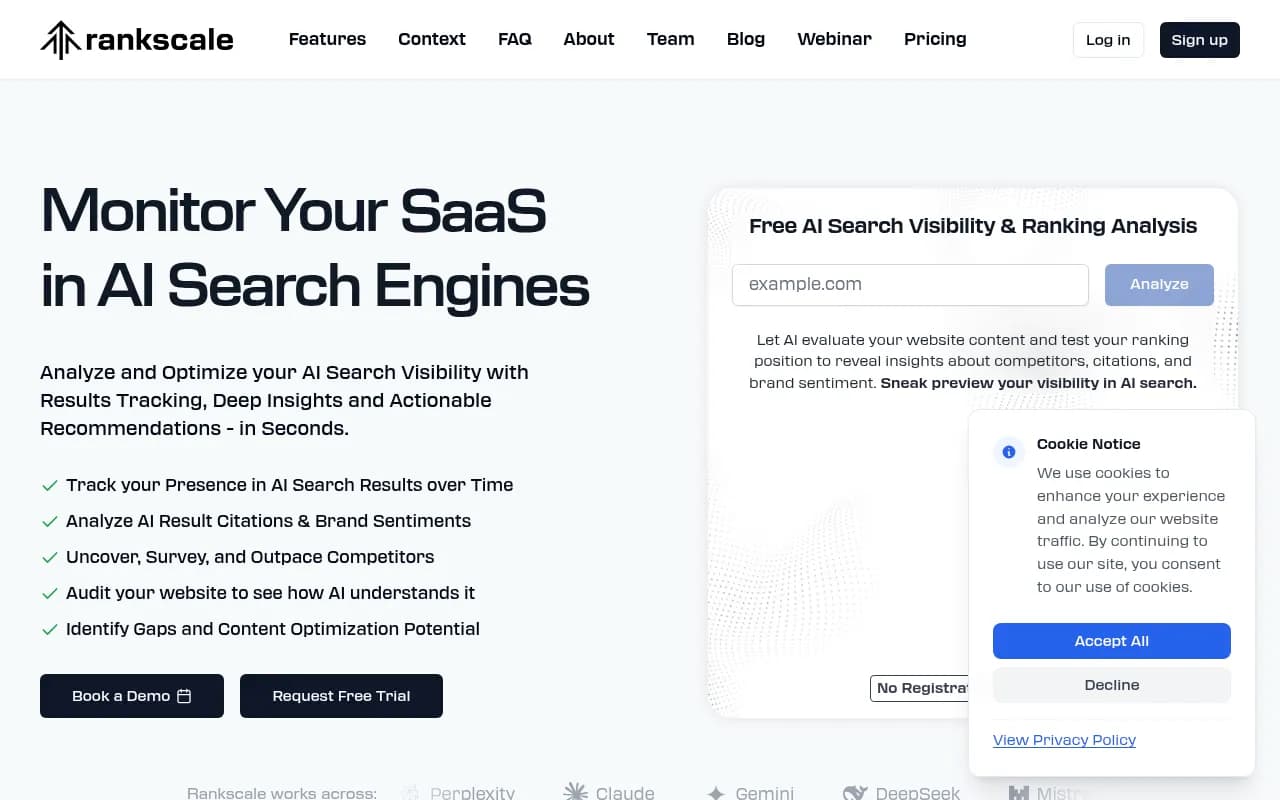
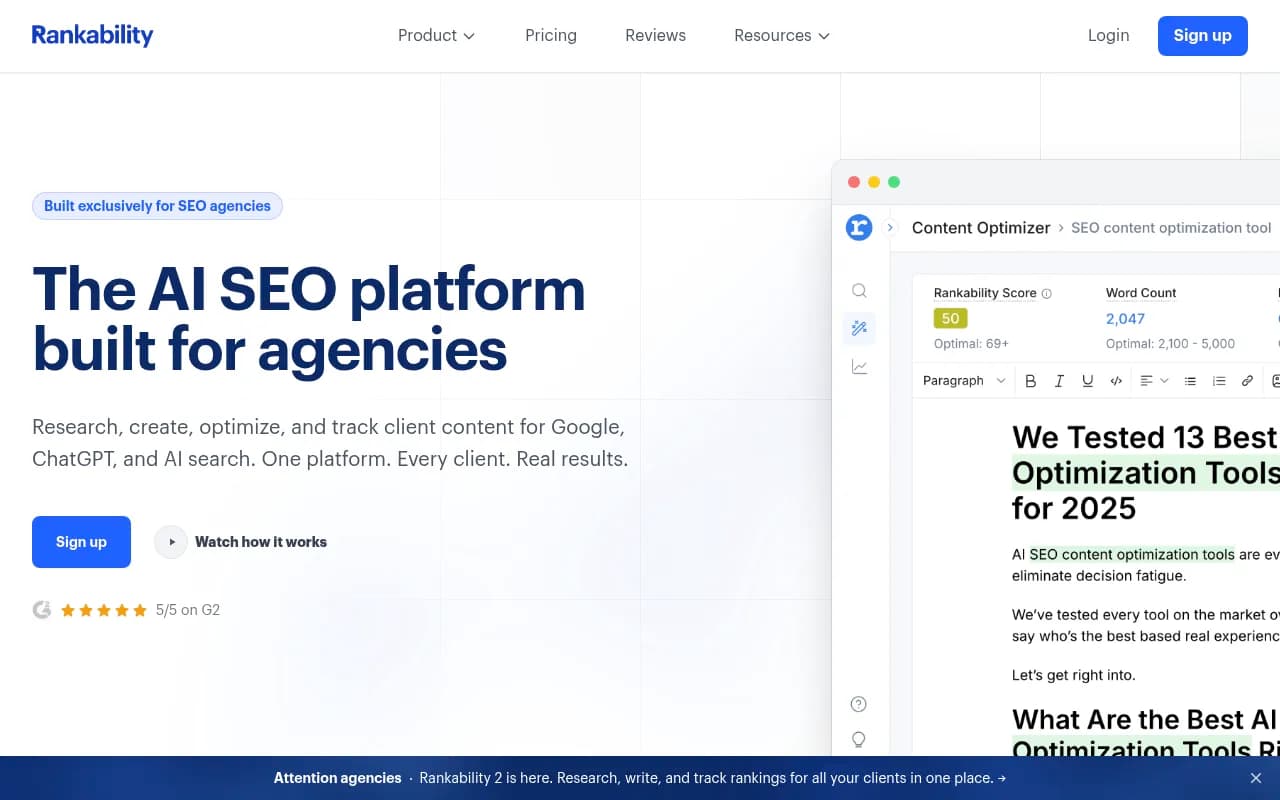
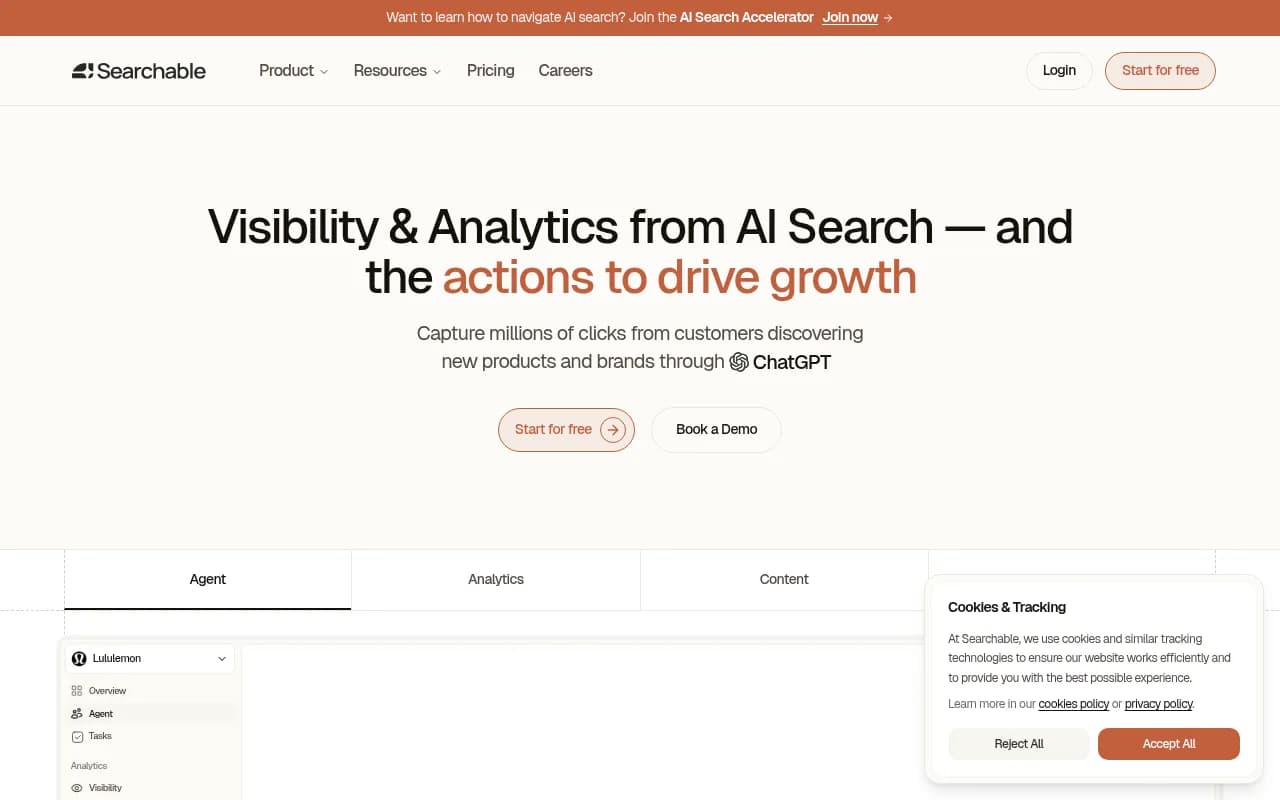
Searchable's tests make a similar point about surfaces. Its review separates model-only answers, ChatGPT Search, ChatGPT Shopping, and fan-out queries, and finds tools differ on how many they cover. Rankscale covers all four in that review, Rankability three, ProRankTracker two and no fan-outs. It also flagged one tool still advertising GPT-4o and GPT-5 tracking after OpenAI retired them from its web and desktop apps, so that data may not match what users see now.
One more thing to check on your own side: ChatGPT stopped sending a referrer on October 8, 2026. Visits that used to show up as ChatGPT referrals can land in direct. Tagging links with utm_source=chatgpt.com helps where you control them, and some analytics tools now count that tag as ChatGPT traffic.
Google AI Mode: no API, only sampling
Google AI Mode has no public API for tracking. Every tool drives a real browser session and reads what comes back. Each number is a modeled estimate from repeated probes, not a meter reading. That is the same limit as ChatGPT, with an extra twist: AI Mode and AI Overviews are different surfaces. Omnia's dataset of nearly 30 million citation events found 63% of AI Mode citations go to domains no other engine cited for that prompt. If your tool measures Overviews and you think you are measuring AI Mode, you are measuring the wrong thing.
The disqualification list in Omnia's roundup is worth reading closely. Tools that, per that article, don't cover Google AI Mode on any free tier include BrandPeek, HubSpot's AEO Grader (ChatGPT, Perplexity, Gemini only), Serpstat's LLM Brand Monitor, PromptMonitor and AI Labs Audit. RankScale covers AI Mode but only on paid plans. Those claims come from a vendor blog and I couldn't re-verify them against each vendor's own pages, so confirm before you buy.
Free trackers: a snapshot, not a program
Free options that genuinely return AI Mode data exist, but they are thin. Omnia's no-signup AI Visibility Checker runs three category prompts in ChatGPT and Google AI Mode, then points to a 14-day trial. AI Rank Lab offers 100 free credits that include AI Mode. Orchly has free trackers for several engines, with AI Mode gated on paid tiers. Searchable's trial gives 14 days of full access.
The pattern is consistent: free gives you today's number. It doesn't give you trend, competitor context, a citation-level explanation or a next action. Use free for a baseline, then decide whether you need history.
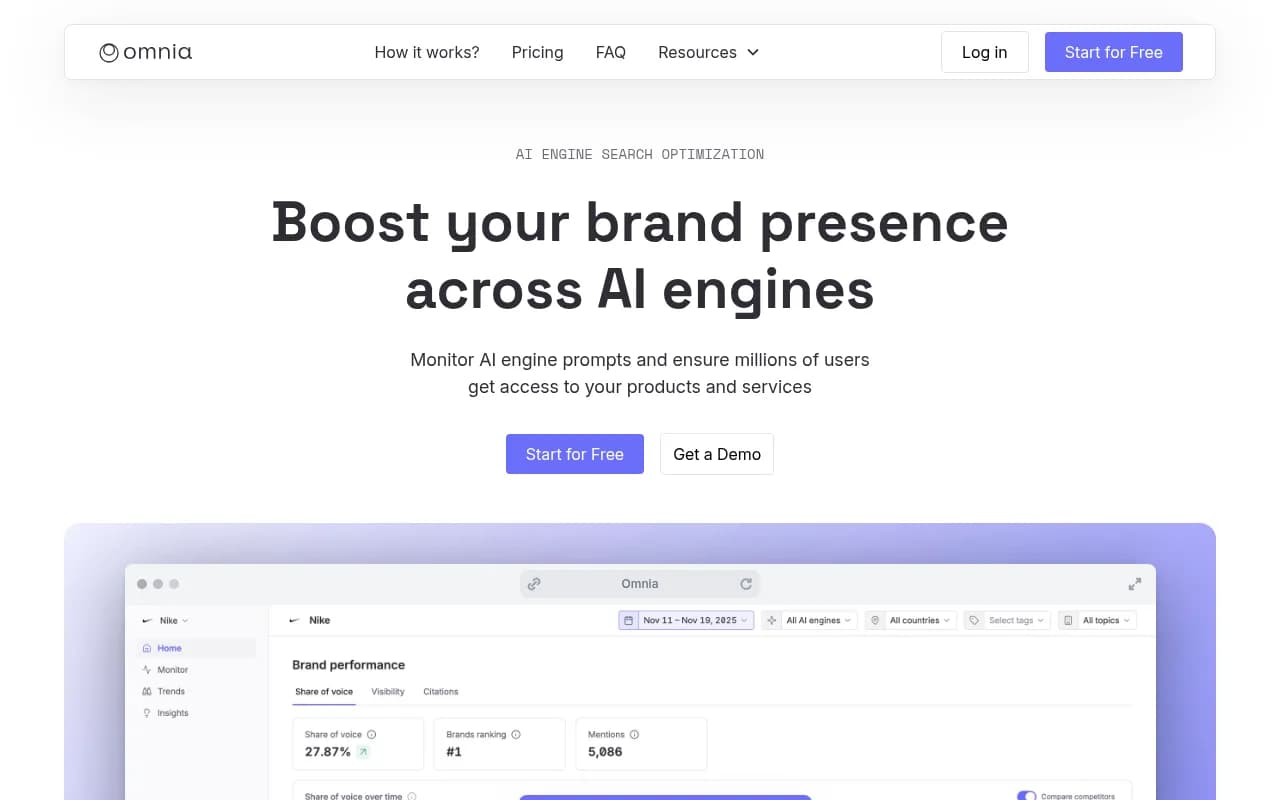
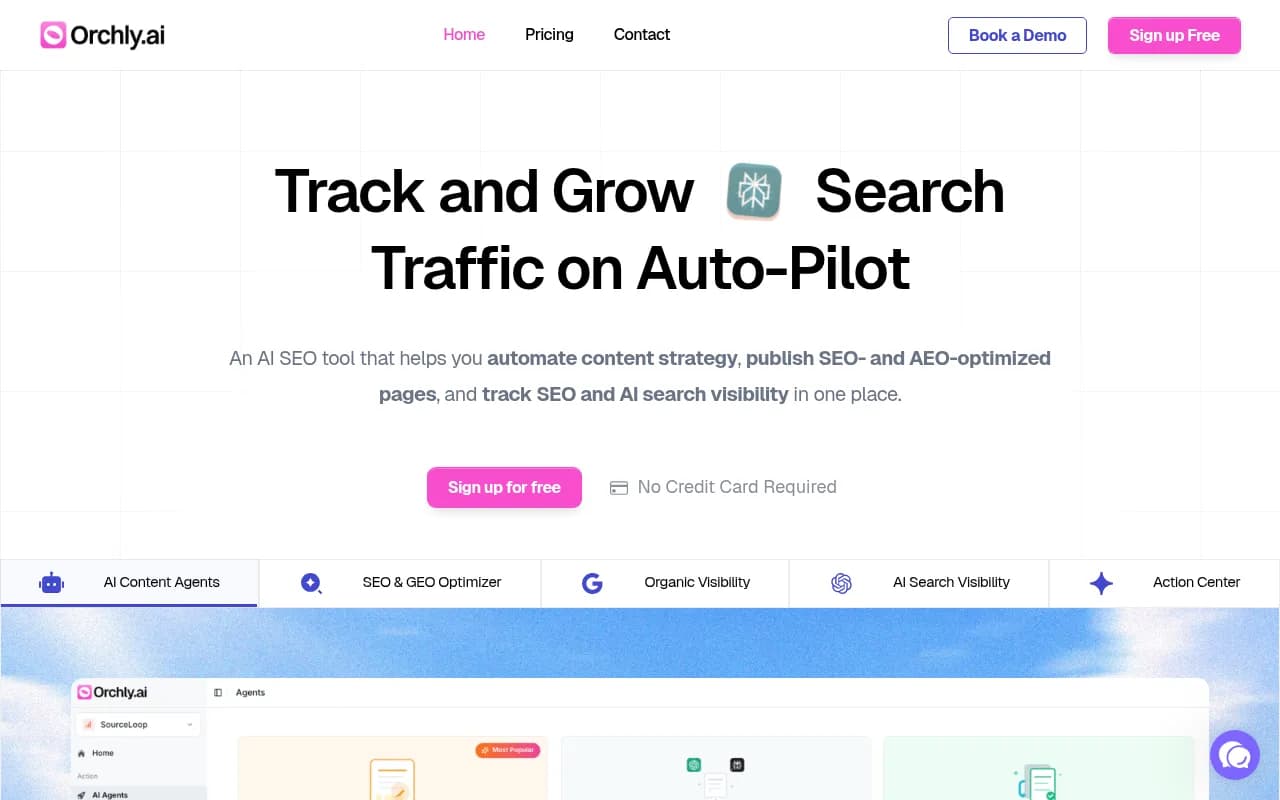
Tool comparison: where the main trackers differ
Prices and coverage change fast and mostly come from vendor roundups, so confirm on each pricing page. Treat this as a map, not a quote.
| Tool | ChatGPT | Google AI Mode | Notable angle | Reported entry price |
|---|---|---|---|---|
| Otterly.AI | Yes, on all tiers | Paid add-on | Citation-based Share of AI Voice, low entry price | $29/mo for 15 prompts |
| Rankscale | Yes, four surfaces per Searchable | Paid plans | Hourly sampling, page-level citations, 17+ engines | From about 20 EUR/mo |
| Rankability | Yes, three surfaces | In Starter per GEO Toolbox | Agency scoring, fan-out tracking | $97-$99/mo Starter |
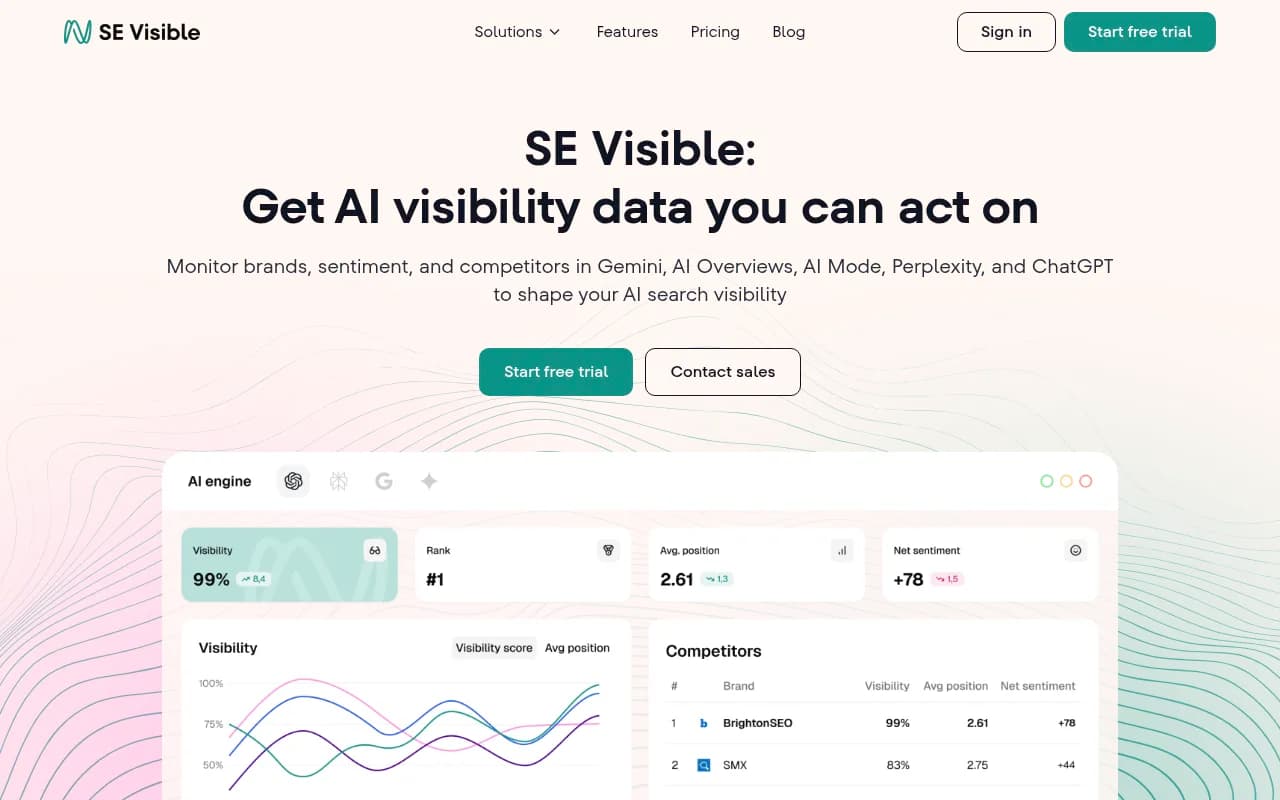
| SE Ranking (SE Visible) | Yes | Yes | URL-level source analysis, white-label | About $79-$99/mo |
| Searchable | Yes, with fan-outs and shopping | Tracked across 11 engines | Daily sampling, content tooling | 14-day trial |
| Peec AI | One of 3 chosen models | Check plan | Fact-check for false claims | 50 prompts on Starter |
| Profound | Yes | Higher tiers | Prompt volumes, server-log crawler data, enterprise compliance | Growth reported at $399/mo |
Otterly.AI


Profound

Methodology questions to ask any vendor
Rework's table of twelve tools is the most useful thing I read on this topic: for almost every vendor, the pricing page did not disclose whether results are averaged across runs, or which ChatGPT mode is sampled. Before you pay, ask:
- Which ChatGPT surface do you query: model-only, Search, Shopping?
- How many runs per prompt, and do you average them?
- Do you drive the real interface or call an API? Real UIs and APIs can return different answers and citations.
- Is the prompt allotment shared across engines? Fifteen prompts across four engines is not fifteen prompts on ChatGPT.
- Is Google AI Mode named in plain words on a tier you can afford? If a vendor won't name the surface, assume it doesn't track it.
- How fast are retired models dropped?
A practical measurement stack
No tracker answers everything. This is what I would run:
- A prompt tracker for mentions, citations, share of voice and sentiment. Platforms like Promptwatch pull from the real ChatGPT and AI Mode interfaces and add crawler logs and visitor analytics on top, which closes part of the loop trackers alone can't.
- Google Search Console's generative AI reports plus Bing Webmaster Tools' AI Performance report for impressions.
- Analytics for AI referrals, with a custom channel group and the UTM workaround for ChatGPT.
- Server or CDN logs for AI crawler activity. If a page can't be fetched, it can't be cited, and most trackers won't tell you.
- A monthly manual check: ask ChatGPT, Perplexity and AI Mode the five questions your best customers asked before buying, and read the full answers.

If you want the cheap crawler check first, Promptwatch's free AI crawler URL inspector tests whether AI bots can read a page. For more tools in this category, the AI rank tracking directory lists a lot of options.
How to run a tracker without fooling yourself
Sample, don't snapshot
If you test by hand, run each prompt three to five times per engine in a clean, logged-out session and note how often you and each competitor appear. Supermetrics recommends exactly this. Tools should do the equivalent at scale.
Pick one tool and stay
Switching trackers mid-quarter makes trends meaningless because the prompt sets, surfaces and sampling differ. Choose one and hold it for the reporting period. Treat the output as directional.
Report four numbers
Mentions, citations, share of voice, and sentiment or accuracy. Report them as ranges over a period, not a single score. A visibility score is a sampling statistic delivered with the confidence of a traffic metric, so label it that way for your CMO.
Normalize your labels
Search Console, GA4 and a citation tracker will each label the same surface differently, so "ChatGPT" arrives as three values. Standardize names in a blending layer before you chart, or you will split one surface into three lines.
Beware borrowed statistics
You will see "only 12% of ChatGPT citations overlap with Google's top 10" in vendor posts. That figure comes from Leapd's article and I haven't verified it independently. Another vendor claims roughly 60% of organic traffic now originates from AI responses, which I would not repeat without a source. Quote vendors as vendors.
What to do with the data
The signals worth acting on are specific. Competitors cited where you aren't often points at third-party coverage (reviews, comparison pages, community threads) more than your own site. Inaccurate claims about your product are fixable by finding the page that teaches the model the wrong thing. A page that never gets cited may be blocked from crawlers. And if you are named but never linked, you have a content problem, not a visibility one.
For content decisions, the Promptwatch Data hub publishes citation studies by content type and industry, which helps you decide what to build for each prompt type.
The short version
AI rank trackers are useful, and they are measuring something real: how often AI engines name and cite you across many samples. They are not measuring a rank, real demand, real clicks from AI Mode, or complete AI sessions. Buy for methodology and surface coverage, not for a clean score. Then triangulate with Search Console, Bing, analytics and crawler logs, and expect the numbers to stay directional."}