Key takeaways
- For pure AI content creation: Jasper is the most mature enterprise option; Writesonic and Copy.ai work better for smaller teams or quick copy tasks
- For SEO-focused content: Surfer SEO is the strongest choice if ranking in Google is your primary goal
- For AI search visibility (GEO/AEO): Promptwatch and AirOps are purpose-built for getting cited in ChatGPT, Perplexity, and other AI engines
- For ABM and intent data: 6sense and Demandbase are the enterprise-grade options; Clearbit/HubSpot Data Enrichment works if you're already in the HubSpot ecosystem
- BrandWell's pivot matters: Content at Scale rebranded to BrandWell and shifted from "AI blog writer" to a full ABM/intent data platform — so the right alternative depends heavily on which version of the product you were actually using
Content at Scale started as one thing and became something quite different. When most people searched for it, they wanted a tool that could produce long-form SEO blog content at volume without sounding like a robot wrote it. That was the original pitch, and it was genuinely useful.
Then came the rebrand to BrandWell, and with it a hard pivot toward intent data, visitor identification, competitor traffic tracking, and ABM audiences. The content creation piece (now called RankWell) is still there, but it's no longer the headline feature. The headline is now: "we show you who's browsing your competitors' websites right now."
That's a meaningful product shift. And it means people looking for alternatives are often looking for two very different things:
- A better AI writing tool for SEO content
- A better ABM/intent data platform
This guide covers both. I've organized it so you can find what you actually need, not just a list of tools that vaguely overlap with BrandWell's current positioning.
AI content creation alternatives
These tools compete with the RankWell/content generation side of BrandWell.
Jasper
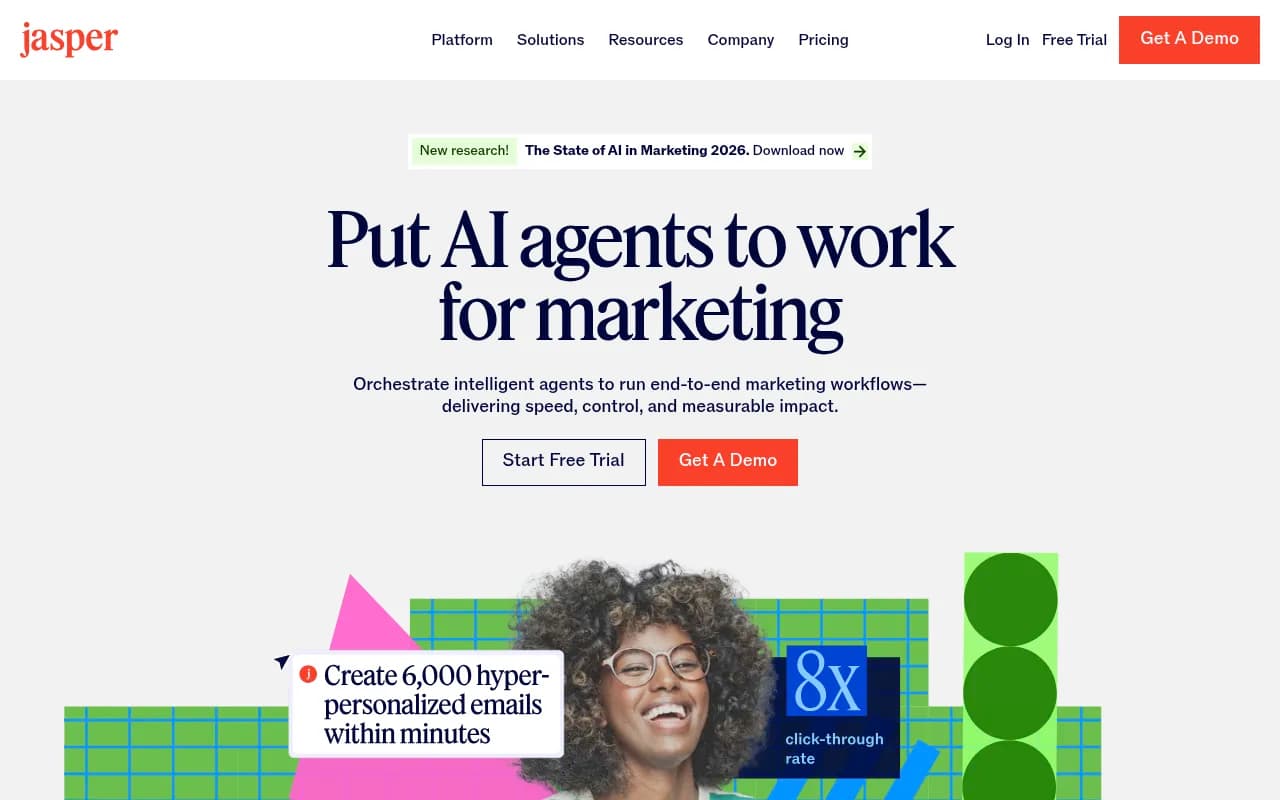
Jasper has been around longer than most AI writing tools and has evolved into something genuinely enterprise-grade. Where BrandWell's content creation is tightly coupled to its SEO scoring and ABM data, Jasper is a standalone content platform with a lot more flexibility in how you use it.
The core product now revolves around AI agents that run end-to-end marketing workflows. You can set up content pipelines that take a brief and produce on-brand output across formats: blog posts, landing pages, email sequences, social content. The Brand IQ system stores your brand voice, style guide, and visual guidelines so outputs stay consistent across a large team.
Compared to BrandWell's content module, Jasper is better for teams that produce diverse content types across multiple channels. BrandWell's writing is more narrowly focused on long-form SEO articles. Jasper handles that too, but it also handles campaign copy, product descriptions, and ad creative.
Where Jasper falls short: it doesn't have BrandWell's intent data or visitor identification. It's purely a content tool. If you were using BrandWell for the ABM features, Jasper doesn't replace that at all. And Jasper's SEO optimization is decent but not as data-driven as Surfer SEO.
Pricing starts at $59/month for the Creator plan (single user) and $249/month for the Pro plan (up to 5 users). Enterprise pricing is custom. That's more expensive than BrandWell's entry point but comparable for team-level usage.
Best for: Mid-to-large marketing teams that need AI-assisted content across multiple formats and channels, with strong brand governance requirements.
Surfer SEO
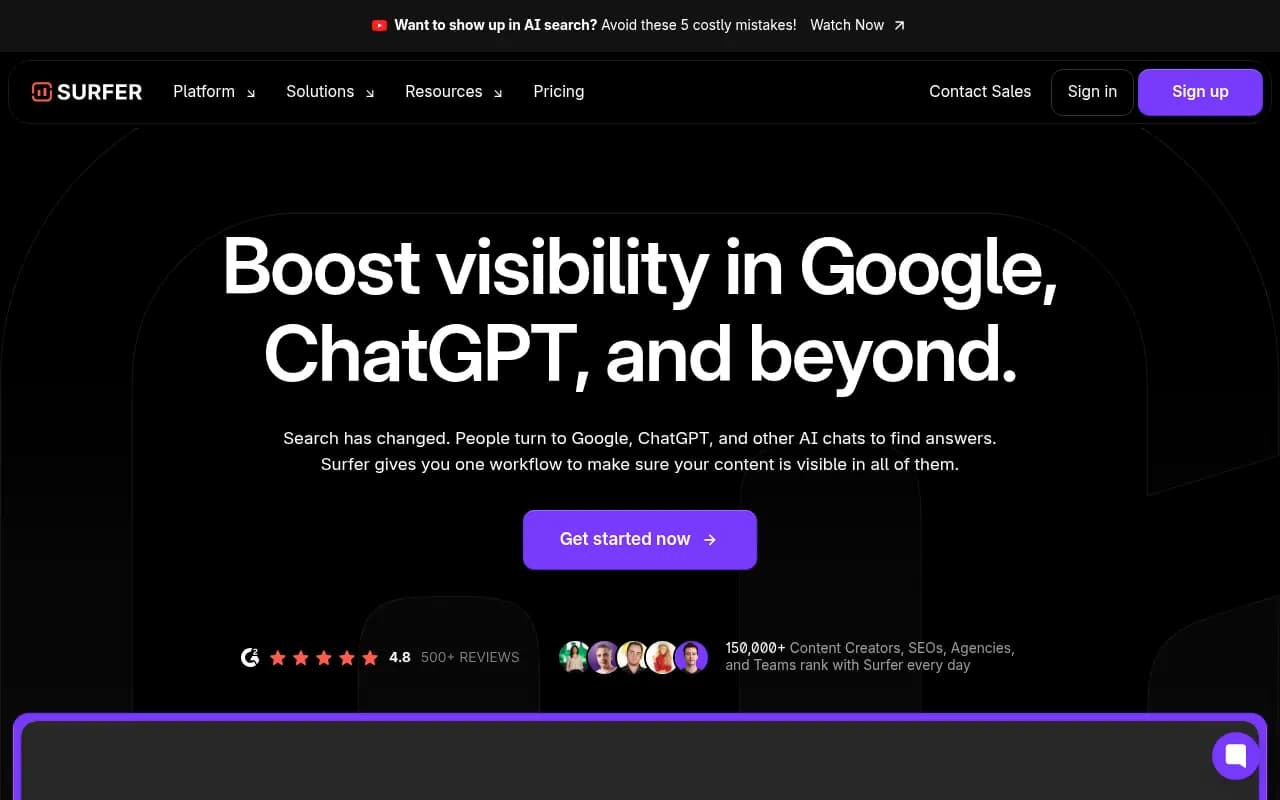
If your main reason for using BrandWell was to produce content that ranks in Google, Surfer SEO is probably the most direct replacement for that specific job.
Surfer analyzes the top-ranking pages for any keyword and tells you exactly what your content needs to compete: word count, semantic terms to include, heading structure, internal linking opportunities. The Content Editor gives you a real-time score as you write or edit. The Surfer AI feature can generate full drafts optimized to that score.
What Surfer does better than BrandWell's content module: the SEO data is more granular and more actionable. BrandWell gives you a "RankWell Score" but Surfer's NLP-based analysis goes deeper into what's actually driving rankings for your specific keyword. The audit tool is also strong for improving existing content.
What Surfer doesn't do: there's no visitor identification, no intent data, no ABM features. It's an SEO tool, full stop. It also doesn't have BrandWell's AI writing agent that can produce full articles from scratch with minimal input. Surfer AI can generate content, but the workflow is more manual.
Surfer has also been investing in AI search optimization (not just Google), which is worth noting. Their positioning is shifting toward visibility in ChatGPT and AI Overviews, not just traditional search.
Pricing: $99/month (Essential), $179/month (Advanced), $299/month (Max), all billed annually. Surfer AI articles cost additional credits on top of the base plan.
Best for: SEO teams and content marketers whose primary goal is Google rankings and who want data-driven optimization rather than volume content generation.
Copy.ai

Copy.ai has also pivoted significantly. It started as a quick copywriting tool (taglines, email subject lines, social posts) and has repositioned itself as a "GTM AI Platform" aimed at automating go-to-market workflows across sales and marketing teams.
The current product is more about workflow automation than raw content generation. You can build automated sequences that pull in CRM data, generate personalized outreach, and run repetitive GTM tasks at scale. Siemens, Gong, and ServiceNow are listed as customers, which gives you a sense of the target market.
Compared to BrandWell, Copy.ai is better for sales-adjacent content (outreach sequences, SDR enablement, personalized messaging at scale) and worse for long-form SEO content. The original quick-copy tools are still there but they're not the focus anymore.
The GTM automation angle does overlap with BrandWell's ABM direction, but Copy.ai doesn't have BrandWell's visitor identification or competitor traffic data. It's more about automating what you do with leads you already have, not finding new ones.
Pricing isn't prominently listed on their site, but the platform is used by enterprise teams suggesting it's not cheap. They claim 17 million users, which includes a significant free tier.
Best for: Sales and marketing ops teams that want to automate repetitive GTM tasks and personalize outreach at scale, without needing intent data or visitor identification.
Writesonic

Writesonic has made a notable pivot of its own. It used to be a straightforward AI blog writer competing directly with BrandWell's original positioning. Now it's repositioning as an "AI Search Visibility Tracking & Optimization Platform" — tracking brand mentions across ChatGPT and other AI platforms, monitoring citations, and helping you create content that gets cited.
This is a meaningful overlap with the GEO/AEO space. Writesonic now tracks AI visibility across 10+ platforms, surfaces citation gaps, and helps you create or refresh content to improve your standing in AI-generated responses. They also mention Reddit and UGC forum targeting, which is a channel that influences AI recommendations.
Compared to BrandWell, Writesonic is now more focused on AI search visibility than traditional SEO or ABM. If you were using BrandWell primarily for content creation and want to shift toward AI search optimization, Writesonic is worth evaluating.
The trade-off: Writesonic's AI visibility features are newer and less proven than dedicated GEO platforms. And it doesn't have BrandWell's intent data or visitor identification at all.
Pricing details weren't clearly listed on their current site, which is a minor frustration when evaluating.
Best for: Content marketers who want a single tool that handles both AI content creation and basic AI search visibility tracking, without the complexity of a full ABM platform.
AI search visibility alternatives
BrandWell's content module includes a "RankWell Score" and SEO optimization, but if you're specifically trying to get cited in ChatGPT, Perplexity, Claude, or Google AI Overviews, these tools are purpose-built for that.
Promptwatch

Promptwatch is the most complete platform in this category. It monitors how your brand appears across 10 AI models (ChatGPT, Claude, Gemini, Perplexity, Grok, DeepSeek, Copilot, Mistral, Meta AI, and Google AI Overviews), but the more important part is what it does after monitoring.
The Answer Gap Analysis shows you exactly which prompts your competitors are visible for that you're not. From there, the built-in content agent generates articles and comparisons grounded in real citation data — content engineered to get cited, not just content that sounds good. Then page-level tracking shows you whether it's working.
That loop (find gaps, create content, track results) is what separates Promptwatch from tools that just show you a dashboard. Most monitoring tools stop at "here's your visibility score." Promptwatch tells you what to do about it.
BrandWell doesn't really compete here. Its content module is focused on traditional SEO, not AI citation optimization. If AI search visibility is your goal, BrandWell isn't the right tool regardless of what alternatives you're considering.
Pricing: Essential $99/mo (1 site, 50 prompts), Professional $249/mo (2 sites, 150 prompts, crawler logs), Business $579/mo (5 sites, 350 prompts). Free trial available.
Best for: Marketing and SEO teams that want to track and improve how their brand appears in AI-generated responses, with tools to actually act on the data.
AirOps
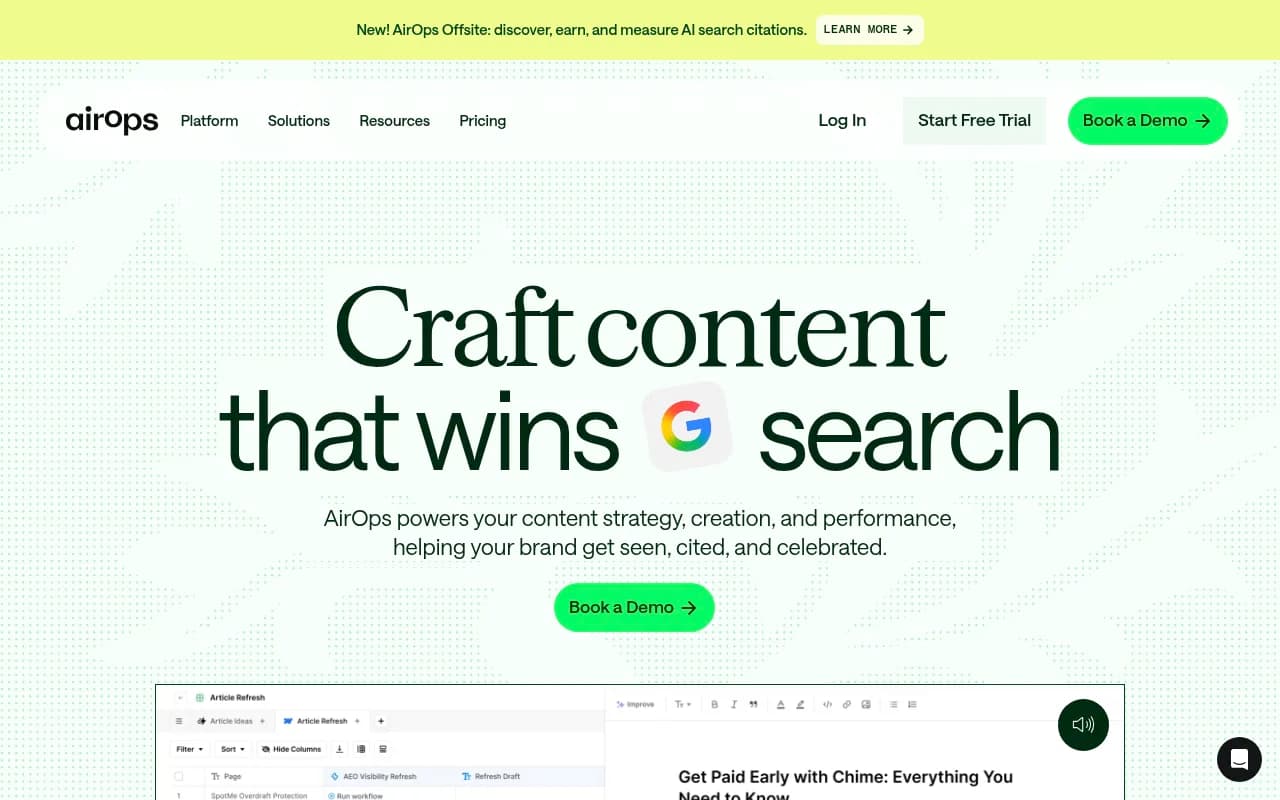
AirOps calls itself a "content engineering platform" and the framing is accurate. It's built around the idea that content for AI search needs to be engineered differently than content for traditional SEO.
The platform combines AI search insights, content gap analysis, and AI-powered writing workflows. Webflow used it to 5x their content refresh velocity. Chime went from being cited in 24 to 68 priority questions. Those are specific, verifiable outcomes, which is more useful than generic claims.
Compared to BrandWell's content module, AirOps is more focused on AI search citation and less on traditional keyword rankings. It also has a stronger workflow system for content teams that need to produce and refresh content at scale.
Where AirOps differs from Promptwatch: AirOps leans more heavily into the content production side, while Promptwatch has deeper monitoring and analytics (crawler logs, prompt volume data, competitor heatmaps, Reddit/YouTube citation tracking). They're complementary in some ways, but if you have to pick one, it depends on whether your bottleneck is insight or execution.
Pricing: Free tier (1,000 tasks/month), then $199/month (Starter, 10,000 tasks/month). Scale and Enterprise plans available.
Best for: Content teams that need to produce and optimize content for AI search at scale, with a focus on measurable citation outcomes.
ABM and intent data alternatives
These tools compete with BrandWell's newer ABM features: visitor identification, competitor traffic tracking, buying committee mapping.
6sense
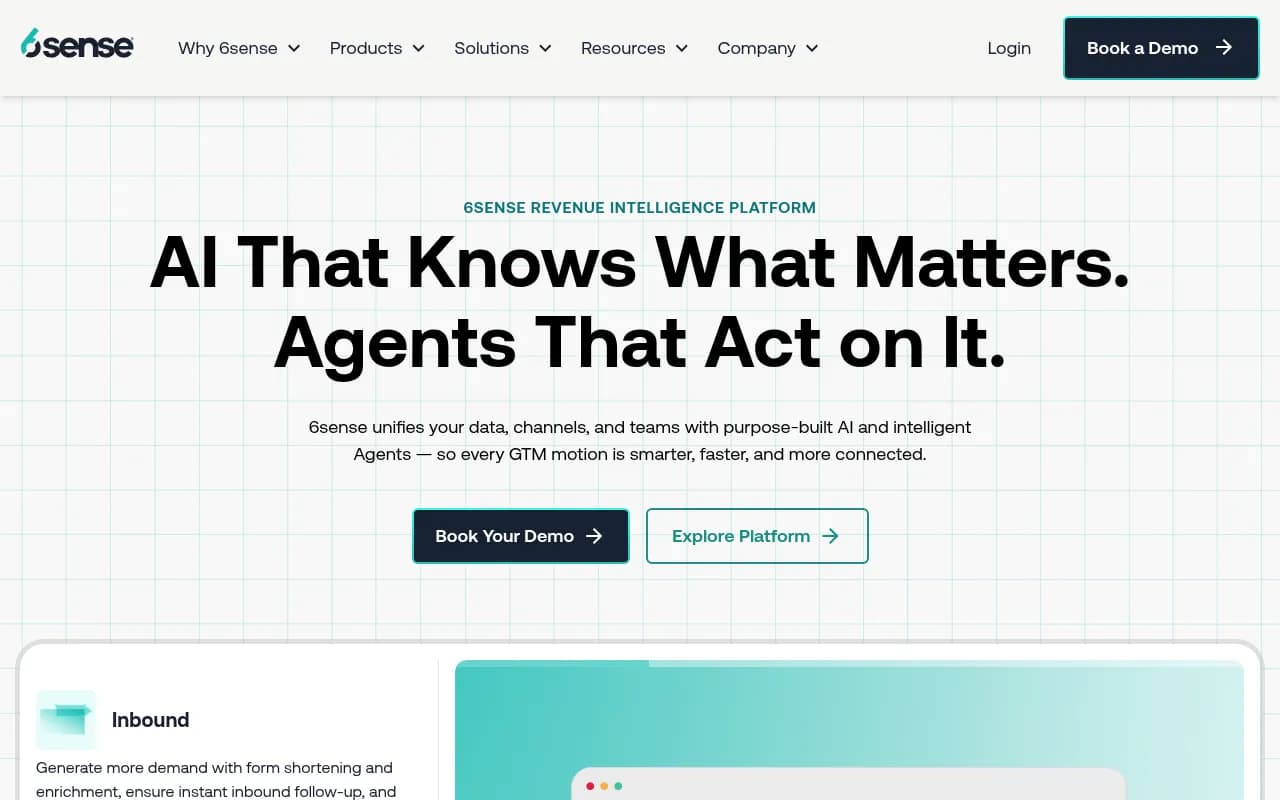
6sense is the enterprise standard for intent-driven ABM. It identifies in-market accounts using AI, maps buying committees, and helps sales and marketing teams prioritize outreach based on where accounts are in their buying journey.
The core capability that overlaps with BrandWell is intent data: 6sense tracks behavioral signals across the web to identify companies researching your category, even before they visit your site. BrandWell does something similar but claims to identify specific individuals (not just companies) visiting competitor sites.
6sense is more mature, more deeply integrated with CRMs and ad platforms, and has a larger data network. But it's significantly more expensive. There's no self-serve option — you're looking at $50,000-$500,000+/year depending on account volume. That's a completely different budget conversation than BrandWell's $250/month entry point.
The trade-off is real: 6sense's data quality and predictive modeling are better, but BrandWell's pricing makes intent data accessible to teams that can't justify enterprise ABM spend.
Best for: Enterprise B2B sales and marketing teams with dedicated ABM programs and budgets to match.
Demandbase
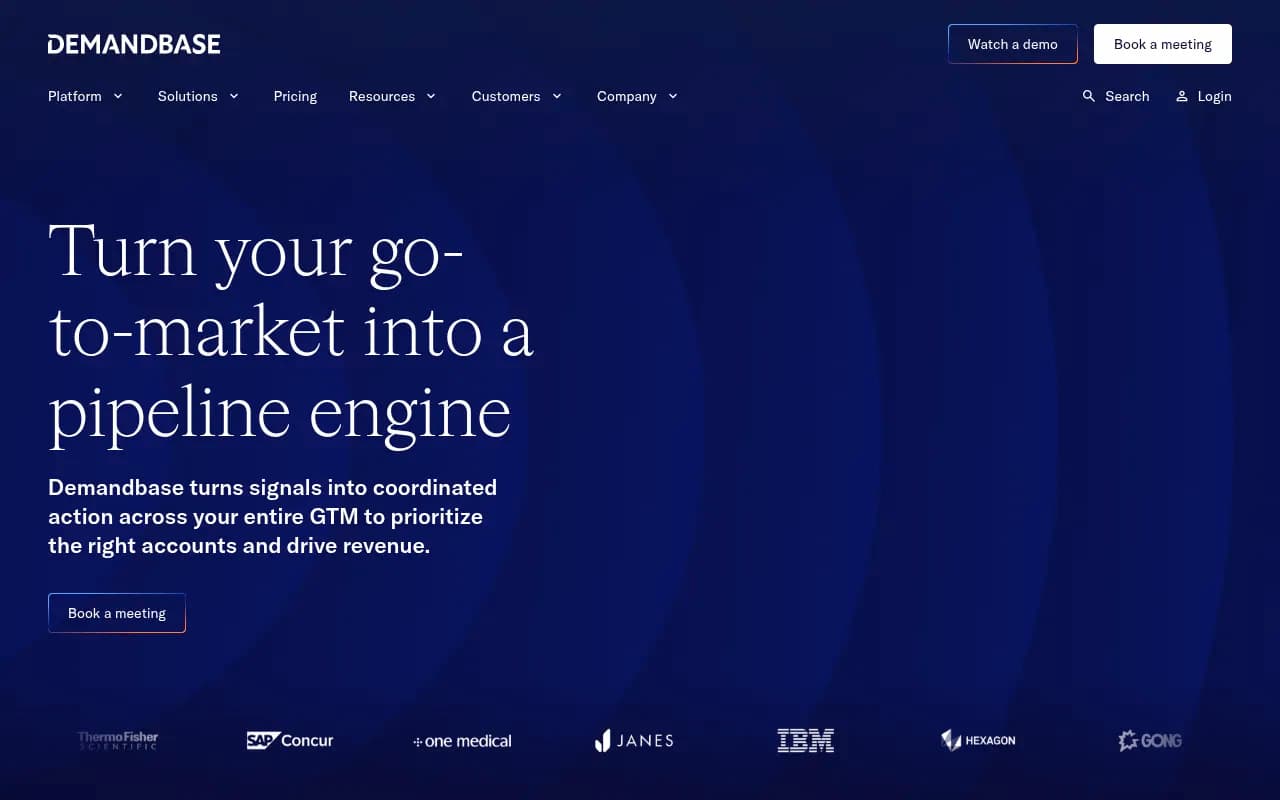
Demandbase competes directly with 6sense in the enterprise ABM space. It combines account intelligence, intent data, advertising, and sales insights into a single platform. Customers include IBM, DocuSign, Adobe, and Salesforce.
The positioning is similar to 6sense: identify in-market accounts, prioritize buying groups, coordinate GTM across sales and marketing. Demandbase has a slight edge in advertising capabilities (particularly B2B display advertising targeted at specific accounts), while 6sense is often considered stronger on the predictive modeling side.
Neither Demandbase nor 6sense is a realistic alternative to BrandWell for most teams. They're enterprise tools with enterprise pricing (starting around $24,000/year). If you're evaluating BrandWell because you want intent data without the enterprise price tag, these aren't the answer.
Best for: Large B2B organizations running coordinated ABM programs across sales, marketing, and advertising.
Clearbit (now HubSpot Data Enrichment)
Clearbit was acquired by HubSpot and is now integrated as HubSpot Data Enrichment. If you're already using HubSpot, this is the most frictionless way to get visitor identification and lead enrichment.
The core functionality: enrich leads and contacts with firmographic data, identify anonymous website visitors by company, score and route leads based on fit. The form shortening feature (where Clearbit fills in fields automatically so you can ask fewer questions) is genuinely useful for conversion rate optimization.
Compared to BrandWell's visitor identification, Clearbit/HubSpot is more focused on enriching known leads and identifying companies (not individuals) visiting your site. BrandWell claims to identify specific people, including those browsing competitor sites — that's a more aggressive data claim.
The HubSpot integration is the main selling point. If your team lives in HubSpot, this is the path of least resistance. If you're not a HubSpot shop, it's less compelling.
Pricing: From around $45/month for 100 credits (billed annually), with some features bundled in HubSpot paid tiers.
Best for: HubSpot users who want basic visitor identification and lead enrichment without switching platforms.
Semrush ContentShake AI
Semrush's ContentShake AI sits inside the broader Semrush platform and is aimed at teams that want AI-assisted content creation with SEO data baked in. It's not a standalone product — it's a feature within Semrush's content toolkit.
The advantage is obvious if you're already a Semrush user: you get keyword data, competitive analysis, and AI writing in one place. The content editor pulls in Semrush's keyword and SERP data to guide what you write.
Compared to BrandWell's content module, ContentShake AI is more tightly integrated with traditional SEO data. Compared to Surfer SEO, it's less specialized but more convenient if you're already paying for Semrush.
Semrush has also been building out AI visibility features (AI Visibility Toolkit, AI Visibility Checker), though these are newer and less developed than dedicated GEO platforms.
The limitation: ContentShake AI is a feature, not a platform. It doesn't have BrandWell's intent data, visitor identification, or ABM capabilities. And Semrush's AI visibility tools use fixed prompts, which limits how useful they are for tracking your actual market.
Best for: Existing Semrush subscribers who want to add AI-assisted content creation without paying for another tool.
How to choose
The right alternative depends entirely on why you were using BrandWell (or considering it) in the first place.
If you want volume SEO content: Jasper or Surfer SEO. Jasper for diverse content types and team workflows; Surfer for data-driven optimization of individual pieces.
If you want AI search visibility (getting cited in ChatGPT, Perplexity, etc.): Promptwatch for the full monitoring-to-optimization loop, or AirOps if your bottleneck is content production specifically.
If you want intent data and visitor identification on a mid-market budget: BrandWell is actually one of the few tools that offers this below enterprise pricing. The closest accessible alternative is Clearbit/HubSpot if you're in the HubSpot ecosystem.
If you want enterprise ABM: 6sense or Demandbase, with the understanding that you're committing to a very different budget and sales process.
If you want quick marketing copy: Copy.ai for GTM workflow automation, or Writesonic if you also want basic AI visibility tracking.
BrandWell's pivot from content tool to ABM platform is genuinely interesting, but it means the product is now trying to do a lot of things at once. Most teams will find that a focused tool does their specific job better. The question is which job matters most.