Key takeaways
- AI brand perception is a separate layer from social listening and review monitoring. Brandwatch, Brand24, and Meltwater cover the web. Another class of tools covers what AI models say.
- Compare numbers within one AI engine, never across engines. Promptwatch Data shows ChatGPT cites about 5 sources per answer, while Google AI Overviews and Perplexity cite about 10.
- Report on cadence. News-driven citations decay fast (half gone after 36 days in ChatGPT), while landing pages and docs last much longer.
- A good client report separates visibility, sentiment, and accuracy, then ties each to an action.
- Most tools stop at a dashboard. Agencies get more value from tools that also show why AI says something and help fix it.
Why brand perception now has two layers
For about a decade, reputation reporting meant reviews, social mentions, and press coverage. That still matters. Brand24's own roundup cites that 93% of consumers read online reviews before buying and 94% say a bad review made them avoid a business. (It is vendor-authored and ranks Brand24 first, so read it with that in mind.)
But clients now ask a different question: "What does ChatGPT say about us?" That answer is built from a different set of sources, often a mix of your own pages, review sites, Reddit threads, listicles, and news. A brand can have a spotless Trustpilot profile and still get described by an AI model as expensive, outdated, or missing a feature it shipped two years ago.
So agencies need to report on both layers:
- Traditional perception: reviews, social listening, press, local listings.
- AI perception: how often, how prominently, and in what tone AI engines mention the brand, and which claims they repeat.
Most agencies already have the first layer covered. This guide focuses on adding the second, and on packaging both into something a client will actually read.
What AI brand perception tracking actually measures
Before picking a tool, get clear on the metrics. Vendors use the same words for different things.
- Visibility: how often the brand appears in answers to a set of tracked prompts, and how prominently.
- Share of voice: the brand's slice of all brand mentions in those answers versus competitors.
- Position: where the brand lands in a list of recommendations. Lower is better.
- Sentiment: the tone of what the model says, scored per response.
- Claims and accuracy: the specific statements AI makes about the brand ("affordable for small teams", "no mobile app") and whether they are true.
- Citations: which URLs the engine used as sources, and whether any of them are the client's own.
The last two are what separate perception tracking from plain mention counting. A sentiment score of 62 tells a client very little. "Three models say your support is slow, and the source is a two-year-old Reddit thread" tells them what to do. Promptwatch's citations vs mentions guide explains why the distinction matters when you read results.
The tool categories agencies should know
The research roundups from DesignRush, Brand24, Revuze, and Built In mostly list traditional reputation tools, with AI visibility showing up as a side feature. In practice you are choosing from four buckets.
| Category | What it covers | Example tools | Gap for agencies |
|---|---|---|---|
| Social listening and media monitoring | Mentions, sentiment, influencers, crisis alerts across web and social | Brandwatch, Brand24, Meltwater, Talkwalker, Awario | Little or no view into AI answers |
| Review and local reputation | Reviews, listings, response workflows across locations | Birdeye, Reputation, Chatmeter, Trustpilot, BrightLocal | Great for local clients, silent on LLMs |
| AI visibility trackers | Prompts run across ChatGPT, Gemini, Perplexity and others, with mention and sentiment data | Otterly.AI, Peec AI, Profound, Rankscale, Scrunch AI | Often dashboards only, limited fixing |
| End-to-end AI visibility platforms | Tracking plus citation tracing, crawler data, traffic attribution, and content actions | Promptwatch | Heavier setup, built for teams that act on the data |
Social listening and media monitoring
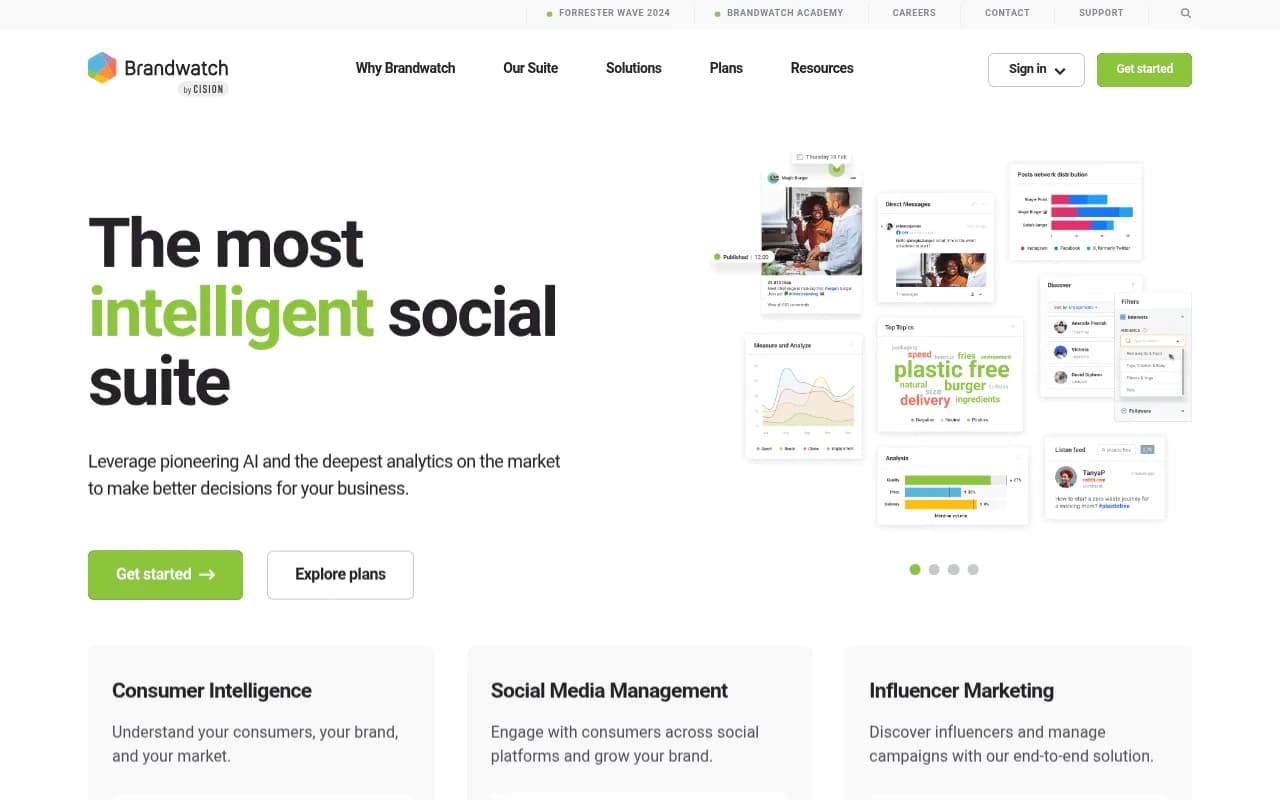
Brandwatch is the enterprise pick for social intelligence and long-term narrative analysis.
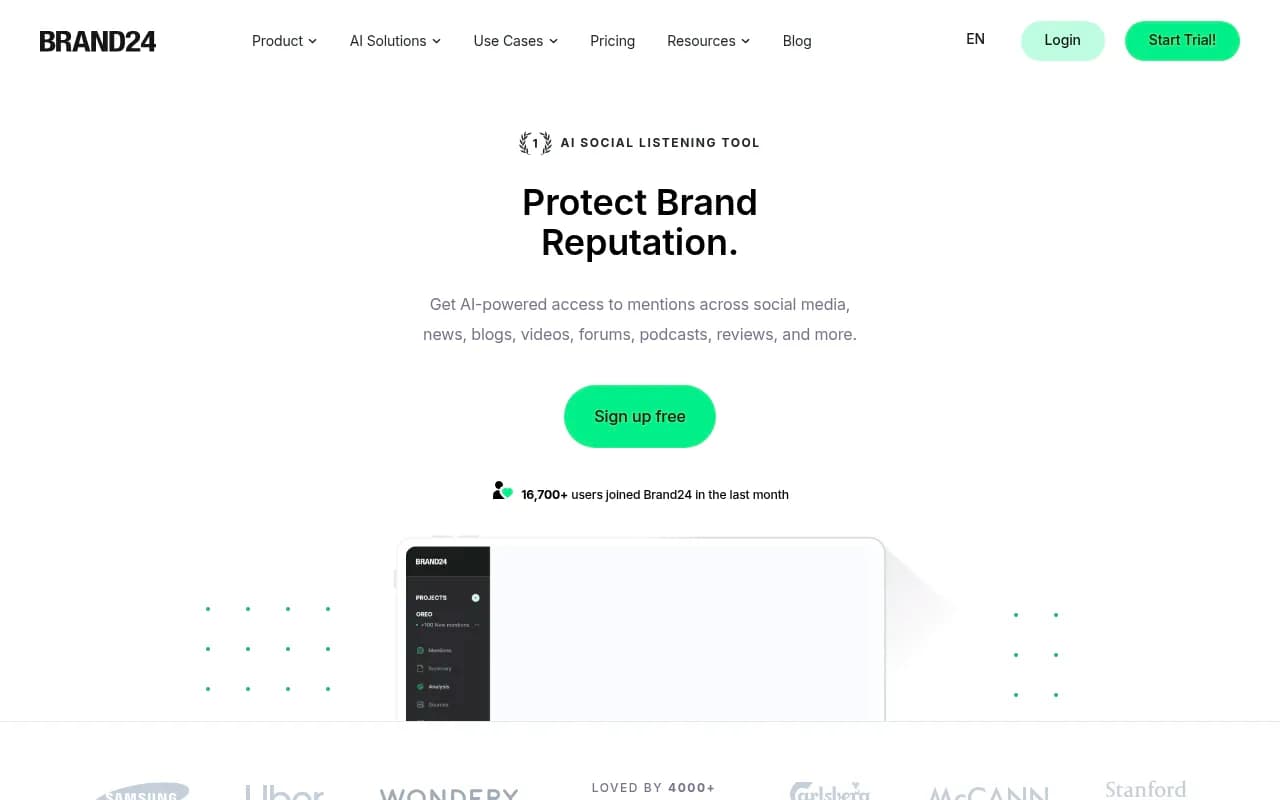
Brand24 is a more accessible option for cross-channel monitoring, sentiment, and crisis alerts, starting at $199/mo per its own listing.

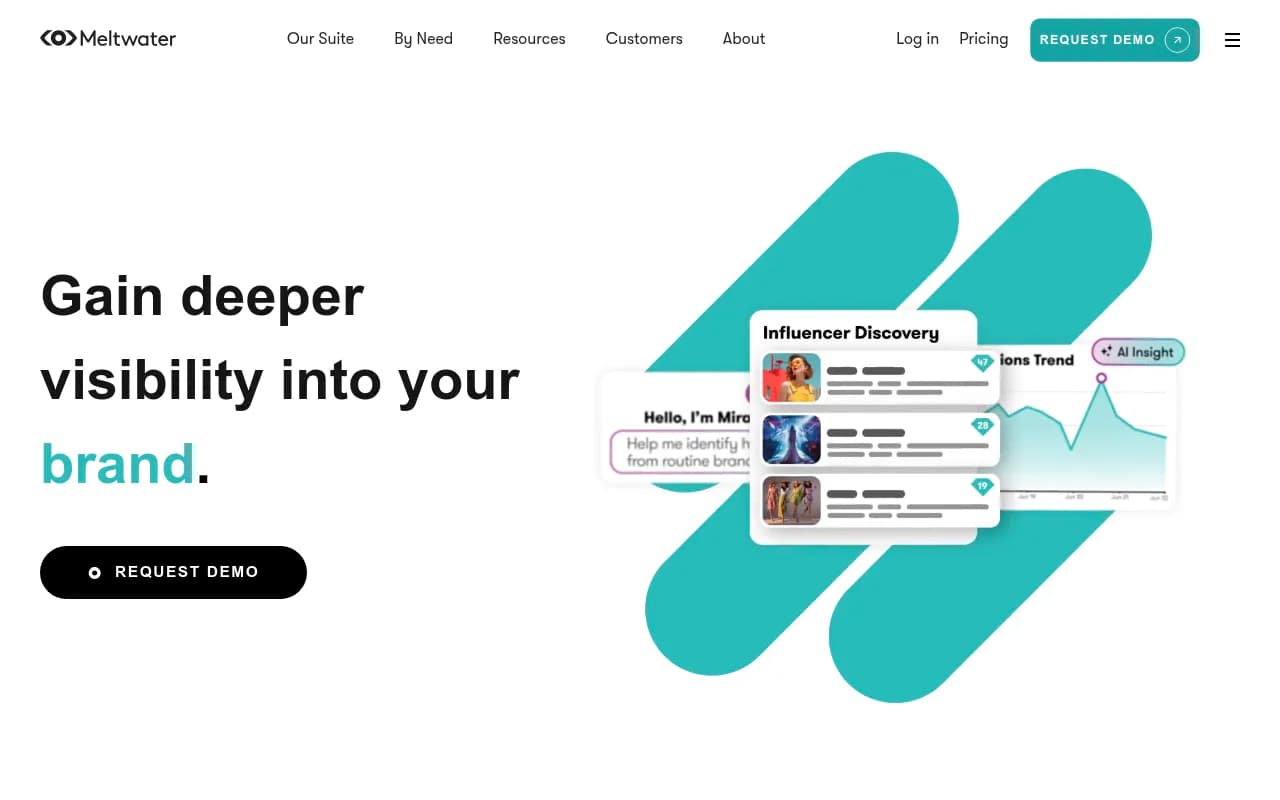
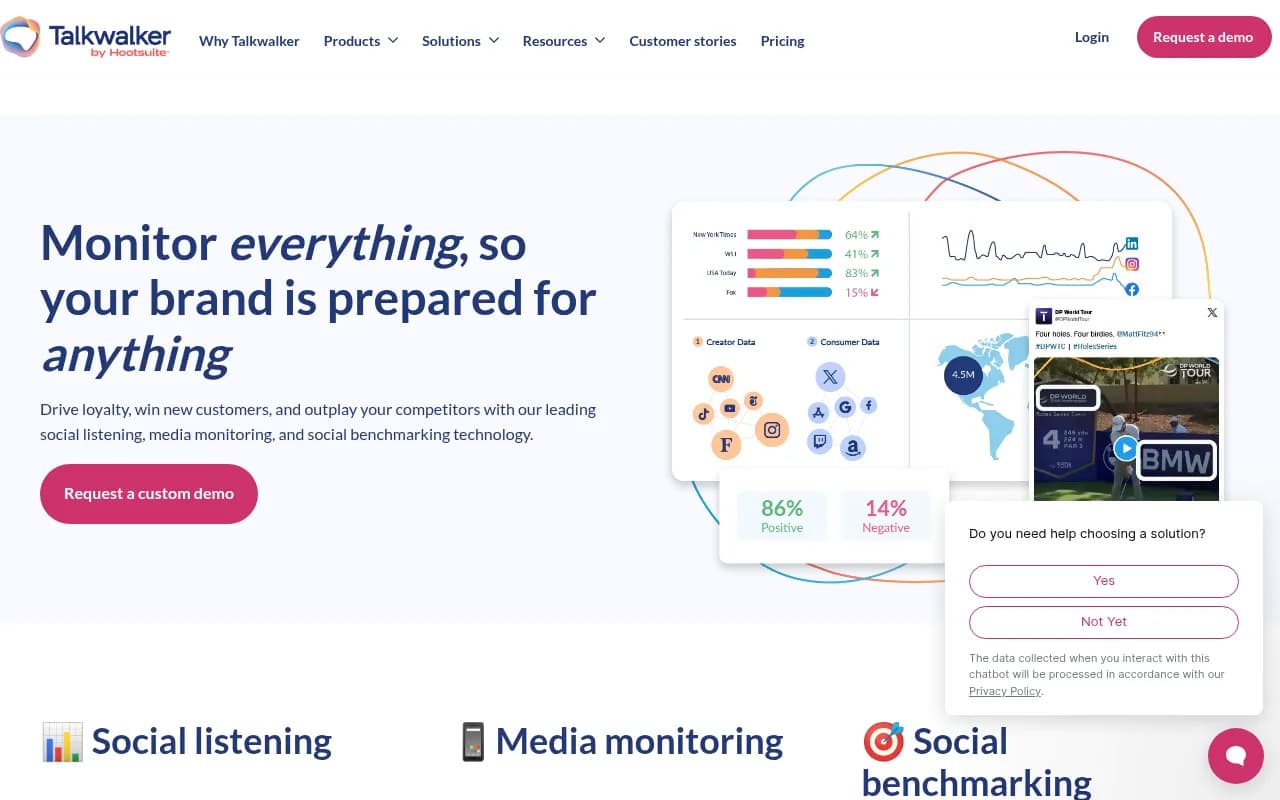
Meltwater and Talkwalker cover media intelligence and social listening for clients with heavy PR needs.
These are the right tools for the first layer. Hootsuite's sentiment tool comparison puts agency-oriented options in the $69 to $79 per month range for entry plans, though sarcasm and context handling is rated only "basic" across them. Keep that in mind: sentiment scores from social tools are blunt instruments.
Review and local reputation platforms
If your clients are multi-location businesses, Birdeye, Reputation, and Chatmeter handle reviews, listings, and response workflows at scale.
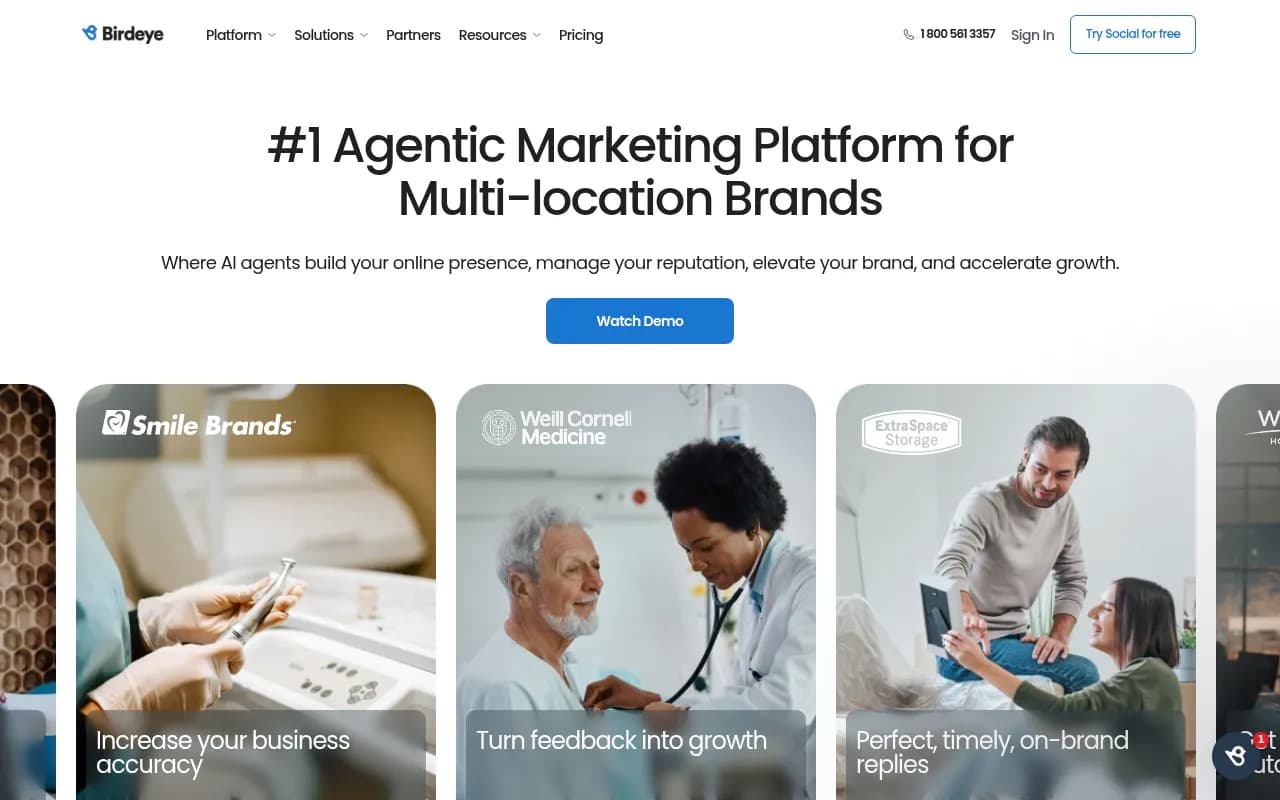
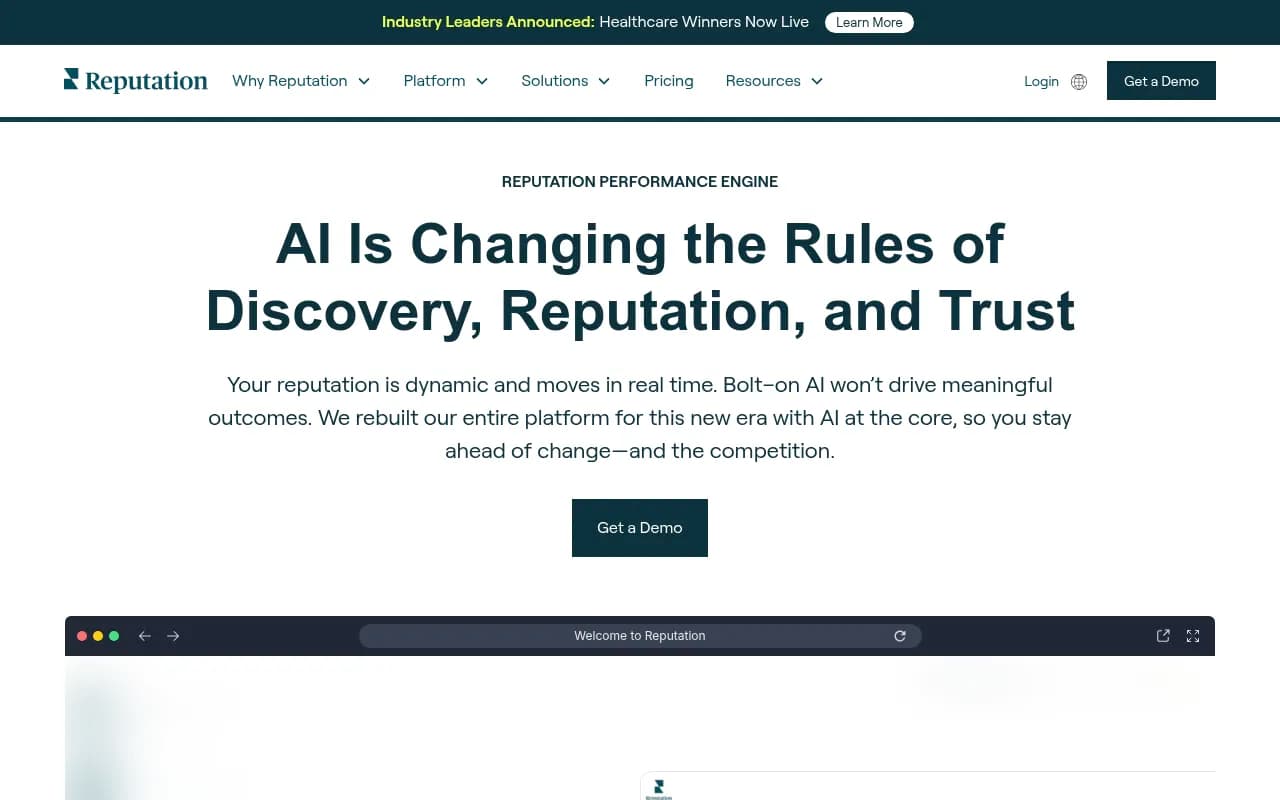
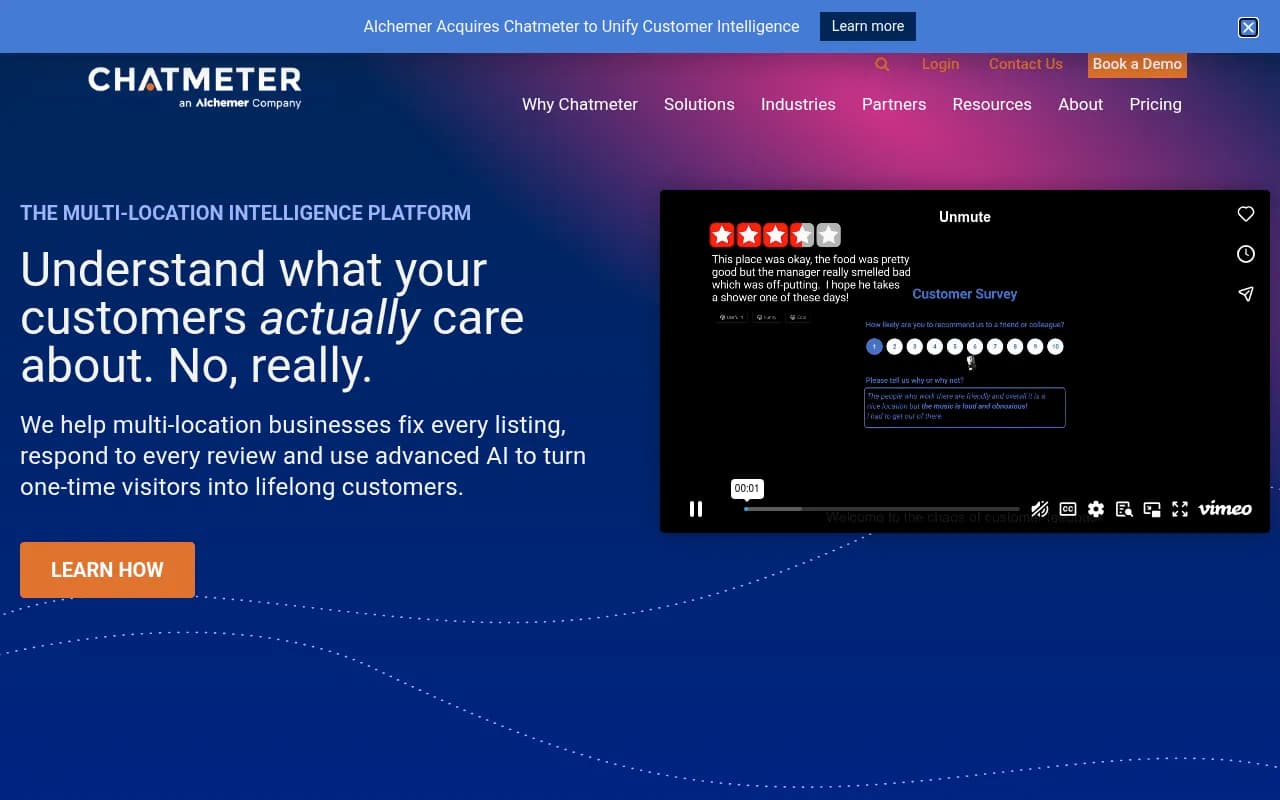
Note that Birdeye is also listed in some catalogs as tracking appearances in AI answers. Treat that as an add-on to a review platform, and test it against a dedicated tracker before relying on it for client reporting.
Consumer intelligence
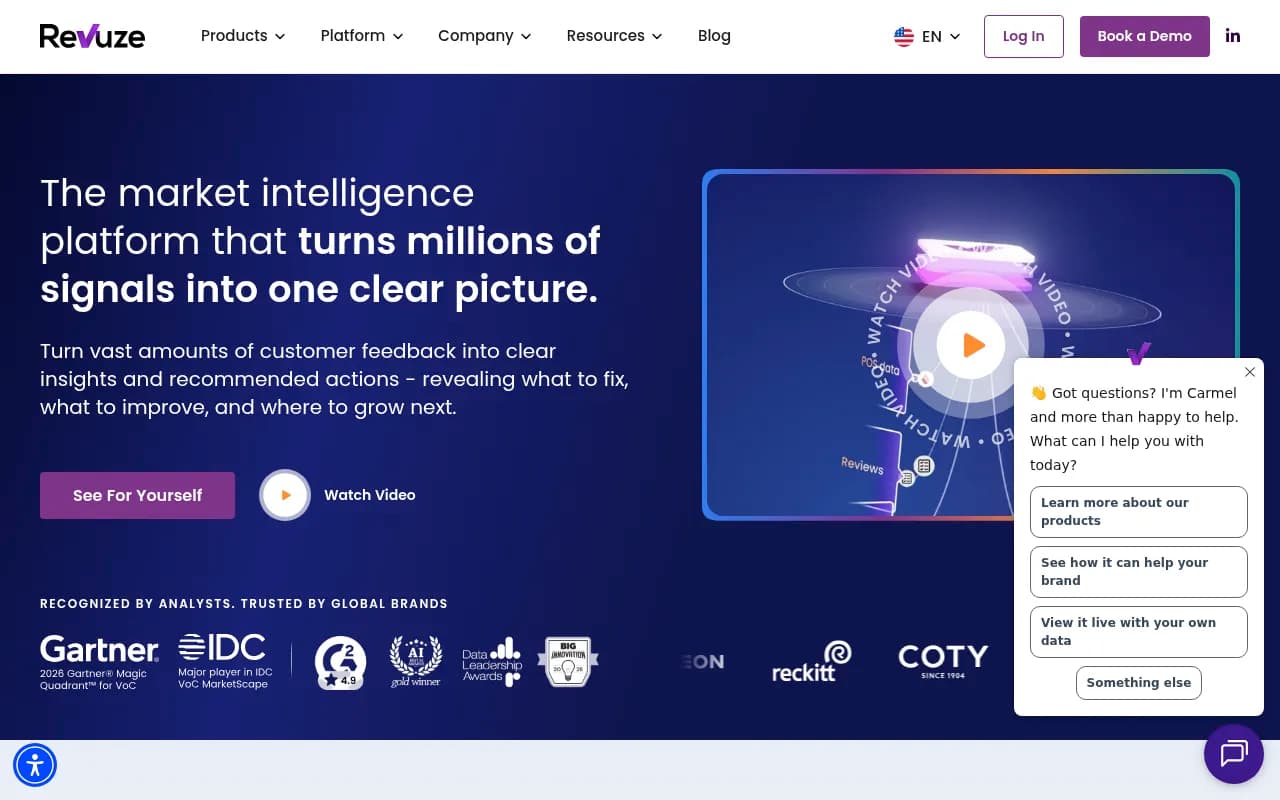
Revuze takes a different angle, analyzing reviews, social, video, and commerce data down to the SKU level. It suits enterprise consumer brands more than typical agency retainers.
AI visibility trackers
This is the layer most agencies are missing. The category is crowded. Options in the catalog include Otterly.AI, Peec AI, Profound, Rankscale, Scrunch AI, AthenaHQ, and LLM Pulse.
Otterly.AI


Profound


For a wider survey of this category, the GEO software directory at bestgeosoftware.com and the AI rank tracking directory at ai-rank-tools.com list dozens more.
An end-to-end option
Promptwatch is the one platform here that covers perception, diagnosis, and the fix in one product. It collects answers from the real interfaces of ChatGPT, Gemini, Perplexity, Google AI Overviews, Google AI Mode, Copilot, and others, in the country and language you choose, then scores each response for visibility and sentiment.

Two features matter most for perception work. Brand Narrative pulls the individual claims AI makes about a brand and its competitors out of every tracked response, groups repeated ones, and files them under themes like Pricing, Features, Support, and Reputation, each with a 0 to 100 score. Fact Check then lets you mark a claim as inaccurate and finds the pages on the client's site that state it (or its opposite), so you know where the model is learning the wrong thing. Fact Check sits on Business and above, while Brand Narrative is on every plan.
How to report AI perception to clients
A dashboard screenshot is not a report. Here is a structure that works.
Start with a baseline, per engine
Set up a prompt set that reflects how the client's buyers actually ask: category questions, comparison questions, and brand-specific questions. Run it across the engines that matter for that client. Then record three baselines: visibility, share of voice against named competitors, and sentiment.
One rule saves a lot of awkward client calls: compare within an engine, not across engines. Promptwatch Data's average sources per response report shows ChatGPT cites about 5 sources per web-search answer, while Google AI Overviews and Perplexity cite about 10. A brand showing up in 8% of AI Overviews citations and 8% of ChatGPT citations is not performing equally. The slots are different sizes.
The same report notes Copilot swung from under 2 to nearly 17 sources within a few weeks. Judge Copilot on monthly trends, because a weekly dip is more likely a retrieval change on Microsoft's side than anything your client did. Perplexity's steady count of roughly 10 sources makes it a cleaner test bench when you want to see whether a content change moved citations.
Report claims, not just scores
Pick the five to ten claims AI repeats most about the client. For each, note which models say it, whether it is accurate, and which source it traces back to. This is the part clients remember. It also turns directly into work: correct a pricing page, publish a comparison, answer a recurring objection.
Match cadence to content decay
If your reputation strategy leans on press coverage, expect short-lived gains. Promptwatch's content half-life study tracked every page ChatGPT cited on July 6, 2026 for 90 days. News lost half its pages within 36 days, and almost a quarter of news pages were never cited again. Landing pages and docs held up far better: 78% of landing pages and 76% of docs were still cited after 30 days, and about 69% and 67% after 60 days.
Two reporting consequences follow. First, a drop in citations for news-driven content is normal and should not be reported as a reputation problem. Second, the assets worth building for lasting perception are landing pages, docs, pricing pages, and comparison pages. Put that in the quarterly narrative so the client does not panic over a bad week.
Separate the three kinds of problems
A useful diagnostic for the monthly report:
| Symptom | Likely problem | Typical action |
|---|---|---|
| Low share of voice | Coverage: the brand is not in the conversation | Publish content for uncovered prompts |
| Late position in answers | Prominence: mentioned but not recommended first | Strengthen comparison and proof content |
| Mentions without citations of client pages | Content or crawlability | Check crawler access, improve citable pages |
| Weak sentiment or wrong claims | Reputation or outdated sources | Fix on-site facts, address third-party sources |
This framing keeps the report from becoming a list of numbers. Each row ends in work the agency can scope and price.
Close the loop with traffic
Clients eventually ask whether any of this brings revenue. Visitor analytics that identify AI-referred sessions answer that. Note that ChatGPT stopped sending a referrer on October 8, 2026, so tagging links with utm_source=chatgpt.com and counting those visits matters if you want clean attribution. Promptwatch's guide on attributing AI traffic walks through the options.
Combining the two layers in one client deck
A practical monthly structure:
- One-page summary: three headline numbers (AI visibility, share of voice, sentiment) with change versus last month.
- Traditional reputation: review rating trend, notable mentions, any crisis alerts from your listening tool.
- AI perception: top claims, accuracy flags, and the sources behind them.
- Wins and actions: what shipped, what is queued, what you need from the client.
- Appendix: prompt list, engines tracked, methodology.
Keep the methodology page. When a number moves, the first question is whether the prompt set or engine changed.
Tools for the reporting layer itself
If you already use a reporting tool such as Whatagraph, you can pull exported data into your standard client template. Promptwatch also offers PDF reports (including scheduled and white-label exports), a Looker Studio connector from the Professional plan, and CSV exports, which helps when clients want AI data next to the rest of their marketing numbers.
What agencies should look for in a tool
When you evaluate platforms, test them against these questions rather than feature checklists:
- Does it collect answers from the real user interfaces, or only from APIs? Answers and citations can differ between the two.
- Can it run prompts in the client's country and language, and pin local queries to a location?
- Does it show the claims behind sentiment, not just a score?
- Can you trace a mention back to a source URL, including Reddit, YouTube, and third-party pages?
- Does it support unlimited client projects and team seats at a sane price?
- Can it export white-label or at least clean PDF and CSV reports?
- Does it help fix issues, or only report them?
On the agency side, Promptwatch's agency plans start at $199/mo (Kick-off), $399/mo (Growth), and $799/mo (Scale), with unlimited projects, prompts, and team seats. Check promptwatch.com/pricing for current terms, and note that content generation, a white-label dashboard and client portal, and SSO sit on Enterprise. Its agency solutions page and the GEO for agencies guide cover setup in more detail. Monks, for one, uses Promptwatch's Answer Gap Report and Visibility Score to build content roadmaps for enterprise clients, as described in that case study.
Gaps and honest caveats
A few things to be upfront about with clients.
- AI answers vary. The same prompt can return different answers on different days. Track trends over weeks, not single runs.
- Sentiment scoring is imperfect. Even dedicated social tools rate their sarcasm handling as basic. Read the underlying responses before presenting a sentiment dip.
- You cannot edit a model. You can change the sources it reads and the pages it cites. That takes weeks, and results are not guaranteed.
- Tool claims need testing. Vendor roundups rank their own products first. Run a two-week trial on one real client before committing across your book.
If you would rather have a team handle the strategy side, the same applies to agencies hiring help: 1001 SEO Media runs SEO and generative engine optimization work for brands and uses Promptwatch as its AI visibility platform.
A starting checklist for the next 30 days
- Pick two or three clients for a pilot. Choose ones that have competitors AI already recommends.
- Build a prompt set of 30 to 50 buyer questions per client, split by category, comparison, and brand-specific.
- Run a baseline across the engines your clients' buyers use. A free starting point is the Promptwatch AI visibility report, which scans how ChatGPT, Gemini, and Perplexity talk about a brand with no login.
- Pull the top repeated claims and mark each accurate or inaccurate.
- Trace the inaccurate ones to sources and queue fixes.
- Send the first combined report at the end of month one, with the methodology page attached.
Then rerun on the same prompts every month. After a quarter you will have the one thing most agencies cannot show clients today: a trend line for how AI describes their brand, and the work that moved it.