Key takeaways
- Most AI visibility platforms stop at monitoring -- they show you where you're invisible but don't help you fix it.
- The platforms that actually move your visibility score combine gap analysis, content generation, and crawler insights in one loop.
- Promptwatch is the only platform rated "Leader" across all categories in a 2026 comparison of 12 GEO tools, largely because it closes the loop from tracking to publishing to results.
- Traditional SEO tools like Semrush and Ahrefs have added AI tracking features, but their fixed-prompt approaches limit how actionable the data really is.
- Smaller monitoring-only tools (Otterly.AI, Peec AI, Goodie AI) are fine for basic awareness but won't move your score on their own.
There's a question worth asking before you spend money on any AI visibility platform: does this tool actually improve my visibility, or does it just measure it?
That distinction matters more than it sounds. In 2026, the GEO software market has exploded. There are now dozens of platforms claiming to help you "rank in AI search." Most of them show you a dashboard with a score, a list of prompts where competitors appear and you don't, and maybe a chart showing your share of voice over time. That's useful context. But context alone doesn't move your score.
The platforms that actually change outcomes are the ones that complete the loop -- find the gap, create the content, track the result. This guide ranks the major platforms by how much they can realistically move your AI visibility score, not just measure it.
Why visibility scores are hard to move
Before getting into the rankings, it's worth understanding what you're actually trying to influence.
AI models like ChatGPT, Perplexity, Claude, and Gemini don't have a "ranking algorithm" in the traditional sense. They don't crawl your site and assign you a position. Instead, they synthesize information from their training data, real-time web retrieval, and cached sources. When they answer a question, they cite sources they've encountered, trust, and found relevant to the specific prompt.
This means visibility in AI search is driven by a few concrete factors:
- Whether your content exists and answers the specific questions users are asking
- Whether AI crawlers have actually visited and indexed your pages
- Whether your brand appears in third-party sources (Reddit, YouTube, review sites, listicles) that AI models frequently cite
- Whether your content is structured in a way that makes it easy for AI to extract and attribute
A monitoring dashboard tells you your current score. What moves the score is publishing the right content, getting it crawled, and earning citations. That's a content and technical problem, not a reporting problem.
The platforms, ranked by impact
Tier 1: Full optimization loop
These platforms don't just track visibility -- they give you the tools to improve it.
Promptwatch
Promptwatch is the clearest example of what a full-loop GEO platform looks like. It tracks your visibility across 10 AI models (ChatGPT, Perplexity, Claude, Gemini, Google AI Overviews, Grok, DeepSeek, Copilot, Meta AI, and Mistral), but the monitoring is really just the starting point.
The part that moves scores is the Answer Gap Analysis, which shows you the specific prompts where competitors are being cited and you aren't. Not vague topic clusters -- actual prompts, with volume estimates and difficulty scores. From there, Content Agents generate articles, listicles, and briefs grounded in that prompt data, competitor citations, and your brand guidelines. Then AI Crawler Logs show you exactly when ChatGPT or Perplexity's crawlers visit your pages, which errors they hit, and when a crawled page starts generating citations.
That sequence -- gap, content, crawl, citation -- is what makes it an optimization platform rather than a tracker. It's used by 1,480+ brands including Booking.com and Center Parcs, and it's the only platform rated "Leader" across all categories in a 2026 comparison of 12 GEO tools.

Search Atlas
Search Atlas takes a different angle but also closes the loop. It combines traditional SEO with AI search optimization, and its content automation features let you publish at scale. It's particularly strong for teams that want to handle both Google and AI search from one platform without switching tools.
Relixir
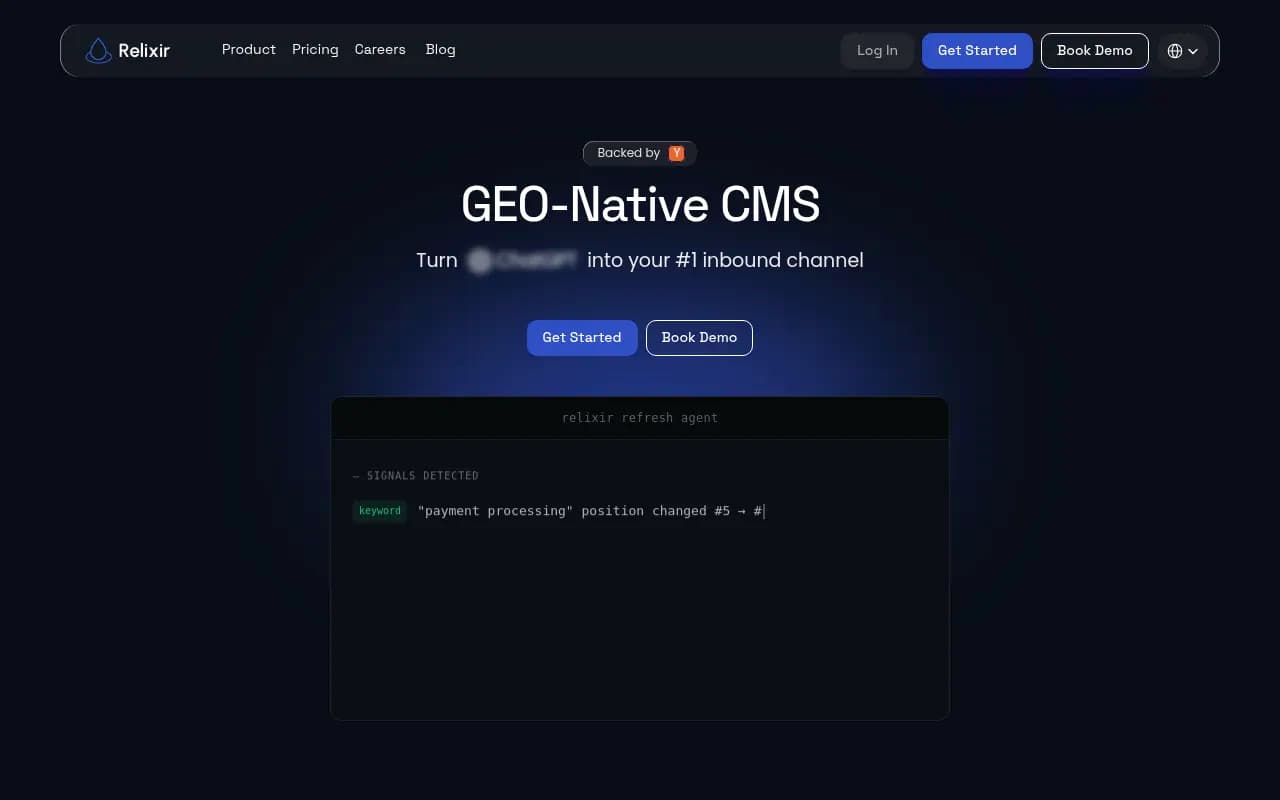
Relixir positions itself as an enterprise GEO engine. It has content generation capabilities and is built for larger brands running structured optimization programs. Less flexible for smaller teams, but solid for enterprise use cases where the content pipeline needs to be systematic.
Tier 2: Strong monitoring with some optimization features
These platforms give you more than a dashboard, but the content and optimization capabilities are either limited or require more manual work to act on.
Profound
Profound is a well-regarded enterprise platform with deep monitoring across multiple AI engines. One third-party ranking put it at 92/100 on an "AEO score" metric. Its citation tracking is thorough and its competitive analysis is solid. Where it falls short is on the action side -- there's no built-in content generation, and the gap analysis doesn't connect directly to a publishing workflow. You'll need to take insights out of Profound and act on them elsewhere.
Profound

AthenaHQ
AthenaHQ has good prompt tracking and brand monitoring features. It's monitoring-focused, which means it's strong at showing you the state of your visibility but doesn't help you change it. For teams that already have a content operation and just need better AI search data to feed it, AthenaHQ is a reasonable choice.

Evertune AI
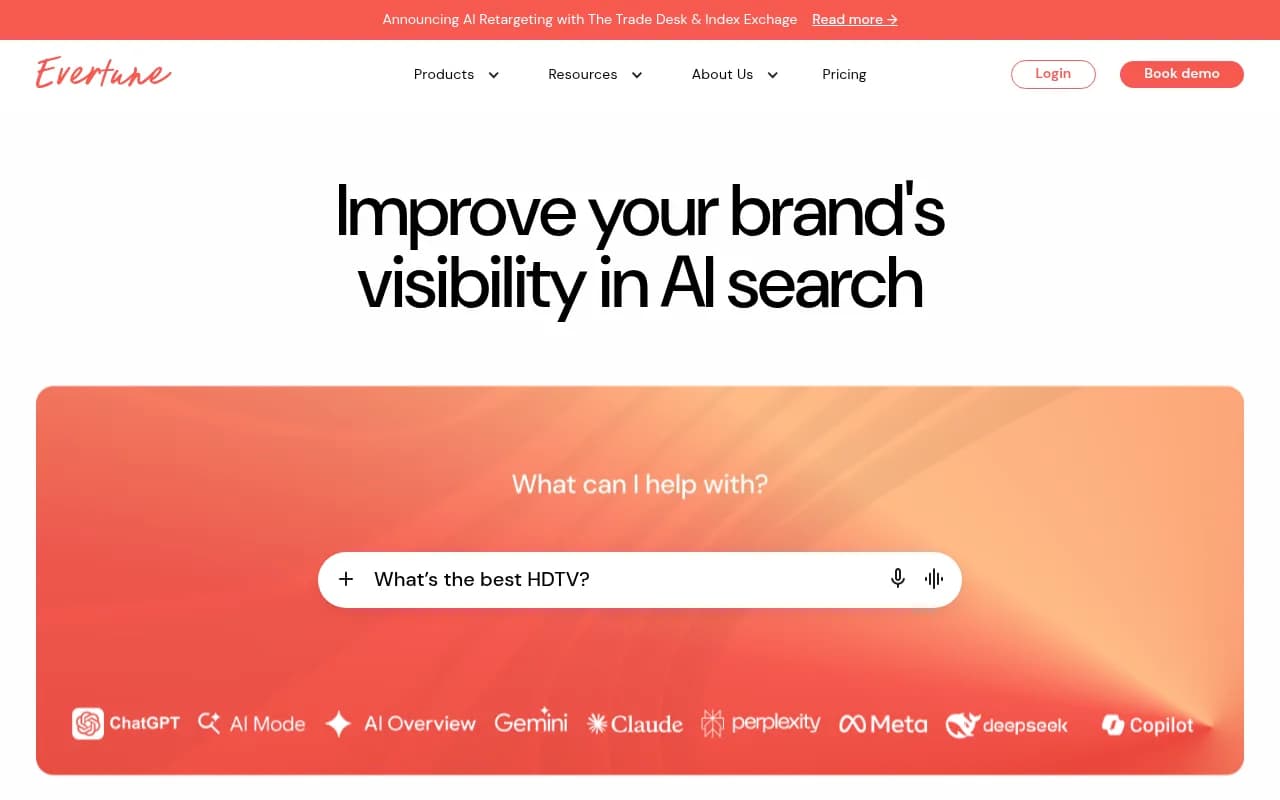
Evertune targets enterprise and Fortune 500 brands with GEO insights and competitive benchmarking. It has more depth than basic monitoring tools, particularly around brand perception analysis (not just whether you're mentioned, but how). The optimization workflow still requires external content production.
Scrunch AI
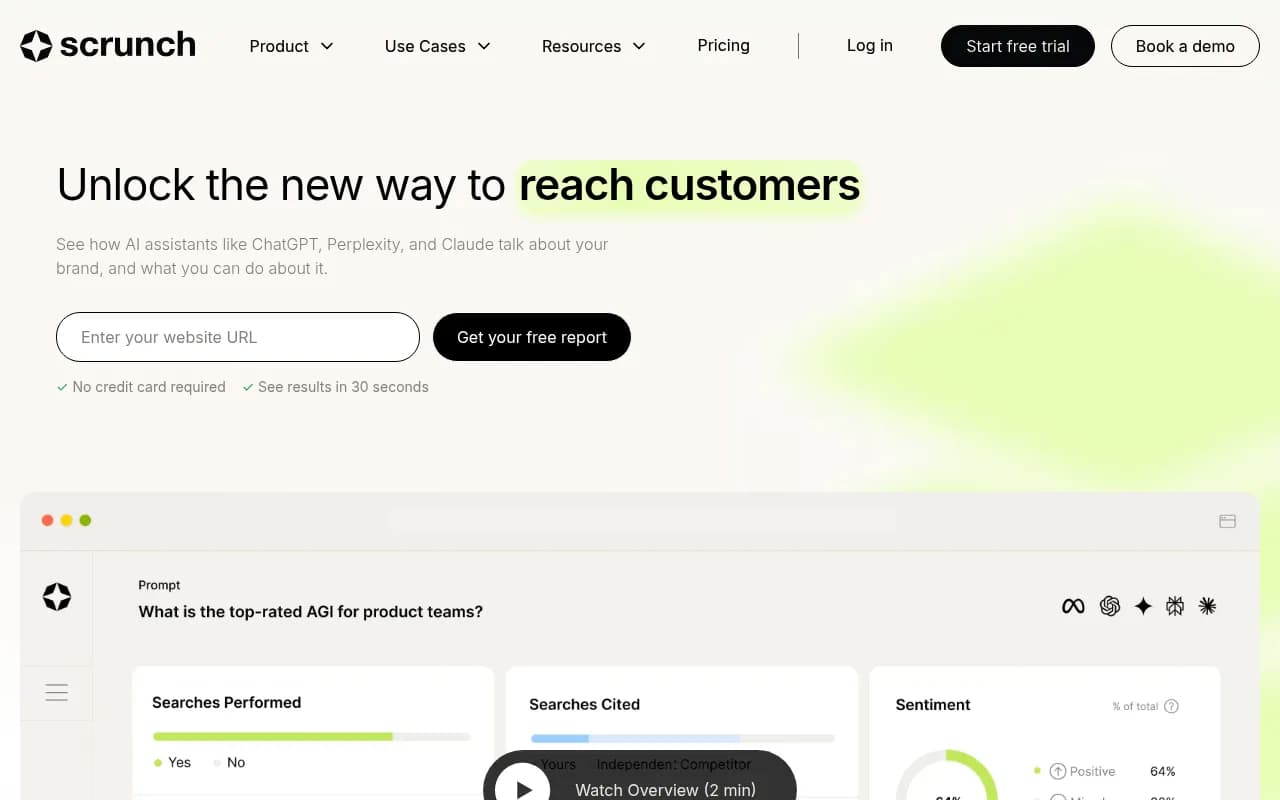
Scrunch has a decent feature set for tracking AI visibility and competitive positioning. It's been improving its content guidance features, though it still leans more toward monitoring than optimization.
Tier 3: Monitoring-only platforms
These tools are useful for awareness and reporting, but they won't move your score on their own. You'd need to pair them with a separate content strategy and publishing workflow.
Otterly.AI
Otterly is one of the better-known monitoring tools in the space. It tracks brand mentions across ChatGPT, Perplexity, and Google AI Overviews, and its interface is clean. But it stops at monitoring -- no crawler logs, no content generation, no gap analysis that connects to action. Good for teams that just need a quick read on AI visibility without a full platform investment.
Otterly.AI

Peec AI
Similar positioning to Otterly. Peec AI tracks your visibility across AI search engines and gives you competitive comparisons. The data is useful, but the platform doesn't help you do anything with it. Fine as a lightweight monitoring layer.

Goodie AI
Goodie AI is a simpler monitoring tool. It covers the basics -- brand mention tracking across a few AI models -- but it's missing most of the features that would make it actionable. Best for teams that want a low-cost way to check whether they're appearing in AI answers at all.
Rankshift
Rankshift tracks brand visibility across ChatGPT, Perplexity, and AI search. It's in the monitoring category with a reasonably clean interface, but optimization features are limited.

LLM Pulse
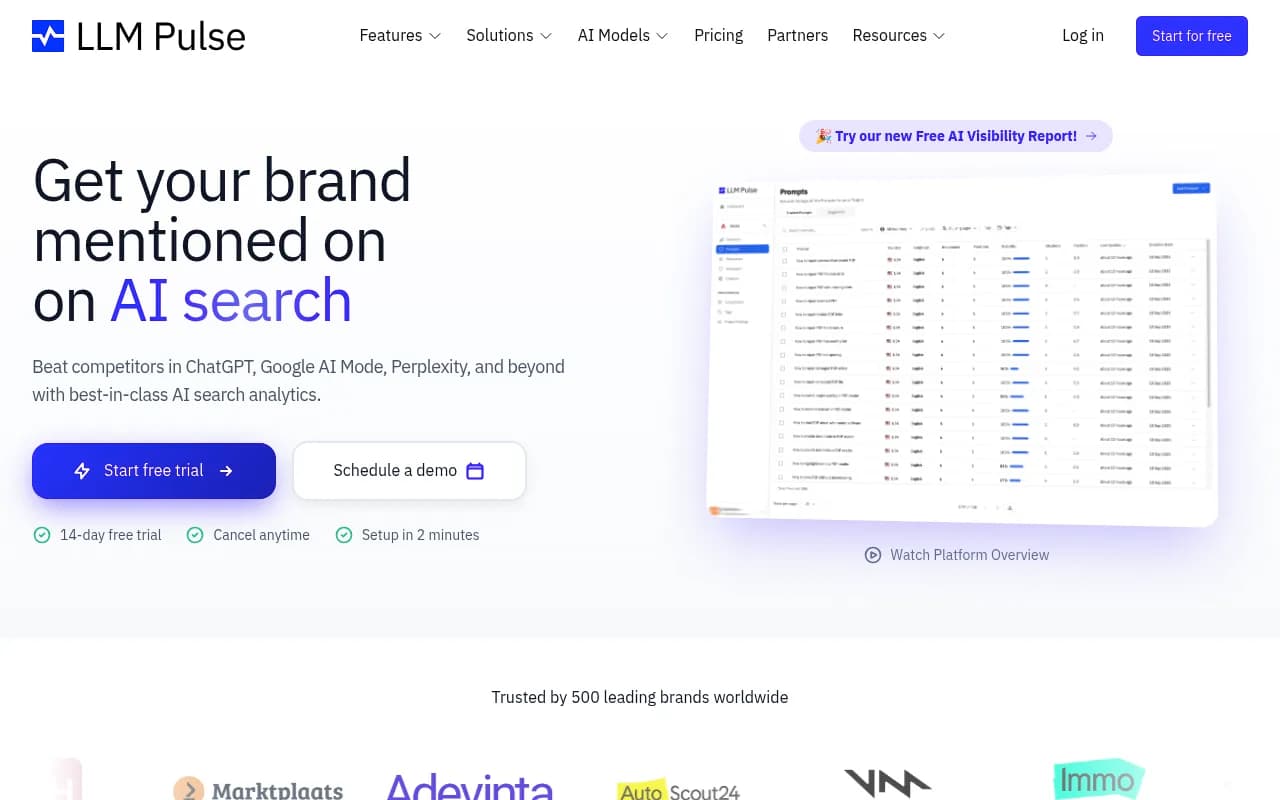
LLM Pulse covers the tracking side across major AI models. Useful for getting a baseline read on your AI search presence, but you'll need to take the data elsewhere to act on it.
Tier 4: Traditional SEO tools with AI tracking add-ons
These are established SEO platforms that have added AI visibility features. The AI tracking is often secondary to their core product, which limits how deep it goes.
Semrush
Semrush has added AI search tracking through its toolkit, but the approach uses fixed prompts rather than dynamic prompt discovery. That means you're tracking a predetermined set of queries rather than discovering new ones where competitors are gaining ground. For teams already inside the Semrush ecosystem, it's a convenient addition. For teams whose primary concern is AI visibility, it's not purpose-built for that job.
Ahrefs
Ahrefs Brand Radar gives you some AI visibility data, but it has fixed prompts and no AI traffic attribution. Like Semrush, it's a useful supplement for teams already using Ahrefs for traditional SEO, but it won't replace a dedicated GEO platform.
SE Ranking
SE Ranking has been adding AI visibility features to its all-in-one SEO platform. It's a solid mid-market option for teams that want to handle traditional and AI search tracking in one place without enterprise pricing.
Head-to-head comparison
| Platform | AI models tracked | Content generation | Crawler logs | Prompt gap analysis | Best for |
|---|---|---|---|---|---|
| Promptwatch | 10 | Yes (Content Agents) | Yes | Yes (with volume + difficulty) | Full optimization loop |
| Search Atlas | 5+ | Yes | Limited | Partial | Combined SEO + AI search |
| Relixir | 6+ | Yes | No | Yes | Enterprise GEO programs |
| Profound | 9+ | No | No | Limited | Enterprise monitoring |
| AthenaHQ | 6+ | No | No | Yes (no publishing) | Monitoring + gap data |
| Evertune AI | 5+ | No | No | Partial | Enterprise brand perception |
| Otterly.AI | 3 | No | No | No | Basic monitoring |
| Peec AI | 4+ | No | No | No | Lightweight monitoring |
| Semrush | 3 (fixed prompts) | Partial | No | No | Teams in Semrush ecosystem |
| Ahrefs | 3 (fixed prompts) | No | No | No | Teams in Ahrefs ecosystem |
What actually moves the score: a practical breakdown
Knowing which platform to use is one thing. Understanding what actions drive visibility is another. Here's what the data from platforms like Promptwatch consistently shows:
Publishing content that answers specific prompt gaps. The single highest-leverage action. If AI models are answering a question and your site has no content addressing it, you won't appear -- regardless of how strong your domain authority is. Identifying the exact prompts where competitors are cited and you aren't, then publishing content that directly answers those prompts, is the most reliable way to move your score.
Getting your pages crawled by AI agents. Publishing content is necessary but not sufficient. AI crawlers (GPTBot, ClaudeBot, PerplexityBot) need to actually visit and process your pages before they can cite them. Crawler log analysis tells you which pages have been visited, which returned errors, and how long the gap is between publish and citation. Fixing crawl errors and improving crawl frequency directly accelerates how quickly new content starts generating citations.
Earning offsite citations. AI models don't only cite your own website. They cite Reddit threads, YouTube videos, review sites, and third-party listicles. Appearing in those sources -- through PR, community participation, or outreach -- contributes to your AI visibility independently of your own content.
Structured, extractable content. AI models favor content that's easy to parse. Clear headings, direct answers, FAQ sections, and structured data all make it easier for an AI to extract a relevant quote and attribute it to your brand.
The monitoring trap
One pattern worth naming directly: a lot of teams buy a monitoring tool, watch their score for a few months, and then wonder why it hasn't improved. The tool didn't fail them -- they just bought a measuring instrument and expected it to do the work of a gym membership.
Monitoring tells you where you are. It doesn't move you anywhere. The platforms in Tier 1 of this guide are more expensive than the monitoring-only tools in Tier 3, but the gap in outcomes is much larger than the gap in price. A team that publishes five well-targeted articles per month based on real prompt gap data will see measurable visibility improvements. A team that watches a dashboard will see accurate data about how little has changed.
The question to ask any vendor before signing up: "Show me a customer who improved their AI visibility score by X% and walk me through exactly what they did in your platform to get there." The answer tells you whether you're buying a tracker or an optimizer.
Which platform is right for your situation
If you're a marketing team or agency that wants to actively improve AI search visibility -- not just monitor it -- the answer is pretty clear. You need a platform with content gap analysis, content generation, and crawler monitoring. Promptwatch covers all three and connects them in a single workflow. The Professional plan ($249/mo) includes crawler logs, 150 prompts, and 15 articles per month, which is enough to run a meaningful optimization program for most brands.
If you're at an enterprise with complex brand monitoring needs and a separate content team, Profound or Evertune AI give you depth on the tracking side, though you'll need to build your own content workflow around the data.
If you just want to check whether your brand appears in AI answers and don't have the budget or bandwidth for a full optimization program, Otterly.AI or Peec AI are reasonable starting points. Just go in knowing they're dashboards, not engines.
The AI search landscape is still early enough that brands willing to actually publish content and fix crawl issues are seeing real gains. The window for easy wins won't stay open indefinitely.