Key takeaways
- Most AI search monitoring tools stop at data -- they show you visibility gaps but don't help you close them.
- A smaller set of platforms now connects prompt data to content generation in a single workflow, letting you go from "gap identified" to "draft article" without switching tools.
- The best implementations use real prompt volume data, competitor citation analysis, and brand guidance to generate content that's actually engineered for AI search -- not just generic blog posts.
- Standalone AI writers (Jasper, Writesonic, Copy.ai) are fast but disconnected from AI search data; you're writing blind without knowing which prompts you need to target.
- Platforms that combine monitoring, gap analysis, and content generation in one loop -- like Promptwatch -- represent the most complete approach available in 2026.
The problem with monitoring-only tools
Here's what most AI search visibility platforms actually do: they run a set of prompts against ChatGPT, Perplexity, or Google AI Overviews, check whether your brand appears in the response, and show you a dashboard. That's it.
That's useful data. But it leaves you with a spreadsheet of gaps and no clear path to fixing them. You know your competitor is getting cited for "best project management software for remote teams" and you're not. Now what? You open a separate AI writer, start from scratch, and hope the article you produce happens to match what AI models want to cite.
That disconnect -- between knowing the gap and filling it -- is where most teams lose time and momentum.
In 2026, a growing number of platforms are trying to close that loop. Some do it well. Some bolt on a content feature as an afterthought. And a few have genuinely built the whole workflow end to end.
This guide breaks down what to look for, which tools are worth your attention, and how to think about the difference between a content generator and a content generator that's actually grounded in AI search data.
What "one-click content creation" actually means (and what it doesn't)
The phrase gets used loosely, so let's be specific. There are at least three different things a tool might mean when it claims to turn prompt data into content:
1. Generic AI writing with a keyword input. You paste in a topic or keyword, the tool generates an article. This is what most standalone writers do. It's fast but not meaningfully connected to AI search behavior -- you're not targeting specific prompts, you don't know the citation landscape, and you have no idea whether the output addresses what AI models are actually looking for.
2. SEO brief generation. Some platforms analyze search data and generate a content brief -- headings, questions to answer, word count targets. Better than nothing, but you still have to write the article yourself or hand the brief to a writer.
3. Prompt-data-grounded content generation. The most sophisticated approach: the platform identifies which prompts your competitors rank for and you don't, analyzes what AI models are citing in those responses, and then generates a draft article specifically designed to fill that gap. The content isn't just "about" a topic -- it's engineered to answer the exact questions AI models are already exposing.
Most tools claiming one-click content creation are doing option 1. A few are doing option 2. Option 3 is rare, and it's the one that actually moves the needle on AI visibility.
The tools worth knowing about
Platforms that connect monitoring to content generation
Promptwatch is the clearest example of the full loop. Its Answer Gap Analysis identifies which prompts competitors appear for and you don't -- down to specific questions, topic angles, and personas. Content Agents then generate articles, listicles, and comparisons grounded in that prompt data, combined with citation analysis, prompt volume scores, competitor research, and your own brand guidelines. After publishing, page-level tracking shows which pages get cited, by which models, and how quickly -- so you can see whether the content actually worked.

That end-to-end loop -- find gaps, generate content, track results -- is what separates it from tools that only do one piece. The content isn't generated in a vacuum; it's generated in response to specific visibility gaps, with real data behind it.
Search Atlas takes a similar approach from the SEO side, combining AI search tracking with automated content publishing. It's built more around traditional SEO workflows but has been expanding its AI search capabilities.

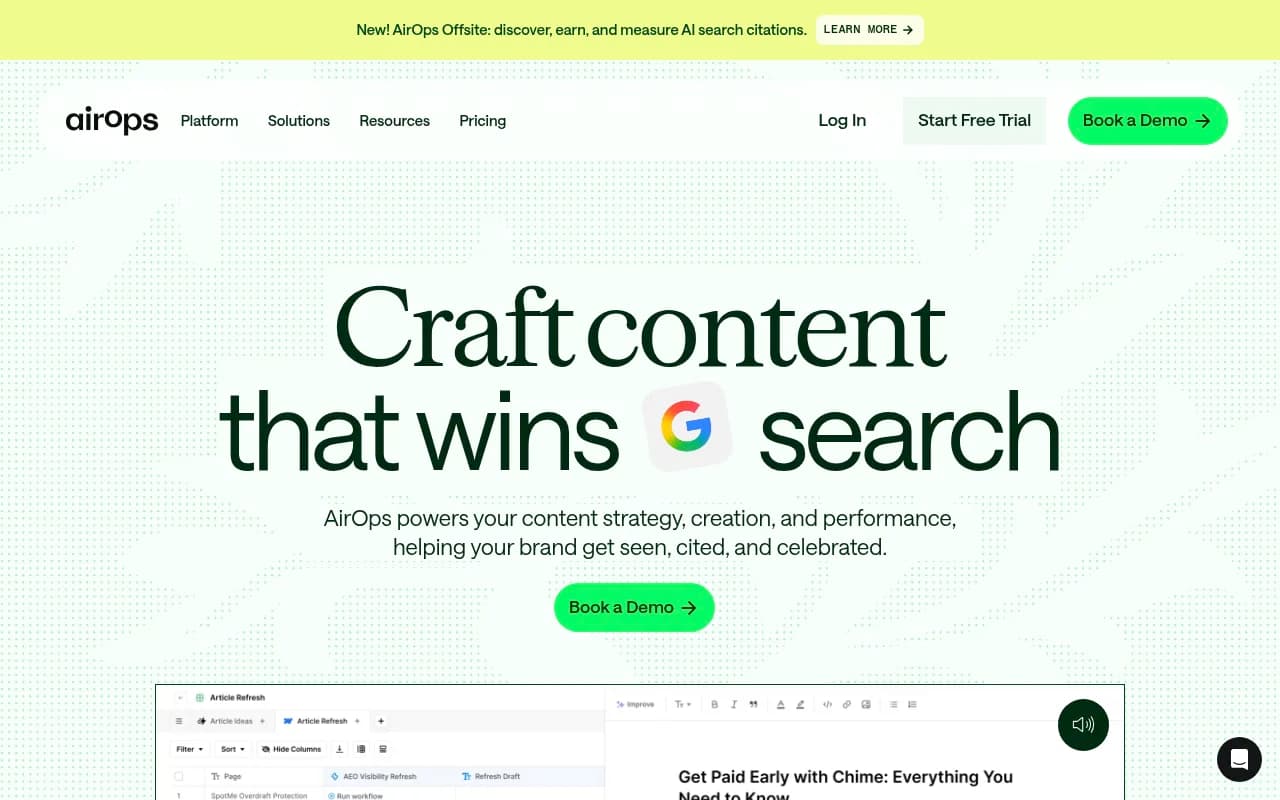
AirOps positions itself as a content engineering platform specifically for AI search visibility. It focuses on building content workflows that target AI citations, with templates and pipelines designed around GEO principles rather than traditional SEO.
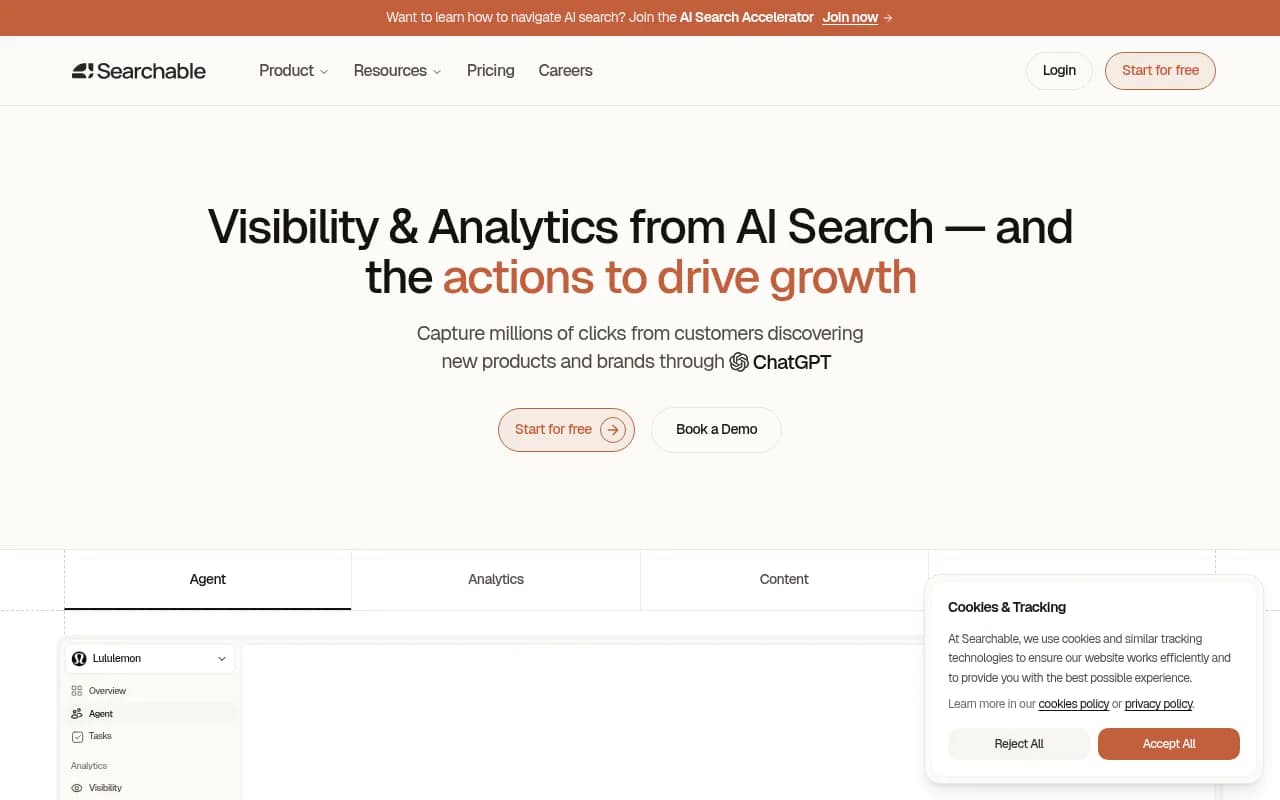
Searchable is another platform that combines AI search visibility tracking with built-in content generation. Worth evaluating if you want a single tool for both monitoring and creation.
Standalone AI writers (powerful, but disconnected from AI search data)
These tools are genuinely good at generating content quickly. The limitation is that they don't know which prompts you need to target, which competitors are getting cited, or what AI models are looking for. You're bringing your own research.
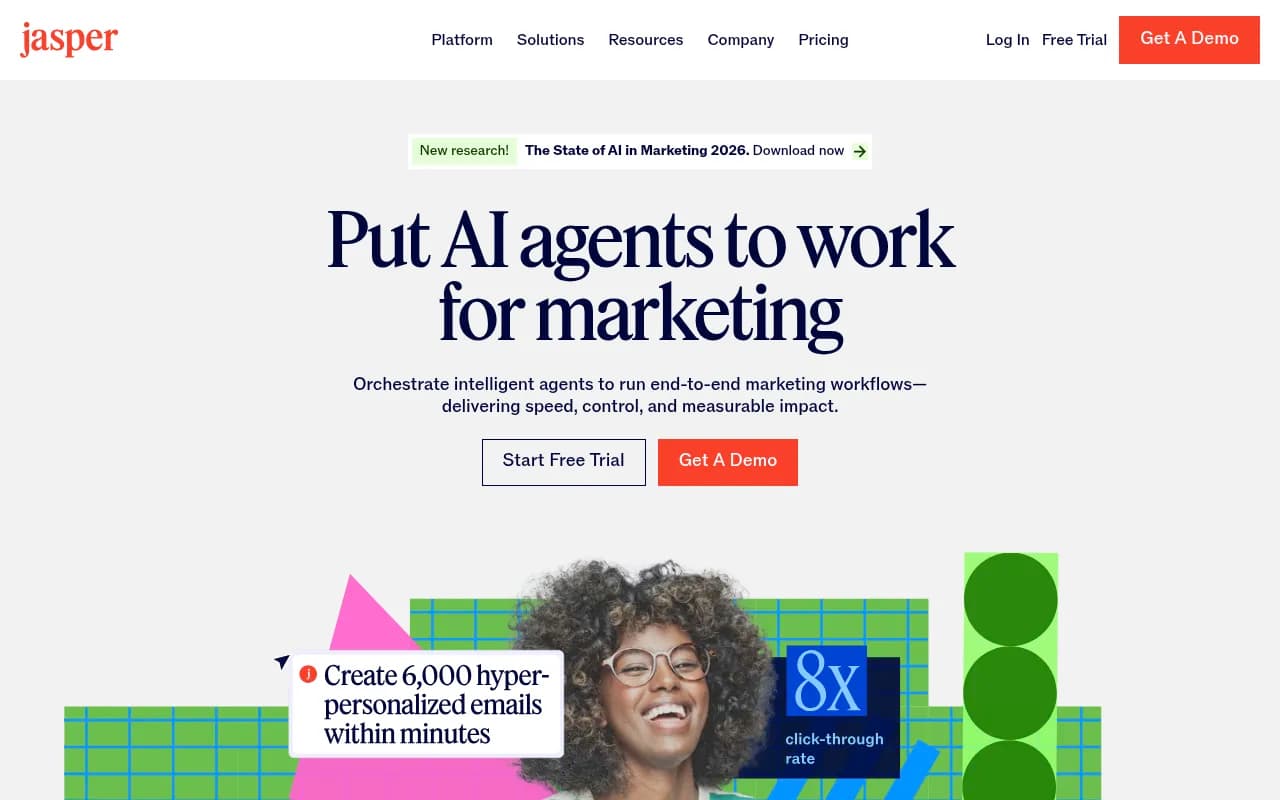
Jasper remains the standard for enterprise marketing teams that need consistent brand voice across high volumes of content. It has brand memory, workflow automation, and multi-format output. If you have a dedicated SEO or GEO researcher feeding it briefs, it produces strong results.
Writesonic is faster and cheaper than Jasper, with decent SEO integration. Good for teams that need volume and are willing to do their own prompt research separately.

Copy.ai is strong for shorter formats -- landing pages, ad copy, email sequences. Less suited for long-form articles targeting specific AI search prompts.

Rytr is the budget option. Structured output, fast, but limited in depth. Fine for simple content tasks, not for serious GEO work.
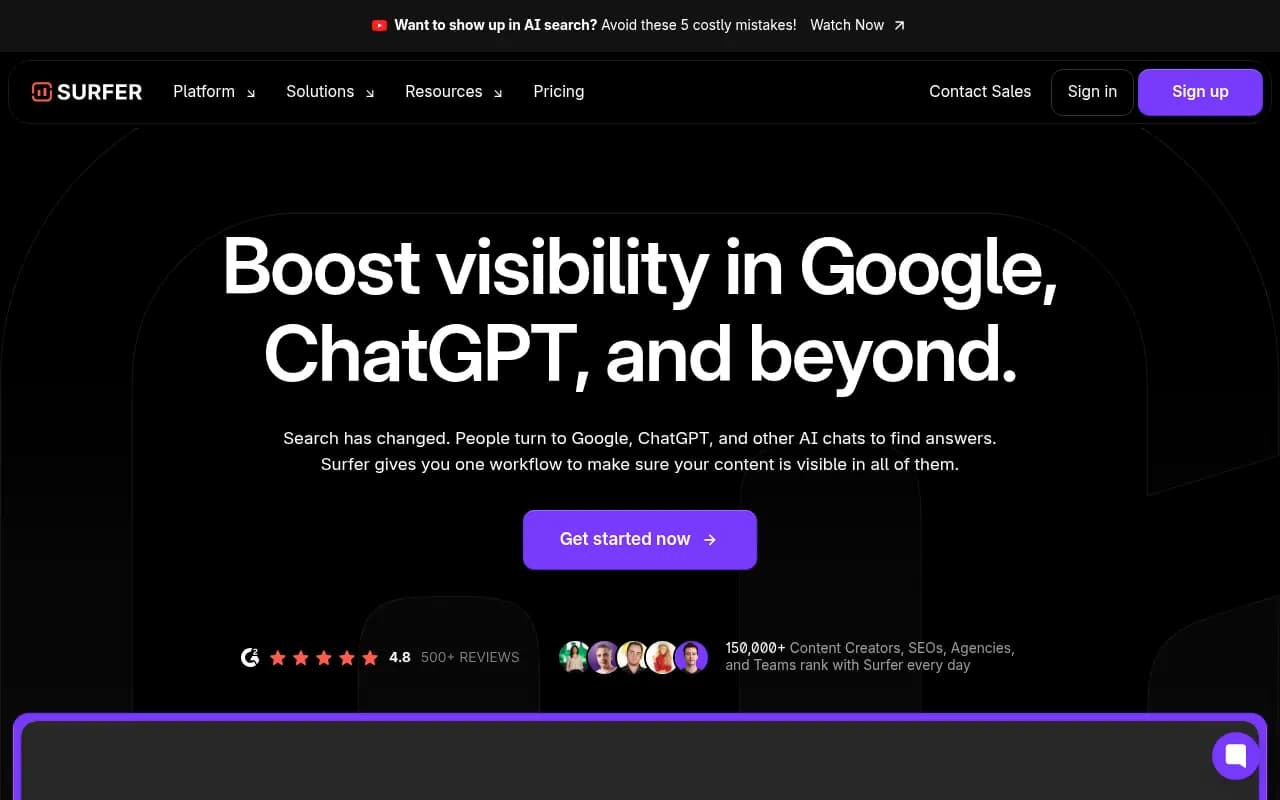
Surfer SEO bridges the gap somewhat -- it combines content writing with SEO data, including some AI search features. Not a full GEO platform, but more grounded than a pure AI writer.
SEO platforms with content generation add-ons
Several traditional SEO platforms have added AI writing features. They're better than standalone writers for SEO-grounded content, but most haven't fully integrated AI search monitoring into their content workflows yet.
Semrush has ContentShake AI, which generates articles based on keyword data. It's solid for traditional search but uses fixed prompts for AI monitoring rather than dynamic gap analysis.
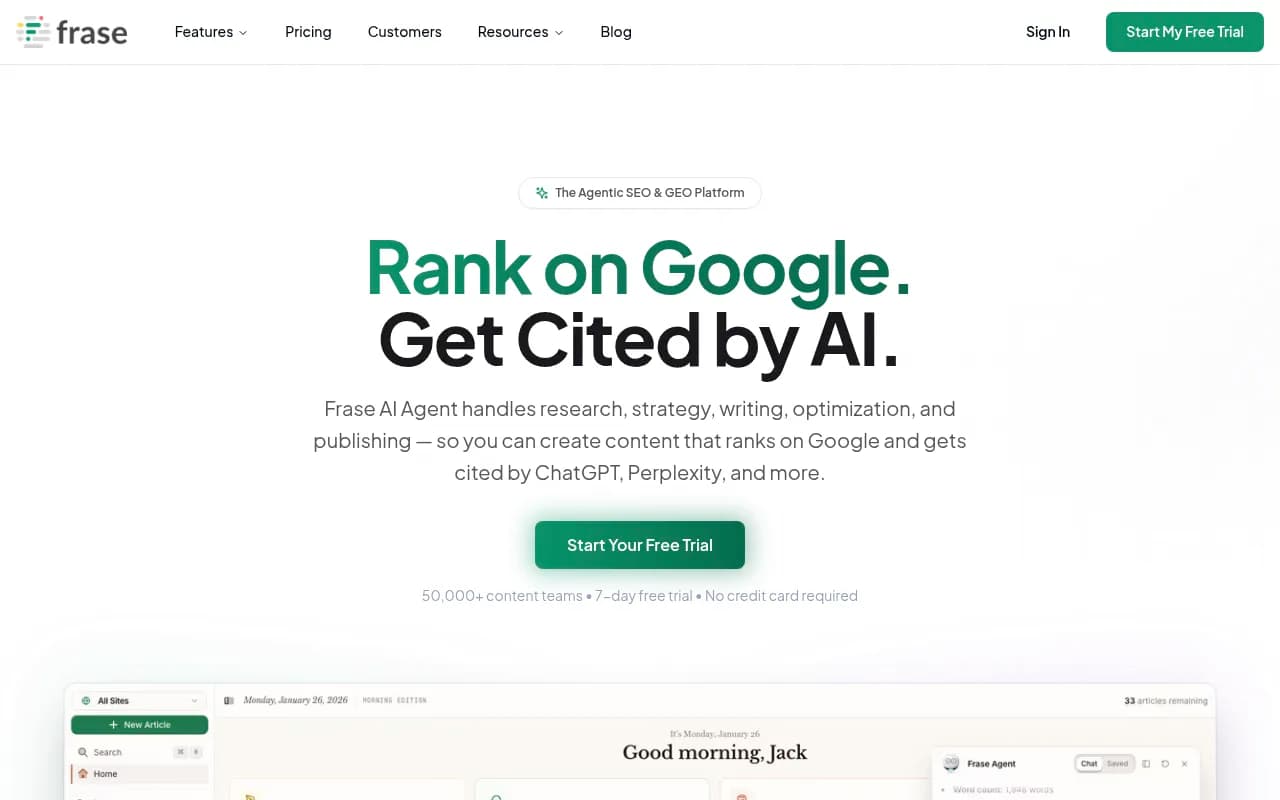
Frase is specifically built around content briefs and optimization. It analyzes what's ranking and helps you write to match. Good for traditional SEO; limited AI search integration.
MarketMuse does deep content intelligence and brief generation. Strong on topical authority mapping. Like Frase, it's more traditional SEO than AI search.
Scalenut combines keyword research, content briefs, and AI writing in one platform. Useful for teams that want an all-in-one SEO content workflow.

Feature comparison
| Tool | AI search monitoring | Prompt gap analysis | Content generation | Grounded in AI search data | Citation tracking |
|---|---|---|---|---|---|
| Promptwatch | Yes (10 models) | Yes | Yes (Content Agents) | Yes | Yes |
| Search Atlas | Partial | Partial | Yes | Partial | Limited |
| AirOps | Partial | Partial | Yes | Partial | Limited |
| Searchable | Yes | Limited | Yes | Partial | Limited |
| Jasper | No | No | Yes | No | No |
| Writesonic | No | No | Yes | No | No |
| Surfer SEO | Limited | No | Yes | No | No |
| Semrush | Limited (fixed prompts) | No | Yes (ContentShake) | No | No |
| Frase | No | No | Yes (briefs) | No | No |
| MarketMuse | No | No | Yes (briefs) | No | No |
What to look for when evaluating these platforms
Real prompt data, not fixed templates
Some platforms monitor AI search by running a fixed set of pre-written prompts. That's better than nothing, but it misses the dynamic nature of how people actually query AI engines. The better platforms track real user-facing behavior -- how ChatGPT or Perplexity actually responds in the UI, not just through API calls -- and let you add custom prompts based on your actual business.
Gap analysis that's specific enough to act on
"You have low AI visibility" is not actionable. "Your competitor is cited for these 14 specific prompts, and here's the content gap on your site that explains why" is actionable. Look for platforms that show you the exact prompts, the competitor pages being cited, and what's missing from your own content.
Content generation that uses the gap data
The content output should be directly connected to the gap analysis. If you have to copy-paste findings from one tab into a separate AI writer, you've lost half the value. The best implementations pre-populate the content brief with prompt data, citation context, competitor analysis, and brand guidelines automatically.
Tracking that closes the loop
After you publish, you need to know whether it worked. Page-level citation tracking -- which pages are being cited, by which models, how often -- is the only way to validate your content strategy. Without it, you're publishing into a black box.
A practical workflow for 2026
If you're building a GEO content workflow from scratch, here's how to think about it:
Step 1: Identify your highest-value prompt gaps. Use a platform with real prompt data and competitor citation analysis. Look for prompts with meaningful volume where competitors are visible and you're not. Prioritize by prompt difficulty -- some gaps are winnable quickly, others require significant content investment.
Step 2: Generate content briefs grounded in AI search data. The brief should include the target prompt, what AI models are currently citing for that prompt, what your competitors' cited pages cover, and what's missing. This is where the gap analysis feeds directly into content creation.
Step 3: Generate and refine the draft. Use a platform with content generation built on that brief data. Review for accuracy, brand voice, and depth. AI-generated drafts are starting points, not finished products -- but a good starting point saves hours.
Step 4: Publish and track. Monitor which AI models start citing the new page, how quickly, and at what rate. Use that data to inform your next round of gap analysis.
This loop -- find gaps, generate content, track results -- is what separates teams that are improving their AI visibility from teams that are just monitoring it.
The honest reality about one-click content
"One-click" is a marketing claim, not a workflow description. Even the best platforms require human judgment at several points: deciding which gaps to prioritize, reviewing drafts for accuracy, ensuring the content reflects your actual expertise and brand voice.
What the best tools genuinely do is compress the research and drafting phases dramatically. Instead of spending hours manually auditing AI responses, identifying gaps, researching competitors, and writing a brief before you even start writing -- a good platform does most of that automatically. The human work shifts from data gathering to judgment and refinement.
That's a real productivity gain. But it's not magic, and it's worth being clear-eyed about what you're actually buying: a faster path from gap identification to publishable draft, not a fully autonomous content machine.
The platforms that deliver on that promise are the ones worth paying for in 2026. The ones that just generate generic articles without any connection to AI search data are, at best, a slightly faster version of what you could do in ChatGPT for free.
Bottom line
If you're serious about AI search visibility, the tool category you want is one that connects monitoring to content generation in a single workflow. Standalone AI writers are useful but blind. Monitoring-only dashboards show you the problem without helping you fix it.
The platforms doing this well -- with real prompt data, genuine gap analysis, and content generation grounded in that data -- are still a small group. Promptwatch is the most complete implementation available right now, covering the full loop from gap identification through content generation to citation tracking across 10 AI models. For teams that want to move fast on GEO without stitching together four different tools, that matters.
For teams with tighter budgets or simpler needs, pairing a monitoring tool with a strong AI writer and a disciplined brief process can get you most of the way there -- it just requires more manual work to connect the dots.