Key takeaways
- AirOps Pro is scoped to a single brand with one Brand Kit. Multi-client setups with unlimited Brand Kits sit on custom Enterprise pricing, which is the main reason agencies go shopping.
- Quality control is the real comparison point: brand voice per client, human approvals, version history, and a way to check whether published pages get cited by AI.
- Promptwatch's data shows ChatGPT cites product pages and landing pages far more than blog posts, so a tool that only writes articles covers the wrong surface.
- No single tool does everything. Most agencies pair a content tool with an AI visibility platform.
- Pricing in this space changes constantly. Confirm every number on the vendor's page before you commit.
Why agencies outgrow AirOps
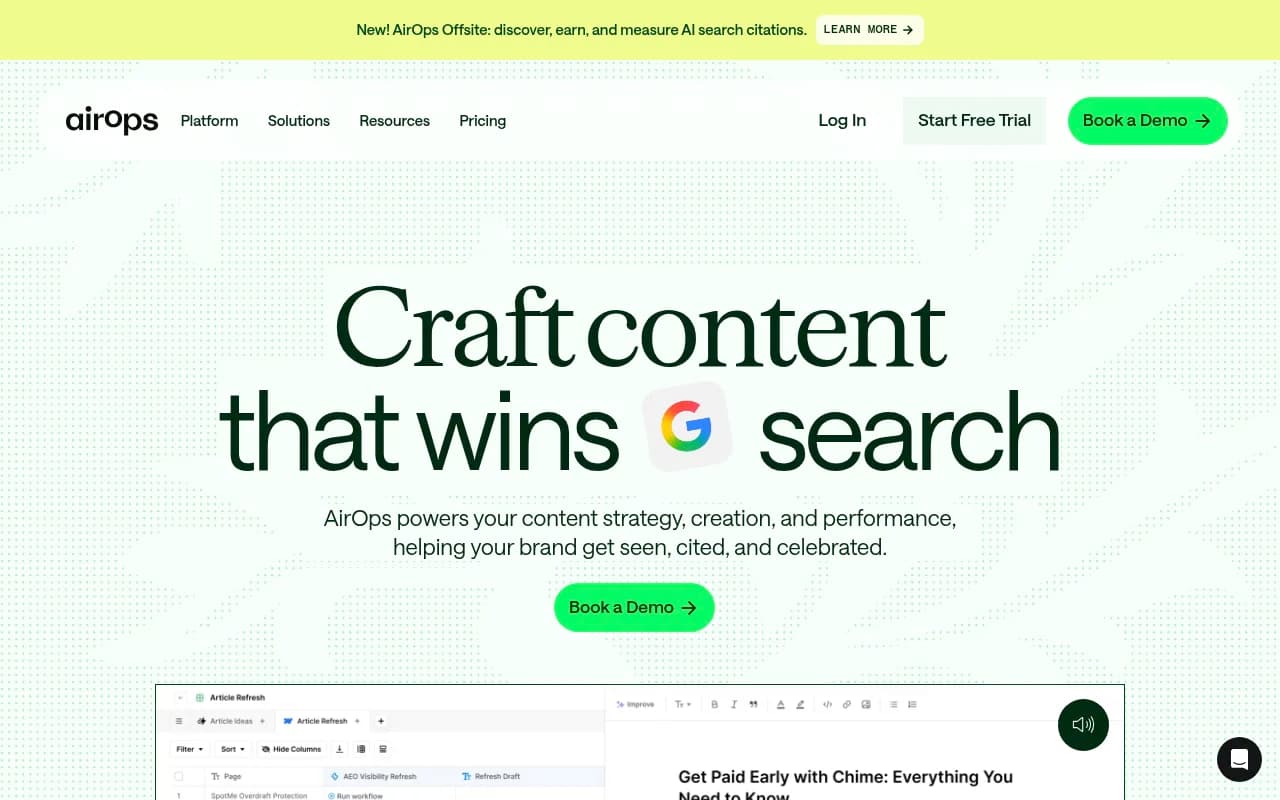
AirOps is a no-code content engineering and workflow platform. It handles research, production and refresh, and it has AI visibility measurement built in. It is good software. The friction for agencies is structural, not about quality.
According to the official pricing page, the tiers break down like this:
- Solo: one brand, ChatGPT insights only, 35,000 tasks, 1 Brand Kit, 3 Knowledge Bases, single user.
- Pro: one brand or project, insights across 10+ answer engines, 100,000 tasks, 1 Brand Kit, 5 Knowledge Bases, unlimited seats.
- Enterprise: custom limits, unlimited Knowledge Bases and Brand Kits, dedicated account manager, 1:1 onboarding.
The page lists no dollar prices, so you will be talking to sales. And if you run 12 clients, each with its own voice, facts and approval chain, the one-Brand-Kit limit on Pro pushes you into Enterprise. Nothing wrong with that if the numbers work. But it is worth knowing before you build processes around the tool.
AirOps does list quality features: Content Review and Quality Scores, Human Review and Approvals, Version History, and an MCP connector plus API. So this is not a case of AirOps lacking controls. It is a case of how those controls are packaged per client.
What quality control means when you have 15 client sites
Quality control for one brand is an editor's job. Across many clients it becomes a systems problem. Here is what I would test in any trial.
- Client isolation. Does each client get its own voice, facts, banned claims and source documents? Or is it one shared pool where a hotel client's tone leaks into a law firm's draft?
- Approval gates. Can a draft sit in a review queue until a named person signs off, with the option to go hands-off later once trust is earned?
- Change history. If a client asks why a page changed in March, can you show them the diff?
- Page type coverage. Can it produce more than blog posts?
- Feedback loop. After publishing, can you see whether the page was crawled, cited, or sent traffic?
Point 4 deserves a closer look, because it changes which tools make the shortlist.
The page types AI actually cites
Promptwatch Data's ChatGPT citation share by content type report (Sep 28 to Oct 4, 2026) found product pages are the most cited type at 22.4% of classified citations, with landing pages next at 16.8%. Together that is roughly 39% going to pages describing what a company sells. Listicles got 13.6%, documentation 7.5%, how-tos 8.7%, comparisons 5.9%, and FAQ pages 3.3%. For commercial prompts, product pages climb to 26.0% and landing pages to 20.6%.
The agency implication is blunt. If your QC process only reviews blog articles, you are policing the minority of what gets cited. Your checks need to cover product pages, landing pages, comparisons and FAQs.
Freshness matters too. Promptwatch's content half-life data shows news pages lose half their cited pages within about 36 days, while landing pages and docs last longer. That argues for scheduled refresh workflows, not one-off publishing.
Alternatives compared
I have grouped these by what job they do, since that matters more than a flat ranking. Pricing for most of these was not verified in my research, so check each vendor.
| Tool | Type | Strongest for agencies | Watch out for |
|---|---|---|---|
| Rankability | Optimizer plus AI visibility plus reporting | Client-ready reporting in one workflow | Publisher of a roundup that ranks itself first |
| Surfer SEO | In-editor optimizer | Fast on-page optimization | Optimizes drafts, does not manage client governance |
| Clearscope | Editorial optimizer | Precise term guidance for editors | Narrow scope |
| Frase | Research plus optimizer | Budget-friendly briefs | Less workflow depth |
| MarketMuse | Topic strategy | Planning and topical coverage | Planning, not production |
| Writer | Governed enterprise writing | Brand style guardrails | Enterprise-oriented |
| Gumloop | No-code automation | Closest workflow-builder analog | You assemble the QC yourself |
| Promptwatch | AI visibility and GEO optimization | Proving what is cited and crawled | Not a general writing tool |
The content and workflow alternatives
Rankability
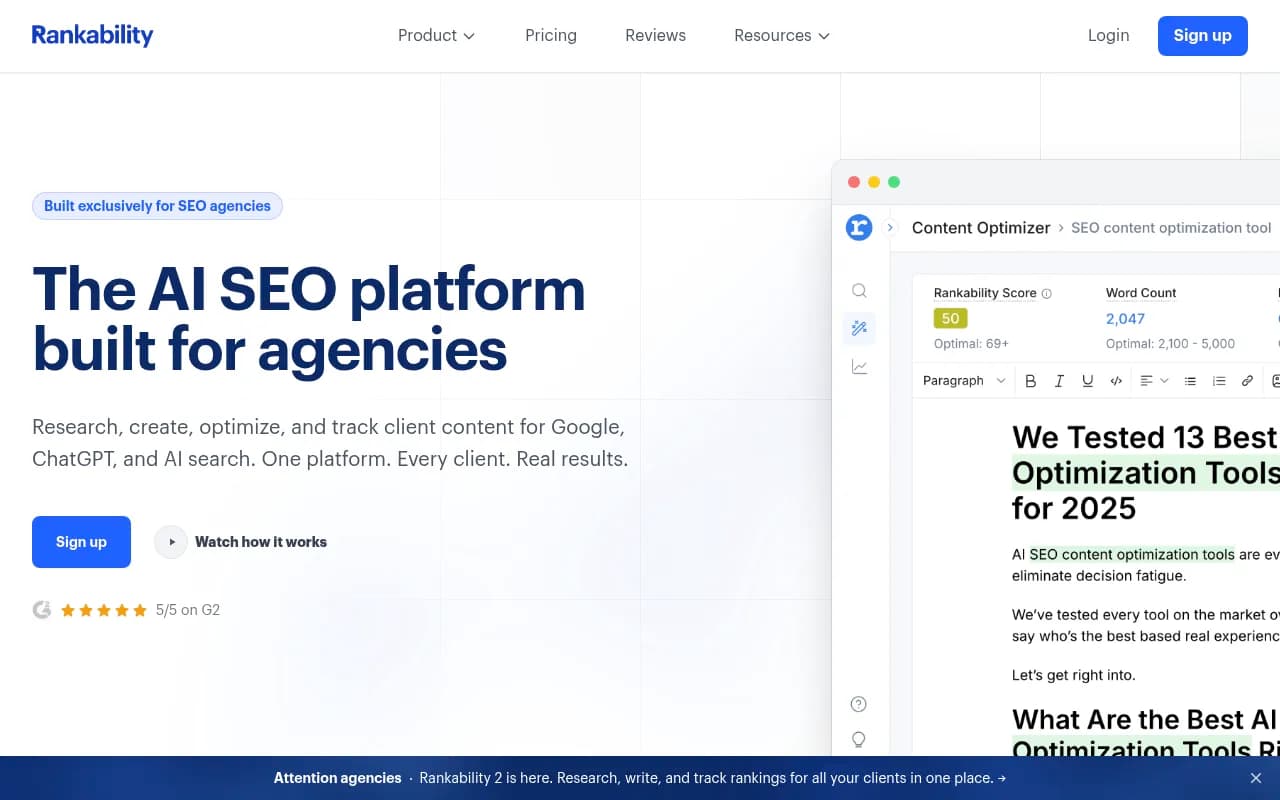
Rankability's own guide names it the best overall AirOps alternative for agencies. Take that with salt: it is the publisher and one of the products compared, though it does disclose this. Still, the pitch is coherent. Optimization, AI search visibility and client reporting in a single workflow is exactly what agencies bill for.
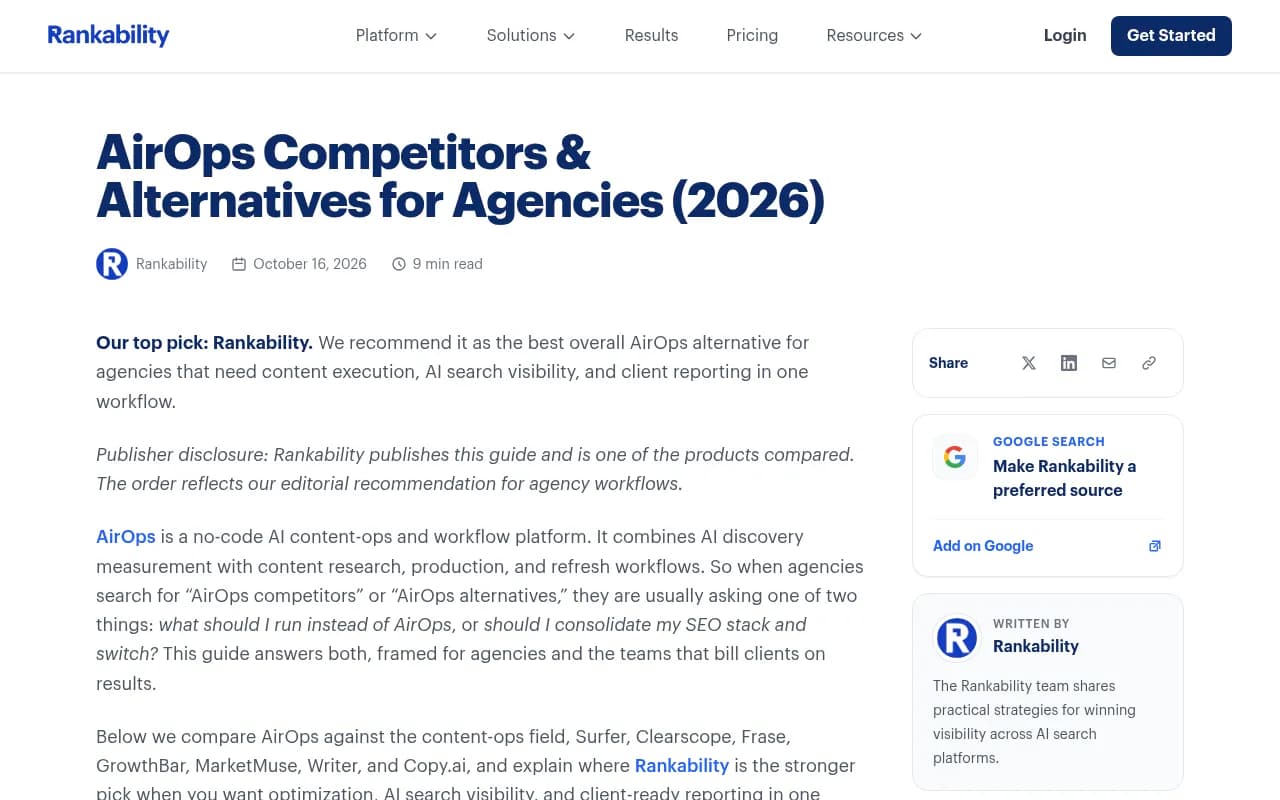
It is worth a trial if reporting is your bottleneck. Read its roundup as one vendor's view and cross-check it.
Surfer SEO
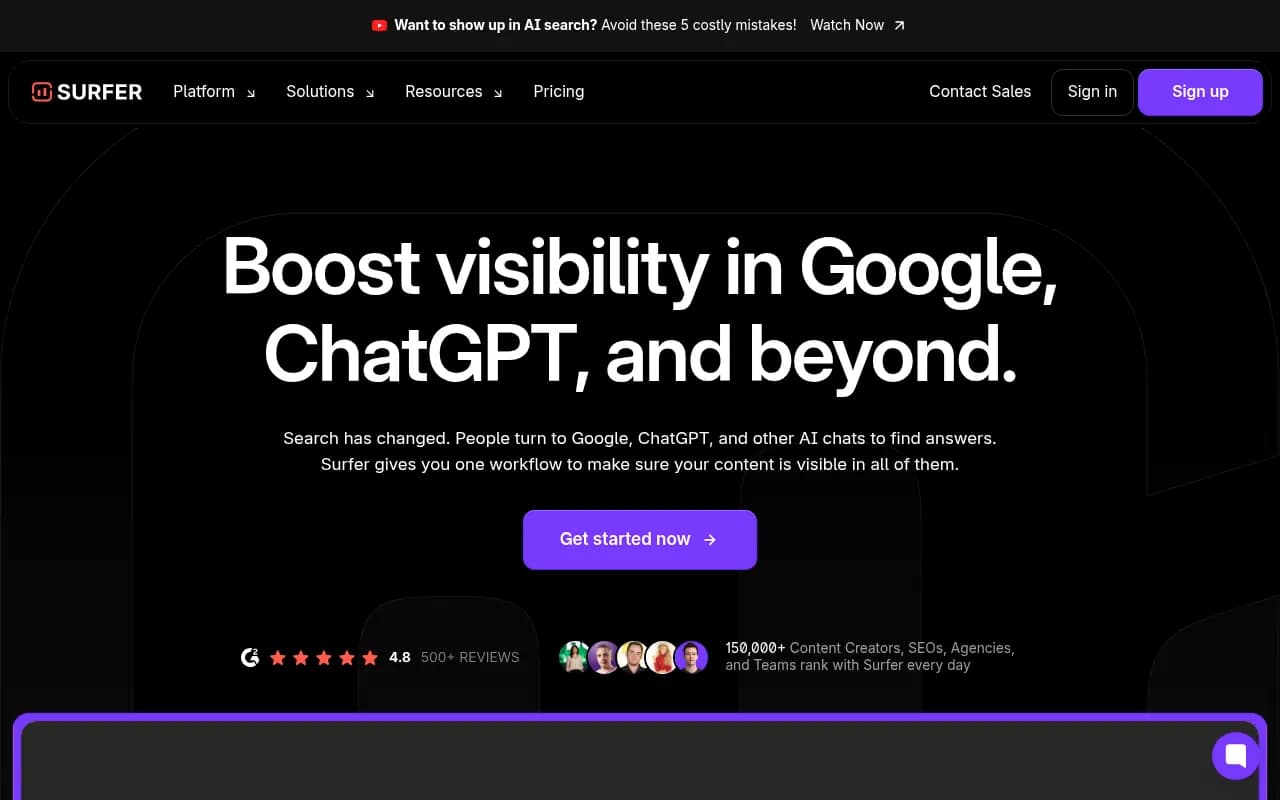
Surfer SEO is the in-editor optimizer most writers already know. It is good at scoring a draft against what ranks. It does not give you per-client governance or approval chains on its own, so treat it as a layer, not a replacement.
A note on acquisitions: roundups have flagged that ownership changes can shift roadmap, pricing and support. Worth tracking if a tool is central to your delivery.
Clearscope and Frase
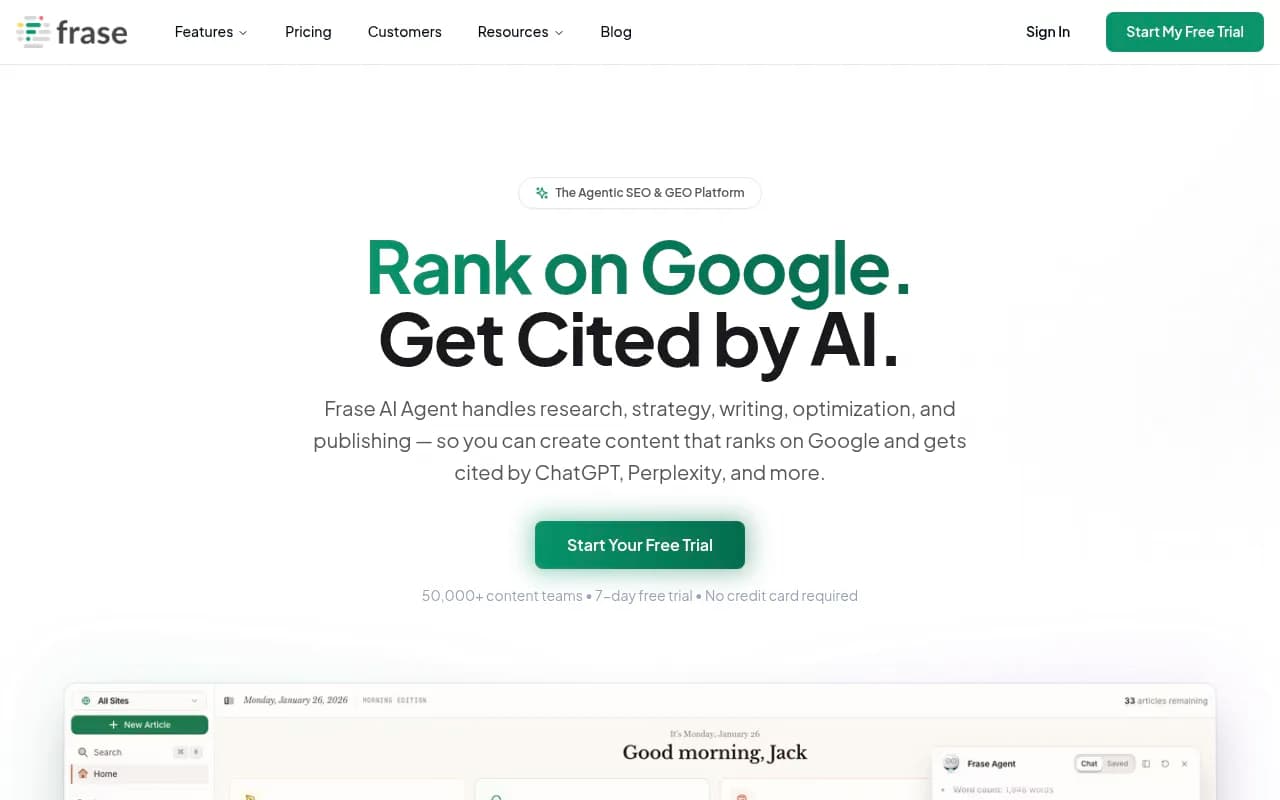
Clearscope is the editorial-grade option, the one editors like because term guidance is precise and the interface stays out of the way. Frase is the budget research-to-optimizer pick, handy when you need briefs fast.

Neither replaces an end-to-end workflow platform. Both fit a team that already has a production process and wants a quality check at the draft stage.
MarketMuse and Writer
MarketMuse is for topic strategy and planning. Use it to decide what each client should cover, not to ship copy.
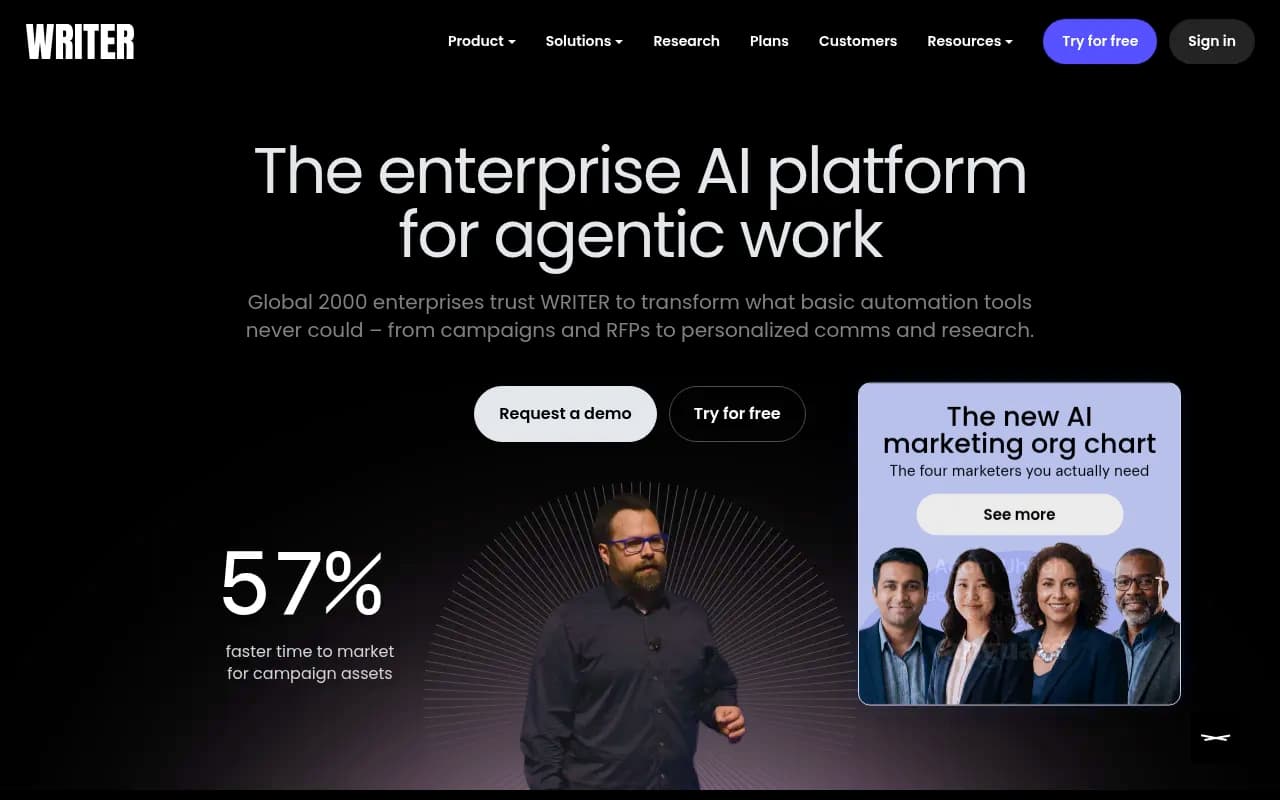
Writer leans enterprise, with brand-governed writing and style guardrails. That is attractive if client voice drift is your main QC failure, though it is built for large organizations more than agency rosters.
Gumloop, Jasper and Copy.ai
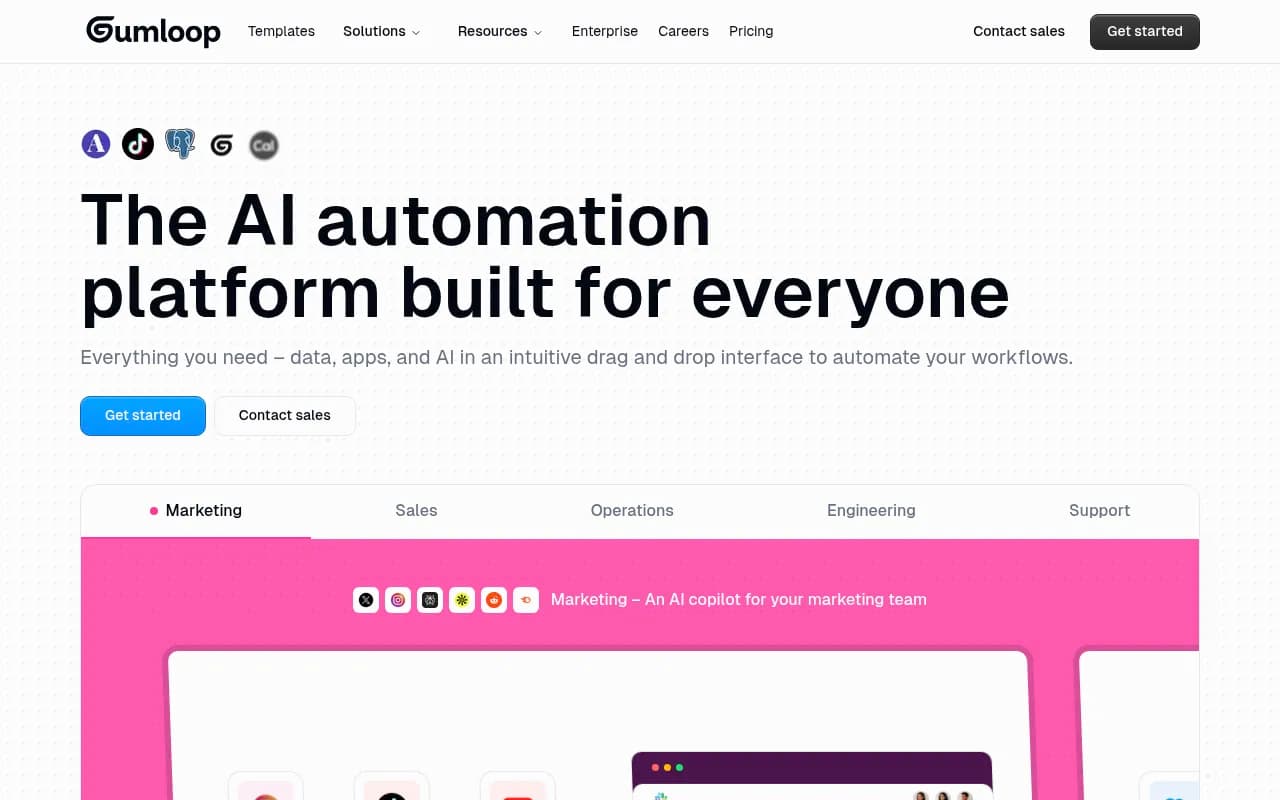
In a Reddit comparison of AirOps alternatives, Gumloop came up as probably the closest alternative for automation. It is a no-code workflow builder, so you can build your own review steps. The catch is that you are building them. That is flexibility and also a maintenance burden.
Jasper and Copy.ai cover volume copy generation. They are fine for ad copy and short-form assets but have no view of whether anything gets cited by AI search.

The missing piece: proof that the content works
Here is the thing most content platforms skip. Quality control is not only what happens before publishing. It is also whether the published page gets crawled, cited and clicked. Content generation tools rarely have citation data or crawler logs to ground what they produce.
Promptwatch fills that gap. It tracks how clients appear across ChatGPT, Google AI Overviews, Perplexity, Gemini and other models, and it logs AI crawler visits so you can see whether a bot hit an error on a page you just shipped. Its Content Agent can also plan, write and publish to Webflow, Framer or WordPress with a review inbox, and published pages are tracked afterwards so underperformers come back as actions. For agencies, plans start at $199/mo (Kick-off) with unlimited projects and 10 seats, but confirm current pricing at promptwatch.com/pricing. One caveat: agency plans do not include the Content Agent or AEO articles, which sit on Business and Enterprise.

If you are comparing visibility trackers specifically, the GEO software directory lists the field, and the AI rank tracking directory covers the monitoring-only options.
A useful test bench
Promptwatch's average sources per response data (an older report, so check the current figures) found ChatGPT cites about 5 sources per web-search answer, Google AI Overviews about 10, and Perplexity almost exactly 10 every day. That stability is why the report suggests treating Perplexity as a test bench: if you change a page and your citation shifts there, it is less likely to be noise.
How the roundups are biased
Read every list with the author in mind. Rankability ranks itself first. AirOps' own Profound-alternatives post (Sep 10, 2026) ranks AirOps first and names Scrunch for technical AI visibility and delivery control. The Yotpo agency roundup leans toward SKU-level shopper data, which makes sense for an ecommerce vendor and less sense for a B2B services agency.
None of that makes them useless. It means you build your shortlist from the criteria above, not from anyone's ranking.
A practical way to choose
Pick based on your actual failure mode.
| If your problem is | Start with |
|---|---|
| Voice drift across clients | Writer, or AirOps Enterprise with per-client Brand Kits |
| Weak drafts that miss on-page basics | Surfer SEO or Clearscope |
| Slow briefs and research | Frase or MarketMuse |
| Building your own approval flow | Gumloop |
| Reporting to clients on one screen | Rankability |
| Not knowing if AI cites your work | Promptwatch |
A pilot that takes two weeks
- Choose three clients with different voices and page types.
- Ship the same type of page in each: one product page, one comparison, one FAQ.
- Run each through the tool's review and approval path. Note who can approve and what gets logged.
- Check crawl and citation activity after a couple of weeks.
- Count the edits a senior editor still had to make. That number is your real quality score.
If a vendor will not let you run this on more than one brand during a trial, you have learned something about how the multi-client setup will feel.
Bottom line
AirOps is capable, and its approval and versioning features are real. The agency problem is the one-brand ceiling on Pro. If Enterprise pricing fits, stay. If not, the sensible stack is a draft-level optimizer such as Surfer or Clearscope, a workflow layer if you need one, and a visibility platform so you can show clients which pages AI actually cites. For more options in the category, browse SurferStack. Verify pricing on every vendor page, because I could not confirm current numbers for most of these tools.
And if you are weighing outside help instead of more software, 1001 SEO Media runs technical SEO, content and GEO work for agencies and brands, with senior specialists and no long-term contracts.