Key takeaways
- AirOps is a strong choice for teams that want to tie content production workflows directly to AI search visibility data, with its Quill agent handling a lot of the heavy lifting.
- Scalenut is built for teams that want SEO and content execution in one place, with solid AI Overview monitoring but limited depth on the GEO side.
- Promptwatch is the only platform of the three that covers the full cycle: finding visibility gaps, generating content designed to be cited, and tracking whether that content actually gets picked up by AI models.
- If your goal is specifically to grow how often AI engines like ChatGPT, Perplexity, and Gemini cite your brand, Promptwatch has the most complete toolset.
- All three are legitimate tools -- the right choice depends on where your biggest gap is: workflow automation, traditional SEO, or AI citation growth.
The GEO software category is getting crowded fast. Every month, another platform adds "AI visibility" to its feature list, and it's getting genuinely hard to tell which tools are built for this problem versus which ones bolted on a monitoring widget and called it a day.
AirOps, Scalenut, and Promptwatch are three platforms that come up constantly in team conversations about scaling content for AI search. They're not identical products -- they come from different angles and serve different primary use cases. But they overlap enough that teams often end up evaluating all three before making a call.
This guide is a direct comparison. No fluff, no vague "it depends" conclusions. By the end, you'll know what each platform actually does, where it's strong, and which one fits your situation.
What we're actually comparing
Before getting into features, it's worth being clear about what problem we're solving. GEO -- Generative Engine Optimization -- is the practice of making your brand more visible in AI-generated answers. When someone asks ChatGPT which project management tool to use, or asks Perplexity for the best B2B email platform, you want your brand in that answer.
That requires three things:
- Knowing where you're invisible (and where competitors are visible instead)
- Creating content that AI models will actually cite
- Tracking whether that content is working
The platforms in this comparison handle those three things very differently. AirOps leans into content production and workflow. Scalenut focuses on SEO execution with some GEO monitoring layered in. Promptwatch is built specifically around the full AI visibility loop.
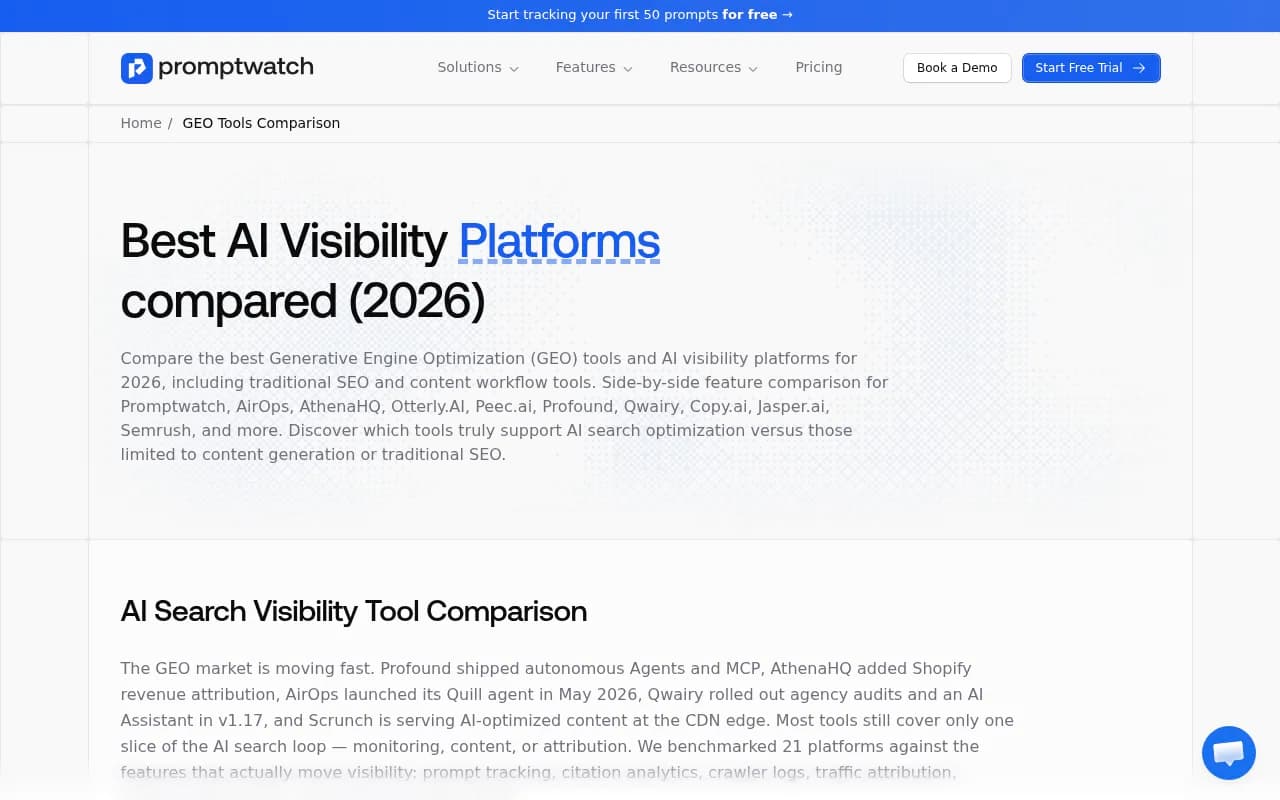
AirOps: content engineering for AI search
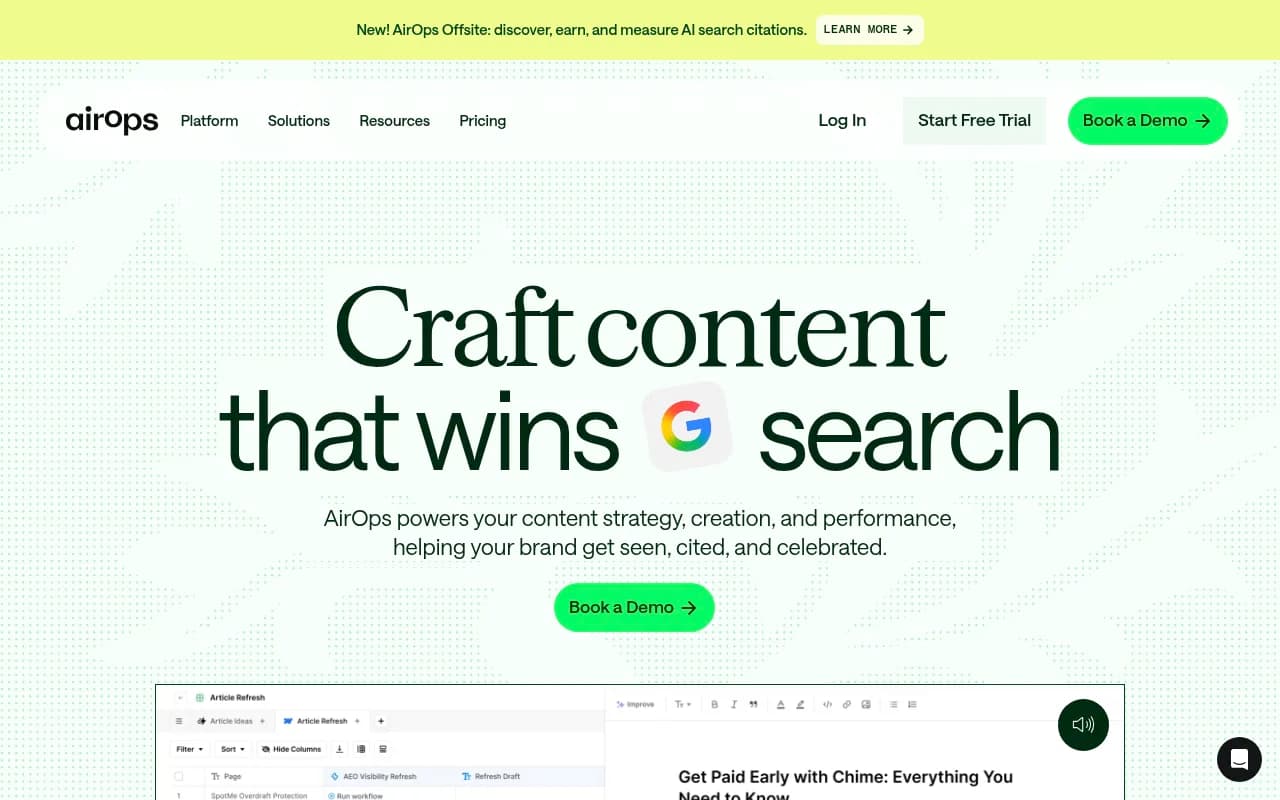
AirOps launched its Quill agent in May 2026, which marked a meaningful shift in how the platform positions itself. It's no longer just a workflow automation tool for content teams -- it's trying to be a full AI search visibility platform that connects content production to citation data.
What AirOps does well
The core strength is workflow. AirOps is genuinely good at helping content teams scale production without losing quality. You can build custom AI workflows, connect them to your CMS, and push content through a consistent process. For growth teams running high-volume content operations, that's valuable.
The Quill agent adds a layer of AI search intelligence on top of this. It can identify which topics and angles are getting cited in AI responses and feed that back into content briefs. The idea is that your production workflow is informed by real AI visibility data, not just traditional keyword research.
AirOps also covers owned and third-party placements, so you get some visibility into where your brand appears in AI answers beyond just your own pages.
Where AirOps falls short
The monitoring depth isn't as granular as dedicated GEO platforms. You won't get crawler logs showing exactly which pages AI agents are visiting, or page-level citation tracking that tells you which specific article drove a visibility lift. The platform is strong on the "create" part of the loop but thinner on the "track results" side.
Reddit and YouTube insights -- which matter a lot for understanding what AI models are citing -- aren't part of the AirOps offering. ChatGPT Shopping tracking is also absent, which matters if you're in e-commerce or selling products that show up in AI shopping recommendations.
For teams whose primary need is content workflow automation with some AI visibility context, AirOps is a solid pick. For teams trying to systematically grow AI citations from scratch, it's not quite complete.
Scalenut: SEO-first with AI Overview monitoring

Scalenut has been positioning itself as the best overall pick for teams that want AI Overview monitoring alongside traditional SEO and content execution. It's a reasonable claim if your definition of GEO is primarily about Google AI Overviews -- but that's a narrower scope than the full AI search landscape.
What Scalenut does well
Scalenut's content workflow is mature. The platform handles keyword research, content briefs, writing assistance, and optimization scoring in one place. For teams that are primarily focused on Google and want a single tool for SEO content production, it's genuinely capable.
The AI Overview monitoring is a real feature, not a marketing claim. You can track whether your content appears in Google's AI-generated summaries, which is increasingly important as AI Overviews take up more real estate in Google search results.
The pricing is also competitive. Scalenut sits at a lower price point than most dedicated GEO platforms, which makes it attractive for smaller teams or those just starting to think about AI search.
Where Scalenut falls short
The GEO coverage is narrow. Scalenut monitors Google AI Overviews but doesn't provide meaningful tracking across ChatGPT, Perplexity, Claude, Gemini, Grok, or the other AI engines where your customers are increasingly getting answers. In 2026, limiting AI visibility monitoring to Google is a significant constraint.
There's no content gap analysis tied to AI prompt data. You can't see which specific prompts your competitors are winning that you're losing. The platform doesn't generate content briefs grounded in citation data from AI models. And there are no crawler logs showing how AI agents interact with your site.
Scalenut is a good SEO content platform that has added some AI monitoring. It's not a GEO platform in the full sense.
Promptwatch: the full AI visibility loop
Promptwatch takes a different approach from both AirOps and Scalenut. It's built specifically around the problem of AI search visibility, and it covers all three stages of the optimization cycle: finding gaps, creating content, and tracking results.

Finding the gaps
The Answer Gap Analysis shows exactly which prompts competitors are visible for that you're not. This isn't a generic content audit -- it's tied to real prompt data, so you can see the specific questions AI models are answering with your competitors' content instead of yours.
Prompt Intelligence adds volume estimates and difficulty scores, so you can prioritize which gaps to close first. Query fan-outs show how a single prompt branches into sub-queries, which helps you understand the full content territory around a topic.
Creating content that gets cited
Content Agents generate articles, listicles, comparisons, and briefs grounded in that prompt data. The output is informed by citation data, competitor analysis, brand guidance, and actual AI response screenshots -- not just keyword density. The goal is content that AI models will cite, not content that checks SEO boxes.
This is where Promptwatch separates itself most clearly from monitoring-only tools. Most platforms show you where you're invisible. Promptwatch also helps you fix it.
Tracking results
Page-level tracking shows which specific pages are being cited, how often, and by which AI models. AI Crawler Logs show when AI agents visit your pages, what they read, and when a page moves from crawled to cited. Traffic attribution connects visibility to actual revenue, so you can see whether your GEO work is translating to business outcomes.
The platform also covers Reddit and YouTube insights (which influence what AI models recommend), ChatGPT Shopping tracking, and competitor heatmaps across 10+ AI engines.
Coverage and pricing
Promptwatch monitors ChatGPT, Perplexity, Google AI Overviews, Google AI Mode, Claude, Gemini, Meta/Llama, DeepSeek, Grok, Mistral, and Copilot. That's the broadest coverage of the three platforms.
Pricing starts at $99/month for the Essential plan (1 site, 50 prompts, 5 articles), $249/month for Professional (2 sites, 150 prompts, 15 articles, crawler logs), and $579/month for Business (5 sites, 350 prompts, 30 articles). A free trial is available.
Side-by-side comparison
| Feature | AirOps | Scalenut | Promptwatch |
|---|---|---|---|
| AI model coverage | Partial | Google AI Overviews only | 10+ models (ChatGPT, Perplexity, Gemini, Claude, Grok, etc.) |
| Prompt/citation tracking | Basic | Limited | Full, with volume + difficulty scores |
| Answer gap analysis | Partial | No | Yes |
| Content generation for GEO | Yes (Quill agent) | Yes (SEO-focused) | Yes (grounded in citation + prompt data) |
| AI crawler logs | No | No | Yes |
| Page-level citation tracking | No | No | Yes |
| Traffic attribution | No | No | Yes |
| Reddit & YouTube insights | No | No | Yes |
| ChatGPT Shopping tracking | No | No | Yes |
| Competitor heatmaps | Partial | No | Yes |
| Traditional SEO features | Partial | Strong | Partial |
| Starting price | Custom | ~$19/mo | $99/mo |
| Best for | Content workflow + AI visibility | SEO teams adding AI Overview monitoring | Teams scaling GEO across all AI engines |
Which platform fits which situation
Choose AirOps if...
Your team is primarily a content production operation and you want AI visibility data to inform your workflow rather than drive it. AirOps is well-suited for growth teams that already have a content process and want to make it smarter without rebuilding from scratch. The Quill agent is genuinely useful for connecting content briefs to AI search signals.
Choose Scalenut if...
You're an SEO team that wants to add AI Overview monitoring to an existing content workflow, and Google is still your primary channel. Scalenut makes sense if you're not yet ready to invest in a dedicated GEO platform but want some visibility into how AI is affecting your Google performance. The price point is accessible and the SEO tooling is solid.
Choose Promptwatch if...
Your goal is to systematically grow how often AI engines cite your brand -- across ChatGPT, Perplexity, Gemini, and the rest. Promptwatch is the right choice when you need to understand exactly where you're invisible, create content designed to close those gaps, and track whether it's working. It's the only platform of the three that closes the full loop.
It's also the right choice if you need crawler logs to diagnose why AI agents aren't picking up your content, or if you want to track ChatGPT Shopping appearances, Reddit citations, or YouTube influence on AI recommendations.
A note on what "GEO platform" actually means in 2026
The research from Promptwatch's own 2026 comparison of 12+ GEO platforms makes a useful distinction: most tools in this space are monitoring-only dashboards. They show you data but leave you to figure out what to do with it.
The more useful framing is whether a platform helps you act on what it shows you. AirOps gets partway there with its content workflow. Scalenut gets partway there with its content tools. Promptwatch is the only one of the three that connects monitoring to content creation to outcome tracking in a single platform.

That said, "best platform" is always relative to what you're trying to do. If you're a 3-person content team that mostly cares about Google and wants a simple workflow tool, Scalenut at $19/month is a reasonable starting point. If you're a marketing team at a mid-market company trying to compete for AI citations across multiple models, the gap between Scalenut and Promptwatch is significant.
Other tools worth knowing about
If none of the three above is quite the right fit, a few other platforms are worth considering depending on your specific needs.
For teams that want enterprise-grade AI visibility with a focus on Fortune 500 use cases:

For teams that want to track AI visibility alongside traditional rank tracking in a single dashboard:
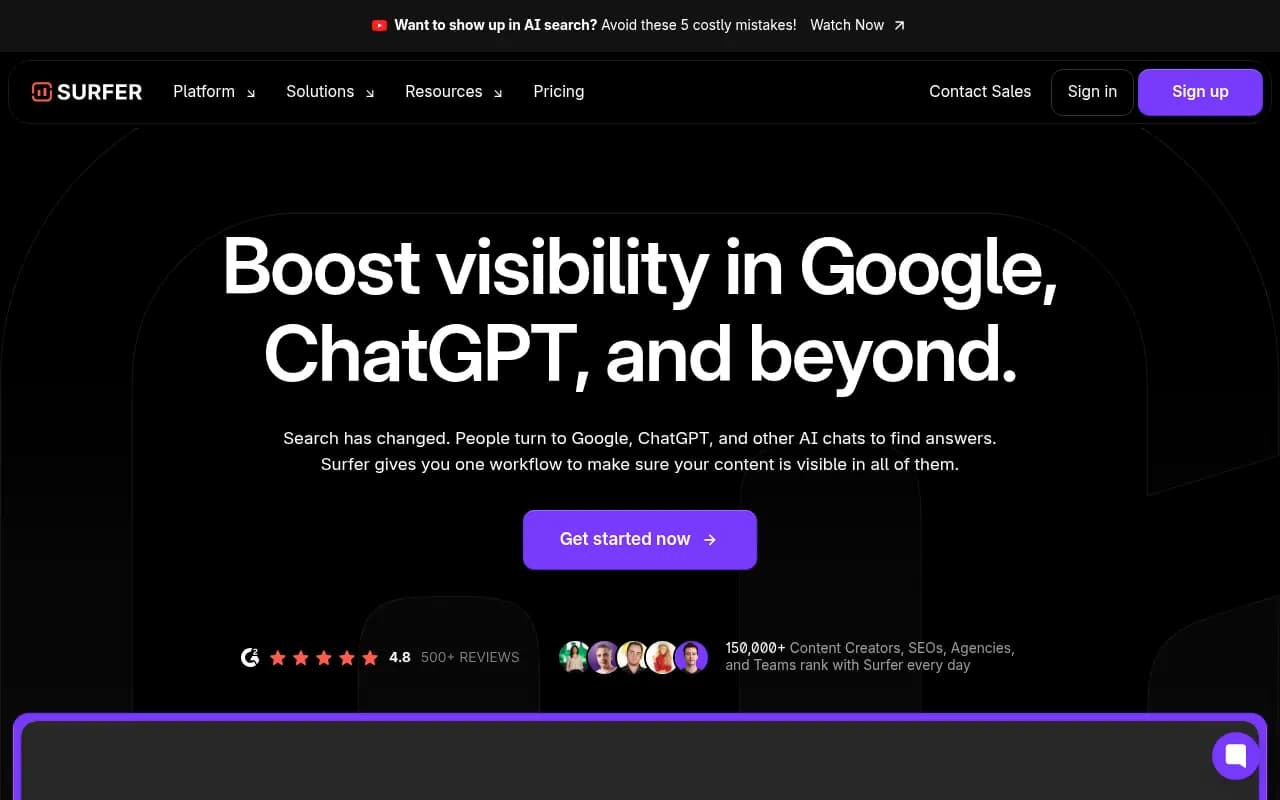
For teams focused specifically on content optimization for both SEO and GEO:
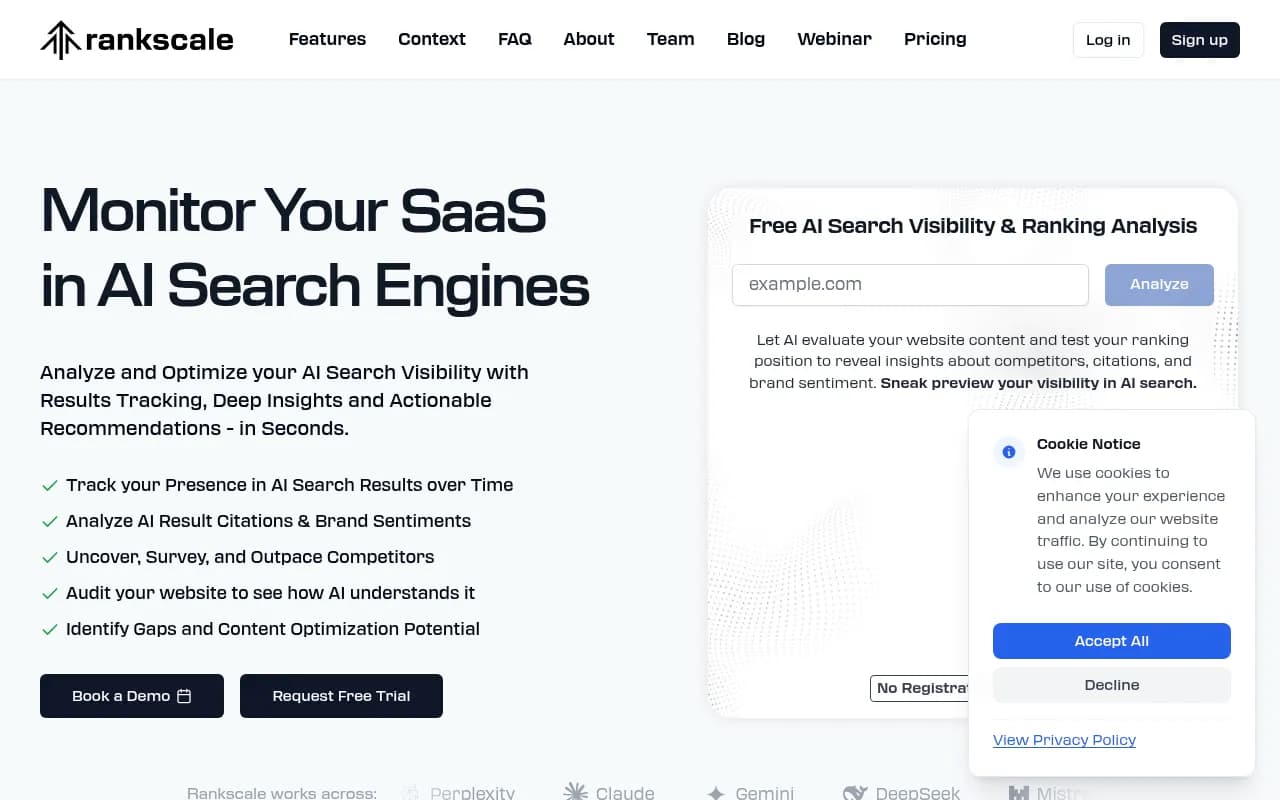
For agencies managing multiple clients who need AI visibility tracking at scale:
Bottom line
AirOps, Scalenut, and Promptwatch are all legitimate tools, but they're solving different problems. AirOps is a content engineering platform that has added AI visibility features. Scalenut is an SEO content platform that has added Google AI Overview monitoring. Promptwatch is built from the ground up around the AI visibility problem.
If you're serious about GEO -- not just monitoring it, but actually improving it -- Promptwatch is the most complete option of the three. The combination of gap analysis, citation-grounded content generation, crawler logs, and page-level tracking is something neither AirOps nor Scalenut can match right now.
Start with the free trial and run your first 50 prompts. The gap analysis alone usually surfaces enough to justify the investment.