Key takeaways
- An AI rank tracker is only useful if it tells you what to change. Tools that stop at a visibility score leave the hard part to you.
- Compare prompt counts, engine coverage, and refresh frequency before headline price. Entry plans often leave out Claude, Copilot, AI Mode, or Perplexity, or sell them as add-ons.
- Data collection matters. Tools that scrape the real AI interfaces and tools that call APIs can give different answers for the same prompt.
- Prices below come from vendor pages and third-party roundups that disagree with each other in places. Confirm on each pricing page before you buy.
- Best picks: Promptwatch for tracking plus fixing, SE Ranking for one suite, Otterly.AI for a tight budget, Profound for enterprise, Local Falcon for map-based local visibility.
What an AI rank tracker actually does
Traditional rank trackers give you a position from 1 to 100 for a keyword. AI answers don't work that way. There is no stable page one. A response changes by platform, prompt wording, location, and day, and your brand is either named, cited, both, or neither.
So an AI rank tracker runs a fixed set of prompts on a schedule across ChatGPT, Gemini, Perplexity, AI Overviews and others, then records three things: whether your brand was mentioned, which of your URLs were cited, and where you landed relative to competitors. Pew Research found people click a traditional result on only 8% of searches that show an AI summary, versus 15% when there is none. You can rank first in Google and still be absent from the answer people read.
If you want to understand how citations behave before you buy anything, two data points from Promptwatch Data are worth knowing. ChatGPT cites about 5 sources per web-search answer, while Google AI Overviews and Perplexity sit near 10. Perplexity's count barely moves day to day, which makes it a decent test bench: if your citations change there, it is probably your content, not engine noise. Copilot swung from under 2 to nearly 17 sources within weeks, so judge it on monthly trends, not weekly snapshots (that report is dated September 2025, so treat the numbers as directional).
Also check whether a tool shows query fan-outs, the sub-searches an engine runs behind a single prompt. Promptwatch's fan-out data shows ChatGPT averaging roughly 1 to 2 fan-outs per response in early 2026, with shorter queries over time. Your content has to match those generated sub-queries, not the user's original prompt.
How I ranked these 15 tools
I weighted five things:
- Whether the tool helps you act on the data, not just view it
- Engine coverage on the entry plan, not just the enterprise tier
- Prompt limits and refresh frequency
- Data collection method (real interface versus API)
- Price relative to what you get
The sources here are third-party roundups, several written by vendors who rank themselves first. One of them claims about 75% of brands named via APIs didn't match what the real AI interfaces showed. That is a vendor claim, so take it with salt, but it points at a real issue worth testing yourself during a trial.
Quick comparison
| Rank | Tool | Starting price (as reported) | Prompts at entry | Notable limit |
|---|---|---|---|---|
| 1 | Promptwatch | $95/mo | 50 | Content Agent starts on Business |
| 2 | SE Ranking / SE Visible | EUR 80/mo (SE Visible) | 75 | No Perplexity in SE Visible |
| 3 | Peec AI | EUR 85/mo (some sources say $95) | 50 | Pick 3 engines, others are add-ons |
| 4 | Otterly.AI | $29/mo | 15 | AI Mode, Gemini, Claude are add-ons |
| 5 | Semrush | $99/mo | 25 | Prompt cap is tight |
| 6 | Ahrefs Brand Radar | $129 to $199/mo (sources conflict) | Real-prompt database | Claude via custom prompts only |
| 7 | Profound | Custom | Varies | Trial covers 3 engines |
| 8 | Scrunch AI | $250/mo | 125 | Higher entry price |
| 9 | AthenaHQ | Free plan, then $295/mo | Credit-based | Big jump from free to paid |
| 10 | Nightwatch | EUR 79/mo | 50 | Strongest for local plus AI |
| 11 | ZipTie | From about $25.65 to $35.63/mo | 30 | Price differs by source |
| 12 | Rankscale | $17/mo (yearly) | 120 credits | Credit-based pricing |
| 13 | LLM Pulse | EUR 49/mo | Weekly tracking | Not daily |
| 14 | AccuRanker | Quoted separately for AccuLLM | n/a | AI is a separate product |
| 15 | Local Falcon | $24.99/mo | 7,500 credits | Narrow, local-focused |
The 15 tools
1. Promptwatch
Promptwatch lands first because it is the only one here that treats tracking as step one of four. It monitors the real interfaces of ChatGPT, Gemini, Perplexity, AI Overviews, AI Mode, Copilot, Meta AI and Alexa, then traces which of your pages get cited, and where. After that it gets practical: an Action Board of prioritized fixes, a Content Agent that writes and publishes to WordPress, Webflow or Framer, and IP-verified AI crawler logs that tell you whether the bots can even read the page.

That crawler log piece is underrated. If you are not cited, the cause is either an access problem or a content problem, and most trackers can't tell you which. Visitor analytics then show whether AI traffic converts. Crisp reported 2x higher conversion rates from AI traffic compared with other channels, per its case study.
Pricing: Essential is $95/mo (50 prompts, daily tracking), Professional is $245/mo (150 prompts), Business is $579/mo (350 prompts, Content Agent, hourly tracking options, local targeting). There is a 7-day free trial on monthly billing, and a free AI visibility report if you want a look first. Confirm at promptwatch.com/pricing. The honest downside: the automated content features sit on Business, so Essential buyers get monitoring and analytics, not the full loop.
2. SE Ranking and SE Visible
If you already need classic rank tracking, site audits and backlinks, SE Ranking is the sensible one-suite pick. In one November 2026 comparison it scored highest overall, with its roughly EUR 109 plan tracking 2,000 keywords daily and including AI prompts. The standalone SE Visible product starts at EUR 80/mo for 75 prompts and collects through browser interfaces rather than APIs, but doesn't cover Perplexity.
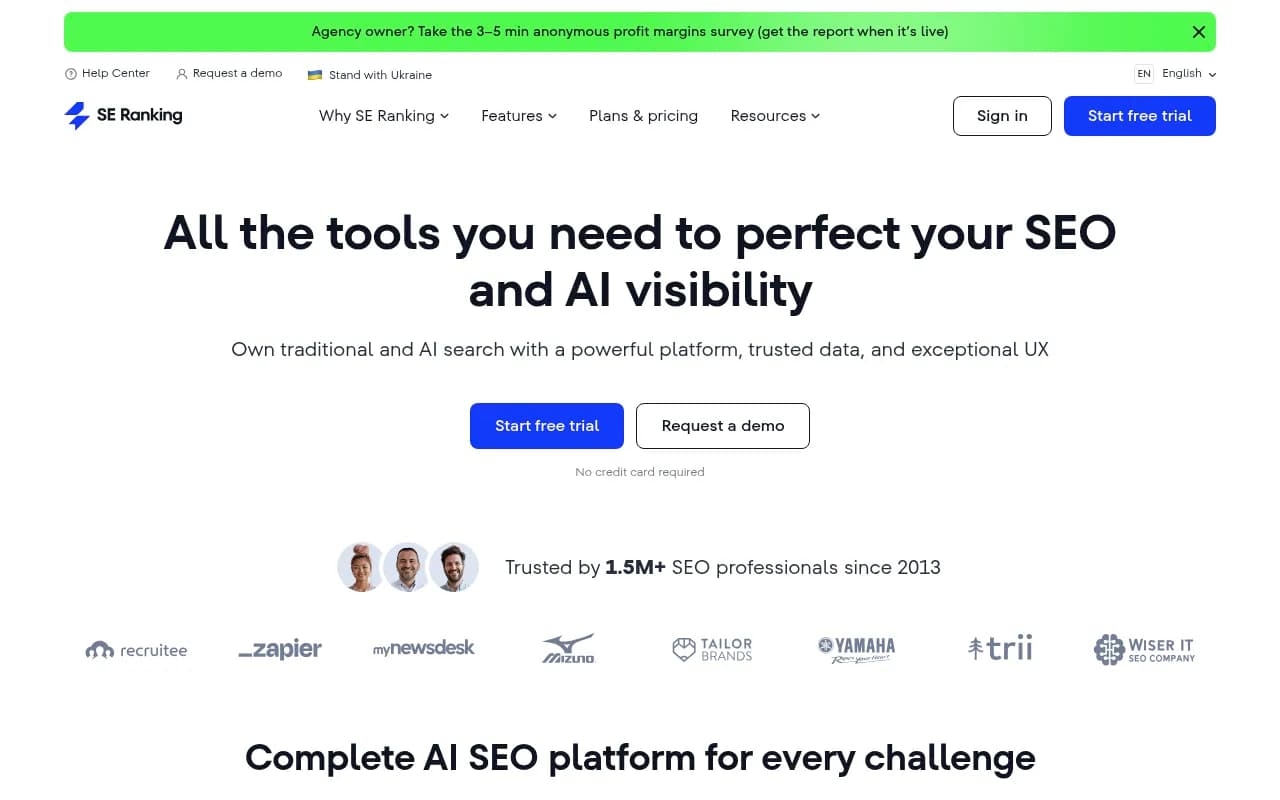
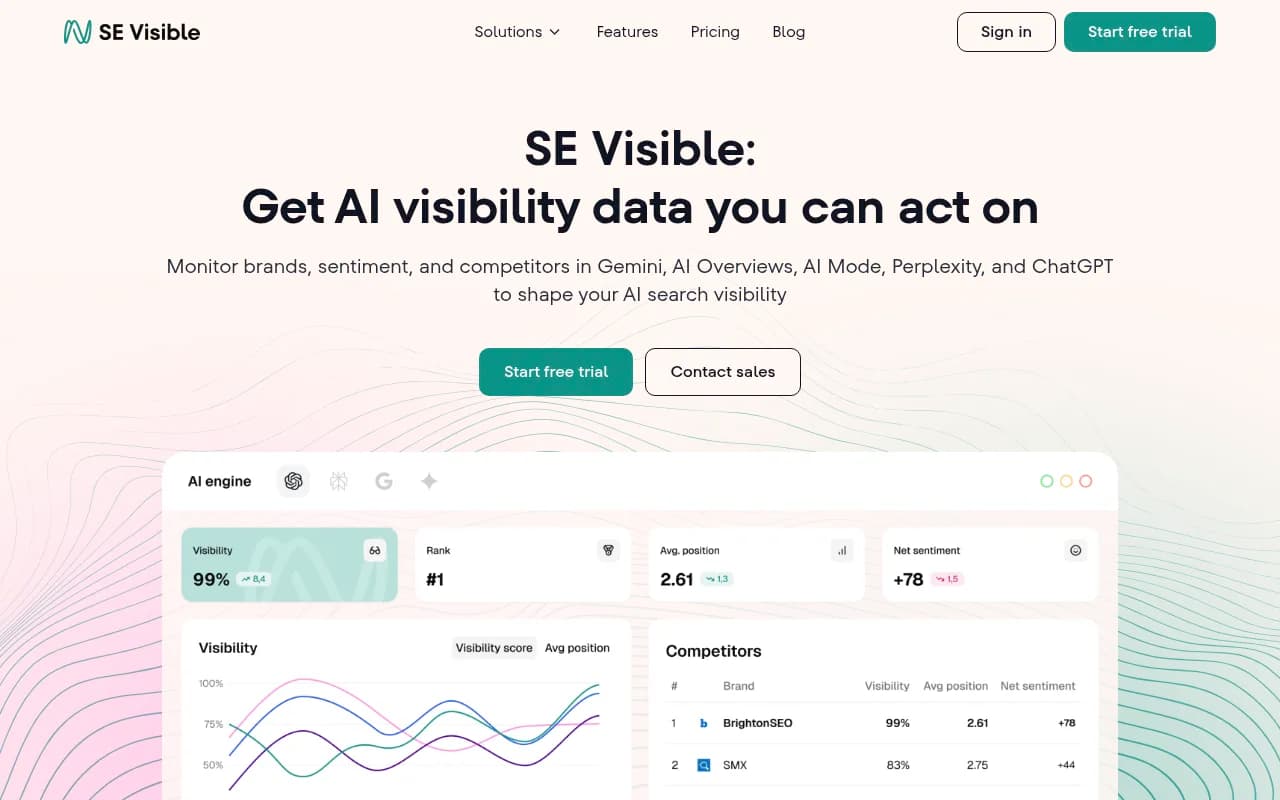
It tells you where you stand. It doesn't help much with fixing it.
3. Peec AI
A clean, well-regarded tracker with sentiment analysis, wide language support and MCP on all plans. You choose 3 engines from ChatGPT, AI Mode, AI Overviews, Copilot, Gemini and Naver AI. Perplexity and Claude cost extra. Price is quoted as EUR 85/mo in one source and $95/mo in another. Good for teams that want monitoring without extras.

4. Otterly.AI
The budget starter. $29/mo gets you 15 prompts across ChatGPT, AI Overviews, Perplexity and Copilot, with a 7-day trial. Fifteen prompts is thin for anything beyond a proof of concept, and the Standard plan at $189/mo adds crawler traffic analysis. Fine for a solo founder checking whether any of this matters for them.
Otterly.AI

5. Semrush AI Visibility Toolkit
Good if your team already lives in Semrush. The add-on is $99/mo for 25 daily prompts covering ChatGPT, Google AI, Gemini and Perplexity. One vendor roundup found Semrush itself appeared in 90% of answers for AI SEO prompts, which says more about its content engine than its tracker. The 25-prompt cap hurts quickly.
6. Ahrefs Brand Radar
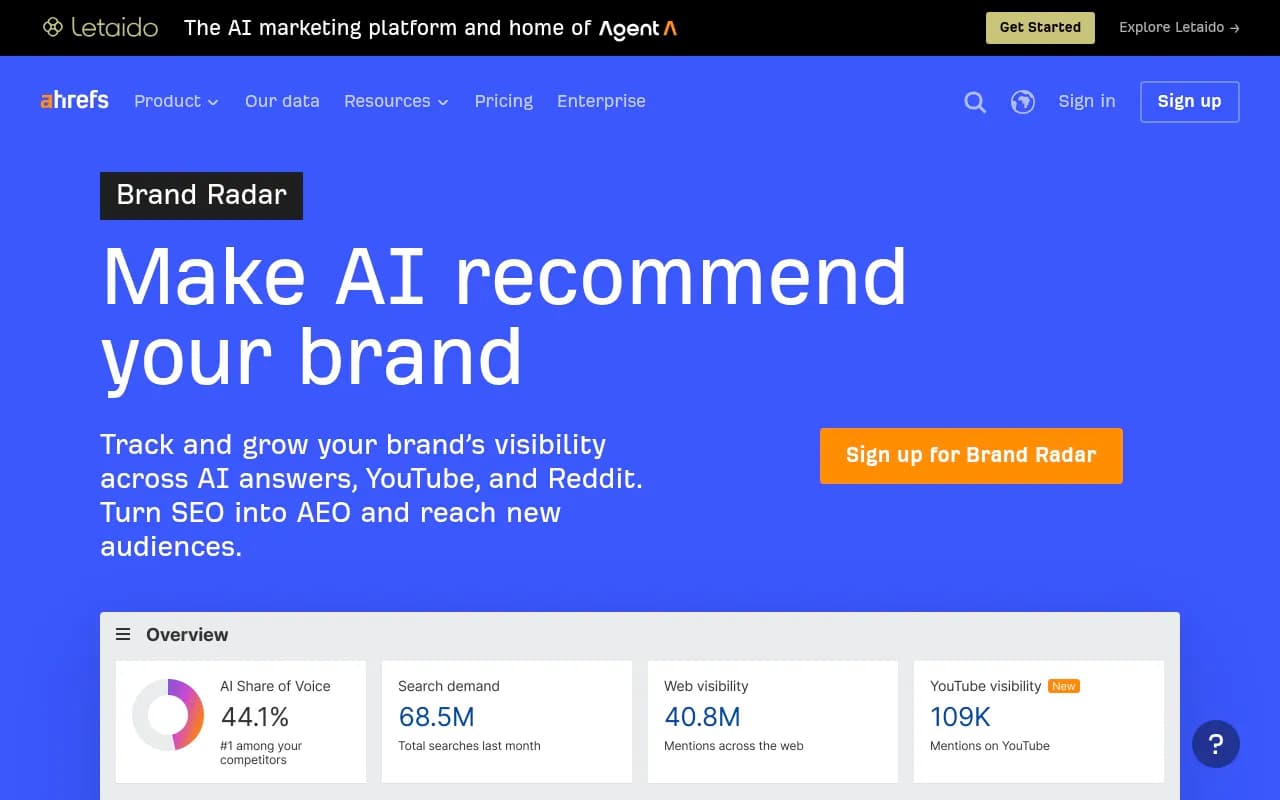
Ahrefs draws on a database of about 500M real prompts, which gives it citation depth most trackers can't match. Price is reported as $129 in one source and $199 in others, so check. It has a free AI Visibility Checker. Claude only works through custom prompts. Buy it if you live in Ahrefs; don't buy Ahrefs for rank tracking alone.
7. Profound
Enterprise AI visibility with custom pricing and a 7-day trial that covers only 3 engines. Enterprise reaches up to 9, including Copilot, Claude and DeepSeek, while Perplexity and AI Mode are Enterprise-only. Strong monitoring, but expect to talk to sales. See Promptwatch vs Profound for a head-to-head.
Profound

8. Scrunch AI
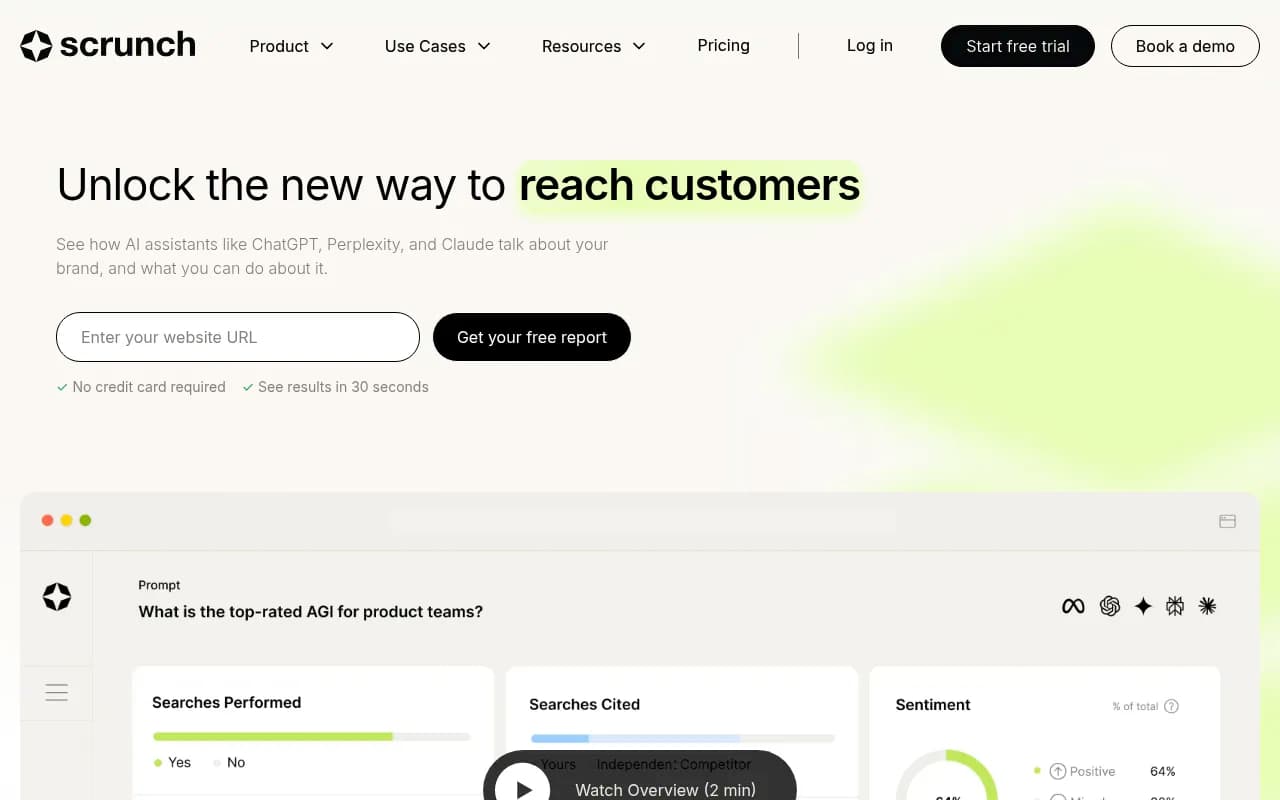
Core plan is $250/mo for 125 prompts and 5 users, with a 7-day trial. Aimed at larger teams and agencies with enterprise scale ambitions. Solid, pricier at entry than most.
9. AthenaHQ
Has a free plan with 300 credits. Starter is $295/mo ($245 yearly) with 3,600 credits and 11 engines, including Claude, Grok and DeepSeek. Wide coverage, but credit pricing is hard to compare and the jump from free to paid is large.

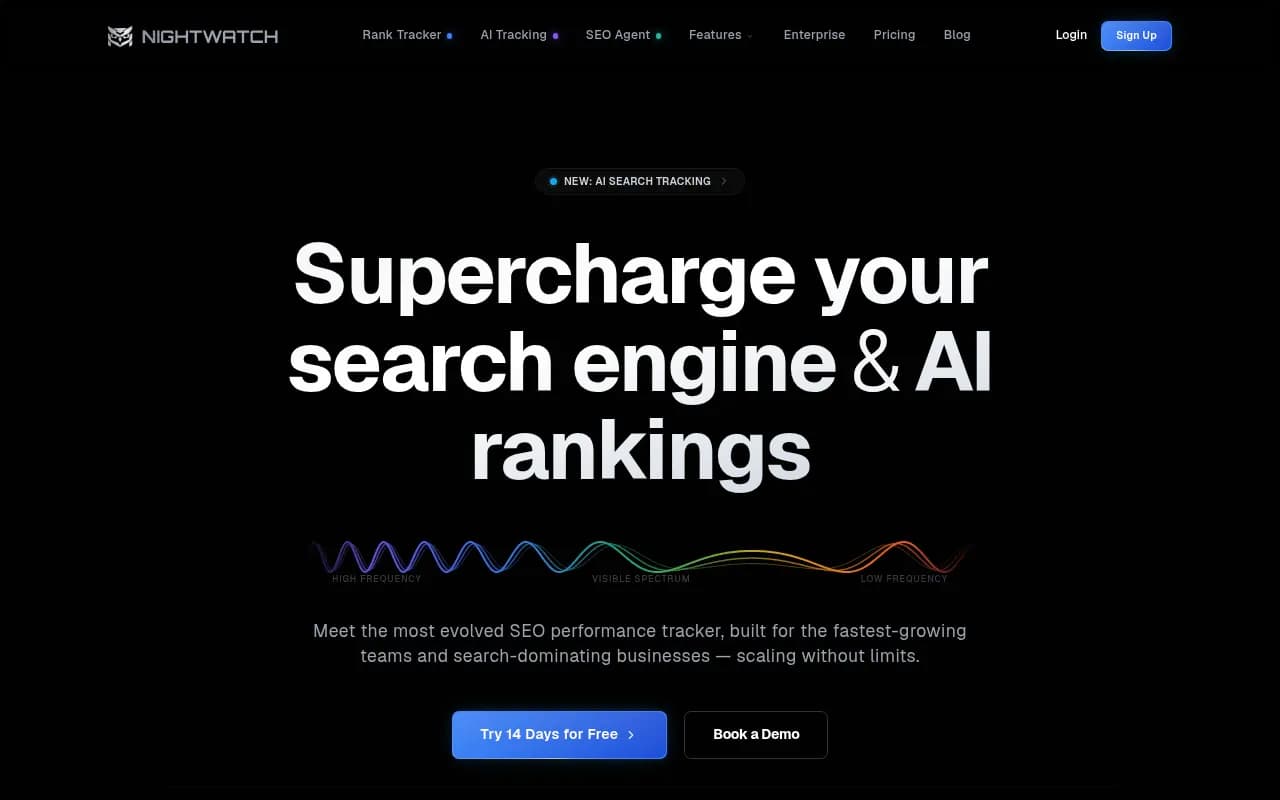
10. Nightwatch
Best if local tracking matters. The Starter plan includes 50 AI prompts (about 1,500 AI answers a month) across ChatGPT, Claude, Gemini and Perplexity, the biggest entry quota in one comparison. Starts around EUR 79/mo.
11. ZipTie
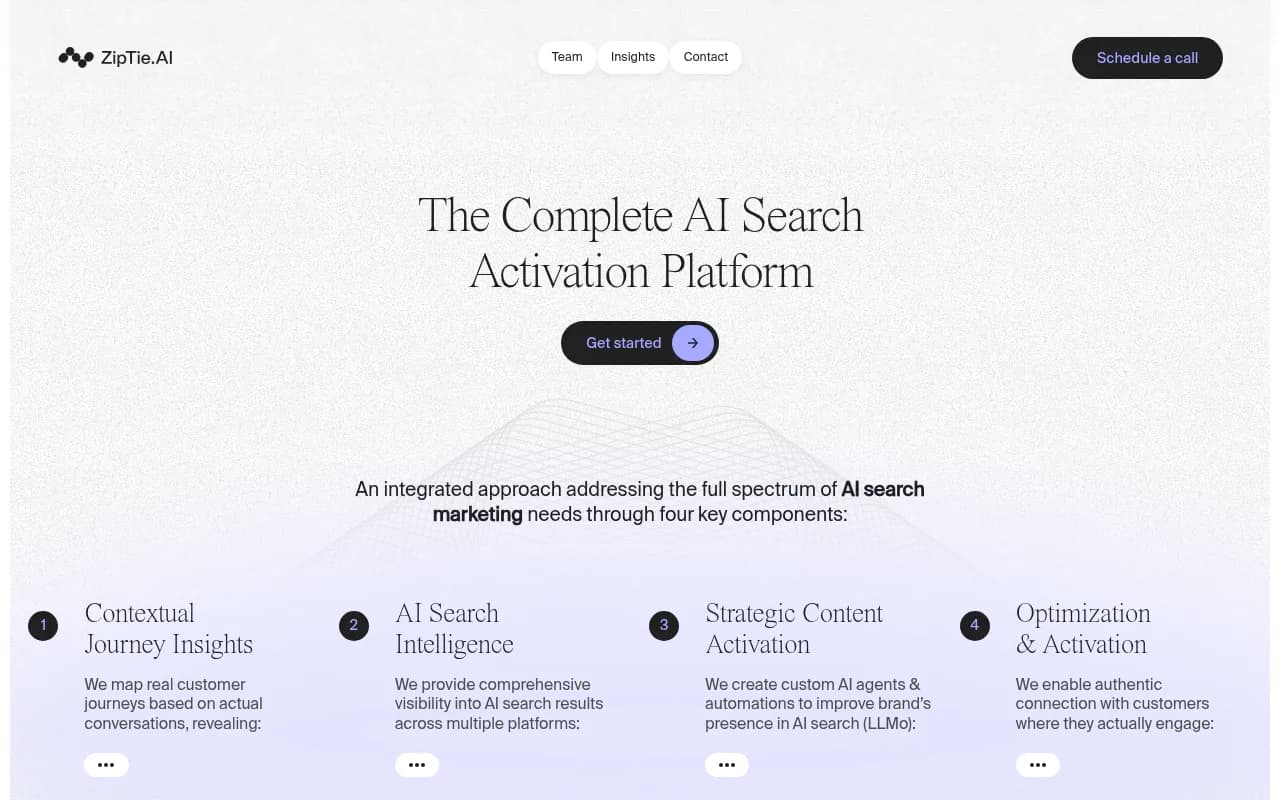
Deep analysis for AI visibility, around $25.65 to $35.63/mo depending on the source, with 30 daily prompts. A reasonable middle option for small teams that want more than Otterly's limits.
12. Rankscale
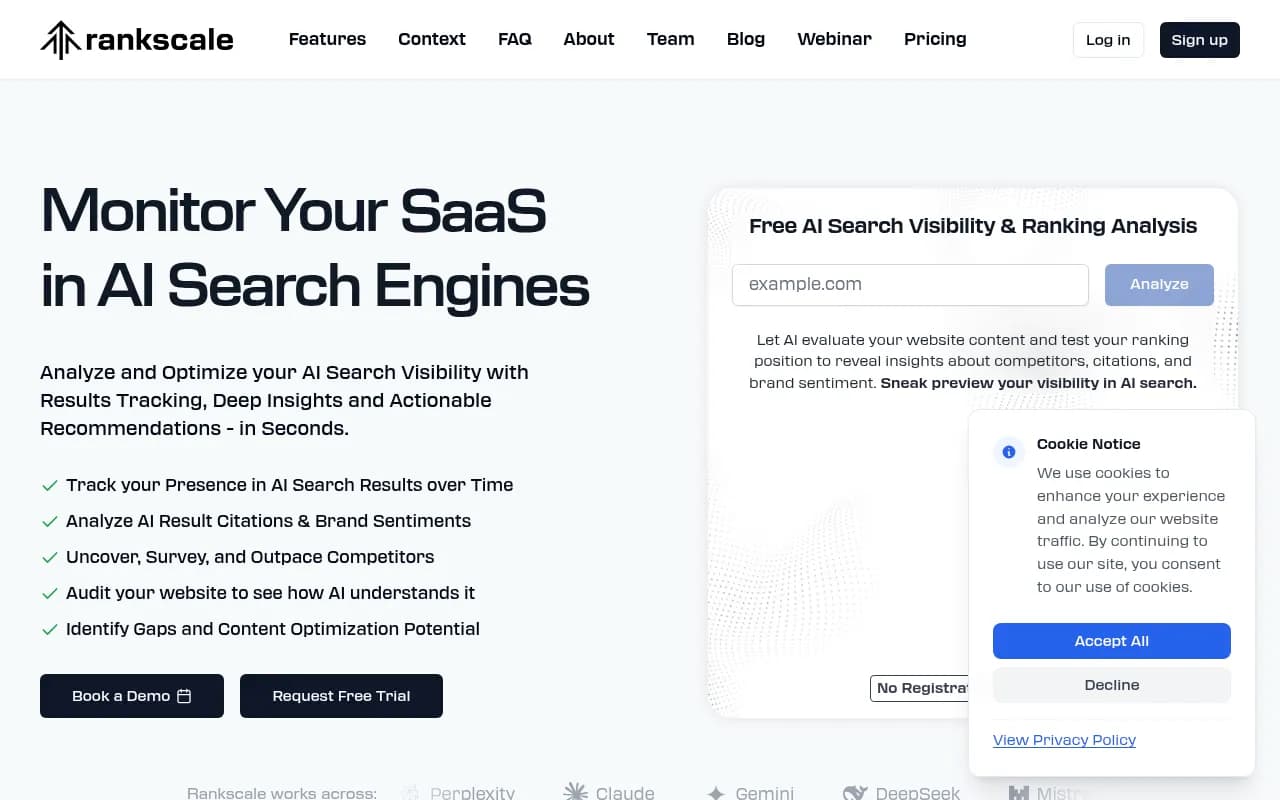
Rankscale starts at $17/mo (yearly billing only) with 120 credits and the Pro plan is $99/mo for 1,200 credits. It covers 17+ engines and has an MCP server. Credit systems make real cost unpredictable, so model your usage before committing.
13. LLM Pulse
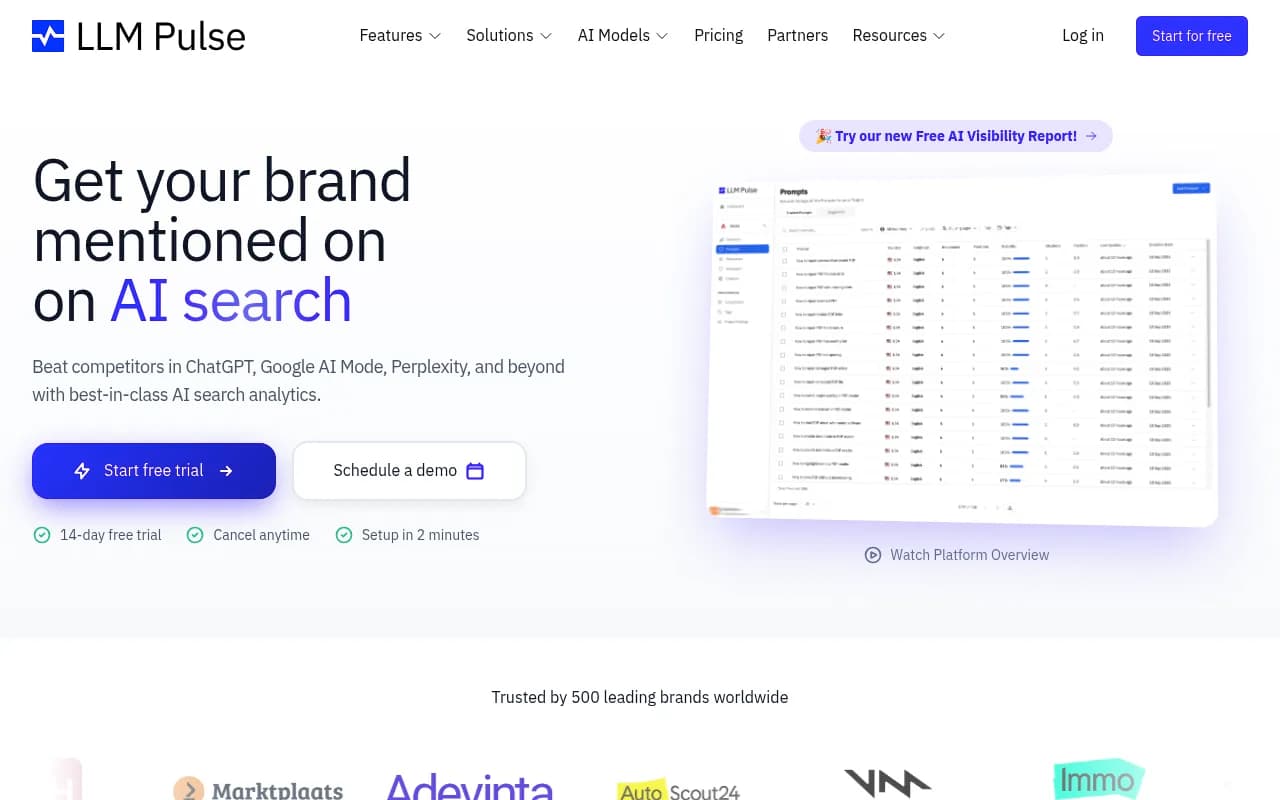
EUR 49/mo with weekly tracking. Weekly is the catch: you won't catch short-lived changes. Fine for slow-moving brands.
14. AccuRanker
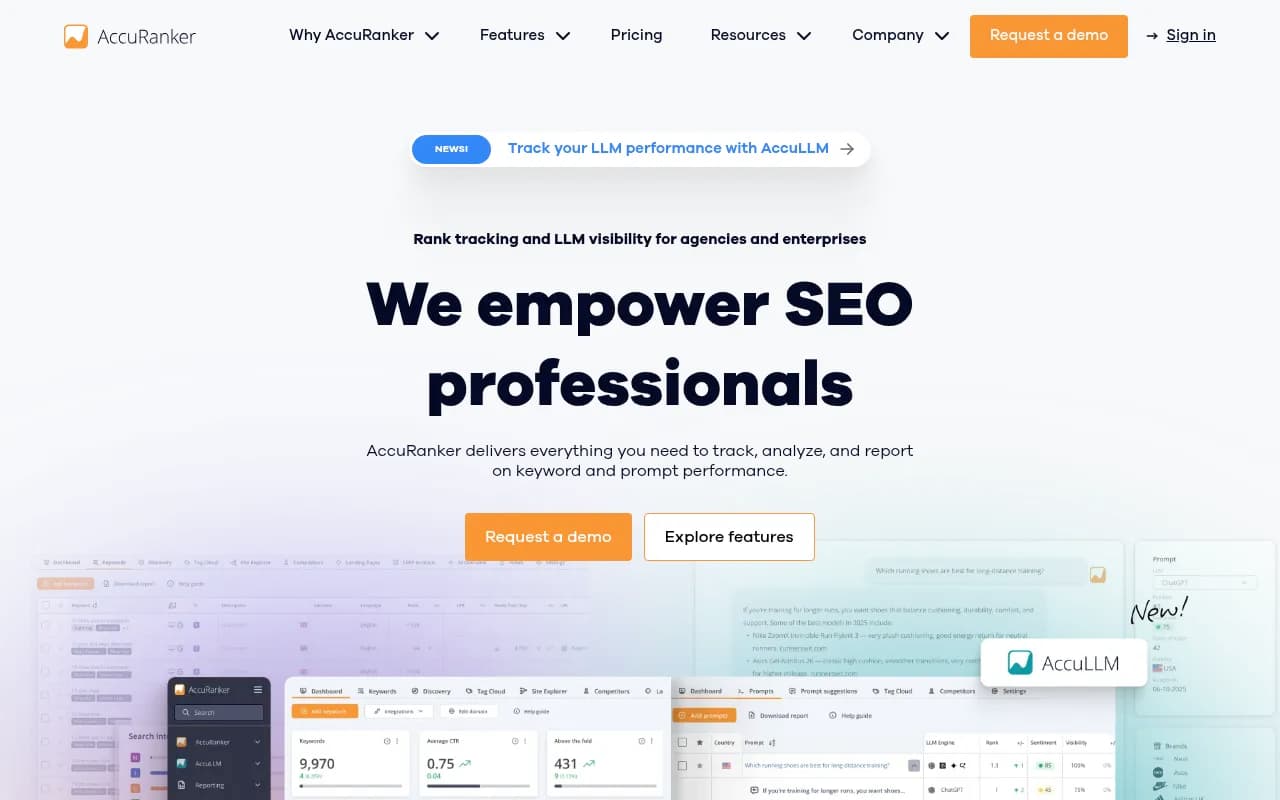
Still a pure rank tracker, and a very good one for large keyword sets. AI visibility comes via AccuLLM, a separate product tracking ChatGPT, Perplexity, AI Overviews and AI Mode. It costs roughly double SE Ranking for a narrower product, so this is for enterprise SEO teams that already use it.
15. Local Falcon
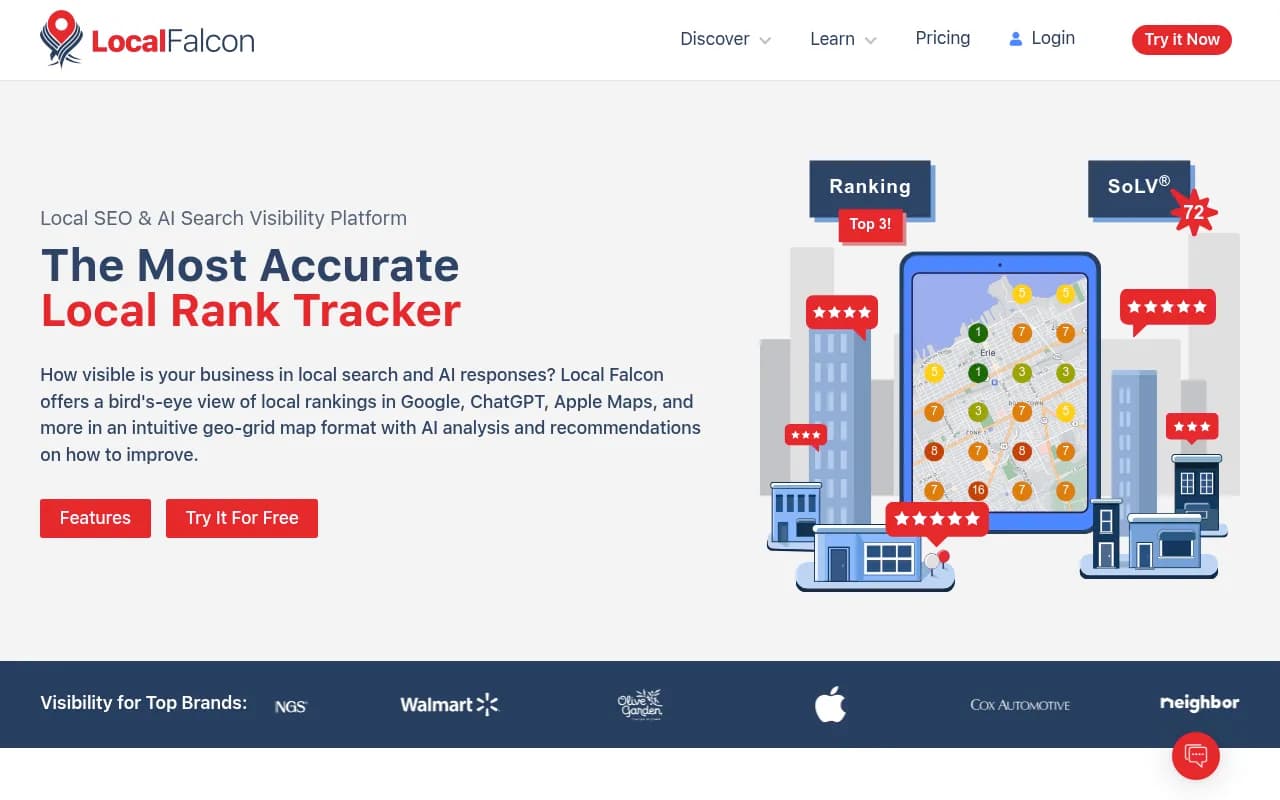
A specialist. Geo-grid rank tracking now extends to AI visibility for ChatGPT, AI Overviews, Gemini, AI Mode and Grok, from $24.99/mo (7,500 credits). If your question is "do we show up when someone asks near this street corner," it earns its place. For everything else it is too narrow.
How to pick
If you need to fix gaps, not just see them
Choose a platform with content workflows, crawler data and traffic attribution. That points to Promptwatch. Everything else on the list is mostly a monitor.
If you already pay for an SEO suite
Try the AI add-on from SE Ranking, Semrush or Ahrefs first. You get unified reporting, though prompt limits are tight.
If budget is the main constraint
Otterly.AI, ZipTie or Rankscale get you started for under $35/mo. Don't expect broad engine coverage or many prompts.
If you run an agency
Look at per-client pricing and white-label reports. Promptwatch's agency plans start at $199/mo (Kick-off) with unlimited projects and prompts, and Scrunch and Profound go enterprise. Read the agency solutions page for detail.
Questions to ask in every trial
- Which engines are included on my plan, not the top tier?
- Does it scrape the real interface or call an API?
- How often do prompts refresh? Daily is the baseline.
- Can I see fan-out queries and the exact cited URLs?
- What happens when I hit the prompt cap?
- Can I export data or connect via API and MCP?
Run the same 20 prompts across two tools for a week. Compare the answers. The gaps will tell you more than any feature table.
Where to find more options
The field is crowded. For wider lists, the AI rank tracking directory and the GEO software directory cover tools not listed here.
Bottom line
Pick a tracker for the job after the dashboard. If you only need a pulse check, Otterly.AI or SE Visible is enough. If you need to improve citations and prove the traffic, start with a Promptwatch trial and compare it against one cheaper monitor on the same prompt set.