Key takeaways
- "AI search visibility checker" covers at least four different jobs: crawler readiness, model-based opinion scores, real prompt answers, and ongoing monitoring against competitors. Most free tools do only one.
- In a September 2026 test by Web Aloha, five free checkers returned results. None showed what an AI answer to a real buyer question actually says.
- Model-based scores (22 to 52 out of 100 in that test) are opinions, not measurements. Treat them as a nudge, not a KPI.
- A one-shot check misses query fan-outs, differing citation slots per engine, and engine volatility. Those gaps are where free tools stop and tracking starts.
- For local businesses, free checkers mostly ignore location. Check results manually from the city or region you care about, and use a paid tracker once the question becomes "is this improving?"
What "local" means here
The phrase "free local AI search visibility checker" gets used in two ways, and the search results blur them together.
The first meaning is a checker for a local business: a dentist, a plumber, a restaurant group. They want to know if ChatGPT names them when someone asks for the best option in their city. The second meaning is a checker that runs locally, in your browser, without sign-up. Most free tools fit the second meaning (paste a URL, get a score). Almost none fit the first, because location-aware prompt testing is expensive to run and is usually the thing vendors hold back for paid plans.
This guide covers both. It looks at what the free options actually do, how to squeeze real local insight out of them, and where you will hit a wall.
The four jobs hiding behind one label
Web Aloha ran eight free tools on its own brand on 26 September 2026, using a fresh logged-out browser with no accounts and no emails. Five returned results. Their framing is the most useful way to sort this category, so here it is, lightly adapted.
| Your question | What answers it | What Web Aloha saw |
|---|---|---|
| Can AI crawlers reach and read my pages? | A readiness checker | Two tools scored the site 100 and the findings matched the live site |
| What does a model think of my brand? | A model-based checker | Scores from 22 to 52 out of 100, plus "likely not named" verdicts |
| Do AI answers mention or cite me for buyer questions? | Your own prompt panel or a monitoring tool | Perplexity named them in 2 of 6 answers, ChatGPT in 1 of 6, and none of 4 discovery prompts named them |
| Is it improving, and how do I compare with competitors? | A paid monitoring tool | Not tested. Everything needed an account, email or payment |
That table is worth printing out. When a free tool hands you a number, ask which row it belongs to.
Free readiness checkers
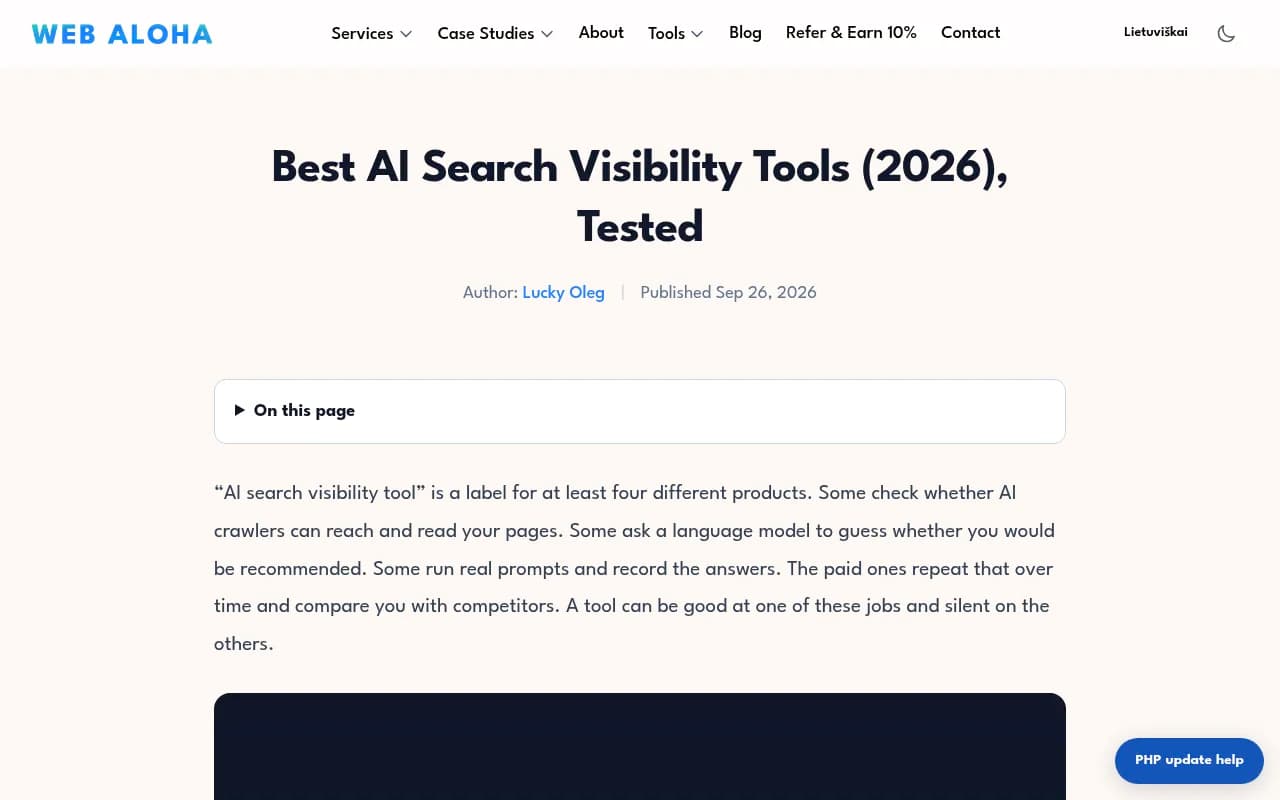
These are the most trustworthy free tools, mainly because they measure something verifiable. They fetch your page and tell you whether an AI crawler could read it: robots rules, structured data, server-rendered text, and so on.
Web Aloha's own AI Search Visibility Checker and Answer Visibility Lab's AI Crawlability Checker both scored the Web Aloha site 100, and every finding matched the live site. Web Aloha's tool also listed 15 unscored observations, including four JSON-LD blocks that parsed and about 940 words in the server-returned HTML. Credit where due: the tool page says plainly that it does not run prompts or track citations.
The catch is obvious. A perfect readiness score does not mean anyone cites you. It means nothing is blocking them. Think of it as a smoke alarm check, not a fire inspection.
If you want a deeper free crawl on your own machine, a desktop crawler such as Screaming Frog is worth knowing. A real crawl will find orphaned pages and rendering problems that a single-URL checker never sees.
And if you suspect JavaScript rendering is hiding your content from AI bots, a prerendering service is the usual fix.
Free model-based checkers
This is the crowded middle, and the one I would trust least.
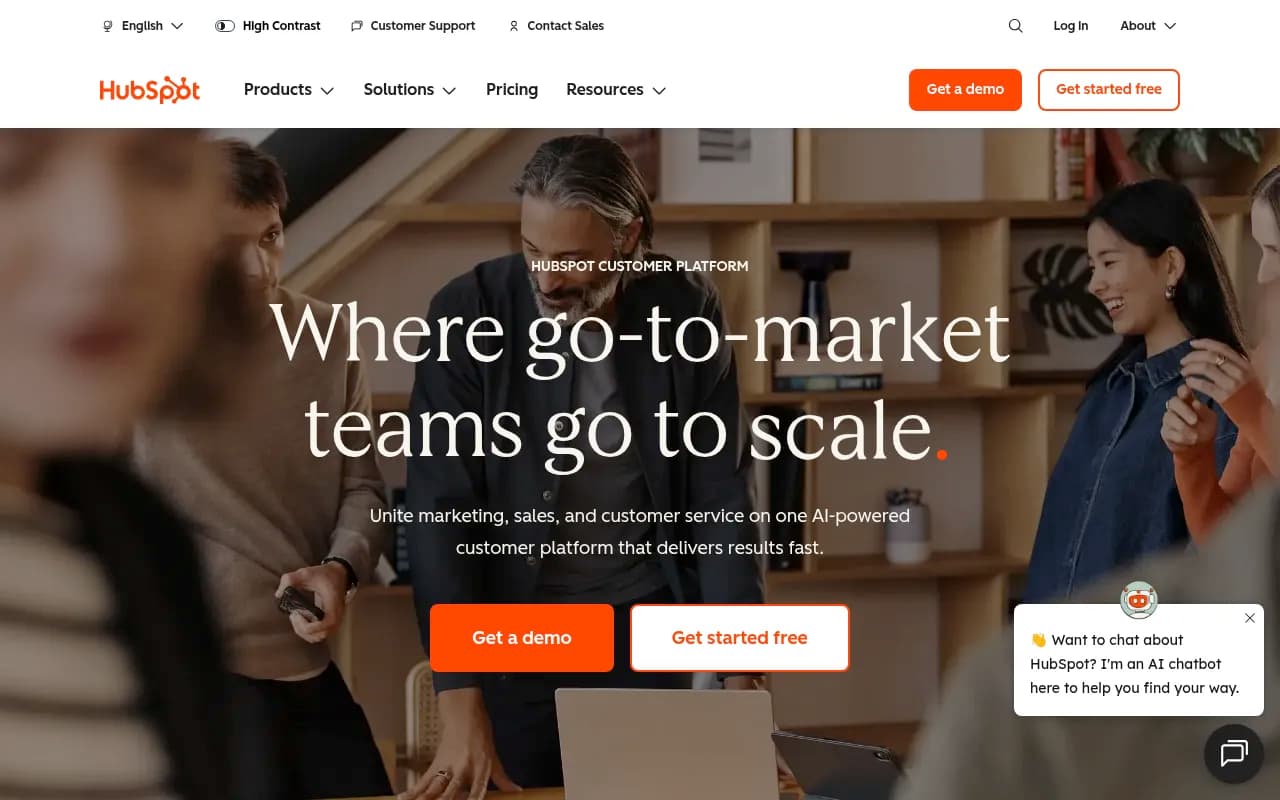
HubSpot's AI Search Grader asks each model how it describes your brand from training data (the full report needs an email). Rank Prompt and SEOcrawl ask a single model to estimate whether you would be named, and both say so on the results page. In the Web Aloha test, Rank Prompt returned "0 of 3 assistants would likely name your brand" across ChatGPT, Perplexity and Gemini, each with a one-line reason.
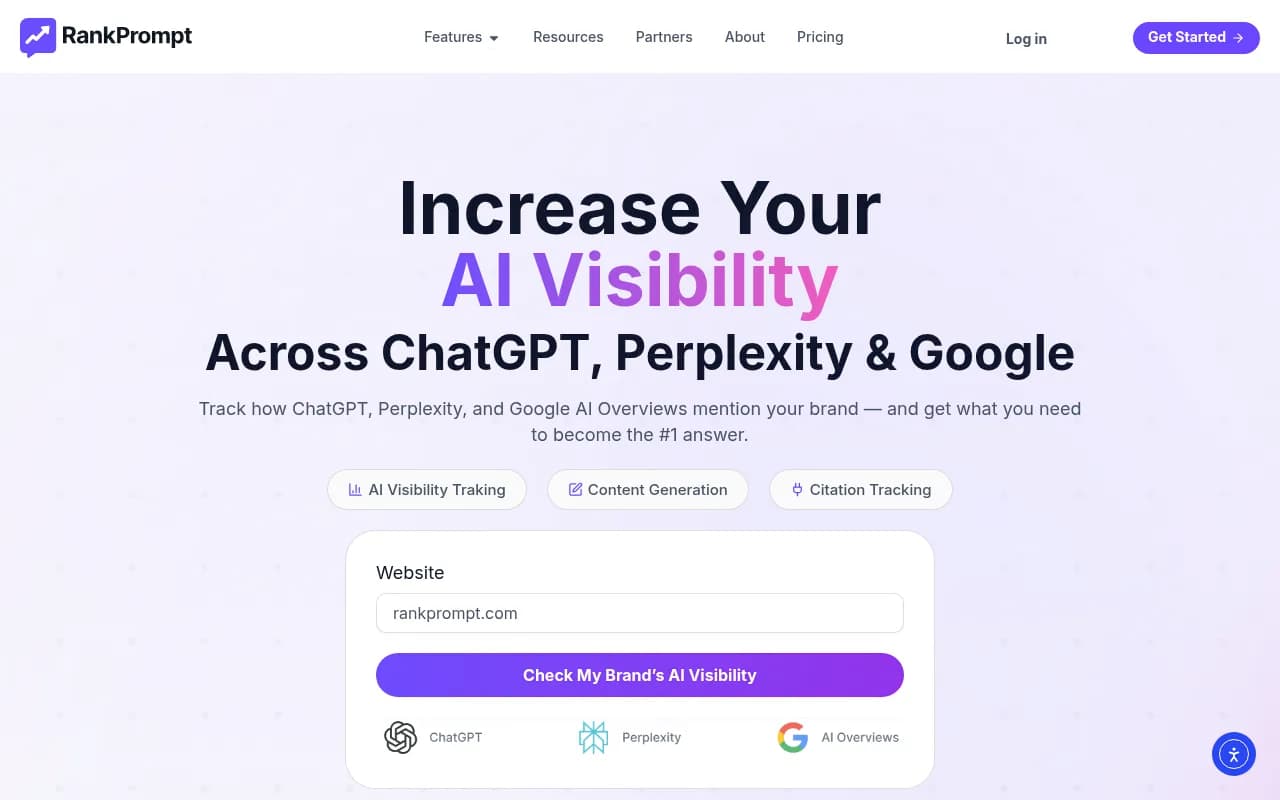
Web Aloha's verdict, which I agree with: these are opinions, not measurements. A model guessing whether it would recommend you is not the same as a live answer on a live prompt with web search switched on. Scores of 22 to 52 out of 100 across tools for the same brand on the same day tell you the scale is not shared.
They are still useful in one narrow way. If a model has a wrong or thin description of you, that points to a content or entity problem you can go fix. Just do not report the number to your boss.
The free checkers from big SEO vendors
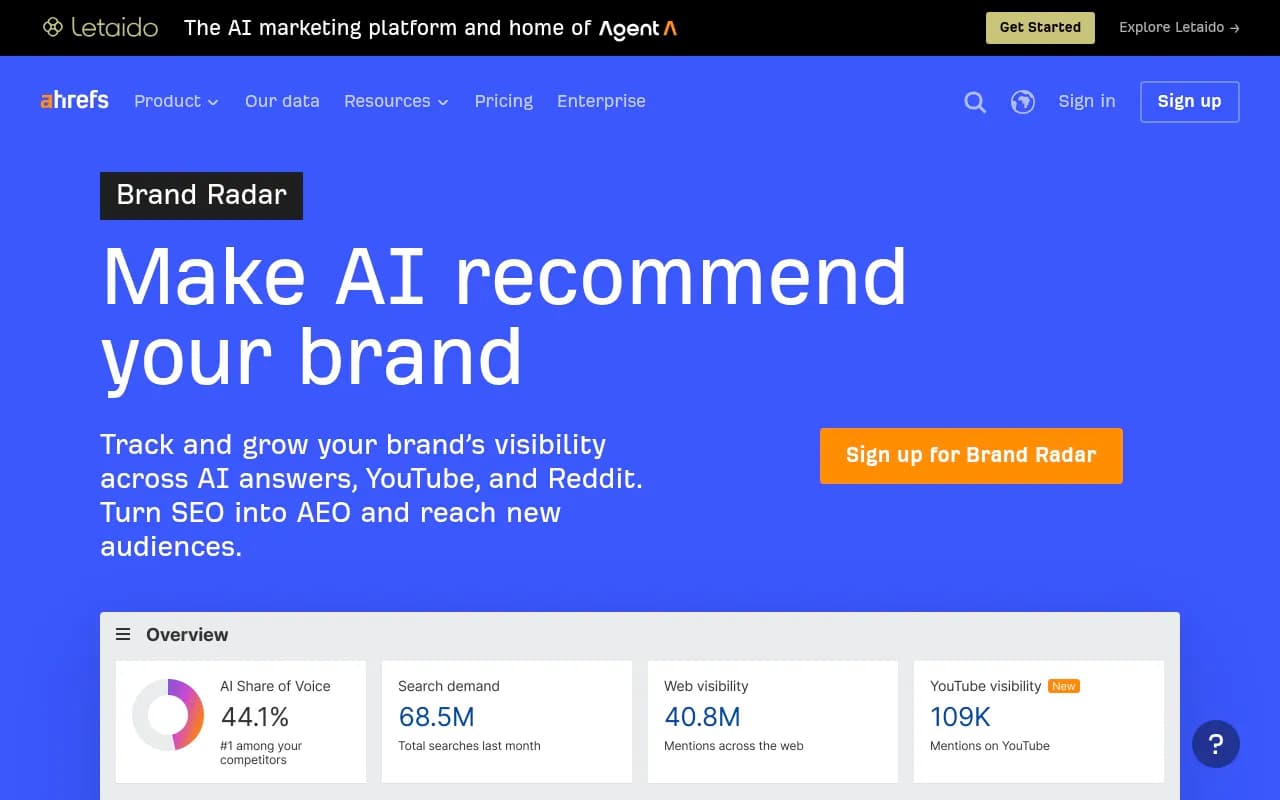
Ahrefs and Semrush both offer free AI visibility checkers that say they draw on large prompt databases. Ahrefs describes 449M+ search-backed prompts across ChatGPT, Gemini, Perplexity, Copilot, AI Overviews and AI Mode. Semrush says it draws on 26M+ prompts and responses and allows 3 free checks a day.
I cannot tell you how good they are, and neither could Web Aloha. Both showed their automated browser a bot check, so the test ended there. That is a fair reason to skip them in an automated test and no reason to skip them yourself. Open them in a normal browser and try your domain.
The pricing mentioned in that test (Ahrefs AI Visibility Index from $199 a month, Semrush's Toolkit at $99 a month, Otterly Lite at 29 euros a month for 15 prompts) was listed by the vendors but not independently verified, so confirm it on the vendor pricing pages before you budget.
Otterly.AI

Other free and freemium options worth a look
A few tools from our catalog advertise free entry points. I have not benchmarked them against each other, so treat this as a shortlist, not a ranking.
| Tool | Angle | Worth trying for |
|---|---|---|
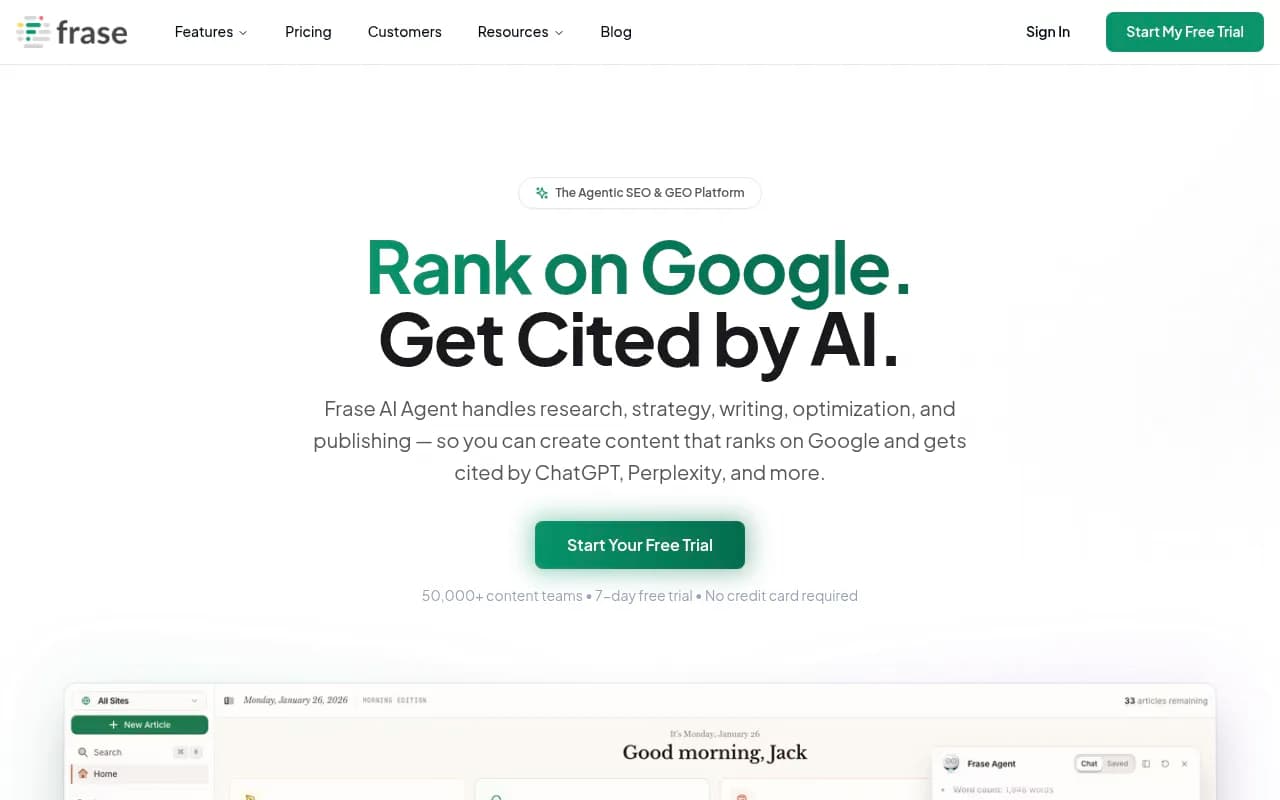
| Frase AI Visibility Checker and GEO Score | Free checker shows who AI cites for your domain; GEO Score grades a page for citability | A quick page-level citability read with no card |
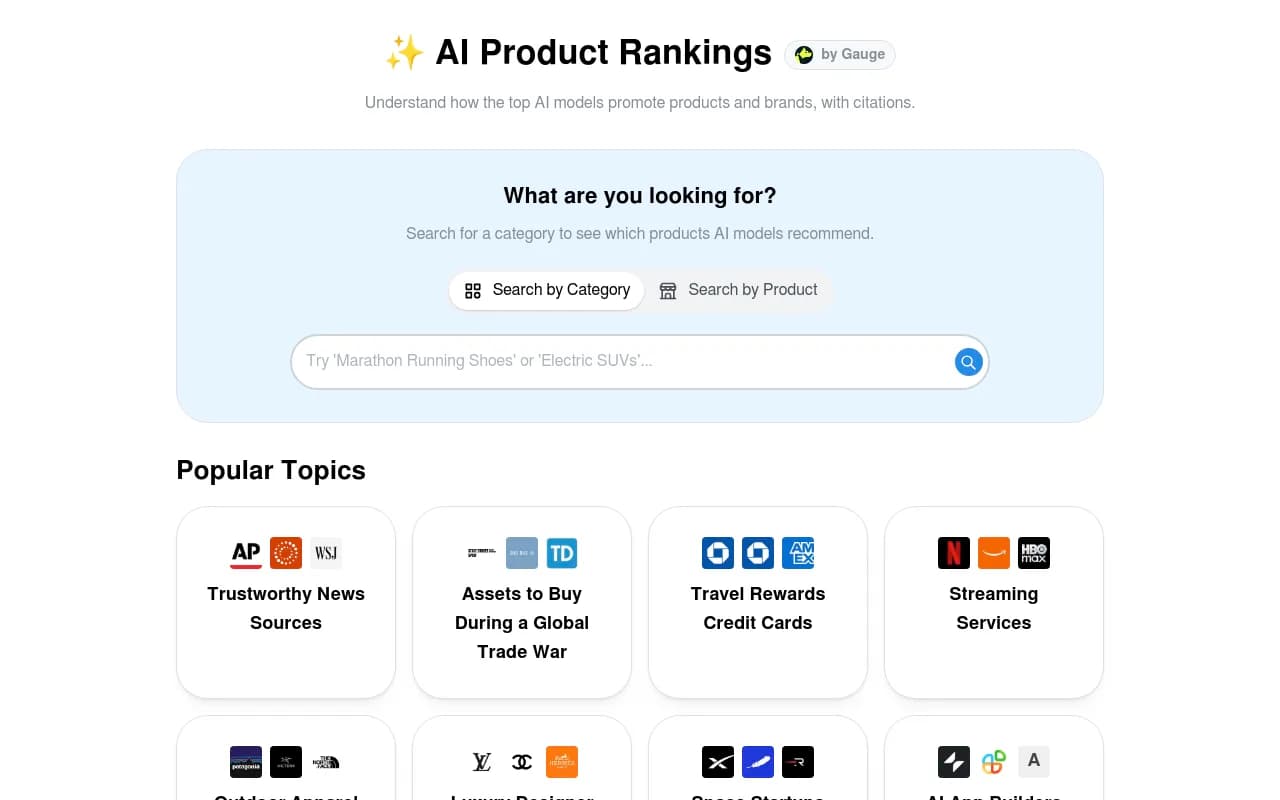
| ProductRank | Free AI search discovery and monitoring | Light monitoring without a budget |
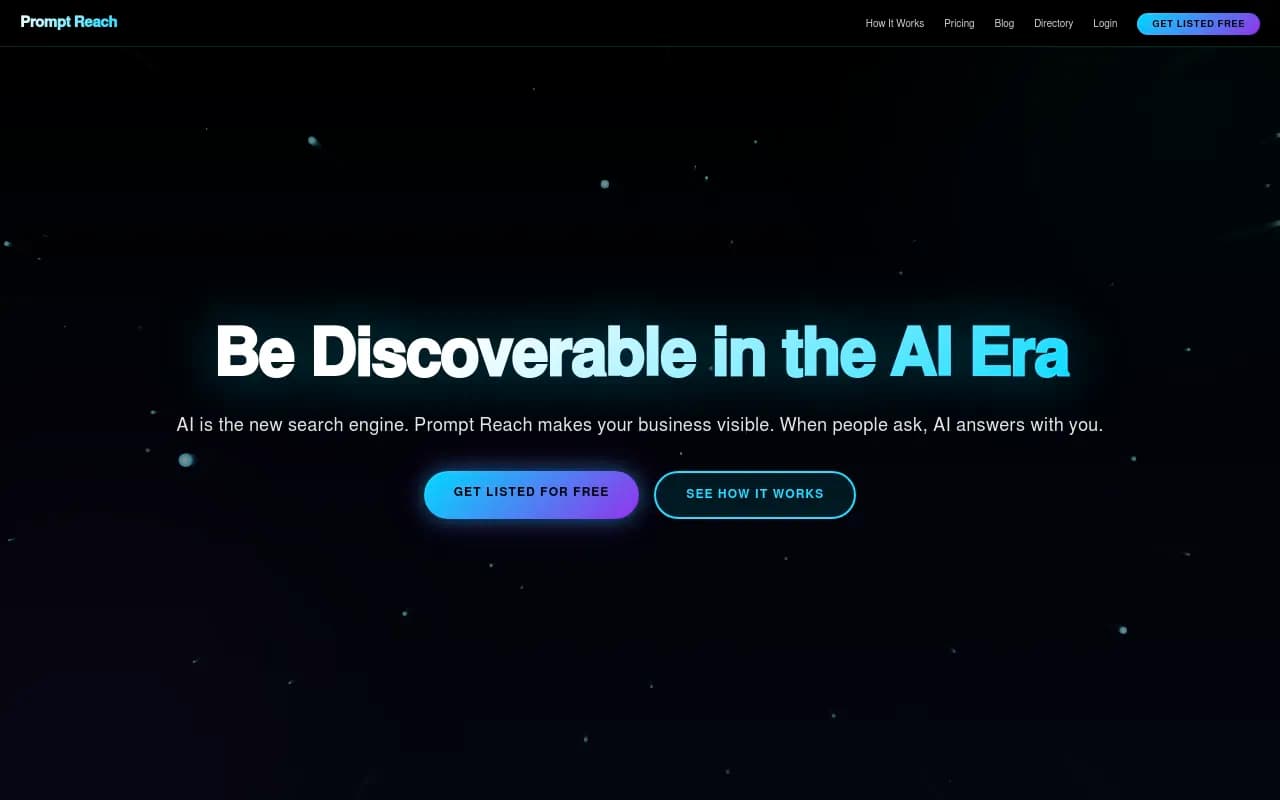
| PromptReach | Free AI business directory | Local businesses wanting another listing surface |
| Surfaced | Free plan available per IndustryLens | Small-scale prompt checks |
| AthenaHQ | Free tier per IndustryLens | Trying a dedicated platform before paying |

Free tiers change often, so verify limits before relying on one.
What every free checker misses
This is the part that matters for anyone making decisions. A single typed prompt, run once, hides a lot.
It misses the fan-out
When ChatGPT searches the web, one prompt can trigger several sub-searches. Promptwatch's ChatGPT query fanout data shows average fan-outs of 2.15 per response in early December, about 1.84 by early March, and 1.0 in April, with average query length falling from about 117 characters to the high 80s and then about 53. A checker that runs your typed prompt never sees those sub-queries, and your page has to match them, not the user's wording. Things shifted again later: Promptwatch Data reports that on August 8, 2026 ChatGPT started using the site: operator at scale, jumping from about 0.4% to about 17% of fan-out queries overnight.
Practically, that means writing headings that read like short queries, putting the entity and category up front, and covering comparison, pricing, alternatives and how-to questions on focused pages. For a local business, add the city and neighbourhood terms the sub-queries will use.
It misses that engines have different citation slots
According to Promptwatch's average sources per response data (a September 2025 snapshot, so check for newer numbers), ChatGPT cites about 5 sources per web-search answer, Google AI Overviews about 10, and Perplexity almost exactly 10 every day. A free score that blends them hides that AI Overviews offers roughly double the room for a mid-authority site to appear.
That same report notes Copilot swung from under 2 to nearly 17 sources within weeks. One check on Copilot tells you almost nothing.
It misses that sources shift under your feet
Citation behaviour changes fast. Promptwatch's data shows reddit.com's share of ChatGPT citations falling from about 4% to about 0.5% on August 14, 2026 (report). For the week of Sep 28 to Oct 4, 2026, ChatGPT drew 0.46% of its citations from social platforms while Google AI Overviews drew 12.2% (report). A one-time snapshot cannot tell you which regime you tested in.
It misses what gets cited
Free checkers rarely show which of your pages earn citations. Promptwatch's content-type data found product pages were 22.4% of ChatGPT citations from Sep 28 to Oct 4, 2026, ahead of landing pages and listicles. Local service businesses should read that as a nudge to make sure each service page can stand alone as an answer.
It misses location
Most free tools run from one server location with no city setting. If you serve one metro area, results from a generic US or EU origin may not match what your customers see. Several of the paid platforms offer country tracking, with state and city tracking on higher tiers. For free, you have to do it by hand.
A free local check you can run in 30 minutes
Web Aloha's own approach, a small panel of real prompts, beats any single score. Here is a version for local businesses.
- Write 8 to 10 prompts a customer would actually type. Include 4 or more discovery prompts that do not name you ("best emergency plumber in [city]"), plus a few branded and comparison prompts.
- Run each one in ChatGPT with search on, in Perplexity, and in Google, noting whether AI Overviews appears. Use a logged-out or clean profile and set your location to the area you serve.
- Record three things per answer: whether you are named, whether you are cited with a link, and who else appears.
- Repeat a week later. Single runs are noisy, as the Copilot swings show.
- Run a free readiness checker on your most important page, then fix whatever it flags first.
The Web Aloha result is a useful reality check on expectations: Perplexity named them in 2 of 6 answers, ChatGPT in 1 of 6, and none of the 4 discovery prompts named them. A tidy technical score and weak discovery visibility can sit side by side. Do not be surprised if yours looks the same.
To see how AI answers are shaped in your own sector, the Promptwatch Data library has industry cuts worth skimming, such as travel, software and healthcare. The pattern is consistent: aggregators, marketplaces and booking sites often outrank the brands themselves, so for local queries your listings and directory profiles may matter as much as your own site.
When to stop using free tools
Free checkers answer "what is the state of things today?" in a limited way. They cannot answer "is it improving?" or "how do I compare with competitors?". That is the fourth row of the table above, and in Web Aloha's test every option for it needed an account, an email or payment.
Once you are there, the real distinction is between tools that stop at the alert and tools that help you fix the gap. Promptwatch sits on the second side: it tracks real UIs for ChatGPT, AI Overviews, AI Mode, Perplexity and others, shows IP-verified AI crawler logs and visitor analytics, and has content agents that draft and publish fixes. It starts at $95 a month with a free Explore tier, and the current plans are on promptwatch.com/pricing.

Other monitoring options from the catalog include Peec AI, Rankshift and LLM Pulse, which are mostly tracking-focused. Agencies and larger brands tend to look at Profound or Scrunch.


Profound

For a wider view of the category, the GEO software directory at bestgeosoftware.com lists more options by feature.
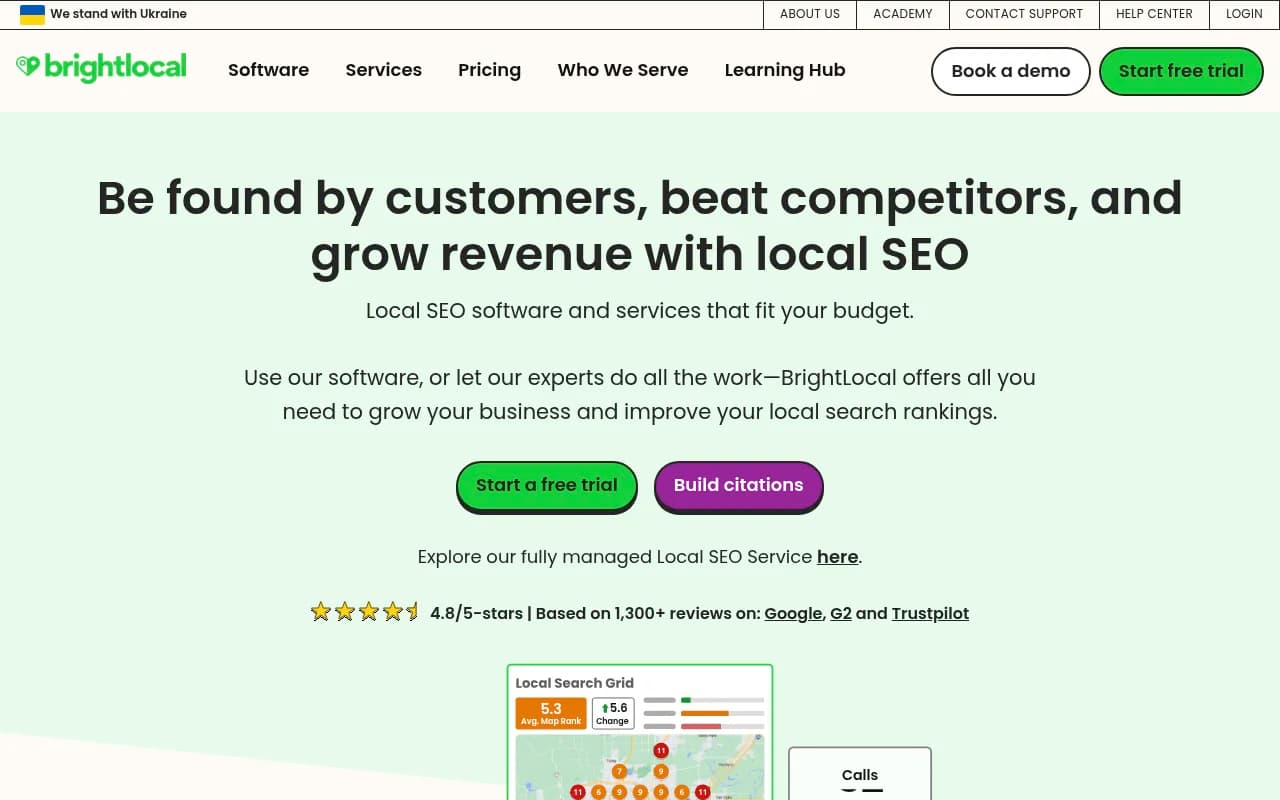
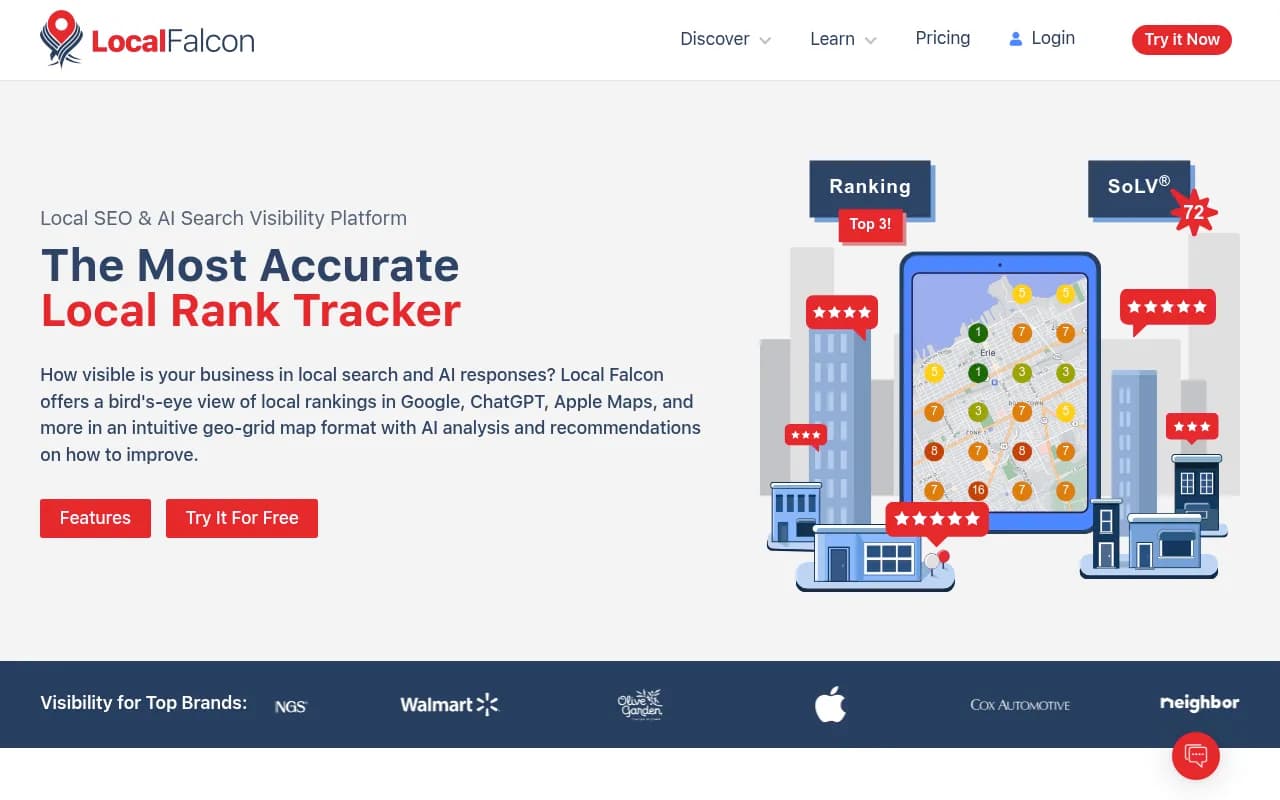
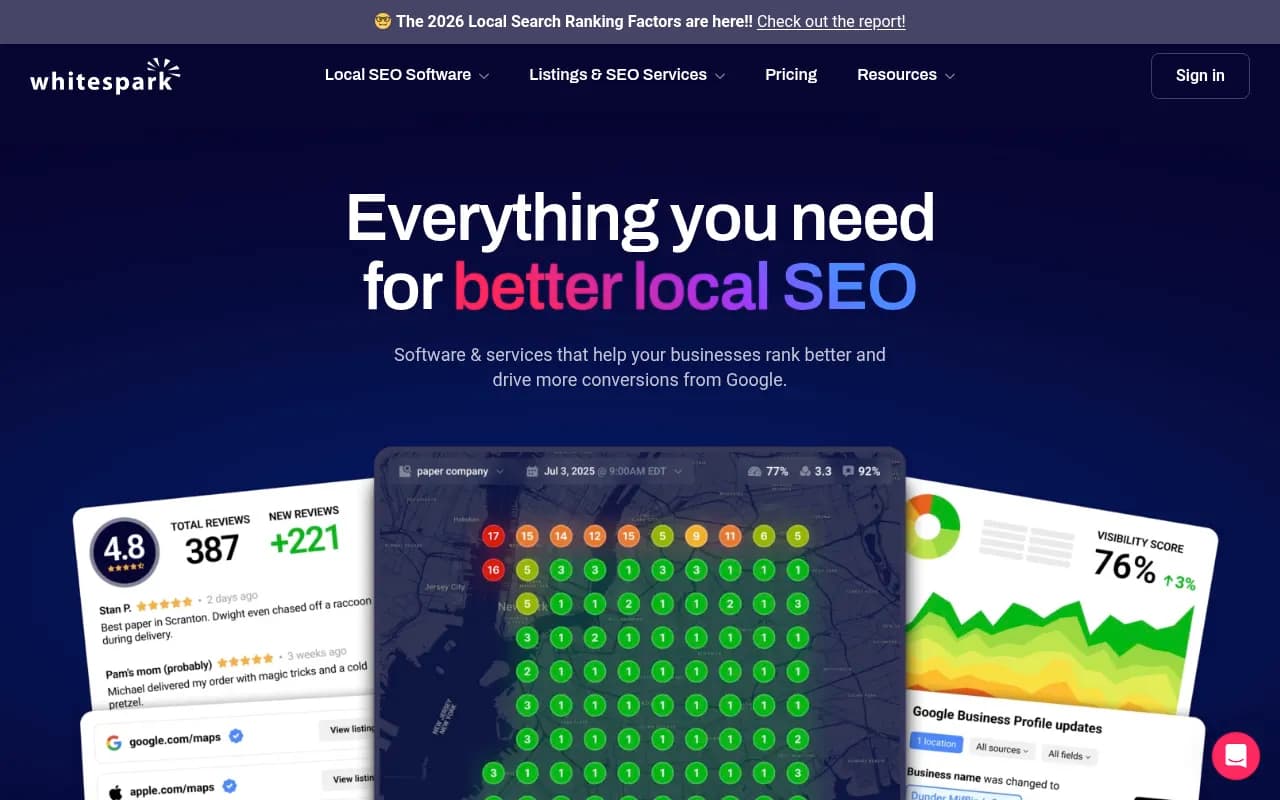
And for the local side specifically, do not forget classic local SEO tools. AI answers lean on the same listings and reviews that local pack rankings do, and a grid tracker or listing manager still covers ground no AI checker touches.
Quick comparison: which free tool for which job
| Job | Free option type | Trust level | Main blind spot |
|---|---|---|---|
| Can bots read my site? | Readiness checkers (Web Aloha, Answer Visibility Lab) | High | Says nothing about citations |
| What does a model think of me? | HubSpot AI Search Grader, Rank Prompt, SEOcrawl | Low to medium | Opinion, inconsistent scales |
| Prompt database lookups | Semrush and Ahrefs free checkers | Unverified here | Limited checks, bot walls for automation |
| Real answers for real prompts | Your own manual panel | High but noisy | Manual, one location, one moment |
| Trend and competitors | Paid monitoring only | High | Costs money |
The bottom line
Use a free readiness checker to rule out technical blockers, ignore the model-guess scores as headline numbers, and build your own prompt panel from your actual customer questions in your actual city. Repeat it weekly for a month. When you catch yourself wanting a trend line and a competitor comparison, that is the point where a paid tracker earns its fee.
If you want a senior team to run that process for you, 1001 SEO Media handles AI search and GEO work alongside traditional SEO.