Key takeaways
- GEO (Generative Engine Optimization) tools track how your brand appears in AI-generated answers from ChatGPT, Perplexity, Gemini, Claude, and others -- traditional rank trackers don't cover this.
- Most tools on the market are monitoring-only: they show you where you're invisible but don't help you fix it.
- The biggest differentiator in 2026 is whether a platform closes the loop from gap detection to content creation to citation tracking.
- Pricing ranges from free tiers to $500+/month for enterprise platforms -- the right tier depends on how many sites, prompts, and AI models you need to track.
- If you're evaluating tools, prioritize: AI model coverage, prompt volume data, content gap analysis, and crawler log access.
Why GEO tools matter now
About 68% of Google searches ended without a click in early 2026, according to SparkToro's analysis of Similarweb clickstream data. ChatGPT hit roughly 900 million weekly active users in February 2026 (per TechCrunch). Google's AI Overviews now reach an estimated 2 billion people per month.
When the answer is the destination, being cited inside it is the new front page. And traditional SEO tools -- rank trackers, site auditors, keyword research platforms -- tell you nothing about whether ChatGPT recommends you or whether Perplexity cites your guide.
That's the gap GEO tools exist to close.
The category has matured fast. In 2024, a handful of scrappy monitoring tools emerged. By mid-2026, there are 50+ platforms claiming to track AI visibility, and the differences between them are significant. Some are genuinely useful. Some are dashboards that look impressive but leave you with data and no direction. This guide cuts through the noise.
What GEO tools actually do
Before comparing platforms, it helps to understand what these tools are actually measuring and why it's hard.
AI search engines like ChatGPT, Perplexity, and Google AI Overviews don't have a results page you can scrape. They generate answers dynamically, and those answers vary by query phrasing, user persona, geography, and even the time of day. Tracking your brand's presence in these answers requires:
- Running real prompts against real AI interfaces (not just APIs, which can return different results than what users actually see)
- Parsing the generated text to find brand mentions, citations, and source links
- Doing this at scale across many prompts, many models, and many geographies
- Storing the data over time so you can see trends
That's the monitoring layer. Most tools do this reasonably well.
Where they diverge is what happens next. Do they show you which prompts your competitors appear in but you don't? Do they help you understand why you're missing? Do they generate content to fix the gap? Do they track whether that new content gets crawled and cited?
That progression -- from monitoring to optimization -- is what separates the leaders from the dashboards.
The four categories of GEO tools
It's useful to think about the market in four buckets:
Full optimization platforms handle the entire loop: track visibility, identify gaps, generate content, and measure results. These are the most expensive but also the most actionable.
Dedicated monitoring platforms do deep, accurate tracking across many AI models with strong reporting and competitive intelligence. They stop short of content generation but give you excellent data to act on.
SEO suite add-ons are traditional SEO platforms (Semrush, Ahrefs) that have bolted on AI visibility features. Convenient if you're already standardized on these tools, but often shallower than dedicated platforms.
Lightweight trackers are entry-level tools -- often cheap or free -- that run basic brand mention checks across a handful of AI models. Fine for a quick pulse check, not for serious optimization work.
The top GEO tools compared
Full optimization platforms
Promptwatch is the most complete platform in this category. It covers 10 AI models (ChatGPT, Perplexity, Claude, Gemini, Google AI Overviews, Google AI Mode, Grok, DeepSeek, Meta/Llama, Copilot, Mistral), and the core value is the action loop: Answer Gap Analysis shows exactly which prompts competitors rank for that you don't, Content Agents generate articles and briefs grounded in real prompt data, and page-level tracking shows when new content moves from crawl to citation. It also has AI crawler logs -- real-time data on which pages GPTBot, ClaudeBot, and PerplexityBot are hitting, how often, and what errors they encounter. That last feature is rare and genuinely useful for diagnosing why content isn't being cited.
Promptwatch starts at $99/month for one site and 50 prompts, with Professional at $249/month and Business at $579/month.

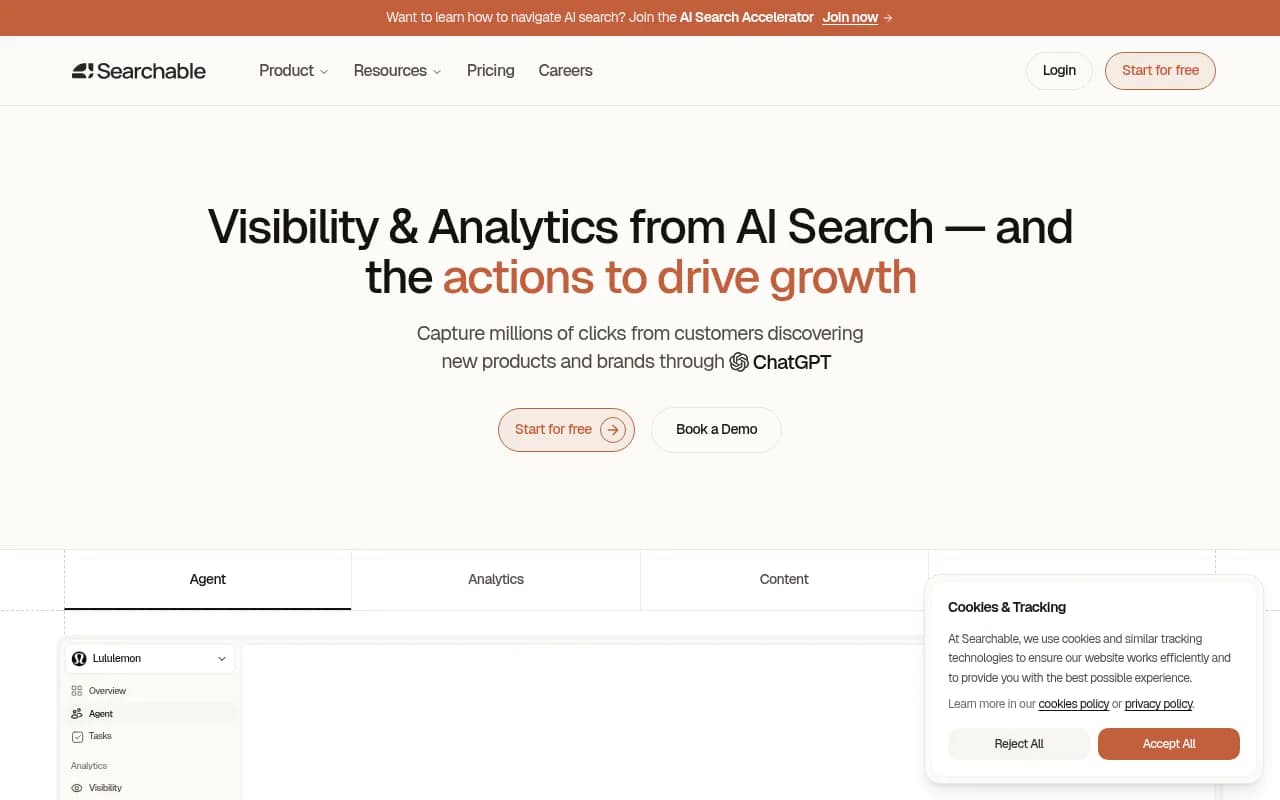
Searchable takes a similar approach, combining AI visibility tracking with built-in content generation. Worth evaluating if you want an alternative to Promptwatch, though it has less depth on crawler analytics and prompt volume data.
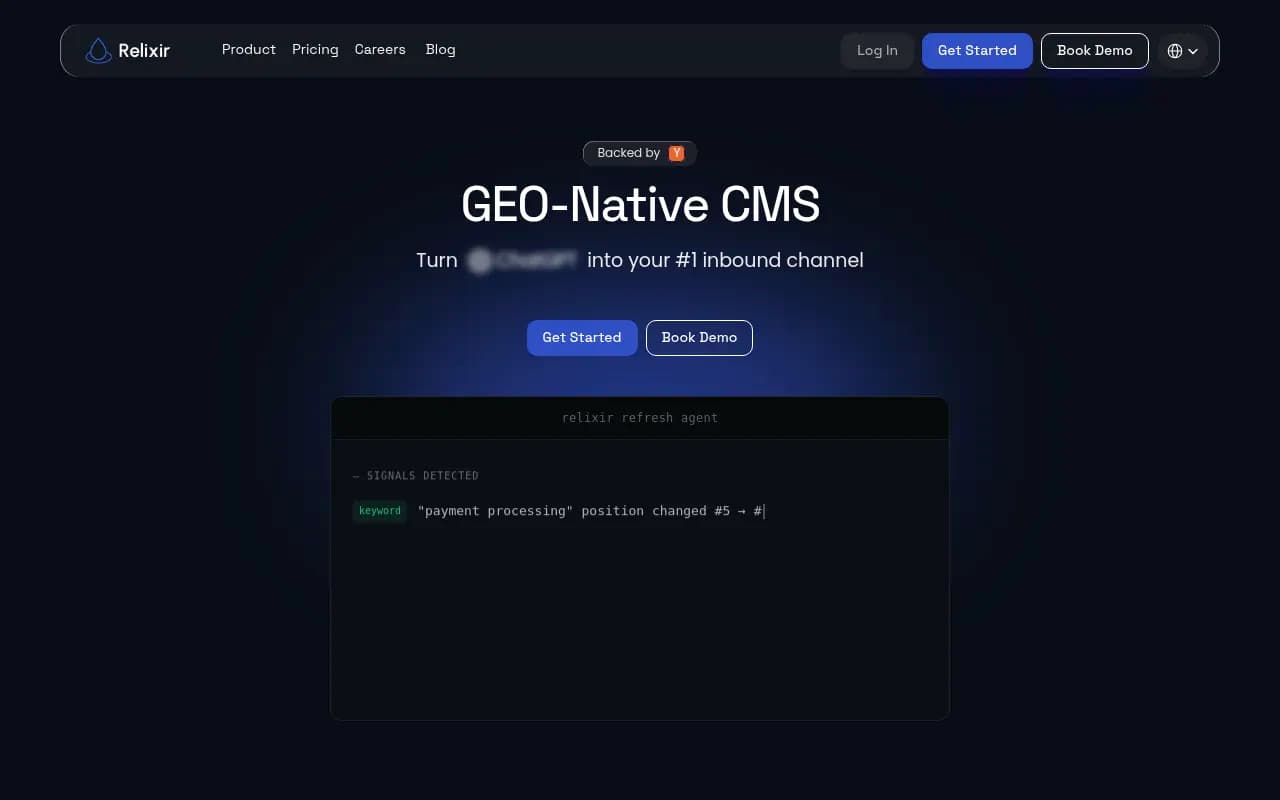
Relixir is positioned for enterprise brands and goes deep on GEO workflow automation. Strong for large teams that need structured content pipelines tied to AI visibility data.
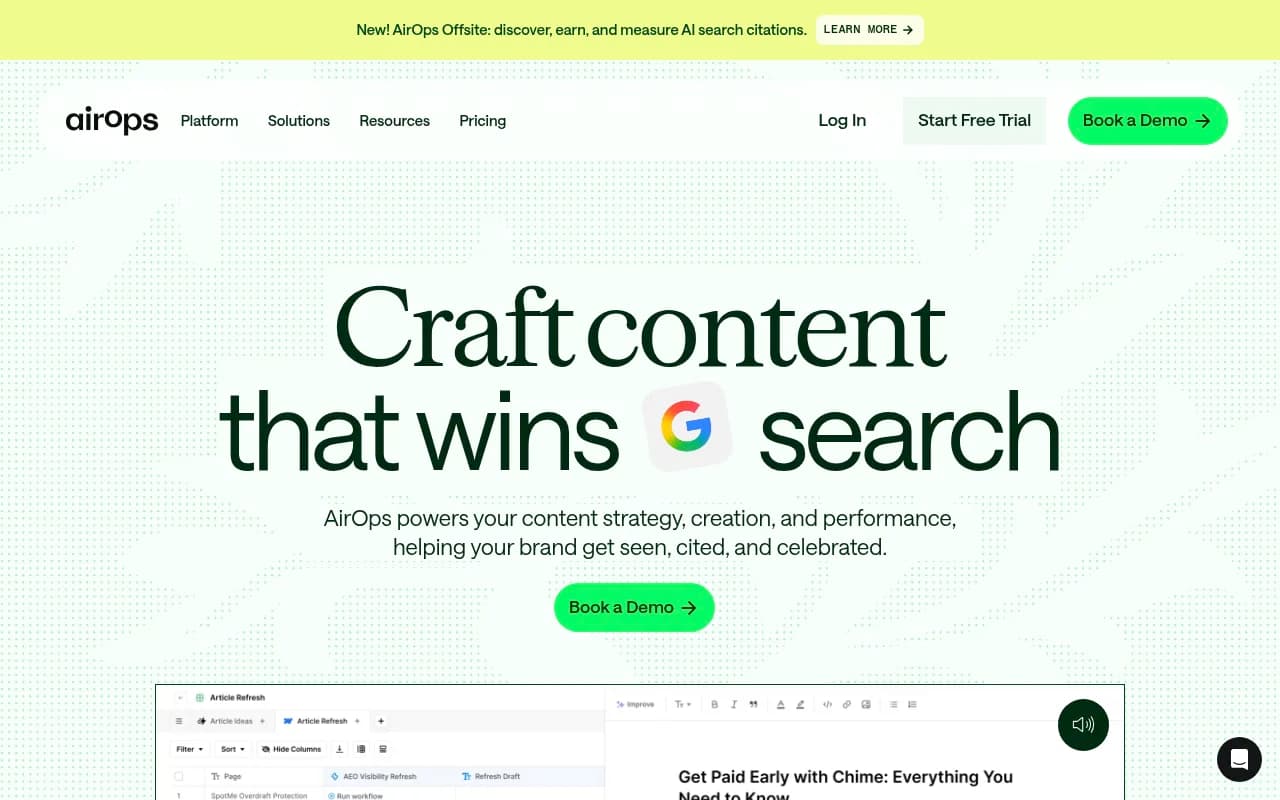
AirOps focuses on content engineering for AI search -- building content workflows that are explicitly designed to earn citations. Less of a monitoring tool, more of a production system for teams already sold on GEO.
Dedicated monitoring platforms
Profound is the strongest pure monitoring platform in 2026. It covers 9+ AI engines with detailed brand mention tracking, sentiment analysis, and competitive benchmarking. The reporting is enterprise-grade. It doesn't generate content, but if your team has writers and just needs the data layer, Profound is hard to beat.
Profound

AthenaHQ is monitoring-focused with good competitive heatmaps and prompt-level data. It's cleaner and easier to set up than Profound but has less depth on the analytics side.

Otterly.AI covers ChatGPT, Perplexity, and Google AI Overviews with a simple interface. Good for teams that want basic brand mention tracking without a steep learning curve. No content generation, no crawler logs.
Otterly.AI

Peec AI is a solid mid-market monitoring option. It tracks mentions across major AI models and has decent competitive reporting. Like Otterly, it stops at the monitoring layer.

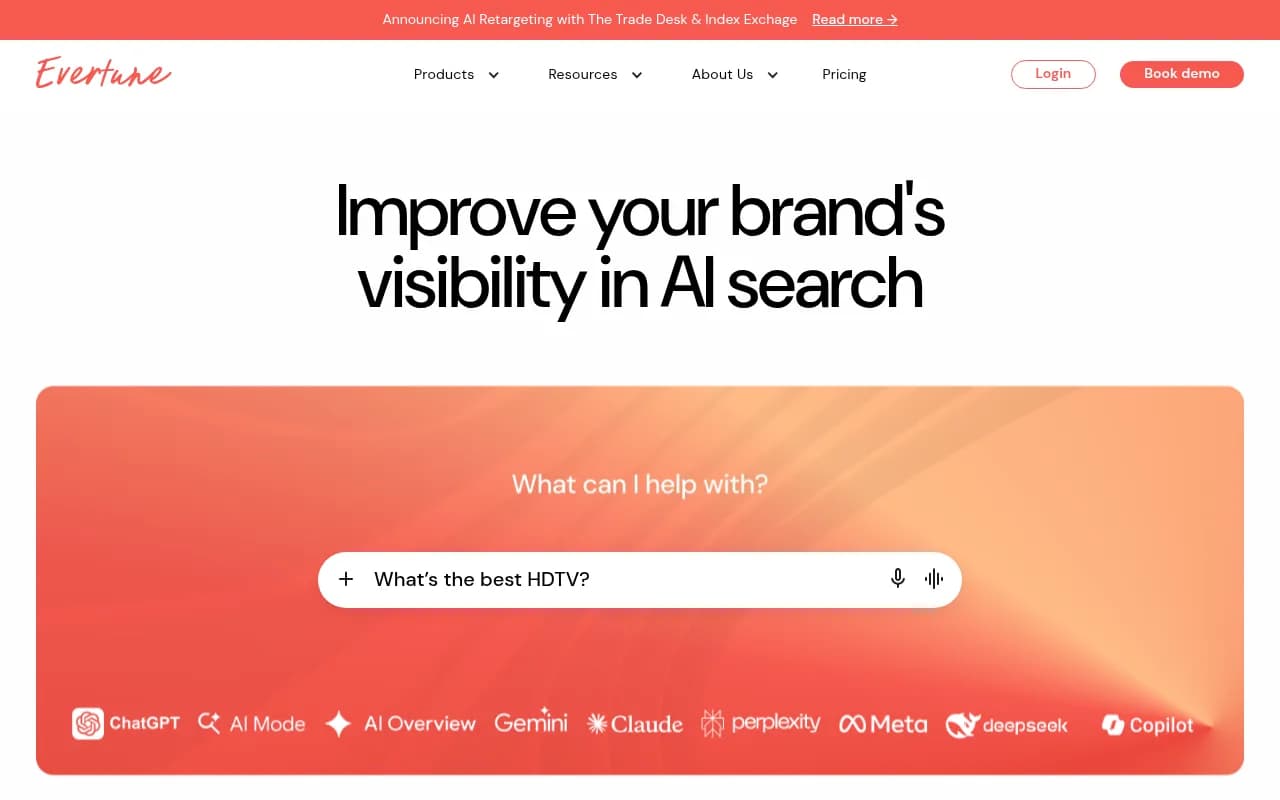
Evertune targets Fortune 500 brands with enterprise-grade AI visibility tracking and GEO insights. Strong on multi-model coverage and brand perception analysis.
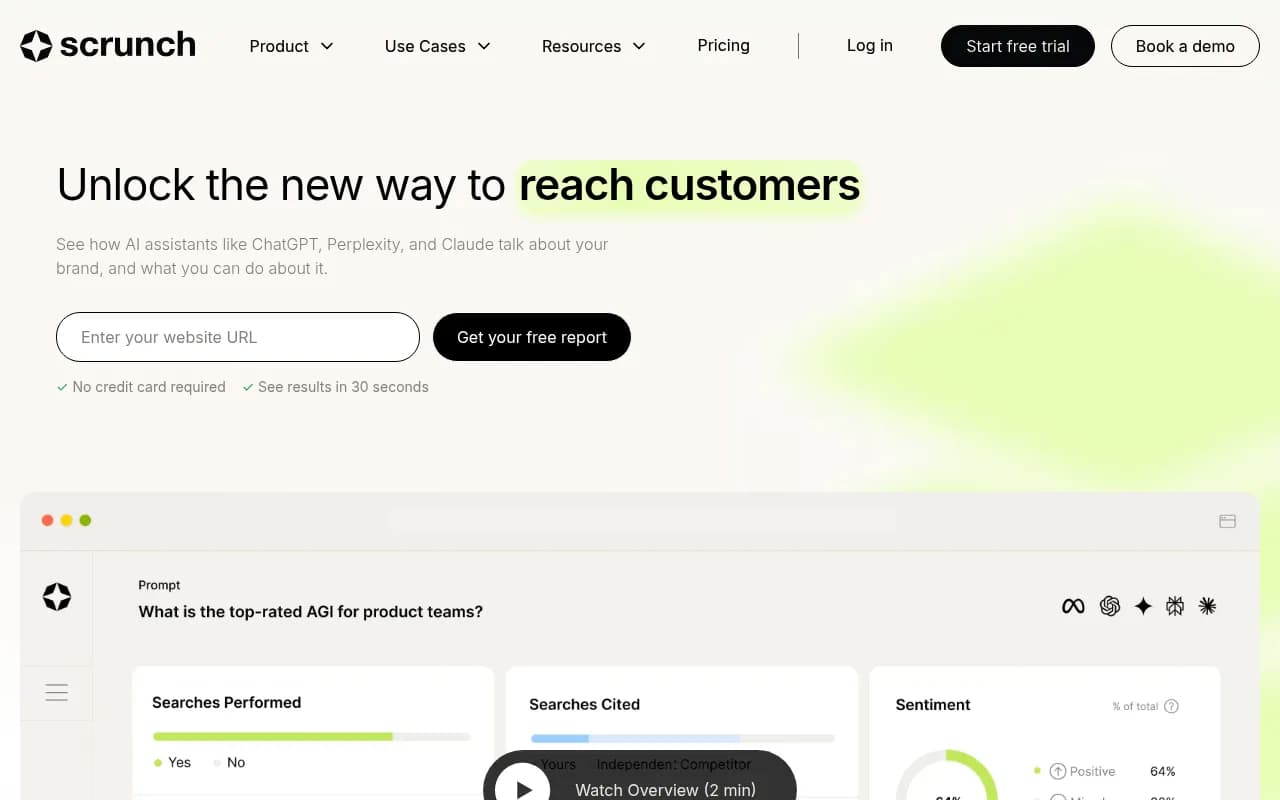
ScrunchAI tracks brand mentions across LLMs with a focus on citation source analysis -- useful for understanding which external pages are driving your AI visibility.
SEO suite add-ons
Semrush has added AI visibility features to its platform, including prompt tracking and brand mention monitoring. The advantage is consolidation -- if your team already lives in Semrush, you don't need another tool. The limitation is that Semrush uses fixed prompts rather than dynamic prompt intelligence, and there's no AI traffic attribution.
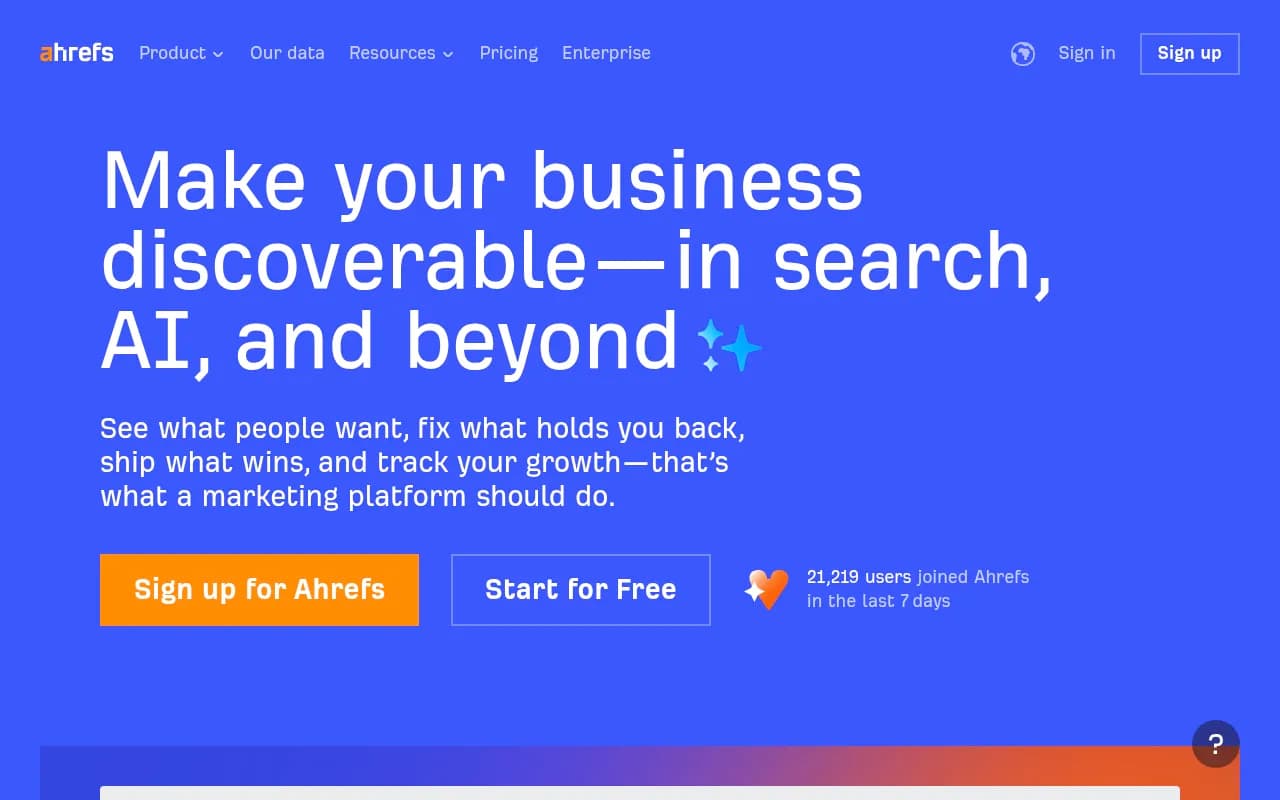
Ahrefs launched Brand Radar for AI search visibility. Similar story: convenient for existing Ahrefs users, but fixed prompts and no content generation or attribution make it a supplementary feature rather than a primary GEO tool.
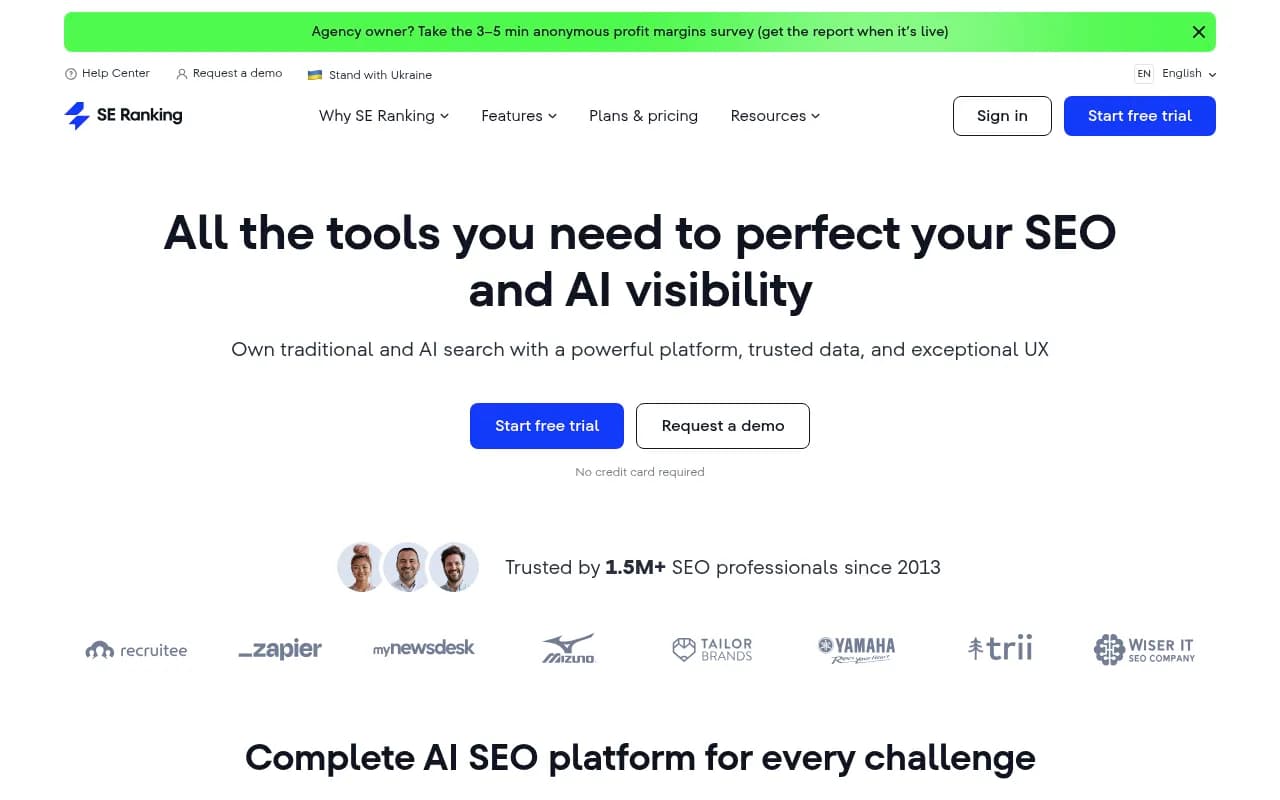
SE Ranking has added AI visibility tracking to its all-in-one SEO platform. Decent coverage for the price, especially for smaller teams that want SEO and GEO in one subscription.
Lightweight trackers
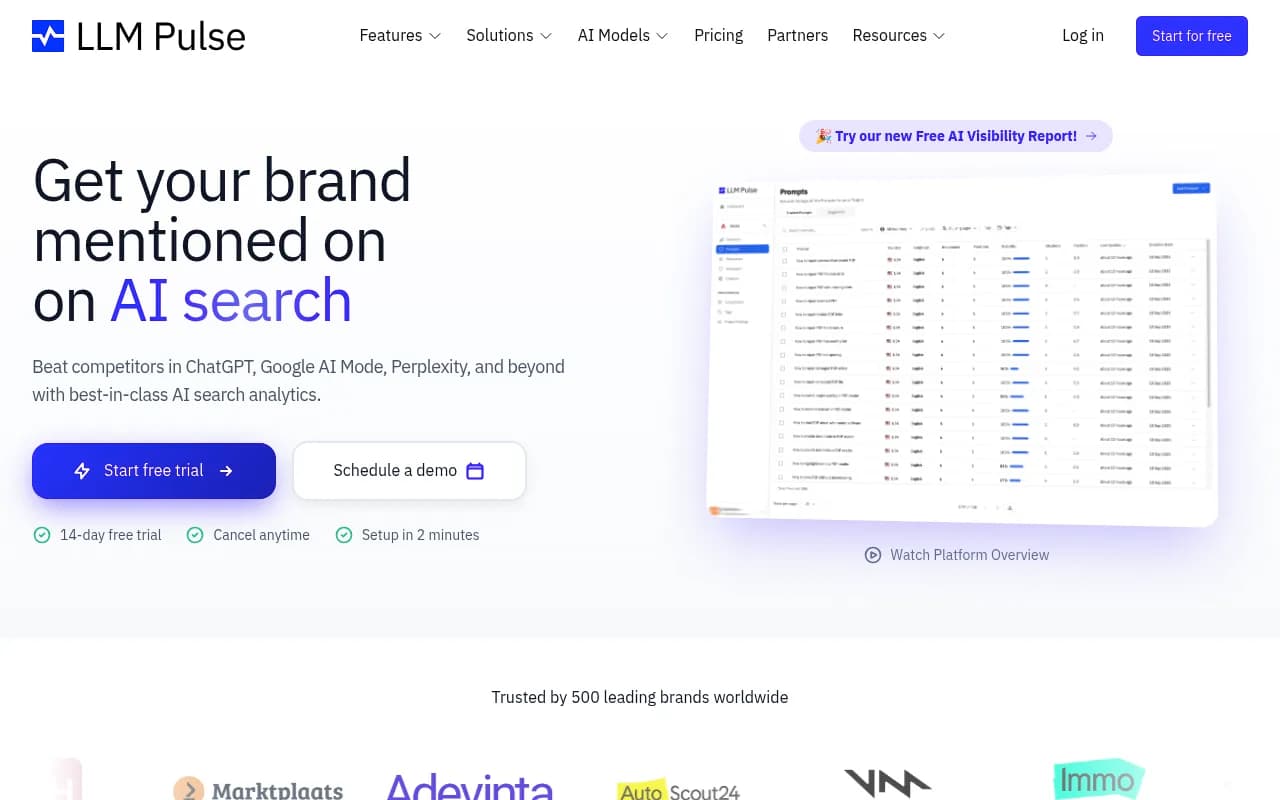
LLM Pulse tracks brand visibility across ChatGPT, Perplexity, and a handful of other models. Simple setup, affordable, good for teams just getting started with AI visibility monitoring.
Rankshift focuses on brand visibility tracking across ChatGPT and Perplexity specifically. Clean interface, easy to use, limited in scope.

Goodie AI monitors AI search visibility at a basic level. Fine for a quick check, not for ongoing optimization.
TrackMyBusiness lets you see what ChatGPT, Gemini, and Perplexity say about your brand. Entry-level tool, useful for small businesses doing a first audit.
Feature comparison table
| Tool | AI models covered | Content generation | Crawler logs | Prompt volume data | Competitive gaps | Starting price |
|---|---|---|---|---|---|---|
| Promptwatch | 10+ | Yes (Content Agents) | Yes | Yes | Yes | $99/mo |
| Profound | 9+ | No | No | Limited | Yes | Custom |
| AthenaHQ | 6+ | No | No | Yes | Yes | Custom |
| Otterly.AI | 3 | No | No | No | Basic | ~$99/mo |
| Peec AI | 5+ | No | No | No | Yes | ~$79/mo |
| Searchable | 5+ | Yes | No | Limited | Yes | Custom |
| Semrush | 3 | No | No | No | No | $139/mo |
| Ahrefs | 3 | No | No | No | No | $129/mo |
| SE Ranking | 4+ | No | No | No | Basic | $65/mo |
| LLM Pulse | 4 | No | No | No | No | ~$29/mo |
| Evertune | 6+ | No | No | Limited | Yes | Custom |
| ScrunchAI | 5+ | No | No | No | Yes | Custom |
How to choose the right tool for your situation
You're a marketing team that needs to act, not just monitor
Go with a full optimization platform. The monitoring data is only useful if you can do something with it. Tools like Promptwatch close the loop -- you see the gap, generate the content, track the result. Monitoring-only tools will give you a list of prompts you're missing and leave you to figure out the rest.
You're an enterprise brand with a dedicated content team
A dedicated monitoring platform like Profound or AthenaHQ might be enough. Your writers can take the competitive gap data and run with it. The tradeoff is that you're paying for two tools (monitoring + content) instead of one.
You're already deep in Semrush or Ahrefs
Start with their built-in AI visibility features. They're not as deep as dedicated platforms, but they're free within your existing subscription and give you a baseline. If you find yourself needing more -- prompt volume data, content gap analysis, crawler logs -- that's when you add a dedicated GEO tool.
You're a small business or solo marketer
A lightweight tracker like LLM Pulse or TrackMyBusiness gives you a starting point without a big investment. Run it for a month, see where you're missing, and decide whether you need more firepower.
You're an agency managing multiple clients
Look for platforms with multi-site support, white-label reporting, and agency pricing. Promptwatch has agency and enterprise tiers. Rankscale is built specifically for agency use cases.
What to look for when evaluating any GEO tool
Real interface tracking vs. API-only. AI models can return different answers in their user-facing products than through their APIs. Tools that only query APIs may miss what your customers actually see. Ask vendors how they collect data.
Prompt coverage and customization. Can you add your own prompts, or are you stuck with a fixed list? Fixed prompts are fine for benchmarking but miss the long-tail queries where a lot of AI discovery happens.
Prompt volume and difficulty data. Knowing you're missing a prompt is one thing. Knowing that prompt gets asked 50,000 times a month and has low competition is what lets you prioritize.
Multi-model coverage. At minimum, you want ChatGPT, Perplexity, Claude, Gemini, and Google AI Overviews. Grok, DeepSeek, and Copilot are growing fast and worth tracking if your audience skews technical or international.
Competitive gap analysis. The most actionable data in GEO is knowing which prompts your competitors appear in that you don't. Not all tools surface this clearly.
Crawler log access. If you want to understand why your content isn't being cited -- not just that it isn't -- you need to see which pages AI crawlers are actually visiting. This is a differentiating feature that most platforms lack.
Content generation. If your team is small or already stretched, having content generation built into the same platform saves a lot of context-switching.
Traffic attribution. Can the tool connect AI visibility to actual website traffic and revenue? This is the hardest problem in GEO analytics and most tools don't solve it yet.
The monitoring-only trap
One thing worth naming directly: a lot of teams buy a GEO monitoring tool, spend a few weeks looking at dashboards, and then... don't do much with the data. This is the monitoring-only trap.
Visibility data without a clear action path tends to sit in reports. You know you're missing 40 prompts. You know Competitor X appears in 70% of them. But turning that into a content brief, getting it written, published, and tracked -- that's a separate workflow that most monitoring tools don't support.
The platforms that have figured this out are the ones that embed content creation directly into the gap analysis workflow. You see the gap, you click "create brief," the tool generates a structured article grounded in the prompt data, you publish it, and the same platform tracks when it gets crawled and cited. That's a closed loop.
A practical stack for most teams
If you're building a GEO stack from scratch in 2026, here's a reasonable starting point:
For most teams, one well-chosen platform beats a stack of three mediocre ones. If you're a mid-market brand with a content team, Promptwatch covers monitoring, gap analysis, content generation, and citation tracking in one subscription. That's usually enough.
If you're enterprise and already have Semrush, keep it for traditional SEO and add a dedicated GEO platform for the AI layer. Profound or AthenaHQ for monitoring, Promptwatch or Searchable if you want content generation included.
If you're just starting out, run a lightweight tracker for 30 days to understand your baseline, then upgrade once you know what you're actually trying to fix.
The bottom line
GEO tools are no longer optional for brands that care about discovery. AI search is where a growing share of your potential customers are forming opinions and making decisions -- and most brands have no idea how they appear in those answers.
The good news is the tooling has matured enough that you can get real data, real competitive intelligence, and real content workflows in a single platform. The bad news is the market is noisy and a lot of tools promise more than they deliver.
The clearest filter: does the tool help you fix what it finds, or does it just show you the problem? If it's the latter, you'll need to decide whether your team has the capacity to act on raw monitoring data. Most don't. That's why the platforms that close the loop are pulling ahead.