Key takeaways
- AI visibility is a leading indicator. Calls, bookings, direction requests and store visits are the outcomes you have to connect it to.
- You will never get perfect attribution for local. Aim for a defensible chain of evidence: visibility, then citations, then AI referrals and branded demand, then calls and bookings.
- A call tracking setup, GA4 channel groups for AI referrals, Google Business Profile metrics and a booking-source question on every form cover most of the gap.
- Third-party stats like "76% of near me searches lead to a store visit" are fine for context but are not proof of your ROI. Use your own numbers.
- Report on a monthly cadence with a before/after baseline, and be honest about what is correlation.
Why local GEO ROI is harder to prove than SEO ROI
Local SEO had a reasonably clean story. You ranked in the map pack, someone tapped "call" or "directions", and Google Business Profile counted it. GEO breaks that story in three places.
First, AI answers often finish the job inside the chat. Someone asks ChatGPT for the best emergency plumber near them, reads three names, and then either clicks, searches your brand name on Google, or calls the number they saw. Only one of those leaves a clean referral trail.
Second, most AI-assisted visits arrive as direct or branded organic traffic. The AI never shows up in your analytics as a source.
Third, local conversions happen offline. A phone call, a walk-in, a booking made through a third-party platform. None of that lands in GA4 by default.
So the goal is not a single magic number. It is a chain you can defend in front of a skeptical owner or CFO. Here is how to build that chain.
The measurement chain: from AI answer to revenue
Think of it in five links. If you can measure each one, even roughly, the story holds together.
| Link | What you measure | Where the data lives |
|---|---|---|
| 1. Visibility | Are you named in AI answers for local prompts? | AI visibility tracker |
| 2. Citation | Which of your pages or listings get cited? | Citation reports, crawler logs |
| 3. Traffic and demand | AI referrals, branded search lift, GBP views | GA4, Search Console, GBP |
| 4. Action | Calls, form fills, direction requests, bookings | Call tracking, CRM, GBP |
| 5. Revenue | Closed jobs, covers, sales value | CRM, POS, booking system |
Most local teams stop at link 1 or jump straight to link 5 and guess. The value is in linking them with consistent tracking over time.
Step 1: Set a baseline before you touch anything
You cannot show lift without a starting point. Before changing pages, listings or reviews, capture four months of history if you have it, and at least one clean month if you don't.
Record:
- Monthly calls (tracked and untracked), form submissions, bookings and walk-in counts where available
- Google Business Profile calls, direction requests, website clicks and profile views
- Branded search impressions and clicks in Google Search Console
- GA4 sessions from AI referral sources
- Your AI visibility on a fixed set of local prompts
That last one matters more than people think. Build a prompt list of 20 to 50 realistic local queries: "best dentist in [city]", "emergency HVAC repair near [neighborhood]", "Italian restaurant open late in [city]", plus comparison and branded variants. Keep it fixed so month-over-month changes mean something.
For tracking, tools like Promptwatch can monitor those prompts across ChatGPT, Google AI Overviews, Perplexity and others, and track by country, with state and city tracking on higher plans, which is what you want for local.

If you want to compare other options, the GEO software directory at bestgeosoftware.com lists a long field of trackers.
Step 2: Track the visibility inputs that actually predict leads
A raw mention count is weak evidence. Better inputs are the ones that tell you why a business is or is not being recommended.
Share of voice on local prompts
For a set of prompts, what percentage of answers name you versus competitors? This is the cleanest top-of-chain metric for local, because the competitive set is small. If three dentists in a city get named in most answers and you are in 10%, that is a coverage problem you can work on.
Which assets get cited
Promptwatch Data looked at ChatGPT citations from Sep 28 to Oct 4, 2026 and found product pages were the most cited content type at 22.4%, with landing pages at 16.8%. For branded prompts, reviews rose to 5.6%, more than three times their overall share, and FAQ pages reached 4.8%. See the full breakdown in Promptwatch's ChatGPT citation share by content type report. The practical read for local: service pages, location pages, FAQ pages and reviews on trusted third-party sites are your citable assets. Those are what to measure and improve.
Query phrasing
Promptwatch's ChatGPT query fanouts data shows average fanout query length dropping to about 53 characters from April 2026. Short keyword strings. For a local business that means "service + city" phrasing on pages and headings does real work. It also means you can predict the searches the AI is running and check whether your pages match them.
Third-party listings
For location-driven industries, third-party platforms matter a lot. In Promptwatch's travel prompt citation data (Sep 28 to Oct 4, 2026), booking and search sites earned more than half of the citations shown, with Skyscanner, Going and Tripadvisor leading. If you are a hotel, tour operator or restaurant, accurate listings on those platforms are part of your GEO footprint, and part of what you should audit.
Step 3: Capture AI-referred traffic properly
Some AI platforms do pass referrers. Set that up so it is not buried in "Referral" or "Direct".
GA4 setup
- In GA4, create a custom channel group called "AI search".
- Add rules matching session source for chatgpt.com, chat.openai.com, perplexity.ai, gemini.google.com, copilot.microsoft.com, claude.ai and similar.
- Place it above the default Referral rule so it takes priority.
- Build an exploration report with landing page, city and key event (call click, form submit, booking).
A regex for the source condition looks like this:
chatgpt\.com|openai|perplexity|gemini\.google|copilot\.microsoft|claude\.ai
The numbers will be small for most local businesses, and that is fine. What matters is the conversion rate of those visits compared with others. Visitors who arrive after an AI recommendation tend to be well-qualified, but check this against your own data rather than assuming it.
Server-side evidence
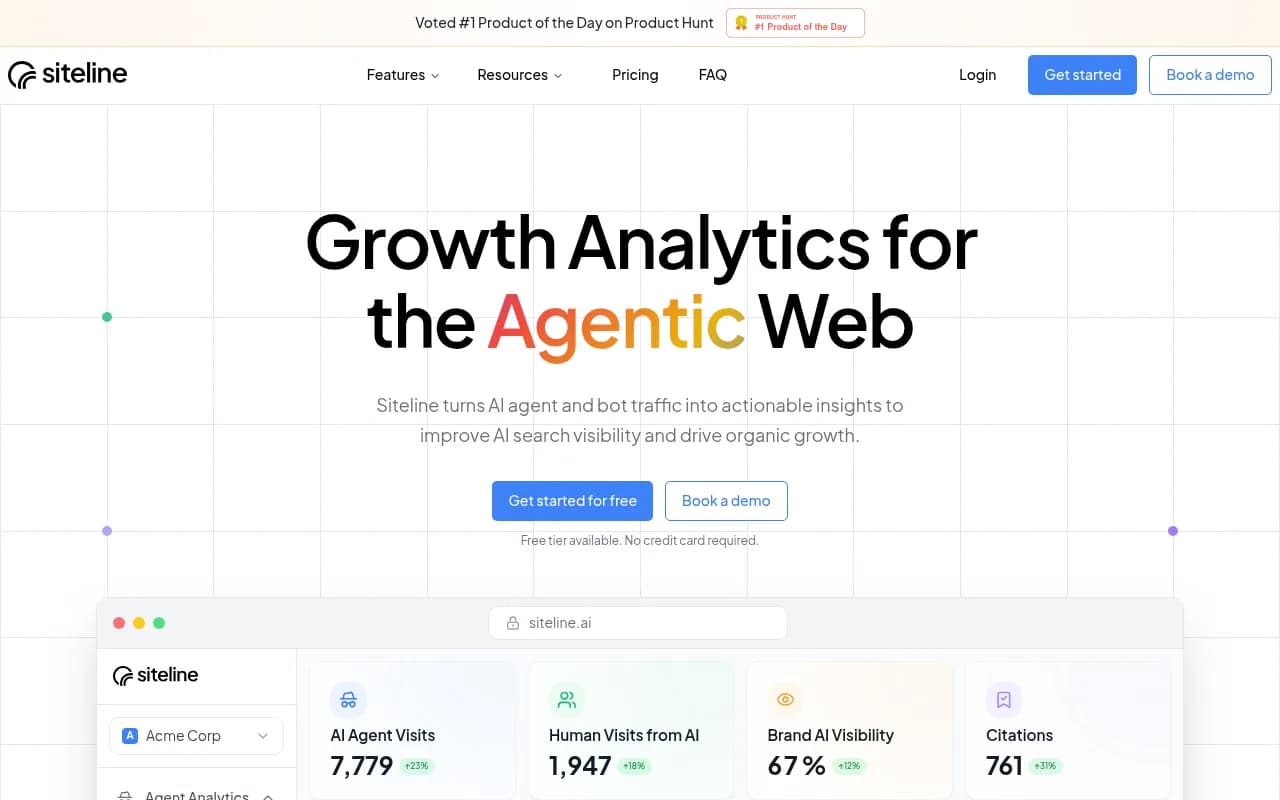
Analytics only sees visitors who run JavaScript and carry a referrer. AI crawler logs tell you something different: whether AI systems can read your location and service pages at all, and which pages they fetch. If your booking pages throw errors for GPTBot or your location pages are blocked by robots.txt, no amount of content work will show up as ROI. Promptwatch includes IP-verified crawler logs for this, and tools such as Siteline AI focus on AI agent traffic analytics as well.
Search Console as the quiet signal
A lot of AI influence shows up as branded search growth. Track branded impressions and clicks for the business name plus the business name and city. A rise in branded queries after visibility gains is soft evidence, but it is real, especially when it coincides with a rise in your share of voice on non-branded prompts.
Step 4: Count the offline actions
For local businesses, this is where proof is won or lost.
Calls
Use dynamic number insertion on your website so you can see which sessions produced calls, and a separate tracking number on your Google Business Profile so you can see profile-originated calls. Record and transcribe a sample to classify call quality: new customer, existing customer, wrong number, spam. A call-tracking tool like CallRail is the usual choice here, and PinMeTo's guidance on local ROI recommends sampling recorded calls to estimate conversion rates rather than treating every call as a lead.
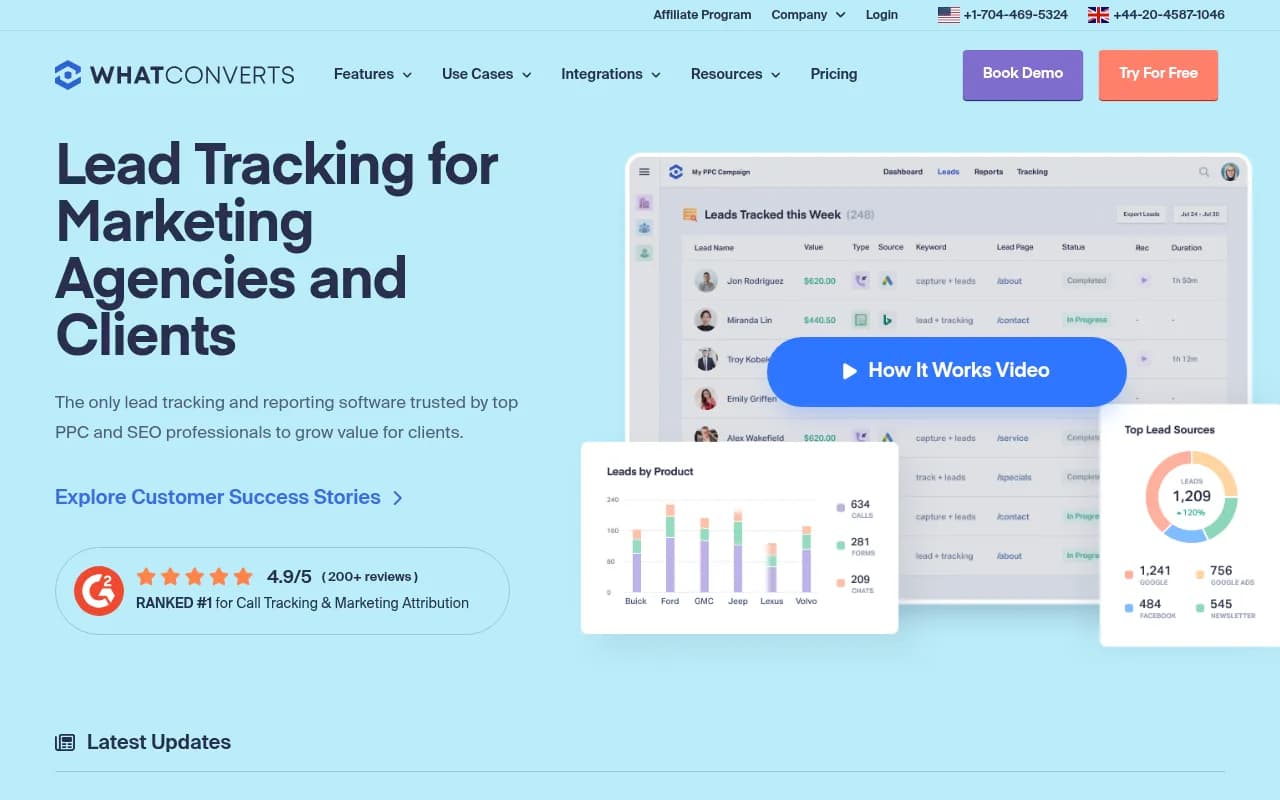
If you are on a lead-tracking platform, WhatConverts tracks calls, forms and chats back to a source in one place.
Bookings and forms
Add a required or strongly encouraged field: "How did you hear about us?" with options like Google Maps, Google Search, ChatGPT or another AI assistant, Friend or family, Social media. Self-reported attribution is imperfect but it is the only way to catch the "AI told me about you, then I searched your name" path. In practice, you will find AI mentions in this field well before they show up in referral reports.
For restaurants and appointment-based businesses, ask the same question at booking confirmation or on the reception checklist.
Direction requests and store visits
Google Business Profile reports direction requests, calls and website clicks. These are proxies, not visits. A frequently recycled stat says 76% of near-me mobile searches lead to a store visit within 24 hours, but that comes from a Feb 2026 agency blog and is a third-party claim, so do not use it as proof of your ROI. Use it only as industry context if at all.
For real visit evidence, use foot-traffic providers such as Placer.ai or Foursquare if you are multi-location and the budget allows. For single locations, a simple door counter, a POS "new customer" flag, or a coupon code unique to AI-assisted channels does the same job more cheaply.
CRM closed-loop
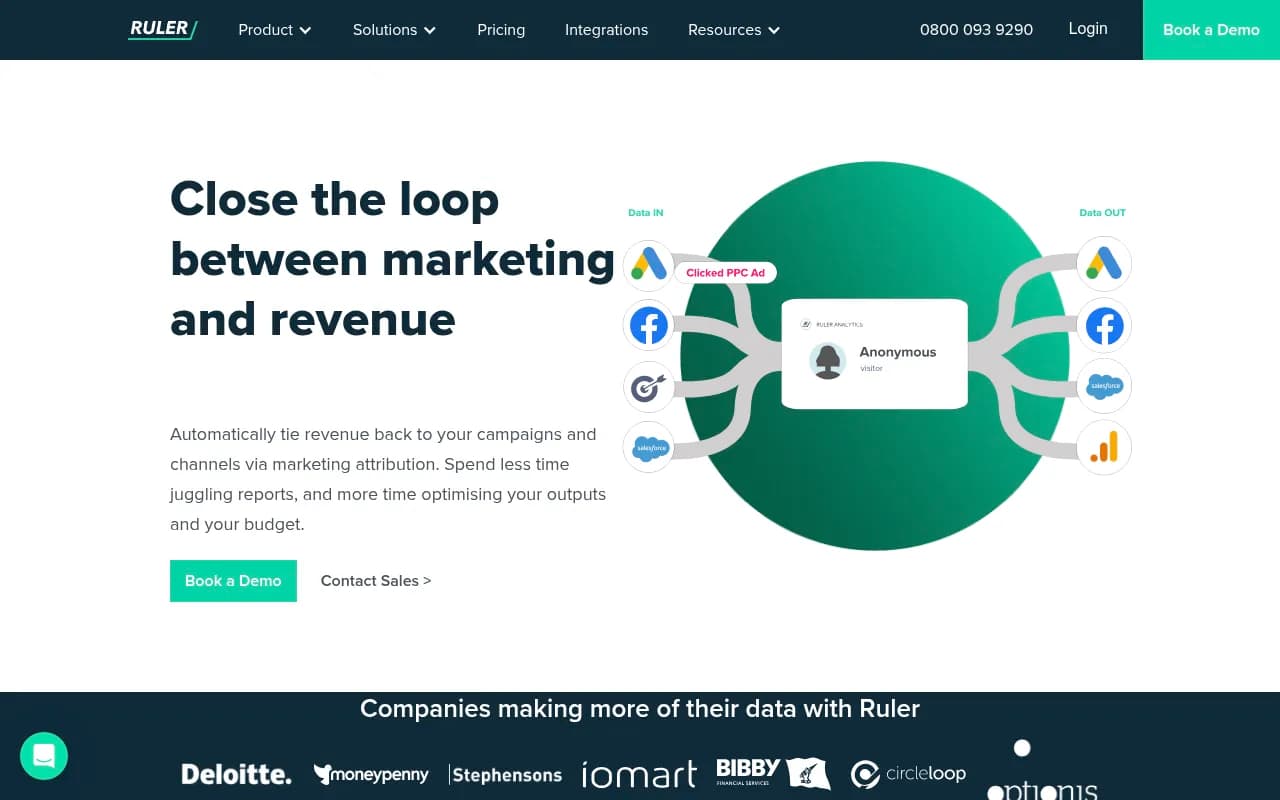
Push call, form and booking data into your CRM, and mark which ones became paying customers. Ruler Analytics is one option that connects marketing source to revenue for call and form leads.
Step 5: Assemble a defensible attribution model
Perfect attribution does not exist here. A better question is: what evidence would convince a reasonable skeptic that GEO work contributed to revenue? Layer these four types.
| Evidence type | What it shows | Strength |
|---|---|---|
| Direct referral | GA4 sessions from AI platforms that converted | Strong but small |
| Self-reported | Customers saying AI recommended you | Medium, catches hidden paths |
| Correlation | Visibility gains followed by lift in branded search, GBP actions and calls | Medium, needs a baseline |
| Controlled change | Improvements on some locations or services, not others | Strongest if feasible |
The controlled approach is underused. If you have multiple locations or service lines, apply GEO work (page improvements, listing cleanup, review requests, FAQ content) to a subset first, keep the rest unchanged for 6 to 8 weeks, and compare. It is not a clinical trial, but it is far more convincing than a single line going up.
Step 6: Put a value on it
Once you have counts, convert them into money.
- Leads from AI-influenced sources: direct referrals plus self-reported AI mentions plus an estimated share of branded lift.
- Close rate: from your CRM or call sampling.
- Average job or order value.
- Gross margin, if you want to be conservative.
A simple example. In a month you log 14 AI-attributed leads (6 tracked referrals, 8 self-reported). Your close rate on those is 45%, and average job value is $620. That is 14 x 0.45 x $620 = about $3,900 in revenue. Compare that with the monthly cost of tooling and content, and you have a working ROI figure. State clearly that 8 of the 14 are self-reported and you will have a more credible number than one that pretends to be exact.
If some of your visibility gain comes through the Maps and listing side, remember that your existing local SEO and reviews are doing part of the work. Do not claim all lift for GEO. Split it, or report it as combined local discoverability and show the AI-specific pieces separately.
Step 7: Tools by job
No single tool covers the whole chain, so here is how the pieces fit.
| Job | Example tools |
|---|---|
| AI visibility and citation tracking | Promptwatch, Otterly.AI, Peec AI, Profound |
| Local listings and reputation | BrightLocal, Yext, Moz Local, Birdeye |
| Local rank grids | Local Falcon, Local Rank Tracker |
| Web and search analytics | Google Analytics, Google Search Console |
| Calls and lead-source tracking | WhatConverts, Ruler Analytics, CallRail |
| Multi-location marketing suites | SOCi, Uberall, Chatmeter, Partoo |
A few notes from using this kind of stack. Prompt trackers that only report mentions leave you with link 1 of the chain and nothing else, so pick one that also shows citations, traffic and crawler activity if you want to tie visibility to outcomes. Promptwatch covers visibility, citations, crawler logs and visitor analytics, plus an Action Board and Content Agent for fixing gaps, which is why it suits this kind of reporting. For listings and reviews, BrightLocal is a common choice for single and multi-location audits.
For multi-location brands, Yext and SOCi handle listing distribution and local marketing at scale, and both now pitch AI search visibility.
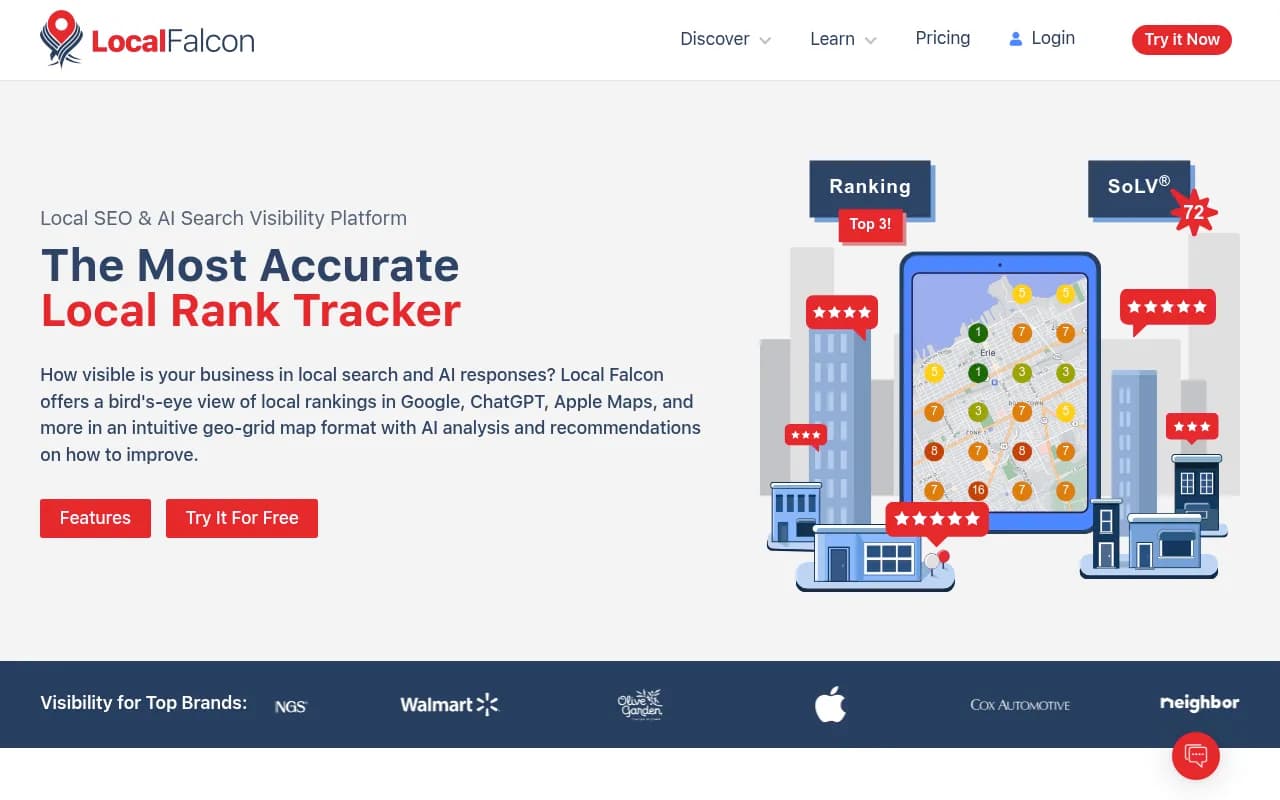
If you want visual local ranking data to sit beside AI data, Local Falcon provides geo-grid rank tracking.
For more tracker options, the AI rank tracking directory at ai-rank-tools.com is a useful pointer.
Step 8: What to do about the evidence gaps
A few honest limits you should tell stakeholders about up front.
- Zero-click AI answers. Some customers will see your name in an AI answer and call without ever visiting your site or searching your brand. Self-reported attribution and call questions ("how did you find us?") are your only catch.
- API versus real interface. User-facing AI answers can differ from API outputs, so use a tracker that monitors the real interfaces if you want the numbers to match what customers actually see.
- Volatility. AI answers change. Promptwatch Data showed reddit.com's share of ChatGPT citations fall from about 4% to 0.5% on August 14, 2026, which is a reminder that citation patterns can move quickly. Look at trends over weeks, not single-day readings. See the Reddit citations report.
- Social. Per Promptwatch Data for Sep 28 to Oct 4, 2026, ChatGPT drew just 0.46% of citations from social platforms, while Google AI Overviews drew 12.2%. If your local audience skews toward AI Overviews, social profiles may matter more than they do in ChatGPT.
A monthly reporting template
Keep it to one page. Owners read one page.
- Visibility: share of voice and average position across your fixed local prompt set, versus last month and versus baseline.
- Citations: the top pages and third-party listings being cited, and any new ones.
- Traffic and demand: AI referral sessions, branded search clicks, GBP views.
- Actions: tracked calls, direction requests, form fills, bookings, and the share that say they came via AI.
- Revenue: estimated closed revenue from AI-influenced leads, with the confidence level stated.
- Changes made and next actions: what you fixed (pages, listings, reviews, schema, crawl issues), and what comes next.
Promptwatch's Action Board and scheduled PDF reports can handle items 1, 2 and 6 automatically. The rest comes from your analytics, call tracking and CRM.
A practical 90-day plan
Days 1 to 30
Build the baseline. Set up GA4 AI channel group, tracking numbers, the "how did you hear about us" field, and your prompt list. Audit crawl access and listings.
Days 31 to 60
Fix the obvious gaps: location and service pages with "service + city" headings, FAQ content, consistent name-address-phone data across directories, a review request routine. Keep a change log with dates.
Days 61 to 90
Compare against baseline. Pull self-reported attribution, call samples and GBP trends. Write up the first ROI estimate with caveats, and decide whether to expand to more locations or services.
When to bring in help
If you do not have the time to run the measurement setup and the content work, a specialist can take it on. 1001 SEO Media offers GEO and local SEO services, with transparent monthly reporting, which is the same kind of one-page reporting described above.
Bottom line
Local GEO ROI is provable if you accept a chain of evidence instead of a single attribution number. Baseline first, track visibility on a fixed prompt set, capture AI referrals and branded demand, count calls and bookings with source questions, then convert to revenue with stated assumptions. Start with the GA4 channel group and the "how did you hear about us" field this week. They cost almost nothing and they produce the first usable data point.