Key takeaways
- Start with 15 to 20 real customer questions, not your brand name. Run each one several times in a fresh ChatGPT chat with web search on, and log every business named.
- One answer proves nothing. ChatGPT varies its output between runs, so you want counts (competitor named in 14 of 18 answers, you in 2), not anecdotes.
- Ask ChatGPT for its sources after each answer. The URLs it lists are the diagnosis: each one is a place your competitor is present and you are not.
- The most useful output is a per-prompt loss map, not a leaderboard. It tells you which questions you lose and why.
- Manual checks work for a first baseline. Once you want daily runs across several AI models, a tracking tool saves hours.
Why local competitor tracking in ChatGPT is different
In Google, a customer sees ten links and a map pack. In ChatGPT, they often see a short list of names, sometimes one. If a plumber, dentist, or accountant gets named and you don't, the customer rarely scrolls further. They call the name they were given.
That makes the question "who gets recommended instead of me?" more urgent than classic rank tracking. A rank tracker tells you where you sit in a list. ChatGPT often skips the list.
There's also a wrinkle for local businesses. ChatGPT builds its answer by searching the web and combining what it finds. It isn't reading your Google Business Profile directly in the way Maps does. It's assembling evidence from directories, review sites, local roundups, and business websites. A competitor with more evidence, or clearer evidence, tends to win.
One published data point: in a 50-query Google AI Mode study from Parvaly, the businesses the AI recommended had a median of 595 Google reviews, while businesses that ranked in Maps but got passed over had a median of 269. That was Google AI Mode rather than ChatGPT, and it's a small study, so treat it as a hint about the kind of evidence that matters, not a rule.
Step 1: Write prompts the way customers type them
The biggest mistake I see is testing your own brand name. Of course ChatGPT knows you if you ask about you. Nobody who's about to hire a plumber types your company name into a chat box first.
Write prompts that force a shortlist. Think of the phrasing of someone under pressure:
- "Best emergency plumber in Tucson"
- "Who should I call for a burst pipe in Tucson tonight"
- "Affordable plumber near Oro Valley"
- "Which dentist in Leeds does same-day crowns"
Use your actual service, your actual city, and the neighborhoods you serve. Vary the intent: urgent, price-driven, comparison, and "who do you recommend" styles all pull different answers.
Where to find real phrasing:
- Sales calls and intake forms (what did the customer say before they found you?)
- Support emails and voicemails
- Google reviews, which often contain the exact words customers use
- People Also Ask boxes and autocomplete for your service plus city
Aim for 15 to 20 prompts. If you only have an hour, start with six.
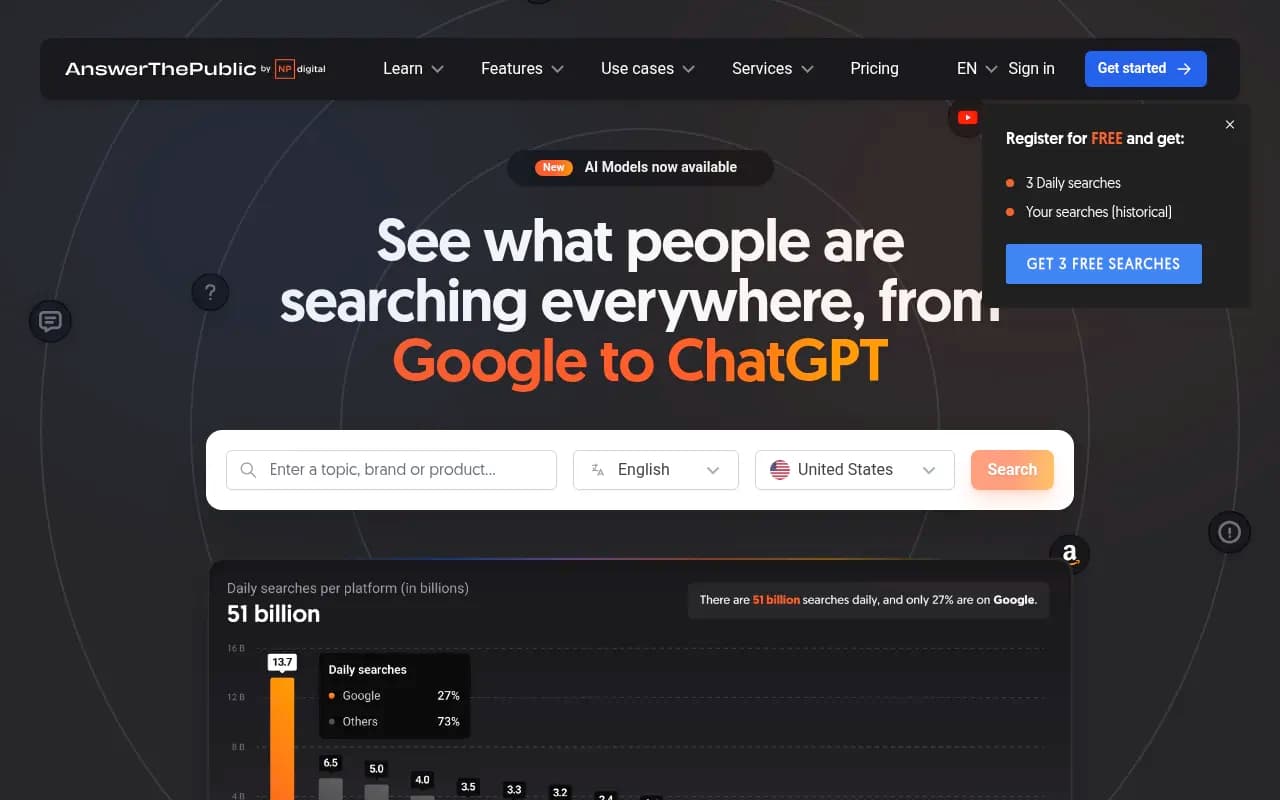
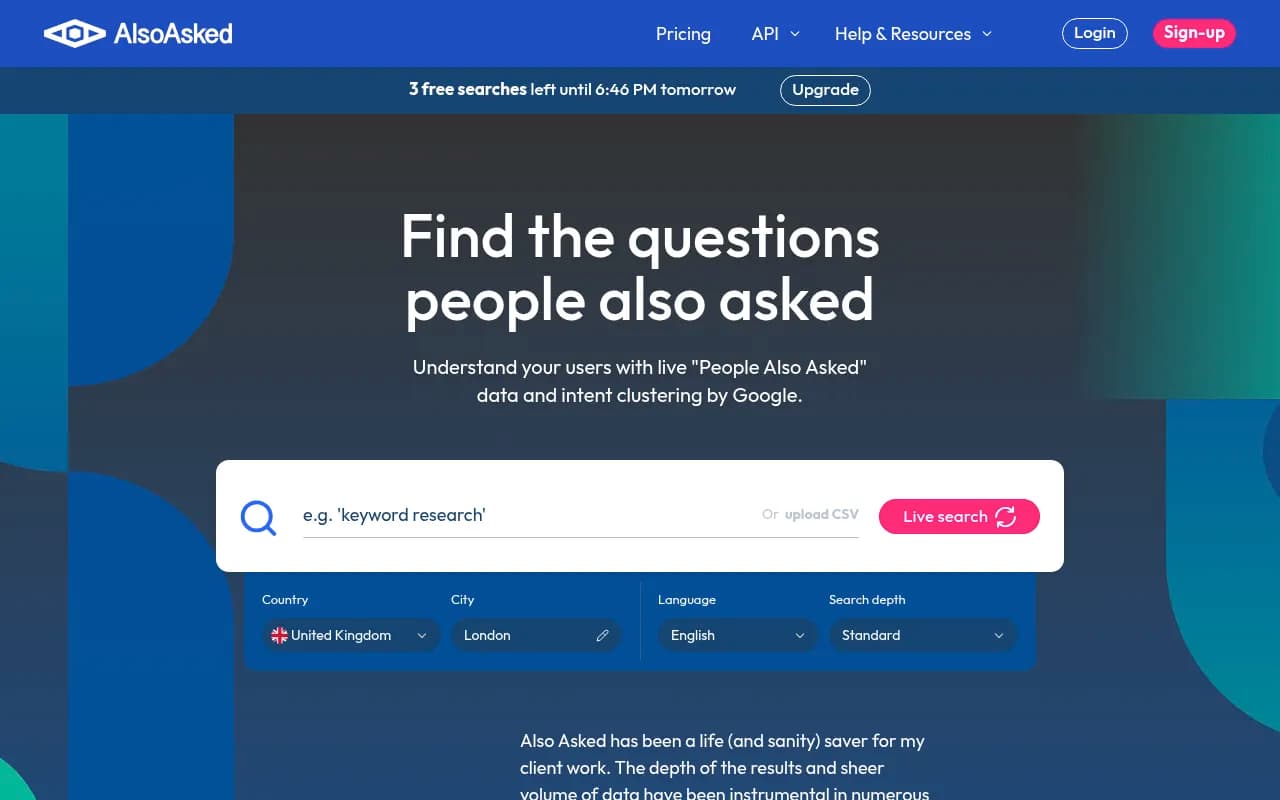
Tools like AnswerThePublic and AlsoAsked can surface question phrasing you hadn't thought of.
Step 2: Run the check manually
For each prompt:
- Open a fresh chat, ideally logged out or in a clean session so your history doesn't bias the result.
- Turn web search on. Results differ noticeably from a plain non-browsing session, and web search is what real customers increasingly use.
- Run the prompt three times, spread over a few days.
- Record every business named, in the order named, and whether you appeared.
- Ask a follow-up: "What sources did you use for that answer?" and save every URL.
A simple spreadsheet is enough:
| Prompt | Run | Businesses named (in order) | You named? | Source URLs |
|---|---|---|---|---|
| Best emergency plumber in Tucson | 1 | A, B, C | No | yelp.com, localroundup.com |
| Best emergency plumber in Tucson | 2 | A, C, D | No | a-plumbing.com |
| Best emergency plumber in Tucson | 3 | A, B, You | Yes (3rd) | yelp.com, your-site.com |
After 18 runs you'll have a baseline. If Competitor A appears in 14 of 18 and you appear in 2, that's your starting number. If nobody appears consistently, nobody owns that question yet, which is an opening.
And a caution: answers vary by session and by user. Don't conclude anything from one result.
Using ChatGPT itself to dig deeper
Beyond sources, a few follow-up prompts are worth trying after an answer:
- "Why did you recommend the first business over the others?"
- "What would make [your business] a better fit for this question?"
- "Which of these has the most recent reviews?"
Take the explanations with salt. The model is generating a plausible rationale, not exposing its internals. But the pattern across many runs often points at real signals like review volume, specific service pages, or local press.
Step 3: Build a per-prompt loss map
A competitor ranking ("we're behind Company A") is vague. A loss map is specific: which questions does each competitor win, and from what kind of source?
Go back through your logged source URLs and categorize them:
| What you see | What it usually means |
|---|---|
| Competitor named, source is a review platform (Yelp, Google, industry directory) | Review volume or recency gap |
| Competitor named, source is a local roundup or news article | They've earned a third-party mention you haven't |
| Competitor named, source is their own service page | They wrote a direct answer to that exact question |
| Competitor named, source is a directory listing with consistent details | Your listings may be inconsistent or missing |
| Nobody consistently named | Open slot. A clear, direct page could win it |
Sort by how often the same competitor wins the same type of source. You'll usually find one or two patterns, not twenty. That's good news, because one or two patterns are fixable.
Step 4: Compare yourself against the winner, source by source
Take the three or four sources a competitor keeps appearing in and compare the two of you directly.
| Check | Where to look | What often separates winner from loser |
|---|---|---|
| Review count and recency | Google profile, Yelp | Total reviews, plus how many arrived in the last 90 days |
| Listing consistency | Google, Yelp, Apple Maps, Bing, industry directories | Same name, address, phone, and hours, character for character |
| Mentions on other sites | Sources ChatGPT cited | Roundups, local news, association pages |
| Pages that answer questions | Both websites | A dedicated page per service and area, with a direct answer near the top |
| Crawlability | View source on both sites | Content that exists in plain HTML versus content rendered by JavaScript |
The last row matters more than most owners expect. AI crawlers generally don't execute JavaScript the way a browser does, so a site that looks great but loads its content client-side can be close to invisible. Tools like Screaming Frog or a simple view-source check will tell you quickly.
Why Reddit probably shouldn't be your plan
A lot of AI visibility advice says to get mentioned on Reddit. For ChatGPT specifically, that's shakier than it was. Promptwatch Data found that reddit.com's share of ChatGPT citations collapsed from about 4% to 0.5% on August 14, 2026, and its October 2026 social media report found ChatGPT drew only 0.46% of its citations from social platforms in the week of Sep 28 to Oct 4. Google AI Overviews, by contrast, drew 12.2%. If you're optimizing for ChatGPT, put your effort into reviews, listings, and your own pages first.
Step 5: Understand what ChatGPT is actually searching
Query fanout is the set of web searches ChatGPT runs behind the scenes when it answers. Two Promptwatch Data findings matter for local businesses:
- In Promptwatch's query fanout data, average query length fell from about 117 characters in early December 2025 to about 53 characters in April 2026. ChatGPT now searches in short, keyword-style phrases. For local pages, that means your headings should read like search queries: service, category, and city up front.
- On August 8, 2026, ChatGPT started using the site: operator at scale. The share of fanout queries using it jumped from 0.37% to 16.8%, and searches per response rose from about 1.08 to 1.83. In practice, ChatGPT is now checking specific domains directly. Your own site, and the sites that list you, need to be crawlable and indexed.
The same data set notes that platform behavior can change overnight. That's the argument for tracking continuously rather than doing one audit and filing it away.
Step 6: Know which content types win
When the prompt looks like "best X in [city]", ChatGPT is behaving like it does for commercial prompts. In Promptwatch's content type data for Sep 28 to Oct 4, 2026, commercial prompts cited product pages 26.0% of the time, landing pages 20.6%, listicles 15.0%, and comparisons 7.9%. Those four types made up almost 70% of commercial citations.
For a local business, translate that as:
- Service pages that clearly say what you do, where, and for whom (the local equivalent of product pages)
- Appearing in the "best of" roundups ChatGPT cites for your category
- A comparison or "how to choose" page of your own
- Reviews on trusted sites (reviews rose to 5.6% of citations on branded prompts, more than 3x their overall share)
- An FAQ page with direct answers
Note that Promptwatch Data doesn't have a report on local "near me" prompts specifically. The nearest are industry reports, such as healthcare and automotive, where aggregators and marketplaces often outrank individual brands. Expect the same pattern locally: directories and roundups may be the real gatekeepers.
Step 7: Fix the gaps in a sensible order
Once you know where you lose, work in this order, because the cheapest fixes come first:
- Make your name, address, phone number, and hours identical everywhere. Inconsistency is the most common blocker and the cheapest to fix.
- Make your website readable as plain HTML, with a direct answer near the top of each service and location page.
- Build a steady stream of recent reviews. Treat it as an ongoing habit rather than a campaign.
- Earn mentions on sites you don't own: local roundups, news, associations, chambers of commerce.
Be wary of anyone who promises a guaranteed placement inside ChatGPT. Nobody can sell one. The honest version of this work is making your business easier to verify, then measuring whether that changed how often you get named.
For listings, tools such as BrightLocal, Whitespark, Moz Local, and Yext handle citation cleanup and consistency. Multi-location brands tend to lean toward Yext, Uberall, or SOCi.
When to move from a spreadsheet to a tracker
The manual method is a good first pass. It gets tedious fast. Three prompts times three runs times four AI engines is already 36 checks, and you want to repeat it weekly.
Move to a tool when:
- You're tracking more than about 20 prompts
- You want to see Perplexity, Gemini, and Google AI Overviews alongside ChatGPT
- You need trends over time, not a snapshot
- You manage several locations or clients
What to look for in a tracker for local competitor work:
- Prompts you write yourself, with city or region targeting
- A competitor breakdown per prompt, not just an overall score
- Citation data showing which sources the AI used
- Real interface tracking rather than only API calls, since user-facing answers can differ from API outputs
- Some way to act on the findings
Tools worth a look
Promptwatch tracks ChatGPT, Google AI Overviews, AI Mode, Gemini, Perplexity, and others through the real interfaces, supports country tracking on all paid plans and state or city tracking from the Business plan, and goes past monitoring with content gap analysis and an Action Board that turns findings into a to-do list. It also reports which of your pages AI crawlers actually read, which helps with the JavaScript issue above. Check promptwatch.com/pricing for current plans.

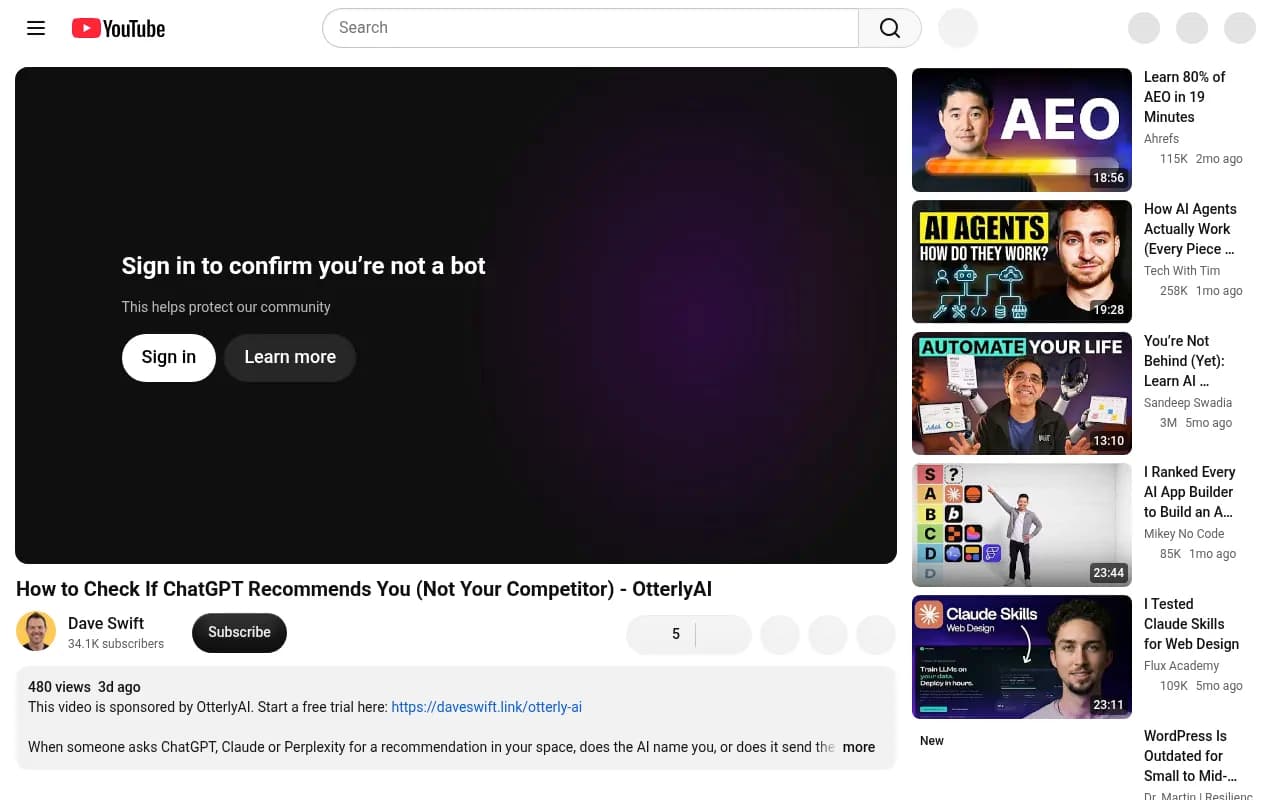
Otterly.AI is a lighter prompt tracker. A recent video walkthrough from creator Dave Swift covers its brand report, competitor and citation data, and a crawlability checker. The video is sponsored, so weigh it accordingly, but it's a decent look at how this category of tool works in practice.
Otterly.AI

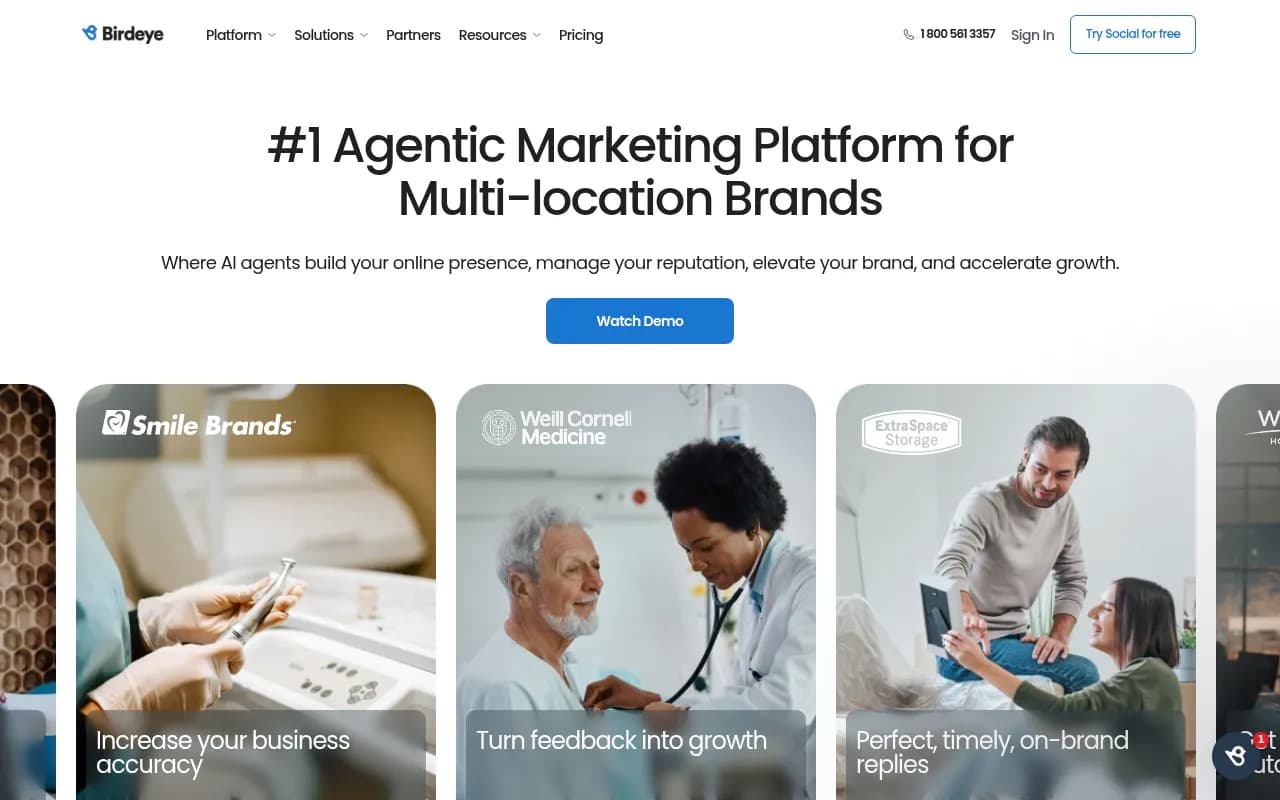
Other options in the catalog include Peec AI, Profound, Rankshift, and Birdeye for businesses already living in review management.

Profound

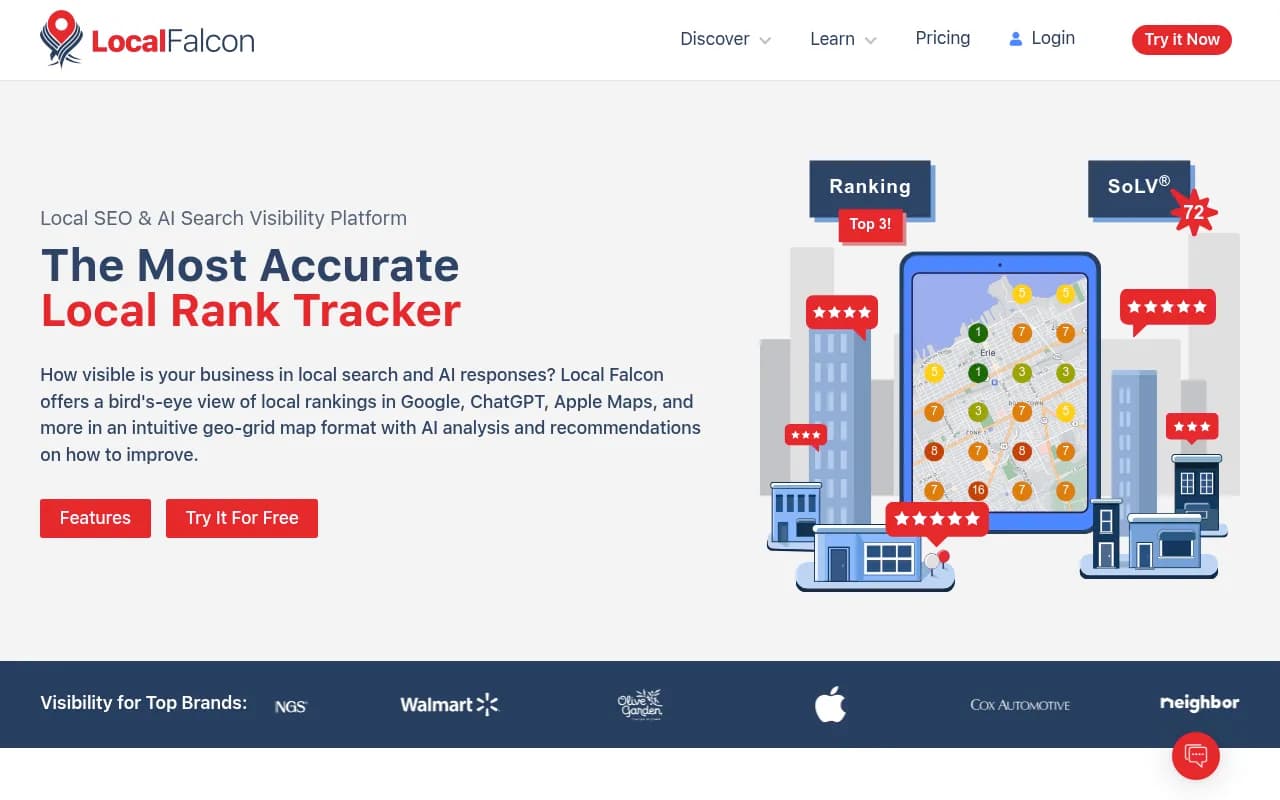
For local rank grids on the Maps side, Local Falcon shows geo-grid visibility. That's a different signal from ChatGPT mentions, but it's useful context when you're comparing who dominates where.
| Tool | Best for | Local-specific strengths | Takes action on findings |
|---|---|---|---|
| Manual spreadsheet | First baseline | Full control over prompt wording | No |
| Promptwatch | Ongoing tracking plus fixes | Country, and state/city tracking on Business | Yes (content gaps, Action Board, Content Agent) |
| Otterly.AI | Straightforward monitoring | Prompt-level brand reports | Limited |
| Peec AI | Marketing team dashboards | Prompt tracking across engines | Limited |
| Birdeye | Review-led local brands | Reviews and listings in one place | Review workflows |
| Local Falcon | Maps ranking | Geo-grid visibility | No |
If you want to browse more options, the GEO software directory lists dozens of trackers, and ai-rank-tools.com focuses on AI rank trackers specifically.
A realistic weekly routine
You don't need a big process. This is enough for most single-location businesses:
- Monday: run your top six prompts in ChatGPT with web search on. Log names and sources.
- Midweek: fix one gap. A listing, a service page, a review request campaign.
- Monthly: rerun the full 15 to 20 prompts, update the loss map, and compare to last month.
- After any big site or listing change: check again in two to four weeks, since citations can take time to move.
Keep the discipline of counting. The number that matters is your appearance rate across repeated runs, and whether it moves.
Common mistakes
- Testing only your brand name or generic category terms
- Judging from a single run
- Ignoring the sources and just noting who won
- Chasing a social platform that ChatGPT barely cites
- Fixing the website while listings still disagree on your phone number
- Treating a competitor's win as permanent. Platform behavior has shifted overnight before, and it will again
The short version
Write real customer questions. Run each several times with web search on. Count who gets named, save the sources, and turn them into a loss map. Then fix the cheapest gap first, usually listing consistency and reviews, and keep measuring. When the spreadsheet gets painful, move to a tracker that shows competitors per prompt and the sources behind them.