Key takeaways
- FAQ schema still drives meaningful AI citation rates in 2026, even though Google removed FAQ rich results from traditional SERPs in 2023
- The goal has shifted: you're no longer optimizing for accordion dropdowns in search results, you're optimizing for AI model comprehension and citation
- Structured data acts more like a credibility filter for AI engines than a direct ranking signal
- Combining FAQPage schema with strong on-page content, author markup, and crawlability gives the best results
- Sites that implement FAQ schema alongside consistent content updates typically see measurable AI visibility improvements within 60-90 days
Why FAQ schema still matters in 2026 (even though Google killed the rich results)
In August 2023, Google quietly removed FAQ rich results from most search results. No more accordion dropdowns. No more expanded Q&A snippets in the SERP. For a lot of SEOs, that felt like the end of FAQ schema's usefulness.
It wasn't.
What happened instead is that AI search engines -- Google AI Overviews, ChatGPT, Perplexity, Claude, Gemini -- became the primary beneficiaries of FAQ structured data. These models don't render accordion widgets. They do something more valuable: they read your schema, understand the question-answer relationship you've explicitly defined, and use that structure to decide whether your content is worth citing.
FAQ schema has one of the highest AI citation rates of any structured data type. The reason is pretty logical when you think about it. AI answer engines are, fundamentally, question-answering machines. When your content explicitly marks up a question and its answer in machine-readable format, you're speaking the AI's native language. You're not making it infer the Q&A structure from your prose -- you're handing it the relationship on a plate.
A 2025 analysis found that structured data schema increased AI search citations by 44% compared to unstructured content. That's not a marginal improvement.
So yes, FAQ schema is worth your time in 2026. But the way you implement it, and what you pair it with, matters enormously.
What's changed: traditional SEO vs. AI search optimization
Before getting into implementation, it helps to understand the mental model shift.
In traditional SEO, FAQ schema was about visual real estate. You wanted the dropdown in the SERP. You wanted to take up more space on the page. The content itself was almost secondary to the markup.
In AI search, the content is everything. The schema is a signal that helps AI models parse and trust your content -- but if the underlying answers are thin, vague, or generic, the schema won't save you. AI models are reading the actual text. They're evaluating whether your answer is genuinely useful, specific, and authoritative.
Think of it this way: schema markup acts like a credibility filter, not a ranking booster. It tells the AI "this content is organized, intentional, and structured for comprehension." But you still have to pass the filter.
This is the core mistake most sites make: they add FAQPage schema to mediocre Q&A content and wonder why nothing changes.
What actually works in 2026
Writing answers that AI models want to cite
The single most important factor is answer quality. AI models, particularly Google's AI Overviews and Perplexity, heavily favor answers that are:
- Direct: the answer starts immediately, without preamble
- Specific: concrete details, numbers, steps, or examples rather than vague generalities
- Self-contained: the answer makes sense on its own, without requiring the reader to have read the rest of the page
- Authoritative: backed by expertise, data, or clear first-hand experience
A bad FAQ answer looks like this: "There are many factors to consider when choosing the right approach for your business needs."
A good FAQ answer looks like this: "Most small businesses should start with FAQPage schema on their service pages and blog posts that answer specific customer questions. Implementation takes about 30 minutes per page using JSON-LD, and you can validate it immediately with Google's Rich Results Test."
The second answer is citable. The first is filler.
Targeting questions AI models actually receive
One of the most common implementation mistakes is writing FAQ questions based on what you think people ask, rather than what they actually search for. In 2026, this is especially important because AI models receive conversational, long-tail queries -- not just short keyword phrases.
Tools like AlsoAsked and AnswerThePublic are useful for surfacing real question patterns.
For AI-specific visibility, you want to go further and understand which prompts AI models are actually responding to in your topic area. That's where platforms like Promptwatch become relevant -- they track real prompt data across ChatGPT, Perplexity, Gemini, and Google AI Overviews, so you can see the actual questions users are asking AI engines about your topic, not just what they type into Google.

Correct JSON-LD implementation
Google's official guidance is clear: use JSON-LD for structured data. Microdata and RDFa work, but JSON-LD is cleaner, easier to maintain, and less likely to break when you update your page content.
Here's a minimal valid FAQPage implementation:
{
  "@context": "https://schema.org",
  "@type": "FAQPage",
  "mainEntity": [
    {
      "@type": "Question",
      "name": "How long does FAQ schema take to implement?",
      "acceptedAnswer": {
        "@type": "Answer",
        "text": "For a single page, FAQ schema in JSON-LD takes 15-30 minutes to write and validate. Using a WordPress plugin like Yoast SEO or Rank Math, you can add it without touching code."
      }
    },
    {
      "@type": "Question",
      "name": "Does FAQ schema still help with Google rankings in 2026?",
      "acceptedAnswer": {
        "@type": "Answer",
        "text": "FAQ schema no longer generates rich result dropdowns in Google's traditional search results (Google removed these in 2023). However, it significantly improves visibility in Google AI Overviews and other AI search engines by making your Q&A content machine-readable."
      }
    }
  ]
}
Place this in a <script type="application/ld+json"> tag in your page's <head> or at the end of the <body>. Always validate using Google's Rich Results Test before publishing.
Pairing FAQ schema with author and organization markup
Google's AI Overviews and other AI models weight content from identifiable, authoritative sources more heavily. Adding Person schema for the author and Organization schema for your site -- with proper sameAs links to LinkedIn profiles, Wikipedia pages, and other authoritative sources -- signals credibility.
This is especially true for YMYL (Your Money or Your Life) topics like health, finance, and legal content. Without author markup, your FAQ content is anonymous. With it, the AI model can verify that a real expert wrote the answer.
{
  "@context": "https://schema.org",
  "@type": "Article",
  "author": {
    "@type": "Person",
    "name": "Jane Smith",
    "url": "https://yoursite.com/about/jane-smith",
    "sameAs": [
      "https://www.linkedin.com/in/janesmith",
      "https://twitter.com/janesmith"
    ]
  }
}
Combining FAQPage schema with HowTo schema
For guides and tutorials, HowTo schema complements FAQPage schema well. AI Overviews respond strongly to step-by-step content because it maps directly to how users ask procedural questions ("how do I..."). Using both schema types on the same page -- FAQPage for the Q&A section, HowTo for the step-by-step instructions -- gives AI models multiple structured entry points into your content.
What doesn't work anymore
Thin FAQ content added purely for schema purposes
If your FAQ answers are one sentence long and don't actually answer the question, adding FAQPage schema makes no difference. AI models read the answer text, not just the markup. A 15-word answer to a complex question will not get cited.
Keyword-stuffed questions
Writing FAQ questions like "What is the best FAQ schema implementation service for small businesses in 2026?" is a holdover from traditional SEO thinking. AI models understand natural language. Write questions the way a real person would ask them.
Duplicate FAQ content across multiple pages
If you copy the same FAQ block onto 10 pages, AI models may treat it as low-value boilerplate. Each FAQ section should be specific to the page it's on and the topic it covers.
Ignoring crawlability
Schema is useless if AI crawlers can't access your page. Google's official guidance on AI optimization is explicit: your content must be crawlable. Check that you're not blocking AI crawlers in your robots.txt (GPTBot, ClaudeBot, PerplexityBot, and Google-Extended are the main ones to watch). JavaScript-heavy pages that don't render properly for bots are a common hidden problem.
Tools like Screaming Frog can help you audit crawlability at scale.
Platform-specific considerations
Google AI Overviews
Google AI Overviews pull heavily from pages that already rank well in traditional search -- but that's not the only signal. Structured data, freshness, and E-E-A-T (Experience, Expertise, Authoritativeness, Trustworthiness) signals all contribute. FAQ schema specifically helps Google's AI understand which parts of your page answer specific questions, making it easier to extract and cite.
Google's own documentation on AI optimization emphasizes crawlability and content quality above all else. Schema is a supporting signal.

Perplexity
Perplexity tends to cite sources more visibly than Google AI Overviews, which makes it a high-value target. It responds well to content that directly answers questions with specific, factual information. FAQ schema helps here because it signals that your content is organized around answering questions -- which is exactly what Perplexity is doing.
ChatGPT
ChatGPT's web browsing and citation behavior is less predictable than Perplexity or Google AI Overviews. However, FAQ schema still helps because it makes your content easier for GPTBot to parse and index. The key factor for ChatGPT citations is domain authority and content specificity.
Implementation checklist
Here's a practical checklist for implementing FAQ schema for AI visibility:
- Write at least 3-5 questions per page, each with a substantive answer (100+ words for complex topics)
- Use JSON-LD format, placed in the
<head>or end of<body> - Validate with Google's Rich Results Test before publishing
- Ensure questions match real user queries (use AlsoAsked, AnswerThePublic, or prompt tracking data)
- Add author markup (
Personschema) withsameAslinks to authoritative profiles - Check that AI crawlers (GPTBot, ClaudeBot, PerplexityBot) are not blocked in
robots.txt - Update FAQ content regularly -- freshness is a real signal
- Don't duplicate FAQ blocks across multiple pages
Tools that help with FAQ schema and AI visibility
For writing and optimizing FAQ content, Frase is worth looking at -- it combines content research with structured data guidance.
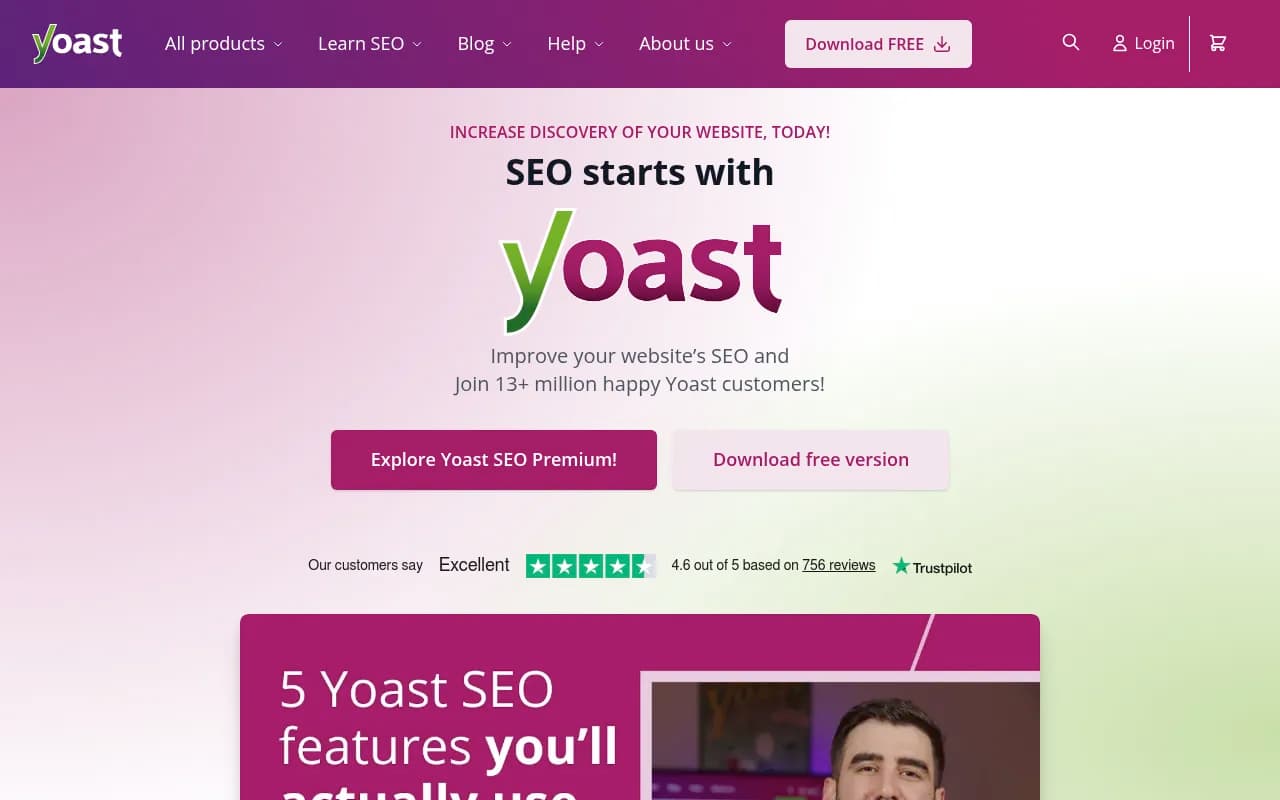
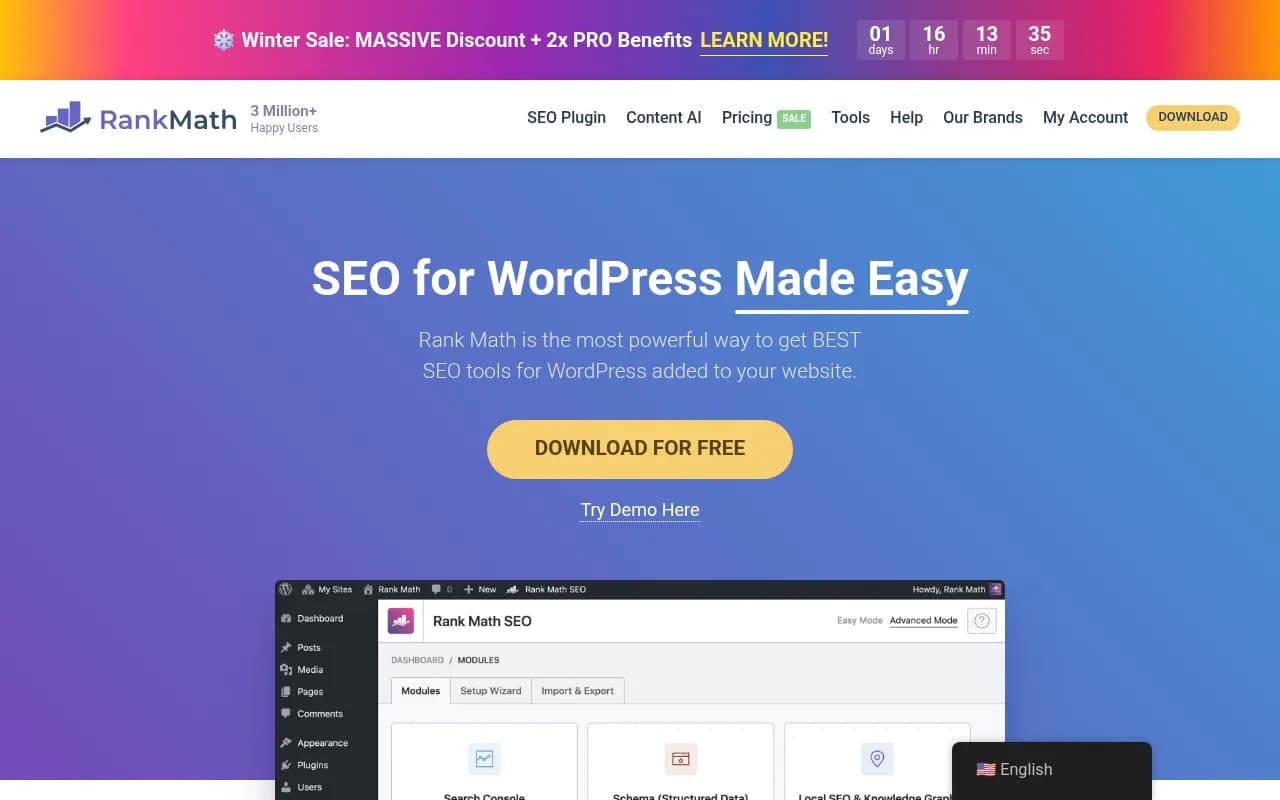
For WordPress sites, Yoast SEO and Rank Math both have built-in FAQ schema generators that let you add structured data without touching code.
For tracking whether your FAQ schema is actually translating into AI citations, you need visibility data. Promptwatch tracks page-level citations across 10 AI models, so you can see which pages are being cited, how often, and by which engines -- and connect that back to the specific content and schema changes you made.
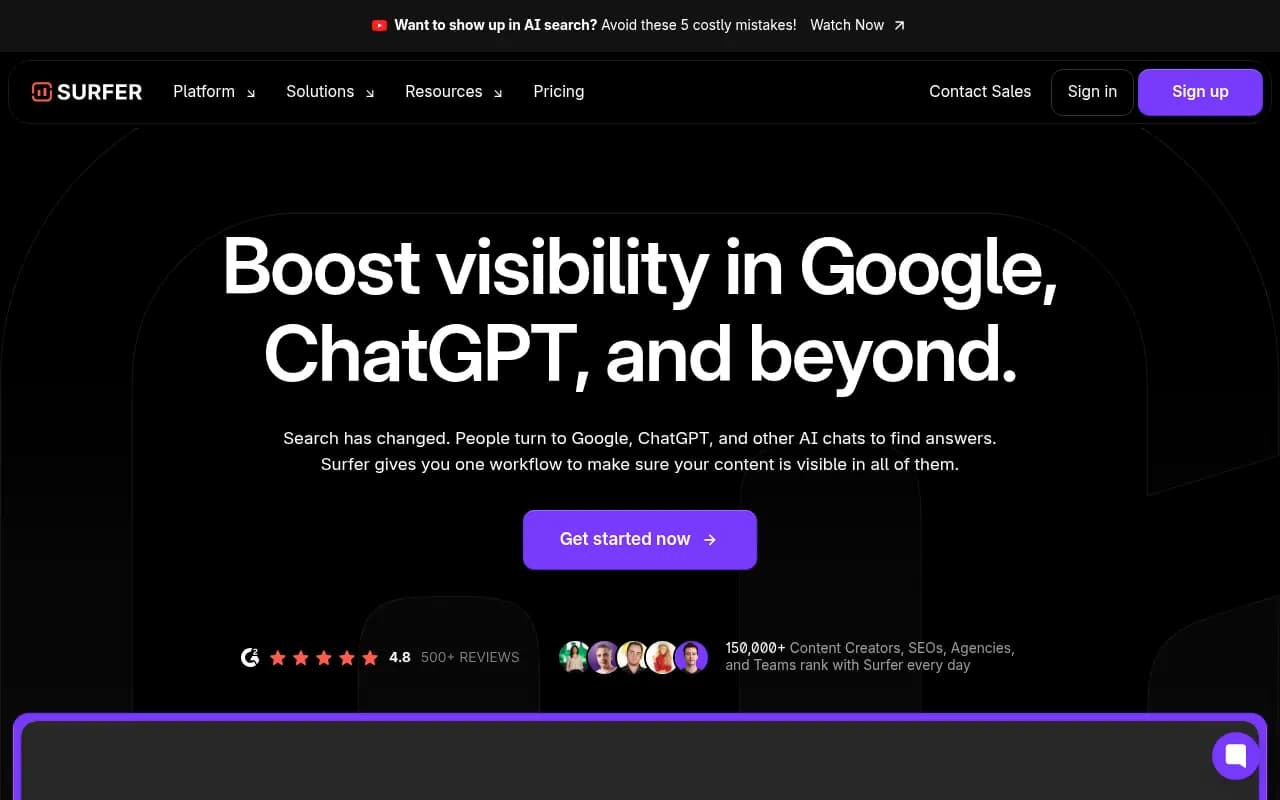
For content optimization specifically, tools like Surfer SEO and Clearscope help ensure your FAQ answers cover the right topics and depth.

A realistic timeline
Small businesses and content teams that implement FAQ schema correctly -- alongside consistent content updates and proper crawlability -- typically see meaningful improvement in AI visibility within 60-90 days. That's not instant, but it's not years either.
The caveat: "meaningful improvement" depends on your baseline. If you're in a competitive topic area where established brands already dominate AI citations, FAQ schema alone won't close the gap. You need to combine it with broader content strategy, authority building, and ongoing monitoring.
Comparison: FAQ schema impact across AI platforms
| Platform | FAQ schema impact | Primary citation factors | Crawl bot |
|---|---|---|---|
| Google AI Overviews | High | E-E-A-T, traditional ranking, schema | Googlebot, Google-Extended |
| Perplexity | High | Content specificity, freshness, schema | PerplexityBot |
| ChatGPT | Moderate | Domain authority, content clarity | GPTBot |
| Claude | Moderate | Content quality, factual accuracy | ClaudeBot |
| Gemini | High | Google ecosystem signals, schema | Googlebot |
| Grok | Low-moderate | Social signals, content recency | Unknown |
The bottom line
FAQ schema in 2026 is not about getting accordion dropdowns in Google search results. That ship sailed in 2023. It's about making your content legible to AI models that are answering millions of questions every day.
The implementation is straightforward. The harder part is writing FAQ answers that are actually worth citing -- specific, direct, authoritative, and genuinely useful. Get that right, add the schema, make sure your site is crawlable, and you have a real shot at appearing in AI-generated answers across Google, Perplexity, ChatGPT, and beyond.