Key takeaways
- A single user prompt triggers 8-10 parallel sub-queries inside AI search engines before any answer is returned. Your content either covers those sub-queries or it doesn't.
- Query fan-out data lets you map which sub-queries you already partially answer (refresh candidates) vs. which you have no content for at all (create from scratch).
- The refresh-vs-create decision comes down to three signals: existing page relevance, citation history, and sub-query coverage depth.
- 95% of fan-out sub-queries show zero monthly search volume in traditional keyword tools, so you can't rely on Ahrefs or Semrush alone to find them.
- Platforms like Promptwatch surface query fan-outs alongside citation data and answer gap analysis, which makes the prioritization decision much faster.
What query fan-out actually means for your content
When someone types "best project management software for remote teams" into ChatGPT or Google AI Mode, the model doesn't just answer that one question. It quietly fires off a set of parallel sub-queries before composing its response. Something like:
- "project management software remote teams 2025 reviews"
- "Asana vs Monday.com for distributed teams"
- "free project management tools remote work"
- "project management software complaints limitations"
- "best project management software pricing comparison"
This is query fan-out. The AI is cross-referencing multiple angles before it commits to an answer. According to data from AirOps covering 72,000+ AI-generated queries across 8,700+ prompts, a single prompt routinely triggers 8-10 of these parallel sub-queries. And here's the part that matters: 95% of those sub-queries show zero monthly search volume in traditional keyword tools.
That means your keyword research spreadsheet is essentially blind to the queries that determine whether you appear in AI search results.
The practical implication is that content strategy in 2026 isn't about ranking for one keyword per page. It's about whether a given page can satisfy multiple related sub-queries simultaneously, or whether you need a dedicated page for a sub-query cluster that you're currently invisible for.
The two decisions fan-out data helps you make
Before getting into the mechanics, it's worth being clear about what you're actually deciding.
Refresh means taking an existing page and expanding or restructuring it so it covers more of the sub-queries AI models are running. The URL stays the same, the core topic stays the same, but the depth and angle coverage increases.
Create from scratch means building a new page because no existing page on your site is even close to relevant for a cluster of sub-queries. You're filling a genuine content gap, not patching an existing one.
Getting this wrong wastes time. Refreshing a page that can never cover a sub-query cluster (because it's topically too far away) is wasted effort. Creating a new page when you already have a page that's 80% of the way there just creates duplication and dilutes your authority.
Fan-out data is the clearest signal you have for making this call correctly.
Step 1: Map your fan-out sub-queries
The first thing you need is the actual sub-query data. There are a few ways to get this.
Manual extraction: Run your target prompts through ChatGPT, Perplexity, or Google AI Mode and observe the sources cited. Tools like Keywords Everywhere can surface fan-out queries directly in the search interface. This is slow but gives you a feel for the data.
Dedicated GEO platforms: Platforms built for AI visibility tracking surface fan-out data at scale. Promptwatch, for example, shows you how a single tracked prompt branches into sub-queries, along with volume estimates and difficulty scores for each branch. This is far faster than manual extraction when you're dealing with dozens of prompts.

AlsoAsked and AnswerThePublic: These tools surface People Also Ask data and question clusters that often correlate with fan-out sub-queries, though they're not pulling directly from AI model behavior.

Once you have your sub-queries, group them into thematic clusters. A cluster might be "pricing and cost comparisons," another might be "limitations and complaints," another might be "use case specifics." These clusters become your unit of analysis.
Step 2: Audit your existing content against each cluster
Now you need to know which clusters you have coverage for and how good that coverage is. This is a content audit, but filtered through the lens of AI sub-query behavior rather than traditional keyword matching.
For each cluster, ask:
- Do I have a page that directly addresses this cluster?
- Does that page answer the sub-queries in a way an AI model could extract a clean passage from?
- Is that page being cited by AI models currently?
The third question is the most important one. A page can technically cover a topic but still not get cited because the content is buried in long paragraphs, lacks clear headers, or doesn't match the specific phrasing patterns AI models are looking for.
Tools like MarketMuse and Clearscope can help you assess topical depth on existing pages.

For citation data specifically, you need a platform that tracks which of your pages are actually appearing in AI responses. Page-level citation tracking shows you the gap between "we have content about this" and "AI models are actually citing this content."
Step 3: Apply the refresh vs. create decision framework
Here's the decision logic, simplified:
| Situation | Decision |
|---|---|
| Existing page covers 60%+ of a sub-query cluster but isn't being cited | Refresh: improve structure, add missing angles, optimize for passage extraction |
| Existing page covers the topic but is topically adjacent, not directly relevant | Create: the page can't be stretched to cover the cluster without breaking its focus |
| No existing page covers the cluster at all | Create from scratch |
| Existing page is being cited but missing specific sub-queries | Refresh: add sections targeting the missing sub-queries |
| Existing page covers the cluster but is outdated (AI models weight freshness) | Refresh: update data, add recency signals, republish with new date |
| Sub-query cluster is a "vs" or comparison query you have no content for | Create: comparison pages are a distinct content type that rarely maps to existing pages |
The 60% threshold is a judgment call, but the underlying logic is: if an existing page is already topically close, refreshing it is faster and preserves any existing citation authority. If you'd have to rewrite 80% of the page to cover the cluster, you're better off creating something new.
The freshness signal matters more than most people realize
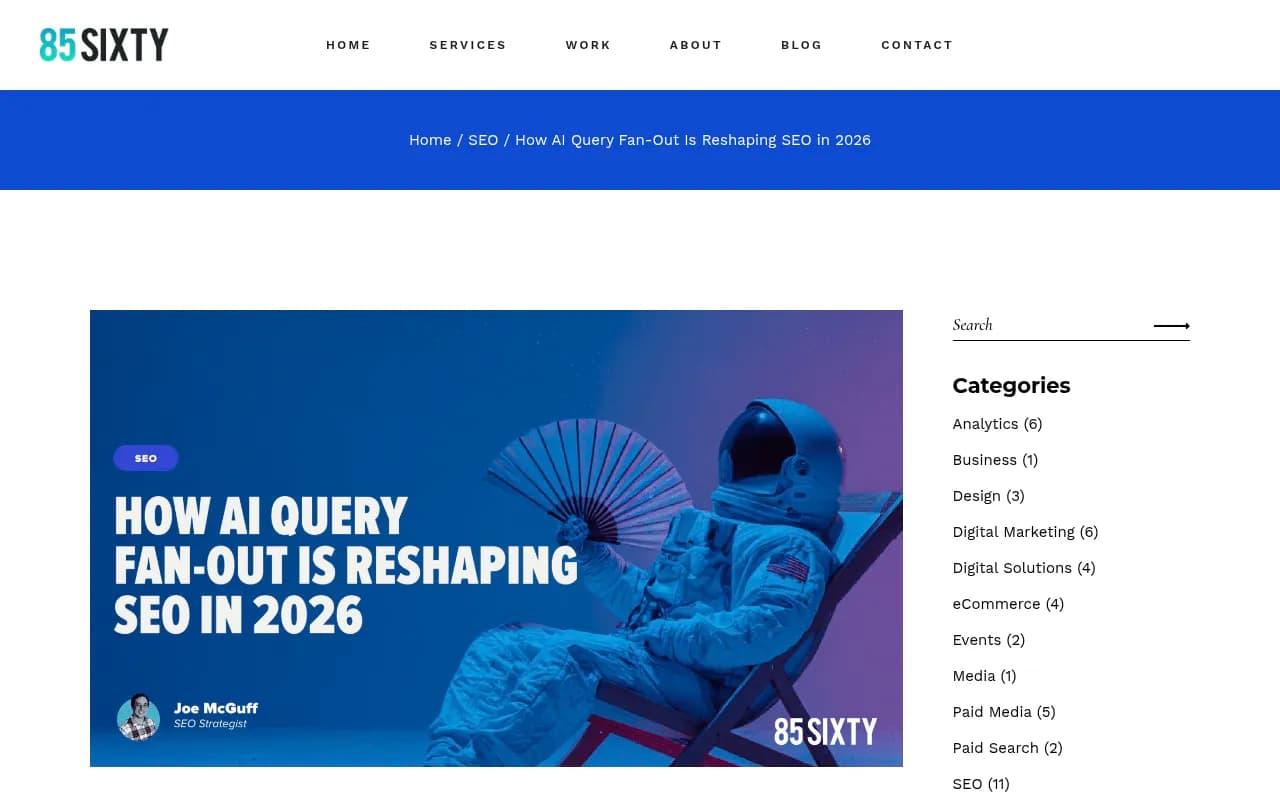
The 85SIXTY analysis of fan-out data found that "2024" or "2025" appears in roughly 6% of all fan-out sub-queries. AI models are actively checking whether information is current. If you have a page that was last updated in 2023 and covers a topic where recency matters (pricing, comparisons, software features), that's a refresh candidate even if the topical coverage is good. The page needs a freshness signal, not a new URL.
Comparison and "vs" pages are almost always create decisions
Fan-out queries frequently include comparison qualifiers: "X vs Y," "alternatives to X," "X pros and cons." These rarely map to existing informational pages. If you don't have dedicated comparison content, you need to create it. Trying to add a comparison section to a general overview page usually produces content that's too thin to get cited.
Step 4: Prioritize by fan-out frequency and citation competition
Not all sub-query clusters are equally worth targeting. You need to prioritize.
Two signals matter most:
Fan-out frequency: How often does this sub-query cluster appear across different prompts? A sub-query that shows up in fan-outs for 15 different prompts is worth more than one that appears in only one. Promptwatch's prompt intelligence feature surfaces volume estimates and difficulty scores for each tracked prompt, which gives you a proxy for this.
Citation competition: Who's currently being cited for this cluster? If the citations are dominated by Reddit threads and YouTube videos rather than authoritative brand pages, that's a signal the cluster is winnable. If every citation is a major publication or established competitor, the bar is higher.
The sweet spot for prioritization is: high fan-out frequency + low citation competition + existing page that's 60%+ relevant. That combination gives you the fastest path to improved AI visibility.
Step 5: Execute refreshes and new pages differently
The execution differs depending on which path you're taking.
Refreshing an existing page
The goal is to make the page more extractable for AI models while covering the missing sub-query angles.
Practically, this means:
- Adding dedicated H2 or H3 sections for each sub-query in the cluster
- Writing those sections as self-contained passages (AI models extract passages, not whole pages)
- Including the specific phrasing patterns that appear in fan-out sub-queries (pricing, limitations, comparisons, use cases)
- Updating any data points that have a year attached to them
- Adding a "last updated" signal that AI crawlers can read
Don't just append new content to the bottom. AI models read structure. If the new sections are buried after 3,000 words of existing content, they're less likely to be extracted.
Creating a new page from scratch
When you're building new, the fan-out cluster is your content brief. Each sub-query in the cluster should map to a section of the page. Think of the page as designed to satisfy a set of parallel queries, not just one.
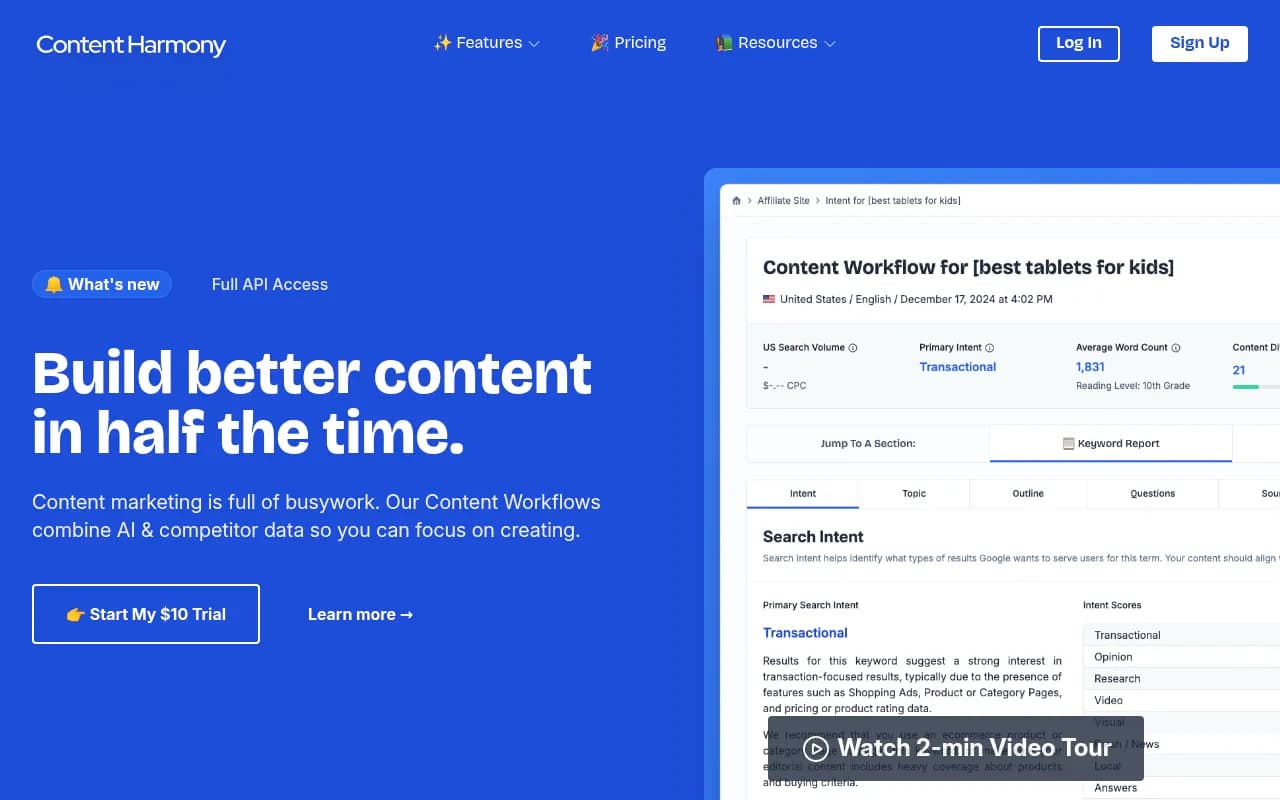
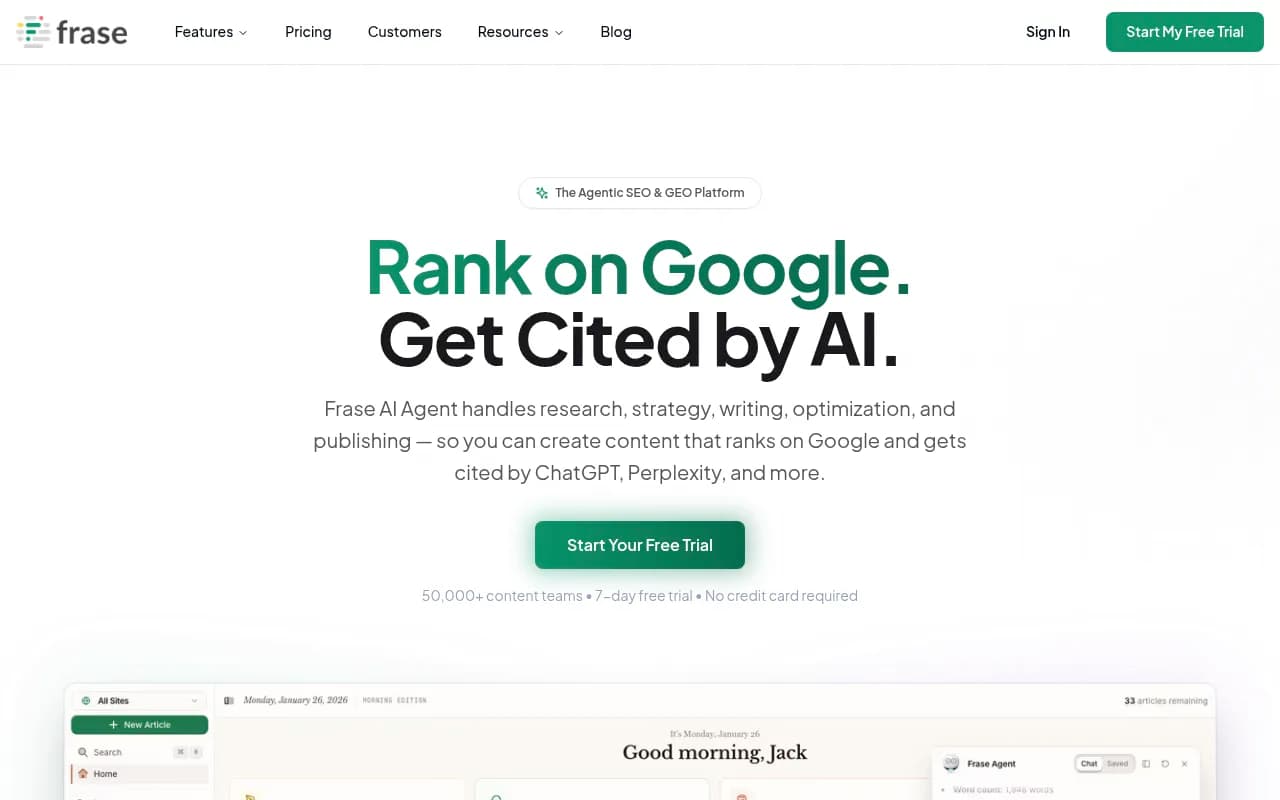
Content brief tools like Content Harmony and Frase are useful here because they help you map competitor coverage and identify what's missing.
For AI-specific content generation grounded in real prompt and citation data, Promptwatch's Content Agents generate articles and briefs based on actual fan-out data and answer gap analysis. That's different from generic AI writing tools because the content is engineered around the specific sub-queries you're trying to capture.
Step 6: Track the results
Creating or refreshing content without tracking whether AI models actually start citing it is guesswork. You need to close the loop.
The key metrics to watch after publishing:
- Is the page being crawled by AI bots (ChatGPT, Perplexity, Claude)?
- Is it being cited in responses to the target prompts?
- Which sub-queries from the cluster is it covering vs. still missing?
AI crawler logs tell you when a bot visits your page and whether it encounters errors. Citation tracking tells you when the page moves from "crawled" to "cited." The gap between those two events is where most optimization work happens.
Promptwatch tracks this full timeline: from publish to crawl to citation, with page-level data showing exactly which pages are being cited, how often, and by which models.
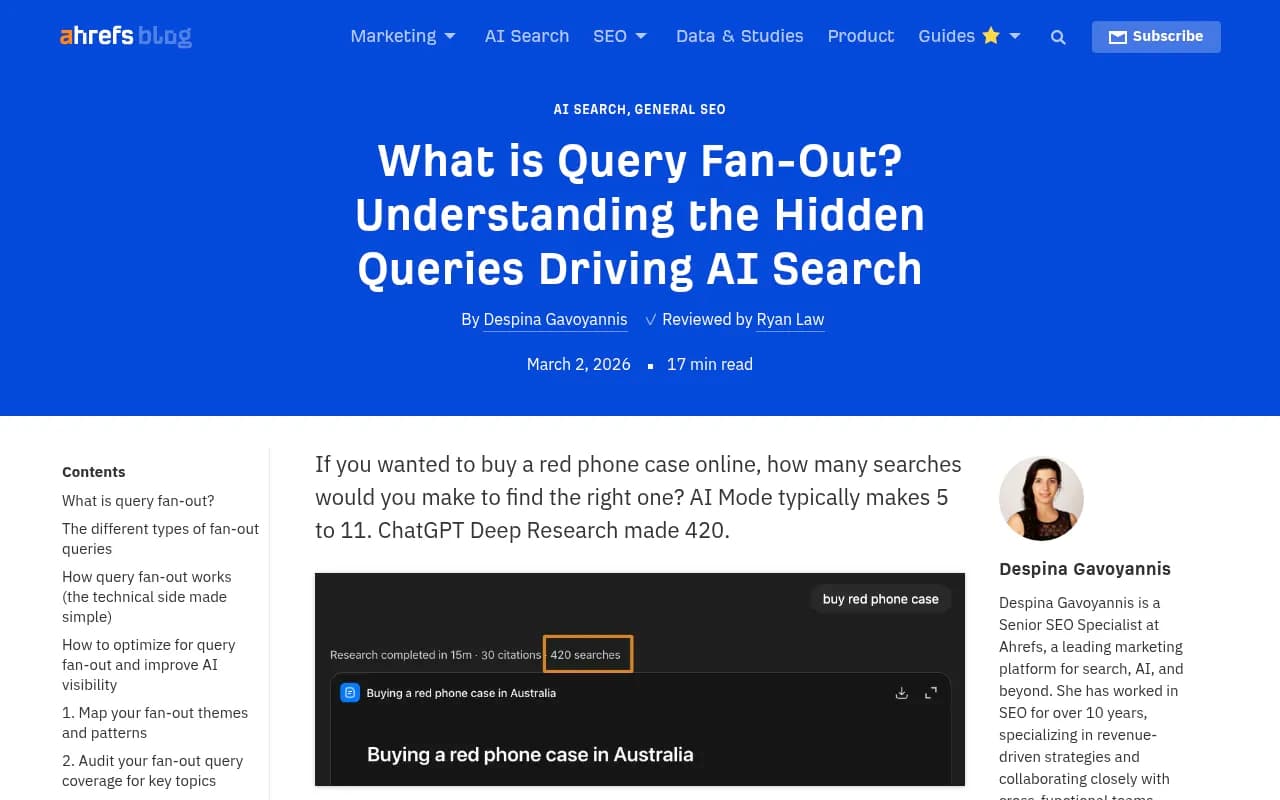
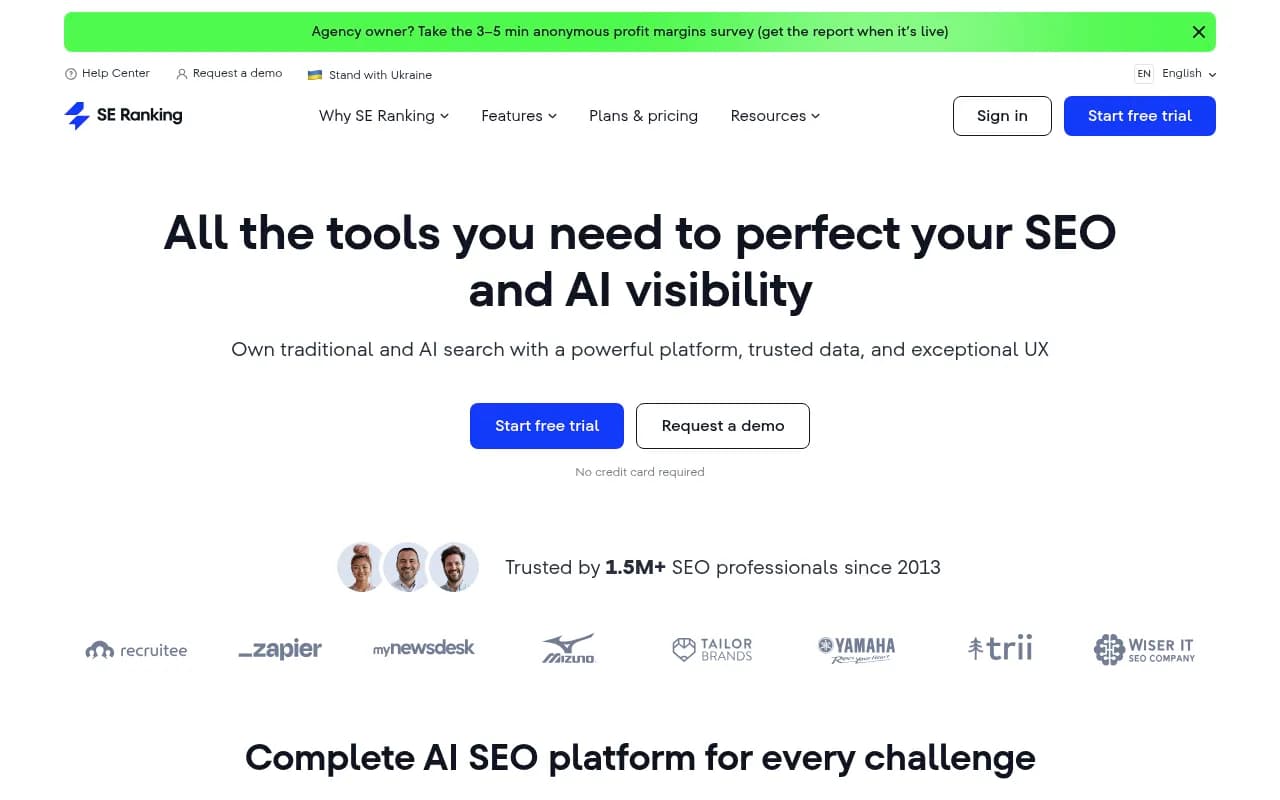
For teams that want to track AI visibility without the full GEO platform investment, tools like Ahrefs Brand Radar and SE Ranking offer some level of AI citation monitoring.

A note on industry variation
Fan-out behavior isn't uniform across topics. The 85SIXTY analysis found significant variation in how often prompts trigger search and how many sub-queries they generate depending on the vertical. High-consideration categories (software, finance, healthcare, travel) tend to generate more sub-queries per prompt because the AI is doing more due diligence before recommending. Commodity or low-stakes topics generate fewer.
This matters for prioritization. If you're in a high-consideration vertical, the fan-out clusters are deeper and more specific, which means there are more gaps to fill and more opportunities to get cited. If you're in a simpler category, the fan-out is shallower and the content requirements are less demanding.
Putting it together: a practical workflow
Here's how this looks as an actual process rather than a set of principles:
- Pull your tracked prompts and their fan-out sub-queries from your GEO platform (or extract manually for a smaller set)
- Group sub-queries into thematic clusters (pricing, comparisons, limitations, use cases, etc.)
- Map each cluster to your existing content inventory -- note pages that are relevant vs. pages that have no match
- For relevant pages, check citation data: are they being cited for these sub-queries?
- Score each cluster on fan-out frequency and citation competition
- Prioritize: high frequency + low competition + existing relevant page = refresh first; high frequency + no existing page = create
- Execute refreshes by adding structured sections for missing sub-queries; execute new pages with the cluster as your brief
- Track crawl and citation data after publishing; iterate based on what's still missing
This isn't a one-time exercise. Fan-out patterns shift as AI models update and as competitors publish new content. Running this process quarterly keeps your content strategy aligned with how AI models are actually evaluating your topic area.
The teams that are winning AI visibility in 2026 aren't the ones with the most content. They're the ones who know exactly which sub-queries they're missing and have a systematic process for filling those gaps.